


America’s midterm elections are not unlike local elections and by-elections in the UK and European elections across the EU – an often-dull event met with low turnout, but that nonetheless provides an important check on public opinion, guards against complacency by the incumbent power and helps to refresh the bloodline of politics (perhaps less so in the gerontocracy of American politics).
In this context, Republicans should bear in mind that in recent years local elections (UK) and EU polls) have proven consequential. An expected poor showing in last May’s local elections was reason enough for the Labour party to jettison Keir Starmer, while Emmanuel Macron’s foolish decision to call a general election following a weak result for his coalition in the 2024 European elections, sapped his government(s) of power and credibility.
In the US, the mid-terms have at times been fateful. In the November 5th, 1946, midterms John F Kennedy, Joe McCarthy and Richard Nixon all entered politics. In an echo of the debate on poverty in San Francisco today, and the Californian billionaire tax, the 1934 California gubernatorial election saw the Democrat Upton Sinclair (he was closer to a Democratic Socialist in today’s terms) launch a campaign entitled ‘End Poverty in California (EPIC)’. Business and landowners didn’t like this, and the movie studio bosses set against him and they spurred an attack campaign against Sinclair using fake newsreels. Upton lost to a colourless Republican in what was likely the first ‘fake news’ political attack campaign, but most certainly not the last.
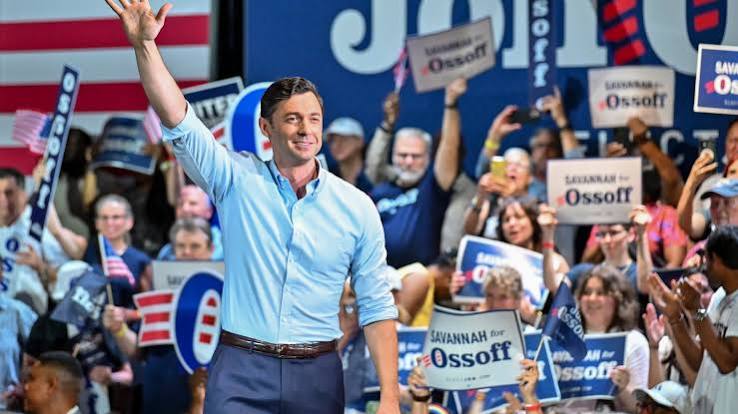
In three weeks’ time, Americans will vote in a consequential midterm roster of votes. As I write, polls and prediction markets point to the potential for a Democrat upset in the Senate (65% probability). The House of Representatives already appears settled – the Democrats need three more seats for a majority but look like they might take up to ten. In the Senate, polls suggest that the Democrats will hold most of the contested ‘Blue’ states – Jon Ossoff will for example easily win Ohio. Then, it looks likely that we will see upsets in Alaska, Maine, Texas, Ohio and maybe Kansas. Since 1861 there have been 29 Republican Senators representing Kansas and only 3 Democrats, the last being in 1932.
As such, a swing to Democrats in Kansas would be emblematic of a major upset, and here there are many things at stake. The most obvious is that the midterms are a referendum of sorts on President Trump, the economic spillover of his war on Iran, growing financial polarisation and the conduct of politics. A very important consideration in the context of manifest corruption (recall that President Trump has promised USD 5,000 to Americans if his party is successful in the midterms) is the role of the democratic system as a check on executive power, and in this context a resolute vote against the President’s party and its many ill-chosen candidates, should be accepted as a sign that American democracy functions.
The midterms will also prove a steer for the next presidential election. A poor showing for the MAGA Republicans will surely dent the chances of the likes of Marco Rubio and JD Vance in 2028 and encourage the likes of Mike Pompeo and David McCormack. On the other side, if the likes of Abdul El Syed in Michigan are victorious, such a result might embolden the Democrats to present a Democratic Socialist presidential candidate in 2028 (a mistake in my view).
Into 2027, a Democrat held Senate might tilt policy in several ways. First, there may be an attempt to impeach ‘War Secretary’ Hegseth, granted the number of Republican Senators who disdain him and even, a move to impeach the President. It is likely that the Democratic Congress would seek to draw in the reins of American foreign policy, and potentially the rapid accumulation of debt by the President though it is hard to find Democrat fiscal hawks. In this regard, a potential market reaction may be a rally in Treasuries should the Democrats enjoy a successful mid-term campaign.
They are also likely to want to slow the build-out of data centres, and AI infrastructure in general, which as an economic activity is dwarfing activity in other sectors – be they manufacturing or construction, and has become a major focal point in state-level elections. Naturally, the emergence of such a policy across Congress would dent the speed of AI infrastructure build-out, which itself may not be a bad thing. But, the financial upshot is that a Democrat win in the Senate (and House) may be the catalyst to trigger a significant shift from US equities to bonds, and the President may well blame them for any resulting market volatility.
When the dust settles on the midterms, the 2028 presidential race will start.
Have a great week ahead, Mike

