Ulysses, Opium and Electric Vehicles

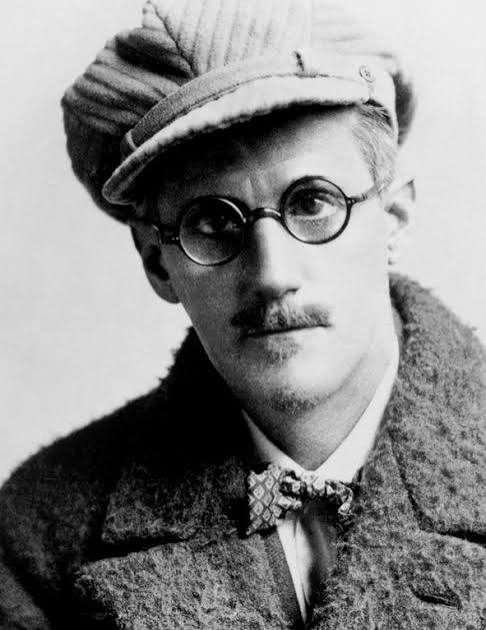
Trade wars can have long-running, unintended consequences. The Smoot-Hawley Act of 1930, widely regarded as a catalyst to the Great Depression, contained a clause (section 305) that permitted the banning of obscene materials, a classification that (in the US) covered James Joyce’s Ulysses. Joyce’s publisher, keen to sell the book in the US, brought a test case under the Smoot Hawley Act (United States vs. One Book Called ‘Ulysses’), and the resulting verdict that the book was not ‘obscene’ made Joyce’s text a bestseller in the US and changed American obscenity laws.   

A more serious case was the consequence of the Opium Wars, which ended with Hong Kong ceded to Britain, and began what China recalls as its ‘century of humiliation’, a perspective that still colours Beijing’s view of the West. In 1997, Chris Patten presided over the handover of Hong Kong to China, and in 2020 the introduction of the national security law drew Hong Kong legally, institutionally and politically back to China, with little protest from the West, and in my view, this is the defining event that marks the end of globalization as we knew it.   

A key institution in the process of globalization was the World Trade Organisation (WTO), which in its early incarnation as GATT (General Agreement on Trade and Tariffs) enjoyed strong leadership under Peter Sutherand and later Pascal Lamy, but is now defunct.   

Beyond its trade agreement rounds, the most consequential event for the WTO was the decision to admit China in 2001. The move was approved by President Bill Clinton at a time when there was an uneven power balance between the US and China and, at the time, Clinton described China’s economic relationship with the USA as ‘the equivalent of a one-way street’ (arguing that it was a highly attractive opportunity).  

The trade, manufacturing and financial relationship between China and the West formed the basis of globalization, and it is the evolution of China from a provider of cheap labour into an economic powerhouse, together with the failure of the West to hold it to the terms of WTO, that has led to the breakdown of globalization. Indeed, many expected that the second Trump presidency would pick up where the first one left off, with a hostile trade stance on China (in 2018 Marco Rubio released a very hawkish report on China ‘The World that China Made’).   

Now, Europe rather than the US, may be the one to pick a trade fight with China.   

China’s growing prowess in technology, intense domestic industrial competition, coupled with large quantities of state aid for ‘champion’ firms, and the need to replace a deflating real estate sector with a manufacturing boom, have created a surplus in/of manufactured goods, which China has opportunistically dumped on the European market (known as the China shock 2.0), to the consternation of auto manufacturers, chemical producers and pharmaceutical firms in the EU.   

Until very recently, the EU has permitted this to continue, for at least two reasons. The first is that EU trade policy is very product-focused in terms of its corrective measures, and the second is that there has been no strong consensus amongst the large European countries on how to deal with China. For example, in his 946 page memoir “La diplomatie n’est pas un dîner de gala’ (a play on Mao’s line that a revolution is not a dinner party) the former French ambassador to China, Claude Martin states that the lack of a coherent, watertight view on China by the EU (with policy measures to support), meant that China could divide and conquer across European capitals.    

That is apparently changing. In recent weeks, commentators and industry bodies in the major countries, notably France and Germany, have been striking a bold and hawkish note on China, and this much was reflected in a major development with the issue of a letter by French and German presidents to the EC president, where they call for a much tougher stance on China.   

In my view, there are three mistaken elements in the French/German stance, a lamentable view of Europe as the victim, a lack of urgency to get European industry to reform and become more competitive (notably few of the Draghi recommendations are in place), and third, the lack of an even more aggressive view on China in the sense that its economy may be even weaker than many think.   

Diplomatically, the move is being presented as a ‘conversion’ by the two governments, each led by intensely unpopular figures (Macron’s ratings are at an all-time low and Merz’ is not far behind).  

There are two elements to note in the letter, which aims to protect key European industries such as chemicals, pharmaceuticals and autos in particular. The first is a diversification instrument that will safeguard supply chains from over-reliance on Chinese goods and inputs, and the second powerful measure aims to exclude Chinese companies (China is not mentioned in the document but the sense is that it is very much the target) from the EU market where trade dumping produces severe and systematic distortions. The implementation of such a measure could be rapid and would need a majority of EU states to block it.   

EU trade commissioner, Maros Sefcovic spent last week in China, trying to extract a commitment from Beijing to limit the flow of Chinese goods to Europe. My sense is that the polite apathy that greeted him (as I write there is talk of an agreement on are earths) means that China has little intention of striking a reliable deal, and that a trade confrontation between Europe and China in early 2027 is something European businesses need to prepare for.   

Have a great week ahead, Mike   
The Rotten Heart of Europe

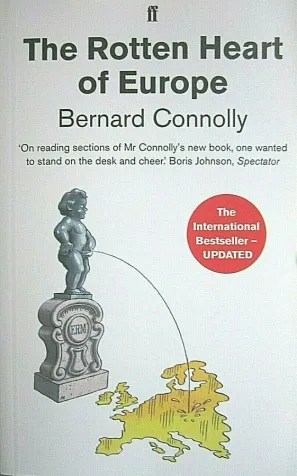
One of the first books I read that helped to explain how Brussels worked was Bernard Connolly’s ‘The Rotten Heart of Europe’, published in 1995. It was a massive hit (in the UK) and hugely controversial. Indeed, a second edition came with a cover recommendation from the then editor of the Spectator Boris Johnson (‘one wanted to stand on the desk and cheer’).  

The book did much to propagate Euroscepticism in British politics, and we might trace some of the roots of Brexit to it. With some irony, Brexit showed that the Commission can function in a forceful way when a crisis befalls it. However, as is well documented the challenge for the EC is to now step up a level and reinforce itself for a multipolar world where it will compete more acutely with China and the US, with at the same time Russia snapping at its heels.  

Connolly’s book came to mind a week ago when speaking at an investment conference. I was joined on a panel by economists and policy makers from Italy, Spain and Portugal, so that together we made up a representative group of the euro-zone periphery countries hit hardest (though Greece suffered the most) by the euro-zone debt crisis.  

Each of the periphery economies has had a remarkable turnaround – Italy is a bastion of political stability, Spain is the fastest growing of the large economies and Greece, Portugal and Ireland are arguably ‘too hot’ in terms of the rate of growth and price inflation they experience. What is telling is the signal from bond markets – yields for Italy, Spain and Greece for example, are below those of France and the UK, and Ireland is nearly on a par with Germany.  

In that respect, the tables have been turned. It is not forgotten how Angela Merkel and Nicola Sarkozy upbraided the lazy Mediterraneans in the 2010’s. Now, the three large countries at the heart of European history – the UK, France and Germany, are struggling, and to unkindly borrow Bernard Connolly’s title, constitute the ‘rotten heart of Europe’ 

They share common problems – sluggish, low growth, an inability to foster sustained private investment, political instability in the face of electorates who are in thrall to the easy solutions of populist parties. The reaction to last week’s triumph of the AfD (Alternative fur Deutschland) in Saxony-Anhalt is an example, and it may mean that Frederich Merz suffers the fate of Keir Starmer should his coalition collapse or his party cast him aside in favour of a younger leader.  

Though the tempo of growth is picking up in Germany, the UK and France, it will not rescue the leaders of the large economies. An additional complexity is that trading partners and allies are turning against them – China is exporting its manufacturing over-capacity to the German consumer and the special relationship that characterized US-UK diplomacy has all but withered away. The prospect that the White House might favour Argentina’s case for sovereignty over the Falkland Islands is a stunning case in point.  

Unlike France, the British and German economies suffer from a similar failure to upgrade their ‘production capital’ – investment in research, skills, new technologies and to an extent, manufacturing capacity. Both are behind France in terms of military power, but France is a leader in over-regulation. The fate of these three great nations has already inspired an endless flow of analyses, ideas and suggestions – the best of which from Mario Draghi, seems to be ignored.  

The sole thought I have to add, is that incumbent, centrist politicians in all three countries appear to ignore the increasingly obvious lesson that the rules of the geopolitical game have changed, and as we have referenced before in this note, we live in an ‘age of predators’, and consequently prey (Starmer). In this regard, new ideas are not the solution, but a change of method is. That method is more singular, less consensus led and aggressive. Edouard Philippe in France and Andy Burnham are its test cases, we will know by next May if they learn this lesson, and if not, Europe is in dire straits.  

Have a great week ahead, Mike  

Debt Purgatory

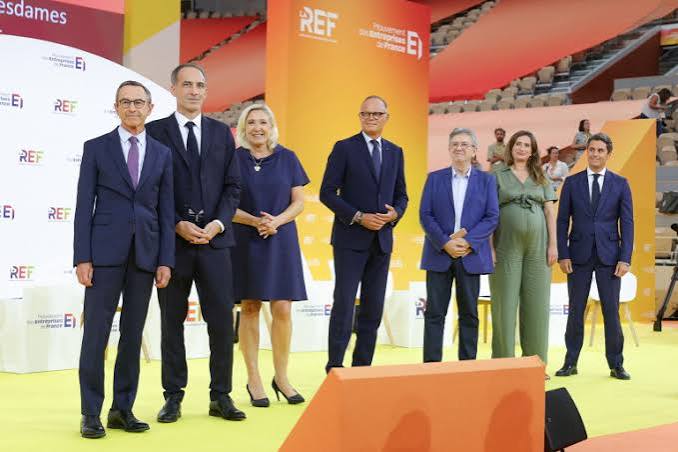
Roland Garros is one of the more stylish and elegant parts of Paris, and not a bad location to discuss finance and economics. Unfortunately, France’s political elite did not rise to the occasion. At the end of last week, (MEDEF), the large French business network gathered the principal candidates for the 2027 presidential campaign to listen to their views on the economy, and in particular their policies to pare back France’s gargantuan fiscal deficit and debt load. With a few exceptions, they disappointed.  

The candidates for the far-left (Jean-Luc Melenchon of La France Insoumise) and far-right, Marine Le Pen of the Rassemblement Nationale, appeared to treat the event as a light-hearted post-holiday chat show, and not a forum to debate the faultline that could pitch the euro-zone into another debt crisis.  

Though France’s presidential election is far off (the first round is on 18 April 2027), international investors need to pay close attention to it, both as a specific risk factor for bonds, foreign exchange and equities, and as a harbinger of what might befall most of the other major economies.  

In this respect, France has at least two things in common with the US. First, its weak finances. The budget deficit has been stuck at 5%, a level historically associated with a recession, and debt to GDP is on course to hit 120% according to the OECD. Second, there is no appetite to tackle this dire fiscal situation. In the US, there is little prospect of corrective tax hikes or spending cuts, and the Trump administration appears to have a fetish for intervening in markets.   

In France, three governments have been consumed by the process of setting a budget, and there is no political nor popular will to set France’s finances on a sustainable track. What is worse is that wild, populist suggestions that France could cancel the debt that the Banque de France holds (as a result of quantitative easing) are being aired in the media. France’s political class and populace are not known for their financial literacy, and the belief in some quarters that debt can be magicked away is dangerous and sets the economy up for a sharp reality check.  

Having witnessed the brutal effect of a debt crisis and the subsequent austerity on the Irish economy from 2010 onwards, French policymakers and its public are badly unprepared for what may come. Government spending at 57% of GDP is comparatively huge, and much of this goes on social welfare (healthcare and pensions).  

Unlike the US, France is not enjoying an AI capital expenditure fuelled wealth effect, and the notion that it might act to structurally boost economic growth is anathema to nearly all of its politicians. In a demonstration of moral hazard, France has accumulated debt at a pace and amount more than any other euro-zone country, without much protest from the ECB. 

Markets however, are reacting. French ten-year bond yields have just passed Italy’s. While long-bond yields in Japan, the US and UK have all broken higher to multi-decade highs, the re-rating of France is troubling. For international investors, France’s changing status, from a core, safe haven, to a periphery market is one of several signals of a coming debt purgatory – a long period where indebtedness dominates markets, government politics and geopolitics.  

For European policy makers, the fact that France is the indispensable nation on geopolitics, defence and military innovation complicates matters because it means that politically, in the context of German underperformance, France is harder to corral into a fiscal straightjacket in the same way the European Commission did with Greece, Ireland and Spain. On the European political stage, there is no-one fiscally credible politician who might stand up to France and avert the potential for contagion across the euro-zone.  

If for instance, both Melenchon and Le Pen make it through to the second round of the presidential election, bond investors will desert France, French bank share will collapse, luxury goods firms will become bargains, and the euro will likely fall. Bond investors will likely rush to the few safe havens the euro-zone offers – Germany, the Netherlands and Ireland as well as assets in ‘old’ periphery countries like Norway and Switzerland.  

More broadly, a continued rise in French yields, in the face of policy inaction (a draft budget is to be presented to parliament at the end of September), will for the first time in over a decade sensitize international investors to the credit risk inherent in government balance sheets. What is intimidating is that here France is in good company, most of the major economies, China, Japan, the UK and the US are as indebted as it is.  

Is China OK?

China's economy grows at one of lowest rates in decades

For much of the last decade or so, Chinese friends and acquaintances, as well as many people I know in Singapore and Hong Kong, have remarked that their view of Europeans is a lazy and decadent people, too tolerant of the problems that beset their societies. This view is in part gentle mockery, and part sincere. Europeans, not used to being mocked, will look up from their Aperol spritz and ask what they are doing wrong?

Indeed, according to the latest (and fourth) University of Alberta ‘How China sees the World’ survey, it seems that most Chinese don’t rate the EU as a major geopolitical player, though a significant economic partner and more importantly, a tourism destination.

The survey highlights that the Chinese have a strong view of their country’s importance on the international stage, pitting it ahead of the USA in a bi-polar world order. The interesting elements in the survey are the casting of Russia as an indispensable, trusted partner on the international stage for China, and the confidence with which participants gauge a war with Japan as a likely geopolitical event.

To an extent, it is welcome to consider Chinese views on the rest of the world, granted the irony that for such an important economic and geopolitical player, there are relatively so few Western experts on China, and in Western public discourse there is not a well-developed conversation on Chinese culture and politics. Consider that there are very few Irish public figures who know China well, and the evolution of China’s economy does not get enough detailed attention in the Irish media, despite China’s enormous role in the world economy.

This might be because China makes it increasingly difficult for outsiders to understand it. In the past seven years, Western investment in China has dropped significantly, and the flow of Westerners to work in China has also fallen. A further illustration is that there are now fewer than 2000 Americans studying in China according to the Straits Times (down from 11,000 in 2019) while there are still some 250,000 Chinese studying in the US (down from 354,000 in 2019), and a further 150,000 Chinese studying in the UK (and close to 4,000 in Ireland).

The reduced social, political and commercial connection between China and the West makes it harder to read what is happening to the Chinese economy, with the additional concern that official Chinese data is not helpful either. Granted that China last week printed one of its lowest official GDP growth readings, this is a significant hurdle. Indeed, there is a sense amongst many Western economists that only an amalgam of very detailed, micro indicators (e.g. electricity usage) can help build a picture of what is really happening in the Chinese economy.

For example, In the USA, the Conference Board has reconstructed China’s economic data, and has concluded that not only has the performance of the Chinese economy overestimated, but it has been driven by the flow of huge amounts of capital into the economy that has steadily become less productive (in the sense that one dollar of capital leads to a decreasingly small return). It may be that the Conference Board team has gotten it wrong, but there is simply neither the forum nor the spirit for an open debate on Chinese data. Also, a prominent Chinese economist Gao Shanwen, who died of cancer last month, had stated publicly that the trend rate of growth in China is far lower than official figures suggest.

Despite that, the most interesting element is that the Chinese authorities have managed their economy better than most have thought, and to use a headline from the New York Times, China’s economy ‘has failed to fail’ in the sense that it has not had an obvious cyclical recession in decades.

If there is a strategy behind this, it looks from afar, as the state pushing activity from one economic engine to another. The Chinese property market has steadily deflated over the past six years, and the financial consequences of this have in my view not fully registered with banks and households. At the same time, through a mixture of state guidance and ruthless industrial competition, China has shifted the locus of activity to manufacturing (and the last Plenum, policy making forum, has ordained deep tech as the spearhead of the Chinese economic effort).

One consequence has been the creation of over-capacity, but in goods of sufficient quality and low production cost, that they displace European markets. Last week, exports of Chinese cars to Europe have just topped a monthly tally of 1 million, while European manufacturers (even Porsche) are struggling in China. The result is a crisis of confidence in German manufacturing, and a policy debate on how to curb the flow of Chinese exports into Europe.

In the past year, China has pursued an ‘involution’ policy, of reducing spare capacity across a range of industries, but this does not yet appear to have borne fruit and raises the risk that there is still a lot of operational leverage in the economy. Two other risks loom. One consequence of the funding of real estate and manufacturing through the banking sector is that in terms of assets, China’s banks are amongst the largest in the world, a systematic risk in the event of a downturn, and its public (including local and regional authority) debt, is dangerously high.

With trading partners, such as Germany, beginning to react to China’s export boom, the policy options for Beijing are increasingly limited as they try to maintain economic momentum. Another bad GDP print and investors will start to fear the worst.

Have a great week ahead, Mike

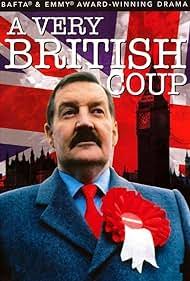
A Very British Coup

Ireland is known for its high-profile actors, from Liam Neeson to Cillian Murphy. But readers might also want to search out the work of actor Ray McAnally, one of Ireland’s best but slightly forgotten actors. Anyone curious to sample his talent should watch the 1992 thee part series ‘A Very British Coup’. It is based on the book of the same name by Chris Mullin, the former Labour MP, Birmingham Six campaigner, and someone who was regarded as one of the most likeable MPs in Westminster. His political diaries are also appreciated as the best in the genre.

‘A Very British Coup’ appeared around the same time as Michael Dobbs’ ‘House of Cards’, which is now famous in its American incarnation, though the British version is far better. In Mullins’ book, the central character is Harry Perkins, a newly elected left wing prime minister from Sheffield, and someone who wears his man of the people identity proudly. As soon as Perkins takes power, he runs up against the establishment, the press, the City, security services and the American government. Despite a valiant resistance, Perkins is eventually forced from power.

The book and tv series came to mind for two reasons, both of which concern next week’s Makerfield by-election on June 18, which could vault Manchester’s mayor Andy Burnham into Downing Street. The resignation of defence secretary John Healey last week ups the ante in this contest.

The first reason is that this manoeuvre is a particularly British one in terms of the logistics of the electoral process and consistent with the tendency in Westminster to discard prime ministers as if they are football managers. No wonder that some commentators refer to the Italianisation of British politics (in the 1990’s the average duration of an Italian government was one year, and we may now be on the brink of the seventh prime minister in ten years). To succeed, Burnham will need a comfortable victory in Makerfield, and a groundswell of support from Labour MP’s.

The second issue relates to the inbox of prospective prime minister Burnham. He is known to be far more political and personable than Starmer, and his mixture of ‘Irish blood and English heart’ (to quote Morrissey) will equip him for the challenges ahead.

Oddly, given the magnitude of change in the world order, some of the challenges that a possible prime minister Burnham will face, are like the ones that confronted Harry Perkins – a gloomy public mood and atmosphere of economic decline, trouble with the Americans and a pressing need to keep up with new technologies.

The special relationship between Washington and London is, like many other institutions of the post Bretton Woods era (NATO, the UN, World Trade Organisation), in real trouble. Senior American politicians like JD Vance and Elon Musk think little of inserting themselves into the debate on immigration and identity in the UK. The NHS is on the verge of cancelling a large contract with Palantir, and the White House has managed to push the UK back towards the EU politically. It has done much the same for Iceland, Norway, Ukraine, Hungary and even Canada.

Then, there is the gloom of the economy. In recent months a series of books has been published about the UK economy, the general tenor of which is captured by AG Hopkins’ ‘The Land Where Nothing Works’. There is a very clear, though frustratingly long-term (for politicians) policy recipe that might allow the UK to lift its sluggish trend growth rate. It involves an overhaul of the education system, far greater state funding of the universities, reform of the welfare state and labour market, and cultivation of broader private investment. Chatter on the left wing of the Labour party suggests that this may not be the chosen path of a Burnham cabinet.

The other related element is technology. In ‘A Very British Coup’, computers were edging into the mainstream, now robots, humanoids and AI are the mainstream. Thanks to the work of a few talented private sector entrepreneurs the UK last year launched its AI Opportunity Plan, which in my view is one of the most coherent strategies for the build-out of a national AI plan.

Last week, the Starmer government followed this with the AI Hardware Plan, which leans heavily on the development of British super computing and next generation semiconductor capabilities.  In both cases, Britain has the talent, the vision, but lacks real capital (two months ago the capitalisation of the Taiwanese and South Korean stock markets passed out the FTSE 100), and very markedly, the execution from politicians is missing.

If Andy Burnham becomes prime minister this summer, the risk is that he stops at the political coup of winning power, like the six prime ministers who have preceded him. A real coup would be to restore confidence and momentum in the economy and make Britain a relevant power in the 21st century.

Have a great week ahead, Mike

League of Nations, II

One implication of the recent surge in the price of semiconductor firms is that the stock markets of Taiwan and South Korea are now larger than that of the UK (which in 1900 made up 25% of the world stock market capitalization). It is expected that the two East Asian countries will soon have more billionaires than Britain, many of whom have apparently been scattered to the winds by the Labour government.

Though a country’s stock market is a highly imperfect indicator of a country’s economic standing, it does offer good clues as to evolving industrial structure. Bond yield and currencies help to complete the picture, and the runaway UK 10-year Gilt yield (now above 5%) doesn’t tell a happy story either. Then, on GDP, the country whose rise impresses me is Poland, which has not suffered a recession in the past thirty years (COVID excepted). Its GDP has increased sevenfold since 1990, and by 2030 it is expected to surpass the UK in terms of GDP (based on purchasing power parity). Remarkably, Poland is also shaping up to be a geopolitical power as well.

The loosening of the globalized world order, and the advent of many new risks and challenges – from the impact of AI on economies, to climate damage to war – has the potential to knock some nations back, and present opportunities to others.

As such, we can expect that the rise and fall of stock markets and economies tells us a lot about the rise and fall of nation states. In a world where the established world order is shattered (OPEC is the latest long running institution to fall apart), the rise and fall of countries is accelerating, and has become more vivid. In 2020, in the context of how different countries and states were responding to the COVID crisis, we wrote of the idea of the ‘League of Nations’, and have emphasized the theme ever since.

There are many existing league tables of country performance – happiest nation, most innovative country and most competitive, to name a few. Those league tables tend to be dominated by small, advanced economies. Regular readers will know that one of my favourite long run economic themes is the success of the small, advanced economy model, notably so for the way in which these nations can adapt to changes in the broader world. The UAE is a case in point.

In previous notes I have also made the parallel between football and politics, and this is still valid. A few weeks ago I mentioned that in the last ten years the UK has had more ministers for housing (a whopping 14) than Chelsea FC has had managers (12). Chelsea have recently parted with their latest manager Liam Rosenior, and it might well be that a cabinet reshuffle or change of prime minister leads to Matthew Pennycook moving on from his job as UK housing minister.

Like football, the manager of a country is important. For decades, Singapore and the Emirati states have made a virtue of strong, visionary leadership, Greece’s Kyriakos Mitsotakis and more recently Mark Carney in Canada are associated with turning their nations away from troubled waters.

In today’s League of Nations, the winning formula is changing, and shifting towards all things ‘sovereign’ and ‘atom-like’. For example, last week Canada announced the creation of a sovereign wealth fund to help the buildout of critical infrastructure, and it also laid claim to be the host of the new multilateral defence bank (Chris Collins and I wrote about this in a recent note for Barrons). Further, as I mentioned last week’s note (‘Mythical’), successful countries will need to cultivate their own AI stack, and the merger of Cohere and Aleph Alpha is a sign of things to come (their main shareholder is German but the firm will effectively be Canadian from now).

Then, with a step change in the industrial structure of the developed economies of the world underway, from services and ‘bits’ (software, crypto) to ‘atoms’ (energy, infrastructure, defence, AI and quantum), those countries with the universities, capital base and innovation ecosystems, will thrive. America is the standout example, but the Nordic countries and the economic zones that surround the Alps (particularly Switzerland) are good examples.

One consideration regarding the stature of nations is age and pedigree. One of the elements that makes small, advanced countries successful is that their laws, democracies and institutions have been in place for some time, and therefore offer clarity and consistency to businesses for example. At the same time, as economies get older they can become sclerotic, acquire layers of regulation and fail to engage in the creative destruction necessary to keep economic growth at healthy levels. Whilst this is simply an observation, I have a hunch that like aging athletes, older, large economies (US, Japan, UK, France) resort to a ‘boost’ in order to keep their economies going, which may explain why they are excessively indebted.

A final word in praise of older economies and societies, which relates to the cultures, behaviours and ‘family silver’ they accumulate over time. King Charles III’s various speeches in Washington last week demonstrated the value of heritage, and he might just have saved Britain from relegation to the lower leagues.

Have a great week ahead,

Mike 

Battle for Budapest

In the days before what is now known as the Iran War, and amidst the horrific suppression of its citizens by the Iranian state, a Dutch diplomat, having arrived at Tehran airport, was stopped and asked to disclose the contents of his luggage. He refused, citing diplomatic immunity, and left Iran, leaving his luggage behind. A subsequent inspection of the luggage in the presence of another Dutch diplomat, allegedly revealed three Starlink modems and a number of satellite phones.

It is not at all clear whether the devices were for ‘personal use’ or for the benefit of Iranian dissidents, but the incident reminded me of the efforts of George Soros to export hundreds of photocopiers into communist Eastern Europe in the late 1980’s and early 1990’s, so that dissident texts could be copied and circulated.

This was the very tip of the iceberg of Soros’ funding of the pro-democracy movement in Eastern Europe, and at one point it was said that he gave more in aid than all the Western governments together. In particular Soros, who studied under the philosopher Karl Popper (author of ‘The Open Society and its Enemies’), was committed to creating an ‘open society’ in Hungary, the country of his birth, and established the Central European University (CEU) in Budapest in 1991. 

Around the mid 1990’s I recall Bill Newton-Smith, a philosopher and Fellow at Balliol College and associate of Soros leaving England to help run the CEU. As he left Oxford, a young student activist called Viktor Orbán had come the other way (in 1990 I think), to begin a research fellowship on the topic of civil society in Europe, sponsored by the Soros Foundation.

Orbán didn’t last long at Oxford, returned home to become a member of parliament and the leader of the main liberal party Fidesz. Orbán has been a central figure in Hungarian politics since then, but in the late 2000’s, underwent a political and moral transformation. At a conference in Prague some years ago, I spoke with a few entrepreneurs who had been early associates of Orbán’s, and who had suspicions as to the motivation behind his change of tack. 

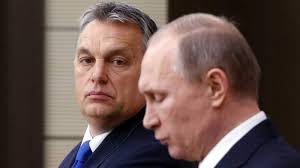
This change pivoted on his relationship with Soros, who Orbán has transformed into a figure of hate for the far-right internationally. Equally, Orbán flipped his view on Russia. He had been highly critical of Russia’s 2008 invasion of Georgia, but soon after, following a visit to St Petersburg to meet Vladimir Putin, Orbán started to change his stance on Russia.

For much of the past sixteen years, Orbán has commanded a large amount of popular support, though his actions and attitude in going against the grain of the EU have cost Hungary – in the last fifteen years, Hungarian GDP growth has lagged that of Poland by 0.8% per annum, tens of billions in EU aid has been withheld, and corruption has become institutionalised under Orbán. Budapest has become a staging post for the Russian security services and teachers, women, judges, amongst others have suffered in ways they would not expect in a normal European country.

In this context, the general election in Hungary (April 12th) could become a critical turning point, and is highly important for the EU. At a broad level, polls point to a victory for Peter Magyar of the Tisza Party, with the majority of the opposition parties in Hungarian politics having swung behind him. However, in the context of extensive gerrymandering, a propensity for ethnic voting groups (Hungarians living abroad and Roma in Hungary) to tilt toward Orbán, and the capture of state institutions and budgets, the outcome is highly uncertain.

Not only is Orbán an ally of Moscow (Orban’s team has been accused of leaking confidential EU discussions to Russian officials, and Orbán holds frequent meetings with the Russian foreign minister), but he has become the darling of the international MAGA movement. Orbán’s campaign been endorsed by Benjamin Netanyahu and Donald Trump, Marco Rubio visited Budapest in mid-February and vice president JD Vance will travel there on April 7th, just before the election.

There are already allegations of impropriety and vote rigging against Orbán, in what will be a hotly contested election, and deep suspicion of social media influence by Russia, not to mention the support of the White House.

EU leaders fear a close election or that Orbán, having lost the vote, will use his remaining days to change laws and appointments to key institutions. The example of Poland is being mentioned, where on taking power Donald Tusk faced years of difficulty in removing hard-right opponents from media and other institutions. 

As such, the EU will have to invest enormous time, energy and capital in remaking Hungary. The short-term gain for the EU will be the absence of the Hungarian veto on European foreign policy stances, notably so in the case of Ukraine.

Should Orbán win, or continue to contest a close vote, a more existential issue faces the EU that will centre around a gathering debate on how to further sanction and potentially expel an EU member that is steadfastly recalcitrant.

Lurking behind the election, is a deeper foreign policy issue for Europe, in the context of several major wars and the disintegration of NATO, the need to combat more fiercely interference in the democratic processes of EU member states.

Have a great week ahead,

Mike 

Old Money

A recent book, Samuel Moyn’s ‘Gerontocracy in America, highlights the growing concentration of wealth and power in the much older generations in the US, whilst younger generations face historically high valuations in real estate and financial assets, and how this growing intergenerational divide might be mended. Moyn, in my view, has struck a chord that will become one of the new dividing lines in politics, in Asia and the West.

His book brings demographic change into focus, a slow-creeping risk to economies, society and public life, but whose implications are only just surfacing in the public debate. Despite that, from a popular point of view, the sense in many Western countries is that there are too many people, or rather that infrastructure has not kept up pace with population growth – I am writing this in Dublin, which is an excellent case in point.

Yet, the long-run demographic trends – falling fertility, longer life expectancy and a shift in population composition towards a much smaller working (tax paying) population, will have enormous impacts on society, pension systems and debt loads, to name a few economic issues.

As much was evident in Germany’s recent pension reform debate which was nearly upended by Helmut Kohl’s grandson Johannes Volkmann and a group of other young parliamentarians who voiced the right of the younger generation to not have to shoulder the financial burden of their parents’ generation (under the German system, and many others, the working population effectively funds the retirement system of the older generation)..

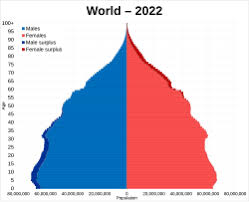
The best starting point on the outlook for demographics is the United Nations World Population Prospects website. and the data – especially in chart form – are quite striking.

The UN data show that as we approach 2100 the world population will plateau and start to shrink. From roughly 2080 onwards the world population growth rate will turn negative for the first time in centuries (wars apart), as the death rate passes out the birth rate. Within the age cohorts, the over 65 group will expand by a billion people in the next thirty years.  

More specifically, at the country level, the US death rate will surpass the birth rate in around 2040, and population growth is likely to only be sustained by immigration. The picture is worse for some European countries – Italy for example is already in negative population growth territory, and the most negative forecast scenario from the UN has the Italian population dropping from over 60 million today to 25 million by 2100 (the same level as when Garibaldi unified the country).

Equally, China, which has been renowned for its economic and population growth, will endure a collapse in the 24–65-year age group, who today number 830 million people and by 2100 are expected to comprise 280 million people. China is projected to be the country most affected by ageing, with its, China’s elderly dependency ratio is projected to surpass 100% by 2080, meaning there will be more people aged over 65 than those aged 15 to 65.

The expected collapse in the working population begs serious questions for the economy – who will pay taxes, sustain pension systems and where will demand for financial assets come from. Markets are not worried, yet.

In general, researchers find that there is a positive link between demographics and asset prices, a finding that is predicated on the rise of the boomer middle class and the coincident equity bull market and fall in bond yields. The idea is that until they retire, working households invest more in real estate, equities and other riskier assets, but then shift to income-oriented assets like bonds as they get older and require income from investments. The oddity in that respect is that despite an ageing population, equities and real estate are very expensive. This may well owe to a growing investment culture, a record level of wealth (USD 500 trillion worldwide) and the prosperity boon that has resulted from globalization.

In this context, old money will become a political target, both in terms of demands for lower inheritance taxes, to more populist measures to tax the ‘old’ and give the ‘young’. For governments who worry about demand for their bonds, wealthier older citizens might make ideal candidates for financial repression (their children would face lower inheritance tax provided that capital spent a period of ‘purgatory’ invested in government bonds – I outlined a similar theme in ‘Patriotic Capital’)

At the same time, pension systems will have to change to accommodate a proportionately smaller number of workers (to pensioners). Private pension systems will become more common, they will invest more, earlier, with a tilt to riskier assets.

Concurrently, I expect to hear more on the need for states to establish sovereign wealth like funds (based potentially on the sale of state assets) to help provide for future pension liabilities. Another concern will be the need for states to cushion the potential blow of AI on workforces (a fund that holds equity in AI firms might be an avenue), at least through a transition period. In the long term, AI and robotics may well allow more older people to work for longer and for more women to enter the workforce. And, I haven’t managed to tackle the topic of later retirement ages and how that will impact the workforce and society.

The effects of demographics are not yet showing up in markets, and are just creeping into the investment industry, but it will become a major fiscal and financial megatrend.

Have a great week ahead, Mike 

Praefectus

Benjamin Jowett is one of the prominent figures in the long history of Balliol College. Jowett, a scholar of Plato and university reformer, was Master of Balliol from 1870 to 1893, where one of his preoccupations was the production of upstanding young men who would then populate the civil service, and in particular who would be sent to ‘run’ India (Jowett favoured a thorough grounding in Greek and Latin as preparation for this task).

It is an understatement to say that India suffered under British rule, during the colonial era (roughly 1700 to 1947) which was marked by the activities of the East India Company, India’s share of world GDP fell from 26% to 4% (after the Second World War). It is still recovering today.

To draw the obvious comparison with Venezuela, which is apparently now to be run from Washington in imperial style (will Marco Rubio be referred to as the Praefectus of Venezuela?), it at least does not have to worry about having its economy destroyed, the revolutionary socialist governments of the past twenty-five years have done a good job of that. Rubio is not made in the mould of Jowett’s scholars, but he speaks Spanish, which will be useful. A knowledge of finance will also be handy, to tackle the mountain of debt that Venezuela owes.

In a week where the American president has been scurrying around like a giddy child opening Pandora’s boxes, the strategy for Venezuela is not yet clear, and it could go very badly wrong, especially if the factions within the current Venezuelan regime start to disagree violently.

The apparent upside is Venezuela’s oil reserves and refining capacity, but this will take a long time and much capital to realise. Indeed, the process of extracting and monetising oil, and driving this wealth into an economy is something that few economies have mastered.

In this regard, the idea of ‘Dutch disease’, a concept that initially referred to the effect of large gas finds on the Dutch economy, is well known, and colloquially, it describes the way the presence of natural resources can (negatively) skew the economic development of a country. Angola, which has been described as a ‘successful failed state’ for the way it has managed to extract and process oil, but does little else, is an example. Nigeria, Russia and of course Venezuela are other examples.

To their credit, the Gulf economies are good examples of states that have used the wealth generated by natural resources in a very ambitious way, whilst top of the league table are Canada, and Norway. Norway’s sovereign wealth fund is the benchmark for many others, and it bears imagining what the UK could have achieved by channelling the wealth from North Sea oil and gas reserves into a sovereign wealth fund from the 1980’s onwards.

If there is a distinguishing factor across the relative success of the above nations it is the rule of law (and its associated values – policy clarity, strong institutions, and enlightened decision makers). The concept of the rule of law (I can recommend a book of that title by Tom Bingham, formerly Lord Chief Justice and Master of the Rolls and like Jowett a Balliol alumni) should be clear to most readers, but its benefits are even more apparent when it is taken away. In this regard, a comment from a US oil company executive regarding investment in Venezuela (in the FT) to the effect that “No one wants to go in there when a random f…g tweet can change the entire foreign policy of the country’ is illustrative of the benefits of the rule of law. Similarly, threats by President Trump to curb the dividend policy of defence companies, and institutional ownership of housing also contribute to policy uncertainty.

World institutions like the IMF and World Bank have produced tons of research demonstrating the link between the rule of law and growth, and stability. Yet the world that ushered in these institutions and globalization, is crumbling, vandalised by ‘world kings’ (Boris Johnson’s phrase) who act in an arbitrary way. Germany’s President Frank-Walter Steinmeier made an important speech to this effect last week.

The litmus test of this view will be the flow of capital. For the moment, the market view seems to be that ‘world kings’ get things done, and markets are reacting in kind. However, there are looming risks, notably the diverging values between the White House and Europe.  

If world leaders were stupefied by the raid on Caracas, there was near hysteria in Europe at the suggestion by President Trump and his advisers that the US would annex Greenland. Though the initial reaction from politicians and commentators across Europe was perhaps overblown, there is a gulf between the American view of the White House’s foreign policy, and that of allies, and in the medium to long term this growing lack of alignment and trust will prove damaging.

Have a great week ahead, Mike

Change of Guard

I was at the Knicks game (against Orlando Magic) at Madison Square Garden on Wednesday night, which offered a glimpse of iconic New York, with Spike Lee courtside to underline the fact.

Madison Square Garden was probably not the place to look for a reaction to Zohran Mamdani’s mayoral election victory, though across Manhattan I found many people exercised about the event (as well as the recent Epstein release).

Having last been in New York only two months ago, it has certainly not become less expensive, and to channel last week’s note (‘Pear-shaped’) on the K-Shaped economy that described how the holders of capital are doing well and labour is doing poorly, Mamdani is the beneficiary of this Marxian contrast, and he has the rhetoric to go with it.

Mamdani had the right level of charisma, decent organization and the perfect context. He may struggle as mayor, notably in terms of his authority with the police and emergency services, his economic acumen and moreover, in curbing the big picture macro issues that are beyond his control, as well as a hostile federal government.

Yet, for all the attention that his election has garnered, I do not think he is the only story in American politics (Seattle’s mayoral election also deserves attention for example), nor do I think he is the answer to the Democrats’ losing ways, and there are a number of other events to consider.

The first is the death of Dick Cheney, a day before Mamdani was elected. Cheney, or ‘Angler’ to give him his secret service codename (there is a good book on Cheney of that title, by Barton Gellman), is now an important reference point in American public life.

Cheney embodied the idea of someone who served the public and private sectors (almost at the same time), and who spent his life embedded in the industrial-defence-political complex. He had served several Republican presidents as a foreign policy and defence hawk, and when George W Bush asked him to lead the search for a vice-presidential candidate, Cheney could find no-one better than himself, and thus spent eight years as ‘W’ Bush’s vice president, with the suspicion being that it was he who called the shots (literally).

At the time, Cheney was regarded as a right-wing hawk, but as American politics changed, he and his courageous daughter Liz (also generally right wing) were two of very few Republicans who had consistently stood up to, and repeatedly condemned Donald Trump. Amongst other policies, Cheney as a Cold War warrior must have found it very difficult to understand and stomach the approach of the current White House to Russia.

That Cheney ended his life as a critic of Trump is a sign of how far the MAGA crowd have taken the Republican party. In itself, that should not mean that the Democrats fight the next elections from the far-left, as the result in New York hinted. 

Indeed, two interesting results, the victories of Mikie Sherrill (now New Jersey’s first female Democratic governor) and Abigail Spanberger (Virginia’s first female governor) suggest that the Democrats can do well in the centre, with credible candidates. Both are role models – Sherrill is a Naval Academy graduate, flew helicopters and is the mother of four children, while Spanberger has three children and worked as a CIA agent.

In the current context, it is encouraging to see these very capable female candidates succeed, and even Marjorie Taylor Greene is displaying a form of reckless courage in veering away from the White House script.

Whilst the Democrat party is in disarray and dispute (following the vote to end the government shutdown), it is in need of a change of guard, notably so given the announcement that Nancy Pelosi will retire from public life. In that respect, serious candidates of the calibre of Sherrill will note three developments that might encourage the sense that a ‘change of guard’ is in the offing.

First, the president’s entanglement with Jeffrey Epstein is sapping his patience and political capital. Secondly, national security will become a more real issue as it is very clear now that China and Russia have only malign intentions towards the West, despite the fantasies of pseudo-Kissingerians in Washington. Third, and most importantly, the direction and timbre of the economy is the key political issue, with affordability at the top of the docket.

Have a great week ahead, Mike