
AI as an asset class

A very early career memory of mine came in late 1999 when the UBS investment bank took the team of analysts covering the staid Paper & Packaging team and re-directed them to become the ‘dot.com’ team. This I reckon came about six months before the peak of the ‘dot.com’ bubble and, I am now wondering if investment banks are channeling resources into AI banking teams (surely AI can do the work!). If so, it would be proof of the idea that AI is everywhere, from the Mythos breakthrough we wrote about a few weeks ago to, with good timing the thoughtful note, Magnifica Humanitas, from Pope Leo XIV on how AI should be deployed.

Nowhere is the sense that AI is everywhere more true than in finance. According to Pitchbook, 45% of all American unicorns (venture-backed companies with a valuation above USD 1bn) are AI-driven, not bad for a technology that, to public eyes, barely existed three years ago. In more detail, two earlier venture-backed successes, Bytedance (i.e. TikTok) and Uber had been established for 80 months when they launched their first products. OpenAI and Anthropic have done so after 30 months, and each is now worth close to USD 1 trn. Equally, illustrating the link between investor exuberance and AI, the FT recently estimated that two-thirds of the value of SpaceX is attributable to investments made in the company in the six months since December 2025.

When this trio of AI firms lists on the stock market, revised index inclusion rules will add their weight to the already substantial 44% representation of technology stocks in the major indices. To that end, AI is no longer a market theme or fad, but is becoming an asset class in its own right.

One of the factors that distinguishes a genuine asset class from a market theme or fad is the presence of a transformative technology, with a lasting economic impact. In the context of an otherwise pedestrian US economy, AI capital expenditure is the dominant growth driver and in the last year, expenditure on data centres in the US hit USD 1 trillion.

A comprehensive study from Stanford’s Forecasting Research Institute (March 2026) compared GDP forecasts from different types of forecasters – economists in the private sector, academics, AI experts and the general public. Unsurprisingly, those closest to the AI industry tended to have the highest GDP forecasts, while academics were more grounded. On balance though, there is a consensus view that AI will lift the trend rate of growth in the US.

There are also increasingly varied ways to invest in AI. An AI-centric portfolio can now span private equity, venture capital, infrastructure (clean energy for data centres), real estate (data centres), currencies such as the Korean won, corporate bonds (Amazon, Meta, Oracle and Alphabet have issued nearly USD 150bn in bonds this year) and private credit. Indeed, AI-related private credit investments are expected to grow by over USD 1.5 trn in the next two years. While there is already a rich mix of AI-centric asset classes, the correlations between them remain high, limiting the diversification benefit.

In addition to investment banks committing resource to AI-driven deals, another hint that AI is an emerging asset class is that it has its own distinctive mode of corporate governance – strong-willed founders who monopolise voting rights, enormous pay packets and neutered boards. This concentration of control is likely to prove one of the structural vulnerabilities of the AI complex as scrutiny from regulators and institutional investors intensifies.

Given the scale of AI’s footprint across markets, one of the essential tasks for investors will be to identify assets uncorrelated with AI (e.g. luxury goods, food), as well as hedges on AI assets. And, as the suspected AI bubble grows in value, investment managers will have to find ways of protecting portfolios against sharp reversals in AI valuations.

The investment dimension of the AI boom carries particular urgency. Given the risk that AI (as per Mythos) creates potentially existential security and economic risks, and could disrupt labour markets, there is a strategic need for pension funds and sovereign wealth funds to have exposure to the economic benefits of AI. As it stands, the risk is that billions of people will have their lives and livelihoods changed by AI, but the benefits accrue to only a narrow group of investors and executives. In that regard, the advent of AI as an asset class gives individuals, countries and investment funds a means of participating in the upside of the AI boom.

The one formidable obstacle investors will have to navigate is the sense that we are in the thick of an AI bubble. Already long-run valuation measures –  such as the ratio of market price to long-run earnings (the ‘Shiller P/E’), or the ratio of the value of the US stock market to GDP – are testing all-time highs, at levels not seen since 1929 and 2000. In this way, AI is truly everywhere, in our savings, investments and pensions, and that will be a risk.

To return to my first point on the switching of analyst roles. A couple of brokerages have, according to the Wall Street Journal’s China correspondent, dropped coverage of Chinese consumer stocks because of the weak outlook for spending. It might be the next trend to watch.

Have a great week ahead, Mike 

Predator or Prey?

On Wednesday I had dinner in Jack’s Brasserie, in Bern, an iconic restaurant not far from two of the institutions that have overseen the rise in power and wealth of Switzerland, its national (central) bank and parliament. My visit to Jack’s was triggered by the fact that I had just finished Giuliano da Empoli’s latest book ‘Hour of the Predator’, and Jack’s was the location of a ‘Lunch with the FT’ between da Empoli and Simon Kuper. Often the FT’s Lunch series throws up sterile exchanges, but this was a good one, and Simon managed to convey the ambience of Jack’s, so I had to go along.

Da Empoli has spent his life in public policy, as a writer on politics, and adviser to former Italian prime minister Matteo Renzi (he occasionally advised another centrist, Emmanuel Macron). He became famous with his book ‘The Wizard of the Kremlin’ (now a film where Jude Law does a passable impersonation of Vladimir Putin), but it is his latest book ‘The Hour of the Predator’ that I find highly pertinent.

Da Empoli originally published his works in French, and has benefited from the short form novels or longish essays that are popular in France and that should really be more widespread in the English-speaking world. One of his talents are pen portraits, notably of politicians he has encountered – from Mohammed Bin Salman, now ruler of Saudi Arabia, Nayib Bukele of El Salvador and Joe Biden.

Da Empoli’s ‘Predators’ thesis is highly relevant to Europeans. It is yet another framing of the idea of the unravelling of globalization, and the chaotic start of a new world order. In this context, ‘Predators’ are autocratic, populist politicians and hyper wealthy technology entrepreneurs who act in sudden, brutal ways, use technology and social media for control, operate outside the established norms and rules, and make a virtue of doing so on the basis that it is a necessary cost of remaking the system and allegedly handing power back to the people.

In this context, ‘Predators’ are autocratic, populist politicians and hyper wealthy technology entrepreneurs. They act in sudden, brutal ways, using technology and social media for control and operating outside the established norms and rules. They justify this on the basis that it is a necessary cost of remaking the system and allegedly handing power back to the people.

Readers will have a good idea of who the ‘Predators’ are. They have succeeded in accelerating the pace in politics and geopolitics (for example in the first three months of this year we have had attacks on Venezuela, Iran, a threat to attack Greenland and a stealthy suppression of Cuba).

The smashing of the established way of doing things and the undercutting of the institutions that have enabled globalization(from NATO to the UN) are part of the ‘Predator’ tradecraft. As a result, economic policy volatility is at an all-time high and financial markets  face contradictory signals, with bond yields, energy prices and technology stocks all at record highs.

The action and drama associated with the ‘Predators’ is seductive, but the question we need to ask is whether they are builders and visionaries, or merely agents of chaos, and vandals? The Department of Government Efficiency (DOGE) experiment, for instance, suggests the latter. The degradation of corporate governance in the US, is another case in point. The danger is that the public, either as investors in some of the landmark IPO’s, or as taxpayers, are left holding the bill. My instinct is that most Americans will soon want their laws and institutions back, and stability restored.

Predators need prey, and many of the ‘Predators’ appear to unite in disdain against Europe. For them, the likes of Renzi and Macron typify the over-educated, lawyerly, social liberalism of Europe. Early in the rise of the ‘Predators’, they took control of the geopolitical narrative, painting Europe as a slow moving, regulatory beast. Indeed, Europe is guilty of moving sluggishly, and electorates are impatient about a range of issues. Neither has it found the urgency and capital to match the rise of America’s technology sector.

For its part however, Europe needs to realize that the rules of the game have changed, such that there are now few rules (Macron, inspired by Da Empoli, has voiced this view), and for instance needs to adopt a more aggressive stance against Russian interference across the continent, and to permit the radical overhaul of industry and finance across Europe. Sadly, it appears to do the opposite.

Finally, there is no country in greater need of the ‘Hour of the Predators’ view than Ireland. More than any other country in Europe, public and political stances cling to the sense that the institutions and norms of the globalized era are still operational. It would be better if they were but that is sadly not the case. The debate on security and defence is a case in point. All other small, advanced countries – from Singapore to Switzerland – are bracing themselves and equipping for a nastier world. Ireland is not and may soon find it is the prey.

Have a great week ahead, Mike 

Lost at Sea

As a child I was fascinated and terrified by tales of the Bermuda Triangle, an area between Florida, Puerto Rico and Bermuda where ships and planes disappeared without warning, allegedly. Legend had it that a mysterious magnetic field around the Sargasso Sea drew vessels to perdition, or that even darker forces were behind the disappearance of the crew of the Mary Celeste.

Without stretching the analogy too far, my feeling is that financial markets have entered a logical Bermuda Triangle, or even Trilemma. Data, models, rules and indicators go in, but come out logically impaired. In particular, there is an unreal sense from at least three asset classes that are at historically extreme levels, each apparently contradicting the other. They cannot all be right.

In one corner, the US has, for the first time since 2007, issued long-term debt (30 years maturity) at a yield of 5%. Then, US stock market valuations are at an all-time high since 1929 and, as we stressed in last week’s note, semiconductor stocks are in a speculative frenzy. In another corner of the triangle, oil prices are pushing the highs of the last two decades.

This trio of market signals leaves investing logic in a grey zone — a Bermuda Triangle-like make-believe world. This stretched logic suggests that the prosperity and productivity of AI-related capital expenditure will rescue the world from both high inflation and a debt crisis, and will also prove powerful enough to compensate for the effects of a momentary energy crisis. I am not sure.

The confluence of these three indicators is interesting because each one points to a long-term trend that investors and policymakers cannot ignore, but equally, each one rests on a short-run vulnerability.

Rising bond yields in Europe, the UK, Japan and the US are an early warning of a debt crisis, or debt purgatory, to come. In the very short term, they signal that inflation is creeping higher whilst a number of policymakers — notably on the Fed’s FOMC — appear complacent about this development.

Equities are trading at record high levels and valuations, mostly because earnings and business cycles are strong. But a very small number of stocks has pushed the market higher, caused in part by the fact that sectors like semiconductors are heavily financialised. What I mean by this is that the deployment of exchange-traded funds and options has surcharged the prices of semiconductor stocks, and likely driven them well above long-term fundamental valuations.

In my view, Intel’s ability to treble in value since the end of March (from USD 41 to USD 129 last week) has less to do with the fundamentals of the company, and more to do with speculation. In support of this, a recent Goldman Sachs note shows that retail investors now account for around 20% of US stock market trading.

Energy prices remind us that in a multipolar world, commodities — or rather their supply and refinement — acquire a premium, and that a number of countries will have to address shortcomings in industrial supply chains. For example, last week Willie Walsh, the former airline chief executive, warned that the UK has scant jet fuel refining capacity. As such, energy infrastructure will be an area for future investment.

In the short term, however, supply pressure may be more acute: oil inventories are being drawn sharply lower. Unless there is a full and speedy resolution to the Iran War, estimates from JP Morgan point to world oil inventories dropping to 6.8 billion barrels by September — just enough to keep refineries operating worldwide.

So, like the Sargasso Sea, market compasses are spinning in different directions, and it is difficult to discern a clear narrative. The confusion arises from the changing geopolitical nature of the world, the fast shift in industrial structure away from ‘bits’ and towards ‘atoms’, shortages of refined oil and compute, and the intense financialisation of specialised sub-industries such as semiconductors and commodities.

Given the disagreement between markets, the obvious question is: which one is right? A ‘two-handed’ economist might argue that the stock, commodity and bond markets are all correct, but on different time frames.

In my experience, the bond market is the most consequential, because when it worries, it imposes a cost on other markets and on political actors. The overused but apt quote from President Clinton’s adviser James Carville in the mid-1990s captures it well: “I used to think that if there was reincarnation, I wanted to come back as the president or the pope or as a .400 baseball hitter. But now I would like to come back as the bond market. You can intimidate everybody.”

So, the ‘market triangle’ or trilemma is resolved by bonds showing their displeasure at high oil and inflation, slowing the economy and walloping the over-bought sections of the stock market.

From a policy angle, bond markets are highlighting the urgent need for policymakers to calm inflation — through rate rises from central banks, and an early test for incoming Fed Chair Kevin Warsh — for governments to reduce debt, and for greater policy clarity in countries like the UK. The silver lining is that credit markets are so far well behaved, signalling that the healthy business cycle should allow for these policy actions to be made now, before it is too late.

Have a great week ahead,  Mike

Goodbye Governance

A long time ago, when I completed my postgraduate studies, I shelved my thesis (on the relationship between corporate governance and company performance) away in a dusty library, thinking that, like many academic works, it would have no relevance in the world of business. Yet, soon after, as the tide went out on the dot.com bubble, a series of major corporate governance scandals surfaced (Enron being the most prominent).

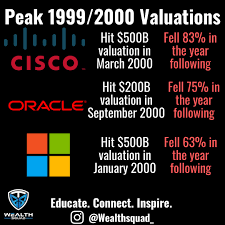
Hopefully my sense of timing is better with experience, and I have started to think of the corporate governance/performance link again. There are a few recent triggers. The value of Intel, having languished in the doldrums for decades, has recovered toward the levels seen in 2000. Taiwan and South Korea, as we noted last week, have become two of the largest stock markets in the world. A range of valuation measures for the US market and indicators of retail participation in the market, are at 2000 nosebleed levels. It also seems that technology companies are growing on steroids, Samsung has become a USD 1 trillion firm last week and Nvidia is now worth USD 5 trillion.

The really new development is the advent of mega-cap startups like Anthropic and SpaceX, both of which have raised capital at valuations close to USD 1 trillion. Trotting behind them, according to the May edition of the Pitchbook Unicorn Tracker (a unicorn is a private company with a value of USD 1bn or greater), are 1,680 unicorns. There were 44 when the term was coined in 2013. Today’s unicorns are worth close to USD 9 trillion (the top 3 companies are worth USD 2.5 trn). About 40% of the total unicorn value is made up of AI firms, which suggests that they are very young indeed. In the history of economics and business, this is an entirely new phenomenon. For it to have happened, several things have changed since the dot.com bubble.

The first is that public and private markets have grown impressively. Not only are US public markets the largest that they have been relative to GDP, but private capital (private equity, venture capital, etc.) is now becoming a sizeable source of financing internationally. As it does, different forms of investor are emerging within it – private credit is the one that currently gets attention, but many growth capital investors have helped to push unicorn valuations to extremes for fear of missing out on hot deals. For example, the median value of late-stage venture deals in AI firms is now USD 5bn, a USD 4bn premium on non-AI firms.

An interesting new element in capital structure is that new, fast growing firms count governments as shareholders, as well as the ranks of former officials and those in the political ecosystem (France’s Mistral is a case in point). Further, the large technology firms have also become active venture investors, and in many recent earnings reports the item ‘other income’ popped up, showing how the likes of Microsoft are already reaping the benefits of their investments.

Two other significant changes are worth flagging. The advent of social media and, more recently, AI-driven commerce means that successful companies can grow very quickly. Large established firms like Apple, Microsoft and JP Morgan have taken decades to grow but are being ‘caught’ by young companies with relatively small workforces, and the effect is disruptive — largely, though not always, positively so. This is much less the case in Europe, which also lacks the small but critical cohort of individuals who know how to build and scale new firms rapidly.

The emergence of a new business model is well-timed for the evolving world order. Recall that the Joint Stock Company Act of 1844 helped to spur the expansion of the British empire in the 19th century, the arrival of the ‘global business model’ (Theodore Levitt’s 1983 essay ‘The Globalization of Markets’ captured this development) was the modus operandi through which America transmitted globalisation around the world (or as one economist put it multinationals were the ‘B-52’s of globalization’).

However, to my original statement, the arrival of new, fast-growing, private companies (many of which are pre-IPO firms), comes at a time when corporate governance in the US is at a low ebb, in terms of the alignment of executive pay with outcomes, active boards, shareholder vigilance, and oversight by institutions like the SEC and Department of Justice.

Further, new, young companies bring their own governance foibles. Many are led by individuals with strong personalities, a necessary quality in startups, many would argue, but an undesirable one from a governance point of view, especially where technologies like AI demand ethical guardrails in their deployment.

Further, many fast growing firms have complicated capital structures and voting rights. In the past, slower-moving capital market cycles and better regulation might have weeded these out, but have instead become the norm. Incorporation in regulatory ‘paradises’ (more businesses are set up in Texas for instance), the prohibition of shareholder class actions, non-profit structures and heavy share-based compensation have become the norm. This matters because more retail investors can access ‘soon to be private’ companies, in addition to subscribing for IPO’s.

Above all, many of these firms have as yet little to show in terms of profits and in the context of stratospheric valuations, the risk of a bubble is high. Once the AI capital expenditure boom slows, the tide will go out —as Warren Buffett famously observed, and many will lose their capital, and will wonder if they should have paid more attention to corporate governance. If they do, I have an old study to share with them.

Have a great week ahead

Mike 

League of Nations, II

One implication of the recent surge in the price of semiconductor firms is that the stock markets of Taiwan and South Korea are now larger than that of the UK (which in 1900 made up 25% of the world stock market capitalization). It is expected that the two East Asian countries will soon have more billionaires than Britain, many of whom have apparently been scattered to the winds by the Labour government.

Though a country’s stock market is a highly imperfect indicator of a country’s economic standing, it does offer good clues as to evolving industrial structure. Bond yield and currencies help to complete the picture, and the runaway UK 10-year Gilt yield (now above 5%) doesn’t tell a happy story either. Then, on GDP, the country whose rise impresses me is Poland, which has not suffered a recession in the past thirty years (COVID excepted). Its GDP has increased sevenfold since 1990, and by 2030 it is expected to surpass the UK in terms of GDP (based on purchasing power parity). Remarkably, Poland is also shaping up to be a geopolitical power as well.

The loosening of the globalized world order, and the advent of many new risks and challenges – from the impact of AI on economies, to climate damage to war – has the potential to knock some nations back, and present opportunities to others.

As such, we can expect that the rise and fall of stock markets and economies tells us a lot about the rise and fall of nation states. In a world where the established world order is shattered (OPEC is the latest long running institution to fall apart), the rise and fall of countries is accelerating, and has become more vivid. In 2020, in the context of how different countries and states were responding to the COVID crisis, we wrote of the idea of the ‘League of Nations’, and have emphasized the theme ever since.

There are many existing league tables of country performance – happiest nation, most innovative country and most competitive, to name a few. Those league tables tend to be dominated by small, advanced economies. Regular readers will know that one of my favourite long run economic themes is the success of the small, advanced economy model, notably so for the way in which these nations can adapt to changes in the broader world. The UAE is a case in point.

In previous notes I have also made the parallel between football and politics, and this is still valid. A few weeks ago I mentioned that in the last ten years the UK has had more ministers for housing (a whopping 14) than Chelsea FC has had managers (12). Chelsea have recently parted with their latest manager Liam Rosenior, and it might well be that a cabinet reshuffle or change of prime minister leads to Matthew Pennycook moving on from his job as UK housing minister.

Like football, the manager of a country is important. For decades, Singapore and the Emirati states have made a virtue of strong, visionary leadership, Greece’s Kyriakos Mitsotakis and more recently Mark Carney in Canada are associated with turning their nations away from troubled waters.

In today’s League of Nations, the winning formula is changing, and shifting towards all things ‘sovereign’ and ‘atom-like’. For example, last week Canada announced the creation of a sovereign wealth fund to help the buildout of critical infrastructure, and it also laid claim to be the host of the new multilateral defence bank (Chris Collins and I wrote about this in a recent note for Barrons). Further, as I mentioned last week’s note (‘Mythical’), successful countries will need to cultivate their own AI stack, and the merger of Cohere and Aleph Alpha is a sign of things to come (their main shareholder is German but the firm will effectively be Canadian from now).

Then, with a step change in the industrial structure of the developed economies of the world underway, from services and ‘bits’ (software, crypto) to ‘atoms’ (energy, infrastructure, defence, AI and quantum), those countries with the universities, capital base and innovation ecosystems, will thrive. America is the standout example, but the Nordic countries and the economic zones that surround the Alps (particularly Switzerland) are good examples.

One consideration regarding the stature of nations is age and pedigree. One of the elements that makes small, advanced countries successful is that their laws, democracies and institutions have been in place for some time, and therefore offer clarity and consistency to businesses for example. At the same time, as economies get older they can become sclerotic, acquire layers of regulation and fail to engage in the creative destruction necessary to keep economic growth at healthy levels. Whilst this is simply an observation, I have a hunch that like aging athletes, older, large economies (US, Japan, UK, France) resort to a ‘boost’ in order to keep their economies going, which may explain why they are excessively indebted.

A final word in praise of older economies and societies, which relates to the cultures, behaviours and ‘family silver’ they accumulate over time. King Charles III’s various speeches in Washington last week demonstrated the value of heritage, and he might just have saved Britain from relegation to the lower leagues.

Have a great week ahead,

Mike