

In most countries, central bankers are anonymous bureaucrats, and rightly so. In America, this is not so, thanks largely to the size of its economy and financial markets, culture of personality and fabled role of the Federal Reserve. In the past sixty years, the chiefs of the Fed have been household names, though most of them will have been uncomfortable with this level of attention. Like the characters in the Wizard of Oz, the career of each Fed chief has been characterised by a particular character trait – Paul Volcker was courage exemplified, Ben Bernanke displayed great intelligence under pressure, Janet Yellen was scholarly, and Jerome Powell was calm and patient (with his president).
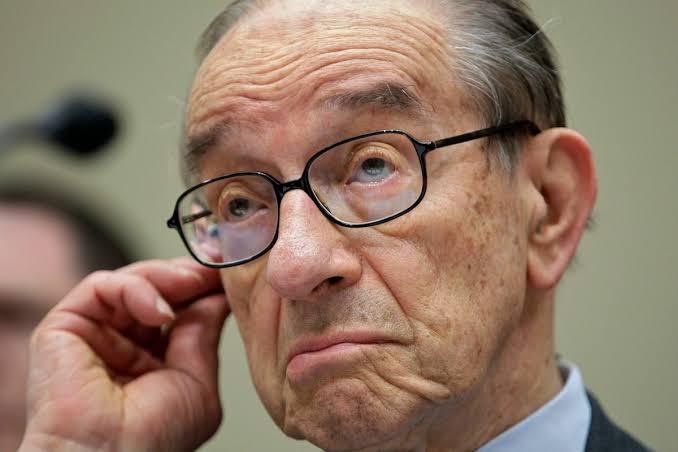
Amongst them, Alan Greenspan, who died last week at the age of 100, was the governor who elevated the Fed to its mythical status, and who through his eighteen years at the helm of the central bank, captured markets with his ‘delphic’ form of communication. It is worth repeating that Greenspan once quipped to a reporter that ‘If I seem unduly clear to you, you must have misunderstood what I said’.
At the time, central bankers spoke less to journalists and were far less transparent in their communication. Kevin Warsh the new Fed chief wants to return towards this approach though he might bear in mind that, so sparing was Greenspan in his messaging, that market watchers tried to guess changes in monetary policy from the size of Greenspan’s briefcase.
Greenspan was an unusual central banker in terms of the trajectory of his career, he had made a name on Wall Street as a consulting economist with a focus on very detailed sector level data. Through the 1987 crash, crises in Russia, Asia, Latin America and the hedge fund LTCM, he won the confidence of investors, but critics will argue that he ultimately allowed himself to become seduced by Wall Street and failed to adequately regulate it in the run up to the global financial (housing) crisis.
Many of the obituaries of Greenspan will focus on his role as ‘Maestro’ (the title of Bob Woodward’s book on Greenspan) but there is also an interesting way in which his era contrasts with our own, and the lessons it holds for the future.
First the Greenspan era (1987-2006) was one of building and growing, and accelerated globalization. In general, the 1990’s and 2000’s were periods of rising expectations, whereas today that is not generally the case across countries. A notable feature was the sense that ‘things were on the up’ in the 1990’s was the growth of emerging markets. In contrast, our era is one of vandalization of the institutions that permitted globalization, and in many countries, of a struggle with decline (Britain, Germany and possibly the US are cases in point).
Secondly, the Greenspan period was one where the USA was first amongst equals of nations and this permitted it to play a coordinating role in international economic policy. The most striking image of this came with the February 1999 Time magazine cover that marked the end of the Asian and Russian financial crises with a photo showing Alan Greenspan (Chairman, Federal Reserve), Larry Summers (economic adviser to President Clinton) and Treasury Secretary Robert Rubin, under the banner ‘Committee to Save the World’. That could not happen today. Notably, the Greenspan era was one of collaboration between nations, and also across policy and political bodies (bi-partisanship) in Congress and close coordination between the Fed and the Treasury). Today, growing distrust makes collaboration very difficult, but collaboration is essential to both avoiding and resolving financial crises.
Then, a feature of the 1990’s and 2000’s was the debate around balancing the budget, something that Republicans proclaimed as sacrosanct, but that only Democrat Robert Rubin achieved. In particular, Greenspan was critical of George W Bush for his governments’ lax approach to fiscal matters. At very least then, Treasury Secretaries tried to rein in budget deficits, and generally talked a good game around this. Today, public finances in nearly all the major economies are on cruise-control for fiscal ruin. In the major economies budget deficits register 5% or more, something that would historically be associated with a bad recession. Debt levels, at 100% (to GDP) would have been unthinkable to investors and policy makers in the 1990’s.
If today’s world is an ‘upside down’ version of the 1990’s, then the challenges that Greenspan faced are germane. One risk is that there is a bubble in AI-driven stocks, and the range of market valuation and investor behaviour indicators are tipping levels not seen since 2000 (and 1929!). I can recall a debate in the late 1990’s when the Alan Greenspan Federal Reserve pondered publicly what it should do if there was a bubble in the stock market, the inconclusive outcome of which was that bubbles were very difficult to identify, so it was best to do relatively little, but to then actively mop up the mess once the bubbles burst.
Many central bankers will still agree with this approach, and the context has changed in important ways. The technology behind this bubble is strategic and it is very clear that firms like OpenAI and Palantir are closely aligned with the US government for example. AI is also the principal source of investment led growth, and is thus a sacred economic cow, even though it will swell private sector indebtedness. As such few central bankers may want to puncture this bubble.
This week’s volatile price action in technology stocks (South Korea’s market fell by over 10%) suggest that central bankers should in fact be more vigilant in the face of what Greenspan called ‘irrational exuberance’. He faced the 1987 crash only two months into his tenure. Kevin Warsh, who wants to re-make the Fed a little more in the image of Greenspan, should pay attention.
Have a great week ahead, Mike