Do No Harm

An unusual but non surprising cameo in the response of the UK to the burgeoning energy crisis that is resulting from the Iran War, was the inclusion of Bank of England Governor Andrew Bailey in last Tuesday’s emergency COBRA (Cabinet Office Briefing Room) meeting. The prospect that inflation and a cost-of-living crisis could further derail the fledgling economic recovery in the UK, has struck fear into politicians (the OECD reckons that the UK will be the worst hit country), though monetary policy purists won’t like the appearance that the independence of the ‘Old Lady’ (the Bank not Bailey!) is compromised.

What is more interesting is that this is yet another datapoint in a trend where finance, war and politics are becoming interwoven. In peacetime, central banks were the only game in town, the monetary battleships of the 2010’s, keeping the peace in bond markets and tilting currency moves in their country’s favour.

That was not always the case, books like Liaquat Ahmed’s excellent ‘Lords of Finance’, show the key role that central banks played in maintaining the stability of war time economies.  

Now, the world order that is unravelling before our eyes is more like that of the 1910’s than the 2010’s, and a particular concern for central bankers is the extent to which economies have become frictioned.

By this, I mean the extra costs and inefficiencies that are bubbling up because of the end of globalization (a period associated with intense commoditization of prices and low inflation), a pandemic of supply chain disruption, and great power competition for ‘rare’ things (from rare earths to rare places like Greenland to rare technologies like quantum computing).

In general, these frictions will tend to bump up the rate of inflation. A famous example is the way in which the side effects of the war on Ukraine combined with short-sighted energy policy in Europe to produce a prolonged rise in inflation from 2021 to 2022.

From the point of view of central bankers, inured to a decade of stubbornly low inflation, this was a surprise, and prominent members of the central banking community were badly caught out by their view that this burst of inflation was ‘transitory’. Their difficulty is that the economic context of the 2010’s was characterised by demand weakness whereas the main policy problem of the 2020’s is supply constraint.

We now live in an economy of ‘atoms’ (energy, commodities, deeptech), where historically huge amounts of investment capital expenditure is/are being deployed amidst supply constraints to build a new (AI) economic infrastructure. About half of this will be financed by different forms of credit. Within this model, the debate on the productivity benefits of AI, which has produced a wide range of estimates of the potential impact of AI on the economy, illustrates what a demanding environment it is for central bankers to read.

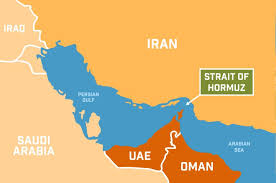
The potential energy shock from the Iran war complicates matters even more and raises the prospect of a policy error. Echoing the schoolboy mistake by Jean-Claude Trichet to raise interest rates in 2006 when a spike in the dollar helped trigger a spike in oil prices, current ECB President Christine Lagarde has stated that the ECB was ‘ready to raise rates’. This may be a pre-emptive move to push markets to do the ECB’s job, and to warn companies and unions off raising prices. If not, Lagarde and other central bankers should do no harm. A rate rise from the ECB will do nothing to re-open the Strait of Hormuz (good note on the disruptive effects from the Kiel Institute), nor to rebuild refining capacity in the Gulf states.

The dilemma for central bankers is in distinguishing between an energy centric rise in prices and an eventual generalised rise in inflation expectations.

In my view the economic consequences of the Iran War can be short lived, but as long as it endures, amounts to a tax on consumers, a hit to risk appetite and a blow to confidence in US financial assets. Furthermore, the many costs of the war (see our note of two weeks ago, ‘It will be over by Christmas’) include a rise in the debt burden that countries like the US and UK will suffer, and an elevated level of uncertainty as the world’s former policeman turns bully.

It could be worse for central bankers, they could be politicians, who now must contend with another cost-of-living crisis, with little money left in the fiscal jar.

Have a great week ahead, Mike 
Mars, Venus or just lost in space?

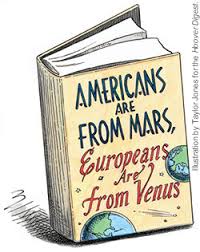
Two recent events have me thinking of a 2003 book by the international relations expert Robert Kagan, entitled ‘Of Paradise and Power: America and Europe in the New World Order’, which started life as a 2002 article in Policy Review. In the foreign affairs world, the book is known colloquially as ‘Mars or Venus’, because the opening sentence goes ‘Americans are from Mars and Europeans are from Venus’.

Kagan’s aim was to explain that Europe and the US had very different views of the world, and that these differences were rooted in culture, history and aims. Europe is the older, wiser and more genteel continent, concerned with roping its social democracy in well made rules, whereas the relatively younger American republic (250 years old this year) was more muscular, in military and financial terms. Kagan’s book, in keeping with the reception given to Francis Fukuyama’s ‘The End of History’ and more recently Graham Allison’s ‘Destined For War’, is better known for its strapline than the detail of its argument, but then again that is the art of the successful author, and one that in comparison, few European international relations experts have cracked.

That, in 2002, Kagan felt the need to state that Europeans and Americans are different, betrayed the long-held sense that they are the same people, in the sense that in 2002, the vast majority of Americans could trace their family history back to Germany, Ireland, Britain and France (in 1960 some 85% of foreign-born Americans were from Europe in vs 10% today).

That much was also clear during the many events in Washington to mark St Patrick’s Day. President Trump invoked his own European heritage (Scottish mother, German father), teased Speaker Mike Johnson as to whether he was a WASP or Italian, whilst Taoiseach Micheal Martin told how a Cork man, Stephen Moylan, a senior officer in George Washington’s staff, is credited with the first use of the phrase ‘the United States of America’ in 1776.

In that context, the ‘Mars and Venus’ argument is ever more relevant today as the divide between Europe and its American cousins widens. While European countries wholeheartedly supported the US in the 1991 Kuwait War (see our recent note) and in the aftermath of 9/11, the doubts that many European governments had over the 2003 invasion of Iraq partly motivated Kagan’s book (the film ‘Quai D’Orsay is very good in this context).

In that context, the polite refusal of nearly all of America’s allies, not just in Europe but also the likes of Japan and India, to send ships to the Strait of Hormuz, is emblematic of a deepening divide, and in recent weeks a good number of American friends have reached out to ask ‘is it us, or is it you?’. My polite response is that ‘it’s the White House’ (noting that most Americans are against this war), but more broadly I feel that one of the great anomalies of our time is that so few Americans realise the damage that is being done to America’s reputation abroad.

So, one might argue that Kagan’s ‘Mars-Venus’ short-hand for international relations has never been more true, and the fact that Europe has done little in the past twenty years to bolster its security, and to deepen its financial markets, gives some weight to American frustration and derision. Equally, the vandalization of shared values (democracy) and institutions (NATO, the United Nations) by the White House causes horror across European capitals.

Yet, at this painful point in trans-Atlantic relations, I wonder if we have reached peak ‘Mars-Venus’, in the context that Europe today is still quite like it was in 2003 in terms of world view, whereas the US is politically and socially very different to that of 2003.

My reasoning is that Europe is finally having the ‘neo-con’ moment that the US went through in the early 2000’s (Robert Kagan was part of that movement), and is starting to rebuild its defences, though it lags badly on capital markets union (now Investment Savings Union).

Oddly, Europe no longer shares the same enemies as the US. Russia should be the prime concern of European security chiefs. It is also troubling that the Trump administration actively supports far-right parties like the AfD in Germany, and the few European nations who side with the Kremlin (VP Vance visits Hungary next week).

As such, Europe’s path and challenge is clear – to remain the sole liberal democratic pole in a disordered world. When Robert Kagan wrote his book in 2003, the natural assumption was that American democracy was a beacon for others to follow, as far as Asia and even across Eastern Europe (Kagan’s wife Victoria Nuland was a senior American diplomat serving in Eastern Europe during ‘the Maidan’ in 2014, where her most famous utterance was ‘f@#k the EU’).

Yet, America’s democracy is now in deep trouble, and one of the sharpest critics of Donald Trump’s approach is Robert Kagan, who warns of the descent towards a dictatorship.

It will be over by Christmas

Mon centre cède, ma droite recule, situation excellente, j’attaque

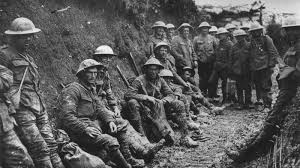
At the First Battle of the Marne, not so far from Paris, in September 1914, Marshall Foch sent the above, inspiring communiqué to Marshall Joffre (‘my centre is crumbling, my right is retreating, the situation is excellent, I attack!’). The Battle of the Marne was arguably the greatest land battle of the twentieth century and caused over 500,000 casualties. Its strategic effect was to halt and reverse Germany’s lightning attack across France towards Paris and set the scene for years of entrenched warfare. At the time, the Great War was some three months old, and many thought that ‘it will be over by Christmas’.

There are few parallels between the First World War and the Iran War, but there is a creeping feeling that, in the absence of a clear strategy from the White House (see last week’s note ‘Safe Places’), there is a risk that this conflict becomes entrenched.

It is already very costly. In the first week of the attack on Iran, the US apparently spent close to USD 11bn on weapons and munitions, and that is without calculating the human and economic costs. In the context of record public indebtedness, the question is not so much can America win the war, but can it afford it?

Indeed, it seems largely forgotten now that America’s own wars have been associated with indebtedness. That the American Revolutionary War was financed mostly by the French (Lafayette and Beaumarchais), Spain and the Netherlands – indeed in a lesson for policy makers today, Congress had to print money to pay off these loans, which had the effect of causing rampant inflation and devaluing the dollar.  It’s also worth flagging that the American Civil War saw a sharp run up in debt (US sovereign debt in 1865 was 40 times what it was in 1860, according to figures from the Treasury), the consequence of which was a collapse in the dollar, again.

Still, the lesson that wars generally strain finances, seems to have been habitually forgotten.  Some might recall that Larry Lindsey, an economic adviser to George W Bush’s administration left his job after producing what at the time was considered to be a high estimate (USD 200bn) of the costs of the second Iraq War. It turned out to be a conservative estimate, as the Congressional Budget Office put the cost of the war at USD 2.4bn and other analysts have put the total cost at closer to USD 5bn.

Equally, Britain and France are fascinating in many ways – they have very old and rich economies and together have been involved in most wars going back to at least 1000 AD. Britain is a nose ahead of  France in that there is arguably a longer thread of data available about its economy, and it is very well curated by the likes of the Bank of England and the Office for Budget Responsibility, whose note on ‘300 years of public finance data’ is a must read for aficionados of economic history.

If I could sum up those 300 years of data it would be to state that wars drive indebtedness, and then indebtedness itself drives fiscal reform. Between 1700 and 1800, debt to GDP in Britain rose from 25% to close to 200%, during a period that was marked by wars over the Spanish Succession, the Austrian Succession, the Seven Years War, the American War of Independence and of course the Napoleonic Wars (after the French Revolution). As a rough rule, British participation in the many and varied wars of the 18th century led to spikes in defence spending of up to 10%, whilst the more deadly world wars saw defence spending push beyond 50% (of GDP).

More broadly, the Kiel Institute has created a database of conflicts going back over the past 150 years that measures the economic costs of war and they have used this to create a model that scopes the potential economic costs of war scenarios. Though quite chilling in its consequences, their interactive tool is useful, and I recommend it to the White House.

For example, I input a scenario (based on 2023 economic valuations) for a war that takes place in Taiwan and also in China (assuming a dramatic US riposte). The direct economic and capital damages are well into the USD 20 trillion, and that is without counting US military losses and the disruptive effect on world trade, risk appetite, and financial market collateral damage.

So, not only do armies march on their stomachs as Napoleon hinted, but also on their balance sheets.  In this alarming context, geopolitical ‘players’ have two pressing needs. One is to build out their military capabilities, and the other is to reduce debt – in part to allow them the fiscal space to be warlike. With the US now spending over USD 100 bn more on interest payments on its debt than on its military, it is living a strategic contradiction.

Have a great week ahead, Mike 

Safe Places

I started the week in the beautiful surroundings of Killarney, Co. Kerry, where after nearly two months of constant rain, blue skies opened up. One of my earliest memories of Killarney, thanks to Irish-German cousins, was the sizeable German community there (Killarney used have a German butchers) and a commonplace saying at the time was that the reason many Dutch and Germans were drawn to the southwest of Ireland is that its remoteness and prevailing winds, meant that it would be the safest place in Europe in the event of a Cold War nuclear exchange.

That much was mildly reassuring given the news from the Middle East.

More so in the context that, in the same corner of the world at Île Longue in Brittany, Emmanuel Macron announced an upgrade of France’s nuclear deterrent, and critically the building of a European nuclear umbrella encompassing the likes of Greece, Belgium, Poland, Germany, the Netherlands and Sweden. This was followed by bi-lateral announcements by other states, notably Germany, and work on joint operations committees will start to take shape from the end of this year.

This is a major announcement from France and the involvement of other countries is highly significant, especially in the case of Germany, and it is yet another indication of the advent of a Military Union in the EU (and I would include Norway and the UK here, possibly Canada). Yet, as we noted in last week’s note (‘Riddle of the Funds’), capital markets union, and business scaling incentives will be more important than nuclear missiles in enabling Europe to build a military innovation complex.

My worry is that with the pace of geopolitical events taking place at a rapid speed, Europe may leave it too late. The attack on Iran was a case in point, but the White House has left the outside world convinced that it has no coherent strategy for Iran, and this exposes multiple risk scenarios.

Five weeks ago in our ‘Persepolis 2’ note, we concluded by observing that the future of Iran might change when   ‘An opening may come when the Supreme Leader, Khamenei dies – he is 86 and suffers from cancer. This event could provide the cover for a discrete but meaningful shift in policy, and the start of negotiations on sanctions and Iran’s nuclear program, and the beginning of a more promising era’.

Broadly, my view has not changed. The volatility of the past week has taught us much more about the behaviour of investors and market analysts, than the future of Iran. There has simply been too much ‘knee-jerkism’, about the impact of the closure of the Strait of Hormuz on long-term inflation and bond markets for example.

What matters most is the long-term alignment of Iran with other countries in the region, post this war, and in this context, there are several considerations. If this war ends in a ‘Mission Accomplished’ style declaration of triumph by both the US and Iran, the first factor will be the extent to which Iranian civil society has any role in the government. Iran is unlike Iraq was in 2003 in that it has a broad middle class, and a large, wealthy diaspora ready to contribute to the country. Unfortunately, it is also unlike Iraq in the sense that it has a highly entrenched regime elite, and herein lies the fallacy of the White House’s decapitation strategy. The Iranian ‘regime’ is composed of priests, oligarchs and the military, who have deep economic interests across the country (the IRGC own stakes in many businesses) and unrooting them will be difficult. If somehow, a more modern elite was to eventually come to power in Iran, then this would be a considerable boost for my ‘Fourth Pole’ thesis of a coherent, thriving economic zones across the region.

If Iran is not ‘Iraq in 2003’, then the prosecution of this war by the US looks from a political point of view, nothing like the 1991 Gulf War. At the time George H. Bush, himself a decorated aviator, spent time building a coalition of allies to fight a war with a very clear and limited objective. Bush, General Norman Schwarzkopf and Colin Powell were recognized for their leadership and clarity, and we cannot say the same for Secretary of War Hegseth.  Today, there is no sense of an overall strategy (though Israel’s aims are clear), and the enduring sense is that the White House is now a source of uncertainty, rather than an architect of peace. The reluctance of European nations to participate reflects this, and the damage that Trump has done to the trans-Atlantic partnership.

Then, finally, the remarkable feature of this war is how publicly quiet Russia and China have been about the plight of their Shanghai Cooperation Organisation (SCO) partner. China has become a vital financial partner in the last decade, Russia is at the epicentre of Iran’s economy and military supply chain. I recall taking an internal flight in Iran twenty years ago where the bodyguards of a Russian businessman stood protectively in the aisle for the duration of the flight (including takeoff and landing).

The danger is less Russian opportunism, but rather that it and China perceive America’s action to be strategic, and that they respond in kind. Other countries like Turkey will also ponder the post-war landscape and what it means for their regional positioning.

Let’s hope that none of them think of Kerry!

Have a great week ahead, Mike