KOSPI Chaos

Apocalyptic stories are emerging of how retail investors in South Korea have made, and then quickly destroyed fortunes in the country’s stock market boom and bust and, we may soon learn that institutional investors, trading firms and banks have been damaged by the fallout. Korea’s Kospi index, which more than doubled from the end of 2025 to its mid-June peak, has collapsed by over 40% since then, with a one-day bounce of 18% at the end of last week.

The index has become an economic absurdity and its volatility (VKOSPI index) is greater than during any of the financial and economic crises of the past thirty years, the Asian crisis of the late 1990s included. There will be considerable damage to the South Korean economy, but so far, unlike the Asian crisis, there is relatively modest contagion across other markets (despite South Korea having rocketed into the top six equity markets in the world).

The absence of broad contagion is not an ‘all clear’ signal. Rather, South Korea is the latest, lurid event in an epidemic of speculation across the world, that is built on the financialization of real economy companies, assets and technologies. While South Korea’s largest technology firms, Samsung and SK Hynix, have become key elements in the AI supply chain thematic (specifically for computer memory), their performance has been wildly exaggerated by financial engineering.

Brokers have created leveraged single stock exchange traded funds on these firms and others, and in recent weeks, trading volume in these financial products has outstripped volume in the underlying stocks by a factor of four times. Option trading volume in Korea has exploded, as has the creation of warrants and structured products, again based largely on the memory stocks. Now, some 3x leveraged Exchange Traded Funds (ETFs) are down between 80 to 95% from their recent peaks. Of course, the majority of trading activity has come from retail investors in Korea, many of whom have used margin debt.

This might all be a bit of emerging market fun were it not for the fact that South Korea is emblematic of the global investment ecosystem, which is driven by the logic of AI capital expenditure but built on the increasingly wobbly foundation of financial engineering. As an illustration, LongView Economics, the independent strategy house, has constructed a ‘Speculative Fervour Index’, based on leveraged ETF activity, and it has risen sharply in the past year, coinciding with an all-time high in US household ownership of equities.

From that vantage point there are at least three serious policy concerns for the US and for American retail investors, if they choose to listen.

The first is a repeated transfer of risk from institutions to retail investors. Semiconductors was just the latest episode, following the SpaceX IPO and the rise and fall of silver and gold earlier this year. The day retail investors stop believing they can beat the market, they will be furious. US households have never owned more equities, wealth per adult has never been as high in America, and wealth inequality in the US is straining historical comparisons. Repeated shocks to households will soon have economic and political effects.

The second effect is the relation between investment and the economy. In an era where Carlota Perez’s (author of ‘Technological Revolutions and Financial Capital’) concept of ‘production capital’ is gaining traction, and where the rebuilding of industrial capacity in the US and EU is a necessity, the risk is that financially engineered investment instruments squander capital and misdirect it from economically meaningful investment projects. High stock market valuations may convince politicians that everyone is getting rich, but there is a serial misallocation of capital occurring before them.

This leads to my third point, which is the role of policy makers, central bankers and regulators. It used to be the case that market stability was a concern for regulators and central bankers, the South Korean authorities have been late to the scene of the fire. In the increasingly ‘regulation-lite’ environment of Wall St., the dominance of financial engineering (there are more ETFs than stocks now and option trading volumes continue to surge), the risk of sporadic volatility events, and, at some stage, a much greater unwind. It should also be a concern for Kevin Warsh, and this is just one topic he needs to be more forthright on. 

For their part, US investors have carried on where the Koreans have left off. In the past three trading sessions, options trading volumes have spiked, driving equities higher. A volatility ‘event’ may not be far off.

Have a great week ahead, Mike  

A Good Read

An emerging trend in our screen driven societies is that fewer people are reading books. A YouGov poll found that 40% of Americans did not read a book in 2025, though nearly all of them consumed streaming services and social media. Other studies, from the National Endowment for the Arts and Bureau of Labor Statistics highlight that younger generations read less, and a number of studies (such as the Programme for International Student Assessment (PISA) attainment scores) show that reading proficiency in many high-income countries is declining. Worse still, AI is taking over writing, to the extent that the FT ran a headline last week ‘The new premium product: books written by people’

A counterargument is that people are consuming fiction and non-fiction in different forms (such as audio books) but, in my view, it’s just not the same. Reading involves consuming ideas with the ‘brain-on’, and by not reading we miss out, not only on great tales, but the lessons of history, human behaviour and the world we live in.

However, I know that most of my readers love books, and as I head off on holiday, I want to recommend a few titles. I divided these into two categories, the books I ought to have read (non-fiction), and the books I really wanted to read (fiction). In that spirit, I packed my bag with a couple of serious books, but once I settled into the hotel, I found a cheap thriller written in 2006 that I read instead.  

Starting with the serious books, I packed ‘Twilight of the Dons’ by Colin Kidd, not a text that will grace many beaches I imagine. The book recounts a period when academics had a much more vaunted position in British public life (it was said that the motorway from London to Oxford was built so that ministers could leave Westminster in the evening to dine at All Soul’s College).

The book bolsters the view that one of the reasons for the crisis that Britain finds itself in is the desiccation of education and learning, in terms of the devaluation of the idea of education as a public good, diminished funding from the state and the strange preference for overseas students over British ones in the best schools and universities. I had a vague hope that Andy Burnham, the first Cambridge educated prime minister (a student of Literature) might encourage a more learned approach to government, even if his first week in office leaves me lukewarm.

Then, the book I am really looking forward to reading is ‘1873’, by Liaquat Ahamed. His first book ‘Lords of Finance’ related the emergence of central banking in the US and Europe in the 1930’s and is one of the best economics books I have read, and a work that was clearly written with great passion.

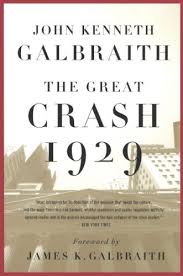
1873’ relates the events around the market panic and financial crisis of 1873, a period of ‘true capitalism’ in the sense that then there were few of the policy guardrails we have today. Apart from Ahamed’s writing, the book is relevant today for its detail on the railway investment boom, and the subsequent deep recession that followed the Panic of 1873. In that context, there is an alarming rise in books whose titles recount financial collapse, another one is Andrew Ross Sorkin’s ‘1929’ which is rich in detail on the social and political context of the 1929 crash.

To finish my economics recommendations, another question that besets commentators and investors is the future of the dollar. In 1976, the economist Charles Kindleberger declared ‘The dollar is finished as an international money, but there is no clear successor’. This view is largely correct, but the prospect that America’s power is diminishing, may have consequences for the dollar, and there is a flurry of new books on the role of the dollar, of which books by Barry Eichengreen (Money beyond Borders), Ken Rogoff (Our Dollar, Your Problem) and Paul Blustein (King Dollar) are prominent.

One book I have mentioned in recent notes, and that I reiterate is Giuliano da Empoli’s ‘The Hour of the Predator’, which succeeds in capturing the spirit of our political times. We have moved from a period of democracy and technocratic engagement between nations, to a lawless one, dominated by autocrats and oligarchs, who vandalise laws, norms and institutions under the false premise of enacting change. The principal lesson today is that centrist politicians, Keir Starmer was the example, need to stop becoming ‘prey’ and change their tactics.

Then, more specifically on AI, last week I wrote on the speed at which the sector is evolving and find it hard to recommend books that can keep pace with this (the best source I have is Azeem Azhar’s Exponential World blog). So, I fall back on Carlota Perez’ framework in ‘Technological Revolutions and Financial Capital: The Dynamics of Bubbles and Golden Ages’. Another useful book in this context is Johan Norberg’s ‘Peak Human’ which describes the emergence of empires, their deployment of technology and sketches the lessons for our world.

Now, with the holidays really in mind, I jump to non-fiction. One of the best books I have enjoyed this year is Alex Starritt’s ‘Drayton and Mckenzie’ is an absorbing story of two entrepreneurs, written in a stylish, mischievous way that does an excellent job of capturing the prevailing economic trends of the past twenty years.

Also, some of my favourite writers have released new books in the past year – William Boyd’s second, amusing Gabriel Dax story ‘The Predicament’ (with ‘Cold Sunset’ out in September), and Ian McEwan’s ‘What We Can Know’. I’ve just read the first of John Banville’s ‘Quirke’ series (Christine Falls) and recommend it, together with the latest in the series ‘The Drowned’ and ‘The Lock Up’. If readers are looking for classics, I propose Bram Stoker’s ‘Dracula’ for a summertime scare.

In the realm of thrillers, an entertaining, new writer I have come across is David McCloskey, a former CIA analyst, co-presenter of the fun podcast ‘The Rest is Classified’, and already author of four espionage thrillers, the latest of which ‘The Persian’ I recommend.

I’ve just finished reading Nick Fox Weber’s book ‘The Art of Tennis’, which is remarkable for the quality of his writing and the breadth of his knowledge of sport, American society and art. It set my mind searching for comparable writers on sport, and the one who comes to mind is the late David Halberstam, I loved his book ‘The Amateurs’.

Enjoy, Mike