
Mythical

One of the characteristics of a chaotic world order, that is on one hand bedazzled by a new technology and on the other, deeply troubled by multiple wars and economic stress, is the disagreement of different markets about the state of the world. For example, the US stock market has recently hit new highs, but at the same time, many parts of the commodity complex portend an energy crisis (in Asia and Europe mostly) and a food crisis (in Asia and Africa).

Often these disagreements occur when sets of investors are laser focused on very specific asset classes, and perhaps do not talk to each other as much as they should. For a long time, this was a perennial problem between the equity and credit departments of investment banks. In periods of stress, credit analysts often had a much more negative view on individual companies than their equity analyst counterparts. I recall that during market crises (dot.com and global financial crisis), some banks brought credit and equity analysts together, so that the balance sheet and profit and loss statement could speak to each other, as it were.

This initiative came to mind last week when I read that in one part of the impressive, new JPMorgan headquarters in Manhattan market strategists were busy upgrading the bank’s 2026  forecast for the S&P 500 index to 7600 while very likely in another part of the JPMorgan building, lawyers, bankers, chief technology officers are scrambling to figure out the implications of Anthropic’s latest model Mythos for the banking system. Many of you will have read that upon the launch of the model, the Treasury Secretary summoned executives from the largest American banks to ponder how Mythos, if used the wrong way, could collapse the financial system.

Mythos is impressive, but also very scary to put it simply. In tests it has easily outperformed other Anthropic models and outperformed to the very upper limit of cybersecurity related tsests, detecting thousands of cyber vulnerabilities in software it tested. The problem is that the unconstrained Mythos can do the exact opposite, exploit bugs in software, and execute deadly attacks on IT systems.

Because of this Anthropic has limited the release of Mythos to twelve companies (‘Project Glasswing’), and the aim of this initiative is to find and repair deficiencies in software. The risk of course is that other platforms or states manage to develop models as powerful as Mythos (some Chinese models are said to be only seven months behind) and apply these to nefarious ends. Indeed, there are reports that three major Chinese AI firms have set up 24,000 accounts on Claude in order to try to hijack its capabilities.

The fact that the Treasury, and other bodies like the Bank of England, are scurrying to determine Mythos’ threat to financial systems is of great concern, and the advance of this model is now a national security issue across most developed nations. The risk of a large, near-autonomous attack on software infrastructure, financial systems and public institutions is now very real, and makes Robert Harris’ 2011 book ‘The Fear Index’ highly prescient (it’s one for the beach this summer).

The advent of Mythos also strikes a chord with a chart in a recent research paper from the Dallas Federal Reserve that illustrates the potential for AI to affect long-term economic growth. Economists normally deploy three types of forecasts – a baseline that tracks historic growth rates, an optimistic version a little above it, and a corresponding pessimistic one. In this paper, however, the optimistic scenario goes vertically upwards and the pessimistic one goes vertically downwards, capturing the potential of AI either to revolutionise the economy or to destroy humanity. In a later chapter I explore the economic and financial effects of AI in more depth, and how it may trigger or exacerbate a debt crisis.

More importantly, it brings into focus the idea of sovereign AI, the idea that governments control and need to control AI models and their data, energy and funding supply chains. Anthropic’s recent popularity is partly based on its independence from the US administration, but it is nonetheless in the American camp. China is catching up fast (DeepSeek is taking on new investors) but, apart from Mistral, Europe is lagging.

There are several things’ governments can and must do, and I am thinking of democracies like the UK, Japan, Canada and the EU. The first is state capitalism (a full description of which is outlined in a recent note from David Skilling), and this can involve sovereign wealth funds taking bigger stakes in AI model builders, the build out and reform of energy systems, and the further concentration of poles of AI excellence. Europe has been too slow here so far, and in my experience confuses the initiative towards state capitalism with a disinterest in incentivising private investment.

A further initiative will be the enhancement of national cyber security institutes in the context of greater collaboration between aligned nations and a rethinking of how critical infrastructure works, is powered and where its multiple vulnerabilities lie.  The terrifying risk is that AI is developing so quickly that a small group of malicious individuals, aided by a small army of cyberagents, could disable a small country like Belgium.

When ChatGPT came to light in 2023, the key figures in the industry issued two letters (‘The Pause Letter’ in March 2023, and ‘The Extinction Letter’ in May 2023) that warned of the capabilities of AI and of its potential misuse. The letters were greeted with some scepticism, and in the giddy rush of AI stocks were quickly forgotten. It turns out that the founders may have been on to something.

Have a great week ahead,

Mike

La Conquête

A few years ago I was walking through the Gare de Lyon in Paris when I was brought to a halt by the sight of an elegant woman strolling through the concourse. She was followed by a black Labrador, a porter, and then a smaller gentleman trundling behind. The lady in question was actress Julie Gayet, wife of Francois Hollande, the former President of France (the gentleman). One of Hollande’s most famous acts as President was to sneak out of the Elysee on a scooter for what the British tabloid press might call ‘trysts’ with Julie.

A distinguishing factor of French politics compared to Anglophone countries like the UK, Australia and Ireland (it used also be the case in the US) is that a politician’s private life is private, and not for public consumption. 

In keeping with this spirit, in 1899, President Félix Faure allegedly died in the arms of his mistress. More recently, presidents like Giscard and Jacques Chirac married well, but had plenty of ‘adventures’. Indeed, the film about Bernadette Chirac ‘Bernadette’, starring Catherine Deneuve is quite good in this regard. Speaking of which, another film to recommend is ‘La Conquete’, the story of the disintegration of Nicolas Sarkozy’s first marriage whilst he rose to power. Sarkozy has done more than most to banalise French politics, but his relationship with Carla Bruni has also introduced a popular sense of glamour into public life.  

My reflections on the love lives of French presidents are motivated by two things. Francois Hollande has this week declared himself ‘ready’ to enter the battle for the 2027 presidency. With much attention on the right, there is space on the left of French politics for a serious candidate, and Hollande sees an opportunity, though he may well be beaten to it by Dominique de Villepin (famous foreign minister and then prime minister under Chirac who led France’s policy on the 2003 war – there is a good film on this ‘Quai d’Orsay, starring Julie Gayet).

The other event was the ‘coming out’ of Jordan Bardella and Maria Carolina de Bourbon des Deux-Siciles as a public couple, thanks to Paris-Match. In the likely event that Marine Le Pen cannot contest the 2027 presidency, Bardella will be the Rassemblement’s candidate, and according to polls the frontrunner in the contest.

If elected, he will have little in common with previous presidents, apart from the fact that he is male. He is different in a few respects.

The first is that he is a manufactured candidate, in the sense that from a very early age he has been groomed and cultivated by the Le Pen clan, provided with speaking coaches and marketing strategists. To that end, many suspect that the ParisMatch report is just another marketing stunt to burnish his profile, it appears too sterile and planned, and there is nothing worse than a French politician who is not genuinely passionate.

The second more serious accusation is that Bardella has done little of consequence in his professional life and is effectively untested as a leader and driver of policy. In this regard, he has more in common with other young politicians across Europe, whose only claim to credibility is their addiction to TikTok posts. To date many of his public appearances are carefully choreographed, but in the long run into an electoral campaign, Bardella will have to think and speak on his feet, which may be his key weakness.

A related, and underestimated criticism is that Bardella has not demonstrated his intellect, and has not passed through France’s Grandes Écoles – as have the likes of Hollande, Edouard Philippe, Macron and Chirac, who apparently topped his class. This rite of passage is important in the context of the way the French state operates – it is a pyramidical elite, made up of generally very capable people, who act and think alike. In order to make this system work, the person at the top needs to think like, and have the intellectual respect of those below. 

Under that scenario, a young, inexperienced Bardella, without the crutch of an experienced policy team, would struggle, and it is becoming clear that the French establishment is girding itself for a Bardella presidency by placing centrist type policymakers in key institutional posts.

There is a scenario where, if he was victorious, the establishment might hand him two poisoned chalices, a crisis over immigration and potentially, a financial crisis. France is in my view the most financially vulnerable country in Europe, given the state of its finances and the fact that parliament has done nothing to resolve this. In that regard, a Bardella presidency could trigger financial chaos in France, that might eventually force reform of pensions and social security (Bardella would be a lame duck by then).

Thus, Bardella does not fit the profile of the typical French president, and as the presidential contest gathers steam his limitations may become more obvious. According to polls, the one centrist politician who can come close to beating him is Édouard Philippe, former prime minister and author of the excellent ‘Dans L’Ombre’. If anything he needs to learn from this work of political fiction, and go a little ‘MAGA’. 

Have a great week ahead

Mike 

Murder She Thought

A recurring theme in this letter is the ‘Rise of the Machines’, the ways in which artificial intelligence (AI) and robots will become a growing part of manufacturing and service industries, not to mention our socio-political lives. Amidst the dominance of geopolitics as the driving force in the international political economy, every week brings a new leap forward in the capability of machines, from the rise of ClawBots and Moltbook, to advances in chip technology. 

The latest, startling advance is Anthropic’s Mythos tool, whose ability to repair and reinforce software code against vulnerabilities has left software specialists flabbergasted, but whose potential is so great (and the model has strayed off the moral path in training) that the US Treasury has convened banks to fathom how a model like Mythos might, in extremis, attack banking software.

For the moment, Mythos is in relatively safe hands, but the potential for misuse of new technologies was underlined in an excellent report by the CEPA (Centre for European Policy Analysis) entitled ’War Without End’ that outlined the multi-varied aspects of Russia’s violent interference across Europe. Many of these attacks are cunning and vicious, and in many cases use social media and increasingly, AI.

Indeed, the link between AI and crime was highlighted in a novel way by but the release of a BBC project that used the work (published and private) of Agatha Christie to build a AI generated writing masterclass in the style and voice of Christie (whilst I am on the topic I heartily recommend the ‘SheDunnit’ podcast).

With crime on my mind, and my inner ‘Moriarty’ awakened, I traipsed across Surrey for an offsite organized by the excellent Dawes Centre for Future Crime at University College London. Appropriately in an age where criminal masterminds use technology one of the Dawes Centre team, Vaseem Khan, has authored ‘Quantum of Menace’, a spin-off book from Ian Fleming’s James Bond oeuvre where technology quartermaster ‘Q’ is the hero.

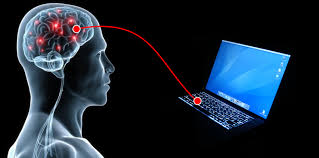
One of the key strands of the Centre’s research is to identify how emerging technologies and megatrends, from climate change to robotics, may provoke new forms of crime and correspondingly, what countermeasures might be put in place. This time, we delved into the potential for neurotechnology to act as a conduit for crime, specifically in the ways BCIs (brain control interfaces) technology, where brain waves can be used to control external devices, and potentially, vice versa, could be used in criminal acts.

BCI’s BCIs are still experimental, though increasingly applied in healthcare (for sleep issues and in traumas), and in some research projects, the combined use of AI and BCI devices has succeeded in using brainwaves to ‘transcribe’ written messages. Elon Musk’s  Neuralink project is just one very ambitious indicator of where this technological field is headed.  The implication is that we might ‘think’ instructions to a machine, or each other, but also that machines can access and potentially manipulate our brainwaves.

While BCI technology is still developmental, we need only look at how the many devices we use – phones, air pods, wrist monitors and headphones – and consider how in years to come, external devices could be used to link to our brainwaves.  

From an ethical and privacy point of view, brainwaves are even more precious than our health data. Imagine if someone knew our innermost thoughts and fantasies or could control and shape these. In that context, the regulatory debate around the use of BCIs and neurotechnology is already underway but, that will not diminish the temptation for some people to use these devices in nefarious ways – to manipulate humans to do bad things, to alter witnesses memories of a crime, for social control, as a military technology, as a portal for fraud, cognitive enhancement, the suppression or exaggeration of emotions, as a tool to commit a murder and as an addictive stimulus, to name a few dark paths.

If we consider how consumer technology, social media, has come to dominate our lives and impact economies, sociability (and possibly fertility rates), public life and even diplomacy, it is worth taking the emergence of neuro-technologies very seriously, for their positive (healthcare) effects as well as negative. It is a truly new form of interaction. To a large extent, humans interact with AI, robots and machines as discrete entities, where to a large extent, humans have ultimate control (Mythos might disagree).

The new development is that neuro-technologies offer a pathway to our minds for machines.

Have a great week ahead,

Mike 

Battle for Budapest

In the days before what is now known as the Iran War, and amidst the horrific suppression of its citizens by the Iranian state, a Dutch diplomat, having arrived at Tehran airport, was stopped and asked to disclose the contents of his luggage. He refused, citing diplomatic immunity, and left Iran, leaving his luggage behind. A subsequent inspection of the luggage in the presence of another Dutch diplomat, allegedly revealed three Starlink modems and a number of satellite phones.

It is not at all clear whether the devices were for ‘personal use’ or for the benefit of Iranian dissidents, but the incident reminded me of the efforts of George Soros to export hundreds of photocopiers into communist Eastern Europe in the late 1980’s and early 1990’s, so that dissident texts could be copied and circulated.

This was the very tip of the iceberg of Soros’ funding of the pro-democracy movement in Eastern Europe, and at one point it was said that he gave more in aid than all the Western governments together. In particular Soros, who studied under the philosopher Karl Popper (author of ‘The Open Society and its Enemies’), was committed to creating an ‘open society’ in Hungary, the country of his birth, and established the Central European University (CEU) in Budapest in 1991. 

Around the mid 1990’s I recall Bill Newton-Smith, a philosopher and Fellow at Balliol College and associate of Soros leaving England to help run the CEU. As he left Oxford, a young student activist called Viktor Orbán had come the other way (in 1990 I think), to begin a research fellowship on the topic of civil society in Europe, sponsored by the Soros Foundation.

Orbán didn’t last long at Oxford, returned home to become a member of parliament and the leader of the main liberal party Fidesz. Orbán has been a central figure in Hungarian politics since then, but in the late 2000’s, underwent a political and moral transformation. At a conference in Prague some years ago, I spoke with a few entrepreneurs who had been early associates of Orbán’s, and who had suspicions as to the motivation behind his change of tack. 

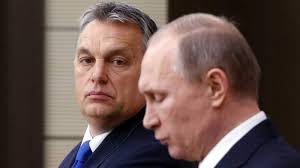
This change pivoted on his relationship with Soros, who Orbán has transformed into a figure of hate for the far-right internationally. Equally, Orbán flipped his view on Russia. He had been highly critical of Russia’s 2008 invasion of Georgia, but soon after, following a visit to St Petersburg to meet Vladimir Putin, Orbán started to change his stance on Russia.

For much of the past sixteen years, Orbán has commanded a large amount of popular support, though his actions and attitude in going against the grain of the EU have cost Hungary – in the last fifteen years, Hungarian GDP growth has lagged that of Poland by 0.8% per annum, tens of billions in EU aid has been withheld, and corruption has become institutionalised under Orbán. Budapest has become a staging post for the Russian security services and teachers, women, judges, amongst others have suffered in ways they would not expect in a normal European country.

In this context, the general election in Hungary (April 12th) could become a critical turning point, and is highly important for the EU. At a broad level, polls point to a victory for Peter Magyar of the Tisza Party, with the majority of the opposition parties in Hungarian politics having swung behind him. However, in the context of extensive gerrymandering, a propensity for ethnic voting groups (Hungarians living abroad and Roma in Hungary) to tilt toward Orbán, and the capture of state institutions and budgets, the outcome is highly uncertain.

Not only is Orbán an ally of Moscow (Orban’s team has been accused of leaking confidential EU discussions to Russian officials, and Orbán holds frequent meetings with the Russian foreign minister), but he has become the darling of the international MAGA movement. Orbán’s campaign been endorsed by Benjamin Netanyahu and Donald Trump, Marco Rubio visited Budapest in mid-February and vice president JD Vance will travel there on April 7th, just before the election.

There are already allegations of impropriety and vote rigging against Orbán, in what will be a hotly contested election, and deep suspicion of social media influence by Russia, not to mention the support of the White House.

EU leaders fear a close election or that Orbán, having lost the vote, will use his remaining days to change laws and appointments to key institutions. The example of Poland is being mentioned, where on taking power Donald Tusk faced years of difficulty in removing hard-right opponents from media and other institutions. 

As such, the EU will have to invest enormous time, energy and capital in remaking Hungary. The short-term gain for the EU will be the absence of the Hungarian veto on European foreign policy stances, notably so in the case of Ukraine.

Should Orbán win, or continue to contest a close vote, a more existential issue faces the EU that will centre around a gathering debate on how to further sanction and potentially expel an EU member that is steadfastly recalcitrant.

Lurking behind the election, is a deeper foreign policy issue for Europe, in the context of several major wars and the disintegration of NATO, the need to combat more fiercely interference in the democratic processes of EU member states.

Have a great week ahead,

Mike