


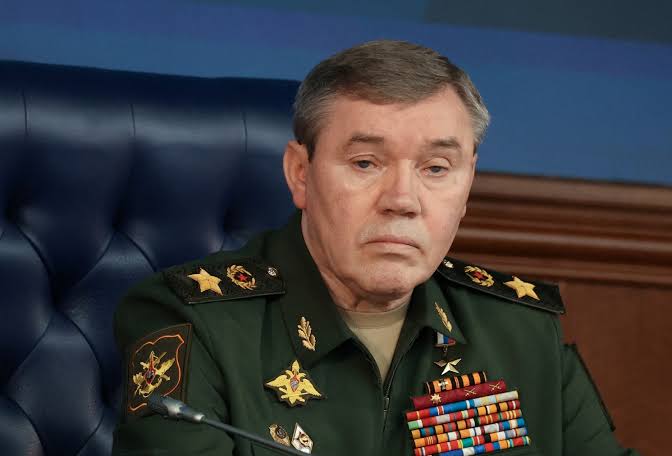
At a recent dinner event three people, myself included, referenced Valery Gerasimov, chief of the general staff of the Russian army, and famous in geopolitical circles for a 2013 essay where he outlined the concept of ‘total war’ as seen through Russian eyes. It is a view of conflict that covers many strategies such as cyber, border testing, propaganda, intensive social media and covert attacks, for example. This approach has been very much on display across Eastern Europe and the Baltics – the encouragement of discord in Bosnia, the hollowing out of Hungarian politics and in particular the harnessing of Belarus as a form of geopolitical attack dog. Indeed, the fact that General Gerasimov has entered our minds is a sign that the doctrine is succeeding.
An excellent steer as to the tactics of ‘total war’ is David Kilcullen’s book ‘The Dragons and Snakes’ where he examines the new, unconventional forms of conflict pursued by the likes of Russia and China. One striking example Kilcullen describes is Russia’s efforts to drive immigrants and asylum seekers through the border with Norway, the aim being to test Norway’s reaction, its border security and to generally aggravate NATO.
Total war is highly effective. The ongoing destabilisation of adversaries through unconventional means is relatively cheap and effective, especially so when many governments in the West refuse to publicly acknowledge the manipulation of the infrastructure of democracy and public life. Other efforts, such as assassinations and the incursion of drones and jets into European airspace, with the added spice of cyber-attacks, are harder to ignore. They likely amount to signs of Russia stressing and probing European defences, and most importantly, testing the commitment of the US to NATO.
In this respect, NATO should be highly focused and motivated, but in the context of its gathering in Ankara, consistent with the view that all of the institutions of the post WW2 era are unravelling, dangerously on the brink of irrelevance. The danger is that it ceases to be an alliance, and instead serves as a mere organisation.
The reasons for this are well known. Whilst military level ties between the likes of France and America are very strong, Europeans (and Canadians) fear that Europe and the US no longer share the same enemy and worry that even in a post Trump 2.0 world, the stance of the US will not revert to an embrace of NATO.
In short, if NATO’s Article 5 was to be invoked, Europeans are still (despite comments from the summit) not convinced that the US would pick up the phone. Indeed, the only person to have triggered Article 5, Ambassador Nick Burns (former US ambassador to NATO who triggered Article 5 on 9/11) has said that Donald Trump’s repeated view that he wants to ‘take’ Greenland, is ‘breaking the bonds of trust’.
To that end, many officers in European armies increasingly regard the NATO command structure as an organisational framework through which European armies can coordinate, plan and organise, and to that end it still has value. Europe is re-arming, and as Germany showed this week, balance sheets are swelling with the issue of new debt to finance defence spending. This re-armament is urgent, in view of warnings from intelligence agencies of a clash with Russia within the next five years. One nod to this risk is the upgrading at the NATO summit of the Baltic Air Policing mission to an air defence one.
By their nature, democracies are vulnerable to the tactics of ‘total war’ and the rise of social media has made populism an easy and attractive strategy, and thoughtful rebuttal a near impossible one. Two important reminders of this came last week.
Nigel Farage, who according to some is Britain’s prime minister in waiting appears to have made a tactical error in resigning his Westminster seat, so as to recontest it. Farage did so in order to head off an inquiry into donations he has received (note that the former head of Reform in Wales is serving a lengthy jail sentence for pro-Russia bribery). With the exception of the satirical independent candidate Count Binface, no other parties will contest the seat, undermining Farage, with potentially enormous consequences for British politics given the rise in popularity of Reform.
Across the Channel, where on repeated occasions the French authorities have warned of foreign influence in French elections, the French judiciary have confirmed Marine Le Pen’s culpability in a finance scandal, but effectively opened the way for her to stand in the 2027 presidential election. The court battle is not yet over, and Le Pen will face several constraints (possible house arrest or electronic bracelet). Most voters should feel disdain in voting for a politician convicted of corruption, though Nicolas Sarkozy stills enjoys an allure in France.
But, Le Pen, whom Emmanuel Macron has accused of being funded by Russia, will likely play the martyr card, that the elitist French system is set against her. She has a hard-core support approaching 30% of the electorate, and the only person who can stop her is Edouard Philippe, the former prime minister, who has been far too mild mannered. He needs to take note from the evisceration of Keir Starmer, otherwise the next NATO summit in Tirana in 2027, may be marked by Marine Le Pen leading France out of NATO’s command structure.
Have a great week ahead, Mike

