

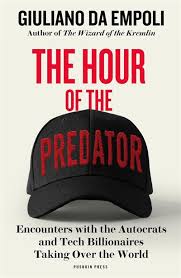
On Wednesday I had dinner in Jack’s Brasserie, in Bern, an iconic restaurant not far from two of the institutions that have overseen the rise in power and wealth of Switzerland, its national (central) bank and parliament. My visit to Jack’s was triggered by the fact that I had just finished Giuliano da Empoli’s latest book ‘Hour of the Predator’, and Jack’s was the location of a ‘Lunch with the FT’ between da Empoli and Simon Kuper. Often the FT’s Lunch series throws up sterile exchanges, but this was a good one, and Simon managed to convey the ambience of Jack’s, so I had to go along.
Da Empoli has spent his life in public policy, as a writer on politics, and adviser to former Italian prime minister Matteo Renzi (he occasionally advised another centrist, Emmanuel Macron). He became famous with his book ‘The Wizard of the Kremlin’ (now a film where Jude Law does a passable impersonation of Vladimir Putin), but it is his latest book ‘The Hour of the Predator’ that I find highly pertinent.
Da Empoli originally published his works in French, and has benefited from the short form novels or longish essays that are popular in France and that should really be more widespread in the English-speaking world. One of his talents are pen portraits, notably of politicians he has encountered – from Mohammed Bin Salman, now ruler of Saudi Arabia, Nayib Bukele of El Salvador and Joe Biden.
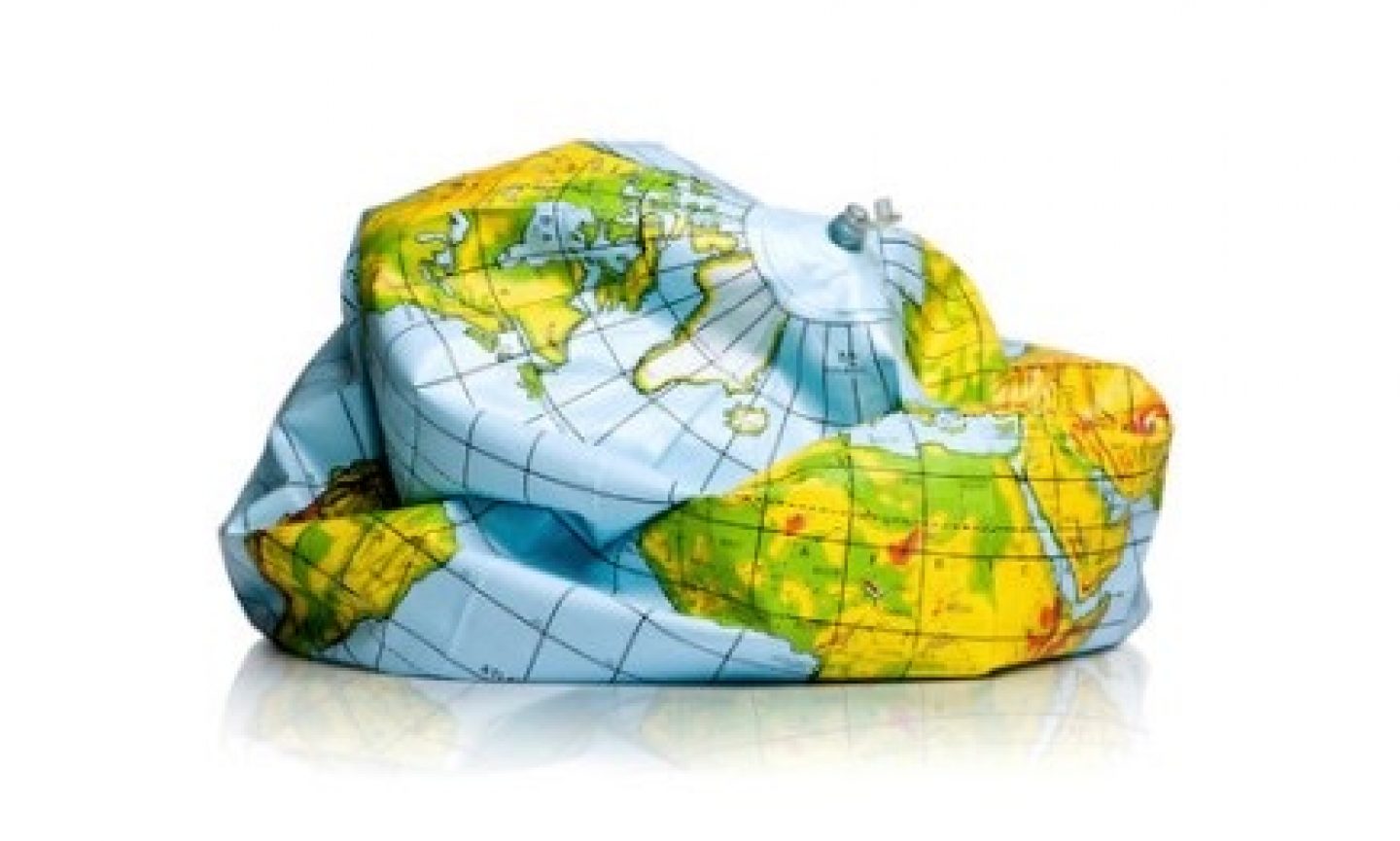
Da Empoli’s ‘Predators’ thesis is highly relevant to Europeans. It is yet another framing of the idea of the unravelling of globalization, and the chaotic start of a new world order. In this context, ‘Predators’ are autocratic, populist politicians and hyper wealthy technology entrepreneurs who act in sudden, brutal ways, use technology and social media for control, operate outside the established norms and rules, and make a virtue of doing so on the basis that it is a necessary cost of remaking the system and allegedly handing power back to the people.
In this context, ‘Predators’ are autocratic, populist politicians and hyper wealthy technology entrepreneurs. They act in sudden, brutal ways, using technology and social media for control and operating outside the established norms and rules. They justify this on the basis that it is a necessary cost of remaking the system and allegedly handing power back to the people.
Readers will have a good idea of who the ‘Predators’ are. They have succeeded in accelerating the pace in politics and geopolitics (for example in the first three months of this year we have had attacks on Venezuela, Iran, a threat to attack Greenland and a stealthy suppression of Cuba).
The smashing of the established way of doing things and the undercutting of the institutions that have enabled globalization(from NATO to the UN) are part of the ‘Predator’ tradecraft. As a result, economic policy volatility is at an all-time high and financial markets face contradictory signals, with bond yields, energy prices and technology stocks all at record highs.
The action and drama associated with the ‘Predators’ is seductive, but the question we need to ask is whether they are builders and visionaries, or merely agents of chaos, and vandals? The Department of Government Efficiency (DOGE) experiment, for instance, suggests the latter. The degradation of corporate governance in the US, is another case in point. The danger is that the public, either as investors in some of the landmark IPO’s, or as taxpayers, are left holding the bill. My instinct is that most Americans will soon want their laws and institutions back, and stability restored.
Predators need prey, and many of the ‘Predators’ appear to unite in disdain against Europe. For them, the likes of Renzi and Macron typify the over-educated, lawyerly, social liberalism of Europe. Early in the rise of the ‘Predators’, they took control of the geopolitical narrative, painting Europe as a slow moving, regulatory beast. Indeed, Europe is guilty of moving sluggishly, and electorates are impatient about a range of issues. Neither has it found the urgency and capital to match the rise of America’s technology sector.
For its part however, Europe needs to realize that the rules of the game have changed, such that there are now few rules (Macron, inspired by Da Empoli, has voiced this view), and for instance needs to adopt a more aggressive stance against Russian interference across the continent, and to permit the radical overhaul of industry and finance across Europe. Sadly, it appears to do the opposite.
Finally, there is no country in greater need of the ‘Hour of the Predators’ view than Ireland. More than any other country in Europe, public and political stances cling to the sense that the institutions and norms of the globalized era are still operational. It would be better if they were but that is sadly not the case. The debate on security and defence is a case in point. All other small, advanced countries – from Singapore to Switzerland – are bracing themselves and equipping for a nastier world. Ireland is not and may soon find it is the prey.
Have a great week ahead, Mike

