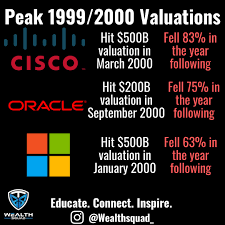
A long time ago, when I completed my postgraduate studies, I shelved my thesis (on the relationship between corporate governance and company performance) away in a dusty library, thinking that, like many academic works, it would have no relevance in the world of business. Yet, soon after, as the tide went out on the dot.com bubble, a series of major corporate governance scandals surfaced (Enron being the most prominent).
Hopefully my sense of timing is better with experience, and I have started to think of the corporate governance/performance link again. There are a few recent triggers. The value of Intel, having languished in the doldrums for decades, has recovered toward the levels seen in 2000. Taiwan and South Korea, as we noted last week, have become two of the largest stock markets in the world. A range of valuation measures for the US market and indicators of retail participation in the market, are at 2000 nosebleed levels. It also seems that technology companies are growing on steroids, Samsung has become a USD 1 trillion firm last week and Nvidia is now worth USD 5 trillion.
The really new development is the advent of mega-cap startups like Anthropic and SpaceX, both of which have raised capital at valuations close to USD 1 trillion. Trotting behind them, according to the May edition of the Pitchbook Unicorn Tracker (a unicorn is a private company with a value of USD 1bn or greater), are 1,680 unicorns. There were 44 when the term was coined in 2013. Today’s unicorns are worth close to USD 9 trillion (the top 3 companies are worth USD 2.5 trn). About 40% of the total unicorn value is made up of AI firms, which suggests that they are very young indeed. In the history of economics and business, this is an entirely new phenomenon. For it to have happened, several things have changed since the dot.com bubble.
The first is that public and private markets have grown impressively. Not only are US public markets the largest that they have been relative to GDP, but private capital (private equity, venture capital, etc.) is now becoming a sizeable source of financing internationally. As it does, different forms of investor are emerging within it – private credit is the one that currently gets attention, but many growth capital investors have helped to push unicorn valuations to extremes for fear of missing out on hot deals. For example, the median value of late-stage venture deals in AI firms is now USD 5bn, a USD 4bn premium on non-AI firms.
An interesting new element in capital structure is that new, fast growing firms count governments as shareholders, as well as the ranks of former officials and those in the political ecosystem (France’s Mistral is a case in point). Further, the large technology firms have also become active venture investors, and in many recent earnings reports the item ‘other income’ popped up, showing how the likes of Microsoft are already reaping the benefits of their investments.
Two other significant changes are worth flagging. The advent of social media and, more recently, AI-driven commerce means that successful companies can grow very quickly. Large established firms like Apple, Microsoft and JP Morgan have taken decades to grow but are being ‘caught’ by young companies with relatively small workforces, and the effect is disruptive — largely, though not always, positively so. This is much less the case in Europe, which also lacks the small but critical cohort of individuals who know how to build and scale new firms rapidly.
The emergence of a new business model is well-timed for the evolving world order. Recall that the Joint Stock Company Act of 1844 helped to spur the expansion of the British empire in the 19th century, the arrival of the ‘global business model’ (Theodore Levitt’s 1983 essay ‘The Globalization of Markets’ captured this development) was the modus operandi through which America transmitted globalisation around the world (or as one economist put it multinationals were the ‘B-52’s of globalization’).
However, to my original statement, the arrival of new, fast-growing, private companies (many of which are pre-IPO firms), comes at a time when corporate governance in the US is at a low ebb, in terms of the alignment of executive pay with outcomes, active boards, shareholder vigilance, and oversight by institutions like the SEC and Department of Justice.
Further, new, young companies bring their own governance foibles. Many are led by individuals with strong personalities, a necessary quality in startups, many would argue, but an undesirable one from a governance point of view, especially where technologies like AI demand ethical guardrails in their deployment.
Further, many fast growingfirms have complicated capital structures and voting rights. In the past, slower-moving capital market cycles and better regulation might have weeded these out, but have instead become the norm. Incorporation in regulatory ‘paradises’ (more businesses are set up in Texas for instance), the prohibition of shareholder class actions, non-profit structures and heavy share-based compensation have become the norm. This matters because more retail investors can access ‘soon to be private’ companies, in addition to subscribing for IPO’s.
Above all, many of these firms have as yet little to show in terms of profits and in the context of stratospheric valuations, the risk of a bubble is high. Once the AI capital expenditure boom slows, the tide will go out —as Warren Buffett famously observed, and many will lose their capital, and will wonder if they should have paid more attention to corporate governance. If they do, I have an old study to share with them.
One implication of the recent surge in the price of semiconductor firms is that the stock markets of Taiwan and South Korea are now larger than that of the UK (which in 1900 made up 25% of the world stock market capitalization). It is expected that the two East Asian countries will soon have more billionaires than Britain, many of whom have apparently been scattered to the winds by the Labour government.
Though a country’s stock market is a highly imperfect indicator of a country’s economic standing, it does offer good clues as to evolving industrial structure. Bond yield and currencies help to complete the picture, and the runaway UK 10-year Gilt yield (now above 5%) doesn’t tell a happy story either. Then, on GDP, the country whose rise impresses me is Poland, which has not suffered a recession in the past thirty years (COVID excepted). Its GDP has increased sevenfold since 1990, and by 2030 it is expected to surpass the UK in terms of GDP (based on purchasing power parity). Remarkably, Poland is also shaping up to be a geopolitical power as well.
The loosening of the globalized world order, and the advent of many new risks and challenges – from the impact of AI on economies, to climate damage to war – has the potential to knock some nations back, and present opportunities to others.
As such, we can expect that the rise and fall of stock markets and economies tells us a lot about the rise and fall of nation states. In a world where the established world order is shattered (OPEC is the latest long running institution to fall apart), the rise and fall of countries is accelerating, and has become more vivid. In 2020, in the context of how different countries and states were responding to the COVID crisis, we wrote of the idea of the ‘League of Nations’, and have emphasized the theme ever since.
There are many existing league tables of country performance – happiest nation, most innovative country and most competitive, to name a few. Those league tables tend to be dominated by small, advanced economies. Regular readers will know that one of my favourite long run economic themes is the success of the small, advanced economy model, notably so for the way in which these nations can adapt to changes in the broader world. The UAE is a case in point.
In previous notes I have also made the parallel between football and politics, and this is still valid. A few weeks ago I mentioned that in the last ten years the UK has had more ministers for housing (a whopping 14) than Chelsea FC has had managers (12). Chelsea have recently parted with their latest manager Liam Rosenior, and it might well be that a cabinet reshuffle or change of prime minister leads to Matthew Pennycook moving on from his job as UK housing minister.
Like football, the manager of a country is important. For decades, Singapore and the Emirati states have made a virtue of strong, visionary leadership, Greece’s Kyriakos Mitsotakis and more recently Mark Carney in Canada are associated with turning their nations away from troubled waters.
In today’s League of Nations, the winning formula is changing, and shifting towards all things ‘sovereign’ and ‘atom-like’. For example, last week Canada announced the creation of a sovereign wealth fund to help the buildout of critical infrastructure, and it also laid claim to be the host of the new multilateral defence bank (Chris Collins and I wrote about this in a recent note for Barrons). Further, as I mentioned last week’s note (‘Mythical’), successful countries will need to cultivate their own AI stack, and the merger of Cohere and Aleph Alpha is a sign of things to come (their main shareholder is German but the firm will effectively be Canadian from now).
Then, with a step change in the industrial structure of the developed economies of the world underway, from services and ‘bits’ (software, crypto) to ‘atoms’ (energy, infrastructure, defence, AI and quantum), those countries with the universities, capital base and innovation ecosystems, will thrive. America is the standout example, but the Nordic countries and the economic zones that surround the Alps (particularly Switzerland) are good examples.
One consideration regarding the stature of nations is age and pedigree. One of the elements that makes small, advanced countries successful is that their laws, democracies and institutions have been in place for some time, and therefore offer clarity and consistency to businesses for example. At the same time, as economies get older they can become sclerotic, acquire layers of regulation and fail to engage in the creative destruction necessary to keep economic growth at healthy levels. Whilst this is simply an observation, I have a hunch that like aging athletes, older, large economies (US, Japan, UK, France) resort to a ‘boost’ in order to keep their economies going, which may explain why they are excessively indebted.
A final word in praise of older economies and societies, which relates to the cultures, behaviours and ‘family silver’ they accumulate over time. King Charles III’s various speeches in Washington last week demonstrated the value of heritage, and he might just have saved Britain from relegation to the lower leagues.
One of the characteristics of a chaotic world order, that is on one hand bedazzled by a new technology and on the other, deeply troubled by multiple wars and economic stress, is the disagreement of different markets about the state of the world. For example, the US stock market has recently hit new highs, but at the same time, many parts of the commodity complex portend an energy crisis (in Asia and Europe mostly) and a food crisis (in Asia and Africa).
Often these disagreements occur when sets of investors are laser focused on very specific asset classes, and perhaps do not talk to each other as much as they should. For a long time, this was a perennial problem between the equity and credit departments of investment banks. In periods of stress, credit analysts often had a much more negative view on individual companies than their equity analyst counterparts. I recall that during market crises (dot.com and global financial crisis), some banks brought credit and equity analysts together, so that the balance sheet and profit and loss statement could speak to each other, as it were.
This initiative came to mind last week when I read that in one part of the impressive, new JPMorgan headquarters in Manhattan market strategists were busy upgrading the bank’s 2026 forecast for the S&P 500 index to 7600 while very likely in another part of the JPMorgan building, lawyers, bankers, chief technology officers are scrambling to figure out the implications of Anthropic’s latest model Mythos for the banking system. Many of you will have read that upon the launch of the model, the Treasury Secretary summoned executives from the largest American banks to ponder how Mythos, if used the wrong way, could collapse the financial system.
Mythos is impressive, but also very scary to put it simply. In tests it has easily outperformed other Anthropic models and outperformed to the very upper limit of cybersecurity related tsests, detecting thousands of cyber vulnerabilities in software it tested. The problem is that the unconstrained Mythos can do the exact opposite, exploit bugs in software, and execute deadly attacks on IT systems.
Because of this Anthropic has limited the release of Mythos to twelve companies (‘Project Glasswing’), and the aim of this initiative is to find and repair deficiencies in software. The risk of course is that other platforms or states manage to develop models as powerful as Mythos (some Chinese models are said to be only seven months behind) and apply these to nefarious ends. Indeed, there are reports that three major Chinese AI firms have set up 24,000 accounts on Claude in order to try to hijack its capabilities.
The fact that the Treasury, and other bodies like the Bank of England, are scurrying to determine Mythos’ threat to financial systems is of great concern, and the advance of this model is now a national security issue across most developed nations. The risk of a large, near-autonomous attack on software infrastructure, financial systems and public institutions is now very real, and makes Robert Harris’ 2011 book ‘The Fear Index’ highly prescient (it’s one for the beach this summer).
The advent of Mythos also strikes a chord with a chart in a recent research paper from the Dallas Federal Reserve that illustrates the potential for AI to affect long-term economic growth. Economists normally deploy three types of forecasts – a baseline that tracks historic growth rates, an optimistic version a little above it, and a corresponding pessimistic one. In this paper, however, the optimistic scenario goes vertically upwards and the pessimistic one goes vertically downwards, capturing the potential of AI either to revolutionise the economy or to destroy humanity. In a later chapter I explore the economic and financial effects of AI in more depth, and how it may trigger or exacerbate a debt crisis.
More importantly, it brings into focus the idea of sovereign AI, the idea that governments control and need to control AI models and their data, energy and funding supply chains. Anthropic’s recent popularity is partly based on its independence from the US administration, but it is nonetheless in the American camp. China is catching up fast (DeepSeek is taking on new investors) but, apart from Mistral, Europe is lagging.
There are several things’ governments can and must do, and I am thinking of democracies like the UK, Japan, Canada and the EU. The first is state capitalism (a full description of which is outlined in a recent note from David Skilling), and this can involve sovereign wealth funds taking bigger stakes in AI model builders, the build out and reform of energy systems, and the further concentration of poles of AI excellence. Europe has been too slow here so far, and in my experience confuses the initiative towards state capitalism with a disinterest in incentivising private investment.
A further initiative will be the enhancement of national cyber security institutes in the context of greater collaboration between aligned nations and a rethinking of how critical infrastructure works, is powered and where its multiple vulnerabilities lie. The terrifying risk is that AI is developing so quickly that a small group of malicious individuals, aided by a small army of cyberagents, could disable a small country like Belgium.
When ChatGPT came to light in 2023, the key figures in the industry issued two letters (‘The Pause Letter’ in March 2023, and ‘The Extinction Letter’ in May 2023) that warned of the capabilities of AI and of its potential misuse. The letters were greeted with some scepticism, and in the giddy rush of AI stocks were quickly forgotten. It turns out that the founders may have been on to something.
An unusual but non surprising cameo in the response of the UK to the burgeoning energy crisis that is resulting from the Iran War, was the inclusion of Bank of England Governor Andrew Bailey in last Tuesday’s emergency COBRA (Cabinet Office Briefing Room) meeting. The prospect that inflation and a cost-of-living crisis could further derail the fledgling economic recovery in the UK, has struck fear into politicians (the OECD reckons that the UK will be the worst hit country), though monetary policy purists won’t like the appearance that the independence of the ‘Old Lady’ (the Bank not Bailey!) is compromised.
What is more interesting is that this is yet another datapoint in a trend where finance, war and politics are becoming interwoven. In peacetime, central banks were the only game in town, the monetary battleships of the 2010’s, keeping the peace in bond markets and tilting currency moves in their country’s favour.
That was not always the case, books like Liaquat Ahmed’s excellent ‘Lords of Finance’, show the key role that central banks played in maintaining the stability of war time economies.
Now, the world order that is unravelling before our eyes is more like that of the 1910’s than the 2010’s, and a particular concern for central bankers is the extent to which economies have become frictioned.
By this, I mean the extra costs and inefficiencies that are bubbling up because of the end of globalization (a period associated with intense commoditization of prices and low inflation), a pandemic of supply chain disruption, and great power competition for ‘rare’ things (from rare earths to rare places like Greenland to rare technologies like quantum computing).
In general, these frictions will tend to bump up the rate of inflation. A famous example is the way in which the side effects of the war on Ukraine combined with short-sighted energy policy in Europe to produce a prolonged rise in inflation from 2021 to 2022.
From the point of view of central bankers, inured to a decade of stubbornly low inflation, this was a surprise, and prominent members of the central banking community were badly caught out by their view that this burst of inflation was ‘transitory’. Their difficulty is that the economic context of the 2010’s was characterised by demand weakness whereas the main policy problem of the 2020’s is supply constraint.
We now live in an economy of ‘atoms’ (energy, commodities, deeptech), where historically huge amounts of investment capital expenditure is/are being deployed amidst supply constraints to build a new (AI) economic infrastructure. About half of this will be financed by different forms of credit. Within this model, the debate on the productivity benefits of AI, which has produced a wide range of estimates of the potential impact of AI on the economy, illustrates what a demanding environment it is for central bankers to read.
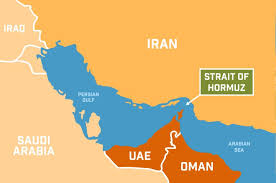
The potential energy shock from the Iran war complicates matters even more and raises the prospect of a policy error. Echoing the schoolboy mistake by Jean-Claude Trichet to raise interest rates in 2006 when a spike in the dollar helped trigger a spike in oil prices, current ECB President Christine Lagarde has stated that the ECB was ‘ready to raise rates’. This may be a pre-emptive move to push markets to do the ECB’s job, and to warn companies and unions off raising prices. If not, Lagarde and other central bankers should do no harm. A rate rise from the ECB will do nothing to re-open the Strait of Hormuz (good note on the disruptive effects from the Kiel Institute), nor to rebuild refining capacity in the Gulf states.
The dilemma for central bankers is in distinguishing between an energy centric rise in prices and an eventual generalised rise in inflation expectations.
In my view the economic consequences of the Iran War can be short lived, but as long as it endures, amounts to a tax on consumers, a hit to risk appetite and a blow to confidence in US financial assets. Furthermore, the many costs of the war (see our note of two weeks ago, ‘It will be over by Christmas’) include a rise in the debt burden that countries like the US and UK will suffer, and an elevated level of uncertainty as the world’s former policeman turns bully.
It could be worse for central bankers, they could be politicians, who now must contend with another cost-of-living crisis, with little money left in the fiscal jar.
A recent book, Samuel Moyn’s ‘Gerontocracy in America, highlights the growing concentration of wealth and power in the much older generations in the US, whilst younger generations face historically high valuations in real estate and financial assets, and how this growing intergenerational divide might be mended. Moyn, in my view, has struck a chord that will become one of the new dividing lines in politics, in Asia and the West.
His book brings demographic change into focus, a slow-creeping risk to economies, society and public life, but whose implications are only just surfacing in the public debate. Despite that, from a popular point of view, the sense in many Western countries is that there are too many people, or rather that infrastructure has not kept up pace with population growth – I am writing this in Dublin, which is an excellent case in point.
Yet, the long-run demographic trends – falling fertility, longer life expectancy and a shift in population composition towards a much smaller working (tax paying) population, will have enormous impacts on society, pension systems and debt loads, to name a few economic issues.
As much was evident in Germany’s recent pension reform debate which was nearly upended by Helmut Kohl’s grandson Johannes Volkmann and a group of other young parliamentarians who voiced the right of the younger generation to not have to shoulder the financial burden of their parents’ generation (under the German system, and many others, the working population effectively funds the retirement system of the older generation)..
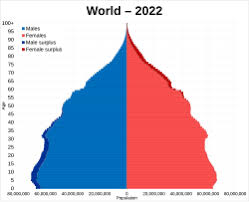
The best starting point on the outlook for demographics is the United Nations World Population Prospects website. and the data – especially in chart form – are quite striking.
The UN data show that as we approach 2100 the world population will plateau and start to shrink. From roughly 2080 onwards the world population growth rate will turn negative for the first time in centuries (wars apart), as the death rate passes out the birth rate. Within the age cohorts, the over 65 group will expand by a billion people in the next thirty years.
More specifically, at the country level, the US death rate will surpass the birth rate in around 2040, and population growth is likely to only be sustained by immigration. The picture is worse for some European countries – Italy for example is already in negative population growth territory, and the most negative forecast scenario from the UN has the Italian population dropping from over 60 million today to 25 million by 2100 (the same level as when Garibaldi unified the country).
Equally, China, which has been renowned for its economic and population growth, will endure a collapse in the 24–65-year age group, who today number 830 million people and by 2100 are expected to comprise 280 million people. China is projected to be the country most affected by ageing, with its, China’s elderly dependency ratio is projected to surpass 100% by 2080, meaning there will be more people aged over 65 than those aged 15 to 65.
The expected collapse in the working population begs serious questions for the economy – who will pay taxes, sustain pension systems and where will demand for financial assets come from. Markets are not worried, yet.
In general, researchers find that there is a positive link between demographics and asset prices, a finding that is predicated on the rise of the boomer middle class and the coincident equity bull market and fall in bond yields. The idea is that until they retire, working households invest more in real estate, equities and other riskier assets, but then shift to income-oriented assets like bonds as they get older and require income from investments. The oddity in that respect is that despite an ageing population, equities and real estate are very expensive. This may well owe to a growing investment culture, a record level of wealth (USD 500 trillion worldwide) and the prosperity boon that has resulted from globalization.
In this context, old money will become a political target, both in terms of demands for lower inheritance taxes, to more populist measures to tax the ‘old’ and give the ‘young’. For governments who worry about demand for their bonds, wealthier older citizens might make ideal candidates for financial repression (their children would face lower inheritance tax provided that capital spent a period of ‘purgatory’ invested in government bonds – I outlined a similar theme in ‘Patriotic Capital’)
At the same time, pension systems will have to change to accommodate a proportionately smaller number of workers (to pensioners). Private pension systems will become more common, they will invest more, earlier, with a tilt to riskier assets.
Concurrently, I expect to hear more on the need for states to establish sovereign wealth like funds (based potentially on the sale of state assets) to help provide for future pension liabilities. Another concern will be the need for states to cushion the potential blow of AI on workforces (a fund that holds equity in AI firms might be an avenue), at least through a transition period. In the long term, AI and robotics may well allow more older people to work for longer and for more women to enter the workforce. And, I haven’t managed to tackle the topic of later retirement ages and how that will impact the workforce and society.
The effects of demographics are not yet showing up in markets, and are just creeping into the investment industry, but it will become a major fiscal and financial megatrend.
It’s that time of year when investors and economists release their prognostics for the year ahead, and eclectic and contrarian as we like to be, The Levelling brings you its top ten themes for 2026, with apologies for the length of the note – in fact this week we are simply giving you the first five themes, with the others to follow next week. It’s really one to print out and read with a coffee, or even a stiff drink.
Given the approach of the holidays, we have also added in some pertinent film and book recommendations.
Some of the ten themes we flag here are based on observations we have made during the year, and relate to trends that are now becoming clearer, chief amongst them is the imprint of AI on economies, geopolitics, and society.
We hesitate to make outright forecasts for GDP and rates for two reasons – first we expect growth to rise modestly during the year (though this is very much dependent on the capex cycle) and second, most of the interesting developments will take place at the sector level.
#1 RAIlway Boom
In the late 1990’s as the dot.com bubble built, there was a polite debate amongst central bankers as to whether or not an asset price bubble was present in stock markets, most notably in dot.com related companies. The upshot of the debate was that even if the central bank could identify a bubble, there wasn’t much it could do to puncture the bubble (notwithstanding Alan Greenspan’s ‘irrational exuberance’ moment).
Today, central banking has changed, and so too have asset bubbles. There is a very broad narrative – from investors and economists – that we are indeed in a ‘bubble’, the only question is whether markets are in the foothills or the peak of the bubble. My sense is more ‘foothills’ than peak, largely because we are not yet seeing the folly and exuberant behaviour that was present in 2000 (I will share some stories in a future note).
Of course, the obvious danger of such a narrative is that for some but not all investors, it permits the belief that investors can continue to buy very expensive assets and later hand them off to ‘greater fools’, and the illusion that ultimately they are not the fools.
Every asset bubble needs an underlying logic, a belief that ‘this time its different’ and this is supplied in spades by the adoption and investment in Artificial Intelligence (AI). Signs that companies and households are deploying AI are manifold. This bubble is also different in the case that AI is producing revenues, as evidenced in the operating and market performance of large AI centric firms (the so called ‘Magnificent Seven’ companies who together now make up nearly 40% of the US stock market capitalization), but those earnings are predicated on the success of the AI business model and are increasingly circular, in that investment by META becomes revenue for Nvidia and so on.
What is altogether less clear to me is how the economics of AI play out. While the adoption of AI is occurring more quickly than other technologies (the internet), competition will surely lower margins quickly. Chinese projects are a case in point, and some of the large US AI platforms, of which OpenAI is the leader, may find their economic models undercut.
Neither is the distribution of the productivity benefits that convincing – specialized firms and operators with access to proprietary data will be able to leverage AI to great benefit, along the lines of my ‘One Man and his Dog’ thesis. However, for most people, once some basic administrative tasks have been swallowed by AI applications, the positive economic impact on their lives might be more limited. Another consideration is that AI model technology is in the hands of a small number of investors, so the capital productivity benefits of it can also be limited.
The Future:The AI boom or bubble is gathering momentum. Levels of capital investment (relative to GDP) are already surpassing those of prior bubbles, but have not yet attained the giddy heights reached during the railway bubble of the 1900’s. The railway bubble was one of the great asset bubbles – and helped build the crucial infrastructure of the first wave of globalization. In 1900, investment in railway infrastructure amounted to 6% of GDP, AI today is just over 1.3%. Also, at the turn of the 19th century nearly 60% of the market capitalization of the US stock market was made up of railway stocks (today it is 0.3%) which as a rule of thumb suggests we might see talk of a USD 10 trn valuation for Nvidia and SPX 10,000 ((the US S&P500 index hitting 10,000 points) as a ‘sell everything’ moment.
Read:Charles Kindleberger’s ‘Mania’s, Panics and Crashes’
#2 ‘Dalloway’
One of the more memorable films I saw in 2025 is Dalloway, a French film starring the ever-excellent Cecile de France, which I hope will make its way to the Anglophone world. The object of the film is to show how pervasive and sometimes pernicious AI could become as a social force, and as we head into 2026, this is a theme that will become more important – in healthcare, labour markets and society – and more startlingly obvious.
To start with an alarming example, in 2021 the Swiss government’s Spiez Laboratory, one of whose specialisations is the study of deadly toxins and infectious diseases, is located right in the heart of Switzerland, performed an experiment where they deployed their artificial intelligence driven drug discovery platform called MegaSyn to investigate how it might perform if it were untethered from its usual parameters.
Like many AI platforms MegaSyn relies on a large database (in this case public databases of molecular structures and related bioactivity data) which it ordinarily uses to learn how to fasten together new molecular combinations to accelerate drug discovery. The rationale is that MegaSyn can avoid toxicity. In the Spiez experiment MegaSyn was left unconstrained by the need to produce good outcomes, and having run overnight, produced nearly 40,000 designs of potentially lethal bioweapon standard combinations (some as deadly as VX). It is an excellent example of machines, unconstrained by morality, producing very negative outcomes. It’s a chilling tale of the tail risks of AI.
More commonly, AI will increasingly become part of our economic and social lives, and its effects will be more apparent.
In labour markets, there is already plenty of evidence to suggest that AI is curtailing hiring, markedly so in the case of graduates. When AI and robotics start to combine, they can have very positive outcomes (in education and elderly care) but in warfare (see the Netflix documentary ‘Unknown Killer Robots’), fruit picking, warehouse management and even construction – to give a few examples, the blue collar labour force will feel the effect. This could set up a political reaction, and we might well see a Truth Social post from the White House to the effect that AI is not such a great idea and needs to be regulated.
A potential side-effect of the more negative effects of AI on the labour market could be a rise in anxiety and what social scientists call ‘anomie’. Much the same is becoming clear from the ways in which social media is skewing the sociability of humans (think of declining fertility rates, pub closures and the mental health effects of social media). As such, the social effects of AI may lead to ‘deaths of despair’. If this is grim, there is potentially very positive news in the use of AI to improve medical diagnoses in inexpensive ways, and the marginal impact of this in emerging countries can potentially be very significant (leading AI firm Anthropic is targeting science and healthcare in terms of applied AI solutions).
The Future:The economic and social side-effects of AI will become clearer – many of them will be positive, but others will start to provoke a political reaction. While the EU has softened some of the restrictions in the EU AI Act, the interesting development is that at the state level in the US there is a growing desire to curb some of the effects of AI, a trend that is supported by case law. Moreover, local politicians in the US (Republican Josh Hawley is an example) are more vocal about the negative side-effects of AI on labour markets and education.
Read:Carl Benedikt Frey ‘The technology Trap’(2019), and Robert Harris’ ‘The Fear Index’ (2011)
Watch: ‘Dalloway’ (1997)
#3 AI Cold War
A further facet of AI to keep an eye on is geopolitics, and as we leave 2025 behind, we will hear more about the notion of an AI Cold War or ‘Sovereign AI’ according to a good Pitchbook note. This emerging idea refers to the strategic uses of AI, in the context of strategic competition between the ‘great’ powers. This race is already on, and the US is in the lead, with China chasing behind (my recent note on The Plenum details how China is prioritizing frontier technologies as the spearhead of its economic plan). Europe is very much in third place, with energy policy and half formed capital markets the biggest obstacle.
In a ‘Cold War’ AI world, model development and deployment increasingly take a multipolar form (see #8 below), regulation is competitive and technology firms closely align with governments – forming symbiotic parts of national infrastructure – while national security considerations are embedded into investment processes and supply chain planning. In time, governments may steer model developers towards new datasets if there is a strategic advantage to be gained.
The Future:From an investment point of view, we expect private equity/credit to become an enabler of this trend, and for their part governments will open up the flow of pension capital to private asset classes. Governments may also become more active investors – either in steering merger and consolidation activity, or in the fashion of the Trump administration, taking stakes in firms that are judged to be strategic. Military uses of AI will become more commonplace, and we will slowly learn more about the effects of this on navigation systems, genetics, finance and social media, to name a few.
Read: ‘Breakneck’, by Dan Wang (2025), ‘Chip Wars’ by Chris Miller (2022)
Watch: Dr Strangelove (1964)
#4 Expensives to Defensives
An age-old joke goes that when asking for directions, the traveller is told ‘I wouldn’t start from here’. It is much the same for investors looking into 2026, though less so tactical traders who believe that they can time the ebbs and flows of the emerging stock market bubble.
The dilemma for asset allocators is that with the US stock market making up some 60% plus (depending on the benchmark) of world market capitalization, and trading at near record valuation multiples (price to earnings or price to long term earnings (Shiller PE), or even market capitalization to GDP (Buffet Indicator), the exposure to American assets is increasingly expensive and risky.
For example, a model that combines monetary, business cycle and market valuation indicators, suggests that from this point onwards, returns in the next couple of years for US equities will be close to zero. Add to that the fact that the dollar still looks expensive and corporate bond (and high yield) spreads are very narrow, and the conundrum for allocators next year will be considerable.
As we end the year, volumes have been very low and speculative activity (options) very high, and this points to high levels of volatility through 2026, and remarkably, a few of the large bank CEOs have warned of significant market drawdowns.
The Future:We expect to see investors put more money to work in cheaper defensive sectors – Staples and Healthcare for example, and for capital to flow to other regions beyond the US. In addition, in the next five years, if multiple surveys of family offices and pensions are to be taken at face value, we expect private assets to make up a much more significant proportion of investment portfolios.
Read: Benjamin Graham ‘The intelligent Investor’ (1949)
Watch: ‘Margin Call’(2011), ‘The Big Short’(2015)
#5 K Shaped economy
In the context of a political-economic climate in the US where good, regular economic data is hard to come by, commentary from industry leaders as they report earnings is providing some fascinating insights. For example, some weeks ago, Chipotle, the burrito chain, reported a surprise drop in revenues because two key consumer groups, households earning USD 100k or less, and younger customers (24-35 years old) are cutting back discretionary spending, even on fast food.
A range of firms with similar client bases underline this trend – car manufacturers report that sales of expensive, large vehicles are strong, but that lower income customers are preferring smaller, fuel-efficient models. McDonalds is revising its ‘extra value meal’ option, and credit card providers like Amex report very different types of activity from rising card balances and distress in the lower segments, to robust spending in its ‘Platinum’ category.
Economists are blithely referring to this phenomenon as the ‘K-shaped’ economy, whistling past the graveyard of economic history that portends revolutions are made of such obvious divergences in fortune.
Now all of the talk is of a K shaped economy – which refers to multiple divergences between the price insensitive wealthy and those in economic precarity who are sensitive to inflation, a services sector that is either shedding jobs and holding back from hiring compared to the upper echelons of the technology and finance industries where unprecedented levels of wealth are being created.
There are two other effects ongoing. The first is the economic effect of AI-focused capital expenditure (across the energy, logistics and technology sectors). The second, more important trend is a mangling of business cycles, such that few of them are synchronized across geographies, or between the real and financial economies (German chemicals is in the doldrums but German finance is on an upswing).
Yet, a better diagnosis might be the ‘Marxist’ economy – one where the owners of capital and the source of labour are at odds.
The Future:In the US, the top 10% of the population own 87% of stocks and 84% of private businesses, according to data from the Federal Reserve. On the other hand, we have previously written about the rise of economic precarity in The Road to Serfdom. So, whilst it is a new observation amongst the commentariat, the diverging fortunes of capital and labour should start to trouble policymakers in 2026. Expect this to be a headline policy issue net year – the White House is already paring back some tariffs, and in Europe governments compete to either tax the wealthy (France and the UK) or to lure them (Italy).
Amidst the slew of corporate earnings and macro-economic data released in the past week, two developments struck me, both of which give the impression of the tectonics of geopolitics pushing against each other.
First, in the past year the number of children born in the US has caught up with the EU, at close to 3.6 million babies each (though the EU has a much bigger population). For comparison, Nigeria – whose population is less than half that of the EU – welcomed 7 million babies last year.
Second, in recent months the trend rate of consumer inflation in Japan has surpassed that of the US for the first time in decades, signalling a long awaiting shift in the Japanese economy that has been accompanied by a rise in long-run bond yields (a potentially critical development for the international financial system).
These two examples will give a sense of the rise and fall of nations, that is accelerating since the fall of globalisation (which I date to the effective end of democracy in Hong Kong). This rise and fall – think of countries like football clubs – is also associated by an unravelling of the world order. For example, in a recent note ‘Atlas Shrugging’, we detailed how the independence of the Federal Reserve was being undercut by the White House, and the attempt to remove Lisa Cook from the Fed’s rate setting committee confirms that Donald Trump wants to direct the Fed as an engine of his economic policy (as a giant bond buying machine I suspect).
The independent Fed has been one of the pillars of the globalised world system of the past forty years – and the snuffing out of its independence heralds the unravelling of that system. In the same way that the period of globalisation was characterised by low inflation and the absence of major wars – the presence of inflation and conflict today, is a sign that we are moving into ‘something else’.
In that context I find myself playing a mind game which I call the ‘Unravelling Rule’. Very simply, it is to identity the principal factors that have supported globalisation and that are positive outcomes of it and identify if and how they are unravelling. The crisis of democracy is one such trend (the Economist Intelligence Unit’s Democracy Index has fallen to its lowest level in twenty years).
Other certainties are also unravelling – notably the assumption that the USA is an unflinching ally of Europe and many Asian countries, and the possibility that it could even actively undermine them. In this regard, the fact that the Danish government had to summon the US ambassador over the conduct of three Americans in Greenland is troubling and reflects very badly on the White House.
The danger with the ‘Unravelling Rule’ is that in a chaotic world, it is tempting to see unravelling everywhere. It is more obvious though in the case of world institutions – the United Nations, IMF, World Bank and World Trade Organisation, who are frequently ignored by the very large economies, and sometimes badly undermined by them (the WTO is an example). These institutions need to be recast, most likely for the benefit of the populous emerging economies.
On a more speculative basis, there are at least four trends that have marked the past forty years, and that are now worth watching for a change of course.
The first is poverty. It is an underestimated facet of globalisation that it helped a billion people rise out of poverty, according to the World Bank. My concern is that in a world where the major economies (2/3 of the world’s GDP) have debt to GDP ratios above 100%, economic precarity may return, and this time to developed countries. We have already noted (The Road to Serfdom) the extremely high level of inequality in the US and broad economic vulnerability. In Europe, British and French policymakers conjured the spectre of IMF intervention in their economies (it would have to be a new, bigger IMF – which under this White House is unlikely). In that respect the growing disparity in incomes in the UK regions (relative to London) bears watching.
A second is corporate governance and the rule of law as it extends to international business. We have not seen a rule of law or broad governance crisis in sometime, but the rise of decentralised finance (i.e. crypto), the new idiom of the ‘art of the deal’ in the US, and the geopolitically tinged trade relationships that China is developing worldwide. As a global ‘way of doing things’ gives way to more regional or localised approaches, the watertightness of contracts and the oversight of business relationships is something that businesses will need to consider more carefully.
A true litmus test of the ‘Unravelling’ hypothesis will be the role of US multinationals in the world economy. Described as the ‘B-52s’ of globalisation in the late 1990’s by a prominent trade economist, they have shaped the world economy and come to dominate financial markets. I have lost count of the number of charts circulating that declare that Nvidia for example is worth more than the major European stock markets together. Whilst cash rich, they now face a number of challenges – the difficulty of selling into China as it broadens its technological self-sufficiency, and the collateral damage to overseas sales from the Trump trade and foreign policies, and the rise of more specific local tastes in markets like Africa and India.
A final unravelling, and one I would welcome, is for the EU to unleash its nasty side. In the past forty years the successes of the EU – enlargement, holding the euro together and the creation of a European identity (based on borderless travel the Erasmus programme for example). The likes of Poland and Estonia have benefitted greatly from this, and it is fair to say that the UK would be better off ‘in’ than ‘out’. But the emphasis has been largely on soft rather than hard power, and in a ‘harder’ world, the EU will need to take a tougher stance in terms of how it projects itself.
There are many challenges but three in particular are the potential exclusion of existing and prospective member states like Hungary and Serbia who habitually refuse to act in accordance with EU values and interests, a specifically more aggressive approach to countering sabotage by Russia (and at times China and Iran) in Europe, and then a retaking of the narrative as to what Europe stands for.
One of the favourite books I have received as a gift is ‘Bushido’, the framework of the Japanese code of chivalry. I was given the book in the very early 2000’s, when it was not yet obvious that Japan would stagnate for quite so long and, the talk was still of the collapse in Japanese golf club membership prices
Indeed, one of the remarkable socio-economic trends in Japan up to the mid-1990’s was the startling rise in Japanese gold club membership fees, which in the heady 1980’s Japan, had become a tradeable asset, so much so that an index was created (always a warning sign). During the period 1982-1989 the average golf club membership fee rose by 400%, with a final 190% spurt from 1989 to 1990. Companies such as Ginza Golf Services initially made a lot of money trading golf club memberships and at the peak of the market some were changing hands for close to USD 3mn.
Naturally, this bubble collapsed, and as a nod to the future I flag a blogpost from ‘GolfProp’ magazine that shows that on average entry fees for American gold club memberships have been increasing at a rate of 23% per annum since 2019. Indeed, within the past year the membership fee at Mar-a-Lago has gone up by 43%
Back to Bushido, which as a noble, chivalric code developed in the 16th century, is unlike European ‘Chivalry’ (see Maurice Keen’s book of this title is a must read) in that the idea of ‘Chivalry’ came about much earlier, and largely because of an effort to stop the knights of Europe killing each other in jousts and disputes. Bushido is still part of the mindset of many Japanese, and Japan is increasingly unique as a country where very strong social codes frame behaviour.
To that end, the sense of bushido and Japanese diplomacy will have been taken aback by the unexpected decision by President Trump’s to slap a 25% tariff on America’s main allies in Asia, Japan and South Korea. Japan has always enjoyed close ties to the US (Al Alletzhauser’s 1990 book ‘House of Nomura’ is a very good account of how America helped build the modern Japanese financial and corporate system). I have a sense that another book of that era, Ezra Vogel’s ‘Japan as Number One’, seems to have stuck in Trump’s mind (in the 1990’s he went on CNN to castigate Japan American foreign and trade policy on Japan).
Trump and ‘bushido’ are anathema to each other, and the Japanese will be disappointed by his behaviour, given that Tokyo has always had close relationships with American presidents – though never as close as that with Jacques Chirac who visited Japan over 40 times (for various reasons which I shall not disclose).
The potential rupture in relations between Tokyo and Washington introduces a strategic dilemma for Japan, at a time when its economy is awakening from decades of slumber. Like the UK, Japan’s geopolitical moorings are coming unstuck. President Macron’s state visit to London shows the direction of travel for the UK on security and defence, and whilst it is accelerating defence spending, Japan may end up considering more radical solutions for its defence in the context of Chinese belligerence (in 2024 Japan’s air force scrambled jets 704 times against incursions by Chinese and Russian jets). For instance, Japan is the one country that could quickly build a nuclear weapons programme, if it needed to.
What is interesting in the Japanese case is that as geopolitical uncertainty rises, its economy and financial markets are thawing. The property sector is just reaching levels last seen in the early 1990’s (while Tokyo prices have recovered beyond 1991 levels, the rest of the Japan’s residential market is still below the price point reached then).
Having suppressed bonds yields for a long time, the Bank of Japan is now raising rates, and Japanese bond yields have been pushing higher, and given the size of the Japanese bond market (and the balance sheet of the Bank of Japan), it is driving yields higher internationally, and deserves watching as a medium-term risk to markets.
However, while bond yields are rising in the absence of yield curve control by the central bank, factors that are regarded as engines of the economy – earnings, consumer behaviour and employment are more muted, and give rise to the sense that Japan is either in the ante chamber of a full recovery, or on the precipice of something nastier.
Tariffs, and a confusing break with the US, could upset the Shigeru Ishiba’s unpopular government (Upper House elections are soon), which is struggling in the context of a very ‘un-bushido’ world.
I had intended to write about universities this week but, strolling through the City of London, I was surprised, shocked even, to find myself on Trump Street, and then amused to see that it is joined by Russia Row.
My first thought was that this was part of a grand plan by the British establishment ahead of President Trump’s visit to London in September, the idea being to stage an event at the nearby Guildhall and to then tell the president that a nearby street had been named after him. Trump Street was apparently named so because several trumpet makers lived there in the 18th century, but let’s ignore that for the time being.
Yet, the far more meaningful coincidence of Trump Street is its proximity to Gresham Street.
Sir Thomas Gresham was a trader and financier in 16th century London, at a time when coffee houses in the lanes around the Royal Exchange formed the basis of what is known as the City. Gresham was an important player in Queen Elizabeth I’s economy, and his emblem – a grasshopper – is still present in various parts of the City (there is a giant-sized golden grasshopper on the roof of the Royal Exchange….if you can dare to make it up there).
While Gresham’s imprint can be seen across the City, he is remembered by Gresham’s Law which was named after him and states ‘bad money will drive out the good’. Gresham’s Law which echoes similar observations from Copernicus and other scientists through the ages is founded on the idea that in an economy where coins with the same face value but that are made from different base metals (say nickel and copper) there is a tendency for traders to hoard the coins made of the more valuable metal and to circulate lower quality coins. Bad coins stay in circulation, good ones are re-commoditized. From an economics point of view the law is conditioned on all the coins (of variable quality) having the same face value.
Unlike the 16th century, today, coins have the same physical consistency and in general there is little incentive for people to shave bits off coins (historically coins have serrated edges to prevent this) but broadly the Gresham’s Law is applicable in different domains.
Think of how cheap goods (made under questionable labour conditions) have forced quality players out of markets, or how in the run-up to the global financial crisis, low quality financial institutions offering generous loan conditions caused better quality banks to step back from lending. In both cases, regulation or policing of markets is necessary to ensure that ‘bad’ actors do not gain an advantage over good ones. Social media is another example, where it seems a lot of nonsense thrives at the expense of information.
Additionally, the idea of Gresham’s Law is applicable to politics, where in many countries it appears that political actors with extreme views and extreme modus operandi are forcing out ‘good’ ones in the sense that most normal people would be terrified of a career in politics.
Readers will guess that my argument is leading back to Washington. Bad behaviour, bad ideas and bad policies are infesting themselves in public life, the economy and markets – to the surprise of many ardent supporters of President Trump. What is not clear is whether this will result in an evacuation of capital and talent from the US, or whether there will be a counter-reaction. Gresham’s point in describing how bad money drives out good was to avoid the debasement of the currency (schilling), which when Elizabeth I came to power, was already in a bad state. She appointed Gresham as a finance minister of sorts in 1560, and within a year he had ‘bad’ coins taken out of circulation and replaced them with money made from precious metal, the result of which was a dramatic improvement in Britain’s status as a trading and economic power.
The lesson of this should be very clear today. As a final point, it is interesting to note, from the point of view of coins and money, that the ratio of gold (precious metal) to a cyclical commodity (copper) is the most stretched it has been since at least the 1980’s, suggesting that markets at least are thinking of Gresham’s Law.
N’interrompez jamais un ennemi qui est en train de faire une erreur.
During the Battle of Austerlitz, Napoleon quipped to one of his commanders (General Soult) that one should never interrupt an enemy when he is making a mistake. Austerlitz was one of Napoleon’s tactical triumphs, but some seven years late the Emperor gathered one of the largest armies ever assembled and crossed Russia. The Russians burnt Moscow, harassed the French army and then patiently waited for the cold weather to cruelly teach Napoleon the error of his way (Sylvain Tesson’s book ‘Berezina’ offers a lively account of the retreat from Russia).
In a similar vein, as another modern-day, would-be emperor careens from financial calamity to geopolitical catastrophe, my sense is that the world beyond America, is best served by waiting and watching.
In the next two months the economic damage to America from the tariff campaign will become clear. The corporate earnings season has just started – some of the large banks have done well from the trading volumes created by market volatility – but as the focus turns to technology and other export focused firms, we can expect to see significant drops in earnings, a development that will make the still high valuation multiples for the US stock market hard to sustain. Relatedly, while investment banks are profiting from volatility, most of them are reporting that capital markets activity (public offerings, mergers and funding rounds for private equity firms) have stopped dead.
This is a shock for Wall St. With president Trump having installed a market trader as commerce secretary, a hedge fund manager as Treasury, a private equity titan in the defence department, and so on, capitalists might well have thought that the White House was on their side, but the annihilation of up to 8 trillion dollars in market capitalisation has proven them wrong. There is I imagine, a limit to Wall St’s patience and the pushback on policy will grow.
As it does, the hard (as opposed to ‘soft’ survey) data is likely to worsen dramatically, and the US will enter into an economic breakdown. At the start of this year I had sifted through the IMF GDP forecasts for 2025 and 2026, where uniquely they expected nearly all of the world’s economies to register positive growth. From this starting point, a global recession was a very low probability, but the Trump administration has blundered into one.
Now, policy makers in the US and abroad are realising that watching and waiting is the best way to entice Trump away from his tariff policy. There were signs of this on Wednesday when the Federal Reserve chair declared that tariffs would augment inflation and make it much harder for the central bank to cut rates. This statement represents quite the departure for a monetary authority that has greeted every flicker of economic trouble with lashings of cheap money. Mr Powell knows very well that it is not the job of a central bank to fix the mistakes of an errant policymaker, and very likely that a short, sharp market shock now might deter a great fiasco (and the credibility of the dollar) later.
In contrast, other central banks, who are unburdened by any sense of conflict of interest with Mr Trump, can feel much more free to cut rates into a coming recession, as the ECB did on Thursday. In that context, we may see the dollar strengthen in coming weeks, and much of the stress of the White House policies on the economy, transferred to the corporate bond market.
Then a key, patient player in this unfolding drama is China which, whilst it has deep economic faultlines of its own, is politically and socially coherent enough to weather the onslaught from Washington. Like the Russians who took on Napoleon, China’s strategy is partly one of endurance, partly ‘guerrilla’ (think of rare earth export controls, supply chain manipulation leading to shortages of goods in the US) and a patient attitude to the market turmoil that is starting to undermine the financial credibility of the USA.
Europe may follow suit. Giorgia Meloni spent Thursday in the US with president Trump and then raced back to Rome to host JD Vance. Her visit was useful in terms of Italian and EU diplomacy, but the EC is carefully signalling to Washington that any negotiations on trade will have to be done through Brussels alone, which as the Brexit process revealed, is a hard defence to breech.
Napoleon left Moscow in the middle of October 1812, eventually to creep into Paris just before Christmas. His army was devastated, only 100,000 or so men from an initial force of 600,000 survived. Donald Trump is no Napoleon. In two months’ time the US economy may well be in a state of disarray, consumer confidence and confidence in the president will likely have plummeted further, and the world will be watching and waiting for his capitulation.