At the end of last week’s note on Russia’s tactic of ‘Maskirovka’ I touched on another favourite of the Kremlin, ‘kompromat’. I was tempted to mention the Ritz Carlton Moscow, the scene – allegedly – of some epic ‘kompromat’, and joke that whenever I stayed there, I was always in bed early, out of trouble as it were.
One reason I got to bed early in Moscow was that I like to make early morning runs through the city, often from Red Square through Gorky Park, which I think locals found amusing as there is not much of a running culture in Moscow.
One run I will not forget came in the aftermath of the murder of the reformer and former deputy prime minister Boris Nemtsov, seeing clusters of flowers on the Bolshoy bridge where he was gunned down. The shocking aspect was how close this happened to the Kremlin, the implication being that Nemtsov had fallen foul of the Kremlin, and it had decided to wipe him out.
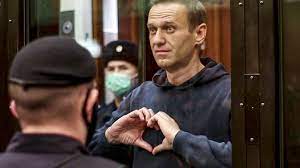
I immediately thought of the flowers at the scene of Nemtsov’s death when I heard that Alexei Navalny had passed away (very likely murdered). The effect of his death, coinciding with the Putin interview I discussed last week and the Munich Security conference, is chilling.
If any good comes of it, it will be to disabuse reasonable people of the notion that the Russian government is not a malevolent threat. In this context there is much to do – Germany must rid itself of Russian influence within the state, Austria, the UK and Switzerland should rid their financial systems of the tens of billions of Russian money and countries like Ireland need to take security and defense seriously.
Navalny’s death also sharpens the war on democracy that Russia has led. Here too, there is much to do. I will shorten this note by linking a TEDx talk I was privileged enough to give in Stormont, Belfast recently, where I lay out some of the measures needed to restore the credibility of democracy. One notable element is for governments in democracies to take a more aggressive, active stance against states like Russia who target our democratic processes.
The link is here, I hope you enjoy the Talk, and feel free to circulate.
I am always keen to shamelessly remind readers that I am a man who can ‘see around corners’, as they say. In 2018, as I handed in the last draft of ‘The Levelling’ I wrote the following regarding Russia, its broad strategy of ‘total war’ and more specifically its tactic of ‘maskirovka’…
‘Some countries, such as Russia, are already practicing war by “many means”—that is, where traditional military force is mixed with covert action, propaganda, and disinformation. The Russian doctrine of maskirovka, has roots that go back to the fourteenth-century Battle of Kulikovo and was further developed more recently, beginning with its use in the Second World War.
In a very basic sense, it involves the use of decoys and deception to distract and destabilize an enemy, though the doctrine of maskirovka has broad applications, stretching to disinformation, propaganda, and politically related tactics. A significant element of the thinking that reflects the new doctrine of warfare in Russia is that wars do not follow the same boundaries and time lines as they did historically.
This means that they are not officially declared—in the way cyberattacks happen—and that they can rely on many different types of force (e.g., information, humanitarian, and media) and can rely on the subversion of states on a continual basis using mercenaries and special operatives’.
At the time (2018) Russia had aggressively interfered with elections in the Netherlands, Germany, France and the UK, to name a few episodes. This was a mere sharpening of tools for what was to come, and while Russia has isolated and weakened itself by invading Ukraine, it has not given up the tricks that have been honed since 1380.
This much was on display in Tucker Carlson’s interview of Vladimir Putin, which took advantage of Carlson’s craven character, the prevalence of social media noise, the gullibility of many in the West and of course the rottenness of Donald Trump. In the minds of many, Putin has thrown sand in the face of those in Congress who support Ukraine, suggested that a ‘win-win’ deal is soon available, and that Donald Trump is a reasonable man worthy of Putin’s respect. In each case, the opposite is true.
Worryingly, this particular episode of ‘maskirovka’ has damaged the outlook for Ukraine, the security of NATO countries (and vulnerable ones on the flanks of NATO like Ireland). Arguably it ups the ante in the US presidential election and suggests that Russia (with the tacit support of China) is bent on further vandalising western democracies in this critical year for elections.
It should be said that Russian is aided and abetted by many politicians in those same western democracies. There are a few that grasp the magnitude of the challenge, and they are mostly in countries close to Russia, and that have battled to revive democracy and the rule of law in their countries, notably Poland’s Donald Tusk who this week castigated the Senate in Washington for its failure to support Ukraine.
I have not found much literature by way of how to do ‘counter-maskirovka’ operations, and I am likely not looking in the right places. We may need a ‘playbook’ soon as elections approach around the world.
What is happening in Poland is instructive in terms of the repair work being done on institutions – the media, courts, civil service and central bank to name a few have become degraded and politicised, and while some argue that they are now being politicised in a different way, the program of work that Tusk is pursuing highlights the importance of independent institutions as a buttress to outside interference.
The politicisation of the Supreme Court in the US, and the failure of social media giants to counter manipulation emanating directly from Moscow suggest that America is opening itself up to ‘maskirovka’.
Speaking of which, the other, better-known facet of Russian manipulation is kompromat – the use of economic, political and personal secrets to rein in enemies (though a Russian journalist Julia Latynina is quoted as saying to keep kompromat on enemies is a pleasure. To keep kompromat on friends is a must’).
I suspect that one of the candidates for (US) president has quite a bit to worry about in this regard (its not Biden), the question is, will we ever get to see the evidence?
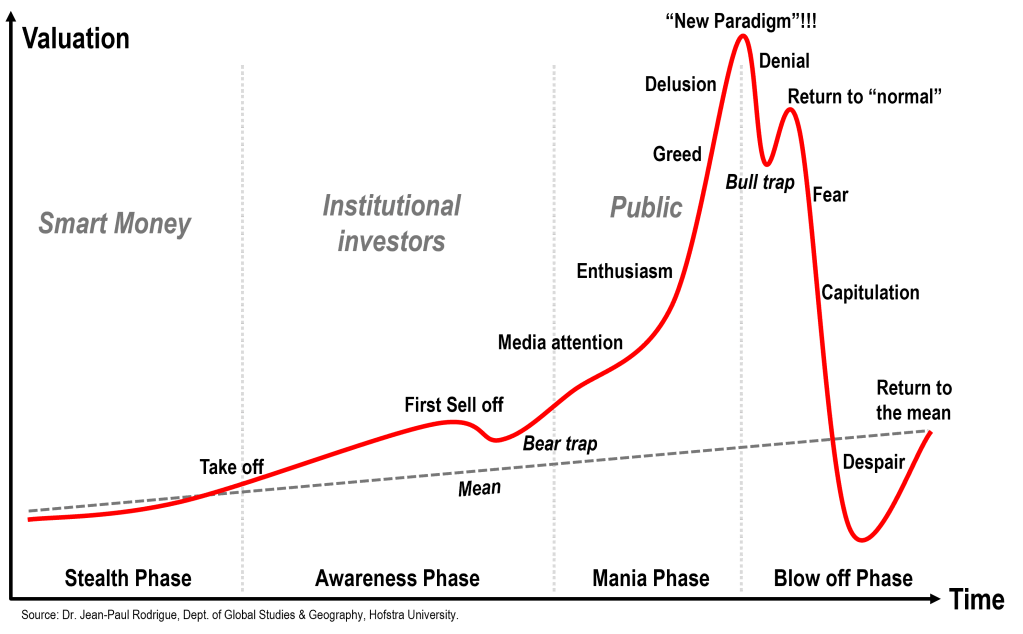
I have seen and heard many things that have made me cynical about the investment industry, but nothing pricks my ears when I hear ‘valuation’ deployed as an entreaty for retail investors to buy expensive assets (one of the best I heard is a former colleague who declared that a company was expensive on the basis of a price to earnings ratio (P/E) but cheap on the basis of the earnings yield (E/P)…they are the same thing!).
On that basis my credulity was recently stretched when I heard an analyst at Morgan Stanley, the large investment bank, declare that technology stocks are ‘attractively valued’ based on the ‘price to innovation’ ratio. Price to innovation is the ratio of the price of a company to its earnings plus what it spends on research and development – as such it is designed to make companies with scant earnings and large, risky investment budgets, look attractive.
As a rule of thumb, when the financial community start to invent new valuation measures, it is time to worry. In the early 2000’s analysts introduced valuation ratios such as ‘price to clicks’ for internet stocks, so as to try to give a veneer of respectability to bubble level valuations. Of course, it all ended badly.
The introduction of the idea of a ‘price to innovation’ ratio to the market narrative should spark fears of a stock market bubble, notably in artificial intelligence (AI) driven stocks. Bubbles are hard to define, but to follow a famous legal opinion on pornography, ‘you know it when you see it’.
The ingredients of a bubble are usually based on an innovation (railways, the internet) doused with cheap money, and together they produce significant outperformance of a select group of assets that results in historically extreme valuation levels.
There is most likely the nucleus of a bubble in a group of mega-sized technology stocks, known increasingly as the Magnificent Seven, chief of which is the chip design firm Nvidia. To use a very simple valuation metric – the ratio of price to revenue, the European equity market trades on a price to revenue multiple of 1.3 times, the American market is 2.5 times (the large tech stocks drive this higher), Microsoft trades at a ratio of 13 times revenue and Nvidia at 33 times (for comparison UBS is on a ratio of 1.7 times and Siemens 1.3).
There is a similar valuation bubble in private markets where venture investors pay very high multiples for AI focused start-ups. The underlying rationale is that the potential sales growth of these large tech firms is so promising, that they desire a higher valuation multiple.
The past week has seen many of them report earnings, and whilst most of these tech firms have delivered healthy earnings, revenue growth is not impressive, suggesting an abundance of optimism regarding the future impact of AI.
In that context, if AI is going to be the organizing logic of the next bubble (in the past fifty years we have seen asset bubbles in gold, Japan, Asia, the internet, housing, China…to name the main ones) it will need the boost, or the ‘petit coup de whiskey’ (as New York Fed chair Benjamin Strong put it in 1927…guess what happened next).
In general, since the global financial crisis monetary conditions have been very easy, provoking inflation in assets as opposed to consumer inflation. That trend has changed recently as a burst of inflation begot a sharp rise in rates. Despite this, credit markets have been very well behaved (another bubble?). With inflation falling, expectations are growing that central banks might prune interest rates back, which might add further fuel to the AI bubble hypothesis.
In the days before quantitative easing there was a decent debate as to whether central banks aided and abetted the creation of asset bubbles. At the time, the orthodoxy was that bubbles were hard to identify and even if they could be identified, it was difficult for central banks to deflate them. The difference today is that few if any central bankers worry about this risk, and instead speak of the ‘wealth effect’ from asset prices.
The reasons for them to be more vigilant here are that asset bubbles usually destroy wealth, invariably transfer it from poorer to richer investors (the rich buy early and the poorer investors buy late it goes), they distort investment across economies and when they collapse, their aftermath can be costly (witness Japan’s lost decade(s)). Bubbles do often leave behind useful infrastructure – railways in the late 19th century, and the internet/telecoms infrastructure of the 2000’s, but at a high price.
In my view we are not yet in an AI bubble proper. So far, it is located in a small number of companies, who very unusually make up a huge proportion of the stock market. Calculations by BCA Research show that the top ten largest companies in the USA make up 75% of the stock market, something that has occurred only in 2000 and 1929.
For the AI bubble to grow and become a mania (Charles Kindleberger’s Manias, Panics and Crashes is still the best analysis of bubbles) companies in sectors that will be impacted positively by AI (such as healthcare and life sciences, financial data centric firms) will need to be captured by the AI narrative and see their share prices rise accordingly. In the same sense, AI mania will need to spill out to countries in Europe, Japan and maybe China.
Watch out for other indicators. When taxi drivers start to speak of error correction in quantum computing then we will most surely be in an AI bubble.
I had thought that early March could be crucial from a political economic point of view. On March 4th Donald Trump goes on trial for trying to overturn the results of the 2020 presidential election, and on the 5th the republican party holds its primary elections for the 2024 presidency. The scene would be set for Trump the martyr to march to power.
It seems that the sense of drama is now largely redundant, Trump is well ahead of his nearest rival Nikki Haley, and he has started to control the policy agenda on the republican side. His very obvious weak point is that beyond the most steadfast ‘right wing’ republicans, he seems to have few votes to garner. This may ensure that some donors help Haley to stay in the race longer than many think.
Yet, a second Trump presidency is now a high probability, and in the US, activists, lawyers and the policy community are preparing for this scenario and the likely cleaving of public life in the US (it can get worse than it is). Beyond the US, the knee-jerk assumption is that Europe is unprepared for a second Trump presidency, and that Europe will ‘fold’ in a world where the leader of the ‘free’ world is an aspiring dictator. I am not sure that this assumption is a good one.
Much of the debate around the impact of a second Trump presidency on Europe, centres around defence, the assumption being that the US would pull out of NATO, leaving Europe at the mercy of Russia. Indeed, in recent days a chorus of European policy makers have sounded off on this.
For example, last week the defence ministers of the UK and Germany, Norwegian and Swedish generals, as well as the head of NATO’s military committee, have made pointed warnings of a war between NATO and Russia. There have also been calls for an EU army (‘European pillar of defence’) and for the EU to have its own nuclear deterrent (the only independent European nuclear capability is that of France), and a public musing by a British general on the virtues of conscription.
If Europe is serious about preparing the political and security ground for a Trump II world in which Russia becomes more belligerent (I am not sure), then it can do a number of things, which in themselves become tests of intent.
First, to repeat a point I have made in this note many times, it needs to make member states like Slovakia and especially Hungary (as well as prospective member Serbia) choose sides. Trump is the only political figure in the western world who lauds Viktor Orban (Putin simply controls him), and Orban in return pushes the case for Trump’s re-election. Orban’s corruption and Russo-philia are becoming institutionalised in Hungary.
Matters might come to a head at an EU leaders summit late next week, where the aim is to sign-off a funding package for Ukraine. Hungary has obstructed this and there is now a sizable group in the European parliament and a smaller group amongst European leaders in favour of using Article 7 to deprive Hungary of its voting rights. Beyond Hungary, there is much the EU can do to prepare for a more hostile approach from Russia – aggressively bolster support for Belarus’ opposition, credible trade and financial sanctions against Russia, aggressive sanctions against banks in and on the old periphery of the EU (i.e. UK and Switzerland) who hold the assets of Russian individuals, and very severe controls on the movement of Russians into and in the EU.
Before I get too carried away with preparations for war, let’s return to the impact of a second Trump presidency for Europe. My view is that beyond the grotesqueness of Trump as a character, the real concern is that his second term in office would be marked by the abandonment of the rule of law and the ethos of democracy by a majority of Americans, to a degree never seen in America’s long history as a democracy and not even fully anticipated in the Federalist Papers.
If this is the view that Americans and the rest of the world draw, then it will have significant implications for the role of American companies in the world economy, the perceived safety of US assets and the role America as both a superpower and a benign ‘godfather’ to world institutions. In this scenario, where there is less respect, confidence in and fear of America, Europe has an obligation and an opportunity to bolster the international order.
Indeed, one could imagine that the role of Europe in the world (as the liberal, democratic and cultural pole) could become clearer – should Europe’s leaders rise to the challenge in framing this, and in investing in it. Here, one opportunity that has gone begging is capital markets union – perhaps there are no votes in such a project for European politicians – but Europe has failed to follow through on one of the implications of the euro-zone crisis. As a financial system it needs more ‘safe assets’ and risk capital. If Europe had deeper, more joined up capital markets it would be in a much stronger place geopolitically, and in terms of funding its ‘strategic autonomy’.
As a final point (I suspect I will be returning to this topic) Europe’s politicians, and I would argue its voters, need to examine the reasons behind Trump’s persistent popularity and ensure that Europe does not make the same mistake (particularly bearing in mind the current controversy over the AfD in Germany, where senior party members hosted an offsite led by a small, Austrian fascist that touched on topics such as mass deportation). In particular, the sense that politics is disconnected from people and run by an ‘elite’, the high cost of living, the poisoning of political systems by social media and the need for greater education specifically around democracy, are just some of the things that spring to mind.
Last Sunday’s lunch was made up of a pint (or two) of ale and a packet of pork scratchings, in the inimitable Peveril in the Peak, in Manchester. It was the start of a week-long tour of the United Kingdom, taking in Manchester, London, the Cotswolds and Belfast, from where I am sending this note.
In the Peveril we soon got chatting to a couple from the Wirral, and after a discussion on football and rugby, the conversation soon turned to politics, and specifically the question of why British people are not more visibly upset at the state of their country. Growth lags all European rivals, multiple corruption scandals are bubbling to the surface of political life, public services (i.e. NHS) have been degraded, and in particular the regions outside London are suffering.
Opinion polls suggest British people are ready for a change of government – Labour is eighteen points ahead of the Tories, far more so when it comes to younger voters. Indeed, a recent poll by YouGov (commissioned by a group of Brexiteers, allegedly) pointed to a 120 seat landslide for Labour. Yet, if British people are upset, they are nonetheless ‘keeping calm and carrying on’.
They may soon get their day at the polls. In a recent interview, prime minister Rishi Sunak suggested that the next UK general election (which must happen by next January) would likely occur in the second half of 2024. This has set commentators guessing the date of the election.
An important date to watch is the Tory party conference which will be held in the first week of October (1st, 2nd), and could thus point to an election just before or more likely after the US election (potentially around Nov 14th). At the same time, the risk of ‘noise’ from the US election might even push the UK election to earlier in the Autumn.
My sense is that Sunak will wait as long as possible given how far behind the Tories are in the polls and may try to engineer a low turnout (every UK general election going back to 1931 has been held on a Thursday, but Sunak could aim for a Friday election, hoping that low turnout could rob Labour of younger voters). Other factors and dates to bear in mind are the UK budget on March 6th and local elections on the 2nd May.
We might also bear in mind that Sunak may no longer be master of his own destiny. The Tories’ promise to send asylum seekers to Rwanda, which has become the organising idea within the party, was nearly ‘sunk’ by a rebellion by the very right wing of the party (reportedly prompting one MP to declare ‘my party has gone mad’). Sunak survived, but is at best a fledgling leader.
The Tories face two more by-elections – in Kingswood and Wellingborough – in coming months, and these will provide a good benchmark of how they are faring (there is a low probability that someone may try to unseat Sunak as leader if the by-elections go badly).
In that context, the election is now Labour’s to lose.
Labour have on several occasions performed less well than polls suggest, notably when the Tories under John Major snatched a victory in 1992 having been behind in the polls. The Blair led ‘New’ Labour (1997) was much better at campaigning and there are signs that Blairites are making a comeback in the ranks of the party now, and that their sense of discipline is holding.
While it is generally accepted that this Labour frontbench is neither as dazzling nor potentially transformative as that of the first Blair government (Starmer is less charismatic and less ’bullish’ than Blair), they are starting to behave in a Blairite manner.
So far, Labour’s strategy has been to allow the Tories to make mistakes. The Labour policy manifesto is, publicly, very dull, and does not give away much. I expect that they will launch more specific policy options in the immediate run-up to the election. This steady, cautious approach belies the fact that Labour has had only six prime ministers in its modern history – while the Tories have had five in just the last eight years.
With regard to the election and its aftermath, several issues will matter.
First, similar to Donald Tusk’s first months in power in Poland, Labour will emphasise a return to the ‘rule of law’ and the rooting out of corruption. Institutional reform (i.e the abolish the Lords, with electoral reform a wild card) and tougher policing of the behaviour of politicians and their associates will be prominent, and we expect there will be further inquiries into the behaviour of Tories/Tory donors.
Labour cannot (immediately) reverse or renegotiate Brexit. But there is scope for the EU and the UK to adopt a less antagonistic and more pragmatic stance with each other on trade oversight, financial services and the regulation of new technologies. Military and security cooperation might well grow even closer. In foreign policy, the UK should be easier to deal with (there is an outside chance that one of the Miliband brothers returns), and the most difficult issues for Keir Starmer will be Israel/Palestine, China and relations with the US (if Trump is elected).
Labour will inherit a difficult legacy in terms of the damage to the UK economy and the rising deprivation in the regions. The biggest task facing Labour is to rebuild the UK economy, re-equip and re-engineer social services and to achieve a sense amongst British people of a sense of ‘fairness’ (equality) across British society. Whether this will imply higher taxes (the Tories will likely cut taxes to low levels, trapping Labour) on individuals and companies, or even the introduction of a wealth tax, is not yet fully clear. Tax breaks, such as ‘non dom status’ would likely be phased out under Labour.
Labour’s economic policy will likely be more state driven – and privately financed, such as the issue of ‘green gilts’ to fund new green energy infrastructure. Rachel Reeves, the shadow chancellor is close to the Biden team and an admirer of ‘Bidenomics’. Also, like Gordon Brown, he is keen to emphasise fiscal discipline and as a potential chancellor will be keen to avoid a Truss style bond market wobble.
Labour are being very careful to guard their lead in the polls, and to not allow themselves to be held hostage to specific policies. They had best save their energy for the lengthy challenge ahead.
There are several interesting rankings of British prime ministers, notably from the BBC and the University of Leeds. They mostly relate to prime ministers of the modern era. Several other rankings (by the BBC and journalists in the politics field – notably Matthew Parris, Iain Dale and Peter Riddell) go back further in time to Robert Walpole, effectively prime minister in 1721. These rankings suggest that one of the greatest prime ministers was William Pitt the Younger (his father William Pitt the Elder was also prime minister).
As a character, Pitt was considered aloof, unsociable, and allegedly, didn’t like girls. Of the main issues to cross his desk (he served as prime minister for nearly nineteen years) were the reaping of commercial fruits of the post-Independence relationship with America, the rebuilding of Britain’s financial strength and the sapping of India’s economy through the East India Company. Today, India is on the rise, the US might have peaked, and Britain’s finances again need remaking.
The reason that Pitt the Younger should be of interest to us today is that he is acclaimed for the way he navigated Britain through a series of geopolitical events emanating from France (the Revolution and the Napoleonic Wars), and that he first became prime minister at the tender age of 24 (for those readers who wish to learn more William Hague has written a good book on Pitt).
It was one of a number of sources I leapt to on hearing that Emmanuel Macron had appointed 34-year-old Gabriel Attal as prime minister. Attal, like several other appointees to the new cabinet, has effectively no experience of government, or indeed of much else. Macron himself had relatively little experience of government when he made the daring decision to run for President, as did Sanna Marin, elevated to prime minister of Finland at the age of 34 also.
However, France usually likes its politicians to be (too) clever, experienced and capable, and in this sense the new government is a break with the past, and not necessarily one for the better. Whether, like Pitt the Younger, Attal has a long distinguished career and vanquishes France’s adversaries I do not know, but his appointment highlights several trends.
The first is that Macron is a risk taker. I don’t feel that this aspect of his behaviour receives enough commentary, but he is one of very few political leaders (populists don’t count here because they don’t care about the consequences of their actions) to take big risks. Pension reform is one, which didn’t quite pay off, and the result is that he has decided that a more political, activist and showy government is the answer.
Attal will be more the impresario of the government, and less the ‘driver of the bus’ in the sense of Jean Castex, or the near-presidential term in office of Edouard Philippe. His cabinet will be a difficult one to manage. Several of the political heavyweights (Le Maire, Darmanin) were against Attal’s appointment, as were other influential figures (Francois Bayrou, Philippe and Alexis Kohler the top civil servant at the Elysée). Some ministers have little experience in government, and the joker in the pack – the appointment of Rachida Dati as culture minister, will likely prove an ongoing distraction (she is hard to describe).
I am lucky to know many of the different corners of France well, and if I was to judge the reshuffle from the point of view of people in for example Charente-Maritime, it all looks like the Parisien elite (of which Attal is the archetype) carving up political roles for themselves, with little radical change in terms of what this means for the lives of French people. Indeed, the reality of France’s perilous fiscal situation makes it very difficult to do so.
My suspicion is that the Attal government will look and sound less like previous French administrations, and more like the recent Tory cabinets (and that is not a good thing). What I mean here is that the personality, private life and ‘showbiz’ allure of the Attal and ministers like Dati could take precedence over policy. French politics will also become more combative, like Westminster. The team that Macron is sending out is crafted to take on the far-right, to be more vocal and aggressive in parliament.
The great error here is that (I believe) French people do not want politics to become like day-time tv, but rather want politicians to trust and understand them better, and to reshape the political machine so that people (regions, departments for example) have more access to power. That is the message of ‘L’Accord du Peuple’, which will be published next week. It might be the only beneficiary of this new government.
A happy new year to all readers, where the start to 2024 has been marked by numerous articles in policy journals and the press about the importance of 2024 from the point of view of politics and democracy, never mind that some of these newspapers have in recent years done their best to promote the vandalization of democracy and the rule of law.
Regular readers will know that the ‘democratic recession’ is a major preoccupation of mine. In this respect, I intend to leap, feet first, into the debate on democracy. In a week’s time L’Accord du Peuple (Calmann Levy) which I have co-authored with the great Pierre-Charles Pradier, will be released in France.
While the book should, I hope, resonate across Europe, our target is France and our aim is to find practical ways of bringing democracy closer to French people. One pragmatic idea is to deploy citizens assemblies at the regional or departmental level, where they have more relevance and where they are perhaps less of a threat to national politicians, who it seems have deplorably little trust in the opinions of French citizens.
Then on January 20th I have the privilege of a TEDx Talk on the topic of ‘restoring the credibility of democracy’. The Talk takes place in Stormont (Belfast), a symbolic location in so many respects for democracy, and where the ‘lights of democracy’ are currently ‘turned off’.
While it is remarkable that nearly half of the world’s population will vote in elections this year (Bangladesh today 7th January, Taiwan next week, and then in order of importance the US, UK (September now likely), India, South Africa, the EU parliament, Mexico, Indonesia and Russia (but we already know the result there)), there are two new elements that are not discussed enough.
One is the fact electoral outcomes in different countries are correlated – for example, what happens in Taiwan next week can impact the US presidential campaign and might even alter the ways in which elections in India and Indonesia are held.
In addition, there are now common global issues (inflation, climate damage) as well as two polarising wars that are colouring political debates in individual countries. The other factor that is common across many of the aforementioned countries is the tug of war between the sanctity of democracy and the belief in ‘strongmanism’. India, South Africa and Russia are in the latter camp. Yet, Indonesia is exceptional here in that Joko Widodo will leave the political stage (he was first elected in October 2014) with exceptionally high approval ratings and broad respect (though his son is involved in the race to succeed him).
There other factor worth emphasising is the industrial-level interference in elections across the world. In this context, Richard Daley’s ‘vote-stuffing’ in favour of John Kennedy’s 1960 presidential campaign or even the Tammany Hall tactic of plying voters with alcohol and then leading them to the voting booth, appear quaint. It will be a busy year ahead for the team at ‘Fancy Bear’ the Russian hacking group alleged to have interfered in elections in the Netherlands, Germany, the UK, US and France amongst other countries.
There are signs that democracies are responding to this interference. For example, yet more evidence has been uncovered of Russia’s support for Marine Le Pen. In addition, the EU has deployed its Digital Services Act for the first time to launch multiple investigations into X (Twitter) specifically that X has been spreading misinformation and diffusing hate content. Indeed, under Musk’s stewardship X has tried hard not to live up to the requirements of the Act – in May it disengaged from the EU Code of Practice on Disinformation and has scaled back resources for monitoring of content.
In the year ahead, I suspect that EU policymakers and national governments will take a tougher line on social media and will be more demanding on the social media giants’ willingness to police content.
However, there is a need for democratic governments to be even more muscular. In Europe two thorns in the democratic side are Hungary and Serbia. An EU leaders’ summit at the start of February, whose goal is to sign off aid to Ukraine, may be the final straw in terms of their patience with Hungary, a country that enables attacks on European democracy and the rule of law. There is now talk of suspending Hungary’s voting rights.
Another bad ‘democratic’ actor is Serbia, a potential EU member state. Serbia recently held general and local elections, the latter were marred by apparently very obvious vote rigging. This has triggered large protests in Belgrade against Alek Vucic’s government. Recently there occurred a brutal, sinister assault on the leader of the opposition leader Nikola Sandulovic. In my view, in the light of the ambivalence of Serbia’s relationship with Russia, the EU should suspend its passage towards EU membership.
In short, until the leaders of the democratic world adopt a more aggressive approach to those who attack democracy, they will continue to be mugged by autocrats. There is plenty they can do if they use cyber, social media and economic warfare to push back on attacks on democracy. One initiative that helped to bring down the Iron Curtain was the mass purchase and distribution of photocopiers into Eastern Europe by George Soros. This provided the mechanism by which ideas and information could travel around countries like Poland, Hungary and Romania. It is time for the West to think like this again.
A couple of weeks ago I found myself strolling through Soho in London, at a respectable hour, behaving in an entirely respectable way.
I popped into the Coach and Horses on Greek St to pay homage to Peter O’Toole and Jeffrey Barnard, and on my way out passed through Dean St. Unusually maybe, my thoughts turned to Karl Marx and Charles Dickens. Marx lived at 28 Dean St (at the time the area was populated by doctors, architects, publishers and lawyers) and Dickens had worked in a theatre nearby (73 Dean St).
I wondered if they had ever met – there is no record of them having ever done so, though both had the same pre-occupation, the social and economic side-effects of the industrial revolution in Britain, especially the plight of those cast aside by the locomotive of what was then the world’s most powerful economy.
For example, Dickens’ book ‘A Christmas Carol’ published in 1843 was followed a few years later by Marx/Engels’ Communist Manifesto. There is evidence that in his own writing, Marx referred to some of Dickens’s work (and characters like Mr Pecksniff in Dickens’ 1842 book Martin Chuzzlewit, with Dickens later coining the term ‘pecksniffian’ to denote someone of high moral principles). Yet, even though their attention was grabbed by the same problems, Marx was an advocate of revolutionary solutions, and Dickens a fan of a more measured, benevolent approach.
If they were to meet today, I wonder what their collective passions might be fired by?
At the beginning of the ‘Manifesto’ Marx wrote ‘a spectre is haunting Europe—the spectre of Communism. All the powers of old Europe have entered into a holy alliance to exorcise this spectre’. What for example might that spectre be?
They might discuss how the two large communist countries have become authoritarian states and the ways in which they are weigh on and actively impinging on European democracy. Dickens would surely hold Marx to task for ‘how it all went so wrong’.
Marx might try to correct the error of communist ways by writing ‘A Democratic Manifesto’, abolishing the concentration of power in small groups, tight ownership of media and social media and much greater use of collective decision making. Dickens might plot the trials of naïve leaders (there are still a few judging by the courting of Viktor Orban) as they struggle to negotiate the obstacles put in their way by the former communists.
If poverty was the greatest obstacle of the mid 19th century, perhaps the biggest challenge in developed countries is from the ways in which, for the first time ever, technology is permitting enormous changes and variability in the ways we socialise, we think, are educated and the ways we look. Two of the stock market trends of 2023 – AI and obesity drugs – betray this.
For his part Marx, who greatly valued the social aspect of human life, and who feared that capitalism might destroy society (not yet), might well take against the power of social media and soon AI firms. He might build up an impressive book of evidence – the ways in which social media leads to deteriorating sociability (apparently most couples now meet online, and there is a loneliness epidemic), societies appear more divided than ever, especially on questions of identity and values. It is also now possible to control and manipulate humans through technology than ever before.
For his part, Dickens might have difficulty writing about an atomised world, where people are so easy to take offense and where, despite material wealth, human development is regressing (Oliver Twist might choose an entirely different path – perhaps continuing life in a gang of scammers and David Copperfield would vault from poverty through the prism of TikTok).
If we needed proof of the prowess and relevance of either man, they are still part of public life. Marx remains prominent in the discourse in international political economy (David Skilling and I have coined the current business cycle as ‘Marx’s revenge’ because of the countervailing forces of capital and inflation) and this Christmas, various works of Dickens will appear on tv channels.
As a final recommendation, one of my favourite Dickens themed books ‘is ‘Drinking with Dickens’ , a set of yuletide drink recipes from the time of Dickens, authored by his great-grandson Cedric Dickens.
I have mentioned previously that I spent a good deal of time this year writing a book on how to reinvigorate French democracy (co-authored with Pierre-Charles Pradier, L’Accord du Peuple’ will be published in mid-January by Calmann Levy).
As we started the book in 2022, France was calm and I wondered if I had the wrong subject but two bouts of violence in early 2023 have convinced me that French democracy needs mending. One way we proposed to doing this is to follow some of the innovations in Irish democracy (i.e. deliberative democracy). No sooner than we had sent the book to our editors, violent riots erupted in Dublin.
All of this suggest two things. First, I am not good at forecasting and in fact curse whatever subject I write about. Secondly and more seriously, the world is still in a democratic recession, and in particular Europe, as the epicentre of the democratic world is challenged and under attack from multiple angles.
Against this backdrop, next year will be a crucial one for democracy as it is a year of consequential elections (as David Skilling and I note in our recent 2024 ‘Scramble for Supremacy’ note), with voters in countries representing over 50% of the global population going to the polls.
Last year we expected to see a stabilisation in the ‘democratic recession’ and increased stresses on autocrats. This has largely played out. In Europe, where we have EU level elections in June, the centre has largely held, but shifted to the right somewhat. Indeed, in several countries the far right has surrendered power to the centre (Spain, Poland).
Immigration and the shadow of Russia’s war on Ukraine are the two motivating forces on European politics and in general we have seen the centre adopt a tougher stance on immigration and values. Robert Habeck’s speech in the aftermath of the attack on Israel and the collaboration amongst the Nordic countries on deportations are two signs of this.
The likely accession to power by Donald Tusk in Poland is a significant positive, though we do not expect the Sanchez government in Spain to endure. German politics is in flux and in both Germany and the Netherlands new parties are emerging that mix left wing socio-economic policies with stringent policies on immigration.
As Europe shifts to the right, we expect the UK to move to the left. The next UK general election is now Labour’s to lose and despite the recent cabinet reshuffle, the credibility of the Tories is so badly damaged that we consider the outstanding issue to be the magnitude of a Labour victory.
If European democracy is more stable, a series of elections in Asia and the US have the potential to reset the democratic and geopolitical debate for the next decade.
Chronologically, we highlight Taiwan’s presidential election in January, Indonesia in February, Russia in March, and India in April. A general election in South Africa will then likely follow and on November 5th the US votes for its next president.
The US Presidential election is obviously the key event. The risk is that not just that Donald Trump is re-elected but that American voters demonstrate disregard for the constitution, the rule of law and the reputation and role of the US abroad. This event would create a constitutional and political crisis (not least as Trump’s retribution committee becomes active) in the US, and would likely upset economic and investment activity, and alter the balance between the democratic and ‘non-democratic’ world.
In other key elections, Vladimir Putin will almost certainly win the Russian vote – though turnout and the protest vote will be interesting to watch. In India, Narendra Modi is likely to stay in power next year – India’s economy and notably its geopolitical position are in the ascendant, and with a fragmented opposition (we are watching five state elections in December) he stands a high chance of being re-elected.
Finally, Taiwan’s election in January bears watching for its global implications – from the risk of war to global semiconductor supply chains. As we write, the two opposition parties have failed to cement a coalition, and it is likely that the DPP’s Lai Ching-te will be the victor, something that would displease China. This election could influence the geopolitical tone for the year.
These elections in 2024 will have implications for markets and for economies. Expect more government spending as governments seek to strengthen economic activity – and the prospects of re-election. And there is the potential for ructions in markets if there are unexpected political results – and there are particular market risks around the US Presidential campaign and elections.
Specifically, and with a financial markets hat on, ‘Losing America’ would have enormous implications for bond markets. In times of crisis, Treasuries and the USD rally, but a ‘rule of law’ crisis of confidence in the US could lead to prolonged weakness. Corporate investment (with less room for tax cuts this time) would be curbed, and ‘American division’ could spoil the economy.
In such a scenario, geopolitical risks – emanating from Russia and China – would rise, vulnerable and contested sectors from semiconductors to vehicles would be volatile, and we expect that a ‘supply chain’ wobble might well reoccur. In response, we expect the EU to focus more on defense and security, and that ‘strategic autonomy’ would be deepened.
Last year we wrote that 2023 would be a year of ‘war by other means’, with multi-spectrum strategic competition between the big powers across trade, finance, technology, as well as military domains. And this is what we have seen over the past year: friend-shoring and economic de-risking is evident in the data, with trade, investment, and technology flows being shaped by geopolitical alignment.
As we look into 2024, we expect that intense strategic competition between countries will become even more pronounced. There is a self-perpetuating, expansionary logic to strategic competition as big powers respond to each other and reduce their exposure to rivals.
This strategic competition may be managed but, in our view, it will not be reversed: global economic fragmentation will intensify as countries are forced to pick sides. Competing in the law of the jungle, with a more adversarial, less rules-based system, will be particularly challenging for small open economies.
And competition between ‘friends’ will become increasingly common: there is growing economic competition between the US and the EU, with competing industrial policies; and expect tensions between China and emerging markets as China exports over-capacity. Protectionist measures will become more common as competing growth models increasingly cause geopolitical frictions.
Outside of geopolitics, competition will be seen elsewhere across the global system through 2024. It will be a year of the great political contest, with multiple deeply consequential elections happening around the world – about 40% of the world’s population votes in national elections in 2024. The US Presidential election is the big one to watch, with major global economic and political impacts likely.
Competition between monetary and fiscal policy will become more evident, with higher for longer interest rates creating stresses around a highly-indebted world. The global financial system has been relatively robust, but stresses continue to accumulate. Don’t relax too quickly as inflation and rates come off. Structural inflationary pressures remain, and unconventional policy choices are increasingly likely.
And there will be growing competition between labour and capital, as labour markets tighten both in the near-term and increasingly over time as working age populations contract in many countries. The balance between labour and capital is changing, and firms, investors, and policy-makers will need to adapt.
Increasingly sharp, visceral competition – much less defined by norms established over the past few decades – is the common theme behind these five dynamics that we expect to characterise 2024. Politics will continue to be at the centre of global developments through 2024, reinforced by economic tensions: sluggish growth, high debt levels and sticky rates, and cost of living pressures.
In a more fluid global economic and geopolitical environment, tail risk events become much more likely: few picked the Russian invasion of Ukraine in 2022 or the scale of the Hamas attacks on Israel in 2023. So we conclude by suggesting several wild cards to watch in 2024 – not predictions, but events worth considering – as well as identifying several risks that we don’t think merit too much concern.
The world may be due a quiet year after a succession of crises and shocks: pandemics, wars, inflation, and so on. This is possible: geopolitical guardrails may be established; immaculate disinflation may occur; the political centre may hold; and policy decisions may manage fragmentation costs. But the strategic dynamics at work make a quiet year (unfortunately) unlikely.
In coming weeks, I will share specific parts of the note, and if you would like a copy of the full note, do let me know.