

In the days before what is now known as the Iran War, and amidst the horrific suppression of its citizens by the Iranian state, a Dutch diplomat, having arrived at Tehran airport, was stopped and asked to disclose the contents of his luggage. He refused, citing diplomatic immunity, and left Iran, leaving his luggage behind. A subsequent inspection of the luggage in the presence of another Dutch diplomat, allegedly revealed three Starlink modems and a number of satellite phones.
It is not at all clear whether the devices were for ‘personal use’ or for the benefit of Iranian dissidents, but the incident reminded me of the efforts of George Soros to export hundreds of photocopiers into communist Eastern Europe in the late 1980’s and early 1990’s, so that dissident texts could be copied and circulated.
This was the very tip of the iceberg of Soros’ funding of the pro-democracy movement in Eastern Europe, and at one point it was said that he gave more in aid than all the Western governments together. In particular Soros, who studied under the philosopher Karl Popper (author of ‘The Open Society and its Enemies’), was committed to creating an ‘open society’ in Hungary, the country of his birth, and established the Central European University (CEU) in Budapest in 1991.
Around the mid 1990’s I recall Bill Newton-Smith, a philosopher and Fellow at Balliol College and associate of Soros leaving England to help run the CEU. As he left Oxford, a young student activist called Viktor Orbán had come the other way (in 1990 I think), to begin a research fellowship on the topic of civil society in Europe, sponsored by the Soros Foundation.
Orbán didn’t last long at Oxford, returned home to become a member of parliament and the leader of the main liberal party Fidesz. Orbán has been a central figure in Hungarian politics since then, but in the late 2000’s, underwent a political and moral transformation. At a conference in Prague some years ago, I spoke with a few entrepreneurs who had been early associates of Orbán’s, and who had suspicions as to the motivation behind his change of tack.
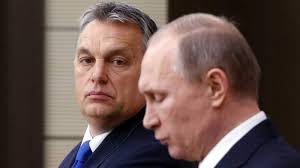
This change pivoted on his relationship with Soros, who Orbán has transformed into a figure of hate for the far-right internationally. Equally, Orbán flipped his view on Russia. He had been highly critical of Russia’s 2008 invasion of Georgia, but soon after, following a visit to St Petersburg to meet Vladimir Putin, Orbán started to change his stance on Russia.
For much of the past sixteen years, Orbán has commanded a large amount of popular support, though his actions and attitude in going against the grain of the EU have cost Hungary – in the last fifteen years, Hungarian GDP growth has lagged that of Poland by 0.8% per annum, tens of billions in EU aid has been withheld, and corruption has become institutionalised under Orbán. Budapest has become a staging post for the Russian security services and teachers, women, judges, amongst others have suffered in ways they would not expect in a normal European country.
In this context, the general election in Hungary (April 12th) could become a critical turning point, and is highly important for the EU. At a broad level, polls point to a victory for Peter Magyar of the Tisza Party, with the majority of the opposition parties in Hungarian politics having swung behind him. However, in the context of extensive gerrymandering, a propensity for ethnic voting groups (Hungarians living abroad and Roma in Hungary) to tilt toward Orbán, and the capture of state institutions and budgets, the outcome is highly uncertain.
Not only is Orbán an ally of Moscow (Orban’s team has been accused of leaking confidential EU discussions to Russian officials, and Orbán holds frequent meetings with the Russian foreign minister), but he has become the darling of the international MAGA movement. Orbán’s campaign been endorsed by Benjamin Netanyahu and Donald Trump, Marco Rubio visited Budapest in mid-February and vice president JD Vance will travel there on April 7th, just before the election.
There are already allegations of impropriety and vote rigging against Orbán, in what will be a hotly contested election, and deep suspicion of social media influence by Russia, not to mention the support of the White House.
EU leaders fear a close election or that Orbán, having lost the vote, will use his remaining days to change laws and appointments to key institutions. The example of Poland is being mentioned, where on taking power Donald Tusk faced years of difficulty in removing hard-right opponents from media and other institutions.
As such, the EU will have to invest enormous time, energy and capital in remaking Hungary. The short-term gain for the EU will be the absence of the Hungarian veto on European foreign policy stances, notably so in the case of Ukraine.
Should Orbán win, or continue to contest a close vote, a more existential issue faces the EU that will centre around a gathering debate on how to further sanction and potentially expel an EU member that is steadfastly recalcitrant.
Lurking behind the election, is a deeper foreign policy issue for Europe, in the context of several major wars and the disintegration of NATO, the need to combat more fiercely interference in the democratic processes of EU member states.
Have a great week ahead,
Mike
 The Levelling