


A long time ago, when I completed my postgraduate studies, I shelved my thesis (on the relationship between corporate governance and company performance) away in a dusty library, thinking that, like many academic works, it would have no relevance in the world of business. Yet, soon after, as the tide went out on the dot.com bubble, a series of major corporate governance scandals surfaced (Enron being the most prominent).
Hopefully my sense of timing is better with experience, and I have started to think of the corporate governance/performance link again. There are a few recent triggers. The value of Intel, having languished in the doldrums for decades, has recovered toward the levels seen in 2000. Taiwan and South Korea, as we noted last week, have become two of the largest stock markets in the world. A range of valuation measures for the US market and indicators of retail participation in the market, are at 2000 nosebleed levels. It also seems that technology companies are growing on steroids, Samsung has become a USD 1 trillion firm last week and Nvidia is now worth USD 5 trillion.
The really new development is the advent of mega-cap startups like Anthropic and SpaceX, both of which have raised capital at valuations close to USD 1 trillion. Trotting behind them, according to the May edition of the Pitchbook Unicorn Tracker (a unicorn is a private company with a value of USD 1bn or greater), are 1,680 unicorns. There were 44 when the term was coined in 2013. Today’s unicorns are worth close to USD 9 trillion (the top 3 companies are worth USD 2.5 trn). About 40% of the total unicorn value is made up of AI firms, which suggests that they are very young indeed. In the history of economics and business, this is an entirely new phenomenon. For it to have happened, several things have changed since the dot.com bubble.
The first is that public and private markets have grown impressively. Not only are US public markets the largest that they have been relative to GDP, but private capital (private equity, venture capital, etc.) is now becoming a sizeable source of financing internationally. As it does, different forms of investor are emerging within it – private credit is the one that currently gets attention, but many growth capital investors have helped to push unicorn valuations to extremes for fear of missing out on hot deals. For example, the median value of late-stage venture deals in AI firms is now USD 5bn, a USD 4bn premium on non-AI firms.
An interesting new element in capital structure is that new, fast growing firms count governments as shareholders, as well as the ranks of former officials and those in the political ecosystem (France’s Mistral is a case in point). Further, the large technology firms have also become active venture investors, and in many recent earnings reports the item ‘other income’ popped up, showing how the likes of Microsoft are already reaping the benefits of their investments.
Two other significant changes are worth flagging. The advent of social media and, more recently, AI-driven commerce means that successful companies can grow very quickly. Large established firms like Apple, Microsoft and JP Morgan have taken decades to grow but are being ‘caught’ by young companies with relatively small workforces, and the effect is disruptive — largely, though not always, positively so. This is much less the case in Europe, which also lacks the small but critical cohort of individuals who know how to build and scale new firms rapidly.
The emergence of a new business model is well-timed for the evolving world order. Recall that the Joint Stock Company Act of 1844 helped to spur the expansion of the British empire in the 19th century, the arrival of the ‘global business model’ (Theodore Levitt’s 1983 essay ‘The Globalization of Markets’ captured this development) was the modus operandi through which America transmitted globalisation around the world (or as one economist put it multinationals were the ‘B-52’s of globalization’).
However, to my original statement, the arrival of new, fast-growing, private companies (many of which are pre-IPO firms), comes at a time when corporate governance in the US is at a low ebb, in terms of the alignment of executive pay with outcomes, active boards, shareholder vigilance, and oversight by institutions like the SEC and Department of Justice.
Further, new, young companies bring their own governance foibles. Many are led by individuals with strong personalities, a necessary quality in startups, many would argue, but an undesirable one from a governance point of view, especially where technologies like AI demand ethical guardrails in their deployment.
Further, many fast growing firms have complicated capital structures and voting rights. In the past, slower-moving capital market cycles and better regulation might have weeded these out, but have instead become the norm. Incorporation in regulatory ‘paradises’ (more businesses are set up in Texas for instance), the prohibition of shareholder class actions, non-profit structures and heavy share-based compensation have become the norm. This matters because more retail investors can access ‘soon to be private’ companies, in addition to subscribing for IPO’s.
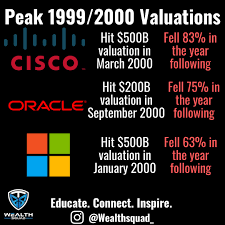
Above all, many of these firms have as yet little to show in terms of profits and in the context of stratospheric valuations, the risk of a bubble is high. Once the AI capital expenditure boom slows, the tide will go out —as Warren Buffett famously observed, and many will lose their capital, and will wonder if they should have paid more attention to corporate governance. If they do, I have an old study to share with them.
Have a great week ahead
Mike


