

An unusual but non surprising cameo in the response of the UK to the burgeoning energy crisis that is resulting from the Iran War, was the inclusion of Bank of England Governor Andrew Bailey in last Tuesday’s emergency COBRA (Cabinet Office Briefing Room) meeting. The prospect that inflation and a cost-of-living crisis could further derail the fledgling economic recovery in the UK, has struck fear into politicians (the OECD reckons that the UK will be the worst hit country), though monetary policy purists won’t like the appearance that the independence of the ‘Old Lady’ (the Bank not Bailey!) is compromised.
What is more interesting is that this is yet another datapoint in a trend where finance, war and politics are becoming interwoven. In peacetime, central banks were the only game in town, the monetary battleships of the 2010’s, keeping the peace in bond markets and tilting currency moves in their country’s favour.
That was not always the case, books like Liaquat Ahmed’s excellent ‘Lords of Finance’, show the key role that central banks played in maintaining the stability of war time economies.
Now, the world order that is unravelling before our eyes is more like that of the 1910’s than the 2010’s, and a particular concern for central bankers is the extent to which economies have become frictioned.
By this, I mean the extra costs and inefficiencies that are bubbling up because of the end of globalization (a period associated with intense commoditization of prices and low inflation), a pandemic of supply chain disruption, and great power competition for ‘rare’ things (from rare earths to rare places like Greenland to rare technologies like quantum computing).
In general, these frictions will tend to bump up the rate of inflation. A famous example is the way in which the side effects of the war on Ukraine combined with short-sighted energy policy in Europe to produce a prolonged rise in inflation from 2021 to 2022.
From the point of view of central bankers, inured to a decade of stubbornly low inflation, this was a surprise, and prominent members of the central banking community were badly caught out by their view that this burst of inflation was ‘transitory’. Their difficulty is that the economic context of the 2010’s was characterised by demand weakness whereas the main policy problem of the 2020’s is supply constraint.
We now live in an economy of ‘atoms’ (energy, commodities, deeptech), where historically huge amounts of investment capital expenditure is/are being deployed amidst supply constraints to build a new (AI) economic infrastructure. About half of this will be financed by different forms of credit. Within this model, the debate on the productivity benefits of AI, which has produced a wide range of estimates of the potential impact of AI on the economy, illustrates what a demanding environment it is for central bankers to read.
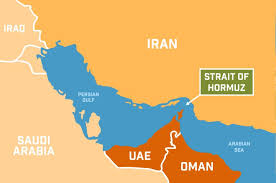
The potential energy shock from the Iran war complicates matters even more and raises the prospect of a policy error. Echoing the schoolboy mistake by Jean-Claude Trichet to raise interest rates in 2006 when a spike in the dollar helped trigger a spike in oil prices, current ECB President Christine Lagarde has stated that the ECB was ‘ready to raise rates’. This may be a pre-emptive move to push markets to do the ECB’s job, and to warn companies and unions off raising prices. If not, Lagarde and other central bankers should do no harm. A rate rise from the ECB will do nothing to re-open the Strait of Hormuz (good note on the disruptive effects from the Kiel Institute), nor to rebuild refining capacity in the Gulf states.
The dilemma for central bankers is in distinguishing between an energy centric rise in prices and an eventual generalised rise in inflation expectations.
In my view the economic consequences of the Iran War can be short lived, but as long as it endures, amounts to a tax on consumers, a hit to risk appetite and a blow to confidence in US financial assets. Furthermore, the many costs of the war (see our note of two weeks ago, ‘It will be over by Christmas’) include a rise in the debt burden that countries like the US and UK will suffer, and an elevated level of uncertainty as the world’s former policeman turns bully.
It could be worse for central bankers, they could be politicians, who now must contend with another cost-of-living crisis, with little money left in the fiscal jar.
Have a great week ahead, Mike
 The Levelling