A Land Full of Vibrancy and Hope

Avid readers of the ‘Levelling’ book will know that some years ago, I wrote

Latin America remains part of the satellite region of the US pole. Sadly, it has been overlooked by Washington. The prime example of this neglect is Venezuela. The country is failing and in the grip of an underreported humanitarian crisis. Economically, this crisis may lead China to take a deeper role in Venezuela and in its oil production. Diplomatically, the lack of a comprehensive reaction from Washington brings to mind an article entitled “The Forgotten Relationship” that Jorge Castaneda published some years ago in Foreign Affairs in which he bemoaned the deteriorating relationship between Latin America and the United States.

Finally, my pleas are heard, and the White House is organizing a rescue (by gunboat) of Venezuela, and possibly much of Latin America.

While it is hard to know how the new engagement between the Trump administration and the fifth largest repository of oil reserves is going to play out, this administration is different to many of its predecessors in taking an active interest in Latin America – note the partisanship with regard to Brazil, generally good relations with Mexico, a chumminess with Milei and the likely support for the new president of Chile.

Despite very active backchannelling between the US military and the Venezuelan army the course that events might take is unclear, and laden with risks – the chaos of popular unrest in Venezuela, the risks that criminals in Venezuela and surrounding countries become involved (and strike in the US), or indeed the risk that other actors or countries use any regime change in Caracas to hurt the US, cannot be ruled out. Another risk is that some of Venezuela’s allies – Iran, China and Russia – become obstreperous, and dig in with Maduro and his cohorts, or that they use any change of government in Caracas to further their own ends. It is worth noting that only last week China launched a policy document entitled ‘Latin America and the Caribbean: A Land Full of Vibrancy and Hope’.

This is a significant risk of the Trump administration’s fetish for a spheres of influence motivated foreign policy. In the recent school boyish ‘National Security Strategy’, which has caused great anguish in the diplomatic parlors of Europe, the document refers to the ‘Trump Corollary’ to the Monroe Doctrine.

For context, the Monroe Doctrine was likely the first coherent, muscular expression of American foreign policy – at the time it was aimed at keeping the Spanish and other pesky European powers out of Central and Southern America. Indeed, the dithering by the large European powers (notably France) over the long running Mercosur trade agreement, suggests that the European dare not go back to Latin America.

The NSS document gives a good deal of attention to Latin America, and this tilt will have the active support of Secretary of State Marco Rubio. Like it or not, Latin America is now in Washington’s sphere.

However, more generally, the establishment of a spheres of influence mindset in international relations may give the likes of Russia and China the sense that they may do as they wish in their own spheres of influence. In the same way that the invasion of Iraq, on the basis of flimsy evidence of weapons of mass destruction, apparently led Vladimir Putin to believe that the West was no longer respecting the rules of the international order, the ‘Trump Corollary’ strategy is a green light for bad policy actors.

That would of course be bad news for Taiwan, and perhaps Vietnam, the Philippines and Japan, who all to some extent count on the notion of a US security guarantee for Taiwan. It may also prove confusing for the US military which, when not loitering off the coasts of Cuba and Venezuela, is organized around the concept of a grand battle in the South China Sea.

Beyond the obvious implications for Ukraine, there are plenty of other open questions – will China take the ‘Stans’ from Russia, and who gets Africa? Russian mercenaries have forced France out of at least seven countries and China has a hand in nearly every African economy. The cancellation of US AID is already having deadly consequences for human and animal life.

A world of spheres of influence might conjure the diplomacy of the Great Game, but it would leave many countries worse off, and the nondemocracies of the world free to abuse their military and economic power.

A forlorn reminder of this was the jailing of Jimmy Lai, the Hong Kong democracy activist last week. Few Western governments were audible in protesting this act, save Britain, which used to count Hong Kong as part of its sphere of influence (Lai has British citizenship). The silent snuffling out of democracy in Hong Kong is the act that brought the curtain down on globalization in my view. An American spheres of influence foreign policy will sow further chaos. 

Have a great Christmas week ahead, Mike (there won’t be a note next week, we return on the 4th January)

Watching and Waiting

N’interrompez jamais un ennemi qui est en train de faire une erreur.

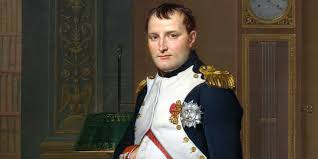
During the Battle of Austerlitz, Napoleon quipped to one of his commanders (General Soult) that one should never interrupt an enemy when he is making a mistake. Austerlitz was one of Napoleon’s tactical triumphs, but some seven years late the Emperor gathered one of the largest armies ever assembled and crossed Russia. The Russians burnt Moscow, harassed the French army and then patiently waited for the cold weather to cruelly teach Napoleon the error of his way (Sylvain Tesson’s book ‘Berezina’ offers a lively account of the retreat from Russia).

In a similar vein, as another modern-day, would-be emperor careens from financial calamity to geopolitical catastrophe, my sense is that the world beyond America, is best served by waiting and watching.

In the next two months the economic damage to America from the tariff campaign will become clear. The corporate earnings season has just started – some of the large banks have done well from the trading volumes created by market volatility – but as the focus turns to technology and other export focused firms, we can expect to see significant drops in earnings, a development that will make the still high valuation multiples for the US stock market hard to sustain. Relatedly, while investment banks are profiting from volatility, most of them are reporting that capital markets activity (public offerings, mergers and funding rounds for private equity firms) have stopped dead.

This is a shock for Wall St. With president Trump having installed a market trader as commerce secretary, a hedge fund manager as Treasury, a private equity titan in the defence department, and so on, capitalists might well have thought that the White House was on their side, but the annihilation of up to 8 trillion dollars in market capitalisation has proven them wrong. There is I imagine, a limit to Wall St’s patience and the pushback on policy will grow.

As it does, the hard (as opposed to ‘soft’ survey) data is likely to worsen dramatically, and the US will enter into an economic breakdown. At the start of this year I had sifted through the IMF GDP forecasts for 2025 and 2026, where uniquely they expected nearly all of the world’s economies to register positive growth. From this starting point, a global recession was a very low probability, but the Trump administration has blundered into one.

Now, policy makers in the US and abroad are realising that watching and waiting is the best way to entice Trump away from his tariff policy. There were signs of this on Wednesday when the Federal Reserve chair declared that tariffs would augment inflation and make it much harder for the central bank to cut rates. This statement represents quite the departure for a monetary authority that has greeted every flicker of economic trouble with lashings of cheap money. Mr Powell knows very well that it is not the job of a central bank to fix the mistakes of an errant policymaker, and very likely that a short, sharp market shock now might deter a great fiasco (and the credibility of the dollar) later.

In contrast, other central banks, who are unburdened by any sense of conflict of interest with Mr Trump, can feel much more free to cut rates into a coming recession, as the ECB did on Thursday. In that context, we may see the dollar strengthen in coming weeks, and much of the stress of the White House policies on the economy, transferred to the corporate bond market.

Then a key, patient player in this unfolding drama is China which, whilst it has deep economic faultlines of its own, is politically and socially coherent enough to weather the onslaught from Washington. Like the Russians who took on Napoleon, China’s strategy is partly one of endurance, partly ‘guerrilla’ (think of rare earth export controls, supply chain manipulation leading to shortages of goods in the US) and a patient attitude to the market turmoil that is starting to undermine the financial credibility of the USA.

Europe may follow suit. Giorgia Meloni spent Thursday in the US with president Trump and then raced back to Rome to host JD Vance. Her visit was useful in terms of Italian and EU diplomacy, but the EC is carefully signalling to Washington that any negotiations on trade will have to be done through Brussels alone, which as the Brexit process revealed, is a hard defence to breech.

Napoleon left Moscow in the middle of October 1812, eventually to creep into Paris just before Christmas. His army was devastated, only 100,000 or so men from an initial force of 600,000 survived. Donald Trump is no Napoleon. In two months’ time the US economy may well be in a state of disarray, consumer confidence and confidence in the president will likely have plummeted further, and the world will be watching and waiting for his capitulation.

Have a great week ahead

Mike

Learning to Love Lenin

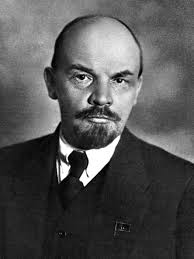
I’ve spent much of the past quarter of the year zigzagging across Europe and the US, cursing Vladimir Lenin as I went. He is reputed to have coined the phrase ‘there are decades where nothing happens; and there are weeks where decades happen’, which in turn has been repeated back to me wherever I went. I shouldn’t be too grumpy though, because the ‘Levelling’ is now playing out at high speed.

Since Donald Trump entered the White House for the second time, so much has happened that I want to use this note – coming at the end of the first quarter of the year, to discern new emerging trends from noise, across four different domains.

Bonfire of Diplomacy

The first emerging trend can be characterised by the image of the bonfire of diplomatic relationships, which started at the Munich Security Conference and has continued apace since then. Gone is the cosy globalised world of Bill Clinton and even George W Bush, where America was a benevolent colossus, keeping the peace, spurring prosperity, and putting out financial fires. In my travels, I found myself recommending investors to read Adam Smith on the topic of mercantilist economic behaviour, Palmerston on foreign policy (‘we have no allies, only interests’) and that they acquaint themselves with Peter Hopkirk’s ‘Great Game’.

In brief, my sense is that the Trump team wants the US to become a hyper-charged nation-state, rather than the hyperpower that it was. Whilst there is much consternation in Europe and parts of Asia about this, I do not yet detect widespread disapproval from many Americans I speak with.

Aux Armes!

A consequence of this is Defence Union in Europe. Echoing the French president, we are all ‘strategic autonomists’ now. Many of the urgent phases in this journey are already being undertaken – the publication of the pragmatic EU White Paper on defence, the EU’s new Eur 800bn loan facility for defence spending and critically Germany’s decision to loosen the debt brake provision on defence spending.

Some intelligence agencies (Denmark and Finland for instance) estimate that in the event of a peace deal in Ukraine, Russia would be ready to launch a war on a European country in two years’ time, and in five years could have rebuilt its military to a level that it could consider a war against the EU. The Nordics, Baltic states, Poland, Germany, France and of course the UK appear to buy into the seriousness of this threat, but there are notable defence laggards, namely Spain and Ireland.

Neither does it seem that there is sufficient urgency on the security front – my experience was that Russians were omni-present in the cafes of Vienna and arguably not enough is being done to sanction governments that are apologists for Moscow (i.e. Hungary).

The one aspect of the European revival story I need to be convinced on is the cultivation of a pro-growth socio-economic outlook in countries like France, and specifically, of the need to instigate capital markets union (CMU), which whilst not a vote winner for politicians, is a necessary development for a stronger European economy.

Oops – muscle not fat

The economic policy of the Trump administration is difficult to decipher through the noise of chainsaws and crashing of markets. At its core, I detect a nihilistic fiscal conservatism – a desire to shrink the fiscal deficit and by extension the enormous debt load that means that the USA pays out far more in interest payments What is causing dismay is that the policies enacted to temper the growth of the economy are cutting economic muscle not fat. Universities, researchers, and essential parts of the science establishment are being undercut, and socially it is disturbing to see veterans bearing the brunt of DOGE. More importantly, the shredding of the rule of law and politicising of justice have never helped any economy (Turkey is the case in point).

Whilst much of the media coverage of the Trump economic policies has focused on the harm caused by tariffs (they should be applied in small, not massive doses), not enough attention is given to how corporations will react to policy uncertainty. In a recent note I described Avinash Dixit’s theory of how macro uncertainty causes companies to ‘wait and see’. In that respect the forthcoming earnings reporting season and corporate action calendar bear close watching.

Exceptionally expensive

Allied to the outlook for the US economy is a growing realisation on the part of investors that American assets (the dollar, stocks and corporate bonds) are very expensive, and dominate portfolios. In this regard, the Liberation Day announcement should worry investors. One is the sheer carelessness and apparent incompetence of the tariff policy – it has exposed the lack of analytical capacity in the administration and a lack of concern for the economy. Trust in the administration is draining.

The other is that it has reminded investors of their exposure to US assets. At this stage, the majority of asset allocators in the investment industry still appear content to persist with very conventional portfolio structures, that are arguably not configured for a rapidly changing world.

One thought experiment I perform with investors is to show them how portfolios have changed through time. For example, in 1900 nearly 50% of stocks were railway companies, and the UK made up 25% of the world stock market (close to 3% now). Today the US weighs in at close to 68% of world equities, and my sense is that with the dollar still relatively strong, allocators should start to sell American exceptionalism in the sense that it is impounded in stock valuations.

A final lesson from Lenin might help them. For much of the period of the first wave of globalisation (1870 to 1900) Russian equities comfortably outperformed American companies. But, having been shut for much of the First World War, the Russian exchange opened again in January 1917. Then came the Revolution and the market dropped to zero and shut for 75 years.

Political risk matters!

Have a great week ahead,

Mike

Another Tea Party?

The Boston Tea Party is an early example of how a trade dispute can reshape an economy (Boston) and foment political change. It is iconic enough that the first presidency of Donald Trump was prefigured by the rise of the Tea Party as a disruptive force in Republican politics.

With the presidential election not far off now, tariffs form the spear-end of Donald Trump’s economic strategy, potentially because he can implement them unilaterally (without the approval of the Senate). In addition, many of his acolytes, from Robert Lighthizer to Peter Navarro, are ‘trade’ obsessed, and have recently published books like ‘No Trade is Free‘ to underline the ways in which they would re-order the international trade system.

In addition, other members of the Trump entourage such as Robert O’Brien, the National Security Adviser (2019-21) has in the July edition of Foreign Affairs Journal invoked the idea that American can bring peace to a disordered world through ‘strength’. In this vision, strength comes in the form of 60% tariffs on Chinese goods and export controls, a message that has repeatedly been emphasised by Trump himself.

In that context, a second Trump presidency could begin with a trade war, and a verbal assault on the currencies of ostensible allies that have weakened in recent years, such as the yen. American consumers and potentially the bond market might pay the price of tariffs (we wrote last week that Trump wanted to fund the development of a sovereign wealth fund with revenues from tariffs).

Trade wars are generally not successful, and while Trump may have in mind America’s trade spats with Japan (1987), the weight of past trade disputes going back to the Smooth Hawley Act suggest that there are better ways to guard American economic power. China could respond with measures that cripple supply chains for at least a couple of years. In this scenario, a trade confrontation between the US and China would decisively shatter the axis of globalisation as we know it, and finally render the WTO (World Trade Organisation) obsolete.

A US-China trade war might have many other consequences.

One might be the rise of populous south Asian (and southeast Asian) from India to Bangladesh to Pakistan, Indonesia, Thailand and Vietnam, with Singapore as their organising locus. Many of these countries are urbanising and rolling out infrastructure, most of them need but distrust China, and in most cases aspire to closer commercial ties to the USA. Tariffs on China by the USA will accelerate supply chain de-risking by Western multinationals towards these countries, though this could well complicate their relationship with China.  

A second consideration is Europe. The EU has been caught by surprise by the consequences of several Biden administration policies – the Inflation Reduction Act and the CHIPS Act – which illustrates that US international trade policy is usually made with a view to domestic politics. A second Trump presidency should be no surprise to Brussels, and there is a small but important team of officials working on a policy response to a potential trade war on Europe by Trump.  Europe’s trump card may lie in its role as a partner with the US against China. It will be difficult for Washington to reshape trade relations with China, Europe and potentially Japan by taking each one on. Stymieing China is better done in collaboration with Japan and Europe, and Trump should really see the constraints of the policy situation that faces him.

A second Trump presidency will be different to the first in the sense that he has had time to prepare for it, and crucially, his supporters have had four years to concoct a policy strategy (‘2025’ seems to have dropped out of headlines). In the same way, a Harris presidency comes with deeper reserves of policy experts, and to a large sense on the international trade and economic outlook, the Harris case represents ‘more of the same’ in terms of the techn0-strategic economic policy that is currently pursued by the White House.

An idealised, and though I like the idea a lot, too lofty rendition of this policy is Walter Russell’s Mead’s September Foreign Affairs essay entitled ‘The Return of Hamiltonian Statecraft’ which argues for the very un-Trumpian notion of ‘enlightened patriotism’.

In this context, a Harris White House would use trade and investment policy to laser focus on America’s race with China for global supremacy. Driving Chinese economic and investment activity further inwards might be one goal, and ironically anything Washington can do to make Chinese public life more closed and repressive, the better (because it curbs innovation and wealth creation).

At the same time, the US and Europe, would both pursue parallel strategies of ‘strategic autonomy’ or what Trump refers to as ‘strategic national manufacturing’ focused on sectors like defence, new computing power (quantum, AI, data storage and management), batteries and new power sources and revolutionary medicine. Europe’s challenge is to find a way of reducing long-term energy costs.

Kamala Harris, who has trialled a few incoherent policies (taxes on unrealised capital gains, price controls) is likely to be more constrained in her fiscal policy – because her government is likely to instinctively focus more on tax and spending changes, for which she will need the help of the Senate (which in turn could tilt towards the Republicans). As such her fiscal policy will focus on not increasing the national debt, and like many other governments, encouraging the private sector to work with government to build out strategic technologies.

I am so far surprised that markets do not seem to price in uncertainty over trade policy, possibly because they are more focused on falling interest rates in the US, Europe and China. However, the next month will start to reveal how seriously financial markets take economic rhetoric of each of the presidential candidates.

JD Goes to Washington

I have twice shared a stage with J.D. Vance, which at the time of writing puts me one ahead of Donald Trump. On both occasions, Vance’s book ‘Hillbilly Elegy’(I managed to get a signed copy, for my mother-in-law) was seen as offering people a glimpse as to why working class America was switching their traditional allegiance from the Democrats, towards what they perceived to be ‘system-smashing’ politicians like Donald Trump. Indeed, to my own reading, a large section of Irish-America has recently made this political journey.

I thoroughly enjoyed Vance’s book, had widely recommended it, and would continue to do so. He has had a fascinating life, which I am sure will get ever more interesting. Somewhat ironically given the Trump political program, Vance’s success in life is testament to the role of institutions (US Marines and education (not unlike Barack Obama)) and in my view is an argument for greater government spending on education and more open access to elite education in the US.

When I spoke (at two separate conferences) with him, my unkind thought was that he expressed himself better – more thoughtfully – in writing than in the spoken word. That seems to be changing, and Vance has clearly crafted an ability to provoke. Much has been made of his intellectual journey to the extreme right of American politics, something that has become the norm as the Republican party has become shattered by Trump (a contemporary of mine – an elite soldier and former governor – has also veered off to the extreme right). As a result, the press is full of speculation on Vance’s views on the dollar and Ukraine.

Vance is in many respects the opposite of Trump in terms of his life story – he started poor, became a soldier, ‘pulled himself up’ through education and has now converted to Catholicism (thanks in part to the Dominicans). Trump had a privileged upbringing, disdains learning and the military (‘losers’), and could not possibly be more irreligious.

Curiously, the Catholic Church in America, which is much more conservative than that outside the US, appears to be attaching itself to the coattails of the Trump movement, a tactic that helps to explain why it is the largest, oldest institution the world has known.

Vance may now reflect on the role of vice-president, and what this will mean for him. In general, it is a political graveyard, populated by token political players. That Kamala Harris has not carved out a serious role in American public life is testament to this. There are, however, two examples of very effective vice presidents – George W Bush, who was more like a prime minister to Ronald Reagan, and Joe Biden, whose experience and vast range of political relationships meant that Barack Obama was tethered to the political establishment.

In this context, Vance, the critic of elites, is at an interesting point.  Since ‘Hillbilly’ was released, he has been mixing more with the American elite, in the technology, policy and venture capital worlds. If he enters the White House with Trump, he will come up against the full complexity of the American power machine.

Here I recommend Robert Reich’s excellent book ‘Locked in the Cabinet’. Reich, a professor of labour economics, was appointed Labor Secretary by Bill Clinton, and the book recounts how his optimism and idealism left him outmanoeuvred by those who ‘really ran the world’ (Robert Rubin).

Another book that I know Vance has, is Chris Wipple’s ‘The GateKeepers’ which is. fascinating study of seventeen chiefs of staff to American presidents. Trump notoriously went through several chiefs of staff, but in many cases the chief of staff can be the most important player in an administration (Jimmy Baker is the most often cited example).

So, for all the clamour around Vance, he might well – like Robert Reich – find himself sidelined by the team around Trump. With the European press over-obsessing about Vance, this is where the real risk lies. The first Trump presidency was chaotic. The second will come armed with a mission to transform America, potentially along the lines of the Heritage Foundation’s Project 2025’. I will devote more time to this, but in short it is an aggressive plan to re-make American government (politicised), society and the foreign policy. As a recent article in Foreign Affairs put it, this will be an ‘Imperial Presidency’, shorn of the constraints that have shaped American public life for the past two hundred years.

To Europe, the US under Trump will look more like China – driven by a single, imperial leader, obsessed with the viability of domestic industry, slow to help allies and much more transactional in foreign policy, and will use financial policy in a more selfish way. Consistent with the end of globalization, there will no longer be an effort to transmit American values, a la George W Bush and Bill Clinton.

In short, it will be an America that few of us will recognise.

Have a great week ahead,

Mike

The Art of Politics

The Future?

One of the telling quotes in ‘The Art of the Deal’ (Tony Schwarz and Donald J Trump) goes ‘You don’t reward failure by promoting those responsible for it, because all you get is more failure’.

That might also be the view of the American people, though given the very close-run Presidential election, it is hard to know what is on their minds, and what they define as success or failure. If the COVID-19 outbreak hadn’t happened, we might easily have seen a robust victory for Donald Trump.  

Previously, in the aftermath of contested elections – from 1876 to 2000, a sense of compromise has eventually prevailed. In previous elections, the vanquished candidate respects the ‘majesty of democracy’ as George H Bush put it. They are then praised, and in some cases such as Jimmy Carter to George W Bush, their reputation rises the further out in time they go from their time in office. This time, as they say, might be different.

It is hard to see how Donald Trump’s reputation can acquire a rosy hue, but at the same time he has stamped his mark on American politics, and it is now clear that his election in 2016 was not an aberration.

Trump will not leave the political scene in the way other presidents have – I suspect he will continue his presidency virtually through twitter and a tv show, and his daughter may soon, in the fine tradition of dynastic America politics, run for high office.

The telling factor that supports the case that Trump will not ‘go away’ is that he has established a new political method and has transformed the political landscape in the USA. This is not to be confused with the notion of a ‘school of thought’ or political philosophy, but rather an approach or what we might call ‘art’ of politics.

It has several elements, which may well be adopted by aspiring and incumbent political practitioners across many countries.

One pillar is ‘to break things’. Trump has a gift for zeroing in on derelict institutions, political opponents and viciously undermining them. His international political legacy has largely been to nobble many of the institutions of the twentieth century – NATO, the WTO (World Trade Organisation), WHO (World Health Organisation) and the UN, to name a few. In this respect his place in history will have been to bookend the closing of the period of globalization by attacking and neutering the institutions of the ‘globalists’.

While Trump is not a builder of institutions, I feel that lily livered, liberal politicians of the centre should more actively question the relevance of bodies like the WTO, and at very least repurpose them. NATO and the EU both need to review whether the composition of their membership makes sense in the light of the behavior of countries like Turkey and Hungary, respectively. German politicians in particular need to put on the ‘Trump hat’, even momentarily, and question the world around them.

One lesson from the Democrat showing in the election is that there is a strong appetite for change, and in some cases reform, across America and that this needs to be met by what politicians offer to the public. This is just as much true for Europe as it is the USA.

This is about as far as I would go in demanding that mainstream politicians emulate Donald Trump.

He has other gifts though – like Herbert Hoover with radio, Reagan and Kennedy with tv, Trump has a gift for (social) media. That social media is setting the rhythm of political cycles is not a new thought, but Trump’s successful banalization of the political world through it is.

In a recent note (‘Democracy’s Depression’, 24 Oct) I wondered if better policing of social media content, more reliable internet user identity checks and improved filtering of facts should make social media richer, and a better platform for discussion. Europe and a Biden administration might even work together on this. The cohabitation of a Democratic President and Republican Senate make policy avenue an unlikely one however.

Trump also it seems has the ability to set people free – from laws, common sense, decency and reality. In this regard he is a masterful populist.

The great danger for politics in general and democracy in particular, is that other ‘sorcerer’s/sorceresses’ apply Trump’s tricks, without his profane charm. This will lead to a degradation of society, and commensurately places a high bar on what Joe Biden and Kamala Harris need to do to repair America. What has troubled me most in recent years, is the ease with which democracy and the rule of law has been eroded in the US and other countries.

The risk now is that it may require even deeper divisions and then younger generations (I am thinking of ‘Ivanka ‘24’, ‘Pete ‘24’ and ‘AOC ’24’) to banish the spectre of Donald Trump.

Have a great week ahead

Mike

Fantastic Corruption!

Cameron explains corruption

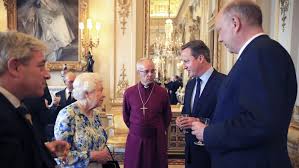
In May 2016, at a summit on anti-corruption the then British Prime Minister David Cameron said in hushed tones to Queen Elizabeth, ‘We’ve got leaders of some fantastically corrupt countries coming to Britain… Nigeria and Afghanistan, possibly the two most corrupt countries in the world’.

A month later he lost the Brexit referendum and the UK has been in a state of chaos ever since.

Nigeria most likely had little hand in Brexit, but the complacency of Cameron did. So too, according to last week’s Commons Intelligence and Security Committee’s report into Russian influence in British politics, did the openness of the Cameron government (and others) to the generosity of Russian donors (fourteen ministers in the Johnson government, including six cabinet ministers have accepted donations from Russians living in the UK).

Britain, which for so long and in the eyes of so many, is the country that has epitomized the rule of law (for instance see Tom Bingham’s book of this title). Its lackluster response to financial and other incursions by Russia, the politization of policy (Cummings v Whitehall) and the faulty response to the COVID 19 crisis have contributed to the view that the robustness of institutions and the rule of law are in decline in Britain.

It is not alone. Last week in an interview with CNN House Speaker Nancy Pelosi declared that the stock market was ‘rigged’, and that this might not be such a bad thing. For a country whose value set is based on capitalism, this is an astonishing admission, though less surprising in the context of the vandalization of the rule of law and institutions in the USA by the President. Most US Presidents have underlined the importance of the rule of law, from Eisenhower to Kennedy to Reagan, but not Donald Trump.

Like Downing Street, the change in moral tack at the White House points to the testing of core values in the two countries whose empires formed the basis of globalization (Britain in the 19th century and the USA in the 20th century), and in that respect, is yet another crack in globalization.

Policy makers in each country should play attention to the elaboration of the link between the erosion of the rule of law to the end of empire by Edward Gibbon in ‘The Decline and Fall of the Roman Empire’. More recently, there is plenty of evidence to show a link between economic growth, financial stability and the rule of law across countries.

If politicians in say the UK, or any other European country for that matter, are happy to take donations from citizens of Russia and China, it is harder for them to claim the moral high ground over China in foreign policy. It is equally problematic for US Secretary of State Mike Pompeo to travel the world looking to build an alliance of democratic countries against China whilst the rule of law is undercut in the US.

If the idea of the rule of law is going out of fashion in Washington and London, it is gaining some allure in Brussels.

Much has been made of the hard won result of last week’s European leaders’ summit (it was the second longest ever, only 25 minutes behind the Nice summit in 2000) in the sense that it has created fiscal capacity for the EU. While the classic division between fiscally conservative or ‘frugal’ countries and those like France and Italy who are fiscally indulgent was on display, a new fiscal fissure is opening up.

The agreement reached last week introduced some (yet mild) conditionality around the rule of law in terms of how it binds aid to EU members (the likes of Bulgaria, Romania and Poland are on the minds of Brussels). Though no sanction has yet fallen on the Viktor Orbans of the world this move is part of a new trend where European values are going to play a more prominent role in political discourse (seven of the top ten countries in the World Justice Project report on Rule of Law are EU states).

In the future, collaboration will be done less on the basis of geography and more on the basis of shared values – this might mean that bodies like NATO and the EU may lose rather than gain members.

It also means that the nations of the ‘old’ world need to realise that their economic and political advantage comes from the rule of law, and that the current race to the bottom in terms of practice of the rule of law, is self-defeating.

Have a great week ahead,

Mike

The Restoration

Team Restoration

The middle of the 17th century was an extraordinary period, especially for political and institutional innovation. The Treaty of Westphalia in 1648 gave us the nation-state, books like Hobbes’ ‘Leviathan’ were produced and in England the first expressions of popular constitutional democracy were aired. The tumult of the period was dampened with the return of King Charles II to England, in what was called ‘The Restoration’, which is a phrase that comes to mind when I think of Joe Biden’s Presidential hopes.

To start with, I won’t try to map the US in 2020 on to Europe in the late 17th century, save to say that both periods are marked by a sense of a ‘world turned upside down’.

However, the notion of an American Restoration is appealing in the sense that a Joe Biden Presidency would restore the thread of Democratic policy (through Obama to Bill Clinton), and very importantly would restore the competent workings and full staffing of institutions like the State Department. The idea is that the American machine of state (I wrote about the French one last week) would once again purr into action, and American credibility would be restored. The question for Biden, the Democrats and America, is whether he can accomplish more than ‘a Restoration’.

With Biden now well ahead of the President in most opinion polls on national and state by state levels, and Donald Trump sacking his campaign manager last week, the prospect of a Biden Presidency is now very real, though financial markets it seems are not yet pricing this in.

The success of Biden’s campaign and the tenor of his potential presidency will rest in good part on the extent of the economic damage ahead. If high unemployment and bankruptcies are a reality into the presidential debates in September and October, the tone of policy will tilt much more towards social justice (a topic where both Bernie Sanders and Elizabeth Warren are very comfortable).  

A Biden White House would likely focus much of its stimulus effort on infrastructure, particularly so in the ‘green’ economy. What is much less clear is the extent to which they would consider rejigging the tax system to place a greater tax burden on wealthier Americans and corporations. This may well be teased out in coming months. I also expect that foreign policy under Biden will be much more assertive, especially so towards Russia and China.

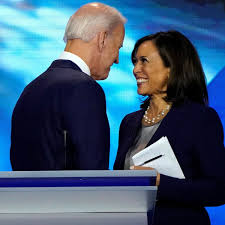
Biden’s next step is to choose a running mate. My judgement is that Biden will choose Kamala Harris as his VP, not least because she has a track record in policing and justice, which is one policy area which the Trump campaign is likely to amplify. Other VP candidates like Susan Rice may suffer from the fact that the Biden team already has a very well stocked foreign policy and security bench.

For his part (and provided he doesn’t drop out of the race!) Donald Trump will inevitably contest the election in a divisive way. Trump’s key weapon over Biden is his social media and network TV reach, and here he can do plenty of damage (to himself also).

There is plenty that he can agitate on – such as contesting the logistics of the election (i.e. postal voting), to stoking tension of topics that resonate with some voters – China, defunding police forces and the prospect of more economic stimulus. He may even claim credit for a COVID-19 vaccine, should it materialize before November.

However, such an approach may not win him a second term as it may merely serve to reinforce the views of the 40% of Americans who think ‘he is doing a good job’. Moreover, with a record number of women now contesting elections for Congress, and more states reacting in a constructive way to racial and other inequalities, the broad socio-political tide may be turning against Trump.

It is now widely recognized that Trump has vastly diminished America – it is financially weaker, its soft power is squandered and its institutions are less admired. He may now also wreck the Republican Party.

Should the Democrats take control of the Senate, it is not impossible that the rump of the Republican Party might split into those who share Trump’s political convictions, and those for whom he was a convenient political force. The ‘convictionists’ could form a harder right wing party, while the ‘conventionists’ might repent and try to rejoin the mainstream in the fashion of the country club Republicans of the Reagan era, led potentially by someone like Liz Cheney.

For their part, the dilemma is what tone to strike across states so that they take back the Senate. A mild ‘re-unite’ America approach is the most likely one, at the expense of the muzzling of the likes of Bernie Sanders. Once in power, the Democrats will be more interesting in that they feel more comfortable following the tack of the likes of Elizabeth Warren, and more emboldened in reinforcing regulation in areas like corporate governance and environmental protection.

A scenario that (according to polls today) brings about an end of Trump politically, cripples the Republican Party and reinstates the Democrats may well restore stability to America, but my worry is that it won’t change it, and much less so may postpone some of the radical policy that is needed to truly revitalize America.

The manifest social tensions, political stasis, and extremes in wealth/inequality as well as declines in human development indicators point to the need for more than a simple restoration.

Have a great week ahead,

Mike

Shemozzle

Shemozzle – Irish style

Mike Tyson is apparently coming out of retirement. America may need him. Last week on the Sino-Indian border Line of Agreed Control (North Sikkim to be precise) there was a mass brawl between Indian and Chinese troops. Helicopters (China) and fighter jets (India) were scrambled to add heft to the situation, which left several injured. The incident recalled the word ‘Shemozzle’ a Yiddish word that denotes chaos, uproar and confusion. In Ireland, sports commentators have used it to describe fights between opposing hurling or Gaelic football teams.

I fear that ‘Shemozzle’ now enters the lexicon of geopolitics, not least because tensions between nations are rising. One relationship to watch is that between China and Australia, where trade, political and diplomatic relations are worsening. I advise my Chinese friends to be wary – every time Australia play Ireland in ‘Compromise Rules’ football, there is a large scale ‘Shemozzle’.

The notion of a ‘Shemozzle’ is not a bad one to describe the world – tensions are rising as governments try to advance beyond lockdowns, and scarce resources such as vaccines will be fought over. In addition, the tension between markets and the reality of the economic damage from the coronavirus is growing.

In my April 4th note (https://thelevelling.blog/2020/03/28/why-did-nobody-notice-it/) I laid out three broad scenarios – an optimistic one called ‘Easter’ which outlined how much of the crisis could be over by the end of April, a more sober one called ‘Summer’ which flagged late summer as the point at which we should have largely mastered the effects of the virus, and then a tail, very nasty scenario called ‘Winter’ where the effects of the virus drag on and the economic damage is severe.

As it stands, it seems that equity markets have priced in the optimistic ‘Easter’ scenario while it looks more likely that economies and societies will get ‘Summer’. The tension between high equity markets and the real world betrays a range of factors – the oversized role of the Federal Reserve and wealth inequality for instance.

I am focused on the performance of small cap indices and bank stocks (as opposed to tech stocks) as the lead indicator of where the economy and markets will go, given the risk of a credit crunch. In general, the performance of banks has been very weak, with some like Wells Fargo in the US hitting March lows and others in Europe (e.g. Société Générale) hitting their lowest levels since 1991.

At the other end of the market the outperformance of technology stocks also reflects a lack of forward thinking that in the US as in other countries, corporate taxes will have to rise in order to offset the generous stimulus programs put in place by the government. The five large tech companies (FAANG’s) who make up 22% of the market capitalization of the S&P 500 index are vulnerable here, given their earnings. This is perhaps the so-called ‘black swan’ that investors have not priced in.

To stick with the idea of ‘black swans’, a phrase that is now in the popular lexicon as meaning a high impact event as opposed to a highly improbable one a la Karl Popper’s conception of the term, the two recurring ‘swan’ questions I keep hearing are ‘will Europe breakup?’ and ‘will the US and China go to war’. That people continue to think about these questions shows that in effect they are not focusing on events (black swans) but processes.

In particular, the evolution and deterioration of the relationship between the US and China is a process that bears watching. In a week where the Economist front cover declared ‘Goodbye Globalization’ an opinion poll from the Pew Research Centre showed that close to 65% of Americans have a negative view of China. This compares with only 30% some ten years ago and the darkening in Americans’ views of China tightly tracks the demise of globalization.

With rhetoric picking up, and supply chain restrictions on Huawei now more severe, there are three elements of this relationship to watch in the short run. One is the friction between China and American allies in Asia (Australia) amidst talk in China that it needs to prepare itself for military conflict. Another is the shift in supply chains, the most interesting development here is Taiwan Semiconductors’ decision to invest USD 12 bn building a plant in the USA. Also, China may respond in kind to the Huawei announcement on Monday.

Then finally, is the politics – lambasting China, however illogically (the President has stated that cutting ties with China would save USD 550 bn) creates political capital for Donald Trump, and as such we should expect no let up in anti-China rhetoric until November. The question is what damage this does to trade and diplomacy, and whether it leads to a real ‘Shemozzle’.

Have a great week ahead,

Mike

Peak Stocks, Peak Trump?

Only way is up

I recently gave a ‘Levelling’ related talk in Paris, where one of the points I made related to the way in which markets and finance have dominated our lives. I am often sensitive to the way markets are discussed in France. In contrast to the USA, where markets are seen as a source of wealth and to a degree, a part of American culture, in France, the opposite is the case.

This, in my view has something to do with France having a much longer economic history (August Landier and David Thesmar’s book ‘Le Grand Méchant Marché is worth a read on this point), and therefore more financial crises, than the US. Indeed, when John law was blowing up the French economy, the US was a ‘frontier market’ and colony of King George I.

One perspective on markets that I think interesting is they way they act as laboratories, signalling the impact of real-world events and economic policies. Markets can be brutally honest in this regard, pricing the effect of tragedies, wars and economic blight in an unsentimental way.

Some recent market behaviour has been revealing. For instance, the price of soya beans fell once the US and China signed their ‘trade’ deal. The drop in soya bean prices likely reflects a very sceptical view on the quality and enforceability (specifically that China would buy large amounts of US agricultural produce). In my view, this scanty deal only serves to provide the President with some politically helpful headlines, eases the stress on the Chinese economy and, profoundly underlines the fracturing in the relationship between the two countries.

In contrast to weakness in agricultural commodities, there are other market price moves that tell us little about the real economy, but a lot about how the plumbing of markets works. The recent, rapid rise in the price of Tesla stock is a case in point (the value of the company has doubled in the past six months and its equity value is worth more than the likes of Volkswagen, who produce far, far more electric cars). The rise in the value of Tesla tells us little about the health of the car market (modest in the US, weaker in Germany and China), but a lot about investor behaviour and the state of banking.

First, in terms of investor behaviour, by October of last year there was a sizeable community of investors sceptical that Tesla would ever become a profitable business. This set of investors had established large ‘short’ positions in Tesla stock. However, as markets rose, they were forced to cover or buy back these short positions, pushing the price ever higher. Anyone who thinks the sharply rising price is an indicator of Tesla’s future is mistaken, it is simply a function of investor positioning.

Another reason for the hubristic move in Tesla stock is that the federal Reserve has been infusing markets with more liquidity. There was a time when earnings, corporate strategy and good governance were determinants of stock performance. Today, in the USA at least, it seems that liquidity is the pre-dominant driver. In the aftermath of the global financial crisis, the banking system has changed in that the nature or species of participants in lending markets has become more diverse.

Hedge funds, private investors and asset managers now participate in lending marketplaces that were once the preserve of banks. The other change is that regulation has pushed banks to have smaller balance sheets, so to that end they are less sizeable players in many corners of financial markets.

At the same time, the amount of debt in the world has ballooned. The effect of this debt load, the changed composition of the banking marketplace and the refinancing pressures it puts on the marketplace is that the Fed now needs to lubricate the wheels of capital markets more often.

As it does so, it adds fuel to speculative fire, which in recent weeks has taken many measures of risk taking to extremes (Tesla’s rise is one example). Regular readers will know that I hold central banks guilty as charged for encouraging people to take on, rather than calibrate risks.

One upshot of this is that strength of the stock market is being used as a self-marketing tool by President Trump (in a recent note I commented that the number of his stock market specific tweets had increased sharply since November). Trump also loudly eggs Fed Chairman Powell on to be more accommodative. As such the Fed is now losing credibility, in a way not seen since the mid 1970’s, and it is entangling itself in asset prices in a way that will compromise it and the US economy.

As for President Trump, the potential near-term peak in equities might mean we have seen peak Trump, especially given the commencement of the impeachment hearings next week. His approach is that of a classically short-term property speculator – take on debt, pump up the value of an asset and then try to sell it. As he does so he is mortgaging the pensions of future generations, and potentially, his next four years in the White House. The stock market is due a correction, and so is Trump.

Perhaps someone, even in Paris no less, will write a book called ‘Le Grand Méchant Président’.

Have a great week ahead,

Mike