Let the Games begin

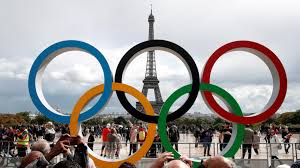
On Saturday morning I got up early to run the first and last parts of the Olympic marathon course, a few hours before the actual race. The course joins the most memorable parts of Paris with Versailles and is consistent with the spirit of the two-week Games in showing the accessibility of the city and its magnificence.

I have spent much of the past two weeks at the Games, mostly at the rowing, athletics and other endurance events like triathlon and bike (my favourite performances were Cork’s Paul O’Donovan and Fintan McCarthy –in the men’s lightweight sculls, Cassandre Beaugrand in the women’s triathlon, and the USA’s Grant Fisher in the 10,000m).

Once the security-driven tension of the opening passed, Paris relaxed and blossomed, and I think it is fair to say that the Games have been a huge success for Paris, France and the morale of the French people (their morale always needs boosting, their self-regard not so).

The success of the Games is a sharp contrast to the mood one month ago, when the country was confronted with the possibility that Jordan Bardella might be prime minister during the Games. Yet, Bardella has now effectively disappeared from public view. The question now is whether the success of the Games will colour the process of the formation of a new government?

My hunch is that it makes a government led by either the far left and far right less likely, and points to a preference for a centrist government – which I think is predicated on a split in the NFP left coalition (coming once they all return from holidays). I do not think that Emmanuel Macron’s reputation will be vastly enhanced by the Games, but they could be decisive in the race for mayor of Paris (Anne Hildago might opt to stand again, against the likes of Rachida Dati and Clement Beaune).

One reason that the atmosphere in Paris seemed so relaxed is that most of the Parisians left the city.

In my experience one motivation for this is that, unlike say England, there is no ‘sports culture’ in France (at least in the realms of the upper and middle classes). Achievement in sports is something for people in the regions, or the suburbs. Despite that, France does remarkably well in many sports like rugby, which is in effect played in a few regional centres (and professionally in Paris).

In this respect, the strong performance of France in the Games, allied to the even more impressive medal haul of Australia and combined with the lacklustre showing of larger countries like India, Brazil and South Africa (who have a combined four gold medals compared the six won by tiny New Zealand) begs the question as to what makes a successful Olympic nation, and whether these characteristics are correlated to economic achievement or even innovation.

Here, there are maybe three different models.

The first, which encompasses the English speaking nations (GB -5th place in the medals table, USA – currently 1st, Australia – 3rd, Canada – 11th, New Zealand – 12th and  Ireland – 16th) and some of the Nordics is based on what I call the ‘schools’ model, where sport is taught and practised competitively in the school system, and where this is valued culturally. In many cases, successful school athletes (especially so in Olympic sports) can continue sports at a very high level at university or clubs. Here the US university system stands out for the support it gives to athletes (from many countries, note that France’s hero Leon Marchand is a student at Arizona State University) and the vast resources that individual universities possess.

What is interesting from the point of view of the Olympics is that the national sports of the English-speaking countries – American football and baseball, hurling and Gaelic football, cricket, Australian rules – are not Olympic sports, and if anything draw talented athletes away from Games sports (and the Nordics have winter sports). It is still however an argument that a ‘sporting culture’ pays off.

The second approach is what I call ‘institutional excellence’, as exemplified by France (and it must also be said Australia with its world leading Institute for Sport), where promising athletes are funnelled through high level performance institutes and top flight clubs, and given support in terms of conditioning, psychology and diet. In the case of France, other institutions like the army also play a supporting role (19 of 52 French medal winners are soldiers). Japan and South Korea might also fall into this category, though it is worth noting the role that Japanese corporates play in supporting sports like running.

The third model is the ‘communist’ one which whilst communism has gone out of fashion, the communist system’s approach to manufacturing athletes has not, and is manifest in China, Romania and of course Russia. In these countries, within certain sports (rowing is one), promising physiological ‘specimens’ are channelled into specific sports and driven to compete. Whilst athletes from many countries have engaged in drug-fuelled enhancement, the ‘communist’ model countries have recently been the greatest offenders (Russia’s efforts here has been described as ‘state-sponsored and systematic’).

These are very broad sketches and will miss many elements such as the quality of individual coaching. One element they have in common is ‘age’ in the sense that most of the successful Olympic countries have been competing for a long time (the 1924 medal table was dominated by the USA, France, Finland, GB and Sweden) and I suspect that institutionalised expertise in many sports as well as a sense of ‘how to win’.

While my fellow Parisian Simon Kuper of the FT writes that there is a correlation between the level of economic development and Olympic achievement, I think it is more complicated. There does seem to be a correlation between sporting success and country pedigree (system longevity) and gender equality, and there does not appear to be a relationship between rate of development and Olympic achievement (China is the exception).

What is more interesting is the notion that the three above ‘Olympic’ models are related to different approaches to innovation. As we noted in last week’s brief, China has a state driven, ‘all-costs’, competitive approach to innovation, Europe’s is also state driven and resource-short, while the resource rich US university model (I would include Imperial and Oxbridge in the UK here too) tallies well with the centres of innovative excellence in the US.

If there is a lesson to countries like India, who perhaps want to be more successful (India sent a large business/socialite/media delegation to the Games) it is to focus on schools and colleges, develop a competitive sports program within its huge army, and copy Australia’s Institute for Sport.

Let’s see who does well in LA. 

Have a great week ahead,

Mike

JD Goes to Washington

I have twice shared a stage with J.D. Vance, which at the time of writing puts me one ahead of Donald Trump. On both occasions, Vance’s book ‘Hillbilly Elegy’(I managed to get a signed copy, for my mother-in-law) was seen as offering people a glimpse as to why working class America was switching their traditional allegiance from the Democrats, towards what they perceived to be ‘system-smashing’ politicians like Donald Trump. Indeed, to my own reading, a large section of Irish-America has recently made this political journey.

I thoroughly enjoyed Vance’s book, had widely recommended it, and would continue to do so. He has had a fascinating life, which I am sure will get ever more interesting. Somewhat ironically given the Trump political program, Vance’s success in life is testament to the role of institutions (US Marines and education (not unlike Barack Obama)) and in my view is an argument for greater government spending on education and more open access to elite education in the US.

When I spoke (at two separate conferences) with him, my unkind thought was that he expressed himself better – more thoughtfully – in writing than in the spoken word. That seems to be changing, and Vance has clearly crafted an ability to provoke. Much has been made of his intellectual journey to the extreme right of American politics, something that has become the norm as the Republican party has become shattered by Trump (a contemporary of mine – an elite soldier and former governor – has also veered off to the extreme right). As a result, the press is full of speculation on Vance’s views on the dollar and Ukraine.

Vance is in many respects the opposite of Trump in terms of his life story – he started poor, became a soldier, ‘pulled himself up’ through education and has now converted to Catholicism (thanks in part to the Dominicans). Trump had a privileged upbringing, disdains learning and the military (‘losers’), and could not possibly be more irreligious.

Curiously, the Catholic Church in America, which is much more conservative than that outside the US, appears to be attaching itself to the coattails of the Trump movement, a tactic that helps to explain why it is the largest, oldest institution the world has known.

Vance may now reflect on the role of vice-president, and what this will mean for him. In general, it is a political graveyard, populated by token political players. That Kamala Harris has not carved out a serious role in American public life is testament to this. There are, however, two examples of very effective vice presidents – George W Bush, who was more like a prime minister to Ronald Reagan, and Joe Biden, whose experience and vast range of political relationships meant that Barack Obama was tethered to the political establishment.

In this context, Vance, the critic of elites, is at an interesting point.  Since ‘Hillbilly’ was released, he has been mixing more with the American elite, in the technology, policy and venture capital worlds. If he enters the White House with Trump, he will come up against the full complexity of the American power machine.

Here I recommend Robert Reich’s excellent book ‘Locked in the Cabinet’. Reich, a professor of labour economics, was appointed Labor Secretary by Bill Clinton, and the book recounts how his optimism and idealism left him outmanoeuvred by those who ‘really ran the world’ (Robert Rubin).

Another book that I know Vance has, is Chris Wipple’s ‘The GateKeepers’ which is. fascinating study of seventeen chiefs of staff to American presidents. Trump notoriously went through several chiefs of staff, but in many cases the chief of staff can be the most important player in an administration (Jimmy Baker is the most often cited example).

So, for all the clamour around Vance, he might well – like Robert Reich – find himself sidelined by the team around Trump. With the European press over-obsessing about Vance, this is where the real risk lies. The first Trump presidency was chaotic. The second will come armed with a mission to transform America, potentially along the lines of the Heritage Foundation’s Project 2025’. I will devote more time to this, but in short it is an aggressive plan to re-make American government (politicised), society and the foreign policy. As a recent article in Foreign Affairs put it, this will be an ‘Imperial Presidency’, shorn of the constraints that have shaped American public life for the past two hundred years.

To Europe, the US under Trump will look more like China – driven by a single, imperial leader, obsessed with the viability of domestic industry, slow to help allies and much more transactional in foreign policy, and will use financial policy in a more selfish way. Consistent with the end of globalization, there will no longer be an effort to transmit American values, a la George W Bush and Bill Clinton.

In short, it will be an America that few of us will recognise.

Have a great week ahead,

Mike

Treasure Chest

John Maynard Keynes is very well known for his contributions to economics and policy making, but less so for his investing prowess. In the 1920’s Keynes worked as a portfolio manager for two insurance companies and from 1921 to 1946 ran the endowment (the ‘Chest’) for King’s College, Cambridge. Keynes’ investing performance is the subject of some fascinating research by David Chambers and Elroy Dimson.

Early in his career Keynes was what we might call a macro investor, focusing on commodities and foreign exchange. Later, he became more focused on stocks, and from the 1930’s Keynes beat the (stock) market by over 5% per year despite several close shaves with personal bankruptcy.

Viewed from the point of view of today’s stock market, what was unusual about Keynes’ style was that in the 1920’s and 1930’s equities were very much the preserve of retail investors, and not so much institutional managers. 

To that end, Chambers and Dimson remark that Keynes’ early allocation to equities was ‘as radical as the much later move to illiquid assets in the late 20th century by Yale’. Unsurprisingly, Keynes’ investing style, which was driven by strong macro-economic views and focused on a few, large and often concentrated positions (if he was investing today he would likely be heavily invested in mega-cap technology stocks) has influenced modern endowment managers, most notably David Swensen of Yale.

Swensen pioneered the move by large US university endowments towards private assets (notably private equity, but also infrastructure and venture), a strategy that has proven remarkably profitable. The top endowments, generally Ivy League schools and other top ranking universities like MIT, have consistently made double digit returns, spurred by annual §private equity returns in the very high teens.

However, the endowment model is coming under scrutiny, partly because some universities have overinvested in private assets at a time when capital distributions have slowed (my former employer Princeton University has effectively invested up to 40% of its portfolio in private equity and venture), and partly because universities themselves have adjusted their expenditure upwards whilst they have enjoyed generous disbursements from performing endowments.

Endowments in the US originally paid 4% of their value to universities annually but in some cases this has risen to 12% (in turn pressuring endowment managers to produce returns). Broadly, disbursements from endowments amount to close to 30% of university budgets with much of it spent on student financial aid. Given that cash distributions from private equity funds have slowed, the knock on to university spending is being felt.

Anyone who has visited a top-flight US university and witnessed the extent to which laboratories, sports facilities and student bursaries are well funded will appreciate the size of university budgets and the role that endowments play. In Europe, only ETH Zurich can match this level of financial backing.

The debate on endowment investing has been enlivened by the publication in February of the 50th NACUBO Endowment Study. In general, the nearly 700 endowments surveyed in the report hold less fixed income than I would imagine for a typical ‘balanced’ investor, more ‘foreign’ equities than US (this might explain some underperformance), and nearly 50% alternative assets (including a large slug of hedge funds).

Interestingly from the point of Keynes’ active management stance, nearly 50% of US endowments ‘outsourced’ their investment office function. Reflecting this, allocations to private equity, returns and return distribution tend to be better in the larger endowments that have well-equipped investment teams.

In turn this reflects the reality that private equity and venture are two of the asset classes (unlike equity and bond funds) where returns are highly dispersed (i.e. there is a large difference between the best and worst performing funds). As such, finding the best performing funds and gaining access to them has a cost in terms of investment research resources. To this end, I wonder if many universities have really been following the ‘endowment’ model as pioneered by Keynes and Swensen.

Indeed, one of the secrets of the performance of the Yale and Harvard models is that they have very good networks of alumni in the private investment industry, who willingly proffered the best advice and access to their alma mater.

Supporting this theory, Keynes had a similar network of former students around the world (notably in Africa – think mining stocks and commodities) who offered him advice, information and investment opportunities and he also had access to relatively sophisticated telegram technology, so that in some cases he had access to market moving information before others. Further, Keynes was unlike many investors today in that his colleagues at King’s had great faith in him and gave him enormous freedom to pursue his own investment style.

This ‘freedom’ has been all but quashed by benchmarking and technology in public markets (i.e. equity and bond funds) but still exits in private markets – the trick is to find the Keynes like managers.

Have a great week ahead,

Mike

Restoring Democracy

A happy new year to all readers, where the start to 2024 has been marked by numerous articles in policy journals and the press about the importance of 2024 from the point of view of politics and democracy, never mind that some of these newspapers have in recent years done their best to promote the vandalization of democracy and the rule of law.

Regular readers will know that the ‘democratic recession’ is a major preoccupation of mine. In this respect, I intend to leap, feet first, into the debate on democracy. In a week’s time L’Accord du Peuple (Calmann Levy) which I have co-authored with the great Pierre-Charles Pradier, will be released in France.

While the book should, I hope, resonate across Europe, our target is France and our aim is to find practical ways of bringing democracy closer to French people. One pragmatic idea is to deploy citizens assemblies at the regional or departmental level, where they have more relevance and where they are perhaps less of a threat to national politicians, who it seems have deplorably little trust in the opinions of French citizens.

Then on January 20th I have the privilege of a TEDx Talk on the topic of ‘restoring the credibility of democracy’. The Talk takes place in Stormont (Belfast), a symbolic location in so many respects for democracy, and where the ‘lights of democracy’ are currently ‘turned off’.

While it is remarkable that nearly half of the world’s population will vote in elections this year (Bangladesh today 7th January, Taiwan next week, and then in order of importance the US, UK (September now likely), India, South Africa, the EU parliament, Mexico, Indonesia and Russia (but we already know the result there)), there are two new elements that are not discussed enough.

One is the fact electoral outcomes in different countries are correlated – for example, what happens in Taiwan next week can impact the US presidential campaign and might even alter the ways in which elections in India and Indonesia are held.

In addition, there are now common global issues (inflation, climate damage) as well as two polarising wars that are colouring political debates in individual countries. The other factor that is common across many of the aforementioned countries is the tug of war between the sanctity of democracy and the belief in ‘strongmanism’. India, South Africa and Russia are in the latter camp. Yet, Indonesia is exceptional here in that Joko Widodo will leave the political stage (he was first elected in October 2014) with exceptionally high approval ratings and broad respect (though his son is involved in the race to succeed him).

There other factor worth emphasising is the industrial-level interference in elections across the world. In this context, Richard Daley’s ‘vote-stuffing’ in favour of John Kennedy’s 1960 presidential campaign or even the Tammany Hall tactic of plying voters with alcohol and then leading them to the voting booth, appear quaint. It will be a busy year ahead for the team at ‘Fancy Bear’ the Russian hacking group alleged to have interfered in elections in the Netherlands, Germany, the UK, US and France amongst other countries. 

There are signs that democracies are responding to this interference. For example, yet more evidence has been uncovered of Russia’s support for Marine Le Pen. In addition, the EU has deployed its Digital Services Act for the first time to launch multiple investigations into X (Twitter) specifically that X has been spreading misinformation and diffusing hate content. Indeed, under Musk’s stewardship X has tried hard not to live up to the requirements of the Act – in May it disengaged from the EU Code of Practice on Disinformation and has scaled back resources for monitoring of content. 

In the year ahead, I suspect that EU policymakers and national governments will take a tougher line on social media and will be more demanding on the social media giants’ willingness to police content.

However, there is a need for democratic governments to be even more muscular. In Europe two thorns in the democratic side are Hungary and Serbia. An EU leaders’ summit at the start of February, whose goal is to sign off aid to Ukraine, may be the final straw in terms of their patience with Hungary, a country that enables attacks on European democracy and the rule of law. There is now talk of suspending Hungary’s voting rights.

Another bad ‘democratic’ actor is Serbia, a potential EU member state. Serbia recently held general and local elections, the latter were marred by apparently very obvious vote rigging. This has triggered large protests in Belgrade against Alek Vucic’s government. Recently there occurred a brutal, sinister assault on the leader of the opposition leader Nikola Sandulovic. In my view, in the light of the ambivalence of Serbia’s relationship with Russia, the EU should suspend its passage towards EU membership.

In short, until the leaders of the democratic world adopt a more aggressive approach to those who attack democracy, they will continue to be mugged by autocrats. There is plenty they can do if they use cyber, social media and economic warfare to push back on attacks on democracy. One initiative that helped to bring down the Iron Curtain was the mass purchase and distribution of photocopiers into Eastern Europe by George Soros. This provided the mechanism by which ideas and information could travel around countries like Poland, Hungary and Romania. It is time for the West to think like this again.

Have a great week ahead,

Mike