

A recurring theme in this letter is the ‘Rise of the Machines’, the ways in which artificial intelligence (AI) and robots will become a growing part of manufacturing and service industries, not to mention our socio-political lives. Amidst the dominance of geopolitics as the driving force in the international political economy, every week brings a new leap forward in the capability of machines, from the rise of ClawBots and Moltbook, to advances in chip technology.
The latest, startling advance is Anthropic’s Mythos tool, whose ability to repair and reinforce software code against vulnerabilities has left software specialists flabbergasted, but whose potential is so great (and the model has strayed off the moral path in training) that the US Treasury has convened banks to fathom how a model like Mythos might, in extremis, attack banking software.
For the moment, Mythos is in relatively safe hands, but the potential for misuse of new technologies was underlined in an excellent report by the CEPA (Centre for European Policy Analysis) entitled ’War Without End’ that outlined the multi-varied aspects of Russia’s violent interference across Europe. Many of these attacks are cunning and vicious, and in many cases use social media and increasingly, AI.
Indeed, the link between AI and crime was highlighted in a novel way by but the release of a BBC project that used the work (published and private) of Agatha Christie to build a AI generated writing masterclass in the style and voice of Christie (whilst I am on the topic I heartily recommend the ‘SheDunnit’ podcast).
With crime on my mind, and my inner ‘Moriarty’ awakened, I traipsed across Surrey for an offsite organized by the excellent Dawes Centre for Future Crime at University College London. Appropriately in an age where criminal masterminds use technology one of the Dawes Centre team, Vaseem Khan, has authored ‘Quantum of Menace’, a spin-off book from Ian Fleming’s James Bond oeuvre where technology quartermaster ‘Q’ is the hero.
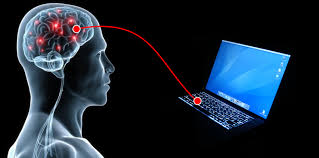
One of the key strands of the Centre’s research is to identify how emerging technologies and megatrends, from climate change to robotics, may provoke new forms of crime and correspondingly, what countermeasures might be put in place. This time, we delved into the potential for neurotechnology to act as a conduit for crime, specifically in the ways BCIs (brain control interfaces) technology, where brain waves can be used to control external devices, and potentially, vice versa, could be used in criminal acts.
BCI’s BCIs are still experimental, though increasingly applied in healthcare (for sleep issues and in traumas), and in some research projects, the combined use of AI and BCI devices has succeeded in using brainwaves to ‘transcribe’ written messages. Elon Musk’s Neuralink project is just one very ambitious indicator of where this technological field is headed. The implication is that we might ‘think’ instructions to a machine, or each other, but also that machines can access and potentially manipulate our brainwaves.
While BCI technology is still developmental, we need only look at how the many devices we use – phones, air pods, wrist monitors and headphones – and consider how in years to come, external devices could be used to link to our brainwaves.
From an ethical and privacy point of view, brainwaves are even more precious than our health data. Imagine if someone knew our innermost thoughts and fantasies or could control and shape these. In that context, the regulatory debate around the use of BCIs and neurotechnology is already underway but, that will not diminish the temptation for some people to use these devices in nefarious ways – to manipulate humans to do bad things, to alter witnesses memories of a crime, for social control, as a military technology, as a portal for fraud, cognitive enhancement, the suppression or exaggeration of emotions, as a tool to commit a murder and as an addictive stimulus, to name a few dark paths.
If we consider how consumer technology, social media, has come to dominate our lives and impact economies, sociability (and possibly fertility rates), public life and even diplomacy, it is worth taking the emergence of neuro-technologies very seriously, for their positive (healthcare) effects as well as negative. It is a truly new form of interaction. To a large extent, humans interact with AI, robots and machines as discrete entities, where to a large extent, humans have ultimate control (Mythos might disagree).
The new development is that neuro-technologies offer a pathway to our minds for machines.
Have a great week ahead,
Mike
 The Levelling