

Mon centre cède, ma droite recule, situation excellente, j’attaque
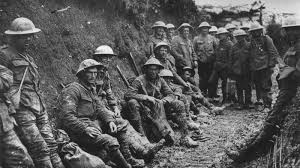
At the First Battle of the Marne, not so far from Paris, in September 1914, Marshall Foch sent the above, inspiring communiqué to Marshall Joffre (‘my centre is crumbling, my right is retreating, the situation is excellent, I attack!’). The Battle of the Marne was arguably the greatest land battle of the twentieth century and caused over 500,000 casualties. Its strategic effect was to halt and reverse Germany’s lightning attack across France towards Paris and set the scene for years of entrenched warfare. At the time, the Great War was some three months old, and many thought that ‘it will be over by Christmas’.
There are few parallels between the First World War and the Iran War, but there is a creeping feeling that, in the absence of a clear strategy from the White House (see last week’s note ‘Safe Places’), there is a risk that this conflict becomes entrenched.
It is already very costly. In the first week of the attack on Iran, the US apparently spent close to USD 11bn on weapons and munitions, and that is without calculating the human and economic costs. In the context of record public indebtedness, the question is not so much can America win the war, but can it afford it?
Indeed, it seems largely forgotten now that America’s own wars have been associated with indebtedness. That the American Revolutionary War was financed mostly by the French (Lafayette and Beaumarchais), Spain and the Netherlands – indeed in a lesson for policy makers today, Congress had to print money to pay off these loans, which had the effect of causing rampant inflation and devaluing the dollar. It’s also worth flagging that the American Civil War saw a sharp run up in debt (US sovereign debt in 1865 was 40 times what it was in 1860, according to figures from the Treasury), the consequence of which was a collapse in the dollar, again.
Still, the lesson that wars generally strain finances, seems to have been habitually forgotten. Some might recall that Larry Lindsey, an economic adviser to George W Bush’s administration left his job after producing what at the time was considered to be a high estimate (USD 200bn) of the costs of the second Iraq War. It turned out to be a conservative estimate, as the Congressional Budget Office put the cost of the war at USD 2.4bn and other analysts have put the total cost at closer to USD 5bn.
Equally, Britain and France are fascinating in many ways – they have very old and rich economies and together have been involved in most wars going back to at least 1000 AD. Britain is a nose ahead of France in that there is arguably a longer thread of data available about its economy, and it is very well curated by the likes of the Bank of England and the Office for Budget Responsibility, whose note on ‘300 years of public finance data’ is a must read for aficionados of economic history.
If I could sum up those 300 years of data it would be to state that wars drive indebtedness, and then indebtedness itself drives fiscal reform. Between 1700 and 1800, debt to GDP in Britain rose from 25% to close to 200%, during a period that was marked by wars over the Spanish Succession, the Austrian Succession, the Seven Years War, the American War of Independence and of course the Napoleonic Wars (after the French Revolution). As a rough rule, British participation in the many and varied wars of the 18th century led to spikes in defence spending of up to 10%, whilst the more deadly world wars saw defence spending push beyond 50% (of GDP).
More broadly, the Kiel Institute has created a database of conflicts going back over the past 150 years that measures the economic costs of war and they have used this to create a model that scopes the potential economic costs of war scenarios. Though quite chilling in its consequences, their interactive tool is useful, and I recommend it to the White House.
For example, I input a scenario (based on 2023 economic valuations) for a war that takes place in Taiwan and also in China (assuming a dramatic US riposte). The direct economic and capital damages are well into the USD 20 trillion, and that is without counting US military losses and the disruptive effect on world trade, risk appetite, and financial market collateral damage.
So, not only do armies march on their stomachs as Napoleon hinted, but also on their balance sheets. In this alarming context, geopolitical ‘players’ have two pressing needs. One is to build out their military capabilities, and the other is to reduce debt – in part to allow them the fiscal space to be warlike. With the US now spending over USD 100 bn more on interest payments on its debt than on its military, it is living a strategic contradiction.
Have a great week ahead, Mike
 The Levelling