Praefectus

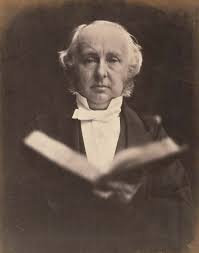
Benjamin Jowett is one of the prominent figures in the long history of Balliol College. Jowett, a scholar of Plato and university reformer, was Master of Balliol from 1870 to 1893, where one of his preoccupations was the production of upstanding young men who would then populate the civil service, and in particular who would be sent to ‘run’ India (Jowett favoured a thorough grounding in Greek and Latin as preparation for this task).

It is an understatement to say that India suffered under British rule, during the colonial era (roughly 1700 to 1947) which was marked by the activities of the East India Company, India’s share of world GDP fell from 26% to 4% (after the Second World War). It is still recovering today.

To draw the obvious comparison with Venezuela, which is apparently now to be run from Washington in imperial style (will Marco Rubio be referred to as the Praefectus of Venezuela?), it at least does not have to worry about having its economy destroyed, the revolutionary socialist governments of the past twenty-five years have done a good job of that. Rubio is not made in the mould of Jowett’s scholars, but he speaks Spanish, which will be useful. A knowledge of finance will also be handy, to tackle the mountain of debt that Venezuela owes.

In a week where the American president has been scurrying around like a giddy child opening Pandora’s boxes, the strategy for Venezuela is not yet clear, and it could go very badly wrong, especially if the factions within the current Venezuelan regime start to disagree violently.

The apparent upside is Venezuela’s oil reserves and refining capacity, but this will take a long time and much capital to realise. Indeed, the process of extracting and monetising oil, and driving this wealth into an economy is something that few economies have mastered.

In this regard, the idea of ‘Dutch disease’, a concept that initially referred to the effect of large gas finds on the Dutch economy, is well known, and colloquially, it describes the way the presence of natural resources can (negatively) skew the economic development of a country. Angola, which has been described as a ‘successful failed state’ for the way it has managed to extract and process oil, but does little else, is an example. Nigeria, Russia and of course Venezuela are other examples.

To their credit, the Gulf economies are good examples of states that have used the wealth generated by natural resources in a very ambitious way, whilst top of the league table are Canada, and Norway. Norway’s sovereign wealth fund is the benchmark for many others, and it bears imagining what the UK could have achieved by channelling the wealth from North Sea oil and gas reserves into a sovereign wealth fund from the 1980’s onwards.

If there is a distinguishing factor across the relative success of the above nations it is the rule of law (and its associated values – policy clarity, strong institutions, and enlightened decision makers). The concept of the rule of law (I can recommend a book of that title by Tom Bingham, formerly Lord Chief Justice and Master of the Rolls and like Jowett a Balliol alumni) should be clear to most readers, but its benefits are even more apparent when it is taken away. In this regard, a comment from a US oil company executive regarding investment in Venezuela (in the FT) to the effect that “No one wants to go in there when a random f…g tweet can change the entire foreign policy of the country’ is illustrative of the benefits of the rule of law. Similarly, threats by President Trump to curb the dividend policy of defence companies, and institutional ownership of housing also contribute to policy uncertainty.

World institutions like the IMF and World Bank have produced tons of research demonstrating the link between the rule of law and growth, and stability. Yet the world that ushered in these institutions and globalization, is crumbling, vandalised by ‘world kings’ (Boris Johnson’s phrase) who act in an arbitrary way. Germany’s President Frank-Walter Steinmeier made an important speech to this effect last week.

The litmus test of this view will be the flow of capital. For the moment, the market view seems to be that ‘world kings’ get things done, and markets are reacting in kind. However, there are looming risks, notably the diverging values between the White House and Europe.  

If world leaders were stupefied by the raid on Caracas, there was near hysteria in Europe at the suggestion by President Trump and his advisers that the US would annex Greenland. Though the initial reaction from politicians and commentators across Europe was perhaps overblown, there is a gulf between the American view of the White House’s foreign policy, and that of allies, and in the medium to long term this growing lack of alignment and trust will prove damaging.

Have a great week ahead, Mike

A Land Full of Vibrancy and Hope

Avid readers of the ‘Levelling’ book will know that some years ago, I wrote

Latin America remains part of the satellite region of the US pole. Sadly, it has been overlooked by Washington. The prime example of this neglect is Venezuela. The country is failing and in the grip of an underreported humanitarian crisis. Economically, this crisis may lead China to take a deeper role in Venezuela and in its oil production. Diplomatically, the lack of a comprehensive reaction from Washington brings to mind an article entitled “The Forgotten Relationship” that Jorge Castaneda published some years ago in Foreign Affairs in which he bemoaned the deteriorating relationship between Latin America and the United States.

Finally, my pleas are heard, and the White House is organizing a rescue (by gunboat) of Venezuela, and possibly much of Latin America.

While it is hard to know how the new engagement between the Trump administration and the fifth largest repository of oil reserves is going to play out, this administration is different to many of its predecessors in taking an active interest in Latin America – note the partisanship with regard to Brazil, generally good relations with Mexico, a chumminess with Milei and the likely support for the new president of Chile.

Despite very active backchannelling between the US military and the Venezuelan army the course that events might take is unclear, and laden with risks – the chaos of popular unrest in Venezuela, the risks that criminals in Venezuela and surrounding countries become involved (and strike in the US), or indeed the risk that other actors or countries use any regime change in Caracas to hurt the US, cannot be ruled out. Another risk is that some of Venezuela’s allies – Iran, China and Russia – become obstreperous, and dig in with Maduro and his cohorts, or that they use any change of government in Caracas to further their own ends. It is worth noting that only last week China launched a policy document entitled ‘Latin America and the Caribbean: A Land Full of Vibrancy and Hope’.

This is a significant risk of the Trump administration’s fetish for a spheres of influence motivated foreign policy. In the recent school boyish ‘National Security Strategy’, which has caused great anguish in the diplomatic parlors of Europe, the document refers to the ‘Trump Corollary’ to the Monroe Doctrine.

For context, the Monroe Doctrine was likely the first coherent, muscular expression of American foreign policy – at the time it was aimed at keeping the Spanish and other pesky European powers out of Central and Southern America. Indeed, the dithering by the large European powers (notably France) over the long running Mercosur trade agreement, suggests that the European dare not go back to Latin America.

The NSS document gives a good deal of attention to Latin America, and this tilt will have the active support of Secretary of State Marco Rubio. Like it or not, Latin America is now in Washington’s sphere.

However, more generally, the establishment of a spheres of influence mindset in international relations may give the likes of Russia and China the sense that they may do as they wish in their own spheres of influence. In the same way that the invasion of Iraq, on the basis of flimsy evidence of weapons of mass destruction, apparently led Vladimir Putin to believe that the West was no longer respecting the rules of the international order, the ‘Trump Corollary’ strategy is a green light for bad policy actors.

That would of course be bad news for Taiwan, and perhaps Vietnam, the Philippines and Japan, who all to some extent count on the notion of a US security guarantee for Taiwan. It may also prove confusing for the US military which, when not loitering off the coasts of Cuba and Venezuela, is organized around the concept of a grand battle in the South China Sea.

Beyond the obvious implications for Ukraine, there are plenty of other open questions – will China take the ‘Stans’ from Russia, and who gets Africa? Russian mercenaries have forced France out of at least seven countries and China has a hand in nearly every African economy. The cancellation of US AID is already having deadly consequences for human and animal life.

A world of spheres of influence might conjure the diplomacy of the Great Game, but it would leave many countries worse off, and the nondemocracies of the world free to abuse their military and economic power.

A forlorn reminder of this was the jailing of Jimmy Lai, the Hong Kong democracy activist last week. Few Western governments were audible in protesting this act, save Britain, which used to count Hong Kong as part of its sphere of influence (Lai has British citizenship). The silent snuffling out of democracy in Hong Kong is the act that brought the curtain down on globalization in my view. An American spheres of influence foreign policy will sow further chaos. 

Have a great Christmas week ahead, Mike (there won’t be a note next week, we return on the 4th January)