Bushido

One of the favourite books I have received as a gift is ‘Bushido’, the framework of the Japanese code of chivalry. I was given the book in the very early 2000’s, when it was not yet obvious that Japan would stagnate for quite so long and, the talk was still of the collapse in Japanese golf club membership prices

Indeed, one of the remarkable socio-economic trends in Japan up to the mid-1990’s was the startling rise in Japanese gold club membership fees, which in the heady 1980’s Japan, had become a tradeable asset, so much so that an index was created (always a warning sign). During the period 1982-1989 the average golf club membership fee rose by 400%, with a final 190% spurt from 1989 to 1990. Companies such as Ginza Golf Services initially made a lot of money trading golf club memberships and at the peak of the market some were changing hands for close to USD 3mn.

Naturally, this bubble collapsed, and as a nod to the future I flag a blogpost from ‘GolfProp’ magazine that shows that on average entry fees for American gold club memberships have been increasing at a rate of 23% per annum since 2019. Indeed, within the past year the membership fee at Mar-a-Lago has gone up by 43%

Back to Bushido, which as a noble, chivalric code developed in the 16th century, is unlike European ‘Chivalry’ (see Maurice Keen’s book of this title is a must read) in that the idea of ‘Chivalry’ came about much earlier, and largely because of an effort to stop the knights of Europe killing each other in jousts and disputes. Bushido is still part of the mindset of many Japanese, and Japan is increasingly unique as a country where very strong social codes frame behaviour.

To that end, the sense of bushido and Japanese diplomacy will have been taken aback by the unexpected decision by President Trump’s to slap a 25% tariff on America’s main allies in Asia, Japan and South Korea. Japan has always enjoyed close ties to the US (Al Alletzhauser’s 1990 book ‘House of Nomura’ is a very good account of how America helped build the modern Japanese financial and corporate system). I have a sense that another book of that era, Ezra Vogel’s ‘Japan as Number One’, seems to have stuck in Trump’s mind (in the 1990’s he went on CNN to castigate Japan American foreign and trade policy on Japan).

Trump and ‘bushido’ are anathema to each other, and the Japanese will be disappointed by his behaviour, given that Tokyo has always had close relationships with American presidents – though never as close as that with Jacques Chirac who visited Japan over 40 times (for various reasons which I shall not disclose).

The potential rupture in relations between Tokyo and Washington introduces a strategic dilemma for Japan, at a time when its economy is awakening from decades of slumber. Like the UK, Japan’s geopolitical moorings are coming unstuck. President Macron’s state visit to London shows the direction of travel for the UK on security and defence, and whilst it is accelerating defence spending, Japan may end up considering more radical solutions for its defence in the context of Chinese belligerence (in 2024 Japan’s air force scrambled jets 704 times against incursions by Chinese and Russian jets). For instance, Japan is the one country that could quickly build a nuclear weapons programme, if it needed to.

What is interesting in the Japanese case is that as geopolitical uncertainty rises, its economy and financial markets are thawing. The property sector is just reaching levels last seen in the early 1990’s (while Tokyo prices have recovered beyond 1991 levels, the rest of the Japan’s residential market is still below the price point reached then).

Having suppressed bonds yields for a long time, the Bank of Japan is now raising rates, and Japanese bond yields have been pushing higher, and given the size of the Japanese bond market (and the balance sheet of the Bank of Japan), it is driving yields higher internationally, and deserves watching as a medium-term risk to markets.

However, while bond yields are rising in the absence of yield curve control by the central bank, factors that are regarded as engines of the economy – earnings, consumer behaviour and employment are more muted, and give rise to the sense that Japan is either in the ante chamber of a full recovery, or on the precipice of something nastier.  

Tariffs, and a confusing break with the US, could upset the Shigeru Ishiba’s unpopular government (Upper House elections are soon), which is struggling in the context of a very ‘un-bushido’ world.

Have a great week ahead,

Mike  

Distance

If any readers travel to Singapore, I can recommend they visit the Botanic Gardens to sense the dawn break. A badly adjusted body clock brought on by jet lag meant that I found myself jogging around the Gardens at 5.30am on Monday and Tuesday mornings – uplifted by the sounds, smells and sights of this mini paradise.

My few days in Singapore, principally to speak at the Founders Forum gathering, allowed me to gauge the Asian reaction to the prospect of a second, more menacing Trump term in office.

I did so armed with the memory of a May 2016 visit to Singapore where I had asked a gathering of some 300 people to compile a word cloud (using their mobiles) of thoughts and emotions they associated with Donald Trump. The result was harsh, and very few of the participants that day thought Trump would be elected as president in 2016, and just as few thought that Brexit would happen.

To my mind the event was emblematic of the certainty of the era of globalization, and the ways in which this was smashed by events like the first Trump presidency, Brexit and the smothering of Hong Kong’s open society.

Singapore is one of the most important places to observe these changes from – it is highly globalized (the DHL Connectedness Report highlights it as the most globalized country in the world), delicately balanced between the Chinese commercial and American worlds, and institutionally one of the strongest countries (though it is one tenth the size of County Cork, it has an active army nearly ten times the size of that of Ireland). As a leading ‘micro-power’ it has an even greater stock of soft power.

As such Singapore will acutely feel the rising tensions between China and America especially in terms of the technologies it uses, investment flows and diplomacy. For context, the soon to be secretary of state Marco Rubio has laid out the faultlines in the relationship between China and America in an interesting document entitled ‘The World China Made’.

Indeed, several prominent politicians in Singapore such as prime minister Laurence Wong have declared the end of the ‘golden era of globalization’. My guess is that in the Trump era, Wong and colleagues will have to tread incredibly carefully diplomatically. Economically, it is clear that Singapore’s role as the wealth hub of Asia, or its ‘Geneva’ is gathering pace, and also obvious that its economy is benefitting from the growing prosperity in countries like Indonesia.

There are two other aspects of my visit that are worth stressing, less for what they say about Singapore but more for what they tell us how the ‘West’ is perceived.

First, with regard to Europe, in two separate meetings I was asked if I thought the euro would survive. This greatly surprised me as not only do I think the euro is a solid, though not yet perfectly formed currency, I have not been asked that question in Europe in nearly ten years. It suggests that Europe still has a reputational problem, or that at very least its ‘message’ is not reaching Asia. Conversely, it seems that there are too few Asian voices in the European media – connecting us to what is happening in cities like Singapore and Hong Kong.

The second reflection, which also resonates across Europe, is that for the first time in at least a century, an American presidency is being launched that has a manifestly threatening and aggressive stance towards the rest of the world.

America has historically been the builder of relationships, alliances and institutions (Pax Americana) and its (soft) power has been built on this. The tenor of the Trump cabinet is increasingly clear, and many of the appointees appear to have been selected on the basis that they did bad things in the past, or that they are prepared to do bad things to others in the future.

This is the great unknown for the USA, that its new posture towards the rest of the world causes it to lose influence and friends. 

Have a great week ahead

Mike

No-one will save you

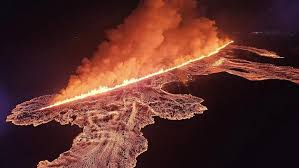
A headline in last week’s Guardian caught my eye. It read ‘No-one will save you’ and detailed the bubbling awakening of a volcano near Grindavik in the south of Iceland. Granted that we were in the area, we drove down to have a look. My family didn’t share my ‘lava-lust’ and luckily for them the police were still in place and roads to the volcano were closed.

However, the ‘no one will save you theme’ is also relevant to Iceland in the financial sense, in the way it represents a rare example of a small, powerless country that resolved its banking and debt crisis by itself, in a very painful but ultimately productive way.

Some readers may recall that in the mid 2000’s Icelandic entrepreneurs were making headlines with bids for leading British retailers like Hamleys and Karen Millen. That a small, fish led economy of some 350,000 people could produce such brash, adventurous capitalists has less to do with Iceland’s Viking and Celtic heritage than the over supply of cheap money from its banks.

At the time, Iceland vied with Ireland for the title of ‘biggest banking sector’ (relative to GDP). According to a presentation deck from Mar Gudmundsson, the Norwegian who took over as head of Iceland’s central bank post the crisis, the Icelandic banking sector grew by a factor of three times between 2004 and 2008. Specifically, Iceland’s banks, the likes of Glitnir, Landsbanki and Kaupthing (all AAA rated of course) were growing their balance sheets at a rapid rate (to a near record 10 times Iceland’s GDP) and bankers travelled from London to sell them new, genius investment ideas.

Like Ireland, Iceland became admired for its ‘model’ economy, and took advantage of the fawning of other Nordic countries and bodies like the OECD to sell more ‘Glacier bonds’.

There are plenty of colourful stories about the exploits of Icelandic bankers at that time, but to cut a long story short, when the global financial crisis struck in October 2008, the Icelandic banking system quickly collapsed.

As a small, open economy with meagre financial resources, the fallout was dramatic and painful. In the aftermath of the crisis, the Reykjavik stock market fell by 90%, the corporate bond market cratered and the currency (Icelandic krona, ISK) by 50%. Many households had borrowed in foreign currencies and as a result saw the burden (in ISK) of their mortgages soar. On paper, Iceland’s debt to GDP hit 700%.

A classic banking bubble was soon followed by a deep, textbook ‘bust’ (one economist Hermann Schwartz summed it up as ‘Iceland came late to the global party, drank too quickly, and hit the floor rather harder than larger economies’)

What is most interesting about Iceland is the way it resolved its crisis, largely by itself and through the will of the people. This might sound obvious or even trite, but when I compare it to the fallout from Ireland’s economic blow-up whose causes were very similar to Iceland’s banking crisis, Iceland has demonstrated a far greater degree of reform and accountability in its public life. In a world of heavily indebted nations the example of Iceland is one to bear in mind.

Like other European countries at the epicentre of the financial crisis Iceland was gripped by protests. Reform came quickly. The long-serving prime minister, Geir Haarde lost his job (his last speech to the nation ended with the words ‘God save Iceland’), and the governor of the central bank was forced out of his role.

The new government, and to a large extent the Icelandic people are considered to have largely taken ownership of the resolution of the crisis (think of the public opposition to pension reform in France as a counter example). Some thirty-six bankers were tried, sent to jail and fined, a development that is in stark contrast to other crisis hit countries.

Iceland suffered a brutal financial shock, and a deep hit to the real economy (output dropped 15% in two years), though this was ultimately less severe than the damage done to the Greek and Spanish economies, one reason for this being the manner in which the drop in the ISK made Iceland attractive as an exporter and tourist destination (the curiosity of tourists was also piqued by the explosion of the Eyjafjallajökull volcano and the use of Iceland as a location for Game of Thrones). .

A number of financial reforms also helped, the financial regulator was given extra powers, notably to protect deposit holders and new, domestic economy focused banks were created. The government refused to assume responsibility for debt owed to foreign nations and investors (many of whom were in the UK which placed Iceland on a terror watch list). Fiscal austerity was imposed, under the watch of the IMF, but this was less onerous in its conditionality than that imposed on Ireland, Greece and Spain.

The result of this reform and readjustment process was that the Icelandic economy began to recover some three years after the crisis started, and according to Iceland’s central bank GDP growth had caught up with the recovery of the US economy by 2018, surpassing that of the euro-zone.

Whilst it is a small, idiosyncratic economy, there are some clear lessons from Iceland in terms of how an open economy might deal with a multi-faceted banking, debt and currency crisis.

Very broadly, the key elements involve prioritizing the domestic economy, domestic banking  deposits and the free functioning of the financial system,  the sense of justice and accountability that comes from ‘regime’ change and the arraignment of guilty bankers, the absence of overly punitive austerity, and the presence of a stabilizing mechanism (in this case the currency).

As I write, Iceland’s economy seems to be thriving, with a new focus on biotech, geothermal power and climate-tech.

France, Germany and the UK should pay attention.

Have a great week ahead

Mike

From Cranes to Crypto

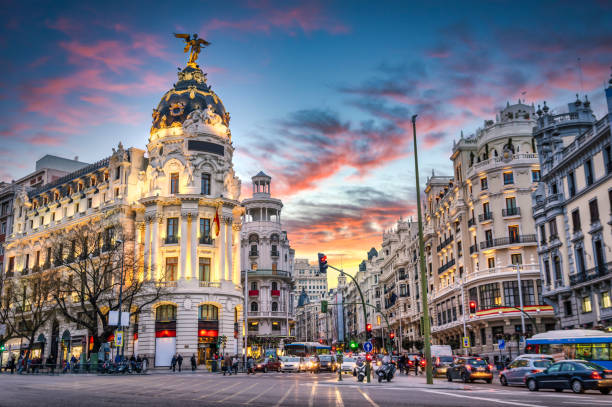
Madrid, Spain cityscape at Calle de Alcala and Gran Via

Regular readers will know that I travel a lot, always with a preference for boats and trains and by air when necessary. Having spent much of the summer without the need for a plane, the next few months will see an intensification of my travel schedule across Europe, the Middle East and Asia.

In most places I will be talking about the economics and politics of a changing world, but the virtue of visiting so many cities (Hamburg to Abu Dhabi for instance) and regions (the Cotswolds to South East Asia) is the opportunity it grants to witness the kinds of growth and development happening in the world, and the measures we can use to compare economic activity across countries.

Here, a few favourites come to mind. In the 1990’s and early 2000’s it was commonplace for economists and investment strategists in the large banks to rush back from trips to Asia with tales of how many cranes they had seen across the skylines of major Chinese cities and estimates of what this meant for the growth of the Chinese economy. Nowadays, those economists sit on a deck chair in the Marina Bay Sands hotel in Singapore, look out onto the bay and count the number of tankers anchored there as a proxy for global supply chain disruption.

Another tell-tale indicator is taxis. A former colleague, friend and reader of this note, with whom I used to travel to Japan in the late 1990’s referenced the length of taxi queues as a proxy for Japan’s then moribund economy (often unoccupied taxi ranks would snake around office blocks).

Then on a visit to a thriving Abu Dhabi in 2012, my taxi driver got lost (on the way to the airport). He apologised, saying it was his ‘first day’. I assumed he meant it was his first day as a taxi driver, but it turned out that it was his first day in Abu Dhabi. I politely took this as a sign of a vibrant labour market and a strong economy.

A risk that travelling economists face, not unwittingly, is that they normally stay in the centre of a city, and often in a decent hotel. I wrote a note some time ago describing this as ‘Grande Bretagne’ syndrome, after the teams from the IMF who oversaw the austerity programme of the Greek economy during the euro-zone financial crisis who stayed in the plush Grande Bretagne and Hilton hotels in the city centre. While this placed them near the seat of power, it meant that they were blind to the brutal impact of austerity across the country.

In general, travelling economists should get out and about. For instance, the quality of public transport in a country is a good indicator of the standard of infrastructure and to an extent, social cohesion and, is also a good way to observe a society. Someone observed that a city in which the wealthy use public transport is a well-balanced one (Zurich is a good example). In contrast, there is, inexplicably, no train from Dublin airport to the city centre, but a ride on the Luas tram will give a very good idea of the dramatic changes in Irish society.

In keeping with this approach, a favourite activity to beat jetlag and to either reacquaint with or discover a city is an early morning run (this week’s schedule took in the Tour Eiffel, the Tiergarten and Madrid (the park was closed due to bad weather)). In that idiosyncratic way, My eyes (and feet) are sensitive to the quality of the road surface, pollution and to the appearance of new buildings and signs of dereliction (Berlin scores on both counts).

There are other indicators of the economic prowess of cities, such as the rise of tall towers (the UAE for instance). In this tech driven age, a new category of indicators might comprise cities that want to become crypto-hubs (UAE, Miami, Zurich, Lisbon) and those that seek to attract large artificial intelligence (AI) firms (OpenAI has just opened an office in Paris).

As a final note on Madrid, I haven’t seen the city as ‘sleek’ or well presented (the 12th was the national holiday), and it must be said, as expensive. Note that Spain now has a slightly lower interest rate (bond yield) than France, and a considerably higher rate of growth than Germany.

The economy appears strong, despite concerns that many people versed about the state of Spanish democracy and its finely balanced political situation – there is likely a contentious budget on the horizon towards 2025.

There were a lot more Latin Americans than I had expected, and this has both helped tourism, and pushed up house prices (to the ire of some locals). Spain’s golden visa system means that it is the recipient of wealthier Latin Americans leaving countries like Venezuela. At the same time, quite a number of Spanish businesses and executives are relocating to Lisbon, which is a warning sign for innovation.

Have a great week ahead,

Mike 

The Great Retreat

Whenever I walk down the street, I can’t help thinking of René Barjavel, a science fiction writer, who when asked (in 1947) to imagine what the future might look like conceived of a vision (then made into a short film ‘La Télévision, l’oeil de demain’) where human life was dominated and disrupted by handheld ‘television’ devices, to the extent that people walked through streets bumping into each other as they watched their screens.

The guiding thesis of Barjavel’s work related to the undermining of civilisation by technology, something that is now becoming more apparent as a widespread trend.

We are at a point in the very long run of history where many established patterns of human behavior are being subverted…in what I call the ‘Great Retreat’. That is to say that in general people – in the West and Asia are retreating from established norms of behaviour, and specifically are retreating from traditional social interaction. These deviations from trend are occurring in the way we socialise, the effects of what we consume on our bodies and perceptibly the ways in which we organise our lives.

Here are a few snippets to illustrate – there is growing documentation of the effects of a loneliness epidemic and researchers are linking this to higher rates of Parkinson’s and cardiovascular disease, a large cohort of adults and young adults in countries like Japan living in effective celibacy and this is also a factor in China whose population is now in a structural decline whilst in the West the birth rate in England & Wales is the lowest on record, a tripling of worldwide obesity since 1975 according to the World Health Organisation to these extent that the Centres for Disease Control and Prevention puts US obesity prevalence at 42% – something that has contributed to a vertiginous drop in life expectancy.  

In brief, in many countries human body shapes and cardiovascular health are changing for the worse, they are interacting less with each other, consuming more information from ‘manufactured’ or non-human sources (the average American checks their mobile device 159 times a day) and are breaking with the cycles of life that have defined the human race over the past three thousand years.

There is a sense that these trends represent a new departure compared to the established social patterns of the past two hundred years, but they also coincide with much lower poverty globally, generally greater longevity (except the US) and broadly greater wealth.

However, there is also the unavoidable impression that the above trends are correlated, and in the view of someone like Barjavel perhaps, are provoked by over industrialisation (of foodstuffs and lifestyles), over-financialisation (of real estate) and over digitisation.

The effects of the ‘Great Retreat’ are already being felt in politics – higher levels of abstention and radical ‘left/right’ voting in many countries and large differences in voting intentions between younger and older generations, and in work patterns (my hunch is that for younger workers the trend towards working from home is altogether less productive).

This sets up a significant task for policy makers, especially those who grow up during the ‘Great Retreat’ and who may not question its long term effects (such as falling birth rates).

In the context of a more laissez-faire approach, a dystopian society threaded together by social media, with high levels of wealth and health inequality could arise, but there might also be a tech led path that could continue to solve the side-effects of obesity and low fertility rates.

In a typical European model, a policy approach might well involve the introduction of ‘civics’ courses in schools on the importance of diet, use of social media, primacy of democracy as well as greater sanctions on disinformation. On the human side, pension and tax systems may well see revolutions that incentivise higher fertility and city planning will, in an ideal world, start to incorporate the need for greater sociability.

Either way, the conception of the ‘Great Retreat’ as a policy idea is not yet upon us but it might be an idea for one of the dwindling world institutions like the WHO or UN to take up.

Have a great week ahead

Mike