Learning to Love Lenin

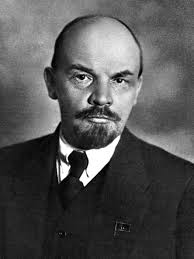
I’ve spent much of the past quarter of the year zigzagging across Europe and the US, cursing Vladimir Lenin as I went. He is reputed to have coined the phrase ‘there are decades where nothing happens; and there are weeks where decades happen’, which in turn has been repeated back to me wherever I went. I shouldn’t be too grumpy though, because the ‘Levelling’ is now playing out at high speed.

Since Donald Trump entered the White House for the second time, so much has happened that I want to use this note – coming at the end of the first quarter of the year, to discern new emerging trends from noise, across four different domains.

Bonfire of Diplomacy

The first emerging trend can be characterised by the image of the bonfire of diplomatic relationships, which started at the Munich Security Conference and has continued apace since then. Gone is the cosy globalised world of Bill Clinton and even George W Bush, where America was a benevolent colossus, keeping the peace, spurring prosperity, and putting out financial fires. In my travels, I found myself recommending investors to read Adam Smith on the topic of mercantilist economic behaviour, Palmerston on foreign policy (‘we have no allies, only interests’) and that they acquaint themselves with Peter Hopkirk’s ‘Great Game’.

In brief, my sense is that the Trump team wants the US to become a hyper-charged nation-state, rather than the hyperpower that it was. Whilst there is much consternation in Europe and parts of Asia about this, I do not yet detect widespread disapproval from many Americans I speak with.

Aux Armes!

A consequence of this is Defence Union in Europe. Echoing the French president, we are all ‘strategic autonomists’ now. Many of the urgent phases in this journey are already being undertaken – the publication of the pragmatic EU White Paper on defence, the EU’s new Eur 800bn loan facility for defence spending and critically Germany’s decision to loosen the debt brake provision on defence spending.

Some intelligence agencies (Denmark and Finland for instance) estimate that in the event of a peace deal in Ukraine, Russia would be ready to launch a war on a European country in two years’ time, and in five years could have rebuilt its military to a level that it could consider a war against the EU. The Nordics, Baltic states, Poland, Germany, France and of course the UK appear to buy into the seriousness of this threat, but there are notable defence laggards, namely Spain and Ireland.

Neither does it seem that there is sufficient urgency on the security front – my experience was that Russians were omni-present in the cafes of Vienna and arguably not enough is being done to sanction governments that are apologists for Moscow (i.e. Hungary).

The one aspect of the European revival story I need to be convinced on is the cultivation of a pro-growth socio-economic outlook in countries like France, and specifically, of the need to instigate capital markets union (CMU), which whilst not a vote winner for politicians, is a necessary development for a stronger European economy.

Oops – muscle not fat

The economic policy of the Trump administration is difficult to decipher through the noise of chainsaws and crashing of markets. At its core, I detect a nihilistic fiscal conservatism – a desire to shrink the fiscal deficit and by extension the enormous debt load that means that the USA pays out far more in interest payments What is causing dismay is that the policies enacted to temper the growth of the economy are cutting economic muscle not fat. Universities, researchers, and essential parts of the science establishment are being undercut, and socially it is disturbing to see veterans bearing the brunt of DOGE. More importantly, the shredding of the rule of law and politicising of justice have never helped any economy (Turkey is the case in point).

Whilst much of the media coverage of the Trump economic policies has focused on the harm caused by tariffs (they should be applied in small, not massive doses), not enough attention is given to how corporations will react to policy uncertainty. In a recent note I described Avinash Dixit’s theory of how macro uncertainty causes companies to ‘wait and see’. In that respect the forthcoming earnings reporting season and corporate action calendar bear close watching.

Exceptionally expensive

Allied to the outlook for the US economy is a growing realisation on the part of investors that American assets (the dollar, stocks and corporate bonds) are very expensive, and dominate portfolios. In this regard, the Liberation Day announcement should worry investors. One is the sheer carelessness and apparent incompetence of the tariff policy – it has exposed the lack of analytical capacity in the administration and a lack of concern for the economy. Trust in the administration is draining.

The other is that it has reminded investors of their exposure to US assets. At this stage, the majority of asset allocators in the investment industry still appear content to persist with very conventional portfolio structures, that are arguably not configured for a rapidly changing world.

One thought experiment I perform with investors is to show them how portfolios have changed through time. For example, in 1900 nearly 50% of stocks were railway companies, and the UK made up 25% of the world stock market (close to 3% now). Today the US weighs in at close to 68% of world equities, and my sense is that with the dollar still relatively strong, allocators should start to sell American exceptionalism in the sense that it is impounded in stock valuations.

A final lesson from Lenin might help them. For much of the period of the first wave of globalisation (1870 to 1900) Russian equities comfortably outperformed American companies. But, having been shut for much of the First World War, the Russian exchange opened again in January 1917. Then came the Revolution and the market dropped to zero and shut for 75 years.

Political risk matters!

Have a great week ahead,

Mike

The Road to Serfdom

I was sauntering through the centre of Vienna last Wednesday, admiring its stylish cafes and bars, and Friedrich Hayek came to mind.

Hayek argued against the suffocating role of government (‘central planners’) on the economy and for greater individual liberty, and his arguments still contain a grain of truth in the context of many European economies. Ironically, Austria’s brand-new finance minister had previously worked as an economist for a trade union and might well prove to be an ‘anti-Hayek’.

Hayek was one of the inspirations (after he won the Nobel Prize in 1974) behind what many American libertarians call the ‘Austrian’ school of economics, and his book ‘The Road to Serfdom’ is undoubtedly on the bookshelves of the most ardent members of team Trump, alongside works like Ayn Rand’s ‘Atlas Shrugged ‘.

In the Americas, Hayek is a favourite of the ‘chainsaw’ economists, with a large dollop of irony given the push for total control of the economy by an elite. Indeed, the risk for Americans is that the dismantling of the government led economy in America risks turning Americans into serfs of the private sector. But, this scenario is not yet immediately obvious given the way public attention remains focused on Ukraine and the victims of American tariffs.

In the past six months, a very strong international narrative has spread around the notion of ‘American exceptionalism’. The US is exceptional in a few domains – fighting (military), finance and its multinationals. Donald Trump is using these exceptional pillars to influence other countries and to set in train his vision for a more isolationist America. The response from America’s erstwhile allies has been to rapidly re-arm and re-finance.

An important sign of this was the announcement by Friedrich Merz (with the SPD’s Lars Klingbeil and the CSU chief) of a new defence spending plan, which largely swerves the issue of the debt brake. That German and Japanese bond yields rose suggests that markets are pricing the reallocation of the bill for security as an international public good to America’s former allies.

The return of war as a topic in European debate will alarm many people, and it should not be underestimated. One of my recent notes highlighted how Europe likely faces an ongoing campaign of harassment, sabotage and destabilisation from Russia. The idea that Europe is on its own is now quite starkly taking hold.

While the drumbeat of war will add to stress in our lives, it is not (yet) part of them. For the great majority of people, the geopolitical debate remains one between elites, and so far, does not impact their everyday lives.

This is where European leaders need to pay more attention and try to reset the international narrative. If America is strong in fighting and finance, it is weaker in areas where Europe is strong, and we might say that the two continents are the mirror opposite of each other. In my view, Europe is strong in the areas that matter to most people, most of the time. Specifically, Europe, as a social democracy is the best place to live in the world (6.6% of the world’s population live in ‘full’ democracies), has generally free education and healthcare and its societies are peaceful (according to the UN, the murder rate in the US is 14 times that of Italy). Life expectancy in France for instance, is four years ahead of the USA. Health spending per capita in the US is well over double what it would be for a European country (13k vs. 6k).  

In this context, my counterintuitive argument (to the ‘chainsaw economists’) is that America needs less Hayek, and more ‘Europe’.

The absence of a deep social security system in the US, and the difficulty of accessing decent healthcare at reasonable prices means that a huge number of Americans live in precarity. Demolishing the department of education and cutting state aid to veterans are just two measures that increase vulnerability.

The trend that is emerging, and which will become starkly visible in a recession, is of an American society where a small but important number of households (say 20%) are wealthy enough to live well and access high quality education and healthcare, 40% of households live with the stress of becoming economically vulnerable and a further 30% live in serfdom in the sense that they have no leisure time (Newsweek estimates that one third of American workers has a second job).

Income inequality in the US is at historically very high levels, and the share of total income garnered by the top 1% of the workforce is tipping levels only seen in the 1930’s. Viewed from the point of view of wealth, 38% of the world’s millionaires live in America and over half of the ultra-high net worth (wealth over USD 50mn) individuals in the world are American. Indeed, the top 1% of wealthy Americans own 18.5% of all wealth in America, while the ‘bottom’ 50% of Americans own just 3% of wealth.

As such, the Trump 2.0 programme may not free Americans from serfdom to the government but will make them serfs of a private sector.

As a parting shot, Europe might need a little dose of Hayek. To that end, social welfare systems, state pension plans and healthcare spending may need to be streamlined across Europe as the security agenda becomes more prominent.

Have a great week ahead,

Mike

Un train peut cacher un autre

Adam Smith, though better known now as an economist held the chair of Moral Philosophy at Glasgow and as such it’s fair to assume that he knew a thing or two about the intersection of economics, philosophy and politics, and that often a political crisis is motivated by an underlying economic crisis…hence the title of this note.

Smith lived during a time of mercantilism, which we might describe as a nationalistic approach to trade that aims to maximise the exports of a country whilst keeping imports to a minimum. In this context, Smith wrote of mercantilist nations that ‘their interest lies in beggaring their neighbours’, and the phrase ‘beggar thy neighbour’ has been often used in the economic context, usually when growth is scarce (the aftermath of the Great Depression and the Global Financial crisis)

With mercantilism and ‘beggar thy neighbour’ back in fashion, it is worth returning to Smith’s ‘Wealth of Nations, book IV’ where many of the observations Smith made chime with America today, such as:

‘The sneaking arts of underling tradesmen are thus erected into political maxims for the conduct of a great empire … . By such maxims as these, however, nations have been taught that their interest consisted in beggaring all their neighbours. Each nation has been made to look with an invidious eye upon the prosperity of all the nations with which it trades, and to consider their gain as its own loss. Commerce, which ought naturally to be, among nations, as among individuals, a bond of union and friendship, has become the most fertile source of discord and animosity’.

To that end, beyond the bonfire of American values and diplomatic relationships, there is an emerging, underlying logic to the policies of the White House that China, Japan and Europe need to pay attention to.

I have written many times in this note that the world economy is in the antechamber of a fiscal-debt crisis (listen to ‘Waking up to World Debt’). Unusually, all of the major economies have become indebted at the same time, and the process(es) by which they try to reduce debt at the same time will likely prove extremely hazardous financially.

It seems that the Trump entourage understands this, and that logically the unifying factor behind disparate policies from the creation of ‘DOGE’ to the enfeebling of NATO are driven by a brutal sense of austerity, that starts with the cutting down of all the international public goods that the US has invested in since Bretton Woods.

In this context, the ‘beggaring’ of Europe pushes the bill for European security back across the Atlantic and has shaped the debate in Europe towards greater debt accumulation (for example the debt brake is one of the most contentious topics for the new German government and the EU will soon embark on the issue of EU defence bonds). Japan, South Korea and Australia might be next.

In effect, the White House is using areas where America is exceptional – financial markets, the military and multinationals – to coerce its allies, and in the case of Ukraine to undermine them. Debt might be next.

The closest we have to a template for a Trump grand macro plan is a paper written by Stephen Miran, who may soon take up the role of head of the Council for Economic Advisers. The elements in this plan have popularly become known as the ‘Mar-A-Lago Accord’, which is not unlike the world debt conference idea I have written about in The Levelling, though my version takes place in the recently refurbished Raffles (Singapore).

One of the pillars of the cited ‘Mar-A-Lago Accord is that holders of Treasuries exchange these securities for very long-term loans (that might not provide a coupon). The result would be to restructure the maturity and fiscal burden of America’s debt load. It is a neat idea but will not work in practice. Any debt accord will likely need the impetus of a major financial crisis as a motivator, will need to restructure the debt of all the major economies and will entail a rewriting of financial regulations across the world (for pension funds for example).

In reality, an attempt to enact a Mar-a-Lago Accord, in the same fashion as the debate around NATO, may create aversion (distrust in) to US financial assets and the dollar. Whilst Europeans may not appreciate the extent to which a ‘beggar thy neighbour’ philosophy is driven by US security policy, the White House is underestimating the value that America’s wide ranging financial, diplomatic and commercial infrastructure bring it. An example is that close to 40% of the revenues of large American firms come from overseas.

In the short-term, we are also starting to witness the effects of austerity on the American economy. Though ‘hard’ data on the economy remain solid, the outlook will become very noisy in the next few months as government job cuts take hold and as social welfare cuts (notably in the mortgage industry) sow anxiety. Markets have started to become jittery too, amidst a belief that the administration is much more focused on lowering bond yields (and thus the cost of government debt) than boosting the stock market.

In a scenario where the (US) economy weakens, investors normally turn to Treasuries, but the prospect of a Mar-A-Lago Accord being foisted upon them could lead to a buyers’ strike. The public attack on president Zelensky has disabused diplomats of the intentions of the Trump White House, investors could be next.

Have a great week ahead,

Mike 

Full Mettle Jacket

A week ago I started reading Admiral Jim Stavridis and Elliott Akerman’s second book, ‘2054’, which like the first (‘2034’) is a work of fiction designed to tell us about how our own world is evolving and the risks that will confront us. Without spoiling the plot, ‘2054’ demonstrates how new technologies can be deployed in nefarious ways, with the goal of turning the tide of geopolitics. However, as much as I enjoy the work of the Stavridis/Akerman team, my reaction to ‘2054’ was much the same as ‘2034’ (‘2034 – are we already there?’), which is that it has been rendered out of date by bizarre events in the real, political world

The detonation of over seventy years of American diplomacy and soft power by the various speeches and deeds of the Trump administration is a fin de siècle moment, that has drawn comment across the diplomatic world (the most pertinent was that of the Singaporean defence minister who described how he saw the USA moving from a force for ‘moral legitimacy’ to a landlord seeking rent’).

The worry now is that the US will treat its allies like enemies and its foes like friends. There was much consternation in Europe, but as this note has argued so many times, very few European countries have faced up to the challenges of the post-globalized world (Mario Draghi’s speech to the EU parliament last week put it very well…’do something!’).

There is now a furore over Eur 500 bn defence bonds, joint nuclear shields and defence equipment shopping lists. But, a more urgent task than buying fighter jets is the need for Europe to have a coherent security strategy. In a weekend where many are anticipating the results of the German election, a neglected development was the collapse of government formation talks between Austria’s centre-right OVP and the far-right FPO.

Some weeks ago, the parties had agreed on an economic programme, but could not settle on  a common foreign policy, a critical stumbling point was oversight of the intelligence services (the OVP wanted to be in charge). This is a sensitive topic given that the FPO has a soft spot for the Kremlin, and specifically the fact that in 2018 the Herbert Kickl (FPO leader), when he was Austria’s interior minister, ordered an investigation into the country’s security services. Today, few of its EU peers share intelligence with Austria.

Reflecting that, the immediate challenge from Russia is infiltration, sabotage and manipulation across Europe (the Gerasimov doctrine and David Kilcullen’s work on Russian/Chinese tactics are both worth a read here ‘From Great War to Total War’). The EU has done relatively little to push back on this interference, and now has an urgent security (as well as defence) challenge.

This could take various forms.

The first is to penalise EU states that systematically go against the grain of the policies, values and interests of the Union. Hungary is the main offender here and whilst some EU funds have been withheld from Viktor Orban, the EU has in general failed to confront him. In the recent past there has been talk in the European parliament of excluding Hungary from the EU, which is technically difficult, but is a necessary part of a more ideologically consistent Europe, and one where bad actors face a penalty for their actions.

A second strand is to have much greater oversight over the movement of Russians in Europe, and of their capital. Vienna, Milan and the south of France, not to mention parts of Switzerland, are popular destinations for wealthy Russians and some European capitals are saturated with Russian money (Mark Hollingsworth’s book ‘Londongrad’ is instructive here as is Oliver Bullough’s ‘Butler to the World’). To emphasise the point, Russian interference in UK and lately Irish politics has not been aggressively countered, and my fear is that this is much worse in other countries like Germany.

Instead of clamouring to buy rocket launchers, Europe’s political classes have a lot to do domestically to shut the door on Russian interference in European affairs.

Then, on a more structural level, there is scope for much greater intelligence sharing across governments and joint task-forces on organised crime (gangs are a favourite extension of the Russian state). From the point of hardware, there is a need for increased joint use of satellites and electronic warfare collaboration.

The distinction between security and defence is an important and urgent one and a reminder of how complacent European governments have been. Whilst defence capabilities will take time to build up, the measures to be enacted in the security domain are less challenging to operationalise, but constitute a real test of European governments’ mettle.

Have a great week ahead,

Mike

Remember the Washington Consensus?

Does anyone remember the Washington Consensus? Such a phrase might seem odd in today’s world but in the early 1990’s the notion of a ‘Washington Consensus’ was very powerful as a method for globalisation, and hotly debated by the left.

Globalisation worked well because, to be overly simplistic, it was facilitated by a very clear world order that helped to establish the rules of the ‘globalisation game’ and the norms associated with this. At their core, these rules were American, or at the very least they were made in Washington within the institutions that were set up to marshal the post-World War II world order, the IMF (International Monetary Fund), the World Bank and the United Nations in New York. America held the purse strings of these organisations and regular meetings at these institutions became a means of schooling ministers from both developing and emerging economies in the ways of American economic power.

These discussions aired what soon became known as the ‘Washington Consensus’ – effectively an approach to world economic development and globalisation, that was denounced by critics on the left as a neo-liberal policy recipe book. With the benefit of hindsight today, the Washington Consensus was valuable in the sense that it was a consensus, it encapsulated an approach that many countries were content to go along with as part of their first foray into real economic development.

Today, the Washington Consensus is in disarray. The institutions that it was built around, like the IMF are defunct, and others like the WTO have been undermined by both China and the US in recent years. The decision of the US to leave the World Health Organisation is another blow. The ‘Consensus’ is dead because there are now other competing methods as to how countries can develop, and of the independent paths they can take.

Here, an important milestone was Xi Jinping’s China Dream speech, in November 2012, which well before MAGA (Make America Great Again) coined the term ‘China Dream’ during a visit to the National Museum of China. Now, countries like Indonesia or Nigeria can try to follow the classical Western model of development, or China’s non-democratic, state led approach. Or, like Argentina and El Salvador, they can pursue the ‘Trumpian’ model that is taking a grip on Washington, but that is anything but a consensus.

Without going into day-by-day developments coming from the White House, the second Trump presidency can be seen as an early stage in the post-globalisation world order.

Globalisation was based on American economic and political strength and promulgated by the ‘Washington Consensus’ and the B-52’s of American capitalism (multinationals). Eventually globalisation ran out of steam, and events like Brexit, the first Trump presidency and the snuffing out of Hong Kong’s democracy shattered it. We are now in a multi-polar world where at least three large powers (EU, China and the US) do things increasingly differently (look at how they treat AI).

Uniquely, this Trump presidency represents an attempt to do something new and can be seen as an early chapter in the formation of the new world order, and to an extent its success depends on the will and the coherence of the groups of people that are driving the Trump project (from sectors like private equity, innovation and wealthy families). One stark difference with globalization is already clear. Globalization was built on the US being umbilically tied to much of the rest of the world, and vice versa, by flows of ideas, money, trade and people. In contrast, it now seems that Trump 2.0 relies on American exceptionalism, attempting to rise above the rest of the world, and in the process severing the relationships and ties built up since the end of the First World War.

For example, consider the words delivered to Canadians by President Kennedy in May 1961 ‘Geography has made us neighbors. History has made us friends. Economics has made us partners. And necessity has made us allies’ and how remarkably different they are to the way the Donald Trump has treated Canada.

In that context, the rest of the world may increasingly choose to avoid America, and the risk to ‘Exceptional America’, notably with the dollar as strong as it is, is that its financial power ebbs, in the way that of many other empires has. The template for this is expertly laid out in Barry Eichengren’s ‘Mars or Mercury’ paper that analysed the link between empires and their monies, though I feel that in the absence of obviously strong competing currencies, this thesis could take time to play out.

A more plausible side-effect of ‘exceptional’ America, is the advent of a new point of economic gravity, pinpointed at the UAE (United Arab Emirates). This is my ‘Fourth Pole’ thesis – that the UAE together with India and Saudi Arabia has the makings of a new pole of trade and commercial activity, with low regulatory barriers and that encompasses a potentially huge market (Prof Afshin Molavi calculates that there are 2.5bn bn people within five hours flying time of Abu Dhabi). The Mercosur trade deal between Latin America and the EU might also be the basis for a new trade corridor.

The other necessary outcome in a world where America is going its own way, is that Europe stops trying to contain Trump, and takes a far more aggressive stance with respect to its risk environment, notably Russia. The German election in two weeks’ time might be the start of that stance.

Have a great week ahead,

Mike

Humphrey

I’m glad to mention that my ‘GoldenEye’ note generated a lot of feedback, some of it cursing my good luck to spend a week in the Caribbean. To atone, I spent four days last week in the foggy cold of England, touring from Oxford to Manchester to the Cotswolds and finishing in London. Many of the places I visited are points of reference that I have known for a long time. Some have changed for the better (the Elizabeth line in London is very useful), some for the worse (this Manchester United team is indeed the worst ever), and some have not changed at all (the food at Pepper’s Burgers in Oxford is just as good as it was thirty years ago).

Economically and politically, Britain is worse off. Brexit has been a terrible mis-step, and the new Labour government is struggling to even diagnose the sputtering economy. Real-wage growth is feeble, productivity is at multi-decade lows, the fiscal deficit dominates policy making and the bond market is more troubled than when Liz Truss was prime minister. The only saving grace is that Britain isn’t Germany.

In foreign policy, while Britain is an active supporter of Ukraine and still a UN Security Council member,  it is at risk of becoming lost geopolitically – Britain is stranded outside the EU and the special relationship between Washington and London is all but dead politically in the Trump 2.0 era.

However, Britain is good at remaking itself. I think that at some point it will have its ‘Brian’ moment when, to borrow from the Monty Python film (The Life of Brian), a political leader will emerge, haphazardly or by design, with the force of personality and ideas to right the country. Nigel Farage is not this person, and without being unkind, I am not sure that Keir Starmer is either.

It used to be the case that Britain didn’t need talented politicians, it had a large, expert civil service to run the country. Instead of ‘Brian’s’ it had ‘Humphreys’ after ‘Sir Humphrey Appleby’ the fictional cabinet secretary in the excellent 1980’s tv series ‘Yes, (Prime) Minister’. The series revolves around the art of non-decisions and the careful practice by civil servants of keeping elected officials far from the levers of power.

When the engine of the economy was whirring, the job of the ‘Humphreys’ was to keep politicians from putting a spanner in the works. Now that productivity is dead across the UK (below the US, Germany and France) due to a lack of investment in capital and skills, the country needs to be inspired by new ideas. Thankfully, two of them came along last week.

The first was the latest in a series of notes on the UK economy by the excellent LongView Economics. In brief their diagnosis is that Britain faces several, long-growing problems – to many ‘Humphreys’ or rather too much regulation and bureaucracy (government spending is at seventy year highs), the death of risk capital and the need to re-generate investment flows across the British economy and the financialization of the economy.

Two of the solutions flagged by LongView are the needs to reform the NHS and to cut bureaucracy across government. This might happen sooner than many think because the second inspirational idea to come out of the UK was the launch a week ago of the UK AI Opportunities Action Plan, which in effect was authored by the venture capitalist Matt Clifford with a little help from the likes of Sir Demis Hassabis. It is applied and well thought through enough that it could not have been written by civil servants. In a week where the USD 500bn Softbank/OpenAI/Oracle AI investment has grabbed the headlines, the UK AI Plan deserves much closer attention and in my view, is the best framework for an AI value chain.

Whilst there are fifty recommendations in the report, all of which have been endorsed by the government, the main ones involve ‘feeding’ AI models by making high quality data more available (changing copyright laws), accelerate investment in data centres and also set up an AI Energy Council to plan the energy sources to power the data centres. There are also plans for a national data library and for the use of AI in the NHS.  

One striking element, announced this Tuesday, is the use of  AI assistants to speed up public services, with data-sharing deals across siloed departments; and a new set of AI tools — dubbed “Humphrey”. The aim is to speed up and make the work of civil servants more efficient – with the stated aim of saving GBP 55bn (this is very ambitious and if achieved would cut significantly into the budget deficit).

The plan, at least, is ambitious. Whether or not the Labour government can implement this plan is very much an open question but at least they have in their hands a blueprint for investment and perhaps the beginning of something better for the British economy.

Have a great week ahead,

Mike

The Diplomacy Crash

US stock market valuations have only been as high as in 2001 and 2020, market concentration is more extreme than in the late 1920’s (the top ten companies now make up 38% of the market capitalization of the S&P 500 index), and money manager surveys show US households to be the most bullish on future returns from equities since the survey began in the early 1980’s.

So, given this precarious euphoria, when is the crash?

My response is that crashes come in unexpected places and times and one idea that has not had much coverage but that might become current is the idea of a ‘diplomatic crash’. By this I mean that a host of countries have invested diplomatically, or in terms of soft power, in institutions, partnerships and causes. The acceleration of a multipolar world by the second Trump presidency will crash the value of many of these diplomatic investments.

An example might be the ‘special relationship’ between the UK and the US, the seeds of which were sown by Roosevelt and Churchill during the second world war (Churchill coined the term in 1946), and later cultivated by Thatcher/Reagan and then the Bushes and Clintons with both John Major and Tony Blair. Today, it is very hard to see any personal chemistry, or philosophical common ground between Donald Trump and Sir Keir Starmer. If the ‘special relationship’ were a stock or even a crypto coin, its value would be at a historic low.

In more detail, the idea of the ‘diplomacy crash’ came to me the night before I voted in Ireland’s general election. Ireland is a very quirky, even eccentric country from a geopolitical view in that unlike many other European countries there is close to no debate in Irish politics on defence and security, and its defence capability is miniscule compared to benchmark countries like Norway and Sweden.

In that context Ireland, like many other mid-ranking developed countries, is about to suffer a diplomatic crash. It has, correctly, invested heavily in the UN and the rules-based order. Some of the pillars of this order, like the World Trade Organisation – effectively built by an Irishman (Peter Sutherland) – are in a state of dereliction. It may well be the case that the UN ceases to be effective in dispute resolution between states, world health policy and great power coordination.

In addition, together with Spain and Norway, Ireland has spent significant geopolitical capital supporting Palestine (all three countries recently recognized Palestine as a state). Here, it cannot be ruled out that a grand peace deal is made in the Middle East, between Israel, Egypt, the UAE and Saudi Arabia, whose goal is to create greater investment and commercial flows between these countries and strategically disable Iran, but whose outcome is to render the ‘two-state’ solution unachievable. This new, harsh reality would leave the humanitarian led foreign policies of many European countries well ‘off-side’, compared to the stance of the Trump administration.

Ireland is just an example here, and there are plenty of other crashes in diplomatic capital – Germany’s trade policy with China, and potentially Japan’s relationship with the USA, France’s relationship with Africa and in general the cultivation of the rules-based order by democracies.

In finance, when a market crash occurs, investors become structurally risk averse, run for safe assets and generally retract positions. This might be the same in diplomacy. The risk then is a more unsure, less engaged diplomatic world, and worryingly one where the international rule of law is ignored.

In Europe, reflecting the lessons of the euro-zone financial crisis, this may imply that EU foreign policy becomes more consistent across countries (though perhaps not yet unified) and more focused (Katja Kallas is perhaps the most forceful foreign policy chief that the EU has had). In addition, new policy coalitions and leadership groups will form, notably so in the case of the Nordic and Baltic states on defence and immigration.

The EU also needs to stop geopolitical hedging by its members. Hungary under Viktor Orban has become notoriously close to Russia, and whilst Serbia had tried to play both sides it seems more comfortable as a bona fide EU nation (it is an accession state).

Once Ireland’s election result is clear, the first task for its leaders may be to choose sides – solidarity with Europe and active participation in the EU defence effort, or a singular, eccentric relationship with the Trump administration.

 Have a great week ahead,

Mike

Profiles in Courage

John F Kennedy, who died this week 61 years ago, is famous for many things, but a lesser known accomplishment is that he won a Pulitzer Prize for a bestselling book entitled ‘Profiles in Courage’, that told the stories of eight American political figures (mostly senators if I recall) who took morally courageous stands on issues that went against the views of their parties and popular opinion. An example was John Quincy Adams’ decision to break from the Federalist Party (over foreign policy).

Like all things Kennedy, the book was a dazzling success, but also had a few magical ingredients. It is generally accepted that Ted Sorensen, adviser and speechwriter to Kennedy, contributed much of the book, or in his own terms, he wrote ‘many of the words that made up the sentences’. Equally, the book did not make it through the formal entry process for the Pulitzer, but was nudged into the competition by Joe Kennedy, the president’s father.

As an aside, in the context of the recent presidential election, it could well be argued that Joe Kennedy was a Trumpian figure…or that Trump is simply following the ‘Patriarch’s; example (David Nasaw’s book of this title is very good). Joe Kennedy accomplished more as a businessman than Trump, but fell short in his political career. Instead, he groomed Joe junior(killed in the second world war), then John, Bobby and Ted.

One of Joe senior’s achievements was his appointment as American ambassador to the UK, but his term was cut short because of his perceived stance on appeasement. With some irony, Joe senior had encouraged the publication of his son’s Harvard thesis as a book.

‘Why England Slept’ queried the ‘soft’ stance of the British government towards Germany in the lead-up to the war and argued that if Britain had re-armed earlier and taken a more robust stance with Germany, the second world war may not have happened, or at least might have taken a different path (the book was a great success and the British royalties were given to the city of Plymouth which had been badly bombed by the Luftwaffe).

Though Robert Kennedy junior may now take the ‘Kennedy’ limelight, the message of JFK’s books echoes in today’s world. In a couple of years’ time, someone might write ‘Why Europe Slept?’ in the sense that Europe has let its guard slip on security and not built defence infrastructure to keep up with the threat of Russia.

In a week where a Chinese vessel is suspected of cutting a telecoms cable between Germany and Finland, when the first EU defence and space commissioner has been confirmed (Andrius Kubilius’ first task is to compile an inventory of Europe’s defence supply chains) and where an intercontinental ballistic missile has apparently been used on Ukraine, there is a sense that Europe is still not ready for the worst.

The idea of ‘profiles in courage’ is even more pertinent. In a multipolar world, where countries and companies have to ‘take sides’, where America will arguably become more transactional and less relationship driven in its foreign policy and, where democracy is being eroded from within and afar, moral courage will be at a premium.

One unfortunate example here is Olaf Scholz’ moral capitulation in calling Russia’s president last week, ostensibly to lay the groundwork for a peace deal. Scholz likely had the upcoming German elections in mind, but his call was rewarded with an intense bombardment of Kiev.

This has left Scholz even more discredited. Up until this week there was now a growing debate around his future as SPD leader and the prospect that he could be replaced by Boris Pistorius, the popular defence minister. Pistorius has declared that he does not want the leadership tole.

This is a pity for Germany, because having Pistorius in place as Social Democrat leader by the time of the election might boost the party and would also make a coalition with the CDU easier to form and more ideologically consistent. As it stands, the polls show the CDU/CSU with some 32% of the vote, the SPD on 16%, AfD at 19% and Sara Wagenknecht’s party at 7%. At that rate the CDU-SPD coalition might need to take on a smaller partner, but in effect Merz would be the dominant partner.

A Merz lead coalition could be a real change for Germany, could reignite its economy and remake its energy policy, and may turn it into a more robust geopolitical player vis a vis Russia.

My advice is that Merz, and his compatriots at the head of the SPD both read the works of John Kennedy. 

Have a great week ahead,

Mike

Empire

Donald Trump will be president of the United States for a second time, defying those who thought his first term was an anomaly and who considered that the American people still care about the rule of law. He will preside over the 250th anniversary of US independence, the next Olympics and World Cup.

This is an election result of such great consequence that it will decide whether America’s hegemony is renewed, or that its empire fades like so many others have done through the ages. Fittingly, I woke up to the news of Trump’s victory in Vienna, a city that knows a thing or two about empires. In that context, an interesting and possibly underread book is ‘The Hapsburg Way – 7 rules for turbulent times’ by Eduard Habsburg, known formally as the Archduke of Austria and now a career diplomat for Hungary.

Of Habsburg’s seven rules, the most important are ‘Believe in the empire, and your subsidiarity’ and ‘Respect law and justice’. Trump will likely not do well on these counts, nor does he score on ‘Be Catholic’ though the Catholic church has chased his coat-tails through the electoral campaign. He does better on ‘Get married and have many children’ and ‘Be brave in battle’.

The book is full of interesting snippets, such as that the first governor of Texas (in 1691) was installed by the (Spanish) Habsburgs. In that respect the only blemish in the book is the foreword, written by Habsburg’s boss Viktor Orban, who this week held court over his European counterparts in Budapest, in the wake of the Trump victory.

While I think that Trump will be much more disruptive for Asia and Europe, and that his presidency will see an unprecedented re-shaping of the Middle East, a great deal of media attention is devoted to his impact on Europe and NATO. Overall, the reaction is far too alarmist and the vision of world leaders cowering before Trump gives little acknowledgement of his and America’s vulnerabilities.

Despite this, with near comic timing, only hours after Trump’s victory was confirmed, the squabbling German government fell apart, a development that has been simmering for some time.

Germany will likely have an election next March, and this is good news. Scholz’ ineffective and indecisive government will be thrown out (Scholz may also be replaced by Boris Pistorius at the head of his party), and Germans will vote in a centre-right government, if polls are to be believed. There is very strong appetite on the part of German businesses to restart the economy, unblock planning laws and rethink energy policy. This much was very clear to me when speaking with investors and businesspeople in Hamburg (after Vienna).

If a new centre-right government transpires in Germany, this should re-engage the political engine at the heart of Europe between France and Germany. But there is a small chance that Emmanuel Macron will not be president of France in a year’s time. Macron, who this week compared Europe’s fate to ‘herbivore in a climate of carnivores’, is fantastically unpopular in France and it cannot be discounted that the Rassemblement will try to bring him down in 2025. Similarly, there is a risk that far-right parties in Europe are emboldened by the Trump victory.

Apart from the travails of the German and French leaders, there is a shift of power going on across Europe – in favour of Poland and Italy, and towards the Baltics/Nordics. The sense is that a Trump led US will bring about the end to the Pax Americana, which may initially leave Europe more vulnerable diplomatically, though ultimately it will become more independent (to America’s disadvantage). Arguably the loser here is the UK, stranded offside the EU, and at odds with Trump and his vice-president.

A Trumpian America, if true to the caricature, will leave Europe as the last bastion of democracy and independent institutions. This is a great challenge and one that most people are not ready for. In events I speak at, a trick question I pitch to the audience is to ask how many of them (usually accomplished, educated people) would enter politics – in most cases there are few volunteers. If European democracies are to be renewed, politics must re-civilise itself and to quote Eduard Habsburg, politics also needs more brave people.

Another area to watch is institutions. Donald Trump already politicized the Supreme Court and might well do the same with the Federal Reserve. On Thursday the Fed, oddly in my view, cut rates, but the press conference after the meeting was dominated by Chair Powell denying that he would resign if Trump requested, he do so. As America’s institutions may become more politicised, and world institutions like the UN and WTO become less relevant in a Trumpian world, Europe needs to ensure that the independence and competence of its institutions is pristine.

Returning to the topic of defense, perhaps the most interesting confirmation hearing (by the EU Parliament) of EU commissioners designate was that of Andrius Kubilius, the Lithuanian, first defense commissioner. His first task will be to deliver a paper (in 100 days from now) on the state of defense procurement, the integration of defense supply chains and the opportunities for a more intensive commitment to space technology. In his commentary, he revealed that a pan-European missile defense shield could cost up to Eur 500bn. So, we should brace ourselves for the issue of EU war bonds to pay for this.

To end this note with a very big picture view, in the context of the theme of the ‘Levelling’, Trump’s first victory was a wrecking ball to globalization. This second one shatters it completely and will try to remake America and the world order with a narrative and vision (‘tariffs’, ‘deportation’, ‘loyalty tests’) that will deglobalize. Politically, Trump has sold Americans a political vision based on the Leviathan (the people surrender their liberty to a singular leader in return for protection). Europe is still a ‘Leveller’ type system (bottom up democracies). Of the two approaches, I am with the Levellers.

Have a great week ahead,

Mike

Act of Union

There is a theory abroad that the British Empire was so vast and dominant, simply because a large country (England) was attached to a brilliant small country (Scotland). It is true that many of the individuals we associate with the advancement of Britain are Scottish – economist Adam Smith, scientists James Watt, Alexander Fleming and Alexander Graham Bell, and writers like Arthur Conan Doyle and Walter Scott. More recently, some of the more prominent political figures in Westminster have been Scottish – such as Gordon Brown.

This year is the tenth anniversary of the Scottish independence referendum, which whilst the motion for independence was defeated, set in train a groundswell in favour of independence and the resulting electoral landslide for the Scottish National Party in the subsequent general election. At the time of the referendum, the SNP was led by Alex Salmond, who died last week, and who was the founding father and driving force of the independence movement (and a subscriber to this note).

At the time of the referendum, there was great interest in the prospect of Scotland going it alone, and the way the Scots might dis-engage their economy from England was the focus of attention. In many respects the downfall of the independence side was that they became mired in an argument over the kind of currency arrangement Scotland might have, and the resulting impact that this could have on household finances. In the land of Braveheart, this battle by spreadsheet proved too much.

The independence referendum also brought into focus the kind of socio-economic model that Scotland might enjoy, and this spurred me to start researching the model of small, advanced states, a theme I have developed in collaboration with David Skilling over the years.

Simply put, our thesis is that while the likes of Sweden, Switzerland, Singapore, Ireland and the Netherlands are culturally very different they, and a handful of other small states are all highly successful. Alex Salmond used refer to the northern most small, advanced economies as the ‘arc of prosperity’.

Small-advanced states dominate the lists of ‘happiest nation, ‘most innovative’ and ‘most open economy’, and share a common set of factors upon which their success is built (strong institutions, a healthy regard for the rule of law, prioritisation of education and innovation for example).

Indeed, this ‘secret sauce’ tallies with the work of the winners of this year’s Nobel Prize in Economics, Daron Acemoglu, Simon Johnson and James Robinson, the body of whose works links growth to institutions and laws (the book ‘Why Nations Fail’ is worth a read).

One of the first occasions that David and I presented our work was with Alex Salmond, in Singapore, and since then David in particular has been an active adviser to the Scottish government.

My sense is that the death of Alex Salmond, and the near implosion of the SNP amidst a series of leadership crises (and the resurrection of the Scottish Labour party who have increased their tally of Scottish MPs in Westminster from 2 to 37) will gravely diminish the political momentum towards an independent Scotland. On the other hand, the limits that Brexit places on the UK in general will serve as one of several motivators for the Scots to go their own way.

One of the underlying theses behind the small state model is that they are adaptive and strategic – nimbly ducking around the imbalances of a chaotic world. To a large extent this is still true – the Nordic countries, as well as the smaller Baltic states have impressively upped their game on the security and defence front (Ireland has not), and Sweden and Finland have thrown off their neutrality.

In addition, and a marker of how policy is changing in the Western world, the Nordic state – once a near parody of tolerance – are adopting much tougher stances on immigration, and after too much patience, organised crime. If they are really canaries in the coal mine of world politics, this turning point suggests that in Europe, there is now little welcome for an increase in immigration.

To that end, having been in the vanguard of economic advancement during globalization, small, advanced states are at the forefront of dealing with the challenges of an intensely geopolitical world.

Have a great week ahead,

Mike