Persepolis

In October 1971, a time when Mao ruled China, Brezhnev was in charge in the USSR and Nixon president of the USA, Maxim’s, the famous Parisian restaurant closed for two weeks so that staff could prepare the restaurant’s greatest order – the feast organised by the Shah of Iran to celebrate the 2500th anniversary of the establishment of the Persian empire by Cyrus the Great.  

The Shah’s celebration became known as the greatest party of all time (Life magazine called it ‘the party of the century’) and became highly controversial for its lavishness. For instance, nearly 300 red Mercedes were used to ferry guests around a large, tented city and in the end Maxim’s and other establishments sent some eighteen tonnes of food to Iran. Waiters had to open and taste all of the bottles of Chateau Lafite Rothschild 1945 for poison. Many of the world’s royal families attended, as did a range of social and political figures from Grace Kelly to Tito to Haile Selassie, to Imelda Marcos. It’s perhaps no surprise that this display of excess was followed a few years later by the Iranian Revolution.

The spectacle of the Shah’s party, his ties to foreign governments and the cruelty of his secret police and a drawn-out recession contributed to months of protests in the late 1970’s, which then led to the Revolution. One of the best accounts of the Revolution is a somewhat accidental one – Desmond Harney’s excellent eyewitness account of the revolution “The Priest and the King.” At the time, Harney worked in Tehran. He had been ready to leave Iran on vacation, but for work-related reasons he remained, and then witnessed the eruption of the revolution around him.

My other Revolution-related thought is of former Ayatollah Khomeini, who, on disembarking the Air France aircraft that took him back to Tehran on the outbreak of the revolution, was asked by ABC anchorman Peter Jennings how he felt about his return to Iran. “Nothing. I feel nothing,” was the alleged response. It gave a pointer as to the austere image Mr. Khomeini wanted to portray and of his cold single-mindedness. The fact that the man who translated Khomeini’s comments, was executed three years later, was another clue as to what would follow.

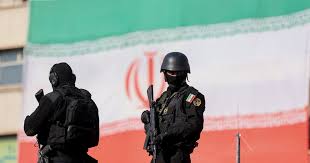
The regime that Khomeini created has outlasted many others – perhaps only the late Fidel Castro and especially so the late Queen Elizabeth II of England have seen as many US presidents, German chancellors, among others, pass on and off the world stage. While Iran has until recently been a dominant player in the Middle East from a geostrategic point of view, it has, to be polite, not been an economic success.

Thus, in keeping with the template of revolutions, high prices, scarcity of food and fuel, and a broken economy, are triggering protests across Iran, that have become so vast, that expectations are growing that Iranians may eject their leadership. That moment may not be too far off, but the path to an Iran that benefits its people remains a difficult one.

Not only are its geriatric rulers stubbornly cut off from its people and the outside world, they have historically, to a worrying extent (this was especially the case under former prime minister Mahmoud Ahmadinejad), relied on heightened tension with the US, Israel and other ‘enemies’ for political oxygen. Also, economically, Iran is like Russia in that most of the assets and resources in the economy are held by a small number of people (IRG, business owners, clerics) who form a sclerotic elite around the theocrats. Breaking their hold on the economy will be difficult, even under a new regime.

Neither is regime change obvious. The name of the Shah’s son Reza Pahlavi is circulating widely (in the West) as a possible figurehead, but the story of the ‘greatest party’ and the memories of his brutality are at least two reasons why he will not lead a ‘new’ Iran. At the same time, it is not obvious what individuals or groups might replace the regime, if it came to that.

A further complication is that Iranians are highly distrustful of interventions from abroad, indeed some people joke that Iran is the only country in the world where MI6 is still considered to be a force to be reckoned with. Military intervention by the US or other states may not be welcome.

The EU is slightly less distrusted than the US and the UK, and it should take a more active stance – in terms of further sanctions, asylum for the hundreds of young people who have been jailed, organise the supply of communication technology into Iran (VPN’s, satellite technology), and potentially begin to plan to assist and shape a transition process.

Iran has been weakened economically by sanctions, humiliated by Israel and had its military capability enfeebled but sadly, the state still has an array of resources with which to repress its people.

My sense is that the brutal repression in Iran will continue now (with very little visible public support in the US and Europe), and the economy will weaken further. An opening may come when the Supreme Leader, Khamenei dies – he is 86 and suffers from cancer. This event could provide the cover for a discrete but meaningful shift in policy, and the start of negotiations on sanctions and Iran’s nuclear program, and the beginning of a more promising era.

Have a great weekend ahead, Mike

Orientalism

It is likely that many of the people protesting for Palestine in US universities will have read Edward Said’s book ‘Orientalism’, or at least will have an idea who he was. It is also likely that they will have heard of Donald Trump, whose ire at these protesters has led to an unexpected fiscal crackdown on many prominent US universities including Columbia, where Said used to teach (see our recent note ‘University Challenge’).

In brief, the tack of Orientalism was to criticise the construction of a superior, Westernised view of the Middle East (the term was coined by navigators in the US Navy), that is then internalised by members of the Middle Eastern elite. At this broad level the theory was  attractive, but runs into many practical difficulties such as Said’s downplaying the role of women, and the failure of many Middle Eastern countries to develop economically and to nurture the kinds of open society that Said liked to live in. 

As with many facets of the debate around the Middle East, ‘Orientalism’ has become a badge of honour for many, and a contentious identifier for others, and there is a risk that many people who hold the ‘Orientalist’ view, have not updated their outlook for say the rise of Al Qaeda in the broad region and the effective domination in the last decade, of Palestinians by Hamas.

I doubt that Donald Trump has read ‘Orientalism’ (I think his speechwriter might have though) but in the light of the Western perspective of the Middle East, his visit to Saudi Arabia was striking in two respects.

First, like any clever politician, he confirmed the view that several countries in the region want to have of themselves

– ‘this great transformation has not come from Western interventionists … giving you lectures on how to live or how to govern your own affairs. No, the gleaming marvels of Riyadh and Abu Dhabi were not created by the so-called ‘nation-builders,’ ‘neo-cons,’ or ‘liberal non-profits,’ …instead, the birth of a modern Middle East has been brought about by the people of the region themselves’

To a degree, Trump’s view is not correct. The economies of the UAE and KSA were built on Western know-how (see David Mulford’s ‘Packing for India’ for example), and many of the financial institutions at least have mimicked those in the US and UK. Also, a large number of army officers from the region have been trained in imperialist bastions such as Sandhurst.

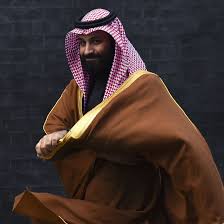
At the same time, the miraculous growth of these countries can be ascribed to local vision and leadership, on a scale only matched by Lee Kuan Yew in Singapore. And, consistent with the ‘Orientalism’ thesis, many people in the West do not acknowledge the rising institutional role that Abu Dhabi plays in the region, or the extent to which Mohammed bin Saman has become a hero for the youth in his country. In that regard, we might say that the model the Middle Eastern countries have followed is the ‘Sinatra Model’ (‘do it my own way’) with a slight American twist.

The President’s address struck a chord because in the Emirates and the KSA in particular, there is a growing pride and independence in what these countries have achieved economically, and on my last visit there a few months ago, I found that there was little patience on the part of government officials to for example, have EU regulatory standards imposed on joint investment projects. In a note I wrote at the time I flagged how locals had developed their own acronym of the West (W.E.N.A.), surely proof that the ideas in ‘Orientalism’ are dated.

Trump’s speech will be a big disappointment for those who believe in institutions and the idea of nation-building, and in that regard will turn on its head the efforts of so many in the State Department and other institutions. Neither does it augur well for current day American institutions.

The speech also brings into focus what Prof. Afshin Molavi refers to as the existence of ‘two Middle Easts’, namely a geopolitical one (sustained by American defence agreements) and an economic one. Chillingly in the context of the annihilation of Gaza, the Trump speech has tilted the momentum towards the economic version, and I feel that many people in Europe vastly underestimate the focus that governments in the region have on the economic prize, as opposed to the humanitarian catastrophe.

Various countries in the region from Qatar to Syria, may now find themselves the beneficiaries of Mr Trump’s lack of attachment to history and the democratic model, and it is very likely that the region known broadly as the Middle East will be one of the very few in the world to profit from his presidency, and will spearhead a move towards a model of materialistic, technocentric non-democracies, that some of Mr Trump’s supporters have in mind for the USA.

The emergence of the ‘Fourth Pole’, a prospective multipolar zone that will become the beneficiary of trade tensions between the ‘older’ multipolar zones (US, EU, Asia), is still very much on track, but as it develops it will increasingly need institutions, markets, rules and means of binding people to the region, none of which Mr Trump can help with.

Persepolis

Those lucky enough to visit Persepolis will know that not far away is an impressive monument to the Persian king Artaxerxes I, who like his even more famous antecedent (and I think distant relative) Cyrus the Great, played an important role in the liberating the Jewish community in Mesopotamia and establishing them in Jerusalem. Since then, the link between Persia and the Jewish people has been strong right through the Pahlavi dynasty years up to 1971, which marked the 2500 anniversary of Cyrus’ establishment of the Persian empire.

This date is controversial for the lavish party that the Shah hosted to celebrate the anniversary, and by some accounts (notably the Guinness Book of Records), it was one of the great parties of all time – for instance nearly 300 red Mercedes were used to bus guests around a large, tented city and Maxim’s in Paris closed for two weeks so that staff could cater for the event. Many of the world’s royal families attended, as did a range of political figures from Tito to Imelda Marcos. It’s perhaps no surprise that this display of excess was followed a few years later by the Iranian Revolution.

Even at this time, there were over 100,000 Jews living in Iran, many of whom would soon leave for Israel, so much so that one quarter of the cabinet of Israeli prime minister Ehud Barak (1999) were born in Iran.

While I don’t intend to comment directly on the recent entanglement between Israel and Iran – which is the culmination of a lengthy covert conflict – the Iranian attack on Israel reinforces a number of emerging geopolitical trends.

The first is the problem of elites in the sense that Iran’s theocratic elite is stubbornly cut off from its people and the outside world, and to a worrying extent (this was especially the case under former prime minister Mahmoud Ahmadinejad) relies on heightened tension with Israel and other ‘enemies’ for political oxygen.

On the Israeli side, it is worth recalling that not so long ago its society was convulsed by a crisis of democracy, and that by any standards its government has in recent years veered to the extreme right, notably so in terms of its willingness to bend Israel’s institutions to their own will.

The extension of this thought is to highlight the values of well made, functioning democracies but to also worry about the damage that the likes of Boris Johnson and Donald Trump has caused to them, how little these individuals value democracy, and how easily they have been manipulated by autocrats.

It is increasingly clear that in a divided, technology driven world, it is very easy for bad actors to undermine other states (a recent BBC documentary ‘The Empire Strikes Back’ made the point that Russia’s foreign policy is to act as a ‘spoiler’), and equally difficult for the lynchpins of the democratic world to repair this damage. Whilst this makes for a testing diplomatic world for the US and EU, not enough attention is given to the lack of any effort on the part of China to improve the state of international relations.

In particular, many of the larger, populous emerging nations of the world should pay more attention to this, and question China’s rhetoric that it wants to be a world diplomatic power.

This group of nations, who suffer under the banner of the ‘Global South’ should rightly feel alarmed that the world is becoming a more dangerous place and that military exchanges between nuclear armed states risk an existential event. They might also be fascinated by advances in drone warfare (the war in Nagorno-Karabakh was instrumental in this respect), the use of AI in military systems and the evolution of covert warfare. The danger is that instead of being repelled by this trend, they want to be part of it and a world arms race begins.

Another trend worth commenting on is that the clubs and gangs of the geopolitical world are becoming more clearly defined. Last week we wrote about the ‘golf playing nations’, and in my view the attack by Iran should convince Israeli strategists that China and Russia are not friends, and that it needs to pursue the normalisation of relations with the Gulf states and Saudi Arabia, and that it needs to be even more appreciative of the role that Jordan plays in the region.

Amidst all of this, the military exchange between Israel and Iran has obscured the fate of Gazans where a famine is deepening. For them, the best outcome of the events of last week is that it accelerates a durable peace process that encompasses the diplomatic realignment of the countries of the region.

Have a great week ahead,

Mike