Orientalism

It is likely that many of the people protesting for Palestine in US universities will have read Edward Said’s book ‘Orientalism’, or at least will have an idea who he was. It is also likely that they will have heard of Donald Trump, whose ire at these protesters has led to an unexpected fiscal crackdown on many prominent US universities including Columbia, where Said used to teach (see our recent note ‘University Challenge’).

In brief, the tack of Orientalism was to criticise the construction of a superior, Westernised view of the Middle East (the term was coined by navigators in the US Navy), that is then internalised by members of the Middle Eastern elite. At this broad level the theory was  attractive, but runs into many practical difficulties such as Said’s downplaying the role of women, and the failure of many Middle Eastern countries to develop economically and to nurture the kinds of open society that Said liked to live in. 

As with many facets of the debate around the Middle East, ‘Orientalism’ has become a badge of honour for many, and a contentious identifier for others, and there is a risk that many people who hold the ‘Orientalist’ view, have not updated their outlook for say the rise of Al Qaeda in the broad region and the effective domination in the last decade, of Palestinians by Hamas.

I doubt that Donald Trump has read ‘Orientalism’ (I think his speechwriter might have though) but in the light of the Western perspective of the Middle East, his visit to Saudi Arabia was striking in two respects.

First, like any clever politician, he confirmed the view that several countries in the region want to have of themselves

– ‘this great transformation has not come from Western interventionists … giving you lectures on how to live or how to govern your own affairs. No, the gleaming marvels of Riyadh and Abu Dhabi were not created by the so-called ‘nation-builders,’ ‘neo-cons,’ or ‘liberal non-profits,’ …instead, the birth of a modern Middle East has been brought about by the people of the region themselves’

To a degree, Trump’s view is not correct. The economies of the UAE and KSA were built on Western know-how (see David Mulford’s ‘Packing for India’ for example), and many of the financial institutions at least have mimicked those in the US and UK. Also, a large number of army officers from the region have been trained in imperialist bastions such as Sandhurst.

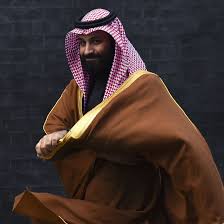
At the same time, the miraculous growth of these countries can be ascribed to local vision and leadership, on a scale only matched by Lee Kuan Yew in Singapore. And, consistent with the ‘Orientalism’ thesis, many people in the West do not acknowledge the rising institutional role that Abu Dhabi plays in the region, or the extent to which Mohammed bin Saman has become a hero for the youth in his country. In that regard, we might say that the model the Middle Eastern countries have followed is the ‘Sinatra Model’ (‘do it my own way’) with a slight American twist.

The President’s address struck a chord because in the Emirates and the KSA in particular, there is a growing pride and independence in what these countries have achieved economically, and on my last visit there a few months ago, I found that there was little patience on the part of government officials to for example, have EU regulatory standards imposed on joint investment projects. In a note I wrote at the time I flagged how locals had developed their own acronym of the West (W.E.N.A.), surely proof that the ideas in ‘Orientalism’ are dated.

Trump’s speech will be a big disappointment for those who believe in institutions and the idea of nation-building, and in that regard will turn on its head the efforts of so many in the State Department and other institutions. Neither does it augur well for current day American institutions.

The speech also brings into focus what Prof. Afshin Molavi refers to as the existence of ‘two Middle Easts’, namely a geopolitical one (sustained by American defence agreements) and an economic one. Chillingly in the context of the annihilation of Gaza, the Trump speech has tilted the momentum towards the economic version, and I feel that many people in Europe vastly underestimate the focus that governments in the region have on the economic prize, as opposed to the humanitarian catastrophe.

Various countries in the region from Qatar to Syria, may now find themselves the beneficiaries of Mr Trump’s lack of attachment to history and the democratic model, and it is very likely that the region known broadly as the Middle East will be one of the very few in the world to profit from his presidency, and will spearhead a move towards a model of materialistic, technocentric non-democracies, that some of Mr Trump’s supporters have in mind for the USA.

The emergence of the ‘Fourth Pole’, a prospective multipolar zone that will become the beneficiary of trade tensions between the ‘older’ multipolar zones (US, EU, Asia), is still very much on track, but as it develops it will increasingly need institutions, markets, rules and means of binding people to the region, none of which Mr Trump can help with.

Persepolis

Those lucky enough to visit Persepolis will know that not far away is an impressive monument to the Persian king Artaxerxes I, who like his even more famous antecedent (and I think distant relative) Cyrus the Great, played an important role in the liberating the Jewish community in Mesopotamia and establishing them in Jerusalem. Since then, the link between Persia and the Jewish people has been strong right through the Pahlavi dynasty years up to 1971, which marked the 2500 anniversary of Cyrus’ establishment of the Persian empire.

This date is controversial for the lavish party that the Shah hosted to celebrate the anniversary, and by some accounts (notably the Guinness Book of Records), it was one of the great parties of all time – for instance nearly 300 red Mercedes were used to bus guests around a large, tented city and Maxim’s in Paris closed for two weeks so that staff could cater for the event. Many of the world’s royal families attended, as did a range of political figures from Tito to Imelda Marcos. It’s perhaps no surprise that this display of excess was followed a few years later by the Iranian Revolution.

Even at this time, there were over 100,000 Jews living in Iran, many of whom would soon leave for Israel, so much so that one quarter of the cabinet of Israeli prime minister Ehud Barak (1999) were born in Iran.

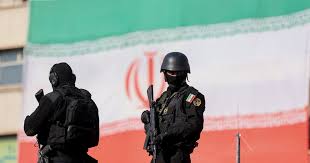
While I don’t intend to comment directly on the recent entanglement between Israel and Iran – which is the culmination of a lengthy covert conflict – the Iranian attack on Israel reinforces a number of emerging geopolitical trends.

The first is the problem of elites in the sense that Iran’s theocratic elite is stubbornly cut off from its people and the outside world, and to a worrying extent (this was especially the case under former prime minister Mahmoud Ahmadinejad) relies on heightened tension with Israel and other ‘enemies’ for political oxygen.

On the Israeli side, it is worth recalling that not so long ago its society was convulsed by a crisis of democracy, and that by any standards its government has in recent years veered to the extreme right, notably so in terms of its willingness to bend Israel’s institutions to their own will.

The extension of this thought is to highlight the values of well made, functioning democracies but to also worry about the damage that the likes of Boris Johnson and Donald Trump has caused to them, how little these individuals value democracy, and how easily they have been manipulated by autocrats.

It is increasingly clear that in a divided, technology driven world, it is very easy for bad actors to undermine other states (a recent BBC documentary ‘The Empire Strikes Back’ made the point that Russia’s foreign policy is to act as a ‘spoiler’), and equally difficult for the lynchpins of the democratic world to repair this damage. Whilst this makes for a testing diplomatic world for the US and EU, not enough attention is given to the lack of any effort on the part of China to improve the state of international relations.

In particular, many of the larger, populous emerging nations of the world should pay more attention to this, and question China’s rhetoric that it wants to be a world diplomatic power.

This group of nations, who suffer under the banner of the ‘Global South’ should rightly feel alarmed that the world is becoming a more dangerous place and that military exchanges between nuclear armed states risk an existential event. They might also be fascinated by advances in drone warfare (the war in Nagorno-Karabakh was instrumental in this respect), the use of AI in military systems and the evolution of covert warfare. The danger is that instead of being repelled by this trend, they want to be part of it and a world arms race begins.

Another trend worth commenting on is that the clubs and gangs of the geopolitical world are becoming more clearly defined. Last week we wrote about the ‘golf playing nations’, and in my view the attack by Iran should convince Israeli strategists that China and Russia are not friends, and that it needs to pursue the normalisation of relations with the Gulf states and Saudi Arabia, and that it needs to be even more appreciative of the role that Jordan plays in the region.

Amidst all of this, the military exchange between Israel and Iran has obscured the fate of Gazans where a famine is deepening. For them, the best outcome of the events of last week is that it accelerates a durable peace process that encompasses the diplomatic realignment of the countries of the region.

Have a great week ahead,

Mike

Micro-Powers

Emirates a micro power

Magazine covers can often offer the best guide to the future – though upside down. I am thinking of the famous BusinessWeek cover of August 1979 that proclaimed ‘The Death of Equities’ before the beginning of the 1980’s bull market, the 2014 Time magazine cover with the headline ‘Can anyone stop Hilary ?’, or the Economist cover ‘Brazil takes off’ in November 2009 just before its markets collapsed, and then ‘Has Brazil blown it ?’ in September 2013 as the country was about to boom.

In this light, I was wary to recently read the Economist magazine (August) declare Ireland as an ‘unlikely diplomatic superpower’ because of the array of important policy seats it holds (UN Security Council, Chief economist ECB, etc). The Economist curse soon struck, and Ireland lost hold of the EU Trade Commission.

In many respects, Ireland is very powerful diplomatically, not least compared to other similar sized states. This largely due to the performance of its superb diplomatic service (which is very much underestimated in Ireland) and outward focused state organisations like the IDA (Industrial Development Authority). Also, Brexit has been an excellent proving ground for Irish diplomacy and in addition, should Joe Biden be elected as US President, this will significantly bolster Ireland’s place in Europe (Biden is likely the most fervent Irish American President).

However, the secret of Irish diplomatic success is that in general Irish people do not take themselves too seriously, and many would laugh at the notion of being a diplomatic superpower.

Maybe a ‘micro-power’ is a better term for a geopolitically influential small state. I’ve derived this from former French foreign minister and commentator on diplomacy, Hubert Vedrine’s term ‘hyper-puissance’ which means ‘hyper power’, or more than a superpower.

The idea of the ‘micro-power’ really came to mind when Israel and the United Arab Emirates recently normalised diplomatic relations. Both are powerful, small states. Israel’s power derives from its military, its diaspora and technology industry while the Emirates is politically powerful across the MENA region and financially and economically very influential (Indeed, one expert, Afshin Molavi, has described Dubai as the ‘Hong Kong of India, or the Singapore of the Middle East’).

While the deal between the two countries very much sidelines the cause of the Palestinians, it reflects the speed and complexity of political change across the Middle East, and, in my view the ambition of both states to be considered ‘micro-powers’. The deal means both Israel and the UAE will gain new markets, cement relations with the White House, and deepen their collective rivalry with Iran.  

In a world that is quickly leaving globalization behind, entering a multipolar world order, the idea of the ‘micro-power’ may be one of the new diplomatic constructs of the 21st century. Regular readers will know that I have written a lot about the small, advanced economy model (and David Skilling’s newsletter on this is worth a read https://davidskilling.substack.com/) but not all small, advanced states are micropowers – Austria, Finland and New Zealand all top the list in terms of socio-economic models, but their diplomatic reach is not overawing.

My criteria for a micro-power are that it must be regionally dominant, count upon a significant resource (in Ireland’s case its diaspora, in the Emirates’ case its wealth and reputation for vision), and must be durable (Switzerland is the best example here).

As the idea of the ‘micro-power’ takes hold (I hope), there will be a number of considerations to bear in mind. One is that like superpowers, we already have the first ‘micro-power’ cold war between the Emirates and Qatar (it has thawed in recent months). Another question is what micropowers are for, beyond bolstering their own influence in the world.

In general, in a world that is transitioning from being driven by geographical to values based alliances, micropowers such as Norway, Ireland and Switzerland can act against the denigration of the rule of law and democracy internationally, and can and in my view should take the lead in pushing the remaking of international institutions – from the UN to the World Health Organisation (WHO).

Some micro-powers in the making, like Singapore, may choose to dodge competing value systems – they risk being subsumed in the crush between the USA and China – and try to foster a form of regional neutrality. Others, like Scotland, have a long way to travel if they want to become micro-powers, but at least they have their history to guide them. Scotland was once the intellectual fulcrum and centre of innovation of Great Britain, and in time could again take on this role.

Have a great week ahead

Mike