


I started the week in the beautiful surroundings of Killarney, Co. Kerry, where after nearly two months of constant rain, blue skies opened up. One of my earliest memories of Killarney, thanks to Irish-German cousins, was the sizeable German community there (Killarney used have a German butchers) and a commonplace saying at the time was that the reason many Dutch and Germans were drawn to the southwest of Ireland is that its remoteness and prevailing winds, meant that it would be the safest place in Europe in the event of a Cold War nuclear exchange.
That much was mildly reassuring given the news from the Middle East.
More so in the context that, in the same corner of the world at Île Longue in Brittany, Emmanuel Macron announced an upgrade of France’s nuclear deterrent, and critically the building of a European nuclear umbrella encompassing the likes of Greece, Belgium, Poland, Germany, the Netherlands and Sweden. This was followed by bi-lateral announcements by other states, notably Germany, and work on joint operations committees will start to take shape from the end of this year.
This is a major announcement from France and the involvement of other countries is highly significant, especially in the case of Germany, and it is yet another indication of the advent of a Military Union in the EU (and I would include Norway and the UK here, possibly Canada). Yet, as we noted in last week’s note (‘Riddle of the Funds’), capital markets union, and business scaling incentives will be more important than nuclear missiles in enabling Europe to build a military innovation complex.
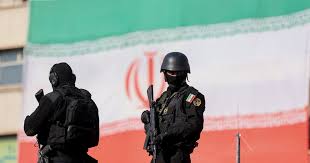
My worry is that with the pace of geopolitical events taking place at a rapid speed, Europe may leave it too late. The attack on Iran was a case in point, but the White House has left the outside world convinced that it has no coherent strategy for Iran, and this exposes multiple risk scenarios.
Five weeks ago in our ‘Persepolis 2’ note, we concluded by observing that the future of Iran might change when ‘An opening may come when the Supreme Leader, Khamenei dies – he is 86 and suffers from cancer. This event could provide the cover for a discrete but meaningful shift in policy, and the start of negotiations on sanctions and Iran’s nuclear program, and the beginning of a more promising era’.
Broadly, my view has not changed. The volatility of the past week has taught us much more about the behaviour of investors and market analysts, than the future of Iran. There has simply been too much ‘knee-jerkism’, about the impact of the closure of the Strait of Hormuz on long-term inflation and bond markets for example.
What matters most is the long-term alignment of Iran with other countries in the region, post this war, and in this context, there are several considerations. If this war ends in a ‘Mission Accomplished’ style declaration of triumph by both the US and Iran, the first factor will be the extent to which Iranian civil society has any role in the government. Iran is unlike Iraq was in 2003 in that it has a broad middle class, and a large, wealthy diaspora ready to contribute to the country. Unfortunately, it is also unlike Iraq in the sense that it has a highly entrenched regime elite, and herein lies the fallacy of the White House’s decapitation strategy. The Iranian ‘regime’ is composed of priests, oligarchs and the military, who have deep economic interests across the country (the IRGC own stakes in many businesses) and unrooting them will be difficult. If somehow, a more modern elite was to eventually come to power in Iran, then this would be a considerable boost for my ‘Fourth Pole’ thesis of a coherent, thriving economic zones across the region.
If Iran is not ‘Iraq in 2003’, then the prosecution of this war by the US looks from a political point of view, nothing like the 1991 Gulf War. At the time George H. Bush, himself a decorated aviator, spent time building a coalition of allies to fight a war with a very clear and limited objective. Bush, General Norman Schwarzkopf and Colin Powell were recognized for their leadership and clarity, and we cannot say the same for Secretary of War Hegseth. Today, there is no sense of an overall strategy (though Israel’s aims are clear), and the enduring sense is that the White House is now a source of uncertainty, rather than an architect of peace. The reluctance of European nations to participate reflects this, and the damage that Trump has done to the trans-Atlantic partnership.
Then, finally, the remarkable feature of this war is how publicly quiet Russia and China have been about the plight of their Shanghai Cooperation Organisation (SCO) partner. China has become a vital financial partner in the last decade, Russia is at the epicentre of Iran’s economy and military supply chain. I recall taking an internal flight in Iran twenty years ago where the bodyguards of a Russian businessman stood protectively in the aisle for the duration of the flight (including takeoff and landing).
The danger is less Russian opportunism, but rather that it and China perceive America’s action to be strategic, and that they respond in kind. Other countries like Turkey will also ponder the post-war landscape and what it means for their regional positioning.
Let’s hope that none of them think of Kerry!
Have a great week ahead, Mike


 The Levelling