Profiles in Courage

John F Kennedy, who died this week 61 years ago, is famous for many things, but a lesser known accomplishment is that he won a Pulitzer Prize for a bestselling book entitled ‘Profiles in Courage’, that told the stories of eight American political figures (mostly senators if I recall) who took morally courageous stands on issues that went against the views of their parties and popular opinion. An example was John Quincy Adams’ decision to break from the Federalist Party (over foreign policy).

Like all things Kennedy, the book was a dazzling success, but also had a few magical ingredients. It is generally accepted that Ted Sorensen, adviser and speechwriter to Kennedy, contributed much of the book, or in his own terms, he wrote ‘many of the words that made up the sentences’. Equally, the book did not make it through the formal entry process for the Pulitzer, but was nudged into the competition by Joe Kennedy, the president’s father.

As an aside, in the context of the recent presidential election, it could well be argued that Joe Kennedy was a Trumpian figure…or that Trump is simply following the ‘Patriarch’s; example (David Nasaw’s book of this title is very good). Joe Kennedy accomplished more as a businessman than Trump, but fell short in his political career. Instead, he groomed Joe junior(killed in the second world war), then John, Bobby and Ted.

One of Joe senior’s achievements was his appointment as American ambassador to the UK, but his term was cut short because of his perceived stance on appeasement. With some irony, Joe senior had encouraged the publication of his son’s Harvard thesis as a book.

‘Why England Slept’ queried the ‘soft’ stance of the British government towards Germany in the lead-up to the war and argued that if Britain had re-armed earlier and taken a more robust stance with Germany, the second world war may not have happened, or at least might have taken a different path (the book was a great success and the British royalties were given to the city of Plymouth which had been badly bombed by the Luftwaffe).

Though Robert Kennedy junior may now take the ‘Kennedy’ limelight, the message of JFK’s books echoes in today’s world. In a couple of years’ time, someone might write ‘Why Europe Slept?’ in the sense that Europe has let its guard slip on security and not built defence infrastructure to keep up with the threat of Russia.

In a week where a Chinese vessel is suspected of cutting a telecoms cable between Germany and Finland, when the first EU defence and space commissioner has been confirmed (Andrius Kubilius’ first task is to compile an inventory of Europe’s defence supply chains) and where an intercontinental ballistic missile has apparently been used on Ukraine, there is a sense that Europe is still not ready for the worst.

The idea of ‘profiles in courage’ is even more pertinent. In a multipolar world, where countries and companies have to ‘take sides’, where America will arguably become more transactional and less relationship driven in its foreign policy and, where democracy is being eroded from within and afar, moral courage will be at a premium.

One unfortunate example here is Olaf Scholz’ moral capitulation in calling Russia’s president last week, ostensibly to lay the groundwork for a peace deal. Scholz likely had the upcoming German elections in mind, but his call was rewarded with an intense bombardment of Kiev.

This has left Scholz even more discredited. Up until this week there was now a growing debate around his future as SPD leader and the prospect that he could be replaced by Boris Pistorius, the popular defence minister. Pistorius has declared that he does not want the leadership tole.

This is a pity for Germany, because having Pistorius in place as Social Democrat leader by the time of the election might boost the party and would also make a coalition with the CDU easier to form and more ideologically consistent. As it stands, the polls show the CDU/CSU with some 32% of the vote, the SPD on 16%, AfD at 19% and Sara Wagenknecht’s party at 7%. At that rate the CDU-SPD coalition might need to take on a smaller partner, but in effect Merz would be the dominant partner.

A Merz lead coalition could be a real change for Germany, could reignite its economy and remake its energy policy, and may turn it into a more robust geopolitical player vis a vis Russia.

My advice is that Merz, and his compatriots at the head of the SPD both read the works of John Kennedy. 

Have a great week ahead,

Mike

Empire

Donald Trump will be president of the United States for a second time, defying those who thought his first term was an anomaly and who considered that the American people still care about the rule of law. He will preside over the 250th anniversary of US independence, the next Olympics and World Cup.

This is an election result of such great consequence that it will decide whether America’s hegemony is renewed, or that its empire fades like so many others have done through the ages. Fittingly, I woke up to the news of Trump’s victory in Vienna, a city that knows a thing or two about empires. In that context, an interesting and possibly underread book is ‘The Hapsburg Way – 7 rules for turbulent times’ by Eduard Habsburg, known formally as the Archduke of Austria and now a career diplomat for Hungary.

Of Habsburg’s seven rules, the most important are ‘Believe in the empire, and your subsidiarity’ and ‘Respect law and justice’. Trump will likely not do well on these counts, nor does he score on ‘Be Catholic’ though the Catholic church has chased his coat-tails through the electoral campaign. He does better on ‘Get married and have many children’ and ‘Be brave in battle’.

The book is full of interesting snippets, such as that the first governor of Texas (in 1691) was installed by the (Spanish) Habsburgs. In that respect the only blemish in the book is the foreword, written by Habsburg’s boss Viktor Orban, who this week held court over his European counterparts in Budapest, in the wake of the Trump victory.

While I think that Trump will be much more disruptive for Asia and Europe, and that his presidency will see an unprecedented re-shaping of the Middle East, a great deal of media attention is devoted to his impact on Europe and NATO. Overall, the reaction is far too alarmist and the vision of world leaders cowering before Trump gives little acknowledgement of his and America’s vulnerabilities.

Despite this, with near comic timing, only hours after Trump’s victory was confirmed, the squabbling German government fell apart, a development that has been simmering for some time.

Germany will likely have an election next March, and this is good news. Scholz’ ineffective and indecisive government will be thrown out (Scholz may also be replaced by Boris Pistorius at the head of his party), and Germans will vote in a centre-right government, if polls are to be believed. There is very strong appetite on the part of German businesses to restart the economy, unblock planning laws and rethink energy policy. This much was very clear to me when speaking with investors and businesspeople in Hamburg (after Vienna).

If a new centre-right government transpires in Germany, this should re-engage the political engine at the heart of Europe between France and Germany. But there is a small chance that Emmanuel Macron will not be president of France in a year’s time. Macron, who this week compared Europe’s fate to ‘herbivore in a climate of carnivores’, is fantastically unpopular in France and it cannot be discounted that the Rassemblement will try to bring him down in 2025. Similarly, there is a risk that far-right parties in Europe are emboldened by the Trump victory.

Apart from the travails of the German and French leaders, there is a shift of power going on across Europe – in favour of Poland and Italy, and towards the Baltics/Nordics. The sense is that a Trump led US will bring about the end to the Pax Americana, which may initially leave Europe more vulnerable diplomatically, though ultimately it will become more independent (to America’s disadvantage). Arguably the loser here is the UK, stranded offside the EU, and at odds with Trump and his vice-president.

A Trumpian America, if true to the caricature, will leave Europe as the last bastion of democracy and independent institutions. This is a great challenge and one that most people are not ready for. In events I speak at, a trick question I pitch to the audience is to ask how many of them (usually accomplished, educated people) would enter politics – in most cases there are few volunteers. If European democracies are to be renewed, politics must re-civilise itself and to quote Eduard Habsburg, politics also needs more brave people.

Another area to watch is institutions. Donald Trump already politicized the Supreme Court and might well do the same with the Federal Reserve. On Thursday the Fed, oddly in my view, cut rates, but the press conference after the meeting was dominated by Chair Powell denying that he would resign if Trump requested, he do so. As America’s institutions may become more politicised, and world institutions like the UN and WTO become less relevant in a Trumpian world, Europe needs to ensure that the independence and competence of its institutions is pristine.

Returning to the topic of defense, perhaps the most interesting confirmation hearing (by the EU Parliament) of EU commissioners designate was that of Andrius Kubilius, the Lithuanian, first defense commissioner. His first task will be to deliver a paper (in 100 days from now) on the state of defense procurement, the integration of defense supply chains and the opportunities for a more intensive commitment to space technology. In his commentary, he revealed that a pan-European missile defense shield could cost up to Eur 500bn. So, we should brace ourselves for the issue of EU war bonds to pay for this.

To end this note with a very big picture view, in the context of the theme of the ‘Levelling’, Trump’s first victory was a wrecking ball to globalization. This second one shatters it completely and will try to remake America and the world order with a narrative and vision (‘tariffs’, ‘deportation’, ‘loyalty tests’) that will deglobalize. Politically, Trump has sold Americans a political vision based on the Leviathan (the people surrender their liberty to a singular leader in return for protection). Europe is still a ‘Leveller’ type system (bottom up democracies). Of the two approaches, I am with the Levellers.

Have a great week ahead,

Mike

Cold War to Total War

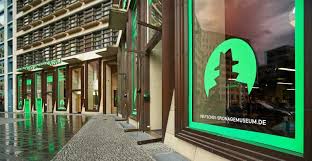
As I stepped out on the street in Kreuzberg (Berlin) on Monday, all was calm, with little to worry about save the choice of the excellent local food, loud music, beer and football (the Dutch invasion was just starting ahead of Tuesday’s match against Austria). Kreuzberg was of course once on the frontier of West Berlin, looking across to East Berlin and will have featured in the high stakes espionage between the West and East (notably so when Markus Wolf ran the Stasi).

Having once run into Mr Wolf, I was pondering what Berlin was like at the time, and we should not be surprised that it is still regarded as ‘the city of spies’, and that it continues to feature in espionage literature.

Given that context, it was no surprise to learn that Germany continues to be targeted by foreign spies. Over a week ago, German Interior minister Nancy Faeser launched the annual threat assessment of the German domestic intelligence service – which pinpoints Russia as well as China and Iran as the authors of multi-faceted attacks (disinformation, cyber-attacks, manipulation of people flows and racial tensions) on Germany, not to mention a recent spate of assassination attempts in Germany by Russia.  

Of great concern is the range of threats to Germany (the same is true in most other countries), from Russian operatives defenestrating enemies of Moscow, to plots to overthrow the German state by the far-right to Islamic terror (there are over 27000 known radicalised Islamists in Germany, and the threat of Islamic terror has been growing since the October 7 attack).

The tactics that the enemies of Europe (and democracy) are deploying are likely very different to those crafted by the likes of Markus Wolf. Espionage during the Cold War was motivated by a need for information, with plenty of proxy battles for influence taking place around the rest of the world.

Today, the aim seems to be outright destabilisation and provocation – from the multiple attacks on arms production facilities across Europe to an epidemic of coups d’état across Africa, to the waves of disinformation on our social media. There is also the impression that the US is being tied down in multiple conflicts around the world.

Today, the eyes of the world are on Gaza and Ukraine – and we are bracing for a new Trump Presidency – perfect conditions to ramp up outright destabilization and provocation. The issue then, is what the EU and its member countries need to do.

The first is to confront the problem and bring it into the open. Nancy Faeser’s report is just one of a growing number from security services across Europe – in May the head of Britain’s GCHQ outlined a similar, urgent threat landscape. The second will be for governments to give security services larger budgets (a Trump presidency might help), and potentially, to allow them a more flexible modus operandi.

The new development relates to the new EU commission. Following last week’s meeting of heads of state, it now looks likely that Ursula von der Leyen will continue as president – and with Katja Kallas as foreign representative, the tone of the next commission will tilt from ‘Green Deal’ to ‘security’ and ‘strategic autonomy’. Defence infrastructure and innovation will become a key trend in the private investment industry (private equity and venture). Von der Leyen has already flagged that enormous amounts of capital will be required to support this, and given the failure of the EU to build out its capital markets union (CMU) this will be an immense challenge.

One element that might help, a little, is von der Leyen’s proposal to create an EU defence commissioner. If it does happen, it will run into two of the common problems that beset bright ideas in Brussels.

First the role of defence commissioner will need to be based on the reallocation of powers from other commissioners – some defence innovation and military logistics responsibilities from Thierry Breton’s department, transport and infrastructure from the Transport commissioner (Valean) and various other responsibilities from the foreign representative.

The second issue is that it might take some power from national defence ministries, but there is also a strong argument that they need to be better coordinated.

In that sense the new EU defence commissioner might reflect changes that John Healey (currently the shadow defence minister in the UK) wants to usher in – an office for value for money in the Ministry of Defence and a restructured defence command.

The EU defence commissioner might also start by coordinating the purchase and use of heavy duty equipment, such as large transport aircraft, and driving the integrated use of new technologies across countries. Another potential task is to find means of better coordinating European security agencies and militaries, so that their collective, offensive capability becomes stronger.

It is a depressing, though necessary use of resources, and a sad sign of our times as globalization fades away.

Have a great week ahead,

Mike

The Art of Politics

The Future?

One of the telling quotes in ‘The Art of the Deal’ (Tony Schwarz and Donald J Trump) goes ‘You don’t reward failure by promoting those responsible for it, because all you get is more failure’.

That might also be the view of the American people, though given the very close-run Presidential election, it is hard to know what is on their minds, and what they define as success or failure. If the COVID-19 outbreak hadn’t happened, we might easily have seen a robust victory for Donald Trump.  

Previously, in the aftermath of contested elections – from 1876 to 2000, a sense of compromise has eventually prevailed. In previous elections, the vanquished candidate respects the ‘majesty of democracy’ as George H Bush put it. They are then praised, and in some cases such as Jimmy Carter to George W Bush, their reputation rises the further out in time they go from their time in office. This time, as they say, might be different.

It is hard to see how Donald Trump’s reputation can acquire a rosy hue, but at the same time he has stamped his mark on American politics, and it is now clear that his election in 2016 was not an aberration.

Trump will not leave the political scene in the way other presidents have – I suspect he will continue his presidency virtually through twitter and a tv show, and his daughter may soon, in the fine tradition of dynastic America politics, run for high office.

The telling factor that supports the case that Trump will not ‘go away’ is that he has established a new political method and has transformed the political landscape in the USA. This is not to be confused with the notion of a ‘school of thought’ or political philosophy, but rather an approach or what we might call ‘art’ of politics.

It has several elements, which may well be adopted by aspiring and incumbent political practitioners across many countries.

One pillar is ‘to break things’. Trump has a gift for zeroing in on derelict institutions, political opponents and viciously undermining them. His international political legacy has largely been to nobble many of the institutions of the twentieth century – NATO, the WTO (World Trade Organisation), WHO (World Health Organisation) and the UN, to name a few. In this respect his place in history will have been to bookend the closing of the period of globalization by attacking and neutering the institutions of the ‘globalists’.

While Trump is not a builder of institutions, I feel that lily livered, liberal politicians of the centre should more actively question the relevance of bodies like the WTO, and at very least repurpose them. NATO and the EU both need to review whether the composition of their membership makes sense in the light of the behavior of countries like Turkey and Hungary, respectively. German politicians in particular need to put on the ‘Trump hat’, even momentarily, and question the world around them.

One lesson from the Democrat showing in the election is that there is a strong appetite for change, and in some cases reform, across America and that this needs to be met by what politicians offer to the public. This is just as much true for Europe as it is the USA.

This is about as far as I would go in demanding that mainstream politicians emulate Donald Trump.

He has other gifts though – like Herbert Hoover with radio, Reagan and Kennedy with tv, Trump has a gift for (social) media. That social media is setting the rhythm of political cycles is not a new thought, but Trump’s successful banalization of the political world through it is.

In a recent note (‘Democracy’s Depression’, 24 Oct) I wondered if better policing of social media content, more reliable internet user identity checks and improved filtering of facts should make social media richer, and a better platform for discussion. Europe and a Biden administration might even work together on this. The cohabitation of a Democratic President and Republican Senate make policy avenue an unlikely one however.

Trump also it seems has the ability to set people free – from laws, common sense, decency and reality. In this regard he is a masterful populist.

The great danger for politics in general and democracy in particular, is that other ‘sorcerer’s/sorceresses’ apply Trump’s tricks, without his profane charm. This will lead to a degradation of society, and commensurately places a high bar on what Joe Biden and Kamala Harris need to do to repair America. What has troubled me most in recent years, is the ease with which democracy and the rule of law has been eroded in the US and other countries.

The risk now is that it may require even deeper divisions and then younger generations (I am thinking of ‘Ivanka ‘24’, ‘Pete ‘24’ and ‘AOC ’24’) to banish the spectre of Donald Trump.

Have a great week ahead

Mike

Will the political recovery be U, V or L shaped?

Collecting votes in Ireland

The term ‘paradigm shift, rather like ‘black swan’, is often misused and overemployed. However, the increasingly fractured world order is beginning to throw up more and more examples of genuine paradigm shifts, such as the result of the recent Irish election and the turmoil at the heart of German politics.

Both correspond to the broad terms of a paradigm shift – the crumbling of a long-established order, a fallow interregnum marked by disorder and questioning, followed by the making of a new way of doing things.

In the case of Ireland, the aftershock of its financial crisis has seen Fianna Fail slip from a period of multi-decade political dominance, Fine Gael’s failure to supplant Fianna Fail, the rise of many independent TD’s (members of the Dáil, the Irish parliament) and new parties, and now the sudden rise of Sinn Fein. When the dust settles, the Irish political spectrum will likely follow more traditional lines, Sinn Fein leading the left, Fine Gael to the right with Fianna Fail disintegrating towards both the left and right.

In Germany, Angela Merkel’s decision to welcome over a million refugees into Germany was her ‘poll tax’ moment, and this set in train the rupture with the stability that stretched back to Helmut Kohl. German politics is now in the disordered interregnum, where parties of the centre are trying to adjust to new issues (climate change, immigration, geopolitical shift), as those of the fringe attack the old consensus. The easy populist solution would before a centrist politician to spend some of Germany’s budget surplus, though this may not resolve the identity crisis in German politics and society.

The cases of Ireland and Germany can be added to a heap of plausible examples of paradigm shift – Brexit and Trump obviously, the role of central banks in markets and the impact of technology on our lives. As such, many people no longer push back on the idea that we live in a ‘world upside down’.

To come back to politics, US academic Larry Diamond has written of a democratic ‘recession’, and political theorists might, as economists did then years ago, debate whether the political recovery will be U, V and L shaped.

In that respect, what is of interest for politicians in Ireland, Germany and the likes of Spain, is to see how other ‘paradigm shifts’ are evolving.

In Europe, Emmanuel Macron’s playbook (perhaps I should say ‘stratégie’ or Grand Plan) has been to capture and hold the political centre, which in my view makes a great deal of sense. He has also aligned the apparatus of state, in that most institutions willingly work to his agenda (the same would not be true if say Jeremy Corbyn had become British Prime Minster). Given the economic and political tasks he is taking on in France and Europe respectively, his performance is easy to criticize, and many take advantage (as the Griveaux incident shows).

Viewed from Cork or Dublin though, he has two blindspots. One is to make the style of government more human and grass roots driven. The other is to take credit for the sharp fall in French unemployment. If unemployment in France falls below 7% by the end of this year it will have a wholly underestimated, positive effect on state finances, on ‘happiness’, human development and on the integration of immigrants. Macron should acclaim this achievement more.

One politician who would not be shy of doing so is Donald Trump, who while not consciously holding the centre, is using the prospect of rising financial wealth, a strong economy and his willingness to harry economic competitors as an inducement to Americans to tolerate ‘four more years’. Unless the Democrats can reverse the shift to the left that most of their candidates have taken, they risk being perceived to demand that middle America commits to an uncertain economic future.

This sense of the unknown was what finished Labour in the UK. However, instead of cementing his political capital at the centre of UK politics, Boris Johnson, by shedding the services of so many capable Tory MP’s and ministers (Julian Smith the former Northern Ireland Secretary was voted politician of the year by the Spectator) is drifting towards the touchline of British politics.

A person to person comparison with say the macron government, or even with the cabinets of John Major and Tony Blair, shows the new Johnson cabinet in a poor light. This makes me think that the paradigm shift in UK politics is by no means over. The centre is being deserted and there is an opportunity for Labour, or more likely in my view, a new party, to fill it.

Have a great week ahead,

Mike