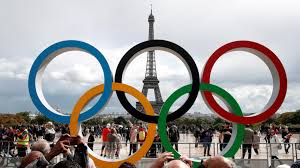
Let the Games begin

On Saturday morning I got up early to run the first and last parts of the Olympic marathon course, a few hours before the actual race. The course joins the most memorable parts of Paris with Versailles and is consistent with the spirit of the two-week Games in showing the accessibility of the city and its magnificence.

I have spent much of the past two weeks at the Games, mostly at the rowing, athletics and other endurance events like triathlon and bike (my favourite performances were Cork’s Paul O’Donovan and Fintan McCarthy –in the men’s lightweight sculls, Cassandre Beaugrand in the women’s triathlon, and the USA’s Grant Fisher in the 10,000m).

Once the security-driven tension of the opening passed, Paris relaxed and blossomed, and I think it is fair to say that the Games have been a huge success for Paris, France and the morale of the French people (their morale always needs boosting, their self-regard not so).

The success of the Games is a sharp contrast to the mood one month ago, when the country was confronted with the possibility that Jordan Bardella might be prime minister during the Games. Yet, Bardella has now effectively disappeared from public view. The question now is whether the success of the Games will colour the process of the formation of a new government?

My hunch is that it makes a government led by either the far left and far right less likely, and points to a preference for a centrist government – which I think is predicated on a split in the NFP left coalition (coming once they all return from holidays). I do not think that Emmanuel Macron’s reputation will be vastly enhanced by the Games, but they could be decisive in the race for mayor of Paris (Anne Hildago might opt to stand again, against the likes of Rachida Dati and Clement Beaune).

One reason that the atmosphere in Paris seemed so relaxed is that most of the Parisians left the city.

In my experience one motivation for this is that, unlike say England, there is no ‘sports culture’ in France (at least in the realms of the upper and middle classes). Achievement in sports is something for people in the regions, or the suburbs. Despite that, France does remarkably well in many sports like rugby, which is in effect played in a few regional centres (and professionally in Paris).

In this respect, the strong performance of France in the Games, allied to the even more impressive medal haul of Australia and combined with the lacklustre showing of larger countries like India, Brazil and South Africa (who have a combined four gold medals compared the six won by tiny New Zealand) begs the question as to what makes a successful Olympic nation, and whether these characteristics are correlated to economic achievement or even innovation.

Here, there are maybe three different models.

The first, which encompasses the English speaking nations (GB -5th place in the medals table, USA – currently 1st, Australia – 3rd, Canada – 11th, New Zealand – 12th and  Ireland – 16th) and some of the Nordics is based on what I call the ‘schools’ model, where sport is taught and practised competitively in the school system, and where this is valued culturally. In many cases, successful school athletes (especially so in Olympic sports) can continue sports at a very high level at university or clubs. Here the US university system stands out for the support it gives to athletes (from many countries, note that France’s hero Leon Marchand is a student at Arizona State University) and the vast resources that individual universities possess.

What is interesting from the point of view of the Olympics is that the national sports of the English-speaking countries – American football and baseball, hurling and Gaelic football, cricket, Australian rules – are not Olympic sports, and if anything draw talented athletes away from Games sports (and the Nordics have winter sports). It is still however an argument that a ‘sporting culture’ pays off.

The second approach is what I call ‘institutional excellence’, as exemplified by France (and it must also be said Australia with its world leading Institute for Sport), where promising athletes are funnelled through high level performance institutes and top flight clubs, and given support in terms of conditioning, psychology and diet. In the case of France, other institutions like the army also play a supporting role (19 of 52 French medal winners are soldiers). Japan and South Korea might also fall into this category, though it is worth noting the role that Japanese corporates play in supporting sports like running.

The third model is the ‘communist’ one which whilst communism has gone out of fashion, the communist system’s approach to manufacturing athletes has not, and is manifest in China, Romania and of course Russia. In these countries, within certain sports (rowing is one), promising physiological ‘specimens’ are channelled into specific sports and driven to compete. Whilst athletes from many countries have engaged in drug-fuelled enhancement, the ‘communist’ model countries have recently been the greatest offenders (Russia’s efforts here has been described as ‘state-sponsored and systematic’).

These are very broad sketches and will miss many elements such as the quality of individual coaching. One element they have in common is ‘age’ in the sense that most of the successful Olympic countries have been competing for a long time (the 1924 medal table was dominated by the USA, France, Finland, GB and Sweden) and I suspect that institutionalised expertise in many sports as well as a sense of ‘how to win’.

While my fellow Parisian Simon Kuper of the FT writes that there is a correlation between the level of economic development and Olympic achievement, I think it is more complicated. There does seem to be a correlation between sporting success and country pedigree (system longevity) and gender equality, and there does not appear to be a relationship between rate of development and Olympic achievement (China is the exception).

What is more interesting is the notion that the three above ‘Olympic’ models are related to different approaches to innovation. As we noted in last week’s brief, China has a state driven, ‘all-costs’, competitive approach to innovation, Europe’s is also state driven and resource-short, while the resource rich US university model (I would include Imperial and Oxbridge in the UK here too) tallies well with the centres of innovative excellence in the US.

If there is a lesson to countries like India, who perhaps want to be more successful (India sent a large business/socialite/media delegation to the Games) it is to focus on schools and colleges, develop a competitive sports program within its huge army, and copy Australia’s Institute for Sport.

Let’s see who does well in LA. 

Have a great week ahead,

Mike

Dans l’Ombre de Sully

Sully!

I confess that on more than one occasion that I have joked to French friends that ‘Sully’ (Maximilien de Bethune, Duke of Sully) the chief minister of France for twenty years around the turn of the seventeenth century is an ancestor of mine. Most are unimpressed, and American friends suggest I would be better off being related to the other ‘Sully’ (Captain Chesley Sullenberger the US Airways pilot who famously landed his plane on the River Hudson).

Sully, the elder that is, is worth pondering for two reasons. First, he was one of the longest standing holders of the office of prime (chief) minister of France, and secondly, he was the architect of some of the early, institutional apparatus that forms France’s highly centralized system of government. Both of these elements are now in focus with the replacement of Edouard Philippe as prime minister by Jean Castex.  

With many other senior ministers still in place, the removal of Edouard Philippe is a political statement by Emmanuel Macron that he and he alone is the captain of the ship of state, with M Castex in the boiler room running the complex machinery of the country. For his part, M Philippe, now mayor of Le Havre, may spend his spare time writing (check out ‘Dans l’Ombre’ written with Gilles Boyer) and cultivating a network of regional support that might equip him to challenge Macron for the Presidency. If so, it will be an enthralling battle.

However, there are other reasons to focus on France, not least next week’s 14th July celebration.

From a European point of view, a lot rests on the collective views and behavior of the French government – which in a country with relatively tame inequality, is one of the most elitist and homogenous in terms of personnel and thought process. There are maybe three challenges to watch.

The first is Europe. With the French-German political engine now whirring again, the approaching end of the Merkel era and the long running absence of a strong German foreign policy, Quai d’Orsay will be the driving force behind EU foreign policy. This is a positive given the policy energy of Macron and the unambiguously pro-European stance of his administration. It will be problematic in the sense that France, as Europe’s military power and a UN Security Council seat holder, also prosecutes its own foreign policy – notably on Russia and Libya.

In this way, France must decide whether it is what I’ll call a ‘great’ country or a ‘strong’ country. ‘Great’ countries have had or desire empires, they have nuclear missiles and soldiers stationed abroad. Their foreign policy is grand, ambitious and causes headaches for other nations. The US, China, Britain and Russia fall into this category. France is easily a peer of theirs.

‘Strong’ countries are the poster children of the post-coronavirus era. They are generally well lead, but not bumptiously so. They value public goods like education and healthcare, have well thought out tax and welfare systems, and are resilient to shocks. Norway, Singapore and New Zealand are in this category, and France might wheedle its way in too if we consider factors such as its state lead approach to innovation.

To draw these strands together, France’s challenge is to make Europe more ‘great’ and itself more ‘strong’, especially in the sense of opening itself up to and integrating more diverse influences. Corporate France is an example, very few women and few foreigners run French companies – unlike say the UK. This is just one rigidity in the French system. Another is a groupthink across the state on the Cartesian need for uniformity. This is dangerous when applied beyond French borders on the European stage.

The mantra that there should be a common fiscal policy amongst nineteen very different euro-zone countries risks handicapping many and robbing the system of the flexibility it needs in the context of a common monetary policy. Moreover, as a mantra it allows policy makers to be blind to the reality that mounting debt loads and perennially weak fiscal deficits have made the fiscal rules of the euro-zone meaningless, to the point that they are replaced by the ‘rule-all’ policy of the ECB.

If Emmanuel Macron is a revolutionary politician, as he tells us, then his economic policy must do at least two things. The first is to reduce debt – here the sale of state assets is perhaps less unpopular than cutting state spending. The second, more important one is to cultivate the narrative that economic growth is positive and necessary. France’s lack of growth (trend growth over the last ten years is just above 1% ) is perhaps the one thing that distinguishes it from ‘great’ countries (e.g China, US) and ‘strong’ ones (i.e. Ireland, Singapore and New Zealand. Macron’s policies to help entrepreneurs for example are meaningful, though underestimated beyond France. He now needs to redouble his efforts.

The Duc de Sully took twelve years to turn around the French economy (1598-1610), Emmanuel Macron has two years left to secure a rebound.

Have a great week ahead,

Mike

Peak Stocks, Peak Trump?

Only way is up

I recently gave a ‘Levelling’ related talk in Paris, where one of the points I made related to the way in which markets and finance have dominated our lives. I am often sensitive to the way markets are discussed in France. In contrast to the USA, where markets are seen as a source of wealth and to a degree, a part of American culture, in France, the opposite is the case.

This, in my view has something to do with France having a much longer economic history (August Landier and David Thesmar’s book ‘Le Grand Méchant Marché is worth a read on this point), and therefore more financial crises, than the US. Indeed, when John law was blowing up the French economy, the US was a ‘frontier market’ and colony of King George I.

One perspective on markets that I think interesting is they way they act as laboratories, signalling the impact of real-world events and economic policies. Markets can be brutally honest in this regard, pricing the effect of tragedies, wars and economic blight in an unsentimental way.

Some recent market behaviour has been revealing. For instance, the price of soya beans fell once the US and China signed their ‘trade’ deal. The drop in soya bean prices likely reflects a very sceptical view on the quality and enforceability (specifically that China would buy large amounts of US agricultural produce). In my view, this scanty deal only serves to provide the President with some politically helpful headlines, eases the stress on the Chinese economy and, profoundly underlines the fracturing in the relationship between the two countries.

In contrast to weakness in agricultural commodities, there are other market price moves that tell us little about the real economy, but a lot about how the plumbing of markets works. The recent, rapid rise in the price of Tesla stock is a case in point (the value of the company has doubled in the past six months and its equity value is worth more than the likes of Volkswagen, who produce far, far more electric cars). The rise in the value of Tesla tells us little about the health of the car market (modest in the US, weaker in Germany and China), but a lot about investor behaviour and the state of banking.

First, in terms of investor behaviour, by October of last year there was a sizeable community of investors sceptical that Tesla would ever become a profitable business. This set of investors had established large ‘short’ positions in Tesla stock. However, as markets rose, they were forced to cover or buy back these short positions, pushing the price ever higher. Anyone who thinks the sharply rising price is an indicator of Tesla’s future is mistaken, it is simply a function of investor positioning.

Another reason for the hubristic move in Tesla stock is that the federal Reserve has been infusing markets with more liquidity. There was a time when earnings, corporate strategy and good governance were determinants of stock performance. Today, in the USA at least, it seems that liquidity is the pre-dominant driver. In the aftermath of the global financial crisis, the banking system has changed in that the nature or species of participants in lending markets has become more diverse.

Hedge funds, private investors and asset managers now participate in lending marketplaces that were once the preserve of banks. The other change is that regulation has pushed banks to have smaller balance sheets, so to that end they are less sizeable players in many corners of financial markets.

At the same time, the amount of debt in the world has ballooned. The effect of this debt load, the changed composition of the banking marketplace and the refinancing pressures it puts on the marketplace is that the Fed now needs to lubricate the wheels of capital markets more often.

As it does so, it adds fuel to speculative fire, which in recent weeks has taken many measures of risk taking to extremes (Tesla’s rise is one example). Regular readers will know that I hold central banks guilty as charged for encouraging people to take on, rather than calibrate risks.

One upshot of this is that strength of the stock market is being used as a self-marketing tool by President Trump (in a recent note I commented that the number of his stock market specific tweets had increased sharply since November). Trump also loudly eggs Fed Chairman Powell on to be more accommodative. As such the Fed is now losing credibility, in a way not seen since the mid 1970’s, and it is entangling itself in asset prices in a way that will compromise it and the US economy.

As for President Trump, the potential near-term peak in equities might mean we have seen peak Trump, especially given the commencement of the impeachment hearings next week. His approach is that of a classically short-term property speculator – take on debt, pump up the value of an asset and then try to sell it. As he does so he is mortgaging the pensions of future generations, and potentially, his next four years in the White House. The stock market is due a correction, and so is Trump.

Perhaps someone, even in Paris no less, will write a book called ‘Le Grand Méchant Président’.

Have a great week ahead,

Mike