2026 – Year of the Riposte

In foreign affairs, the great surprise of 2025, has not been tariffs or the geo-politicisation of AI, but the flipping of American foreign policy to apparently align with Russia, jettison the rule of law, tolerate China, and as our recent, prescient note underlined, rediscover Latin America (‘The Land Full of Vibrancy and Hope’). The ‘exit’ of Nicolas Maduro further undermines the rule of law and reinforces the view of a ‘spheres of influence’, where the bad are emboldened and the good are imperiled.

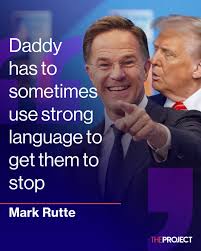
The big disappointment has been the slow, meek reaction of Europe to the above, the low point of which was the reference to Trump as ‘daddy’ by Mark Rutte, former Dutch prime minister and now NATO chief. Indeed, 2025 might also be described as Europe’s ‘neo-con’ year, when its leaders were mugged by the reality of strategic competition, and more specifically the mendacity of Vladimir Putin and the election of Donald Trump.

There are several strands to this. The first is the shock at the delivery of the message that America (the ‘White House’) is in effect dis-engaging from Europe and shattering the idea of the ‘West’. From the shambles of the Munich Security Conference to the communication of the National Security Strategy, there is still a shock felt across the continent to the change of direction that the White House is pursuing. A notable sign of this is how, in the post-Brexit world, Britain has become much closer to Europe on security and defence and is in the lead on strategy around Ukraine. A consequence of America’s ‘flip’ of this reaction, which I feel is not yet appreciated in the US, will be a much reduced willingness to buy American goods and services.

In practical terms, the new geopolitical climate is revolutionising defence spending in Europe. The Baltic and Nordic states, as well as Poland, are all increasing defence budgets amidst warnings of a future confrontation with Russia. Most notably, Germany has cast aside its debt brake to target Eur 1trn in extra defence spending in the next decade, and the EU’s Eur 150bn loan facility has closed its loan round. Europe is now in effect in a three year scramble to build defensive infrastructure, and there is also growing talk of more offensive (i.e. cyber) actions against Russia.

Beyond the manner of the delivery of US diplomacy there is a mixture of anger and confusion in Europe at the stance of the White House. One is the apparent untethered nature of US diplomats like Steve Witkoff, his alleged closeness to Russia and the peace deal proposals he has concocted. This has caused concern because of the time, energy and political capital that European leaders have had to spend (with Ukraine) counteracting the US/Russia proposal. 

A second source of ire is the apparent support by the White House for far-right parties in Europe – the AfD, Reform in the UK and the Rassemblement in France – all of whom have proven ties to Russia, all of whom hold 30% or more in opinion polls and all of whom are in direct opposition to governments in the three largest European countries.

It is also worth noting that the tension provoked by the White House has not brought Europe any closer to China – the perceived dumping of Chinese goods (electric vehicles for example) in Europe, and China’s support of Russia’s war in Ukraine are two major sticking points.

One relative bright spot on the horizon is that growth is beginning to pick up across Europe – bank lending is expanding, unemployment already low and lead indicators perking up. In that context it is likely that growth surprises to the upside next year. One great challenge, which has dropped from the policy limelight in the context of the focus on defence, is the Savings and Investment Union (old Capital Markets Union), and this is an essential part of the policy landscape in the coming year.

Looking ahead, across individual countries, there is now a consensus view in the UK that Sir Keir Starmer could be toppled as prime minister by his Labour colleagues (Wes Streeting is favourite to take over, and another Blairite Yvette Cooper, cannot be ruled out either). A recent YouGov poll showed Starmer to be the most unpopular prime minister in the past fifty years, and Rachel Reeves is the most unpopular Chancellor. The only European leader who is further adrift in the opinion polls than Starmer is Emmanuel Macron.

Macron, it seems, has given up, and in France the political debate bypasses him and is steadfastly focused on the next presidential election which should take place in May 2027 though it is not impossible that an attempt is made to unseat him in 2026. The election to watch is in Hungary, where the pro-Russia/anti EU prime minister Viktor Orban is behind in the polls to Peter Magyar’s TISZA party. A return of Hungary to the pro-EU ‘fold’ would be welcome and would constitute a blow to Russia.

To that end, and in the context of the damp squib that was the last EU summit, the litmus test for Europe in 2026 is to stop reacting to the disorder that others sow, but to build a positive narrative around the EU, and critically to riposte in a meaningful way against its adversaries.  Greenland might be an early test.

Have a great week (and new year) ahead, Mike 

Profiles in Courage

John F Kennedy, who died this week 61 years ago, is famous for many things, but a lesser known accomplishment is that he won a Pulitzer Prize for a bestselling book entitled ‘Profiles in Courage’, that told the stories of eight American political figures (mostly senators if I recall) who took morally courageous stands on issues that went against the views of their parties and popular opinion. An example was John Quincy Adams’ decision to break from the Federalist Party (over foreign policy).

Like all things Kennedy, the book was a dazzling success, but also had a few magical ingredients. It is generally accepted that Ted Sorensen, adviser and speechwriter to Kennedy, contributed much of the book, or in his own terms, he wrote ‘many of the words that made up the sentences’. Equally, the book did not make it through the formal entry process for the Pulitzer, but was nudged into the competition by Joe Kennedy, the president’s father.

As an aside, in the context of the recent presidential election, it could well be argued that Joe Kennedy was a Trumpian figure…or that Trump is simply following the ‘Patriarch’s; example (David Nasaw’s book of this title is very good). Joe Kennedy accomplished more as a businessman than Trump, but fell short in his political career. Instead, he groomed Joe junior(killed in the second world war), then John, Bobby and Ted.

One of Joe senior’s achievements was his appointment as American ambassador to the UK, but his term was cut short because of his perceived stance on appeasement. With some irony, Joe senior had encouraged the publication of his son’s Harvard thesis as a book.

‘Why England Slept’ queried the ‘soft’ stance of the British government towards Germany in the lead-up to the war and argued that if Britain had re-armed earlier and taken a more robust stance with Germany, the second world war may not have happened, or at least might have taken a different path (the book was a great success and the British royalties were given to the city of Plymouth which had been badly bombed by the Luftwaffe).

Though Robert Kennedy junior may now take the ‘Kennedy’ limelight, the message of JFK’s books echoes in today’s world. In a couple of years’ time, someone might write ‘Why Europe Slept?’ in the sense that Europe has let its guard slip on security and not built defence infrastructure to keep up with the threat of Russia.

In a week where a Chinese vessel is suspected of cutting a telecoms cable between Germany and Finland, when the first EU defence and space commissioner has been confirmed (Andrius Kubilius’ first task is to compile an inventory of Europe’s defence supply chains) and where an intercontinental ballistic missile has apparently been used on Ukraine, there is a sense that Europe is still not ready for the worst.

The idea of ‘profiles in courage’ is even more pertinent. In a multipolar world, where countries and companies have to ‘take sides’, where America will arguably become more transactional and less relationship driven in its foreign policy and, where democracy is being eroded from within and afar, moral courage will be at a premium.

One unfortunate example here is Olaf Scholz’ moral capitulation in calling Russia’s president last week, ostensibly to lay the groundwork for a peace deal. Scholz likely had the upcoming German elections in mind, but his call was rewarded with an intense bombardment of Kiev.

This has left Scholz even more discredited. Up until this week there was now a growing debate around his future as SPD leader and the prospect that he could be replaced by Boris Pistorius, the popular defence minister. Pistorius has declared that he does not want the leadership tole.

This is a pity for Germany, because having Pistorius in place as Social Democrat leader by the time of the election might boost the party and would also make a coalition with the CDU easier to form and more ideologically consistent. As it stands, the polls show the CDU/CSU with some 32% of the vote, the SPD on 16%, AfD at 19% and Sara Wagenknecht’s party at 7%. At that rate the CDU-SPD coalition might need to take on a smaller partner, but in effect Merz would be the dominant partner.

A Merz lead coalition could be a real change for Germany, could reignite its economy and remake its energy policy, and may turn it into a more robust geopolitical player vis a vis Russia.

My advice is that Merz, and his compatriots at the head of the SPD both read the works of John Kennedy. 

Have a great week ahead,

Mike

Empire

Donald Trump will be president of the United States for a second time, defying those who thought his first term was an anomaly and who considered that the American people still care about the rule of law. He will preside over the 250th anniversary of US independence, the next Olympics and World Cup.

This is an election result of such great consequence that it will decide whether America’s hegemony is renewed, or that its empire fades like so many others have done through the ages. Fittingly, I woke up to the news of Trump’s victory in Vienna, a city that knows a thing or two about empires. In that context, an interesting and possibly underread book is ‘The Hapsburg Way – 7 rules for turbulent times’ by Eduard Habsburg, known formally as the Archduke of Austria and now a career diplomat for Hungary.

Of Habsburg’s seven rules, the most important are ‘Believe in the empire, and your subsidiarity’ and ‘Respect law and justice’. Trump will likely not do well on these counts, nor does he score on ‘Be Catholic’ though the Catholic church has chased his coat-tails through the electoral campaign. He does better on ‘Get married and have many children’ and ‘Be brave in battle’.

The book is full of interesting snippets, such as that the first governor of Texas (in 1691) was installed by the (Spanish) Habsburgs. In that respect the only blemish in the book is the foreword, written by Habsburg’s boss Viktor Orban, who this week held court over his European counterparts in Budapest, in the wake of the Trump victory.

While I think that Trump will be much more disruptive for Asia and Europe, and that his presidency will see an unprecedented re-shaping of the Middle East, a great deal of media attention is devoted to his impact on Europe and NATO. Overall, the reaction is far too alarmist and the vision of world leaders cowering before Trump gives little acknowledgement of his and America’s vulnerabilities.

Despite this, with near comic timing, only hours after Trump’s victory was confirmed, the squabbling German government fell apart, a development that has been simmering for some time.

Germany will likely have an election next March, and this is good news. Scholz’ ineffective and indecisive government will be thrown out (Scholz may also be replaced by Boris Pistorius at the head of his party), and Germans will vote in a centre-right government, if polls are to be believed. There is very strong appetite on the part of German businesses to restart the economy, unblock planning laws and rethink energy policy. This much was very clear to me when speaking with investors and businesspeople in Hamburg (after Vienna).

If a new centre-right government transpires in Germany, this should re-engage the political engine at the heart of Europe between France and Germany. But there is a small chance that Emmanuel Macron will not be president of France in a year’s time. Macron, who this week compared Europe’s fate to ‘herbivore in a climate of carnivores’, is fantastically unpopular in France and it cannot be discounted that the Rassemblement will try to bring him down in 2025. Similarly, there is a risk that far-right parties in Europe are emboldened by the Trump victory.

Apart from the travails of the German and French leaders, there is a shift of power going on across Europe – in favour of Poland and Italy, and towards the Baltics/Nordics. The sense is that a Trump led US will bring about the end to the Pax Americana, which may initially leave Europe more vulnerable diplomatically, though ultimately it will become more independent (to America’s disadvantage). Arguably the loser here is the UK, stranded offside the EU, and at odds with Trump and his vice-president.

A Trumpian America, if true to the caricature, will leave Europe as the last bastion of democracy and independent institutions. This is a great challenge and one that most people are not ready for. In events I speak at, a trick question I pitch to the audience is to ask how many of them (usually accomplished, educated people) would enter politics – in most cases there are few volunteers. If European democracies are to be renewed, politics must re-civilise itself and to quote Eduard Habsburg, politics also needs more brave people.

Another area to watch is institutions. Donald Trump already politicized the Supreme Court and might well do the same with the Federal Reserve. On Thursday the Fed, oddly in my view, cut rates, but the press conference after the meeting was dominated by Chair Powell denying that he would resign if Trump requested, he do so. As America’s institutions may become more politicised, and world institutions like the UN and WTO become less relevant in a Trumpian world, Europe needs to ensure that the independence and competence of its institutions is pristine.

Returning to the topic of defense, perhaps the most interesting confirmation hearing (by the EU Parliament) of EU commissioners designate was that of Andrius Kubilius, the Lithuanian, first defense commissioner. His first task will be to deliver a paper (in 100 days from now) on the state of defense procurement, the integration of defense supply chains and the opportunities for a more intensive commitment to space technology. In his commentary, he revealed that a pan-European missile defense shield could cost up to Eur 500bn. So, we should brace ourselves for the issue of EU war bonds to pay for this.

To end this note with a very big picture view, in the context of the theme of the ‘Levelling’, Trump’s first victory was a wrecking ball to globalization. This second one shatters it completely and will try to remake America and the world order with a narrative and vision (‘tariffs’, ‘deportation’, ‘loyalty tests’) that will deglobalize. Politically, Trump has sold Americans a political vision based on the Leviathan (the people surrender their liberty to a singular leader in return for protection). Europe is still a ‘Leveller’ type system (bottom up democracies). Of the two approaches, I am with the Levellers.

Have a great week ahead,

Mike

No-one will save you

A headline in last week’s Guardian caught my eye. It read ‘No-one will save you’ and detailed the bubbling awakening of a volcano near Grindavik in the south of Iceland. Granted that we were in the area, we drove down to have a look. My family didn’t share my ‘lava-lust’ and luckily for them the police were still in place and roads to the volcano were closed.

However, the ‘no one will save you theme’ is also relevant to Iceland in the financial sense, in the way it represents a rare example of a small, powerless country that resolved its banking and debt crisis by itself, in a very painful but ultimately productive way.

Some readers may recall that in the mid 2000’s Icelandic entrepreneurs were making headlines with bids for leading British retailers like Hamleys and Karen Millen. That a small, fish led economy of some 350,000 people could produce such brash, adventurous capitalists has less to do with Iceland’s Viking and Celtic heritage than the over supply of cheap money from its banks.

At the time, Iceland vied with Ireland for the title of ‘biggest banking sector’ (relative to GDP). According to a presentation deck from Mar Gudmundsson, the Norwegian who took over as head of Iceland’s central bank post the crisis, the Icelandic banking sector grew by a factor of three times between 2004 and 2008. Specifically, Iceland’s banks, the likes of Glitnir, Landsbanki and Kaupthing (all AAA rated of course) were growing their balance sheets at a rapid rate (to a near record 10 times Iceland’s GDP) and bankers travelled from London to sell them new, genius investment ideas.

Like Ireland, Iceland became admired for its ‘model’ economy, and took advantage of the fawning of other Nordic countries and bodies like the OECD to sell more ‘Glacier bonds’.

There are plenty of colourful stories about the exploits of Icelandic bankers at that time, but to cut a long story short, when the global financial crisis struck in October 2008, the Icelandic banking system quickly collapsed.

As a small, open economy with meagre financial resources, the fallout was dramatic and painful. In the aftermath of the crisis, the Reykjavik stock market fell by 90%, the corporate bond market cratered and the currency (Icelandic krona, ISK) by 50%. Many households had borrowed in foreign currencies and as a result saw the burden (in ISK) of their mortgages soar. On paper, Iceland’s debt to GDP hit 700%.

A classic banking bubble was soon followed by a deep, textbook ‘bust’ (one economist Hermann Schwartz summed it up as ‘Iceland came late to the global party, drank too quickly, and hit the floor rather harder than larger economies’)

What is most interesting about Iceland is the way it resolved its crisis, largely by itself and through the will of the people. This might sound obvious or even trite, but when I compare it to the fallout from Ireland’s economic blow-up whose causes were very similar to Iceland’s banking crisis, Iceland has demonstrated a far greater degree of reform and accountability in its public life. In a world of heavily indebted nations the example of Iceland is one to bear in mind.

Like other European countries at the epicentre of the financial crisis Iceland was gripped by protests. Reform came quickly. The long-serving prime minister, Geir Haarde lost his job (his last speech to the nation ended with the words ‘God save Iceland’), and the governor of the central bank was forced out of his role.

The new government, and to a large extent the Icelandic people are considered to have largely taken ownership of the resolution of the crisis (think of the public opposition to pension reform in France as a counter example). Some thirty-six bankers were tried, sent to jail and fined, a development that is in stark contrast to other crisis hit countries.

Iceland suffered a brutal financial shock, and a deep hit to the real economy (output dropped 15% in two years), though this was ultimately less severe than the damage done to the Greek and Spanish economies, one reason for this being the manner in which the drop in the ISK made Iceland attractive as an exporter and tourist destination (the curiosity of tourists was also piqued by the explosion of the Eyjafjallajökull volcano and the use of Iceland as a location for Game of Thrones). .

A number of financial reforms also helped, the financial regulator was given extra powers, notably to protect deposit holders and new, domestic economy focused banks were created. The government refused to assume responsibility for debt owed to foreign nations and investors (many of whom were in the UK which placed Iceland on a terror watch list). Fiscal austerity was imposed, under the watch of the IMF, but this was less onerous in its conditionality than that imposed on Ireland, Greece and Spain.

The result of this reform and readjustment process was that the Icelandic economy began to recover some three years after the crisis started, and according to Iceland’s central bank GDP growth had caught up with the recovery of the US economy by 2018, surpassing that of the euro-zone.

Whilst it is a small, idiosyncratic economy, there are some clear lessons from Iceland in terms of how an open economy might deal with a multi-faceted banking, debt and currency crisis.

Very broadly, the key elements involve prioritizing the domestic economy, domestic banking  deposits and the free functioning of the financial system,  the sense of justice and accountability that comes from ‘regime’ change and the arraignment of guilty bankers, the absence of overly punitive austerity, and the presence of a stabilizing mechanism (in this case the currency).

As I write, Iceland’s economy seems to be thriving, with a new focus on biotech, geothermal power and climate-tech.

France, Germany and the UK should pay attention.

Have a great week ahead

Mike

From Cranes to Crypto

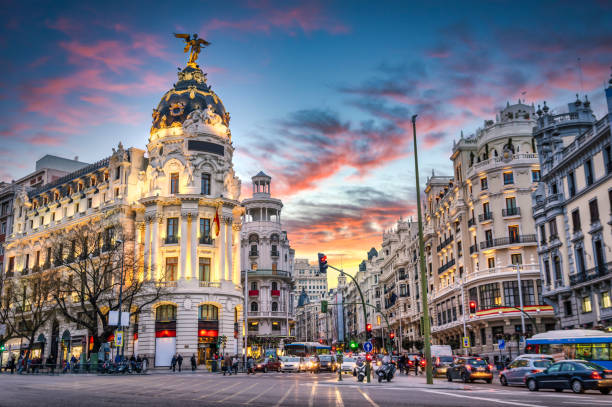
Madrid, Spain cityscape at Calle de Alcala and Gran Via

Regular readers will know that I travel a lot, always with a preference for boats and trains and by air when necessary. Having spent much of the summer without the need for a plane, the next few months will see an intensification of my travel schedule across Europe, the Middle East and Asia.

In most places I will be talking about the economics and politics of a changing world, but the virtue of visiting so many cities (Hamburg to Abu Dhabi for instance) and regions (the Cotswolds to South East Asia) is the opportunity it grants to witness the kinds of growth and development happening in the world, and the measures we can use to compare economic activity across countries.

Here, a few favourites come to mind. In the 1990’s and early 2000’s it was commonplace for economists and investment strategists in the large banks to rush back from trips to Asia with tales of how many cranes they had seen across the skylines of major Chinese cities and estimates of what this meant for the growth of the Chinese economy. Nowadays, those economists sit on a deck chair in the Marina Bay Sands hotel in Singapore, look out onto the bay and count the number of tankers anchored there as a proxy for global supply chain disruption.

Another tell-tale indicator is taxis. A former colleague, friend and reader of this note, with whom I used to travel to Japan in the late 1990’s referenced the length of taxi queues as a proxy for Japan’s then moribund economy (often unoccupied taxi ranks would snake around office blocks).

Then on a visit to a thriving Abu Dhabi in 2012, my taxi driver got lost (on the way to the airport). He apologised, saying it was his ‘first day’. I assumed he meant it was his first day as a taxi driver, but it turned out that it was his first day in Abu Dhabi. I politely took this as a sign of a vibrant labour market and a strong economy.

A risk that travelling economists face, not unwittingly, is that they normally stay in the centre of a city, and often in a decent hotel. I wrote a note some time ago describing this as ‘Grande Bretagne’ syndrome, after the teams from the IMF who oversaw the austerity programme of the Greek economy during the euro-zone financial crisis who stayed in the plush Grande Bretagne and Hilton hotels in the city centre. While this placed them near the seat of power, it meant that they were blind to the brutal impact of austerity across the country.

In general, travelling economists should get out and about. For instance, the quality of public transport in a country is a good indicator of the standard of infrastructure and to an extent, social cohesion and, is also a good way to observe a society. Someone observed that a city in which the wealthy use public transport is a well-balanced one (Zurich is a good example). In contrast, there is, inexplicably, no train from Dublin airport to the city centre, but a ride on the Luas tram will give a very good idea of the dramatic changes in Irish society.

In keeping with this approach, a favourite activity to beat jetlag and to either reacquaint with or discover a city is an early morning run (this week’s schedule took in the Tour Eiffel, the Tiergarten and Madrid (the park was closed due to bad weather)). In that idiosyncratic way, My eyes (and feet) are sensitive to the quality of the road surface, pollution and to the appearance of new buildings and signs of dereliction (Berlin scores on both counts).

There are other indicators of the economic prowess of cities, such as the rise of tall towers (the UAE for instance). In this tech driven age, a new category of indicators might comprise cities that want to become crypto-hubs (UAE, Miami, Zurich, Lisbon) and those that seek to attract large artificial intelligence (AI) firms (OpenAI has just opened an office in Paris).

As a final note on Madrid, I haven’t seen the city as ‘sleek’ or well presented (the 12th was the national holiday), and it must be said, as expensive. Note that Spain now has a slightly lower interest rate (bond yield) than France, and a considerably higher rate of growth than Germany.

The economy appears strong, despite concerns that many people versed about the state of Spanish democracy and its finely balanced political situation – there is likely a contentious budget on the horizon towards 2025.

There were a lot more Latin Americans than I had expected, and this has both helped tourism, and pushed up house prices (to the ire of some locals). Spain’s golden visa system means that it is the recipient of wealthier Latin Americans leaving countries like Venezuela. At the same time, quite a number of Spanish businesses and executives are relocating to Lisbon, which is a warning sign for innovation.

Have a great week ahead,

Mike 

Cold War to Total War

As I stepped out on the street in Kreuzberg (Berlin) on Monday, all was calm, with little to worry about save the choice of the excellent local food, loud music, beer and football (the Dutch invasion was just starting ahead of Tuesday’s match against Austria). Kreuzberg was of course once on the frontier of West Berlin, looking across to East Berlin and will have featured in the high stakes espionage between the West and East (notably so when Markus Wolf ran the Stasi).

Having once run into Mr Wolf, I was pondering what Berlin was like at the time, and we should not be surprised that it is still regarded as ‘the city of spies’, and that it continues to feature in espionage literature.

Given that context, it was no surprise to learn that Germany continues to be targeted by foreign spies. Over a week ago, German Interior minister Nancy Faeser launched the annual threat assessment of the German domestic intelligence service – which pinpoints Russia as well as China and Iran as the authors of multi-faceted attacks (disinformation, cyber-attacks, manipulation of people flows and racial tensions) on Germany, not to mention a recent spate of assassination attempts in Germany by Russia.  

Of great concern is the range of threats to Germany (the same is true in most other countries), from Russian operatives defenestrating enemies of Moscow, to plots to overthrow the German state by the far-right to Islamic terror (there are over 27000 known radicalised Islamists in Germany, and the threat of Islamic terror has been growing since the October 7 attack).

The tactics that the enemies of Europe (and democracy) are deploying are likely very different to those crafted by the likes of Markus Wolf. Espionage during the Cold War was motivated by a need for information, with plenty of proxy battles for influence taking place around the rest of the world.

Today, the aim seems to be outright destabilisation and provocation – from the multiple attacks on arms production facilities across Europe to an epidemic of coups d’état across Africa, to the waves of disinformation on our social media. There is also the impression that the US is being tied down in multiple conflicts around the world.

Today, the eyes of the world are on Gaza and Ukraine – and we are bracing for a new Trump Presidency – perfect conditions to ramp up outright destabilization and provocation. The issue then, is what the EU and its member countries need to do.

The first is to confront the problem and bring it into the open. Nancy Faeser’s report is just one of a growing number from security services across Europe – in May the head of Britain’s GCHQ outlined a similar, urgent threat landscape. The second will be for governments to give security services larger budgets (a Trump presidency might help), and potentially, to allow them a more flexible modus operandi.

The new development relates to the new EU commission. Following last week’s meeting of heads of state, it now looks likely that Ursula von der Leyen will continue as president – and with Katja Kallas as foreign representative, the tone of the next commission will tilt from ‘Green Deal’ to ‘security’ and ‘strategic autonomy’. Defence infrastructure and innovation will become a key trend in the private investment industry (private equity and venture). Von der Leyen has already flagged that enormous amounts of capital will be required to support this, and given the failure of the EU to build out its capital markets union (CMU) this will be an immense challenge.

One element that might help, a little, is von der Leyen’s proposal to create an EU defence commissioner. If it does happen, it will run into two of the common problems that beset bright ideas in Brussels.

First the role of defence commissioner will need to be based on the reallocation of powers from other commissioners – some defence innovation and military logistics responsibilities from Thierry Breton’s department, transport and infrastructure from the Transport commissioner (Valean) and various other responsibilities from the foreign representative.

The second issue is that it might take some power from national defence ministries, but there is also a strong argument that they need to be better coordinated.

In that sense the new EU defence commissioner might reflect changes that John Healey (currently the shadow defence minister in the UK) wants to usher in – an office for value for money in the Ministry of Defence and a restructured defence command.

The EU defence commissioner might also start by coordinating the purchase and use of heavy duty equipment, such as large transport aircraft, and driving the integrated use of new technologies across countries. Another potential task is to find means of better coordinating European security agencies and militaries, so that their collective, offensive capability becomes stronger.

It is a depressing, though necessary use of resources, and a sad sign of our times as globalization fades away.

Have a great week ahead,

Mike

The Art of Politics

The Future?

One of the telling quotes in ‘The Art of the Deal’ (Tony Schwarz and Donald J Trump) goes ‘You don’t reward failure by promoting those responsible for it, because all you get is more failure’.

That might also be the view of the American people, though given the very close-run Presidential election, it is hard to know what is on their minds, and what they define as success or failure. If the COVID-19 outbreak hadn’t happened, we might easily have seen a robust victory for Donald Trump.  

Previously, in the aftermath of contested elections – from 1876 to 2000, a sense of compromise has eventually prevailed. In previous elections, the vanquished candidate respects the ‘majesty of democracy’ as George H Bush put it. They are then praised, and in some cases such as Jimmy Carter to George W Bush, their reputation rises the further out in time they go from their time in office. This time, as they say, might be different.

It is hard to see how Donald Trump’s reputation can acquire a rosy hue, but at the same time he has stamped his mark on American politics, and it is now clear that his election in 2016 was not an aberration.

Trump will not leave the political scene in the way other presidents have – I suspect he will continue his presidency virtually through twitter and a tv show, and his daughter may soon, in the fine tradition of dynastic America politics, run for high office.

The telling factor that supports the case that Trump will not ‘go away’ is that he has established a new political method and has transformed the political landscape in the USA. This is not to be confused with the notion of a ‘school of thought’ or political philosophy, but rather an approach or what we might call ‘art’ of politics.

It has several elements, which may well be adopted by aspiring and incumbent political practitioners across many countries.

One pillar is ‘to break things’. Trump has a gift for zeroing in on derelict institutions, political opponents and viciously undermining them. His international political legacy has largely been to nobble many of the institutions of the twentieth century – NATO, the WTO (World Trade Organisation), WHO (World Health Organisation) and the UN, to name a few. In this respect his place in history will have been to bookend the closing of the period of globalization by attacking and neutering the institutions of the ‘globalists’.

While Trump is not a builder of institutions, I feel that lily livered, liberal politicians of the centre should more actively question the relevance of bodies like the WTO, and at very least repurpose them. NATO and the EU both need to review whether the composition of their membership makes sense in the light of the behavior of countries like Turkey and Hungary, respectively. German politicians in particular need to put on the ‘Trump hat’, even momentarily, and question the world around them.

One lesson from the Democrat showing in the election is that there is a strong appetite for change, and in some cases reform, across America and that this needs to be met by what politicians offer to the public. This is just as much true for Europe as it is the USA.

This is about as far as I would go in demanding that mainstream politicians emulate Donald Trump.

He has other gifts though – like Herbert Hoover with radio, Reagan and Kennedy with tv, Trump has a gift for (social) media. That social media is setting the rhythm of political cycles is not a new thought, but Trump’s successful banalization of the political world through it is.

In a recent note (‘Democracy’s Depression’, 24 Oct) I wondered if better policing of social media content, more reliable internet user identity checks and improved filtering of facts should make social media richer, and a better platform for discussion. Europe and a Biden administration might even work together on this. The cohabitation of a Democratic President and Republican Senate make policy avenue an unlikely one however.

Trump also it seems has the ability to set people free – from laws, common sense, decency and reality. In this regard he is a masterful populist.

The great danger for politics in general and democracy in particular, is that other ‘sorcerer’s/sorceresses’ apply Trump’s tricks, without his profane charm. This will lead to a degradation of society, and commensurately places a high bar on what Joe Biden and Kamala Harris need to do to repair America. What has troubled me most in recent years, is the ease with which democracy and the rule of law has been eroded in the US and other countries.

The risk now is that it may require even deeper divisions and then younger generations (I am thinking of ‘Ivanka ‘24’, ‘Pete ‘24’ and ‘AOC ’24’) to banish the spectre of Donald Trump.

Have a great week ahead

Mike

Dans l’Ombre de Sully

Sully!

I confess that on more than one occasion that I have joked to French friends that ‘Sully’ (Maximilien de Bethune, Duke of Sully) the chief minister of France for twenty years around the turn of the seventeenth century is an ancestor of mine. Most are unimpressed, and American friends suggest I would be better off being related to the other ‘Sully’ (Captain Chesley Sullenberger the US Airways pilot who famously landed his plane on the River Hudson).

Sully, the elder that is, is worth pondering for two reasons. First, he was one of the longest standing holders of the office of prime (chief) minister of France, and secondly, he was the architect of some of the early, institutional apparatus that forms France’s highly centralized system of government. Both of these elements are now in focus with the replacement of Edouard Philippe as prime minister by Jean Castex.  

With many other senior ministers still in place, the removal of Edouard Philippe is a political statement by Emmanuel Macron that he and he alone is the captain of the ship of state, with M Castex in the boiler room running the complex machinery of the country. For his part, M Philippe, now mayor of Le Havre, may spend his spare time writing (check out ‘Dans l’Ombre’ written with Gilles Boyer) and cultivating a network of regional support that might equip him to challenge Macron for the Presidency. If so, it will be an enthralling battle.

However, there are other reasons to focus on France, not least next week’s 14th July celebration.

From a European point of view, a lot rests on the collective views and behavior of the French government – which in a country with relatively tame inequality, is one of the most elitist and homogenous in terms of personnel and thought process. There are maybe three challenges to watch.

The first is Europe. With the French-German political engine now whirring again, the approaching end of the Merkel era and the long running absence of a strong German foreign policy, Quai d’Orsay will be the driving force behind EU foreign policy. This is a positive given the policy energy of Macron and the unambiguously pro-European stance of his administration. It will be problematic in the sense that France, as Europe’s military power and a UN Security Council seat holder, also prosecutes its own foreign policy – notably on Russia and Libya.

In this way, France must decide whether it is what I’ll call a ‘great’ country or a ‘strong’ country. ‘Great’ countries have had or desire empires, they have nuclear missiles and soldiers stationed abroad. Their foreign policy is grand, ambitious and causes headaches for other nations. The US, China, Britain and Russia fall into this category. France is easily a peer of theirs.

‘Strong’ countries are the poster children of the post-coronavirus era. They are generally well lead, but not bumptiously so. They value public goods like education and healthcare, have well thought out tax and welfare systems, and are resilient to shocks. Norway, Singapore and New Zealand are in this category, and France might wheedle its way in too if we consider factors such as its state lead approach to innovation.

To draw these strands together, France’s challenge is to make Europe more ‘great’ and itself more ‘strong’, especially in the sense of opening itself up to and integrating more diverse influences. Corporate France is an example, very few women and few foreigners run French companies – unlike say the UK. This is just one rigidity in the French system. Another is a groupthink across the state on the Cartesian need for uniformity. This is dangerous when applied beyond French borders on the European stage.

The mantra that there should be a common fiscal policy amongst nineteen very different euro-zone countries risks handicapping many and robbing the system of the flexibility it needs in the context of a common monetary policy. Moreover, as a mantra it allows policy makers to be blind to the reality that mounting debt loads and perennially weak fiscal deficits have made the fiscal rules of the euro-zone meaningless, to the point that they are replaced by the ‘rule-all’ policy of the ECB.

If Emmanuel Macron is a revolutionary politician, as he tells us, then his economic policy must do at least two things. The first is to reduce debt – here the sale of state assets is perhaps less unpopular than cutting state spending. The second, more important one is to cultivate the narrative that economic growth is positive and necessary. France’s lack of growth (trend growth over the last ten years is just above 1% ) is perhaps the one thing that distinguishes it from ‘great’ countries (e.g China, US) and ‘strong’ ones (i.e. Ireland, Singapore and New Zealand. Macron’s policies to help entrepreneurs for example are meaningful, though underestimated beyond France. He now needs to redouble his efforts.

The Duc de Sully took twelve years to turn around the French economy (1598-1610), Emmanuel Macron has two years left to secure a rebound.

Have a great week ahead,

Mike

Friday 13

Lagarde, Merkel

In the current panicked environment, it will not have escaped the attention of most people that last Friday fell on the 13th of the month. Friday 13th is typically seen as an omen of dark things to come, though its origin is more interesting than many will suspect.

Friday 13th October (1307) was the day that King Philip (le Bel) IV of France launched a lightening raid against the Knights Templar, imprisoning their Grand Master Jacques de Molay and many others. Philip was in debt to the Templars, whom he also feared for their military power and the clout of their pan-European financial network (they in many respects, invented banking as we know it).

The Templars were subjected to years of torture, the techniques of which prefigure the worst of the Inquisition and recent wars (i.e. water boarding). At the end of some seven years in captivity, Jacques de Molay was arraigned, and upon declaring that his only mistake was to renounce the Templars, he was carted off to be burnt at the stake (there is a memorial to him at the end of Ile de la Cité in Paris). Before dying, he cursed Philip and the Pope, both of whom died within the year.

While this tale is a good diversion from the ups and downs of the Dow, and to scare you the death of de Molay was followed thirty years later by the bubonic plague, it has made me think of the the link between torture/pain and one’s view of the world.

In de Molay’s day, torture quickly made the Templars recant their views, and in markets the same is true today. My first thought is of ECB President Christine Lagarde, who having been born in Paris should be familiar with the plight of the Templars.

On Thursday she stepped into the fire of markets by declaring that it was not the job of the ECB to close bond spreads. It was a brave statement, delivered at exactly the wrong time. Regular readers will know that I often rail against the ‘morphine’ that central banks have provided to economies and markets, and of the need to curb the oversized role of central banks. Lagarde, wisely I think, agrees and she has also expressed the view that European governments (especially Germany) need to be much more fiscally active.

By choosing to express this near heretical view, Lagarde risked monetary martyrdom, and disarray on the periphery of the European bond markets. I suspect that the pronounced and prolonged market volatility will produce a more generous and less thoughtful policy response from the ECB. We should expect a rate cut, more QE and liquidity intervention and I suspect more joint communiques with the Federal Reserve.

Lagarde is not alone in having her feet held to the fire of the market’s ire, Angela Merkel may be next. If there is a time for Germany to engage its borrowing power and fiscal surplus, it is now. Berlin needs to quickly communicate a plan to stimulate the German and by extension the European economy. This must also include ambitious structural objectives such as the need to a unified pan-European capital market, banking consolidation and a common approach to business start-ups across the EU.

If Merkel doesn’t act now, her career will be marked by banking collapses and rising unemployment. Like the network of the Templars, the future of the Union is at stake.

In the same way, the future of Donald Trump and the American approach to capitalism is also at stake. His administration is not the exemplar of the kind of big, responsive and diligent government that is necessary to defeat this crisis. Neither is big, responsive and diligent government something that can be conjured up in the short-run.

As market pain persists, I suspect that the Trump administration will increasingly turn ‘socialist’, and ask the private sector to take the strain of the coronavirus crisis (i.e. organizing testing, work from home and a less aggressive approach to layoffs), and will push for new monetary measures such as ‘helicopter money’ from the Federal Reserve. As the unfortunate Jacques de Molay found, pain can motivate great inventiveness.

Have a great week ahead,

Mike

Recession rehearsal

Powell under pressure

The last week has seen many different expressions of adaptive behaviour. First, the Democratic Party establishment and organisation have rallied around Joe Biden, and helped to push him to stunning turnaround in the Party’s campaign for President.

Then there has been widespread adaptation to the coronavirus – people have stopped shaking hands, travel only when necessary and it seems, lead incrementally more healthy lives (though a half-marathon I had entered was cancelled). In some cases however, stoicism wins out – the London Tube is as packed as ever.

In markets, investors – a great deal of whom are unsentimental robots – are adapting to extreme volatility. It has been one of the most extraordinary weeks in markets as investors try to position around the uncertainties introduced by the coronavirus. If and when we get it, a mid-twenties reading on the Vix volatility index would suggest that what might be described as ‘normal’ trading is getting underway. 

Then, policy makers have also been adapting, slowly. My sense is that to a large extent the policy reaction to the coronavirus is a rehearsal for how the next recession is met. So far, it has been a shambles. 

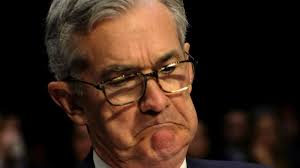
Jerome Powell, in making a 50 basis point cut in interest rates revealed that he is beholden to both equity and bond markets, and it seems, to politics. His action underlined the existence of the Fed ‘put’ – that the central bank will ride to the market’s rescue in times of turbulence.

The delivery of the rate cut was poor.  It focused insufficiently on the sense that this move would provide ‘insurance’ and on the ways it might combat the economic panic (e.g. risk of bankruptcies) associated with the coronavirus.

With the idea of a ‘rehearsal’ in mind, Powell’s move contributed to a feeling that when the ‘real’ recession comes, the Fed will have relatively little monetary ammunition and may, like the ECB and Bank of Japan (BoJ), have to resort to extraordinary measures like negative interest rates. 

If that is where the Fed is headed to, then the lesson for them from the likes of the BoJ, ECB and Riksbank in Sweden is not a happy one. The rush towards very low to negative rates in those monetary jurisdictions undercut banking sectors – a key reason why Europe and Japan have had weak recoveries, and also why to date US banks have outcompeted their international rivals. Sharply cutting rates, in tandem with a compressing yield curve, undercuts the balance sheets of banks, and in some cases can deepen a downturn. The Fed needs to study this carefully.

The second issue with the political response to the economic side-effects of the coronavirus crisis so far, is that despite G7 conference call and very general statement of intent, there is little apparent leadership and coordination.

The fracturing of international politics has made sincere collaboration difficult in practice (America might for example have announced a moratorium on sanctions on China). Moreover, the absence of a serious fiscal response in countries like Italy (the support measures announced come to only 0.3% of GDP), and the notable lack of open thinking on how deregulation might serve to boost business, is worrying.

I may be a little too critical here, but the sum of the week’s policy activity highlights depleted economic arsenals. Debt is too high and few countries have a decent fiscal surplus. Those that do, like Germany, don’t have the will to spend it.

It also points to a depleted international policy community – where the goodwill, leadership and force of mind that existed in the 1980’s or 1990’s (I am thinking of the likes of James Baker or Robert Rubin) is no longer visible. In Europe, Christine Lagarde has been strangely quiet.

There is now a need, an opportunity and hopefully time for someone like Kristalina Georgieva, or even departing Bank of England boss Mark Carney, to so a postmortem on the economic policy response to the coronavirus crisis. With world debt to GDP at its highest level since the Second World War, the next recession will be for real.