The UnRavelling Rule

Amidst the slew of corporate earnings and macro-economic data released in the past week, two developments struck me, both of which give the impression of the tectonics of geopolitics pushing against each other.

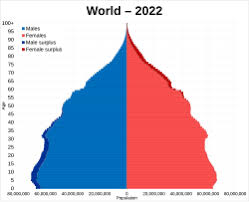
First, in the past year the number of children born in the US has caught up with the EU, at close to 3.6 million babies each (though the EU has a much bigger population). For comparison, Nigeria – whose population is less than half that of the EU – welcomed 7 million babies last year.

Second, in recent months the trend rate of consumer inflation in Japan has surpassed that of the US for the first time in decades, signalling a long awaiting shift in the Japanese economy that has been accompanied by a rise in long-run bond yields (a potentially critical development for the international financial system).

These two examples will give a sense of the rise and fall of nations, that is accelerating since the fall of globalisation (which I date to the effective end of democracy in Hong Kong). This rise and fall – think of countries like football clubs – is also associated by an unravelling of the world order. For example, in a recent note ‘Atlas Shrugging’, we detailed how the independence of the Federal Reserve was being undercut by the White House, and the attempt to remove Lisa Cook from the Fed’s rate setting committee confirms that Donald Trump wants to direct the Fed as an engine of his economic policy (as a giant bond buying machine I suspect).

The independent Fed has been one of the pillars of the globalised world system of the past forty years – and the snuffing out of its independence heralds the unravelling of that system. In the same way that the period of globalisation was characterised by low inflation and the absence of major wars – the presence of inflation and conflict today, is a sign that we are moving into ‘something else’.

In that context I find myself playing a mind game which I call the ‘Unravelling Rule’. Very simply, it is to identity the principal factors that have supported globalisation and that are positive outcomes of it and identify if and how they are unravelling. The crisis of democracy is one such trend (the Economist Intelligence Unit’s Democracy Index has fallen to its lowest level in twenty years).

Other certainties are also unravelling – notably the assumption that the USA is an unflinching ally of Europe and many Asian countries, and the possibility that it could even actively undermine them. In this regard, the fact that the Danish government had to summon the US ambassador over the conduct of three Americans in Greenland is troubling and reflects very badly on the White House.

The danger with the ‘Unravelling Rule’ is that in a chaotic world, it is tempting to see unravelling everywhere. It is more obvious though in the case of world institutions – the United Nations, IMF, World Bank and World Trade Organisation, who are frequently ignored by the very large economies, and sometimes badly undermined by them (the WTO is an example). These institutions need to be recast, most likely for the benefit of the populous emerging economies.

On a more speculative basis, there are at least four trends that have marked the past forty years, and that are now worth watching for a change of course.

The first is poverty. It is an underestimated facet of globalisation that it helped a billion people rise out of poverty, according to the World Bank. My concern is that in a world where the major economies (2/3 of the world’s GDP) have debt to GDP ratios above 100%, economic precarity may return, and this time to developed countries. We have already noted (The Road to Serfdom) the extremely high level of inequality in the US and broad economic vulnerability. In Europe, British and French policymakers conjured the spectre of IMF intervention in their economies (it would have to be a new, bigger IMF – which under this White House is unlikely). In that respect the growing disparity in incomes in the UK regions (relative to London) bears watching.

A second is corporate governance and the rule of law as it extends to international business. We have not seen a rule of law or broad governance crisis in sometime, but the rise of decentralised finance (i.e. crypto), the new idiom of the ‘art of the deal’ in the US, and the geopolitically tinged trade relationships that China is developing worldwide. As a global ‘way of doing things’ gives way to more regional or localised approaches, the watertightness of contracts and the oversight of business relationships is something that businesses will need to consider more carefully.

A true litmus test of the ‘Unravelling’ hypothesis will be the role of US multinationals in the world economy. Described as the ‘B-52s’ of globalisation in the late 1990’s by a prominent trade economist, they have shaped the world economy and come to dominate financial markets. I have lost count of the number of charts circulating that declare that Nvidia for example is worth more than the major European stock markets together. Whilst cash rich, they now face a number of challenges – the difficulty of selling into China as it broadens its technological self-sufficiency, and the collateral damage to overseas sales from the Trump trade and foreign policies, and the rise of more specific local tastes in markets like Africa and India.

A final unravelling, and one I would welcome, is for the EU to unleash its nasty side. In the past forty years the successes of the EU – enlargement, holding the euro together and the creation of a European identity (based on borderless travel the Erasmus programme for example). The likes of Poland and Estonia have benefitted greatly from this, and it is fair to say that the UK would be better off ‘in’ than ‘out’. But the emphasis has been largely on soft rather than hard power, and in a ‘harder’ world, the EU will need to take a tougher stance in terms of how it projects itself. 

There are many challenges but three in particular are the potential exclusion of existing and prospective member states like Hungary and Serbia who habitually refuse to act in accordance with EU values and interests, a specifically more aggressive approach to countering sabotage by Russia (and at times China and Iran) in Europe, and then a retaking of the narrative as to what Europe stands for.

Have a great week ahead,

Mike 

Grasshopper

I had intended to write about universities this week but, strolling through the City of London, I was surprised, shocked even, to find myself on Trump Street, and then amused to see that it is joined by Russia Row.

My first thought was that this was part of a grand plan by the British establishment ahead of President Trump’s visit to London in September, the idea being to stage an event at the nearby Guildhall and to then tell the president that a nearby street had been named after him. Trump Street was apparently named so because several trumpet makers lived there in the 18th century, but let’s ignore that for the time being.

Yet, the far more meaningful coincidence of Trump Street is its proximity to Gresham Street.

Sir Thomas Gresham was a trader and financier in 16th century London, at a time when coffee houses in the lanes around the Royal Exchange formed the basis of what is known as the City. Gresham was an important player in Queen Elizabeth I’s economy, and his emblem – a grasshopper – is still present in various parts of the City (there is a giant-sized golden grasshopper on the roof of the Royal Exchange….if you can dare to make it up there).

While Gresham’s imprint can be seen across the City, he is remembered by Gresham’s Law which was named after him and states ‘bad money will drive out the good’. Gresham’s Law which echoes similar observations from Copernicus and other scientists through the ages is founded on the idea that in an economy where coins with the same face value but that are made from different base metals (say nickel and copper) there is a tendency for traders to hoard the coins made of the more valuable metal and to circulate lower quality coins. Bad coins stay in circulation, good ones are re-commoditized. From an economics point of view the law is conditioned on all the coins (of variable quality) having the same face value.

Unlike the 16th century, today, coins have the same physical consistency and in general there is little incentive for people to shave bits off coins (historically coins have serrated edges to prevent this) but broadly the Gresham’s Law is applicable in different domains.

Think of how cheap goods (made under questionable labour conditions) have forced quality players out of markets, or how in the run-up to the global financial crisis, low quality financial institutions offering generous loan conditions caused better quality banks to step back from lending. In both cases, regulation or policing of markets is necessary to ensure that ‘bad’ actors do not gain an advantage over good ones. Social media is another example, where it seems a lot of nonsense thrives at the expense of information.

Additionally, the idea of Gresham’s Law is applicable to politics, where in many countries it appears that political actors with extreme views and extreme modus operandi are forcing out ‘good’ ones in the sense that most normal people would be terrified of a career in politics.

Readers will guess that my argument is leading back to Washington. Bad behaviour, bad ideas and bad policies are infesting themselves in public life, the economy and markets – to the surprise of many ardent supporters of President Trump. What is not clear is whether this will result in an evacuation of capital and talent from the US, or whether there will be a counter-reaction. Gresham’s point in describing how bad money drives out good was to avoid the debasement of the currency (schilling), which when Elizabeth I came to power, was already in a bad state. She appointed Gresham as a finance minister of sorts in 1560, and within a year he had ‘bad’ coins taken out of circulation and replaced them with money made from precious metal, the result of which was a dramatic improvement in Britain’s status as a trading and economic power.

The lesson of this should be very clear today. As a final point, it is interesting to note, from the point of view of coins and money, that the ratio of gold (precious metal) to a cyclical commodity (copper) is the most stretched it has been since at least the 1980’s, suggesting that markets at least are thinking of Gresham’s Law.

Have a great week ahead

Mike

Watching and Waiting

N’interrompez jamais un ennemi qui est en train de faire une erreur.

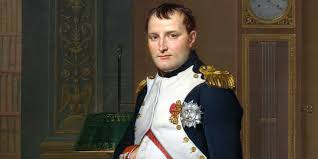
During the Battle of Austerlitz, Napoleon quipped to one of his commanders (General Soult) that one should never interrupt an enemy when he is making a mistake. Austerlitz was one of Napoleon’s tactical triumphs, but some seven years late the Emperor gathered one of the largest armies ever assembled and crossed Russia. The Russians burnt Moscow, harassed the French army and then patiently waited for the cold weather to cruelly teach Napoleon the error of his way (Sylvain Tesson’s book ‘Berezina’ offers a lively account of the retreat from Russia).

In a similar vein, as another modern-day, would-be emperor careens from financial calamity to geopolitical catastrophe, my sense is that the world beyond America, is best served by waiting and watching.

In the next two months the economic damage to America from the tariff campaign will become clear. The corporate earnings season has just started – some of the large banks have done well from the trading volumes created by market volatility – but as the focus turns to technology and other export focused firms, we can expect to see significant drops in earnings, a development that will make the still high valuation multiples for the US stock market hard to sustain. Relatedly, while investment banks are profiting from volatility, most of them are reporting that capital markets activity (public offerings, mergers and funding rounds for private equity firms) have stopped dead.

This is a shock for Wall St. With president Trump having installed a market trader as commerce secretary, a hedge fund manager as Treasury, a private equity titan in the defence department, and so on, capitalists might well have thought that the White House was on their side, but the annihilation of up to 8 trillion dollars in market capitalisation has proven them wrong. There is I imagine, a limit to Wall St’s patience and the pushback on policy will grow.

As it does, the hard (as opposed to ‘soft’ survey) data is likely to worsen dramatically, and the US will enter into an economic breakdown. At the start of this year I had sifted through the IMF GDP forecasts for 2025 and 2026, where uniquely they expected nearly all of the world’s economies to register positive growth. From this starting point, a global recession was a very low probability, but the Trump administration has blundered into one.

Now, policy makers in the US and abroad are realising that watching and waiting is the best way to entice Trump away from his tariff policy. There were signs of this on Wednesday when the Federal Reserve chair declared that tariffs would augment inflation and make it much harder for the central bank to cut rates. This statement represents quite the departure for a monetary authority that has greeted every flicker of economic trouble with lashings of cheap money. Mr Powell knows very well that it is not the job of a central bank to fix the mistakes of an errant policymaker, and very likely that a short, sharp market shock now might deter a great fiasco (and the credibility of the dollar) later.

In contrast, other central banks, who are unburdened by any sense of conflict of interest with Mr Trump, can feel much more free to cut rates into a coming recession, as the ECB did on Thursday. In that context, we may see the dollar strengthen in coming weeks, and much of the stress of the White House policies on the economy, transferred to the corporate bond market.

Then a key, patient player in this unfolding drama is China which, whilst it has deep economic faultlines of its own, is politically and socially coherent enough to weather the onslaught from Washington. Like the Russians who took on Napoleon, China’s strategy is partly one of endurance, partly ‘guerrilla’ (think of rare earth export controls, supply chain manipulation leading to shortages of goods in the US) and a patient attitude to the market turmoil that is starting to undermine the financial credibility of the USA.

Europe may follow suit. Giorgia Meloni spent Thursday in the US with president Trump and then raced back to Rome to host JD Vance. Her visit was useful in terms of Italian and EU diplomacy, but the EC is carefully signalling to Washington that any negotiations on trade will have to be done through Brussels alone, which as the Brexit process revealed, is a hard defence to breech.

Napoleon left Moscow in the middle of October 1812, eventually to creep into Paris just before Christmas. His army was devastated, only 100,000 or so men from an initial force of 600,000 survived. Donald Trump is no Napoleon. In two months’ time the US economy may well be in a state of disarray, consumer confidence and confidence in the president will likely have plummeted further, and the world will be watching and waiting for his capitulation.

Have a great week ahead

Mike

Did no-one see it coming?

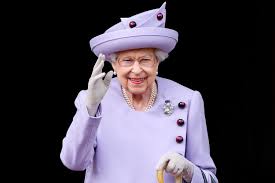
In November 2008, in the darkest hour of the global financial crisis, Queen Elizabeth II asked an audience at the London School of Economics ‘Why did no one see it coming”. We might ask the same question today in respect of Donald Trump’s tariff war, where he has diminished the things that he was reputed to hold dear – the economy, the stock market and the dollar.

One disturbing template that might offer insight into the path that the American economy takes is Brexit. As noted by the current prime minister of Canada, Brexit was not the solution to the problems that Britain faces. Certainly, the disengagement of the US from the world trade system is becoming as soap operatic and sometimes ludicrous as Brexit was.

An even more pertinent example might be Britain at the turn of the 19th century when there was a palpable sense that the might of its empire was peaking. At the time tariffs and trade were widely debated, and leading politicians like Joseph Chamberlain proposed the idea of an ‘imperial preference’, a lower tariff on trade with its colonies, to create a trading zone that would buffer the rise of the US and Germany.

To a certain extent, tariffs and trade became the issue of the day, but in the 1906 general election the public voted overwhelmingly for liberal, open trade (less restrictive tariffs) candidates. This I suspect was also the intention of those who supported Donald Trump in November last – keep the economy and markets strong, whilst evening up the status quo (a little). That tariff rates set by the US (and China) are at levels only last seen in the 1920’s completes the shock, and rhymes with history.

One reason tariffs were a popular policy tool one hundred years ago is that the fiscal side of the economy was not well developed (only a small proportion of Americans paid tax) and, in some cases, central banks did not exist. Today, tax systems are well developed and as small, open economies show, they are the best mechanism to reduce inequality, and to entice investment, both stated objectives of the Treasury secretary.

This particular market crisis is interesting because it is nearly entirely man-made. Turkey has taken a similar path in recent years, all but eviscerating its bond market and currency, but these are inconsequential compared to the depth of US markets. Whilst the president has stepped nimbly and profitably (some say) away from the financial brink, he still risks contagion of his actions in a number of respects.

Two such risks loom on the horizon, an economic war with China and a crisis of credibility in US financial assets.

We are now led to believe that ‘it was China all along’, but it would have been easier to tackle China with the support of America’s former allies in Canada, Japan, the UK and Europe.

For its part, China has plenty of tools to respond to the US with – it can allow its currency to weaken further and through supply chain disruption can inflict higher consumer prices, shortages of goods and lower (Chinese) demand on the US. Informal boycotts of American goods, investigations of US service firms and rare earth restrictions are just a few other tools at China’s disposal.

Should an economic war between the US and China materialise, my sense is that a supportive response from the Federal Reserve has been made less likely by Wednesday’s tariff capitulation by the White House, which demonstrates how arbitrary policy is under this administration.

In the longer-run, the actions of the Trump team could manifest themselves in a capital crisis in the context of the way they have undermined confidence in the US and by extension its financial system. What the likes of Peter Navarro seem not to have grasped is that the quid pro quo of America’s trade deficit is its enormous financial power – the role of the dollar and Treasuries as lynchpins of the international financial system, the dominance of US financial systems and its integral role in the fabric of capital markets, and the capital that overseas investors provide them.

With Mr Trump behaving in the way that some might caricature as ‘emerging market’, If we apply an emerging market stock market valuation rating to US stocks, the SPX index would be half its current size for instance. Equally, the mid-week selloff in Treasuries which was most likely the result of hedge funds unwinding positions, but the poor performance of bonds underlines the sceptical view that markets are starting to take on the administration.

In this context, we may be at the beginning of a great unwind of American financial power.

Have a great week ahead,

Mike 
The Road to Serfdom

I was sauntering through the centre of Vienna last Wednesday, admiring its stylish cafes and bars, and Friedrich Hayek came to mind.

Hayek argued against the suffocating role of government (‘central planners’) on the economy and for greater individual liberty, and his arguments still contain a grain of truth in the context of many European economies. Ironically, Austria’s brand-new finance minister had previously worked as an economist for a trade union and might well prove to be an ‘anti-Hayek’.

Hayek was one of the inspirations (after he won the Nobel Prize in 1974) behind what many American libertarians call the ‘Austrian’ school of economics, and his book ‘The Road to Serfdom’ is undoubtedly on the bookshelves of the most ardent members of team Trump, alongside works like Ayn Rand’s ‘Atlas Shrugged ‘.

In the Americas, Hayek is a favourite of the ‘chainsaw’ economists, with a large dollop of irony given the push for total control of the economy by an elite. Indeed, the risk for Americans is that the dismantling of the government led economy in America risks turning Americans into serfs of the private sector. But, this scenario is not yet immediately obvious given the way public attention remains focused on Ukraine and the victims of American tariffs.

In the past six months, a very strong international narrative has spread around the notion of ‘American exceptionalism’. The US is exceptional in a few domains – fighting (military), finance and its multinationals. Donald Trump is using these exceptional pillars to influence other countries and to set in train his vision for a more isolationist America. The response from America’s erstwhile allies has been to rapidly re-arm and re-finance.

An important sign of this was the announcement by Friedrich Merz (with the SPD’s Lars Klingbeil and the CSU chief) of a new defence spending plan, which largely swerves the issue of the debt brake. That German and Japanese bond yields rose suggests that markets are pricing the reallocation of the bill for security as an international public good to America’s former allies.

The return of war as a topic in European debate will alarm many people, and it should not be underestimated. One of my recent notes highlighted how Europe likely faces an ongoing campaign of harassment, sabotage and destabilisation from Russia. The idea that Europe is on its own is now quite starkly taking hold.

While the drumbeat of war will add to stress in our lives, it is not (yet) part of them. For the great majority of people, the geopolitical debate remains one between elites, and so far, does not impact their everyday lives.

This is where European leaders need to pay more attention and try to reset the international narrative. If America is strong in fighting and finance, it is weaker in areas where Europe is strong, and we might say that the two continents are the mirror opposite of each other. In my view, Europe is strong in the areas that matter to most people, most of the time. Specifically, Europe, as a social democracy is the best place to live in the world (6.6% of the world’s population live in ‘full’ democracies), has generally free education and healthcare and its societies are peaceful (according to the UN, the murder rate in the US is 14 times that of Italy). Life expectancy in France for instance, is four years ahead of the USA. Health spending per capita in the US is well over double what it would be for a European country (13k vs. 6k).  

In this context, my counterintuitive argument (to the ‘chainsaw economists’) is that America needs less Hayek, and more ‘Europe’.

The absence of a deep social security system in the US, and the difficulty of accessing decent healthcare at reasonable prices means that a huge number of Americans live in precarity. Demolishing the department of education and cutting state aid to veterans are just two measures that increase vulnerability.

The trend that is emerging, and which will become starkly visible in a recession, is of an American society where a small but important number of households (say 20%) are wealthy enough to live well and access high quality education and healthcare, 40% of households live with the stress of becoming economically vulnerable and a further 30% live in serfdom in the sense that they have no leisure time (Newsweek estimates that one third of American workers has a second job).

Income inequality in the US is at historically very high levels, and the share of total income garnered by the top 1% of the workforce is tipping levels only seen in the 1930’s. Viewed from the point of view of wealth, 38% of the world’s millionaires live in America and over half of the ultra-high net worth (wealth over USD 50mn) individuals in the world are American. Indeed, the top 1% of wealthy Americans own 18.5% of all wealth in America, while the ‘bottom’ 50% of Americans own just 3% of wealth.

As such, the Trump 2.0 programme may not free Americans from serfdom to the government but will make them serfs of a private sector.

As a parting shot, Europe might need a little dose of Hayek. To that end, social welfare systems, state pension plans and healthcare spending may need to be streamlined across Europe as the security agenda becomes more prominent.

Have a great week ahead,

Mike

Un train peut cacher un autre

Adam Smith, though better known now as an economist held the chair of Moral Philosophy at Glasgow and as such it’s fair to assume that he knew a thing or two about the intersection of economics, philosophy and politics, and that often a political crisis is motivated by an underlying economic crisis…hence the title of this note.

Smith lived during a time of mercantilism, which we might describe as a nationalistic approach to trade that aims to maximise the exports of a country whilst keeping imports to a minimum. In this context, Smith wrote of mercantilist nations that ‘their interest lies in beggaring their neighbours’, and the phrase ‘beggar thy neighbour’ has been often used in the economic context, usually when growth is scarce (the aftermath of the Great Depression and the Global Financial crisis)

With mercantilism and ‘beggar thy neighbour’ back in fashion, it is worth returning to Smith’s ‘Wealth of Nations, book IV’ where many of the observations Smith made chime with America today, such as:

‘The sneaking arts of underling tradesmen are thus erected into political maxims for the conduct of a great empire … . By such maxims as these, however, nations have been taught that their interest consisted in beggaring all their neighbours. Each nation has been made to look with an invidious eye upon the prosperity of all the nations with which it trades, and to consider their gain as its own loss. Commerce, which ought naturally to be, among nations, as among individuals, a bond of union and friendship, has become the most fertile source of discord and animosity’.

To that end, beyond the bonfire of American values and diplomatic relationships, there is an emerging, underlying logic to the policies of the White House that China, Japan and Europe need to pay attention to.

I have written many times in this note that the world economy is in the antechamber of a fiscal-debt crisis (listen to ‘Waking up to World Debt’). Unusually, all of the major economies have become indebted at the same time, and the process(es) by which they try to reduce debt at the same time will likely prove extremely hazardous financially.

It seems that the Trump entourage understands this, and that logically the unifying factor behind disparate policies from the creation of ‘DOGE’ to the enfeebling of NATO are driven by a brutal sense of austerity, that starts with the cutting down of all the international public goods that the US has invested in since Bretton Woods.

In this context, the ‘beggaring’ of Europe pushes the bill for European security back across the Atlantic and has shaped the debate in Europe towards greater debt accumulation (for example the debt brake is one of the most contentious topics for the new German government and the EU will soon embark on the issue of EU defence bonds). Japan, South Korea and Australia might be next.

In effect, the White House is using areas where America is exceptional – financial markets, the military and multinationals – to coerce its allies, and in the case of Ukraine to undermine them. Debt might be next.

The closest we have to a template for a Trump grand macro plan is a paper written by Stephen Miran, who may soon take up the role of head of the Council for Economic Advisers. The elements in this plan have popularly become known as the ‘Mar-A-Lago Accord’, which is not unlike the world debt conference idea I have written about in The Levelling, though my version takes place in the recently refurbished Raffles (Singapore).

One of the pillars of the cited ‘Mar-A-Lago Accord is that holders of Treasuries exchange these securities for very long-term loans (that might not provide a coupon). The result would be to restructure the maturity and fiscal burden of America’s debt load. It is a neat idea but will not work in practice. Any debt accord will likely need the impetus of a major financial crisis as a motivator, will need to restructure the debt of all the major economies and will entail a rewriting of financial regulations across the world (for pension funds for example).

In reality, an attempt to enact a Mar-a-Lago Accord, in the same fashion as the debate around NATO, may create aversion (distrust in) to US financial assets and the dollar. Whilst Europeans may not appreciate the extent to which a ‘beggar thy neighbour’ philosophy is driven by US security policy, the White House is underestimating the value that America’s wide ranging financial, diplomatic and commercial infrastructure bring it. An example is that close to 40% of the revenues of large American firms come from overseas.

In the short-term, we are also starting to witness the effects of austerity on the American economy. Though ‘hard’ data on the economy remain solid, the outlook will become very noisy in the next few months as government job cuts take hold and as social welfare cuts (notably in the mortgage industry) sow anxiety. Markets have started to become jittery too, amidst a belief that the administration is much more focused on lowering bond yields (and thus the cost of government debt) than boosting the stock market.

In a scenario where the (US) economy weakens, investors normally turn to Treasuries, but the prospect of a Mar-A-Lago Accord being foisted upon them could lead to a buyers’ strike. The public attack on president Zelensky has disabused diplomats of the intentions of the Trump White House, investors could be next.

Have a great week ahead,

Mike 

Remember the Washington Consensus?

Does anyone remember the Washington Consensus? Such a phrase might seem odd in today’s world but in the early 1990’s the notion of a ‘Washington Consensus’ was very powerful as a method for globalisation, and hotly debated by the left.

Globalisation worked well because, to be overly simplistic, it was facilitated by a very clear world order that helped to establish the rules of the ‘globalisation game’ and the norms associated with this. At their core, these rules were American, or at the very least they were made in Washington within the institutions that were set up to marshal the post-World War II world order, the IMF (International Monetary Fund), the World Bank and the United Nations in New York. America held the purse strings of these organisations and regular meetings at these institutions became a means of schooling ministers from both developing and emerging economies in the ways of American economic power.

These discussions aired what soon became known as the ‘Washington Consensus’ – effectively an approach to world economic development and globalisation, that was denounced by critics on the left as a neo-liberal policy recipe book. With the benefit of hindsight today, the Washington Consensus was valuable in the sense that it was a consensus, it encapsulated an approach that many countries were content to go along with as part of their first foray into real economic development.

Today, the Washington Consensus is in disarray. The institutions that it was built around, like the IMF are defunct, and others like the WTO have been undermined by both China and the US in recent years. The decision of the US to leave the World Health Organisation is another blow. The ‘Consensus’ is dead because there are now other competing methods as to how countries can develop, and of the independent paths they can take.

Here, an important milestone was Xi Jinping’s China Dream speech, in November 2012, which well before MAGA (Make America Great Again) coined the term ‘China Dream’ during a visit to the National Museum of China. Now, countries like Indonesia or Nigeria can try to follow the classical Western model of development, or China’s non-democratic, state led approach. Or, like Argentina and El Salvador, they can pursue the ‘Trumpian’ model that is taking a grip on Washington, but that is anything but a consensus.

Without going into day-by-day developments coming from the White House, the second Trump presidency can be seen as an early stage in the post-globalisation world order.

Globalisation was based on American economic and political strength and promulgated by the ‘Washington Consensus’ and the B-52’s of American capitalism (multinationals). Eventually globalisation ran out of steam, and events like Brexit, the first Trump presidency and the snuffing out of Hong Kong’s democracy shattered it. We are now in a multi-polar world where at least three large powers (EU, China and the US) do things increasingly differently (look at how they treat AI).

Uniquely, this Trump presidency represents an attempt to do something new and can be seen as an early chapter in the formation of the new world order, and to an extent its success depends on the will and the coherence of the groups of people that are driving the Trump project (from sectors like private equity, innovation and wealthy families). One stark difference with globalization is already clear. Globalization was built on the US being umbilically tied to much of the rest of the world, and vice versa, by flows of ideas, money, trade and people. In contrast, it now seems that Trump 2.0 relies on American exceptionalism, attempting to rise above the rest of the world, and in the process severing the relationships and ties built up since the end of the First World War.

For example, consider the words delivered to Canadians by President Kennedy in May 1961 ‘Geography has made us neighbors. History has made us friends. Economics has made us partners. And necessity has made us allies’ and how remarkably different they are to the way the Donald Trump has treated Canada.

In that context, the rest of the world may increasingly choose to avoid America, and the risk to ‘Exceptional America’, notably with the dollar as strong as it is, is that its financial power ebbs, in the way that of many other empires has. The template for this is expertly laid out in Barry Eichengren’s ‘Mars or Mercury’ paper that analysed the link between empires and their monies, though I feel that in the absence of obviously strong competing currencies, this thesis could take time to play out.

A more plausible side-effect of ‘exceptional’ America, is the advent of a new point of economic gravity, pinpointed at the UAE (United Arab Emirates). This is my ‘Fourth Pole’ thesis – that the UAE together with India and Saudi Arabia has the makings of a new pole of trade and commercial activity, with low regulatory barriers and that encompasses a potentially huge market (Prof Afshin Molavi calculates that there are 2.5bn bn people within five hours flying time of Abu Dhabi). The Mercosur trade deal between Latin America and the EU might also be the basis for a new trade corridor.

The other necessary outcome in a world where America is going its own way, is that Europe stops trying to contain Trump, and takes a far more aggressive stance with respect to its risk environment, notably Russia. The German election in two weeks’ time might be the start of that stance.

Have a great week ahead,

Mike

Humphrey

I’m glad to mention that my ‘GoldenEye’ note generated a lot of feedback, some of it cursing my good luck to spend a week in the Caribbean. To atone, I spent four days last week in the foggy cold of England, touring from Oxford to Manchester to the Cotswolds and finishing in London. Many of the places I visited are points of reference that I have known for a long time. Some have changed for the better (the Elizabeth line in London is very useful), some for the worse (this Manchester United team is indeed the worst ever), and some have not changed at all (the food at Pepper’s Burgers in Oxford is just as good as it was thirty years ago).

Economically and politically, Britain is worse off. Brexit has been a terrible mis-step, and the new Labour government is struggling to even diagnose the sputtering economy. Real-wage growth is feeble, productivity is at multi-decade lows, the fiscal deficit dominates policy making and the bond market is more troubled than when Liz Truss was prime minister. The only saving grace is that Britain isn’t Germany.

In foreign policy, while Britain is an active supporter of Ukraine and still a UN Security Council member,  it is at risk of becoming lost geopolitically – Britain is stranded outside the EU and the special relationship between Washington and London is all but dead politically in the Trump 2.0 era.

However, Britain is good at remaking itself. I think that at some point it will have its ‘Brian’ moment when, to borrow from the Monty Python film (The Life of Brian), a political leader will emerge, haphazardly or by design, with the force of personality and ideas to right the country. Nigel Farage is not this person, and without being unkind, I am not sure that Keir Starmer is either.

It used to be the case that Britain didn’t need talented politicians, it had a large, expert civil service to run the country. Instead of ‘Brian’s’ it had ‘Humphreys’ after ‘Sir Humphrey Appleby’ the fictional cabinet secretary in the excellent 1980’s tv series ‘Yes, (Prime) Minister’. The series revolves around the art of non-decisions and the careful practice by civil servants of keeping elected officials far from the levers of power.

When the engine of the economy was whirring, the job of the ‘Humphreys’ was to keep politicians from putting a spanner in the works. Now that productivity is dead across the UK (below the US, Germany and France) due to a lack of investment in capital and skills, the country needs to be inspired by new ideas. Thankfully, two of them came along last week.

The first was the latest in a series of notes on the UK economy by the excellent LongView Economics. In brief their diagnosis is that Britain faces several, long-growing problems – to many ‘Humphreys’ or rather too much regulation and bureaucracy (government spending is at seventy year highs), the death of risk capital and the need to re-generate investment flows across the British economy and the financialization of the economy.

Two of the solutions flagged by LongView are the needs to reform the NHS and to cut bureaucracy across government. This might happen sooner than many think because the second inspirational idea to come out of the UK was the launch a week ago of the UK AI Opportunities Action Plan, which in effect was authored by the venture capitalist Matt Clifford with a little help from the likes of Sir Demis Hassabis. It is applied and well thought through enough that it could not have been written by civil servants. In a week where the USD 500bn Softbank/OpenAI/Oracle AI investment has grabbed the headlines, the UK AI Plan deserves much closer attention and in my view, is the best framework for an AI value chain.

Whilst there are fifty recommendations in the report, all of which have been endorsed by the government, the main ones involve ‘feeding’ AI models by making high quality data more available (changing copyright laws), accelerate investment in data centres and also set up an AI Energy Council to plan the energy sources to power the data centres. There are also plans for a national data library and for the use of AI in the NHS.  

One striking element, announced this Tuesday, is the use of  AI assistants to speed up public services, with data-sharing deals across siloed departments; and a new set of AI tools — dubbed “Humphrey”. The aim is to speed up and make the work of civil servants more efficient – with the stated aim of saving GBP 55bn (this is very ambitious and if achieved would cut significantly into the budget deficit).

The plan, at least, is ambitious. Whether or not the Labour government can implement this plan is very much an open question but at least they have in their hands a blueprint for investment and perhaps the beginning of something better for the British economy.

Have a great week ahead,

Mike

Distance

If any readers travel to Singapore, I can recommend they visit the Botanic Gardens to sense the dawn break. A badly adjusted body clock brought on by jet lag meant that I found myself jogging around the Gardens at 5.30am on Monday and Tuesday mornings – uplifted by the sounds, smells and sights of this mini paradise.

My few days in Singapore, principally to speak at the Founders Forum gathering, allowed me to gauge the Asian reaction to the prospect of a second, more menacing Trump term in office.

I did so armed with the memory of a May 2016 visit to Singapore where I had asked a gathering of some 300 people to compile a word cloud (using their mobiles) of thoughts and emotions they associated with Donald Trump. The result was harsh, and very few of the participants that day thought Trump would be elected as president in 2016, and just as few thought that Brexit would happen.

To my mind the event was emblematic of the certainty of the era of globalization, and the ways in which this was smashed by events like the first Trump presidency, Brexit and the smothering of Hong Kong’s open society.

Singapore is one of the most important places to observe these changes from – it is highly globalized (the DHL Connectedness Report highlights it as the most globalized country in the world), delicately balanced between the Chinese commercial and American worlds, and institutionally one of the strongest countries (though it is one tenth the size of County Cork, it has an active army nearly ten times the size of that of Ireland). As a leading ‘micro-power’ it has an even greater stock of soft power.

As such Singapore will acutely feel the rising tensions between China and America especially in terms of the technologies it uses, investment flows and diplomacy. For context, the soon to be secretary of state Marco Rubio has laid out the faultlines in the relationship between China and America in an interesting document entitled ‘The World China Made’.

Indeed, several prominent politicians in Singapore such as prime minister Laurence Wong have declared the end of the ‘golden era of globalization’. My guess is that in the Trump era, Wong and colleagues will have to tread incredibly carefully diplomatically. Economically, it is clear that Singapore’s role as the wealth hub of Asia, or its ‘Geneva’ is gathering pace, and also obvious that its economy is benefitting from the growing prosperity in countries like Indonesia.

There are two other aspects of my visit that are worth stressing, less for what they say about Singapore but more for what they tell us how the ‘West’ is perceived.

First, with regard to Europe, in two separate meetings I was asked if I thought the euro would survive. This greatly surprised me as not only do I think the euro is a solid, though not yet perfectly formed currency, I have not been asked that question in Europe in nearly ten years. It suggests that Europe still has a reputational problem, or that at very least its ‘message’ is not reaching Asia. Conversely, it seems that there are too few Asian voices in the European media – connecting us to what is happening in cities like Singapore and Hong Kong.

The second reflection, which also resonates across Europe, is that for the first time in at least a century, an American presidency is being launched that has a manifestly threatening and aggressive stance towards the rest of the world.

America has historically been the builder of relationships, alliances and institutions (Pax Americana) and its (soft) power has been built on this. The tenor of the Trump cabinet is increasingly clear, and many of the appointees appear to have been selected on the basis that they did bad things in the past, or that they are prepared to do bad things to others in the future.

This is the great unknown for the USA, that its new posture towards the rest of the world causes it to lose influence and friends. 

Have a great week ahead

Mike

Druk!

Winter it seems, across much of Europe, has come early. Two instincts that grow as the evenings darken are the inclination to have a tipple in the evening and to watch a good film. One Danish work that captures both sentiments is ‘Druk’ or ‘Another Round’, which won the Oscar for best international film in 2021. I recommend it.

In the film a group of four school teacher friends decide to test the hypothesis of a Norwegian psychologist that humans have a deficiency of alcohol in their blood, and the protagonists undertake an experiment to maintain a ‘warm’ level of alcohol in their blood. It is an experiment I attempt often, but the real lesson today is with central banking.

It seems that central bankers have decided that in the spirit of ‘Druk’, the liquidity in the world financial system is not sufficient and have set out to administer near daily injections of cheap money. The number of central banks changing policy (i.e. to negative) is the greatest it has been, apart from the global financial crisis and the COVID period. In September alone there have been 24 rate cuts from central banks around the world.

Chief amongst these has been the 50-basis point cut from the Federal Reserve and the very dramatic, multiple policy moves by China. In short China has cut rates, infused the banking system, made mortgages cheaper and generally tried to spread liquidity over the emerging cracks in China’s economy. In the spirit of ‘Druk’ it is the equivalent of going on a five day bender in order to cure a serious disease.

Nonetheless, the easing in policy from the Fed and China, together with what will likely be a couple of more rate cuts this year from the European Central Bank mean that the world financial system is flush with liquidity. Chinese markets – hitherto the worst performing markets of a major economy – show the impact and importance of liquidity. The market cap of the Hang Seng index has grown by a quarter in less than two weeks. China has overtaken the US in terms of equity market performance to date.

There is no change to fundamentals – I don’t see this policy move having a decisive impact on the downward trend in Chinese earnings, but that doesn’t matter in the near term – liquidity is coursing through the pipes of the Chinese financial system, and in turn might bring a temporary easing to conditions in the property market.

For all the analysts who devote time to measuring earnings and calibrating valuations, the reality is that in this era of ‘quick to please’ monetary policy, liquidity matters a lot for asset prices. My rule of thumb in constructing a measure of liquidity would encompass money supply, the state of central bank balance sheets, the key role of the dollar and net issuance of debt by treasuries.

The arcane notion of financial liquidity has attracted enough attention that the Financial Times recently ran an article breaking down its component parts. A couple of top-flight economics consultancies run their own measures of liquidity – such as LongView Economics and Michael Howell at CrossBorder Capital. The latter holds that we are on the cusp of a significant upswing in global liquidity.

 If that is true, the implication for markets is ‘Druk’- a persistent giddyiness whilst central banks keep rates low and liquidity flush, amidst an acceptable level of GDP and profit growth. Friday’s job market figures in the US were very strong, suggesting that in fact there was no need for a large rate cut. This is the kind of macro climate we have seen in the mid and late 1990’s, and one that tends to dampen the market implications of turbulent geopolitics.  

From the point of view of asset prices, there are a couple of possible trajectories. Historically, the Fed has started to cut interest rates when the price to earnings ratio on the S&P 500 has been close to 10 times (1960’s to 1990’s). Now, like in 2000, it is in the mid 20’s which suggests that extra liquidity now could run asset prices in bubble territory proper, and cultivate the next bout of inflation, something the central banks’ bank, the BIS, has warned about (helpfully the BIS has taken a counter view to that of its members ahead of a number of crisis).

For the time being, the upturn in liquidity may be most meaningful for capital markets activity and assets in the private economy. They have been in the doldrums. If the ‘Druk’ hypothesis is working we should see a rise in IPO activity into 2025, and intensification in private equity deals and a rise in funding activity (beyond AI firms) in venture.

Then, later in 2025, the hangover will arrive.

Have a great week ahead,

Mike