Two Cities

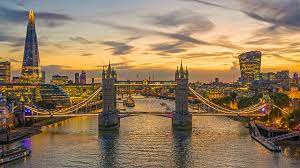
Writers or presenters in need of a catchy headline often deploy the line from Charles Dickens’ ‘A Tale of Two Cities’ that ‘it was the best of times, it was the worst of times’. The phrase in question compares London and Paris, around time of the French Revolution.

Having spent Thursday giving a talk on ‘La Guerre par d’autre moyens’ to a group of French economists and then Friday in London attending the estimable Pi Capital’s lunch meeting (Ian Bremmer presented his ‘risks for the year ahead’), I couldn’t help thinking of the ‘Two Cities’ and everything their history has to tell us about the development of economies, power and the state of the world today.

They are the two most extraordinary cities on earth, and no modern city, nor I expect Beijing (for a very long time the most populous city on earth – Rome has the record here) will match their colour.

I have lived in London and Paris for nearly half my life, so a full and worthy attempt to compare and contrast them could take a very long time. O’Sullivan’s Guide to the Pubs of The City and Paris Centre (sponsored by Eurostar) will have to wait.

What is interesting today is how each city confirms the stereotype of the other – London rather than Paris is beset by strikes and labour disputes, alternatively I find Paris more elitist than London and provocatively, I find Parisien(ne)s more polite than Londoners. There are certain elements of British culture I miss – notably the artistry of newspaper headlines. ‘Sex at No. 10 Covid Party’ is one such banner that greeted my arrival in London,

There are a number of serious points in comparing the two cities – not least in the context of the rest of Dickens’ quote that ‘it was the age of wisdom, it was the age of foolishness, it was the epoch of belief, it was the epoch of incredulity, it was the season of Light, it was the season of Darkness, it was the spring of hope, it was the winter of despair’ which underlined the dangers of the post-Revolution period.

The uncertainty that the French Revolution caused, and that Dickens wrote about, might well map onto Brexit. We are at a point in history where, as the old globalization led order dissipates, the rise and fall of countries will accelerate. For example, Russia, Estonia and Poland have all made strong choices this year, and will reap the consequences – in a positive way geopolitically for Poland Estonia, and quite possibly in a catastrophic way for Russia that could see the disintegration of its geopolitical hinterland and potentially the country become a renegade actor internationally.

Brexit is not quite as bad, but its folly is laid bare every day. Investment, especially in social infrastructure and public goods has collapsed over the past ten years, while productivity is anaemic. In France productivity is healthy, but France is reaching the limits of its budgetary and financial power. So, not entirely unlike the aftermath of the Napoleonic Wars, which drove economic innovation (in England), both the UK and France need to rethink everything they have done in the past forty years.

The UK needs to follow the French model – greater, better spending on education, health (and a less politicised approach to operating healthcare and policing), and possibly also on the military. The UK’s tax base needs to widen and arguably corporate tax needs to rise.

France on the other hand needs to look at what its neighbours are doing well. The heavy burden of administration needs to be cut away – to help businesses and to shorten the gap between the state and ‘the people’. Granted that France is at the limit of its budgetary potential, it has two (non-mutually exclusive) choices – political crisis or innovation. Mass privatisation is a non-starter but the digital economy in France offers the means to use private capital and expertise to improve public services.

As a final, crucial point, the ‘real’ tale of the two cities is how politically they have become estranged during the Johnson years. Brexit and the post Merkel era in Germany have left France the indispensable country in Europe, but with American singularity and Russian savagery on the rise, it needs to be politically closer to the UK (notwithstanding AUKUS) on topics of defense and security.

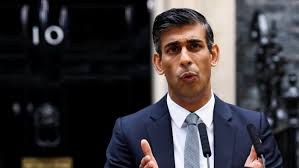
If this is the case it will suit Rishi Sunak, who I suspect will follow a foreign policy akin to the old Turkish one of ‘no trouble with neighbours’. There are already welcome signs of a change in tack in discussions around the post Brexit trade relationship of Northern Ireland. There is growing urgency to solve this before the 25th anniversary of the Good Friday Agreement in April.

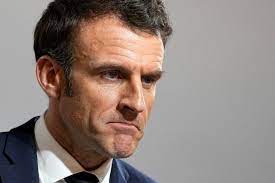
Fittingly then, it has just been announced that Emmanuel Macron and Rishi Sunak will hold the first UK-France summit in five years on March 10, and King Charles III is expected to cross the Channel in late March.

At long last, harmony may reign between the two greatest cities on earth.

Have a great week ahead,

Mike
Talos

Talos

Let me pick up where I left off ahead of Christmas by reiterating the fives themes for 2023 (‘War by Other Means’) that I had put together with David Skilling. The note details the trends we expect to materialise through the year as intense strategic competition between regions takes hold.

What has also become apparent to me over the holiday period – perhaps because I have simply had time to read more and reflect better, is that some of the contours of the post-globalization landscape are taking shape – the geopolitical realignment of the countries of the Middle East for instance, and the forming of currency based geo-strategic relationships, notably in the use of the yuan and rouble to settle commodity trades.

Another profound change that has been taking place is the relationship between humans and technology, in the sense that in many domains now humans are becoming far more effective in their work where they use technology cleverly and with humility. Additionally, still strong labour markets in the context of collapsing technology stock valuations suggest that humans have not been economically eviscerated by technology.

The trade-offs between technology and humans are not a new issue. As with many of the topics we grapple with today – military strategy, democracy and philosophy – the ancient Greeks established the benchmarks that most of us have struggled to keep up with since. With respect to technology, Greek philosophers spoke of automations (robots), engineers like Daedalus were said to have invented moving statues and models of animals, and Greek mythology conjured ‘Talos’ a giant, moving, bronze statue that guarded the island of Crete.

In modern times, the new frontier is where human professionals can use technology to help rather than replace them. For example, within the US military the use of various drones, intelligence centric tools and some weaponised machines by small units of soldiers is an area of keen study and practise, and it is now more than evident that the Ukrainian army has been given a leg up in deploying satellite and AI technologies in prosecuting its defence with increasingly impressive results.

The military use of robots and AI has potentially terrifying outcomes, which is why it is important that both the law and philosophy keep track with the use of technology and set boundaries to its use – to that end some universities are tackling this head on, such as the Centre for Ethics in AI at Oxford. In this respect, an interesting book that I have flagged before, is Aifric Campbell’s ‘The Love Makers’ (see AI – The Final Problem) which provocatively details a world where humans and robots are enmeshed, romantically and in other ways.

In this context, a really interesting recent paper by Cass Sunstein (‘The Use of Algorithms in Society’) highlights the role of AI in multiple domains such as dating, where he quotes the conclusion of a paper by the University of Utah’s Samantha Joel entitled ‘Is Romantic Desire Predictable? Machine Learning Applied to Initial Romantic Attraction’ which holds that the process of romantic attraction may be more “like an earthquake such that the dynamic and chaos-like processes that cause its occurrence require considerable additional scientific inquiry before prediction is realistic.”, a conclusion so clunky it must have been written by a robot.


The Sunstein paper is useful in illustrating how surgeons or judges can use AI and its related datasets in the support of their own roles, rather than competition with them, so that they are wiser, challenged in a data centric way, and hopefully society is better off.


Lurking behind the use of technology and specifically AI by professionals is the fear that it will disintermediate them. A recent development here is the arrival of ChatGPT an interactive ‘intelligent’ bot that has been developed by OpenAI (set up seven years ago to build socially constructive AI, and recently valued at USD 30bn). ChatGPT is catching on quickly, not least because students have found that it can write half decent essays.


I recently tested it out, asking for a response to the question ‘Is globalization over?’- the result is below, and in my humble opinion is a good rendition of the kind of response that a ‘two handed economist’ might give (‘on one hand…on the other’). I think I can just about do better, and if there is any lesson to draw it is for human writers to be more opinionated, quirky or style driven in how they write. I am not out of a job just yet.


Have a great week ahead,
Mike

It is difficult to say whether globalization is “over,” as the term can be interpreted in different ways. Some people use the term to refer to the increased interconnectedness of the world’s economies, while others use it to refer to the spread of Western culture around the world.

In terms of economic interconnectedness, it is true that globalization has slowed down in recent years. Trade growth has slowed, and there has been an increase in protectionist policies such as tariffs and trade barriers. However, it is also important to note that globalization has brought many benefits, such as increased economic growth and the spread of technology and ideas.

It is also worth noting that globalization is not a new phenomenon. Throughout history, people and goods have been moving around the world, and different cultures have influenced one another. While the pace of globalization may have slowed in recent years, it is unlikely to come to a complete halt.

In terms of the spread of Western culture, it is also difficult to say whether this process is over. While it is true that other cultures and ways of life have been influenced by Western culture, it is also important to recognize that there is a growing appreciation for cultural diversity and the value of preserving cultural traditions.

In conclusion, it is hard to say whether globalization is “over.” While there have been some changes in the level of economic interconnectedness in recent years, it is unlikely that the world will become completely isolated from one another. Similarly, while Western culture has had an influence on other parts of the world, there is also a growing recognition of the value of cultural diversity.

War by Other Means – Positioning for 2023

War is a mere continuation of policy by other means’, General Carl von Clausewitz

As we end a turbulent 2022, I have been thinking about what firms, investors, and governments should be positioning for in 2023 (and beyond).  This year, together with David Skilling (long-time collaborator and LandFall Strategy Group CEO), we have prepared a paper on key dynamics that will shape the year ahead.

This shorter note sketches out our view on these dynamics.  Please get in touch (through LinkedIn or by email) if you would like to access the full report. 2023 is likely to be another volatile year.  This ongoing turbulence reflects not just idiosyncratic shocks, but also a regime change in the global economic and political system. 

After the end of the beginning

Our core thesis is that the global economy is moving onto a ‘war time’ footing, with increasing, broad-spectrum strategic rivalry between the big powers reshaping the global economic and political system.  The key domains for this strategic competition relate to economics, finance, and technology – extending well beyond military competition. 

Increasingly, government policy across multiple areas will be deeply shaped by this strategic competition, from macro policy to industrial policy and the net zero transition.  In turn, economic outcomes, the business environment, and markets, will also be affected.  2022 was the ‘end of the beginning’ for the new regime, and these realities will powerfully shape 2023.  The global economy has been relatively depoliticised – but politics is firmly back.

Note that we are not forecasting a ‘war’, but Clausewitz’ terminology is useful to describe an increasingly contested world.

Previous episodes of regime change have had big impacts on investment returns, profitability, and national outcomes.  New approaches are needed to prosper in this new context.  

We identify five major themes associated with this regime change and their implications for firms, investors, and policymakers: from a changing globalisation model to the return of the state and changed macro policy settings. 

Globalisation & strategic autonomy

Globalisation is changing in structural ways.  Economic factors are partly responsible, supporting reshoring and nearshoring.  But domestic politics and geopolitics are much more disruptive factors in reshaping global flows.

In domestic politics, there is a growing push for strategic autonomy and independence in key sectors.  Industrial policy has crossed into protectionism.  The Inflation Reduction Act and the CHIPS and Science Act in the US are two examples, with sweeping local content provisions.  The EU and numerous national governments are likely to respond with industrial support packages of their own through 2023.  And China will continue to strengthen its development of national champions. 

Relatedly, growing geopolitical rivalry between the US/West and China will powerfully shape global flows.  The US has imposed restrictions and sanctions on China, notably on semiconductors, and is looking to decouple parts of its economy.  Similarly, Europe and others will continue to reduce economic exposures to China, albeit in a more gradual manner.  China’s policies also push in the same direction – reinforced by observation of Western-led economic sanctions on Russia.

2023 will be a year in which we move into much more explicit political competition and tension in globalisation, with a more fragmented global economy emerging rapidly.  The recent G20 meetings put some guardrails around the US/China relationship, removing some of the tail risks, but the logic of strategic competition remains intact.  Firms and countries will need to make deliberate choices.

The return of the state

After a few decades of declining government spending, interrupted by the global financial crisis, the size and role of the state is expanding.  The pandemic and energy crisis support packages reflect changing expectations on the role of government and will be difficult to reverse, particularly into a slowing economy.

And beyond the pressures for transfer payments and the costs of an aging population, strategic competition will lead to increased government spending.  Many governments have committed to raise military spending to 2% of GDP (or more); significant investments are being made in the net zero transition; and there is increased spending on industrial policy initiatives. 

Beyond financial support, governments will also take a more expansive role in trade and regulatory policy to support key strategic sectors and building national champions. There will be pressure to increase tax revenues to fund this spending.  Wealth and asset taxes will become more prominent, together with windfall taxes and higher corporate taxes.  An increasingly progressive tax system is likely.  Efforts to reduce international tax competition, such as the OECD’s minimum corporate tax rate agreement, are consistent with this.

Given the magnitude of the likely increases in government spending and investment, the quality of those decisions will make a substantial difference.  State capability will become a core driver of national competitive advantage.

Democracy fights back – and the autocratic recession.

The strategic competition between big powers has sometimes been framed as democracy versus autocracy.  This is not an entirely accurate framing, but it does capture something.  As some Western political systems have stumbled over the past several years, they have often been compared to apparently high-performing autocracies like China.

Yet as we look into 2023, democracies are on the comeback after a period of ‘democratic recession’.   The centre is holding and populism is broadly on the retreat.  Across Europe, reasonably centrist parties are in dominant positions.  The US remains deeply divided, but the centre is also stronger. This dynamic is partly because democracies have been responsive to popular preferences through challenging times (Covid, energy crisis); and it may be that the increasingly evident strategic competition has led to greater seriousness.

There are of course challenges to democracies.  One of the biggest challenges in 2023 will be managing the redistributive implications of high inflation: real wage growth is negative, household budgets are squeezed and borrowing costs are increasing.  High inflation is weighing on public support for governments. 

In contrast, an ‘autocratic recession’ is more likely.  China will face major political issues through 2023, most notably getting out of the Covid corner it has painted itself into.  And the Chinese economy is slowing structurally, with increasing youth unemployment.  Iran is struggling with poor economic and social outcomes and political discontent.  And the Russian economy is likely to struggle to a much greater extent in 2023.

China, Russia, and other autocracies were on the offensive over the past decade, sensing democratic weakness.  But democracies now have more reason for confidence in their model. 

Macro unravelling

Strategic competition will also contribute to an unravelling of the macro policy order.  

We expect inflation to drop in 2023 but to remain stubbornly above target – including for structural reasons, such as frictions on globalisation and higher government spending.  As a result, interest rates will also remain at a high plateau.  This will create a range of macro risks, as pressure is placed on leveraged parts of the global economy. 

At the same time, the shift to a war-time economy will challenge the current macro policy regime: fiscal rules with a focus on fiscal sustainability, and independent central banks with a price stability target.  Higher government spending and investment will run into the constraints of fiscal rules and central bank inflation targets. 

If the choice is between strategic priorities and existing macro policy institutions, it is likely the institutions that will give.  There will be a shift from policy rules to policy discretion: a relaxation of fiscal rules and softer inflation targets, perhaps with diminished central bank independence.  QE will be difficult to end.  Higher trend inflation is likely as macro policy remains accommodating. 

By way of analogy, the US decision to unilaterally exit the gold peg in 1971 was due to the tension between its strategic policy objectives (domestic spending, the Vietnam and Cold Wars) and macro policy rules.  Similar pressures will become more evident in 2023.

The USD will remain dominant, but there may be some changes in the global financial system.  As one example, it seems unlikely to us that the HKD peg can be sustained given the rivalry between the US and China.

The commanding heights: the technology & energy revolution

Technology is commonly thought to dominate the commanding heights of the global economy, and national economic policy is often focused on developing an edge in technology.  China, the EU, the US, and others, are increasingly investing in strengthening strategic autonomy in leading technology sectors.  Through 2023, we will see increased government capital flow into strategic areas of technology. 

Economic sanctions and restrictions are being placed on technology flows and investments between the competing blocs – and this will strengthen through 2023, drawing in a broader range of countries.   Choices will need to be made.  There are costs to global economic fragmentation due to the push for strategic autonomy.  But as in other domains, competition between countries can be a good thing – creating sharper incentives for investment and innovation (as during the Cold War).

In addition, energy remains a core element of competitive advantage.  The US is advantaged with its high measure of energy independence relative to Europe – which is currently facing competitive pressures, particularly in energy intensive sectors.

Energy investments, particularly renewables, will be accelerated in 2023 for several reasons: in response to the current high prices and supply concerns; as a matter of industrial policy; to comply with net zero targets; and as a matter of strategic autonomy.  Economies that can rapidly move to renewables (electricity, green hydrogen) will be advantaged. 

Those countries and firms that can combine technology leadership as well as security of supply of critical flows of commodities and energy will out-perform.  As technology and energy are increasingly framed in strategic terms, the pace of change will increase markedly, generating significant investment opportunities. 

For a full copy of the paper – including implications, our views on wild cards for 2023, as well as things not to worry about – please get in touch by reply email or at thelevelling@gmail.com for the full report.

The Autocratic Recession

I am in the middle of writing a book on French democracy, and not for the first time I wonder if I have the wrong country. Often in recent months I have felt I should have been scribbling about America or the UK, but now unrest is bravely picking up in Iran, and then, surprisingly we have the most political, widespread and angry outbreak of protests across China. It might well be too bold a view to say that the democratic recession is coming to an end or has troughed, but a ‘Spring’ in autocratic countries would be a welcome development, provided it ends well (please note that 15 of the 16 countries in the last ‘16’ round of the World Cup are democracies’).  

China is crucial and fascinating here. Having crowned himself as leader for ‘a very long time’ and triggered a transition from one party to one man, Xi Jinping’s hubris could not have been greater (see an earlier note ‘The Red Curtain’), and this has now been punctured by public calls for his resignation.

Having enjoyed an easy two years whilst the rest of the world suffered greatly, China is now mired in COVID, direly so in the context of the government’s autocratic and heavy-handed crackdown. In some ways it has had little choice. Chinese vaccines are not as effective as Western ones and a very large number of older Chinese people have not had a booster jab.

Neither does China have the public health infrastructure of the West. It has, on a per capita basis, one seventh of the nurses that Germany has, and one tenth of the ‘emergency’ hospital beds of Germany (though, life expectancy in China surpassed that of the US this year, still well behind the EU). It could not cope with a public health emergency – by the standards of how America dealt with COVID, China could suffer 4 million deaths, or 2.3 million using Taiwan as a benchmark. In that respect, a harsh lockdown makes some sense.

What is new, is that the lockdown has given the bulk of China’s population a bitter taste of

autocracy. In some cases, factory workers have been treated in a way that makes Oliver Twist’s trials look like a luxury holiday. Granted that the lockdown cannot end immediately and must endure till the spring in some form or other, there are two very important, long-term questions to answer.

The first is whether the manifestation of Xi Jinping’s autocratic strategy breaks the patience of the Chinese people, and the contract between the people and the state (CCP). Second and relatedly, is whether autocracy is bad for productivity, and if so China hits the productivity wall and regresses. In my view, in the grand scheme of strategic competition between China

and the US, this is far more an important issue that a potential invasion of Taiwan.

Chinese growth is slowing and like many other countries it may be in a recession. More tellingly, its trend rate of growth has come down significantly (3%) and given worsening demographics, stronger productivity is really the only recourse to higher growth. This is why autocracy is a problem.

To parse the academic work in this field, autocracy and rising productivity can go hand in hand in early developmental economies, but as the very different paths of North and South Korea show, the development of strong institutions and potentially a democracy, pays a sizeable economic dividend.

There is a good deal of evidence to show that political instability or sharp, negative changes in institutional quality can damage productivity. Turkey is another good example of a thriving economy shrunk by deepening autocracy and corruption.

At the other end of the spectrum, the consistently most productive and innovative economies are those countries (Nordics, Ireland, Switzerland for instance) with the best institutional and democratic ‘quality’. They exemplify open economies and open societies.

Cracks are now starting to show in the Chinese model. That Jack Ma only feels secure in Tokyo suggest that there are limits to entrepreneurial leadership in China. The property and shadow banking system are under stress and the disconnection of China from the rest of the world (diplomatically, flow of people) are just some of the factors that will curb innovation, risk taking and productivity in China.

Any talk of a ‘rising’ in China is misplaced, and equally the place of Taiwan is not fundamental to China’s progress. However, if it is to become a dominant power its economy must develop structurally, and this is where autocracy may become the biggest obstacle that China faces.

Have a great week ahead,

Mike

From Pantomime to Farce

This time last year we wrote an article entitled ‘Pantomime Monetary Policy’ where we mocked the denial and inaction of central bankers in the face of rising inflation, especially high asset price inflation. For much of 2022 central bankers bleated that inflation was ‘transitory’, but with consumer price inflation now tagging 8-10% across the Atlantic, they  are now of the view that ‘there are few signs that inflation pressures are easing’ to quote the latest Federal Reserve meeting minutes. Now they may get it badly wrong again.

As the central banking chorus grows, an array of macroeconomic indicators are dropping sharply like fizzing meteorites to earth – components of the Conference Board lead indicators, Philly Fed Survey and Empire State Manufacturing indicator – have all fallen to levels only seen during the 2008 recession. Financial liquidity is contracting rapidly (this has proven a good indicator of where inflation goes, with a lag). Note that if inflation doesn’t fall, then liquidity must contract even more.  

Economic sleuths will have noticed the recent drop in the price of oil, welcome from an inflation watching point of view, but a move that also tells the story of weaker growth ahead. Together with the drop in some of the above-mentioned releases, this suggests that a recession is not far away, if not upon us (curiously the Fed economic forecasts and those of the White House exclude such a scenario). More compelling evidence comes from the bond market where there is an epidemic of steeping if different calibrations of yield curve.

Yield curve steepening occurs, in very simple terms when longer maturity bond yields (10 year for example) fall well below shorter term ones (2 year), essentially forecasting weaker growth in the future. Unlike equity markets, which have predicted nine of the past five recessions, the yield curve has a better record, predicting six of the past five recessions. Another important indicator is the health of housing markets. In the rate sensitive and generally over valued and over leveraged markets (Canada, Sweden, Australia and New Zealand for instance) aggregate prices are dropping

Many economists are now sounding the alarm, and readers should brace for a media debate on whether we get a W, V or U-shaped recession. As it stands, unlike government bond markets, corporate bond and equity markets are not pricing in a recession and may well be vulnerable.

But, the outlook is however more complex than that.

Notably, different elements of the business cycle are behaving in odd ways. While lead indicators and more speculative indicators of inflation (lumber, used car prices for example) are dropping, labour markets are very strong and in general business activity seems to be healthy. Many of these elements may disimprove with time, or a lag as economists say, but these strands of strength make for several dilemmas for central bankers.

Do they for example bludgeon the cash rich consumer and healthy labour market in order to force inflation down or permit a higher level of inflation to stay in place with many unforeseen consequences for companies and asset prices. As it stands, there is a risk that interest rates run high for too long – thus discovering hitherto hidden pockets of risk and leverage. This will be a key story for 2023 and we will come back to it. An additional strand of this story will be the acute social and wealth inequality related aspects of this.

There are two more things worth saying about the business cycle.

The first is that it has been distorted and vandalized by a range of factors – lengthened and prolonged by both globalization and low interest rates (the three business cycle expansion phases during the period of globalization were the longest on record) and then the effects of COVID on labour markets, consumer preferences and fiscal policy. The commercial rupture between the US and China will also skew it and most likely the large outstanding debt load across many countries and companies will produce shorter, staccato’d business cycles.

Second, and finally there are not enough policy makers with a vision for the structural improvement of their economies. Liz Truss managed to identify a low trend rate of growth as a problem, but her response to it was hopeless. Since the global financial crisis, policy making across different countries, notably Europe, has been about crisis management. As such there are few large economies that are targeting gains in productivity and build infrastructure in new economic areas. When that happens we will be free of unconventional business cycles.

 Until then, we are in the hands of the central bankers.

The Kennedy Tapes

In a June note ‘Summer Surprises’ we spoke of tail risks to the war in Ukraine, noting the risk of a missile strike on Poland. In that respect we were not surprised by Wednesday’s missile hit on Poland, though relieved that it was not graver, and perhaps, more deliberate.

Oddly, the incident in Poland made me think of the evening of June 30, 1998 when Argentina beat England on penalties in the World Cup. I had rushed back from London to watch the match, having been to a more interesting event – the European launch of a book called ‘The Kennedy Tapes’. Memorably the book was launched by Caspar Weinberg, one of the longest serving secretaries of defense (his efforts to become secretary of state were stymied by the likes of Jimmy Baker and George H Bush). His introduction to the book that evening was passionate and telling, even for a Republican.

To give you more detail, ‘The Kennedy Tapes – Inside the White house during the Cuban Missile Crisis’ edited by Ernest May and Philip Zelikow, is a compilation of the conversations that John Kennedy, his brother Bobby and advisers held during the Cuban Missile Crisis – JFK had had recording devices fitted in the Oval Office to record his meetings and deliberations. Apparently, JFK was incensed that some advisers had backed the Bay of Pigs invasion privately but later publicly gave opposing views (there is more detail at the JFK Library).

When I read the book, I recall being struck by how thoughtful and strategic JFK and Bobby were (by the way there is a very good book about his murder ‘Who Killed Bobby?’ by Shane O’Sullivan, not to mention the film ‘RFK Must Die’). The book does not dwell on what produced the Cuban crisis but gives a superb and dramatic insight into the reaction of the Kennedy administration to it. JFK and his brother are generally calmer and more considered than their public reputations allow, and it is largely owing to this ‘calm’, and the advice of capable advisers, that an escalation did not occur.

Historians, politicians and public policy practitioners should read the ‘Kennedy Tapes’, even today, where the dilemma that the Kennedys faced is now ever present. Consider that the US/Japan/South Korea ponder the ever more powerful missile tests of North Korea, the now near public shadow war between Iran and Israel over the former’s nuclear program, the potential threat to China’s southern flank of a Japanese nuclear missile program or even the acquisition by Taiwan of long range missile technologies, the many risks from Russia’s arsenal to Ukraine and Europe, and to depress readers even more, the risks that terror groups acquire high level missile technology and deploy it into Latin America or Europe.

With respect to the immediate risk of a Russian strike into Poland and the threat of an attack on a NATO or western country, leaders will do well to follow the deliberate strategy evident in the Kennedy Tapes.

Whilst I have read a few books on war, I am not a military strategist, though I have enough experience with econometrics to know that tail risks are rising. This can encapsulate the possibility of some form of truce or settlement (perhaps Turkey or India or even China will be the initial matchmaker) but also of more sinister action by Russia given Ukraine’s progress in the south-east of the country. I suspect that the more Ukraine forces the Russian army back and the closer they approach Crimea, the heavier that attacks on Ukrainian infrastructure will grow, and as some hold, the prospect of an aggressive attack on the Ukrainian president will also rise. The recent meeting in Ankara of Bill Burns (CIA Director) with his Russian counterpart is a demonstration of the very serious undertones to the tail risks present.

There is a common thread in the ‘Kennedy Tapes’ and Bill Burns own recent book ‘The Back Channel’, that of the value of diplomacy. Worryingly in the cases of Iran and North Korea, the limits of diplomacy appear to be exhausted – by North Korea’s increasingly belligerent and attention seeking missile tests, and by Iran’s decision to supply weapons to Russia. In 2023 we may well see ‘Cuban crisis’ style deliberations around these two countries, both of which present dilemmas for Western policymakers.

In the case of Iran, any outside aggression or perceived interference could derail what is a surprisingly robust (though bloody) protest movement. In North Korea, the calculation is one of geography (namely the proximity of Seoul to North Korea) and of the viability of Kim Jong Il’s regime. And that’s before we have even considered Taiwan.

Have a great week ahead

Mike

Odd Couples

Spats between Europe and the US tend to be tempestuous, short-lived affairs – thankfully. In the Suez Crisis, Britain and France stormed towards Egypt only to be reined in by a raise of the American eyebrow. Dominique de Villepin’s speech against the invasion of Iraq was a glorious affair (please read the bande dessinée ‘Quai D’Orsay’ or watch the film of the same name with Thierry Lhermitte and Julie Gayet), but the tanks still rolled in. Then there was ‘The Donald’, lecturing the Germans on their energy and security policies, to guffaws of laughter and much derision, though he was quite right in the end.

Now, there is another, largely avoidable, though consequential tangle coming between the US and Europe. America’s increasingly concerted efforts to nobble the Chinese economy, and Europe’s slow awakening that it finds itself in strategic competition with China and to an extent the US and must boost its ‘strategic autonomy’, are two geopolitical threads that risk crossing each other in a disorderly way.

The complications of this intersection of interests were on display last week as Olaf Scholz visited China- a man standing nervously on cracking geopolitical ice flottes – he managed to disappoint everybody. His coalition partners were vexed, France’s proposal for a joint EU visit was spurned and America wondered whose side Scholz is on (that of German industry is the answer).

This tender diplomatic environment is just one outcome of a world where globalization as we know it has crumbled and we are now in the interregnum phase before the contours of a new world order are established. The problem being that two or maybe three parties want to establish the rules, standards and institutions of that world order.

There are several problems. America wants to have its diplomatic cake and eat it – it expects Europe and other nations to disengage from China – recall the diplomatic error over the creation of AUKUS. Further its domestic fiscal policy is reinforcing the negative side-effects of its foreign policy. For instance, European car manufacturers will suffer the consequences of the Inflation Reduction Act (David Skilling elaborates on these points in his recent ‘Peak West’ note).

Europe by comparison wants to bake its own cake but doesn’t quite know how. The idea of strategic autonomy has yet to fully take flight – and to be cruel this has yet to evolve beyond ‘strategic yogurt policy’ (in 2005 the French government shielded Danone from a takeover bid by Pepsi).

In a world where the three large regions are fast developing distinct expressions of their values, Europe and America have a common cultural and historical thread and share an interest in promoting democracy. On both sides of the Atlantic, democracy is under threat – from within by populists, and from without by anti-democratic countries like Russia and China.

In that respect, we ask what can be done to ensure that Europe and the US do not trip over each other as they keep an eye on the bigger picture.

The first is that American companies and policy makers need to take into account that the narrative in Brussels and major European capitals has changed towards ‘strategic autonomy’ across a range of fields (defence, telecoms etc) and anyone wanting to do business across Europe needs to fit their pitch into this framing.

The second, related element is that Europe needs to do at least two things – give itself a chance to establish strategic autonomy by putting in place the capital markets, tax frameworks and incentives that will allow innovation to thrive. We are far from this point and there are too few pan-European consumer and fintech platforms – Sumup is one, Doctolib becoming another. The second is to help partners like the US to understand the mapping of ‘strategic autonomy’ and where they can be involved commercially.  

The US and Europe ideally need to work more closely on stemming external interference in their electoral processes in particular, and economies in general. For instance, this time last year Europe announced its democracy package – aimed at safeguarding interference on political funding, media and voting rights – but it is effectively porous given the ability of foreign actors to penetrate individual countries without proper surveillance and sanction.

Then, there is talk that the G7 could become the organising body for the democratic Western world – though in effect this boils down to the US-EU axis. There was a time when the UK acted as a bridge for the US into Europe, but Brexit and the degradation of the UK’s soft and institutional power by Boris Johnson have broken this bridge – it may now be up to smaller states like Ireland to better interpret and marshal an open, diplomatic exchange between the US and Europe.

Such a move might help the US-EU axis but then the bigger question remains as to what the EU and US do together- would they try to destabilise public life in China or adopt permanent sanctions and restrictions on Russia. This might well be a false avenue – the best they can do together is convince the likes of Indonesia, Bangladesh and India to move closer to them and thus tilt the balance away from autocracy.

Have a great week ahead

Mike

Merka

There is a scene at the end of the film ‘The Firm’ where the character played by Tom Cruise is chased along the Mississippi bank in Memphis. As we might expect, our hero escapes. I was in Memphis recently, and ‘re-created’ the run along the mud bank, and then across the Harahan bridge into Arkansas – which looks very much like Tennessee, and no sign at all of Bill Clinton.

In my visit to Tennessee one private objective was to pick up a sense of the fractured political climate in the US ahead of the midterm elections – though disappointingly all the people I met were pleasant, intelligent and well informed. On then to New York, where at a breakfast meeting, I spotted Bill Barr at the next table no doubt conspiring on the election with a Republican Senate candidate.

Then, a quick, regular homage to the tomb of Alexander Hamilton (see chapter ten of the Levelling) before a meeting in the new World Trade Centre. The last time I was there, I shared a podium (one the very impressive top floor) with JD Vance, author of HillBilly Elegy, and now a Senate candidate in Ohio.

At the time – I had greatly enjoyed his book – my impression was of someone who was authentic, somewhat unpolished and with strong views. I recall him being very critical of Donald Trump. Since then, Vance has been swallowed up in the bitter morass of American politics, and viewed from Europe, been radicalized. This is a pity given his life story and achievements, but emblematic of the intensity and complexity of public life in the US.

It was always a testing environment – an examination of the period Hamilton lived through (and the fact that he died in a duel), highlights the vitriol of the press and political debate back then (Ron Chernow’s book is a good reference point). There is also a school of thought that holds that the quality of politicians has been on a downward tack since the Founding Fathers, Andy Borowitz’ new book is an example (‘Profiles in Ignorance’).

Against the backdrop of the ebb and flow of the fortunes of strongmen leaders (Bibi is back, Bolsonaro is out, Boris is on tour) and the context of a worldwide democratic depression, the mid-terms are interesting for what they tell us about the theatrical aspect of American politics (notably the Pennsylvania race between Dr Oz and John Fetterman), the pulling power of Donald Trump and the health of American democracy.

In that respect, the barometers to watch are the relative success of ‘non-Trump’ Republicans (for example Doug Ducey in Arizona or Joe O’Dea in Arizona), the extent to which candidates at the extremes of both parties do well (worryingly both Kevin McCarthy and a group of left wing Democrats including Alexandra Ocasio-Castro have tried to suggest that America’s support for Ukraine be limited).

Listening to the debate, it seems that the notion of ‘truth’ is very much up for grabs, both in the sense to which candidates and their supporters have flexible views on the rules of the political process, and to the extent to which they feel their own lives need to correspond to their policies – Herschel Walker the former Dallas Cowboys running back and now Republican candidate in Georgia is a case in point in terms of his stance on abortion.

The race will also give a steer as to the runners and riders in the 2024 Presidential election – I suspect that on balance the Republicans will do relatively well in the mid-terms (a barometer of the extent to which Americans care about the economy versus abortion for instance), and Donald Trump could claim credit for this and declare his candidacy for the Presidency (he is, statistically, the most ‘losingist’ President since Herbert Hoover having lost the Presidential election and the Senate and Congress).

It is not clear who the Democratic candidate might be – officially Joe Biden is a contender and problematically for the Democratic race there are few other obvious contenders (maybe Mayor Pete?). My own view is that the really interesting political figures are found at the mayoral and gubernational levels – Mike Duggan in Detroit and Francis Suarez in Miami.

In previous decades, a relatively good mid-term for the Republicans would have fostered talk of bi-partisan cooperation with a Democratic President – something that Joe Biden excelled at during his career. This time is different. The battle for American democracy may just heat up.

At War

During the week I participated in a discussion with a group of insurance sector executives as to what defines ‘at war’ – in the context of various claims on the sector with respect to the invasion of Ukraine (i.e. ships stranded in the Black Sea, aircraft impounded in Russia). The question is an increasingly relevant one, notably for the evolution of security policy in Europe.

In recent days, at least two developments have underlined this. One is the elevation of Xi Jinping to a third term as Chinese leader, in a choreographed display of singular ‘thoughtcrime’. In my view the transition from a ‘one party’ to a ‘one man’ state may not necessarily make the invasion of Taiwan more likely, but it does increase the risk of policy mistakes by China (as an aside, capital is trying to flee China and, the Chinese stock market has delivered a 30 year return of precisely 0%).

The other was the repeated warnings from Russia that Ukraine is developing a dirty bomb – such crooked veiled threats can be unlocked by turning them upside down – Russia is signaling its intention to escalate the war in an even more ghastly way (interestingly this week’s Der Spiegel has an interesting article on veiled threats by Russia to attack Berlin with nuclear weapons). 

And, the Russians have been busy. Consistent with some of our earlier missives (From Great War to Total War) Russia has adopted a policy of aggravating and irritating Europe around its borders. They have now stepped this up to menace critical infrastructure – cyber attacks on banks, transport companies in large European countries, the (alleged) blowing up of gas pipelines around the Nordic states, the threat to vandalize telecommunication cables linking the US to Ireland (and thus Europe). It is a ruthless, near medieval siege type attack where Europe’s vital connections are targeted.

Not to mind that, but attacks are coming in other domains. In a recent note (The Man on Horseback) we noted the epidemic of coups d’états in African states, many of which coincided with the arrival of the Russian mercenary firm Wagner in those countries. There has yet to be a push back from the colonial power in many of those countries (France) but it could come once the outcome of the war in Ukraine is more clear.

In sum, Europe is under attack, if not at war. Insurers would argue that the technical conditions for war are not met, but the reality on the ground is that this is the case in a practical sense. This attack or aggravation by Russia may also mark the first time that Europe as an entity or more importantly, as a system of values, is under attack. How then might it respond?

First, in some European countries, where a coherent security policy has been willfully neglected because of historical factors, there is a rude awakening.

Germany is a good example and it has a long way to go in replenishing its military hardware and personnel. Indeed, one of the reasons for the relatively difficult relations between the German and French governments has been the German reluctance to buy French weaponry. If that’s not enough, Germany is also caught in a difficult position with regard to Russia’s ‘unlimited friend’ China, with a proposed Chinese acquisition of Hamburg’s port and a visit to China by Olaf Scholz stirring controversy.  

Ireland is another example, where complacency regarding its geographic location and a half-baked policy of neutrality have been conceived in a way that it is effectively defenceless – so much so that when a Russian plane flies close to Irish airspace, we need to call the RAF. Irish politicians may think that its location and neutrality render it safe, but viewed through Russian eyes Ireland is a tributary of the larger Anglo-Saxon countries (notably the US) and an easy candidate for a provocative act.

Second, at some point, Europe’s leaders will feel the need to respond to aggression, and in the pattern of the EU being forced to evolve by crises, it may for the first time undertake an offensive action in the name of the EU. This would take the EU into a highly ambiguous area, and such an act may take the shape of a coalition of the willing – perhaps a large scale cyber attack led by the Netherlands, France and Sweden. 

The awakening that Europe is under attack should really sharpen the view that cannot suffer attacks from within – I have written many times on the need to credibly sanction Viktor Orban’s Hungary. Additionally, the progress of countries like Serbia towards EU membership should be halted. Moreover, Belarus a weak point in Russia’s constellation should be more actively targeted in terms of sanctions and support for its pro-democracy movement.

This has not been an optimistic post, but to finish on a high, though stay on topic, I can recommend an excellent, amusing collection of the writings (between 1940-45) of Flann O’Brien, entitled ‘At War’.  

Katherine the Great

It is hard not to write about the end of the short political career of Liz Truss, harder still to say something funnier than the array of jokes already printed, and impossible to write about the dangerous political asteroid that is Brexit.

Truss’ exit is the logical outcome of the Tory party’s hatred of Europe on one hand and inability and unwillingness to arrest their country’s relative decline, that has consumed British politics, troubled the EU, permanently damaged the UK and likely destroyed the Union. This bonfire may only end when the Tory party itself is consumed by Brexit, and this day may not be far off. Even with a new prime minister, in the context of severe economic stress in the UK we cannot be far away from a general election, which based on opinion polls, would effectively wipe out the Tories.

Truss’ premiership will go down as the worst and shortest in British history, competing with the likes of George Canning who died after 121 days in the role, and Andrew Bonar Law who stepped down with illness after 211 days. Even, Edgar Æthling who ruled England from October 1066 till William the Conqueror stepped in in December 1066, lasted longer.

Equally, Truss will make Lord North (who lost the American ‘colonies’) and Anthony Eden (Suez) look like strategic geniuses.

That the current cabinet is now made up largely of ‘Remainers’ and the political-economic landscape in the UK is in ruins, support the sense that Brexit was a bad idea. That some Tory MP’s and party members still want Boris Johnson as prime minister suggest that pockets of denial remain, and that more ‘pain’ is necessary.

Brexit allowed the most ambitious, least able politicians to come to the fore, and it is time to now reverse this. One recent example of the clash of ability with politics comes in Kate Bingham’s recent book ‘The Long Shot’ where she details the race to find and distribute a COVID vaccine in the UK, and the political machinations involved in the process.

The implosion of the Brexiteers allows many people to say ‘I told you so!’, and I am going to clamber shamelessly onto this bandwagon. It could have been very different.

Some four years ago when I wrote ‘The Levelling’ I created a character called Katherine Chidley. She was based on a very impressive 17th century activist and businesswoman of that name. Born in 1616, Katherine Chidley was one of the most eloquent and prominent women in public life in mid-seventeenth-century England. She wrote widely, ran a business (selling socks to the army) and was the mother of seven children.

In the book (chapter six – much of what follows is directly from this) I imagined a modern politician in her image, newly elected, and thrown into the position of finance minister. As such her aim is to find a formula for sustainable economic growth that will also lead to a balanced society (Liz Truss could have taken this path but didn’t).

Chidley is determined, especially to avoid creating imbalances in debt levels, asset prices, and trade. Minister Chidley has many obstacles ahead; the first is coming to grips with her department and with the nuances of economics and finance.

‘As the new finance minister she might, if not careful, find herself being quickly carried along in the jargon of economics, speaking in terms of deficits and the code of GDP forecasts. Like most professions, finance and economics have their own codes, rituals, and language. To the outsider, most of this is dull and hard to comprehend (even Kwasi got it wrong).

In her first weeks in the job Chidley will see economics and policy making from the inside and will make a journey of discovery, learning to distinguish cosmetic drivers of growth from longer-term, more meaningful factors —such as a focus on investment in human development. They take time to show dividends but are ultimately the ingredients that make countries strong and resilient.

In her first few days in the job, she asks her chief civil servant or “Sir Humphrey” to give

her an honest view of the lay of the land: What is the outlook for economic growth, where does economic growth come from, and, optimistically, how can she improve her country’s level of growth?

An honest mandarin might point out that economic growth, as we have come to know it, is getting scarcer and more constrained. In order to soften that blow the mandarin might heave a great pile of research and policy papers from institutions like the IMF, the World Bank, and OECD onto the desk of Minister Chidley.

Already, Minister Chidley will see that a troubling pattern is emerging. At one level, we see the slowing and transformation of globalization. At another, the end of a very long economic cycle is in sight. There is also a sense of exhaustion, not merely on the part of households and businesses but also on the part of policy makers, especially central banks, who have gone to extraordinary lengths to sustain growth and prevent a deep recession (and who are now confronted by high inflation). This exhaustion may be attributable to the fact that at no point since the late 1990s has there been a full-scale reckoning or  clearing out of the imbalances in the world economic system.

Having listened to this long tale of lower growth, the economic handbrakes of demographics, and lower productivity, Minister Chidley is thoroughly depressed and wishes she had been made a minister of defense instead. Tackling low growth and its consequences will be demanding.

She has two, perhaps three, options. First, worried that there seems to be very little public acceptance that the future could be less rosy than  the past, she asks her mandarin for a quick fix, an economic magic pill.  An infrastructure program like Boston’s Big Dig might fit the bill. A second option is economic nationalism. With the level of growth likely to be lower than it has in the past twenty years, she might take to megaphone politics, point to growing competing economies and tell her voters that she will take back the growth that is theirs.

Third, and the difficult solution practically and politically, she might ask what drives national development and stability in the long term and set about creating a framework to implement those drivers. She is drawn to the idea of country strength, which relies on nations’ developing a policy mind-set that cultivates economic resilience and that invests in intangible infrastructure (education, an inclusive society, research/development, institutional excellence).

Katherine Chidley, and the economic vision that she developed, which I set our four years ago is the anti-thesis of Liz Truss. The only remaining question is how much chaos the Tories must visit upon themselves and their country, until a Chidley character takes the political stage.