How to be ‘Bigly’

A few weeks ago we wrote of the ‘Bubble Brewing’ in large US technology stocks. Since then some tech stocks like Tesla have struggled, but the leader in the ‘bubble’ pack Nvidia has powered on though it is becoming more volatile, such that on a given day it rises or falls by the same magnitude of the market capitalisation of well-known European firms like Volkswagen (Nvidia is worth over USD 2 trn, while Volkswagen is worth a paltry USD 65bn).

The disparity in size between what many would consider a giant of European industry (Volkswagen employs 670,000 people half of whom work in Germany) and a fast-growing tech company (Nvidia has roughly 26,000 employees) leads many people to demand that Europe should have its own giant companies. This is not itself a coherent strategy. In the US, the technology giants have become so large as to at very least be oligopolistic, and in some cases monopolistic.

Only the veneer of great power competition where tech giants are part of the competitive arsenal of the great powers makes this level of concentration acceptable (by the way the ten largest companies in the US have the largest share of the stock market since…1929).  

While Europe doesn’t have this problem, a better way to frame the ‘we need to be bigger’ question is to ask what can be done to allow European companies to scale more easily – that after all is the essence of technology led businesses.  With a new European defence procurement strategy being put in place, the EU AI Act in force and a supporting ‘supercomputing’ strategy drive its infrastructure, this question becomes even more pertinent.

When I think of firms that have successfully scaled across Europe, many have done so by mergers and acquisitions (drinks and spirits) and most are in industries with tangible products that appeal across cultures (luxury goods, payment technologies and drinks, again). In most cases, the difficulty in scaling lies in distribution networks – financial services being a good example.

There are many reasons why it is difficult to scale firms across Europe – the lack of deeper capital and venture markets is one. A more telling reason is the cultural and legal complexity of operating across countries with distinct ways of doing things. Within this, the vast majority of European firms – even those fast growing tech firms – tend to have an unavoidable cultural imprint, and these ‘imprints’ make it extremely difficult for firms to go from the ‘national’ to the ‘pan-national’.

For example, whilst many French politicians speak to the idea of pan-national champions, virtually no large French companies have ‘foreigners’ as CEO’s (and few women also). For most executives, the ‘national’ rather than ‘European’ corporate politics matters, in the same way that most European politicians would value a seat in their national parliament more than the European parliament.

What then needs to be done to build large pan-European corporate champions?

First, a few clues come from countries in the geographic and cultural hinterland to the EU. The UK, for instance, used be home to large firms – banks, oil companies and a few tech giants – which is widely regarded as a free-market capitalist economy. The UK should have more mega cap companies but it appears that the shock of Brexit, a longstanding neglect of education and public services and the degradation of the labour market, have undercut its attractiveness. Two other countries that come to mind in a more positive sense are Canada and Switzerland.

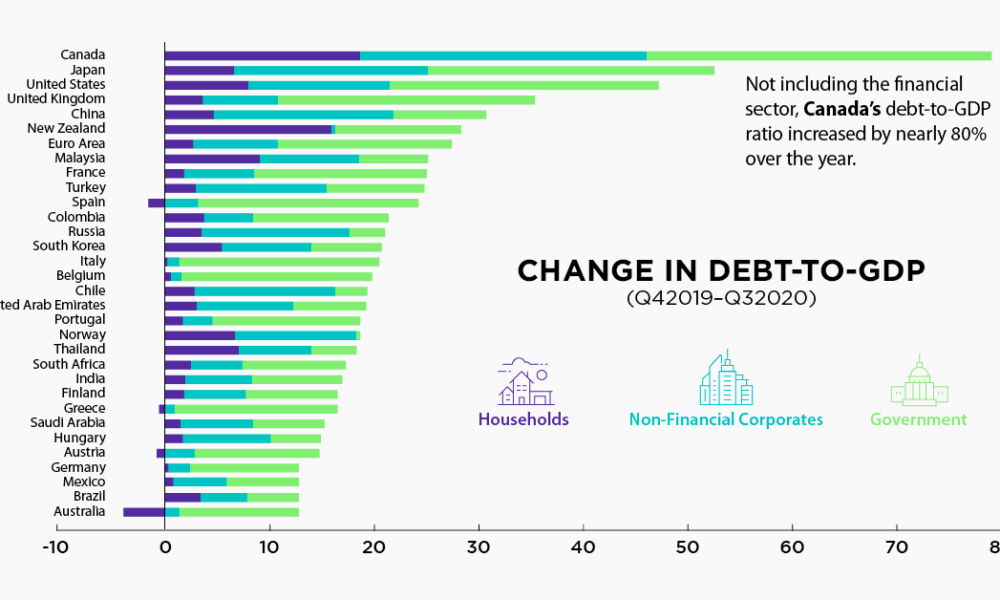
Canada doesn’t have any mega-cap companies (it has a bunch of large banks, railway companies and miners) but the breadth of its investment ecosystem strikes me as one for Europe to emulate. It is one of the few economies (it has the same population as Poland and 10 million less than Spain) to have a range of successful venture, private equity, infrastructure, and agriculture investment firms and very large pension funds, thanks mostly to progressive pension and tax laws.

Switzerland is perhaps a beacon for Europe. Despite the fact that it has a population that is only 12% of that of Germany, its stock market is just half the size of that of Germany (Switzerland has a more impressive stock market to GDP and population ratios than the US), and Switzerland has a range of large global firms such as Nestle and UBS. There are a few elements for Europeans to focus on, notwithstanding the fact that Switzerland is very much the exception.

One is that Switzerland has a well-developed capital markets and a large pool of savings capital (a lot of it comes from outside Switzerland), a developed financial markets eco-system, a lively market for executive labour, high levels of research and development and heavy investment in education (front skills based apprentice schools to top flight universities like ETH). Digesting the Swiss recipe for success, and that of other countries might lead to the following suggestions.

The Swiss example might point to the need for greater private funding (through endowments) of universities, spread across departments so that developments in physics are matched by the legal and philosophical frameworks that should accompany the deployment of new technologies. It might also point to better funding of pensions and the ability for pension funds to invest in a wider range of asset classes. There is also a need for the European Investment Bank to make greater equity investments, and potentially greater coordination between corporate venture capital firms across Europe.

More generally, Europe needs to think about corporate governance on a pan-European level, to reiterate a recommendation we made in ‘The Levelling’

One such proposal would be to harmonize the processes involved in setting up a business. The European Union could establish an EU-level process whereby entrepreneurs could adopt an EU template for setting up a business such that it would take the same amount of time to establish a business anywhere in the European Union. The EU entrepreneur template should ideally make the early stages of the life of a business as uncomplicated as possible and it could be a basis to harmonize laws across specific topics, such as bankruptcy, prosecution of corruption, and labour laws. This would be a much more meaningful reform than deeper political uniformity’. 

This proposal could for example be established under the EU Horizon programme, and with deeper pools of capital might be the beginnings of a cadre of European corporate champions.

As a final comment, perhaps the greatest obstacle to policy action on building corporate ‘champions’, is that there are no votes in this as a political issue in Europe, and therefore little impetus for change.

Have a great week ahead,

Mike

Does debt smother politics?

An early, formative career experience of mine was an internship in the City of London, where I sat a few metres away from the office of Gavyn Davies, then (and now) a very prominent economist. He was instrumental behind the scenes, in spurring some of the early policies of the New Labour government of the 1990’s, such as the radical move to give the Bank of England its independence.

At the time, one of the great tasks of City economists was the parsing of the Budget. Budgets were great set pieces affairs, dramatized by Chancellors like Ken Clarke sipping whiskey as he delivered the Budget. Trolleys of sandwiches (and a few whiskies) would be delivered to economist’s desks as they made sense of the Budget and then transmitted their views to gilt, currency and equity investors. The Budget was a frontpage story for nearly all newspapers.

Today, the Budget is a whimpery affair. The speed of telecoms, pre-releases and the spinning and whispering of press secretaries mean that the interesting detail reaches markets and the press well before the Chancellor stands up. In addition, bond markets today are more sensitive to inflation figures and the manipulation of central banks, so they are less sensitive to fiscal tweaking.

As Jeremy Hunt delivered his Budget, there were effectively two ‘elephants’ in the room.

The first is that this year is an election year (possibly May but more likely November), and the second is that the sense checking by the Office for Budget Responsibility that accompanied the delivery of the Budget, made it very clear that the scope for fiscal manoeuvre (the Chancellor is constrained by a fiscal framework) is very limited. In particular (depending on how we measure it), government debt to GDP is close to 100%, a historically high level and one that should set alarm bells ringing.

The very limited set of options open to Jeremy Hunt was a perfect illustration of how, when government debt hits record levels, policy choices are severely curbed.

A report by the respected Institute for Fiscal Studies the day after the Budget made this very clear, even a recent BBC 4 radio interview with Hunt’s junior minister Laura Trott laid bare the fact that few senior politicians have a grasp on the UK’s indebtedness problem.

What is happening in the UK, Europe and in the US, is that debt is smothering politics in the sense that the financial burden that high levels of debt produce (in the context of high interest rates), reduces the policy options that governments have.

To an extent, reflecting the euro-zone crisis, governments are now the wards of bond markets (and their own fiscal rules). To stick with the example of the UK, though it is much the same for neighbouring countries like France, Jeremy Hunt brandished GBP 10bn worth of tax cuts, but he will spend eleven times that on debt interest payments.

I do not think enough attention is given to the ‘debt smothering politics’ thesis, but we can start to think of its implications.

Against a backdrop of elections throughout 2024 and a broader ‘democratic recession’, the idea of debt dominating fiscal policy may cause further disenchantment with politics. It might also drive politicians to focus much more on identity politics and polemic issues like immigration (as is the case in France and Italy) and to become speculative and populist on economic policy (expect talk of ‘taking chainsaws to debt loads’).

A less pessimistic view is that much reduced fiscal space means that there are fewer means to ‘buy off’ voters (Jeremy Hunt’s budget was a case in point) and that as result political leaders are induced to reform public services and possibly, public life, along the lines of the playbook introduced by the ‘Troika’ to Greece and Ireland in the aftermath of the euro-zone crisis.

In turn the debate may turn to economic growth and what the UK for example, might learn from neighbouring countries like Ireland, or even how economic and financial reform in the aftermath of the Napoleonic Wars (debt was extremely high) permitted the English economy to outperform the French one.

Before we arrive at that rosy scenario, I suspect that the first port of call for debt-burdened politicians will be central banks. Notably the Bank of Japan has swallowed over half of the national debt market, which has reduced the short-term consequences of indebtedness, but increases the risk of an ultimate, existential crisis.

In an indebted world there will be greater pressure on central banks to compromise themselves and act in ways (i.e. control the level of bond yields) that reduce the political consequences of indebtedness. In this respect the US could prove interesting if Donald Trump becomes president.

He doesn’t like taxes, and is unlikely to want to raise them, but cutting them may lead to a rise in bond yields. As result, one of his first moves may be to replace Jerome Powell with a more overtly political Fed chair (markets may not like this either). If that doesn’t work, he might start to threaten to chainsaw the national debt. America might then have the crisis Trump deserves.

Have a great week ahead

Mike

All Creatures Great and Small

Over a week ago Emmanuel Macron’s team attempted to show how ‘close’ he is to the people and the ‘terre’ by arranging a set piece meeting with up to thirty farmer’s groups at the Salon de l’Agriculture. However, there were two problems. Only a couple of those groups turned up, and another protest group stormed the pavilion where Macron was holding forth, leading to an enormous scrummage with riot police.

In the context of a country where to paraphrase Charles de Gaulle, it is near impossible to govern any country that produces 258 cheeses, there is an important link between politics and food, and by extension farming. In recent years, French politicians have in general failed to live up to this bond – infamously in 2008 when Nicolas Sarkozy insulted someone (‘casse-toi pauvre con’) at the Salon.

Jacques Chirac stands out as a president who visibly enjoyed the Salon, lingering at the stands, tickling calves, eating and drinking everything put in front of him. In recent years I have taken a Chirac-ian approach, consuming agricultural amounts of wine, beer, cheese and meat at the Salon, so much so that in early February I receive multiple invitations from the viticulteurs and agriculteurs of France, asking me back to sample their wares.

Last Friday, as I strolled through the vast setting of the Salon, I wondered about the relationship between food and politics.

In diplomacy, food is deployed to seduce and impress (witness the French state dinner for King Charles last year), or to disappoint (the culinary highlight of a joint German-French cabinet offsite, hosted by Germany, was herring sandwiches). Stalin used to apparently invite Communist Party officials to dinner, get them very drunk, and then hoover up the gossip and secrets that they spilled.

Underlining the link between politics and food, there is a group called Les Chefs des Chefs, a very exclusive gathering of the personal chefs of heads of state, and their slogan is ‘if politics divides people, a good table brings them together’. An infamous incident that haunts the group is George H Bush’s vomit into the lap of the Japanese prime minister at a state banquet in Japan (in 1992), an act that the Japanese refer to as ‘Busshu-suru’.

In the wider world, the food and drink we consume is driving important social changes, some of which I referred to in last week’s note ‘The Great Retreat’ that charted the mostly negative, historic ways in which human interaction is changing.

Markedly, in Europe’s ‘northern’ countries – from Ireland to Germany, the typical shopping basket contains 44% processed foods, as compared to roughly 15% in Mediterranean countries. There is a strong correlation between the consumption of processed foods with obesity and cardio-vascular diseases.

In addition in the ‘south’, households spend more time eating and drinking (mostly together). Research by the OECD shows that the French, Spanish, Italians and Greeks spend close to two hours per day eating and drinking per day, as opposed to a meagre hour for the Americans, Canadians and Dutch.

Against this backdrop, one might think that farmers in France and Italy are happier than their European counterparts, but they have been prominent in sacking the Salon and spreading slurry in Brussels during recent protests. For those of you interested in a dark account of agricultural life, do read ‘Michel Houllebecq’s ‘Seratonin’.

Many of the protests across Europe are driven by smaller farmers, disillusioned at national and EU agricultural policy, together with the purchasing power of large super market chains and the political power of ‘large’ farmer groups. Our own experience in the beer industry is illustrative of how difficult it is to succeed, in the absence of a big distribution network, for example.

It is fashionable to blame globalization for the apparent demise of farming as a profitable small business activity, but I suspect that the high interest rates, inflation and price variability of the post-globalized world will be more difficult.

I have two observations to add from an investment point of view, one is the rise of the agtech sector in Europe – which will help some farmers with data analysis, market places and DNA for fruit crops for instance, the other is how very few professional agriculture investors there are and that surely there is greater scope to have more investment managers focused on this space (notably those with good impact credentials).

In the future, to parse my conversations with French famers, the future will be to, where possible, allow less produce to be processed, and more to be specialised and branded – an example is the very good Toonsbridge buffalo mozzarella from Macroom, County Cork, not a traditional ‘buffalo’ stronghold.

Have a great week ahead,

Mike

The Great Retreat

Whenever I walk down the street, I can’t help thinking of René Barjavel, a science fiction writer, who when asked (in 1947) to imagine what the future might look like conceived of a vision (then made into a short film ‘La Télévision, l’oeil de demain’) where human life was dominated and disrupted by handheld ‘television’ devices, to the extent that people walked through streets bumping into each other as they watched their screens.

The guiding thesis of Barjavel’s work related to the undermining of civilisation by technology, something that is now becoming more apparent as a widespread trend.

We are at a point in the very long run of history where many established patterns of human behavior are being subverted…in what I call the ‘Great Retreat’. That is to say that in general people – in the West and Asia are retreating from established norms of behaviour, and specifically are retreating from traditional social interaction. These deviations from trend are occurring in the way we socialise, the effects of what we consume on our bodies and perceptibly the ways in which we organise our lives.

Here are a few snippets to illustrate – there is growing documentation of the effects of a loneliness epidemic and researchers are linking this to higher rates of Parkinson’s and cardiovascular disease, a large cohort of adults and young adults in countries like Japan living in effective celibacy and this is also a factor in China whose population is now in a structural decline whilst in the West the birth rate in England & Wales is the lowest on record, a tripling of worldwide obesity since 1975 according to the World Health Organisation to these extent that the Centres for Disease Control and Prevention puts US obesity prevalence at 42% – something that has contributed to a vertiginous drop in life expectancy.  

In brief, in many countries human body shapes and cardiovascular health are changing for the worse, they are interacting less with each other, consuming more information from ‘manufactured’ or non-human sources (the average American checks their mobile device 159 times a day) and are breaking with the cycles of life that have defined the human race over the past three thousand years.

There is a sense that these trends represent a new departure compared to the established social patterns of the past two hundred years, but they also coincide with much lower poverty globally, generally greater longevity (except the US) and broadly greater wealth.

However, there is also the unavoidable impression that the above trends are correlated, and in the view of someone like Barjavel perhaps, are provoked by over industrialisation (of foodstuffs and lifestyles), over-financialisation (of real estate) and over digitisation.

The effects of the ‘Great Retreat’ are already being felt in politics – higher levels of abstention and radical ‘left/right’ voting in many countries and large differences in voting intentions between younger and older generations, and in work patterns (my hunch is that for younger workers the trend towards working from home is altogether less productive).

This sets up a significant task for policy makers, especially those who grow up during the ‘Great Retreat’ and who may not question its long term effects (such as falling birth rates).

In the context of a more laissez-faire approach, a dystopian society threaded together by social media, with high levels of wealth and health inequality could arise, but there might also be a tech led path that could continue to solve the side-effects of obesity and low fertility rates.

In a typical European model, a policy approach might well involve the introduction of ‘civics’ courses in schools on the importance of diet, use of social media, primacy of democracy as well as greater sanctions on disinformation. On the human side, pension and tax systems may well see revolutions that incentivise higher fertility and city planning will, in an ideal world, start to incorporate the need for greater sociability.

Either way, the conception of the ‘Great Retreat’ as a policy idea is not yet upon us but it might be an idea for one of the dwindling world institutions like the WHO or UN to take up.

Have a great week ahead

Mike

Gorky Park

At the end of last week’s note on Russia’s tactic of ‘Maskirovka’ I touched on another favourite of the Kremlin, ‘kompromat’. I was tempted to mention the Ritz Carlton Moscow, the scene – allegedly – of some epic ‘kompromat’, and joke that whenever I stayed there, I was always in bed early, out of trouble as it were.

One reason I got to bed early in Moscow was that I like to make early morning runs through the city, often from Red Square through Gorky Park, which I think locals found amusing as there is not much of a running culture in Moscow.

One run I will not forget came in the aftermath of the murder of the reformer and former deputy prime minister Boris Nemtsov, seeing clusters of flowers on the Bolshoy bridge where he was gunned down. The shocking aspect was how close this happened to the Kremlin, the implication being that Nemtsov had fallen foul of the Kremlin, and it had decided to wipe him out.

I immediately thought of the flowers at the scene of Nemtsov’s death when I heard that Alexei Navalny had passed away (very likely murdered). The effect of his death, coinciding with the Putin interview I discussed last week and the Munich Security conference, is chilling.

If any good comes of it, it will be to disabuse reasonable people of the notion that the Russian government is not a malevolent threat. In this context there is much to do – Germany must rid itself of Russian influence within the state, Austria, the UK and Switzerland should rid their financial systems of the tens of billions of Russian money and countries like Ireland need to take security and defense seriously.

Navalny’s death also sharpens the war on democracy that Russia has led. Here too, there is much to do. I will shorten this note by linking a TEDx talk I was privileged enough to give in Stormont, Belfast recently, where I lay out some of the measures needed to restore the credibility of democracy. One notable element is for governments in democracies to take a more aggressive, active stance against states like Russia who target our democratic processes.

The link is here, I hope you enjoy the Talk, and feel free to circulate.

Have a great week ahead,

Mike

Maskirovka’d

I am always keen to shamelessly remind readers that I am a man who can ‘see around corners’, as they say. In 2018, as I handed in the last draft of ‘The Levelling’ I wrote the following regarding Russia, its broad strategy of ‘total war’ and more specifically its tactic of ‘maskirovka’…

‘Some countries, such as Russia, are already practicing war by “many means”—that is, where traditional military force is mixed with covert action, propaganda, and disinformation. The Russian doctrine of maskirovka, has roots that go back to the fourteenth-century Battle of Kulikovo and was further developed more recently, beginning with its use in the Second World War.

In a very basic sense, it involves the use of decoys and deception to distract and destabilize an enemy, though the doctrine of maskirovka has broad applications, stretching to disinformation, propaganda, and politically related tactics. A significant element of the thinking that reflects the new doctrine of warfare in Russia is that wars do not follow the same boundaries and time lines as they did historically.

This means that they are not officially declared—in the way cyberattacks happen—and that they can rely on many different types of force (e.g., information, humanitarian, and media) and can rely on the  subversion of states on a continual basis using mercenaries and special  operatives’.

At the time (2018) Russia had aggressively interfered with elections in the Netherlands, Germany, France and the UK, to name a few episodes. This was a mere sharpening of tools for what was to come, and while Russia has isolated and weakened itself by invading Ukraine, it has not given up the tricks that have been honed since 1380.

This much was on display in Tucker Carlson’s interview of Vladimir Putin, which took advantage of Carlson’s craven character, the prevalence of social media noise, the gullibility of many in the West and of course the rottenness of Donald Trump. In the minds of many, Putin has thrown sand in the face of those in Congress who support Ukraine, suggested that a ‘win-win’ deal is soon available, and that Donald Trump is a reasonable man worthy of Putin’s respect. In each case, the opposite is true.

Worryingly, this particular episode of ‘maskirovka’ has damaged the outlook for Ukraine, the security of NATO countries (and vulnerable ones on the flanks of NATO like Ireland). Arguably it ups the ante in the US presidential election and suggests that Russia (with the tacit support of China) is bent on further vandalising western democracies in this critical year for elections.

It should be said that Russian is aided and abetted by many politicians in those same western democracies. There are a few that grasp the magnitude of the challenge, and they are mostly in countries close to Russia, and that have battled to revive democracy and the rule of law in their countries, notably Poland’s Donald Tusk who this week castigated the Senate in Washington for its failure to support Ukraine.

I have not found much literature by way of how to do ‘counter-maskirovka’ operations, and I am likely not looking in the right places. We may need a ‘playbook’ soon as elections approach around the world.

What is happening in Poland is instructive in terms of the repair work being done on institutions – the media, courts, civil service and central bank to name a few have become degraded and politicised, and while some argue that they are now being politicised in a different way, the program of work that Tusk is pursuing highlights the importance of independent institutions as a buttress to outside interference.

The politicisation of the Supreme Court in the US, and the failure of social media giants to counter manipulation emanating directly from Moscow suggest that America is opening itself up to ‘maskirovka’.

Speaking of which, the other, better-known facet of Russian manipulation is kompromat – the use of economic, political and personal secrets to rein in enemies (though a Russian journalist Julia Latynina is quoted as saying to keep kompromat on enemies is a pleasure. To keep kompromat on friends is a must’).

I suspect that one of the candidates for (US) president has quite a bit to worry about in this regard (its not Biden), the question is, will we ever get to see the evidence?

Have a great week ahead

Mike 

Bubble Brewing

I have seen and heard many things that have made me cynical about the investment industry, but nothing pricks my ears when I hear ‘valuation’ deployed as an entreaty for retail investors to buy  expensive assets (one of the best I heard is a former colleague who declared that a company was expensive on the basis of a price to earnings ratio (P/E) but cheap on the basis of the earnings yield (E/P)…they are the same thing!).

On that basis my credulity was recently stretched when I heard an analyst at Morgan Stanley, the large investment bank, declare that technology stocks are ‘attractively valued’ based on the ‘price to innovation’ ratio. Price to innovation is the ratio of the price of a company to its earnings plus what it spends on research and development – as such it is designed to make companies with scant earnings and large, risky investment budgets, look attractive.

As a rule of thumb, when the financial community start to invent new valuation measures, it is time to worry. In the early 2000’s analysts introduced valuation ratios such as ‘price to clicks’ for internet stocks, so as to try to give a veneer of respectability to bubble level valuations. Of course, it all ended badly.

The introduction of the idea of a ‘price to innovation’ ratio to the market narrative should spark fears of a stock market bubble, notably in artificial intelligence (AI) driven stocks. Bubbles are hard to define, but to follow a famous legal opinion on pornography, ‘you know it when you see it’.

The ingredients of a bubble are usually based on an innovation (railways, the internet) doused with cheap money, and together they produce significant outperformance of a select group of assets that results in historically extreme valuation levels.

There is most likely the nucleus of a bubble in a group of mega-sized technology stocks, known increasingly as the Magnificent Seven, chief of which is the chip design firm Nvidia. To use a very simple valuation metric – the ratio of price to revenue, the European equity market trades on a price to revenue multiple of 1.3 times, the American market is 2.5 times (the large tech stocks drive this higher), Microsoft trades at a ratio of 13 times revenue and Nvidia at 33 times (for comparison UBS is on a ratio of 1.7 times and Siemens 1.3).

There is a similar valuation bubble in private markets where venture investors pay very high multiples for AI focused start-ups. The underlying rationale is that the potential sales growth of these large tech firms is so promising, that they desire a higher valuation multiple.

The past week has seen many of them report earnings, and whilst most of these tech firms have delivered healthy earnings, revenue growth is not impressive, suggesting an abundance of optimism regarding the future impact of AI.

In that context, if AI is going to be the organizing logic of the next bubble (in the past fifty years we have seen asset bubbles in gold, Japan, Asia, the internet, housing, China…to name the main ones) it will need the boost, or the ‘petit coup de whiskey’ (as New York Fed chair Benjamin Strong put it in 1927…guess what happened next).

In general, since the global financial crisis monetary conditions have been very easy, provoking inflation in assets as opposed to consumer inflation. That trend has changed recently as a burst of inflation begot a sharp rise in rates. Despite this, credit markets have been very well behaved (another bubble?). With inflation falling, expectations are growing that central banks might prune interest rates back, which might add further fuel to the AI bubble hypothesis.

In the days before quantitative easing there was a decent debate as to whether central banks aided and abetted the creation of asset bubbles. At the time, the orthodoxy was that bubbles were hard to identify and even if they could be identified, it was difficult for central banks to deflate them. The difference today is that few if any central bankers worry about this risk, and instead speak of the ‘wealth effect’ from asset prices.

The reasons for them to be more vigilant here are that asset bubbles usually destroy wealth, invariably transfer it from poorer to richer investors (the rich buy early and the poorer investors buy late it goes), they distort investment across economies and when they collapse, their aftermath can be costly (witness Japan’s lost decade(s)). Bubbles do often leave behind useful infrastructure – railways in the late 19th century, and the internet/telecoms infrastructure of the 2000’s, but at a high price.

In my view we are not yet in an AI bubble proper. So far, it is located in a small number of companies, who very unusually make up a huge proportion of the stock market. Calculations by BCA Research show that the top ten largest companies in the USA make up 75% of the stock market, something that has occurred only in 2000 and 1929.

For the AI bubble to grow and become a mania (Charles Kindleberger’s Manias, Panics and Crashes is still the best analysis of bubbles) companies in sectors that will be impacted positively by AI (such as healthcare and life sciences, financial data centric firms) will need to be captured by the AI narrative and see their share prices rise accordingly. In the same sense, AI mania will need to spill out to countries in Europe, Japan and maybe China.

Watch out for other indicators. When taxi drivers start to speak of error correction in quantum computing then we will most surely be in an AI bubble.

Have a great week ahead,

Mike

Donald, Part Deux

I had thought that early March could be crucial from a political economic point of view. On March 4th Donald Trump goes on trial for trying to overturn the results of the 2020 presidential election, and on the 5th the republican party holds its primary elections for the 2024 presidency. The scene would be set for Trump the martyr to march to power.

It seems that the sense of drama is now largely redundant, Trump is well ahead of his nearest rival Nikki Haley, and he has started to control the policy agenda on the republican side. His very obvious weak point is that beyond the most steadfast ‘right wing’ republicans, he seems to have few votes to garner. This may ensure that some donors help Haley to stay in the race longer than many think.

Yet, a second Trump presidency is now a high probability, and in the US, activists, lawyers and the policy community are preparing for this scenario and the likely cleaving of public life in the US (it can get worse than it is). Beyond the US, the knee-jerk assumption is that Europe is unprepared for a second Trump presidency, and that Europe will ‘fold’ in a world where the leader of the ‘free’ world is an aspiring dictator. I am not sure that this assumption is a good one.

Much of the debate around the impact of a second Trump presidency on Europe, centres around defence, the assumption being that the US would pull out of NATO, leaving Europe at the mercy of Russia. Indeed, in recent days a chorus of European policy makers have sounded off on this.

For example, last week the defence ministers of the UK and Germany, Norwegian and Swedish generals, as well as the head of NATO’s military committee, have made pointed warnings of a war between NATO and Russia. There have also been calls for an EU army (‘European pillar of defence’) and for the EU to have its own nuclear deterrent (the only independent European nuclear capability is that of France), and a public musing by a British general on the virtues of conscription.

If Europe is serious about preparing the political and security ground for a Trump II world in which Russia becomes more belligerent (I am not sure), then it can do a number of things, which in themselves become tests of intent.

First, to repeat a point I have made in this note many times, it needs to make member states like Slovakia and especially Hungary (as well as prospective member Serbia) choose sides. Trump is the only political figure in the western world who lauds Viktor Orban (Putin simply controls him), and Orban in return pushes the case for Trump’s re-election. Orban’s corruption and Russo-philia are becoming institutionalised in Hungary.

Matters might come to a head at an EU leaders summit late next week, where the aim is to sign-off a funding package for Ukraine. Hungary has obstructed this and there is now a sizable group in the European parliament and a smaller group amongst European leaders in favour of using Article 7 to deprive Hungary of its voting rights. Beyond Hungary, there is much the EU can do to prepare for a more hostile approach from Russia – aggressively bolster support for Belarus’ opposition, credible trade and financial sanctions against Russia, aggressive sanctions against banks in and on the old periphery of the EU (i.e. UK and Switzerland) who hold the assets of Russian individuals, and very severe controls on the movement of Russians into and in the EU.

Before I get too carried away with preparations for war, let’s return to the impact of a second Trump presidency for Europe. My view is that beyond the grotesqueness of Trump as a character, the real concern is that his second term in office would be marked by the abandonment of the rule of law and the ethos of democracy by a majority of Americans, to a degree never seen in America’s long history as a democracy and not even fully anticipated in the Federalist Papers.

If this is the view that Americans and the rest of the world draw, then it will have significant implications for the role of American companies in the world economy, the perceived safety of US assets and the role America as both a superpower and a benign ‘godfather’ to world institutions. In this scenario, where there is less respect, confidence in and fear of America, Europe has an obligation and an opportunity to bolster the international order.

Indeed, one could imagine that the role of Europe in the world (as the liberal, democratic and cultural pole) could become clearer – should Europe’s leaders rise to the challenge in framing this, and in investing in it. Here, one opportunity that has gone begging is capital markets union – perhaps there are no votes in such a project for European politicians – but Europe has failed to follow through on one of the implications of the euro-zone crisis. As a financial system it needs more ‘safe assets’ and risk capital. If Europe had deeper, more joined up capital markets it would be in a much stronger place geopolitically, and in terms of funding its ‘strategic autonomy’.

As a final point (I suspect I will be returning to this topic) Europe’s politicians, and I would argue its voters, need to examine the reasons behind Trump’s persistent popularity and ensure that Europe does not make the same mistake (particularly bearing in mind the current controversy over the AfD in Germany, where senior party members hosted an offsite led by a small, Austrian fascist that touched on topics such as mass deportation). In particular, the sense that politics is disconnected from people and run by an ‘elite’, the high cost of living, the poisoning of political systems by social media and the need for greater education specifically around democracy, are just some of the things that spring to mind.  

Have a great week ahead,

Mike

Labouring on

Last Sunday’s lunch was made up of a pint (or two) of ale and a packet of pork scratchings, in the inimitable Peveril in the Peak, in Manchester. It was the start of a week-long tour of the United Kingdom, taking in Manchester, London, the Cotswolds and Belfast, from where I am sending this note.

In the Peveril we soon got chatting to a couple from the Wirral, and after a discussion on football and rugby, the conversation soon turned to politics, and specifically the question of why British people are not more visibly upset at the state of their country. Growth lags all European rivals, multiple corruption scandals are bubbling to the surface of political life, public services (i.e. NHS) have been degraded, and in particular the regions outside London are suffering.

Opinion polls suggest British people are ready for a change of government – Labour is eighteen points ahead of the Tories, far more so when it comes to younger voters. Indeed, a recent poll by YouGov (commissioned by a group of Brexiteers, allegedly) pointed to a 120 seat landslide for Labour. Yet, if British people are upset, they are nonetheless ‘keeping calm and carrying on’.

They may soon get their day at the polls. In a recent interview, prime minister Rishi Sunak suggested that the next UK general election (which must happen by next January) would likely occur in the second half of 2024. This has set commentators guessing the date of the election.

An important date to watch is the Tory party conference which will be held in the first week of October (1st, 2nd), and could thus point to an election just before or more likely after the US election (potentially around Nov 14th). At the same time, the risk of ‘noise’ from the US election might even push the UK election to earlier in the Autumn.

My sense is that Sunak will wait as long as possible given how far behind the Tories are in the polls and may try to engineer a low turnout (every UK general election going back to 1931 has been held on a Thursday, but Sunak could aim for a Friday election, hoping that low turnout could rob Labour of younger voters). Other factors and dates to bear in mind are the UK budget on March 6th and local elections on the 2nd May.

We might also bear in mind that Sunak may no longer be master of his own destiny. The Tories’ promise to send asylum seekers to Rwanda, which has become the organising idea within the party, was nearly ‘sunk’ by a rebellion by the very right wing of the party (reportedly prompting one MP to declare ‘my party has gone mad’). Sunak survived, but is at best a fledgling leader.

The Tories face two more by-elections – in Kingswood and Wellingborough – in coming months, and these will provide a good benchmark of how they are faring (there is a low probability that someone may try to unseat Sunak as leader if the by-elections go badly).

In that context, the election is now Labour’s to lose.

Labour have on several occasions performed less well than polls suggest, notably when the Tories under John Major snatched a victory in 1992 having been behind in the polls. The Blair led ‘New’ Labour (1997) was much better at campaigning and there are signs that Blairites are making a comeback in the ranks of the party now, and that their sense of discipline is holding.
 
While it is generally accepted that this Labour frontbench is neither as dazzling nor potentially transformative as that of the first Blair government (Starmer is less charismatic and less ’bullish’ than Blair), they are starting to behave in a Blairite manner.

So far, Labour’s strategy has been to allow the Tories to make mistakes. The Labour policy manifesto is, publicly, very dull, and does not give away much. I expect that they will launch more specific policy options in the immediate run-up to the election. This steady, cautious approach belies the fact that Labour has had only six prime ministers in its modern history – while the Tories have had five in just the last eight years.

With regard to the election and its aftermath, several issues will matter.

First, similar to Donald Tusk’s first months in power in Poland, Labour will emphasise a return to the ‘rule of law’ and the rooting out of corruption. Institutional reform (i.e the abolish the Lords, with electoral reform a wild card) and tougher policing of the behaviour of politicians and their associates will be prominent, and we expect there will be further inquiries into the behaviour of Tories/Tory donors.

Labour cannot (immediately) reverse or renegotiate Brexit. But there is scope for the EU and the UK to adopt a less antagonistic and more pragmatic stance with each other on trade oversight, financial services and the regulation of new technologies. Military and security cooperation might well grow even closer. In foreign policy, the UK should be easier to deal with (there is an outside chance that one of the Miliband brothers returns), and the most difficult issues for Keir Starmer will be Israel/Palestine, China and relations with the US (if Trump is elected).

Labour will inherit a difficult legacy in terms of the damage to the UK economy and the rising deprivation in the regions. The biggest task facing Labour is to rebuild the UK economy, re-equip and re-engineer social services and to achieve a sense amongst British people of a sense of ‘fairness’ (equality) across British society. Whether this will imply higher taxes (the Tories will likely cut taxes to low levels, trapping Labour) on individuals and companies, or even the introduction of a wealth tax, is not yet fully clear. Tax breaks, such as ‘non dom status’ would likely be phased out under Labour.

Labour’s economic policy will likely be more state driven – and privately financed, such as the issue of ‘green gilts’ to fund new green energy infrastructure. Rachel Reeves, the shadow chancellor is close to the Biden team and an admirer of ‘Bidenomics’. Also, like Gordon Brown, he is keen to emphasise fiscal discipline and as a potential chancellor will be keen to avoid a Truss style bond market wobble.

Labour are being very careful to guard their lead in the polls, and to not allow themselves to be held hostage to specific policies. They had best save their energy for the lengthy challenge ahead.

Have a great week ahead,

Mike

The Pitts

There are several interesting rankings of British prime ministers, notably from the BBC and the University of Leeds. They mostly relate to prime ministers of the modern era. Several other rankings (by the BBC and journalists in the politics field – notably Matthew Parris, Iain Dale and Peter Riddell) go back further in time to Robert Walpole, effectively prime minister in 1721. These rankings suggest that one of the greatest prime ministers was William Pitt the Younger (his father William Pitt the Elder was also prime minister).

As a character, Pitt was considered aloof, unsociable, and allegedly, didn’t like girls. Of the main issues to cross his desk (he served as prime minister for nearly nineteen years) were the reaping of commercial fruits of the post-Independence relationship with America, the rebuilding of Britain’s financial strength and the sapping of India’s economy through the East India Company. Today, India is on the rise, the US might have peaked, and Britain’s finances again need remaking.

The reason that Pitt the Younger should be of interest to us today is that he is acclaimed for the way he navigated Britain through a series of geopolitical events emanating from France (the Revolution and the Napoleonic Wars), and that he first became prime minister at the tender age of 24 (for those readers who wish to learn more William Hague has written a good book on Pitt).

It was one of a number of sources I leapt to on hearing that Emmanuel Macron had appointed 34-year-old Gabriel Attal as prime minister. Attal, like several other appointees to the new cabinet, has effectively no experience of government, or indeed of much else. Macron himself had relatively little experience of government when he made the daring decision to run for President, as did Sanna Marin, elevated to prime minister of Finland at the age of 34 also.

However, France usually likes its politicians to be (too) clever, experienced and capable, and in this sense the new government is a break with the past, and not necessarily one for the better. Whether, like Pitt the Younger, Attal has a long distinguished career and vanquishes France’s adversaries I do not know, but his appointment highlights several trends.

The first is that Macron is a risk taker. I don’t feel that this aspect of his behaviour receives enough commentary, but he is one of very few political leaders (populists don’t count here because they don’t care about the consequences of their actions) to take big risks. Pension reform is one, which didn’t quite pay off, and the result is that he has decided that a more political, activist and showy government is the answer.

Attal will be more the impresario of the government, and less the ‘driver of the bus’ in the sense of Jean Castex, or the near-presidential term in office of Edouard Philippe. His cabinet will be a difficult one to manage. Several of the political heavyweights (Le Maire, Darmanin) were against Attal’s appointment, as were other influential figures (Francois Bayrou, Philippe and Alexis Kohler the top civil servant at the Elysée). Some ministers have little experience in government, and the joker in the pack – the appointment of Rachida Dati as culture minister, will likely prove an ongoing distraction (she is hard to describe).

I am lucky to know many of the different corners of France well, and if I was to judge the reshuffle from the point of view of people in for example Charente-Maritime, it all looks like the Parisien elite (of which Attal is the archetype) carving up political roles for themselves, with little radical change in terms of what this means for the lives of French people. Indeed, the reality of France’s perilous fiscal situation makes it very difficult to do so.

My suspicion is that the Attal government will look and sound less like previous French administrations, and more like the recent Tory cabinets (and that is not a good thing). What I mean here is that the personality, private life and ‘showbiz’ allure of the Attal and ministers like Dati could take precedence over policy. French politics will also become more combative, like Westminster. The team that Macron is sending out is crafted to take on the far-right, to be more vocal and aggressive in parliament.

The great error here is that (I believe) French people do not want politics to become like day-time tv, but rather want politicians to trust and understand them better, and to reshape the political machine so that people (regions, departments for example) have more access to power. That is the message of ‘L’Accord du Peuple’, which will be published next week. It might be the only beneficiary of this new government. 

Have a great week ahead,

Mike