Avid readers of the ‘Levelling’ book will know that some years ago, I wrote
Latin America remains part of the satellite region of the US pole. Sadly, it has been overlooked by Washington. The prime example of this neglect is Venezuela. The country is failing and in the grip of an underreported humanitarian crisis. Economically, this crisis may lead China to take a deeper role in Venezuela and in its oil production. Diplomatically, the lack of a comprehensive reaction from Washington brings to mind an article entitled “The Forgotten Relationship” that Jorge Castaneda published some years ago in Foreign Affairs in which he bemoaned the deteriorating relationship between Latin America and the United States.
Finally, my pleas are heard, and the White House is organizing a rescue (by gunboat) of Venezuela, and possibly much of Latin America.
While it is hard to know how the new engagement between the Trump administration and the fifth largest repository of oil reserves is going to play out, this administration is different to many of its predecessors in taking an active interest in Latin America – note the partisanship with regard to Brazil, generally good relations with Mexico, a chumminess with Milei and the likely support for the new president of Chile.
Despite very active backchannelling between the US military and the Venezuelan army the course that events might take is unclear, and laden with risks – the chaos of popular unrest in Venezuela, the risks that criminals in Venezuela and surrounding countries become involved (and strike in the US), or indeed the risk that other actors or countries use any regime change in Caracas to hurt the US, cannot be ruled out. Another risk is that some of Venezuela’s allies – Iran, China and Russia – become obstreperous, and dig in with Maduro and his cohorts, or that they use any change of government in Caracas to further their own ends. It is worth noting that only last week China launched a policy document entitled ‘Latin America and the Caribbean: A Land Full of Vibrancy and Hope’.
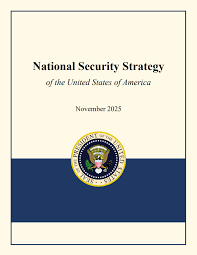
This is a significant risk of the Trump administration’s fetish for a spheres of influence motivated foreign policy. In the recent school boyish ‘National Security Strategy’, which has caused great anguish in the diplomatic parlors of Europe, the document refers to the ‘Trump Corollary’ to the Monroe Doctrine.
For context, the Monroe Doctrine was likely the first coherent, muscular expression of American foreign policy – at the time it was aimed at keeping the Spanish and other pesky European powers out of Central and Southern America. Indeed, the dithering by the large European powers (notably France) over the long running Mercosur trade agreement, suggests that the European dare not go back to Latin America.
The NSS document gives a good deal of attention to Latin America, and this tilt will have the active support of Secretary of State Marco Rubio. Like it or not, Latin America is now in Washington’s sphere.
However, more generally, the establishment of a spheres of influence mindset in international relations may give the likes of Russia and China the sense that they may do as they wish in their own spheres of influence. In the same way that the invasion of Iraq, on the basis of flimsy evidence of weapons of mass destruction, apparently led Vladimir Putin to believe that the West was no longer respecting the rules of the international order, the ‘Trump Corollary’ strategy is a green light for bad policy actors.
That would of course be bad news for Taiwan, and perhaps Vietnam, the Philippines and Japan, who all to some extent count on the notion of a US security guarantee for Taiwan. It may also prove confusing for the US military which, when not loitering off the coasts of Cuba and Venezuela, is organized around the concept of a grand battle in the South China Sea.
Beyond the obvious implications for Ukraine, there are plenty of other open questions – will China take the ‘Stans’ from Russia, and who gets Africa? Russian mercenaries have forced France out of at least seven countries and China has a hand in nearly every African economy. The cancellation of US AID is already having deadly consequences for human and animal life.
A world of spheres of influence might conjure the diplomacy of the Great Game, but it would leave many countries worse off, and the nondemocracies of the world free to abuse their military and economic power.
A forlorn reminder of this was the jailing of Jimmy Lai, the Hong Kong democracy activist last week. Few Western governments were audible in protesting this act, save Britain, which used to count Hong Kong as part of its sphere of influence (Lai has British citizenship). The silent snuffling out of democracy in Hong Kong is the act that brought the curtain down on globalization in my view. An American spheres of influence foreign policy will sow further chaos.
Have a great Christmas week ahead, Mike (there won’t be a note next week, we return on the 4th January)
Last week we released the first five of our themes for the year ahead, where much of the focus was on artificial intelligence –and its potential impact on asset allocation, society, geopolitics and industry.
This week we focus on macro and geopolitical themes, which in the light of the US National Security Strategy document, are becoming vital for Europe.
Have a great week ahead.
#6 Wall Street Retro
One of the curious foibles of Donald Trump is his dislike of economic competitors. If readers care to watch, there are multiple videos of him in the 1980’s and 1990’s castigating the role of Japan as an economic competitor of the US. That period was also marked by the rise of capital markets – as marked by the film ‘Wall Street’ and book ‘Barbarians at the Gate’.
With Trump back in the White House, capital markets activity is building – merger activity is picking up, not just between companies but also business sales by private investment firms to industry. Cross-industry data suggest that takeover activity is picking up significantly, and in private markets, private equity deal making is enjoying a recovery. Other parts of the capital markets chain should also pick up – most notably IPOs and one of the tests for 2026 will be whether a string of large European fintech firms can come to market.
In recent days, the battle between Netflix and Paramount for Warner Brothers is emblematic of some of the major takeover battles of capital markets history, and perhaps a harbinger of future activity.
The Future:
While OpenAI for example is using acquisitions to build out an AI industrial structure, we do not yet have a landmark M&A deal in the fashion of Vodafone-Mannesmann in 2000 or RBS’ acquisition spree in 2007. A sign of things to come are reports in the FT that AI giant Anthropic is preparing an IPO.
An uptick in capital markets activity will be a boon for private markets asset managers, as it helps to free up capital. In equities, it may make value investing easier in the sense that cheaper, struggling firms are acquired, but the net effect may be to push equity valuations even higher.
Reading William Cohen ‘The Last Tycoons’(2007), William Burroughs ‘Barbarians at the Gate’ (1989)
Watch: ‘Wall Street’ (1987)
#7 Age of Debt
One of the most terrifying economic statistics is that the world has never been as indebted- most of the large economies (Japan, China, USA, UK, France and Italy) or about 60% of world GDP, have debt to GDP ratios over 100%. In previous decades 60% was considered excessive!
The good news is that households and corporates are not carrying excess debt loads, and that world household wealth is close to USD 500 trillion. Also, economists have been warning about the risks of indebtedness for some time, and we have not experienced a crash – and apart from an inflation scare, bond markets have been reasonably well behaved. Indeed, we are guilty of thinking of indebtedness as a risk event, rather than an economic process.
That said, as we head towards 2030, the consequences – economic, financial and political – of fiscal deficits and debt loads become all the clearer. At one level, public indebtedness will lead to shifts in economic power – private investors will take on the strategic investment projects that governments cannot afford to do (Canadian pension funds are doing so in the UK already).
At the country level low debt countries like Germany, the Netherlands, Ireland and Norway will make up a small group of ‘safe’ countries that will accordingly enjoy greater economic power. At the same time, France, the UK and perhaps the US will spend the next fifteen years in the ‘Debtor’s Prison’ where policy and politics become dominated by debt. The US and China are more interesting. The obvious response of the White House to indebtedness (it spends more on interest payments than defence) is to pursue a set of unorthodox policies that push the fiscal burden to allies (tariffs on Canada and military spending on Germany).
The Future: In markets, investors are already beginning to price some corporate bonds at yields below their sovereigns, and when credit markets do start to price risk large cash rich companies will be in an advantageous position, and in some cases can control more strategic assets, and the wealthy will find that governments need to court them rather than tax them. Instead of wealth taxes, expect governments to issue ‘Patriot’ bonds to wealthy families.
The one country where this may not be the case is China, which is vastly indebted. Having studied the way some European economies become heavily indebted in the aftermath of the euro-zone crisis, the Communist party will throw entrepreneurs, the wealthy and corporates into the Debtors Prison, and let them pay their way out.
High yield spreads in the US, Japanese bond yields and Chinese bank share prices are some of the key variables to watch.
Read: Charles Dickens’ ‘Little Dorrit’ (1857) and Honoré de Balzac’s ‘Lost Illusions’ (1837-1843) and ‘Pére Goriot’(1835)
Watch: A Christmas Carol (1984 version with George C Scott as Ebenezer Scrooge)
#8 From Multipolarity to the Fourth Pole
As the snippet on Sovereign AI suggests, strategic competition between the large economic blocs is the order of the day, and with globalization in the rear-view mirror the world order is evolving towards a multipolar form – one where the large zones do things increasingly differently.
While the notion of multipolarity is framed around the US, China and Europe, there may well be a fourth pole in the making in the shape of India, the Gulf States and other players across the ‘region’ (which we could define as those countries within a five hour flight from the UAE, which includes some 2.4 billion people across Asia, Africa, Southeast Europe and the Eastern Mediterranean).
There are two elements that will determine whether a ‘Fourth Pole’ emerges – that this coherent group of countries has mass or scale, and that it increasingly has a method – or distinctive way of doing things (I recently developed this theme in the UAE’s newspaper The National).
The notion of the ‘Fourth Pole’ is gathering pace around the very close relationship between the UAE and India (the very popular Hindu Temple in Abu Dhabi is just one sign), and the web of trade, finance and infrastructure deals they are engaging in across the region. This relationship may not ultimately become as deep as that of the EU countries, but it is beginning to look like a modern version of the ‘Coal and Steel’ community. The risk however, is that they overbuild capacity in the face of a forthcoming economic shock or recession.
The Future:The best indication that we had that the UAE is feeling both confident and more independent is that some well-connected government advisors have come up with an acronym for the west – W.E.N.A (Western Europe and North America).
Reading: UAE Future Vision , Peter Hopkirk’s ‘The Great Game’ (1990)
#9 Safe strategies in the Interregnum
The process by which globalization unravels and the multipolar world takes shape is going to be a long, noisy and uncertain one, which I term the ‘Interregnum’. It is an in-between phase, like the German idea of the ‘Zeitenwende’, characterized by noise, uncertainty, and multiple contests between the ‘old’ and the ‘new’ (finance is a good example with the emergence of ‘DeFi’ or decentralized finance).
The Interregnum has at least three phrases. The first centres around the crises of the old, crumbling order notably in debt and democracy, the second phase around social, legal, and economic superstructures built around new technologies (AI, quantum) as well as the evolving contours of the multipolar world order, and then thirdly, the acceptance and coalescence of new world institutions, governments, and companies around this new world order.
The Interregnum will be a period of breaking (down the imbalances that have built up with globalisation such as climate damage and debt) and making (new world institutions and the integration of technology into economies and societies). It will be a noisy, chaotic process and its success is not yet a given.
The Future:From an investment point of view, the shifting geopolitical sands beg the question as to how exposed investors should be to US assets (last week’s theme ‘Expensives to Defensives’) and what safe havens are available (small, advanced economy debt and corporate bonds perhaps, above ‘Age of Debt’). There are other questions percolating up – previously specialized asset classes like agriculture, infrastructure and energy infrastructure will come more into the mainstream and become more ‘strategic’. Un-correlated assets or at least those that have much reduced correlation with equities will also be in demand.
Stablecoins is another area where many scratch their heads – is it a bona fide asset class or an electronic gambling chip? The bigger picture here is the ability of large financial institutions to evolve and adapt quickly to new technologies, whilst maintaining well managed balance sheets. The many ‘buy now pay later’ platforms will likely suffer here.
Read: The Fourth Turning by Neil Howe (1997)
#10 Europe – Right on the Brink
Britain, France and Germany have never been as united, in misery that is. Each country is struggling to get growth going, the UK and France are indebted to the gills, and centrist governments in those countries are highly unpopular. In the political wings, new right-wing parties – the Rassemblement, AfD and Reform. All three lead on the issue of immigration, are less than clear on their economic plans and in their own special way, have close ties to Moscow.
The abiding lesson from Europe’s unpopular centrist governments is that if they do not confront difficult social and political issues, the public will tire of their mildness. In this sense, Europe’s liberals are being mugged by reality, and in the next year (at least in Germany and the UK) we are likely to see more dramatic attempts to combat illegal immigration, and to get economic growth going, with de-regulation emerging as the avenue through which this is achieved.
The Future:The popular narrative is that the US innovates, China copies and Europe regulates. This may no longer be true, especially given the advances China is making in numerous technologies, and Europe may surprise in that a bonfire of regulations may mark 2026. European growth momentum is already better than that of the US, and a positive surprise could be in the offing.
Read: Giuliano da Empoli ‘The Wizard of the Kremlin’(2022), ‘’L’Heure des Prédateurs’(2024).
Watch: The Great Beauty (2013), House of Cards (UK version) (1990), A Very British Coup (1988), and ‘La Conquête’(2011).
It’s that time of year when investors and economists release their prognostics for the year ahead, and eclectic and contrarian as we like to be, The Levelling brings you its top ten themes for 2026, with apologies for the length of the note – in fact this week we are simply giving you the first five themes, with the others to follow next week. It’s really one to print out and read with a coffee, or even a stiff drink.
Given the approach of the holidays, we have also added in some pertinent film and book recommendations.
Some of the ten themes we flag here are based on observations we have made during the year, and relate to trends that are now becoming clearer, chief amongst them is the imprint of AI on economies, geopolitics, and society.
We hesitate to make outright forecasts for GDP and rates for two reasons – first we expect growth to rise modestly during the year (though this is very much dependent on the capex cycle) and second, most of the interesting developments will take place at the sector level.
#1 RAIlway Boom
In the late 1990’s as the dot.com bubble built, there was a polite debate amongst central bankers as to whether or not an asset price bubble was present in stock markets, most notably in dot.com related companies. The upshot of the debate was that even if the central bank could identify a bubble, there wasn’t much it could do to puncture the bubble (notwithstanding Alan Greenspan’s ‘irrational exuberance’ moment).
Today, central banking has changed, and so too have asset bubbles. There is a very broad narrative – from investors and economists – that we are indeed in a ‘bubble’, the only question is whether markets are in the foothills or the peak of the bubble. My sense is more ‘foothills’ than peak, largely because we are not yet seeing the folly and exuberant behaviour that was present in 2000 (I will share some stories in a future note).
Of course, the obvious danger of such a narrative is that for some but not all investors, it permits the belief that investors can continue to buy very expensive assets and later hand them off to ‘greater fools’, and the illusion that ultimately they are not the fools.
Every asset bubble needs an underlying logic, a belief that ‘this time its different’ and this is supplied in spades by the adoption and investment in Artificial Intelligence (AI). Signs that companies and households are deploying AI are manifold. This bubble is also different in the case that AI is producing revenues, as evidenced in the operating and market performance of large AI centric firms (the so called ‘Magnificent Seven’ companies who together now make up nearly 40% of the US stock market capitalization), but those earnings are predicated on the success of the AI business model and are increasingly circular, in that investment by META becomes revenue for Nvidia and so on.
What is altogether less clear to me is how the economics of AI play out. While the adoption of AI is occurring more quickly than other technologies (the internet), competition will surely lower margins quickly. Chinese projects are a case in point, and some of the large US AI platforms, of which OpenAI is the leader, may find their economic models undercut.
Neither is the distribution of the productivity benefits that convincing – specialized firms and operators with access to proprietary data will be able to leverage AI to great benefit, along the lines of my ‘One Man and his Dog’ thesis. However, for most people, once some basic administrative tasks have been swallowed by AI applications, the positive economic impact on their lives might be more limited. Another consideration is that AI model technology is in the hands of a small number of investors, so the capital productivity benefits of it can also be limited.
The Future:The AI boom or bubble is gathering momentum. Levels of capital investment (relative to GDP) are already surpassing those of prior bubbles, but have not yet attained the giddy heights reached during the railway bubble of the 1900’s. The railway bubble was one of the great asset bubbles – and helped build the crucial infrastructure of the first wave of globalization. In 1900, investment in railway infrastructure amounted to 6% of GDP, AI today is just over 1.3%. Also, at the turn of the 19th century nearly 60% of the market capitalization of the US stock market was made up of railway stocks (today it is 0.3%) which as a rule of thumb suggests we might see talk of a USD 10 trn valuation for Nvidia and SPX 10,000 ((the US S&P500 index hitting 10,000 points) as a ‘sell everything’ moment.
Read:Charles Kindleberger’s ‘Mania’s, Panics and Crashes’
#2 ‘Dalloway’
One of the more memorable films I saw in 2025 is Dalloway, a French film starring the ever-excellent Cecile de France, which I hope will make its way to the Anglophone world. The object of the film is to show how pervasive and sometimes pernicious AI could become as a social force, and as we head into 2026, this is a theme that will become more important – in healthcare, labour markets and society – and more startlingly obvious.
To start with an alarming example, in 2021 the Swiss government’s Spiez Laboratory, one of whose specialisations is the study of deadly toxins and infectious diseases, is located right in the heart of Switzerland, performed an experiment where they deployed their artificial intelligence driven drug discovery platform called MegaSyn to investigate how it might perform if it were untethered from its usual parameters.
Like many AI platforms MegaSyn relies on a large database (in this case public databases of molecular structures and related bioactivity data) which it ordinarily uses to learn how to fasten together new molecular combinations to accelerate drug discovery. The rationale is that MegaSyn can avoid toxicity. In the Spiez experiment MegaSyn was left unconstrained by the need to produce good outcomes, and having run overnight, produced nearly 40,000 designs of potentially lethal bioweapon standard combinations (some as deadly as VX). It is an excellent example of machines, unconstrained by morality, producing very negative outcomes. It’s a chilling tale of the tail risks of AI.
More commonly, AI will increasingly become part of our economic and social lives, and its effects will be more apparent.
In labour markets, there is already plenty of evidence to suggest that AI is curtailing hiring, markedly so in the case of graduates. When AI and robotics start to combine, they can have very positive outcomes (in education and elderly care) but in warfare (see the Netflix documentary ‘Unknown Killer Robots’), fruit picking, warehouse management and even construction – to give a few examples, the blue collar labour force will feel the effect. This could set up a political reaction, and we might well see a Truth Social post from the White House to the effect that AI is not such a great idea and needs to be regulated.
A potential side-effect of the more negative effects of AI on the labour market could be a rise in anxiety and what social scientists call ‘anomie’. Much the same is becoming clear from the ways in which social media is skewing the sociability of humans (think of declining fertility rates, pub closures and the mental health effects of social media). As such, the social effects of AI may lead to ‘deaths of despair’. If this is grim, there is potentially very positive news in the use of AI to improve medical diagnoses in inexpensive ways, and the marginal impact of this in emerging countries can potentially be very significant (leading AI firm Anthropic is targeting science and healthcare in terms of applied AI solutions).
The Future:The economic and social side-effects of AI will become clearer – many of them will be positive, but others will start to provoke a political reaction. While the EU has softened some of the restrictions in the EU AI Act, the interesting development is that at the state level in the US there is a growing desire to curb some of the effects of AI, a trend that is supported by case law. Moreover, local politicians in the US (Republican Josh Hawley is an example) are more vocal about the negative side-effects of AI on labour markets and education.
Read:Carl Benedikt Frey ‘The technology Trap’(2019), and Robert Harris’ ‘The Fear Index’ (2011)
Watch: ‘Dalloway’ (1997)
#3 AI Cold War
A further facet of AI to keep an eye on is geopolitics, and as we leave 2025 behind, we will hear more about the notion of an AI Cold War or ‘Sovereign AI’ according to a good Pitchbook note. This emerging idea refers to the strategic uses of AI, in the context of strategic competition between the ‘great’ powers. This race is already on, and the US is in the lead, with China chasing behind (my recent note on The Plenum details how China is prioritizing frontier technologies as the spearhead of its economic plan). Europe is very much in third place, with energy policy and half formed capital markets the biggest obstacle.
In a ‘Cold War’ AI world, model development and deployment increasingly take a multipolar form (see #8 below), regulation is competitive and technology firms closely align with governments – forming symbiotic parts of national infrastructure – while national security considerations are embedded into investment processes and supply chain planning. In time, governments may steer model developers towards new datasets if there is a strategic advantage to be gained.
The Future:From an investment point of view, we expect private equity/credit to become an enabler of this trend, and for their part governments will open up the flow of pension capital to private asset classes. Governments may also become more active investors – either in steering merger and consolidation activity, or in the fashion of the Trump administration, taking stakes in firms that are judged to be strategic. Military uses of AI will become more commonplace, and we will slowly learn more about the effects of this on navigation systems, genetics, finance and social media, to name a few.
Read: ‘Breakneck’, by Dan Wang (2025), ‘Chip Wars’ by Chris Miller (2022)
Watch: Dr Strangelove (1964)
#4 Expensives to Defensives
An age-old joke goes that when asking for directions, the traveller is told ‘I wouldn’t start from here’. It is much the same for investors looking into 2026, though less so tactical traders who believe that they can time the ebbs and flows of the emerging stock market bubble.
The dilemma for asset allocators is that with the US stock market making up some 60% plus (depending on the benchmark) of world market capitalization, and trading at near record valuation multiples (price to earnings or price to long term earnings (Shiller PE), or even market capitalization to GDP (Buffet Indicator), the exposure to American assets is increasingly expensive and risky.
For example, a model that combines monetary, business cycle and market valuation indicators, suggests that from this point onwards, returns in the next couple of years for US equities will be close to zero. Add to that the fact that the dollar still looks expensive and corporate bond (and high yield) spreads are very narrow, and the conundrum for allocators next year will be considerable.
As we end the year, volumes have been very low and speculative activity (options) very high, and this points to high levels of volatility through 2026, and remarkably, a few of the large bank CEOs have warned of significant market drawdowns.
The Future:We expect to see investors put more money to work in cheaper defensive sectors – Staples and Healthcare for example, and for capital to flow to other regions beyond the US. In addition, in the next five years, if multiple surveys of family offices and pensions are to be taken at face value, we expect private assets to make up a much more significant proportion of investment portfolios.
Read: Benjamin Graham ‘The intelligent Investor’ (1949)
Watch: ‘Margin Call’(2011), ‘The Big Short’(2015)
#5 K Shaped economy
In the context of a political-economic climate in the US where good, regular economic data is hard to come by, commentary from industry leaders as they report earnings is providing some fascinating insights. For example, some weeks ago, Chipotle, the burrito chain, reported a surprise drop in revenues because two key consumer groups, households earning USD 100k or less, and younger customers (24-35 years old) are cutting back discretionary spending, even on fast food.
A range of firms with similar client bases underline this trend – car manufacturers report that sales of expensive, large vehicles are strong, but that lower income customers are preferring smaller, fuel-efficient models. McDonalds is revising its ‘extra value meal’ option, and credit card providers like Amex report very different types of activity from rising card balances and distress in the lower segments, to robust spending in its ‘Platinum’ category.
Economists are blithely referring to this phenomenon as the ‘K-shaped’ economy, whistling past the graveyard of economic history that portends revolutions are made of such obvious divergences in fortune.
Now all of the talk is of a K shaped economy – which refers to multiple divergences between the price insensitive wealthy and those in economic precarity who are sensitive to inflation, a services sector that is either shedding jobs and holding back from hiring compared to the upper echelons of the technology and finance industries where unprecedented levels of wealth are being created.
There are two other effects ongoing. The first is the economic effect of AI-focused capital expenditure (across the energy, logistics and technology sectors). The second, more important trend is a mangling of business cycles, such that few of them are synchronized across geographies, or between the real and financial economies (German chemicals is in the doldrums but German finance is on an upswing).
Yet, a better diagnosis might be the ‘Marxist’ economy – one where the owners of capital and the source of labour are at odds.
The Future:In the US, the top 10% of the population own 87% of stocks and 84% of private businesses, according to data from the Federal Reserve. On the other hand, we have previously written about the rise of economic precarity in The Road to Serfdom. So, whilst it is a new observation amongst the commentariat, the diverging fortunes of capital and labour should start to trouble policymakers in 2026. Expect this to be a headline policy issue net year – the White House is already paring back some tariffs, and in Europe governments compete to either tax the wealthy (France and the UK) or to lure them (Italy).



 The Levelling