The UnRavelling Rule

Amidst the slew of corporate earnings and macro-economic data released in the past week, two developments struck me, both of which give the impression of the tectonics of geopolitics pushing against each other.

First, in the past year the number of children born in the US has caught up with the EU, at close to 3.6 million babies each (though the EU has a much bigger population). For comparison, Nigeria – whose population is less than half that of the EU – welcomed 7 million babies last year.

Second, in recent months the trend rate of consumer inflation in Japan has surpassed that of the US for the first time in decades, signalling a long awaiting shift in the Japanese economy that has been accompanied by a rise in long-run bond yields (a potentially critical development for the international financial system).

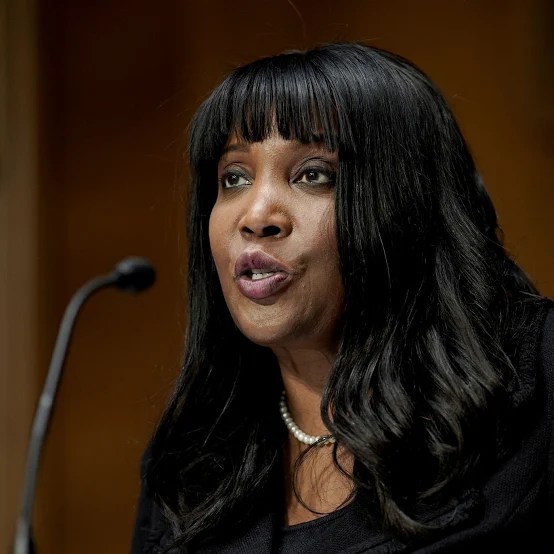
These two examples will give a sense of the rise and fall of nations, that is accelerating since the fall of globalisation (which I date to the effective end of democracy in Hong Kong). This rise and fall – think of countries like football clubs – is also associated by an unravelling of the world order. For example, in a recent note ‘Atlas Shrugging’, we detailed how the independence of the Federal Reserve was being undercut by the White House, and the attempt to remove Lisa Cook from the Fed’s rate setting committee confirms that Donald Trump wants to direct the Fed as an engine of his economic policy (as a giant bond buying machine I suspect).

The independent Fed has been one of the pillars of the globalised world system of the past forty years – and the snuffing out of its independence heralds the unravelling of that system. In the same way that the period of globalisation was characterised by low inflation and the absence of major wars – the presence of inflation and conflict today, is a sign that we are moving into ‘something else’.

In that context I find myself playing a mind game which I call the ‘Unravelling Rule’. Very simply, it is to identity the principal factors that have supported globalisation and that are positive outcomes of it and identify if and how they are unravelling. The crisis of democracy is one such trend (the Economist Intelligence Unit’s Democracy Index has fallen to its lowest level in twenty years).

Other certainties are also unravelling – notably the assumption that the USA is an unflinching ally of Europe and many Asian countries, and the possibility that it could even actively undermine them. In this regard, the fact that the Danish government had to summon the US ambassador over the conduct of three Americans in Greenland is troubling and reflects very badly on the White House.

The danger with the ‘Unravelling Rule’ is that in a chaotic world, it is tempting to see unravelling everywhere. It is more obvious though in the case of world institutions – the United Nations, IMF, World Bank and World Trade Organisation, who are frequently ignored by the very large economies, and sometimes badly undermined by them (the WTO is an example). These institutions need to be recast, most likely for the benefit of the populous emerging economies.

On a more speculative basis, there are at least four trends that have marked the past forty years, and that are now worth watching for a change of course.

The first is poverty. It is an underestimated facet of globalisation that it helped a billion people rise out of poverty, according to the World Bank. My concern is that in a world where the major economies (2/3 of the world’s GDP) have debt to GDP ratios above 100%, economic precarity may return, and this time to developed countries. We have already noted (The Road to Serfdom) the extremely high level of inequality in the US and broad economic vulnerability. In Europe, British and French policymakers conjured the spectre of IMF intervention in their economies (it would have to be a new, bigger IMF – which under this White House is unlikely). In that respect the growing disparity in incomes in the UK regions (relative to London) bears watching.

A second is corporate governance and the rule of law as it extends to international business. We have not seen a rule of law or broad governance crisis in sometime, but the rise of decentralised finance (i.e. crypto), the new idiom of the ‘art of the deal’ in the US, and the geopolitically tinged trade relationships that China is developing worldwide. As a global ‘way of doing things’ gives way to more regional or localised approaches, the watertightness of contracts and the oversight of business relationships is something that businesses will need to consider more carefully.

A true litmus test of the ‘Unravelling’ hypothesis will be the role of US multinationals in the world economy. Described as the ‘B-52s’ of globalisation in the late 1990’s by a prominent trade economist, they have shaped the world economy and come to dominate financial markets. I have lost count of the number of charts circulating that declare that Nvidia for example is worth more than the major European stock markets together. Whilst cash rich, they now face a number of challenges – the difficulty of selling into China as it broadens its technological self-sufficiency, and the collateral damage to overseas sales from the Trump trade and foreign policies, and the rise of more specific local tastes in markets like Africa and India.

A final unravelling, and one I would welcome, is for the EU to unleash its nasty side. In the past forty years the successes of the EU – enlargement, holding the euro together and the creation of a European identity (based on borderless travel the Erasmus programme for example). The likes of Poland and Estonia have benefitted greatly from this, and it is fair to say that the UK would be better off ‘in’ than ‘out’. But the emphasis has been largely on soft rather than hard power, and in a ‘harder’ world, the EU will need to take a tougher stance in terms of how it projects itself. 

There are many challenges but three in particular are the potential exclusion of existing and prospective member states like Hungary and Serbia who habitually refuse to act in accordance with EU values and interests, a specifically more aggressive approach to countering sabotage by Russia (and at times China and Iran) in Europe, and then a retaking of the narrative as to what Europe stands for.

Have a great week ahead,

Mike 

Mania’s, Panics and Crashes

I’ve spent a bit of the summer re-reading the work of Charles Kindleberger, an important economist whose career intersected monetary systems and stock market bubbles, two issues that are top of mind for investors and economists today (see last week’s note ‘Stable Genius’).

Kindleberger had an interesting career. His PhD advisor at Columbia was Henry Parker Willis (a key architect of the Federal Reserve Act in 1913 and the first Secretary of the Federal Reserve Board that became what we now know as the ‘Fed’). Then in one of his first jobs at the US Treasury, Kindleberger worked for Harry Dexter White, the interlocutor and ‘rival’ of JM Keynes at the Breton Woods conference.

To that end, Kindleberger had a very strong sense of the creation of the monetary infrastructure that has built today’s economic world, and he then had the opportunity to play a role in this as one of the architects of the Marshall Plan, which did so much to spur growth in post-war Europe and to cement the view of the USA as the benevolent world power. Benn Steil’s book ‘The Marshall Plan: The Dawn of the Cold War’ is worth a read.

Beyond his policy work, Kindleberger is best known for ‘Mania’s, Panics and Crashes’, the best outline of how asset bubbles form and are followed by crashes.

It is highly pertinent today because a variety of stock market valuation indicators (the long-term ‘Shiller Price Earnings ratio’, the ‘Buffet Indicator’ as well as measures of market concentration – the largest ten stocks account for 75% of the entire market), point to the kind of market behaviour seen only in market bubbles (like 2001). Consistent with this, various investors, as well as entrepreneurs like OpenAI’s Sam Altman are warning of a ‘bubble’.

One test of the bubble thesis is to follow Kindleberger’s theory that asset price bubbles follow a common speculative cycle. According to Kindleberger, bubbles often start with an innovation – in a technology (i.e. railways) or a financial policy or market structure, or even a growth ‘miracle’ (note all the Tiger economies from Hong Kong to Ireland have seen boom/bust cycles) towards which investors channel capital, and then even more as asset prices rise and a narrative around the ‘mania’ begins to build.

This effect helps to loosen the strings of the overall economy and financial sector, but around this point asset prices are reaching incredulous levels as investor euphoria intensifies, drawing in further speculation, until prices then turn down, and the house of cards collapses in a crash. The collapse is always greater when households, institutions and individuals have borrowed on the back of high asset prices, and logically there is greater contagion across the economy.

One lesson from the Kindleberger book is that ‘new’ things – inventions or economic policy liberalizations often provide the spark for a new speculative bubble, that can grow and destabilise a financial system if enough speculative capital is driven towards it.

AI is a case in point. For context, Morgan Stanley estimates that over USD 3 trillion will be invested in AI related infrastructure (data centres, energy), with about half of that coming from the cashflow of the large technology companies, and the rest from private credit. It is clear that the large technology firms (from Microsoft to Nvidia) are the driving force behind this boom, especially so in the context of the fiscal weakness of most Western governments.

The recent results season was instructive in this respect. Often in a bubble, the dot.com one being a good example, the earnings associated with the bubble are only ‘prospective’ or somehow inflated. This is not the case with the large technology firms so far – by and large they report very strong earnings, which helps to soften the bubble argument. The catch is the circularity of the capital expenditure by the large technology firms – META for example is spending aggressively on data centres and chips and running down its cash levels. To that extent, the large tech firms are making a bold bet to get ahead in the AI game, but it is a concentrated and possibly existential bet.

If the strong cashflow position of the firms at the centre of this bubble is unusual in the context of the Kindleberger framework, two other factors also stand out as untypical.

The first is that short- and long-term interest rates in the major economies are close to ‘neutral’, neither too hot not too cold. Bubbles are often characterised, or preceded by ‘easy money’, though it has to be recognised that the last decade has been one of near continual stimulus (from QE to fiscal spending).

The other unusual factor is that the stock bubble is occurring against a backdrop of intense geopolitical and economic policy uncertainty – from great power competition to an unravelling trade order to a reconfiguring of America’s role in the world. The one way in which these dislocations fit the bubble narrative is that AI is a strategic asset, a ‘must-have’, that leads to an environment where for example the US government aims to take a strategic stake in Intel.

Having written in early 2024 of a ‘Bubble Brewing’, I think we are now ‘in’ an AI centric  market bubble, though not at the end of it in the sense of there being a ‘mania’ proper. In the short term, we might well see a wobble in AI stocks, before they pick up again.

In a future note I will detail my own experiences of the dot.com and European real estate bubbles, which lead me to think that ‘we are not there yet’ in terms of the evolution of this bubble. It will end with the absurd – Nvidia encroaching on a USD 10 trn valuation, food companies publicly adopting AI and seeing their values double, wild predictions that AI can treble productivity and wipe out the debt, and on the flip side, the structural risks to energy and jobs markets that AI could pose.

But, we are not there yet.

Have a great week ahead, Mike

Stable Genius

There should be a rule in financial markets that, at some stage, a financial product or strategy will do the opposite of what its name suggests – we might call it the ‘inverse Ronseal hypothesis’ (Ronseal paint is famous for promising that ‘it does what it says on the tin’). In this sense, think of how the ‘risk free’ assets of the textbooks perform under inflation, how ‘low volatility’ structured products blew up spectacularly and how in the 1980’s America’s Savings and Loan banks went bust, because they failed to save and lend properly.

Into this realm steps the ‘stablecoin’, an asset that is growing speedily and that is forecast to become the solution to many problems – the US national debt, a sluggish and conservative banking system and the impoverishment of emerging economies.

A neat way to think of stablecoins is to first consider the gold standard – money backed by physical holdings of gold – and then conceive of them as a digital coin (token or ‘betting chip’) that is backed by a well-established, reputable asset (increasingly, US Treasuries).

The idea is that because they are backed by a stable financial asset, the value of the stablecoin should not fluctuate and should therefore form the basis for transfers of money and value. Yet, some stablecoins are not fully backed by Treasuries and others are backed by crypto ‘money’, which quite obviously renders them less than stable. Bear in mind that a crypto coin called ‘FartCoin’ is inexplicably worth USD 1.4 bn, which is a lot of comedy value compared to zero intrinsic value.

In the past year, the use of stablecoins has surged, notably so in the case of those backed by Treasuries.  Stablecoins are now the 18th largest holder of Treasuries (with USD 150bn) just after Norway, India and Brazil.

The vast majority of stablecoins are used in crypto trading, but the potential they hold to revolutionise the payments industry is startling. Payments by stablecoin are nearly instantaneous (as opposed to having to wait 1-5 days with banking systems), carry a very low transaction charge and should make payments across borders easier. Indeed, the volume of stablecoin transactions is creeping close to the activity that the major credit card firms – Visa and MasterCard generate (Visa has its own crypto/stablecoin division).

Consistent with the instinct that is prevalent in markets and politics to see all new things as solutions to old problems, stablecoins are being promoted as a new source of demand for Treasuries, and therefore a new channel through which the US national debt can be nourished.

This is a dangerous idea, because whilst stablecoins are a digital join between the old financial world (Treasuries) and the new (‘defi’ or decentralised finance), their growth may set in train a situation where the tail starts to wag the dog. What I mean by this is that even though an individual stable coin, backed 100% by Treasuries is stable, the infrastructure and the people behind the stablecoin network, and the crypto world, may not themselves be stable.

There are several risks.

One relates to Gresham’s Law, which stated that ‘bad money, will drive out the good’. In the same way that 16th century bankers and traders had an incentive to use coins (which all had the same face value) with some lower quality metal. Equally, certain stablecoin providers will have an incentive to only partially back coins with reliable assets or to misreport the extent to which coins are backed by ‘good assets’, and in the event – a recession or financial crisis – that these assets are ‘called’, there could very easily be a bank run style collapse in a few stablecoins, with contagion across the field.

As such, the large stablecoin providers may submit themselves to central bank regulation, to ensure that there is hard evidence that coins are backed by stable assets – but the quid pro quo of this (that they surrender details of the people using stablecoins) may be unpalatable.

It is also worth recalling that over the past five years, there have been a range of scandals in the crypto world, and many crypto exchanges have collapsed or been shut down by regulators. To that end there is a counterparty risk inherent in the stablecoin system. Also, the loss or theft of wallets and keys to crypto assets makes the stablecoin system highly vulnerable, at a time when financial institutions are investing even more in security.

From a macro pint of view, it is more likely that stablecoins effectively digitise the grey and black economies (so that there is no net financial or economic effect) or that they have very strong appeal in emerging economies with poor financial infrastructure. If that is the case, the economic effect will be to draw capital out of emerging market economies, enfeebling them (and their currencies and bond markets). Tether is very popular in Turkey, whose financial system has been significantly weakened by the current government, whose autocratic style incentivises business to transact ‘outside’ the existing economic system.

The other major risk is that the obvious attractions of stablecoins as cheap and speedy means of switching money, implies an undercutting of the profitability of banks and payment companies, especially if savers can start to earn yield (technically called a ‘reward’) on stablecoins. The incumbent financial system will not like this, and whilst the larger financial institutions will likely adapt to them, many smaller ones will suffer. From a regulatory point of view, a weaker banking system is unwelcome, and the very fact that fewer dollars are taken ‘out of sight’ of regulators is not good either. There are already a number of regulatory frameworks for stablecoins, ‘MICA’ in Europe and the Genius Act in the US for instance.

In these ways, stablecoins can make financial systems more volatile, and of diminished quality, and higher volatility, unless they are brought under the wing of regulators (which is anathema to most in the crypto world) or adopted by the large, incumbent financial institutions. Reflecting this, researchers at the ECB[1] found that in periods where crypto assets (i.e. Bitcoin) were volatile, stablecoins exhibited volatility that was not evident in the assets used to back them (Treasuries).

From a geopolitical, or geo-economic point of view, the spread of stablecoins that are backed by safe dollar based assets (Treasuries) is at least a means of spreading dollarization to grey and emerging economies. The question for central banks like the ECB is how best to approach stablecoins. 

My sense is that there are two avenues to follow. The first is to encourage financial institutions, corporates and banks to develop stablecoins, in a way that permits later adoption of a digital euro. The other is to push a euro-stablecoin into Russia, Belarus, the ‘Stans’ and generally the former USSR countries not in or wanting to get into the EU to deprive the ‘rouble’ zone if we can put it that way, of money that flows through its large grey economy. 

Have a great week ahead

Mike

Atlas Shrugs

In ancient Greece the ‘Titanomachy’ was a battle between the Olympian gods (like Zeus) and the older gods, the Titans. Once victorious, Zeus condemned his vanquished opponents, notably Atlas, who was forced to carry the burden of the heavens, for eternity.

Though it is a stretch of the comparison that classical scholars should not forgive, when thinking of Atlas’ feat of endurance, I have central banks in mind, and in particular of the Federal Reserve, which has especially in the past fifty years borne the weight of investor expectations and the hopes of politicians. The importance of the Fed cannot be underestimated – academics have shown that returns, volatility and trading volumes are higher than average around the Federal Open Markets Committee meeting.

The Fed has been at the epicentre of every financial crisis rescue effort through the globalization era – from the Asian, Russia and LTCM crises, to the global financial crisis where the intellectual burden of finding a way of mending markets was shouldered by Ben Bernanke, to the recent responsiveness of the institution during COVID. If anything, the Fed has been guilty of doing too much in recent years, and the consequences of its long deployment of quantitative easing are still becoming evident.

On one hand, the large central banks, led by the Fed, are the glue that has kept the political economic peace throughout this thirty or so year period, but on the other, this peace has permitted the accumulation of huge amounts of debt, and has shielded politicians from the fiscal consequences of their actions.

Now, the independence of the Fed is about to be sacrificed, as the president appoints Stephen Miran to replace Adriana Kugler who is stepping down, and a prospective chair to replace Jerome Powell who is due to step down in a year’s time as head of the Fed. The unwritten assumption is that, like never before, the Fed’s rate setting committee will sway to the mood of the White House. Miran’s appointment is a sure sign of this. 

This is problematic at many levels. The suite of policies enacted by the president – from deportation to tariffs – means that the US economy is now suffering from stagflation (sticky inflation and low growth). Strip away the blinding effect of wild investment in AI and corporate America looks like corporate Europe. 

Stagflation is difficult for investors and central banks to navigate, and markets are pricing out rate cuts from this Fed. Indeed, this is a very strange rate cycle. Historically, the Fed leads rate cutting cycles and other central banks follow, but the Bank of England, ECB, Royal Bank of Canada and other smaller central banks like the SNB, have been hacking away at rates whilst the Fed has not moved this year.

In the long-term, the potential politicisation of the Fed will augment uncertainty. There is already talk in central banking circles that in the event of a financial crisis, the politicised Fed may not be willing to open swap lines with other central banks, which if it occurred would deepen the economic effects of any crisis. Swap lines across the international financial system have been staples of past rescues, and articles of faith for scholars of monetary systems like Charles Kindleberger.

In such a context, the Fed’s job as lender to (US) banks might also become more complex and ineffective if the large banks were to behave in the same way that the technology companies are now doing (Apple looks to have escaped tariffs by presenting a gift to the president in the White House and promising to invest USD 600bn in the US – it currently invests about USD 43bn). So, in a financial crisis, a large American bank could offer a large loan to the Trump family to extend the Mar-a-Lago resort, if the president sanctioned its main national and international rivals (cynics will ask whether something similar happened in 2009).  

My hunch is that beyond the thrill of lower interest rates (which will likely raise inflation and long-term bond yields), the vision that Trump has in mind for the Fed is something along the lines of the Bank of Japan, which in the past ten years has effectively swallowed the Japanese bond market (the BoJ owns just over 50% of the Japanese bond market). Having the Fed as a monetary hoover to keep bond yields stable will help to dampen some of the risks of indebtedness, but will store up greater risks for later.

The appointment of a ‘yes-man’ at the head of the Fed (Kevin Hassett fits this role much more than the other leading candidate Kevin Warsh), will likely spur resistance within the institution, and across the regional Fed banks whose presidents help to make up the rate setting committee. Not only will Fed employees – who are devoted to the institution – worry for their jobs (witness the hollowing out of the Bureau for Labour Statistics), but they will be concerned that the entire macro-landscape is being undermined – by weaker institutions, unreliable data, crypto and other ‘new’ money experiments, the acceptance of corruption and more volatile assets.

The ultimate objective of ‘politicising’ the Fed, if that is what is at stake, is to make sure that the next crisis doesn’t happen on Donald Trump’s watch. The risk is that when that crisis does happen, the Fed will be part of the problem rather than the solution. 

Secret Lives

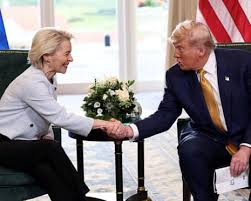
James Thurber’s famous book ‘The Secret Life of Walter Mitty’ is yet another book I would recommend to readers, to continue a recurring theme of recent weeks. It is especially apt in the context of the US-EU trade deal.

Walter Mitty appeared at the end of the 1930’s, a decade that was shaped by Herbert Hoover’s tariff policy, and that was marked by profound economic and geopolitical tensions. Mitty’s fantasies were provoked by the reality of his pedestrian, harangued life – which will appeal to European leaders who care to dream of better days. Equally, the giddiness of Mitty’s fantasies has its equivalent in the promises that Donald Trump has elicited from the EU – namely, to buy and invest hundreds of billions of dollars in energy.

One week on, reaction to the US-EU trade deal is still mixed, and it is not quite clear who has ‘won’. This may be because it is not a trade deal in the classical sense – at least in the sense of the laborious trade deals that the EU is used to striking, partly because a large facet of the ‘deal’ is based on a promise and also because the optics of the deal are quite depressing for Europe.

At the headline level, EU exports into the US will be met with a 15% tariff to be paid by the US consumer, not unlike the Japanese ‘deal’. Auto companies will not be displeased with a 15% tariff. Wines and spirits, steel and notably pharmaceuticals have yet to have tariff levels finalised and there will be some relief on the confirmation of 15% tariffs on pharmaceuticals, though the investigation into pharmaceutical exports back to the US is a tail risk. Interestingly, the EU has resisted attempts to water down its digital regulations.

Politically the spin that the EU is putting on the agreement is that it was the best possible outcome in a difficult geopolitical climate (recall that the recent EU-China summit was a damp-squib). While there were some public expressions of dismay, notably from the French prime minister Francois Bayrou – these can be seen to be largely aimed at the public, rather than Brussels.

Though Ursula von der Leyen is unpopular with EU governments for the singular way she runs her office – it is populated with officials who are close to national government (i.e.  Alexandre Adam one of von der Leyen’s key deputies is an arch Macronist) – there is no sense that the large countries were left out of the negotiation process, and any effort to isolate von der Leyen for blame, is ignoble.

However, amongst the professional trade staff, there is still some despair at the humiliating optics of the deal, the fact that it is in many ways not binding, and the risk that there is no undertaking that it is final in the sense that another round of tariffs is imposed later.

On the positive side for Europe, and flipping to the ‘Mitty-esque’ part of the deal, two of the key undertakings in the deal – that European companies invest USD 600 bn in the US, in addition to a commitment to purchase microchips, as well as a commitment from the EU to buy USD 750bn in energy from the US over the course of the Trump presidency – are not at all clear in their implementation, and very much open to a fudge, with the right accounting treatment. In particular the energy purchase commitment is unrealistic because it exceeds what the EU spends on energy in a given year and US energy firms do not have the capacity to service a commitment of USD 250bn in demand from Europe, whilst also serving other markets.  

In my view there are several aftershocks to watch for. The first is that the deal further damages trans-Atlantic relations, and the level of trust between the EU and the US is likely the lowest it has ever been, and this has strategic implications as far afield as Russia/Ukraine and the Middle East. One other implication may be a drift, by government and consumers, away from US brands – as this may well be an effect that is seen in other regions.

Two financial market implications are that the dampening of growth in Europe will maintain downward pressure on rates in Europe. More importantly, in the context of a very oversold dollar, there is now an incentive for EU policy makers to try hard to talk down the euro, and we may see a short-term rebound in the currency pair.

On the whole, if this is a ‘final’ deal and the topic of tariffs does not re-emerge in the next three years, it is not a bad deal for the semi’s, autos and aerospace sectors in Europe, though the public optics are not good for the EU. The best parts of the deal for Europe are the fantastical claims of incoming European investment and energy purchases in the US. This is a Mitty style fairy tale that the Europeans hope Mr Trump believes in.

The telling factor is that this deal has now emptied all goodwill from the trans-Atlantic relationship, and effectively completes another diplomatic rupture by President Trump.  From a European point of view, this is yet another ‘wake up call’ and the best that can be hoped for is that it accelerates projects like the savings and investment union and ‘strategic autonomy’. European leaders and the European policy elite keep talking about this, but until we see hard evidence (for example, German real GDP over the last five years is close to zero), they are the fantasists.

Have a great week ahead

Mike