Watching and Waiting

N’interrompez jamais un ennemi qui est en train de faire une erreur.

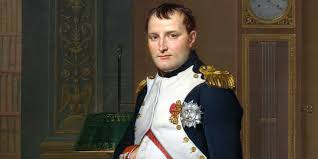
During the Battle of Austerlitz, Napoleon quipped to one of his commanders (General Soult) that one should never interrupt an enemy when he is making a mistake. Austerlitz was one of Napoleon’s tactical triumphs, but some seven years late the Emperor gathered one of the largest armies ever assembled and crossed Russia. The Russians burnt Moscow, harassed the French army and then patiently waited for the cold weather to cruelly teach Napoleon the error of his way (Sylvain Tesson’s book ‘Berezina’ offers a lively account of the retreat from Russia).

In a similar vein, as another modern-day, would-be emperor careens from financial calamity to geopolitical catastrophe, my sense is that the world beyond America, is best served by waiting and watching.

In the next two months the economic damage to America from the tariff campaign will become clear. The corporate earnings season has just started – some of the large banks have done well from the trading volumes created by market volatility – but as the focus turns to technology and other export focused firms, we can expect to see significant drops in earnings, a development that will make the still high valuation multiples for the US stock market hard to sustain. Relatedly, while investment banks are profiting from volatility, most of them are reporting that capital markets activity (public offerings, mergers and funding rounds for private equity firms) have stopped dead.

This is a shock for Wall St. With president Trump having installed a market trader as commerce secretary, a hedge fund manager as Treasury, a private equity titan in the defence department, and so on, capitalists might well have thought that the White House was on their side, but the annihilation of up to 8 trillion dollars in market capitalisation has proven them wrong. There is I imagine, a limit to Wall St’s patience and the pushback on policy will grow.

As it does, the hard (as opposed to ‘soft’ survey) data is likely to worsen dramatically, and the US will enter into an economic breakdown. At the start of this year I had sifted through the IMF GDP forecasts for 2025 and 2026, where uniquely they expected nearly all of the world’s economies to register positive growth. From this starting point, a global recession was a very low probability, but the Trump administration has blundered into one.

Now, policy makers in the US and abroad are realising that watching and waiting is the best way to entice Trump away from his tariff policy. There were signs of this on Wednesday when the Federal Reserve chair declared that tariffs would augment inflation and make it much harder for the central bank to cut rates. This statement represents quite the departure for a monetary authority that has greeted every flicker of economic trouble with lashings of cheap money. Mr Powell knows very well that it is not the job of a central bank to fix the mistakes of an errant policymaker, and very likely that a short, sharp market shock now might deter a great fiasco (and the credibility of the dollar) later.

In contrast, other central banks, who are unburdened by any sense of conflict of interest with Mr Trump, can feel much more free to cut rates into a coming recession, as the ECB did on Thursday. In that context, we may see the dollar strengthen in coming weeks, and much of the stress of the White House policies on the economy, transferred to the corporate bond market.

Then a key, patient player in this unfolding drama is China which, whilst it has deep economic faultlines of its own, is politically and socially coherent enough to weather the onslaught from Washington. Like the Russians who took on Napoleon, China’s strategy is partly one of endurance, partly ‘guerrilla’ (think of rare earth export controls, supply chain manipulation leading to shortages of goods in the US) and a patient attitude to the market turmoil that is starting to undermine the financial credibility of the USA.

Europe may follow suit. Giorgia Meloni spent Thursday in the US with president Trump and then raced back to Rome to host JD Vance. Her visit was useful in terms of Italian and EU diplomacy, but the EC is carefully signalling to Washington that any negotiations on trade will have to be done through Brussels alone, which as the Brexit process revealed, is a hard defence to breech.

Napoleon left Moscow in the middle of October 1812, eventually to creep into Paris just before Christmas. His army was devastated, only 100,000 or so men from an initial force of 600,000 survived. Donald Trump is no Napoleon. In two months’ time the US economy may well be in a state of disarray, consumer confidence and confidence in the president will likely have plummeted further, and the world will be watching and waiting for his capitulation.

Have a great week ahead

Mike
Did no-one see it coming?

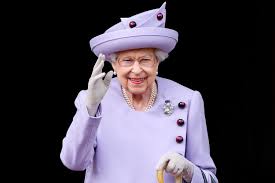
In November 2008, in the darkest hour of the global financial crisis, Queen Elizabeth II asked an audience at the London School of Economics ‘Why did no one see it coming”. We might ask the same question today in respect of Donald Trump’s tariff war, where he has diminished the things that he was reputed to hold dear – the economy, the stock market and the dollar.

One disturbing template that might offer insight into the path that the American economy takes is Brexit. As noted by the current prime minister of Canada, Brexit was not the solution to the problems that Britain faces. Certainly, the disengagement of the US from the world trade system is becoming as soap operatic and sometimes ludicrous as Brexit was.

An even more pertinent example might be Britain at the turn of the 19th century when there was a palpable sense that the might of its empire was peaking. At the time tariffs and trade were widely debated, and leading politicians like Joseph Chamberlain proposed the idea of an ‘imperial preference’, a lower tariff on trade with its colonies, to create a trading zone that would buffer the rise of the US and Germany.

To a certain extent, tariffs and trade became the issue of the day, but in the 1906 general election the public voted overwhelmingly for liberal, open trade (less restrictive tariffs) candidates. This I suspect was also the intention of those who supported Donald Trump in November last – keep the economy and markets strong, whilst evening up the status quo (a little). That tariff rates set by the US (and China) are at levels only last seen in the 1920’s completes the shock, and rhymes with history.

One reason tariffs were a popular policy tool one hundred years ago is that the fiscal side of the economy was not well developed (only a small proportion of Americans paid tax) and, in some cases, central banks did not exist. Today, tax systems are well developed and as small, open economies show, they are the best mechanism to reduce inequality, and to entice investment, both stated objectives of the Treasury secretary.

This particular market crisis is interesting because it is nearly entirely man-made. Turkey has taken a similar path in recent years, all but eviscerating its bond market and currency, but these are inconsequential compared to the depth of US markets. Whilst the president has stepped nimbly and profitably (some say) away from the financial brink, he still risks contagion of his actions in a number of respects.

Two such risks loom on the horizon, an economic war with China and a crisis of credibility in US financial assets.

We are now led to believe that ‘it was China all along’, but it would have been easier to tackle China with the support of America’s former allies in Canada, Japan, the UK and Europe.

For its part, China has plenty of tools to respond to the US with – it can allow its currency to weaken further and through supply chain disruption can inflict higher consumer prices, shortages of goods and lower (Chinese) demand on the US. Informal boycotts of American goods, investigations of US service firms and rare earth restrictions are just a few other tools at China’s disposal.

Should an economic war between the US and China materialise, my sense is that a supportive response from the Federal Reserve has been made less likely by Wednesday’s tariff capitulation by the White House, which demonstrates how arbitrary policy is under this administration.

In the longer-run, the actions of the Trump team could manifest themselves in a capital crisis in the context of the way they have undermined confidence in the US and by extension its financial system. What the likes of Peter Navarro seem not to have grasped is that the quid pro quo of America’s trade deficit is its enormous financial power – the role of the dollar and Treasuries as lynchpins of the international financial system, the dominance of US financial systems and its integral role in the fabric of capital markets, and the capital that overseas investors provide them.

With Mr Trump behaving in the way that some might caricature as ‘emerging market’, If we apply an emerging market stock market valuation rating to US stocks, the SPX index would be half its current size for instance. Equally, the mid-week selloff in Treasuries which was most likely the result of hedge funds unwinding positions, but the poor performance of bonds underlines the sceptical view that markets are starting to take on the administration.

In this context, we may be at the beginning of a great unwind of American financial power.

Have a great week ahead,

Mike 

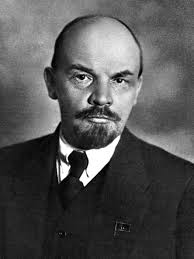
Learning to Love Lenin

I’ve spent much of the past quarter of the year zigzagging across Europe and the US, cursing Vladimir Lenin as I went. He is reputed to have coined the phrase ‘there are decades where nothing happens; and there are weeks where decades happen’, which in turn has been repeated back to me wherever I went. I shouldn’t be too grumpy though, because the ‘Levelling’ is now playing out at high speed.

Since Donald Trump entered the White House for the second time, so much has happened that I want to use this note – coming at the end of the first quarter of the year, to discern new emerging trends from noise, across four different domains.

Bonfire of Diplomacy

The first emerging trend can be characterised by the image of the bonfire of diplomatic relationships, which started at the Munich Security Conference and has continued apace since then. Gone is the cosy globalised world of Bill Clinton and even George W Bush, where America was a benevolent colossus, keeping the peace, spurring prosperity, and putting out financial fires. In my travels, I found myself recommending investors to read Adam Smith on the topic of mercantilist economic behaviour, Palmerston on foreign policy (‘we have no allies, only interests’) and that they acquaint themselves with Peter Hopkirk’s ‘Great Game’.

In brief, my sense is that the Trump team wants the US to become a hyper-charged nation-state, rather than the hyperpower that it was. Whilst there is much consternation in Europe and parts of Asia about this, I do not yet detect widespread disapproval from many Americans I speak with.

Aux Armes!

A consequence of this is Defence Union in Europe. Echoing the French president, we are all ‘strategic autonomists’ now. Many of the urgent phases in this journey are already being undertaken – the publication of the pragmatic EU White Paper on defence, the EU’s new Eur 800bn loan facility for defence spending and critically Germany’s decision to loosen the debt brake provision on defence spending.

Some intelligence agencies (Denmark and Finland for instance) estimate that in the event of a peace deal in Ukraine, Russia would be ready to launch a war on a European country in two years’ time, and in five years could have rebuilt its military to a level that it could consider a war against the EU. The Nordics, Baltic states, Poland, Germany, France and of course the UK appear to buy into the seriousness of this threat, but there are notable defence laggards, namely Spain and Ireland.

Neither does it seem that there is sufficient urgency on the security front – my experience was that Russians were omni-present in the cafes of Vienna and arguably not enough is being done to sanction governments that are apologists for Moscow (i.e. Hungary).

The one aspect of the European revival story I need to be convinced on is the cultivation of a pro-growth socio-economic outlook in countries like France, and specifically, of the need to instigate capital markets union (CMU), which whilst not a vote winner for politicians, is a necessary development for a stronger European economy.

Oops – muscle not fat

The economic policy of the Trump administration is difficult to decipher through the noise of chainsaws and crashing of markets. At its core, I detect a nihilistic fiscal conservatism – a desire to shrink the fiscal deficit and by extension the enormous debt load that means that the USA pays out far more in interest payments What is causing dismay is that the policies enacted to temper the growth of the economy are cutting economic muscle not fat. Universities, researchers, and essential parts of the science establishment are being undercut, and socially it is disturbing to see veterans bearing the brunt of DOGE. More importantly, the shredding of the rule of law and politicising of justice have never helped any economy (Turkey is the case in point).

Whilst much of the media coverage of the Trump economic policies has focused on the harm caused by tariffs (they should be applied in small, not massive doses), not enough attention is given to how corporations will react to policy uncertainty. In a recent note I described Avinash Dixit’s theory of how macro uncertainty causes companies to ‘wait and see’. In that respect the forthcoming earnings reporting season and corporate action calendar bear close watching.

Exceptionally expensive

Allied to the outlook for the US economy is a growing realisation on the part of investors that American assets (the dollar, stocks and corporate bonds) are very expensive, and dominate portfolios. In this regard, the Liberation Day announcement should worry investors. One is the sheer carelessness and apparent incompetence of the tariff policy – it has exposed the lack of analytical capacity in the administration and a lack of concern for the economy. Trust in the administration is draining.

The other is that it has reminded investors of their exposure to US assets. At this stage, the majority of asset allocators in the investment industry still appear content to persist with very conventional portfolio structures, that are arguably not configured for a rapidly changing world.

One thought experiment I perform with investors is to show them how portfolios have changed through time. For example, in 1900 nearly 50% of stocks were railway companies, and the UK made up 25% of the world stock market (close to 3% now). Today the US weighs in at close to 68% of world equities, and my sense is that with the dollar still relatively strong, allocators should start to sell American exceptionalism in the sense that it is impounded in stock valuations.

A final lesson from Lenin might help them. For much of the period of the first wave of globalisation (1870 to 1900) Russian equities comfortably outperformed American companies. But, having been shut for much of the First World War, the Russian exchange opened again in January 1917. Then came the Revolution and the market dropped to zero and shut for 75 years.

Political risk matters!

Have a great week ahead,

Mike