Wrong Turns

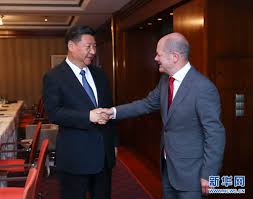
An early morning run through Berlin last week (down Unter den Linden and through the Tiergarten) underlined to me its role as one of the few cities to have been at the centre of several, major shifts in political power – from the dominance of Bismark and the Prussian Empire, to Berlin’s role as a scientific and intellectual hub at the start of the 20th century, the two world wars, effective Russian occupation, and then the path from unification to its role as Europe’s economic powerhouse.

That the consensus view of Germany today is of ‘the sick man of Europe’ is also emblematic of a regime shift in globalization – Germany has neither the leadership, diplomacy, economic policy nor energy policy to succeed in a multipolar world. It is also an interesting vantage point to consider how some of the tectonic geopolitical shifts will evolve through the rest of 2024. Here are a few that preoccupy me.

We have written a number of times in recent years on the way in which the breakdown of the unipolar globalized world order is forcing countries and companies to ‘take sides’. Wars in Ukraine and the Middle East have made this trend more acute, as have growing supply chain centric protectionism. The messy evolution of the world order around three economic poles and value systems (China, EU, USA) adds complexity. Two recent events illustrate how different actors are becoming embroiled with each other.

First, Elon Musk’s interview with Donald Trump, combined with his castigation of Keir Starmer polarise the international consequences of the US presidential election. For instance, the EU Commissioner with responsibility for the Digital Services Act (Thierry Breton) hastily took sides and leapt to caution Musk. If Trump wins, there is a convincing argument that ‘global oligarchy’ will align with him, to the great inconvenience of Europe.

Second, the deepening of China’s support for both Russia (Chinese troops have recently been on exercise in Belarus) and Iran is puzzling and may increasingly put Xi Jinping at odds with colleagues. While this collaboration (of which North Korea is an important component part) is turning the SCO (Shanghai Cooperation Organisation) into a coherent strategic grouping, it is taking China down a narrow path diplomatically, and one that will sap its credibility on the international stage.

The admirers of Xi may argue that China is creating not just a new world order, but a new model of government (autocratic state development). But, from a Western point of view, and I hope a neutral stance, China has fallen in with a ‘bad crowd’ whose foreign policy modus operandi seems to be to ‘make things worse’ (especially for democracies). In that regard, Xi may come under greater pressure from within his party – some of whom think he has taken a ‘wrong turn’, and many of whom are concerned with the performance of the economy.

If China is in danger of taking the ‘wrong side’, Germany is at risk because it is not taking sides.

Returning to Berlin and looking ahead to September, Olaf Scholz may also come under great pressure from colleagues. The ‘back to school’ season brings state elections in Saxony, Thuringia and Brandenberg. In these ‘eastern’ states, the ruling coalition has feeble support (mid-teens for the three coalition parties together), the conservative CDU does much better (close to 30%) with the now notorious AfD enjoying close to 30% in the three above states.

Whilst these are regional elections, the prospect of a strong showing for the AfD (granted the highly controversial nature of its ‘eastern’ leaders) will embarrass Scholz. It might also further undermine the government’s energy policy (voters in these regions want the return of Russian gas and coal). It also brings into question the need for the government to spend more on structural social infrastructure.

Scholz coined the term ‘Zeitenwende’ (or turning point) to coin Germany’s strategic dilemma, but he has done little to steer it towards a better path. The consternation in Berlin over Ukraine’s use of German armour in Russia and the stasis in the government on producing a budget in the context of fiscal constraints suggest policy paralysis.

The new development for the second half of 2024 through 2025 may well be that both Germany and China, two of the important engines of the world economy, become embroiled in economic and political crises of their own making.

On that upbeat note, I am going on holiday for a couple of weeks, and will resume ‘The Levelling on Sunday’ on the 8th September.

Mike
Let the Games begin

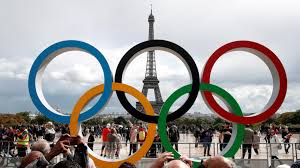
On Saturday morning I got up early to run the first and last parts of the Olympic marathon course, a few hours before the actual race. The course joins the most memorable parts of Paris with Versailles and is consistent with the spirit of the two-week Games in showing the accessibility of the city and its magnificence.

I have spent much of the past two weeks at the Games, mostly at the rowing, athletics and other endurance events like triathlon and bike (my favourite performances were Cork’s Paul O’Donovan and Fintan McCarthy –in the men’s lightweight sculls, Cassandre Beaugrand in the women’s triathlon, and the USA’s Grant Fisher in the 10,000m).

Once the security-driven tension of the opening passed, Paris relaxed and blossomed, and I think it is fair to say that the Games have been a huge success for Paris, France and the morale of the French people (their morale always needs boosting, their self-regard not so).

The success of the Games is a sharp contrast to the mood one month ago, when the country was confronted with the possibility that Jordan Bardella might be prime minister during the Games. Yet, Bardella has now effectively disappeared from public view. The question now is whether the success of the Games will colour the process of the formation of a new government?

My hunch is that it makes a government led by either the far left and far right less likely, and points to a preference for a centrist government – which I think is predicated on a split in the NFP left coalition (coming once they all return from holidays). I do not think that Emmanuel Macron’s reputation will be vastly enhanced by the Games, but they could be decisive in the race for mayor of Paris (Anne Hildago might opt to stand again, against the likes of Rachida Dati and Clement Beaune).

One reason that the atmosphere in Paris seemed so relaxed is that most of the Parisians left the city.

In my experience one motivation for this is that, unlike say England, there is no ‘sports culture’ in France (at least in the realms of the upper and middle classes). Achievement in sports is something for people in the regions, or the suburbs. Despite that, France does remarkably well in many sports like rugby, which is in effect played in a few regional centres (and professionally in Paris).

In this respect, the strong performance of France in the Games, allied to the even more impressive medal haul of Australia and combined with the lacklustre showing of larger countries like India, Brazil and South Africa (who have a combined four gold medals compared the six won by tiny New Zealand) begs the question as to what makes a successful Olympic nation, and whether these characteristics are correlated to economic achievement or even innovation.

Here, there are maybe three different models.

The first, which encompasses the English speaking nations (GB -5th place in the medals table, USA – currently 1st, Australia – 3rd, Canada – 11th, New Zealand – 12th and  Ireland – 16th) and some of the Nordics is based on what I call the ‘schools’ model, where sport is taught and practised competitively in the school system, and where this is valued culturally. In many cases, successful school athletes (especially so in Olympic sports) can continue sports at a very high level at university or clubs. Here the US university system stands out for the support it gives to athletes (from many countries, note that France’s hero Leon Marchand is a student at Arizona State University) and the vast resources that individual universities possess.

What is interesting from the point of view of the Olympics is that the national sports of the English-speaking countries – American football and baseball, hurling and Gaelic football, cricket, Australian rules – are not Olympic sports, and if anything draw talented athletes away from Games sports (and the Nordics have winter sports). It is still however an argument that a ‘sporting culture’ pays off.

The second approach is what I call ‘institutional excellence’, as exemplified by France (and it must also be said Australia with its world leading Institute for Sport), where promising athletes are funnelled through high level performance institutes and top flight clubs, and given support in terms of conditioning, psychology and diet. In the case of France, other institutions like the army also play a supporting role (19 of 52 French medal winners are soldiers). Japan and South Korea might also fall into this category, though it is worth noting the role that Japanese corporates play in supporting sports like running.

The third model is the ‘communist’ one which whilst communism has gone out of fashion, the communist system’s approach to manufacturing athletes has not, and is manifest in China, Romania and of course Russia. In these countries, within certain sports (rowing is one), promising physiological ‘specimens’ are channelled into specific sports and driven to compete. Whilst athletes from many countries have engaged in drug-fuelled enhancement, the ‘communist’ model countries have recently been the greatest offenders (Russia’s efforts here has been described as ‘state-sponsored and systematic’).

These are very broad sketches and will miss many elements such as the quality of individual coaching. One element they have in common is ‘age’ in the sense that most of the successful Olympic countries have been competing for a long time (the 1924 medal table was dominated by the USA, France, Finland, GB and Sweden) and I suspect that institutionalised expertise in many sports as well as a sense of ‘how to win’.

While my fellow Parisian Simon Kuper of the FT writes that there is a correlation between the level of economic development and Olympic achievement, I think it is more complicated. There does seem to be a correlation between sporting success and country pedigree (system longevity) and gender equality, and there does not appear to be a relationship between rate of development and Olympic achievement (China is the exception).

What is more interesting is the notion that the three above ‘Olympic’ models are related to different approaches to innovation. As we noted in last week’s brief, China has a state driven, ‘all-costs’, competitive approach to innovation, Europe’s is also state driven and resource-short, while the resource rich US university model (I would include Imperial and Oxbridge in the UK here too) tallies well with the centres of innovative excellence in the US.

If there is a lesson to countries like India, who perhaps want to be more successful (India sent a large business/socialite/media delegation to the Games) it is to focus on schools and colleges, develop a competitive sports program within its huge army, and copy Australia’s Institute for Sport.

Let’s see who does well in LA. 

Have a great week ahead,

Mike

The Plenum Pauses

If I uttered the word plenum, you might think I was a surgeon or arcane barrister, and not a casual observer of Chinese politics. The ‘Plenum’ is held seven times during the five yearly policy making cycle that aims to set the long-term direction of the development of China by the Communist Party.

Amidst the generalised chaos of Western politics in recent weeks, China held its most recent plenum (July 15-19), and this was the third plenum of this policy cycle, which typically focuses on economic policy. Though the outcome appeared to have been something of a damp squib, it is worth reflecting on .

To many international observers (note that China is becoming much less transparent in its policy process and in the availability of detailed macro data), there are three recurring threads.

The first is to ‘make China more like Denmark’(my words not the CCP’s), in other words to deepen its social welfare net and to limit inequalities. This has long been a goal of the CCP. In 2018, in the last chapter of the Levelling we wrote that ‘Another approach is to develop social infrastructure that encompasses many of the elements of intangible infrastructure, such as health-care spending, education, pension plans, and broader financial services. ……Motivation for building social infrastructure in China may come from stress points uncovered during China’s next recession. As such, it would be a logical chapter in China’s path to development, and not at all unlike Franklin D. Roosevelt’s New Deal. The New Deal was a watershed in the United States in many respects, one of which was that it marked the full evolution of the United States from an emerging to a developed nation.

The building out of a social infrastructure in China remains a significant project, as does the flattening out of Chinese society. Granted that I wrote the above paragraph in 2017/18, it is striking that a number of basic reforms are still missing – there is very little reform of the hukou system (household registration system that allows internal migrants to work in cities) and children of migrant workers to cities do not receive the same social benefits and education as children of city parents do. In addition, little accommodation has been made for the fact that the ageing of the population will strain the social safety network. In that regard China looks a little like France!

So, like the US under Roosevelt, the creation of a formal ‘new deal’ type social infrastructure, if it happens, could be a (positive) turning point for China.

The second challenge is to make China more like Silicon Valley. The plenum underlined the importance of maintaining a laser-like focus on ‘high quality development’, which translates as the need to make China the leader in new, strategic technologies. In this respect it is conceptually like the EU’s idea of strategic autonomy, but far far more serious in implementation.

In addition, the wording of the plenum drafts references ‘fierce international competition’, which ultimately points to intense competition with European car manufacturers, and in the telecoms and AI sectors. In recent years the number of directives from the CCP on topics that fall under the ‘Strategic Innovation’ umbrella, has multiplied and state aid for sectors like AI and semiconductors is now burgeoning into the trillions of dollars.

The third element that bears flagging is the ongoing focus on ‘reform’, and to my limited experience there is a ‘lost in translation’ element where quite harsh Chinese policies end up being translated as positive, innocuous Western ones. As an example, I recall in the 2010’s a very senior Chinese trade diplomat explaining that ‘rule of law’ did not equate to a Western sense of adherence to established laws, but rather the imposition of the rule of the CCP on business, politics and society. In that context, the idea of ‘reform’ means the fitting of Chinese society to the will of CCP, and specifically Xi Jinping ‘thought’.  

My interpretation of all of this is that Xi is shaping China in the form of a more closed state (which again to the tone of my recent note on globalization, makes for a less open world), that curbs the will of those inside, adopts a singularly selfish approach to those outside, and relies on several great strides in technological industrialisation for the prolongation of the ‘China Dream’.

The contradiction here, and specifically between the three strands to emerge from the plenum, is that in its policy making (social infrastructure) and economy (high quality development) China needs innovation but is creating a socio-political system that smothers it. This is the fallacy of authoritarian systems.

In this respect, the third plenum missed a trick in not outlining a Keynesian style stimulus for the economy (or even longer-run structural one). The property market is slowing, entrepreneurs are very cautious and the risks associated with local government debt are rising. 

I am beginning to wonder if, in the carefully choreography world of Chinese policy making, they need to plan for an ‘emergency plenum’.