2026 – Year of the Riposte

In foreign affairs, the great surprise of 2025, has not been tariffs or the geo-politicisation of AI, but the flipping of American foreign policy to apparently align with Russia, jettison the rule of law, tolerate China, and as our recent, prescient note underlined, rediscover Latin America (‘The Land Full of Vibrancy and Hope’). The ‘exit’ of Nicolas Maduro further undermines the rule of law and reinforces the view of a ‘spheres of influence’, where the bad are emboldened and the good are imperiled.

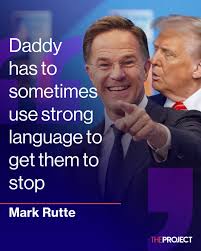
The big disappointment has been the slow, meek reaction of Europe to the above, the low point of which was the reference to Trump as ‘daddy’ by Mark Rutte, former Dutch prime minister and now NATO chief. Indeed, 2025 might also be described as Europe’s ‘neo-con’ year, when its leaders were mugged by the reality of strategic competition, and more specifically the mendacity of Vladimir Putin and the election of Donald Trump.

There are several strands to this. The first is the shock at the delivery of the message that America (the ‘White House’) is in effect dis-engaging from Europe and shattering the idea of the ‘West’. From the shambles of the Munich Security Conference to the communication of the National Security Strategy, there is still a shock felt across the continent to the change of direction that the White House is pursuing. A notable sign of this is how, in the post-Brexit world, Britain has become much closer to Europe on security and defence and is in the lead on strategy around Ukraine. A consequence of America’s ‘flip’ of this reaction, which I feel is not yet appreciated in the US, will be a much reduced willingness to buy American goods and services.

In practical terms, the new geopolitical climate is revolutionising defence spending in Europe. The Baltic and Nordic states, as well as Poland, are all increasing defence budgets amidst warnings of a future confrontation with Russia. Most notably, Germany has cast aside its debt brake to target Eur 1trn in extra defence spending in the next decade, and the EU’s Eur 150bn loan facility has closed its loan round. Europe is now in effect in a three year scramble to build defensive infrastructure, and there is also growing talk of more offensive (i.e. cyber) actions against Russia.

Beyond the manner of the delivery of US diplomacy there is a mixture of anger and confusion in Europe at the stance of the White House. One is the apparent untethered nature of US diplomats like Steve Witkoff, his alleged closeness to Russia and the peace deal proposals he has concocted. This has caused concern because of the time, energy and political capital that European leaders have had to spend (with Ukraine) counteracting the US/Russia proposal. 

A second source of ire is the apparent support by the White House for far-right parties in Europe – the AfD, Reform in the UK and the Rassemblement in France – all of whom have proven ties to Russia, all of whom hold 30% or more in opinion polls and all of whom are in direct opposition to governments in the three largest European countries.

It is also worth noting that the tension provoked by the White House has not brought Europe any closer to China – the perceived dumping of Chinese goods (electric vehicles for example) in Europe, and China’s support of Russia’s war in Ukraine are two major sticking points.

One relative bright spot on the horizon is that growth is beginning to pick up across Europe – bank lending is expanding, unemployment already low and lead indicators perking up. In that context it is likely that growth surprises to the upside next year. One great challenge, which has dropped from the policy limelight in the context of the focus on defence, is the Savings and Investment Union (old Capital Markets Union), and this is an essential part of the policy landscape in the coming year.

Looking ahead, across individual countries, there is now a consensus view in the UK that Sir Keir Starmer could be toppled as prime minister by his Labour colleagues (Wes Streeting is favourite to take over, and another Blairite Yvette Cooper, cannot be ruled out either). A recent YouGov poll showed Starmer to be the most unpopular prime minister in the past fifty years, and Rachel Reeves is the most unpopular Chancellor. The only European leader who is further adrift in the opinion polls than Starmer is Emmanuel Macron.

Macron, it seems, has given up, and in France the political debate bypasses him and is steadfastly focused on the next presidential election which should take place in May 2027 though it is not impossible that an attempt is made to unseat him in 2026. The election to watch is in Hungary, where the pro-Russia/anti EU prime minister Viktor Orban is behind in the polls to Peter Magyar’s TISZA party. A return of Hungary to the pro-EU ‘fold’ would be welcome and would constitute a blow to Russia.

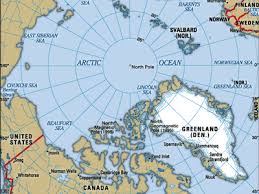
To that end, and in the context of the damp squib that was the last EU summit, the litmus test for Europe in 2026 is to stop reacting to the disorder that others sow, but to build a positive narrative around the EU, and critically to riposte in a meaningful way against its adversaries.  Greenland might be an early test.

Have a great week (and new year) ahead, Mike 

Guns and Roses

It looks like I will have to burn all the Biggles books I collected as a child and jettison any antique copies of ‘Eagle’ comic books, because there are reports that Britain and Germany are about to sign a defence co-operation agreement, ending a long stretch of history where they have been on opposing sides. Indeed, the entire literature of what George Orwell described in his essay ‘Boys’ Weeklies’ could now be caught offside.

For instance, the work of John Buchan, once Governor General of Canada, and well known as the author of the ‘Thirty Nine Steps’, may be especially dislodged by an agreement that casts Germany and Britain as best geopolitical friends, as many of his books, like those of Captain W.E. John, depend on the role of the indispensable British hero seeing off his German nemesis. An innovation on the part of Buchan, was the glamorous female mastermind, Hilda von Einem, who vies with the handsome Irish intriguer Dominic Medina (please do read ‘Greenmantle’ and the ‘Three Hostages’) as the foil to Richard Hannay.  

One of the significant moments of history when Britain and Germany (Prussia then) found themselves on the same side was the Battle of Waterloo, one of the great contests, where during a pounding from French guns Wellington’s officers asked for orders he replied, ‘there are no orders, except to stand firm to the last man’.

One of the survivors was Henry Percy, aide de camp to Wellington, who after the Battle had to row halfway across the Channel with the news of the Duke’s victory, as an absence of wind had halted his sloop. On arriving in England he found that many (in the City) already knew of the victory owing, allegedly, to a network of agents assembled by Nathaniel Rothschild who is said to have made a fortune on the event and thereby spawned the phrase ‘buy on the sound of cannons’. It is a useful illustration of the roles of communications (social media today) and finance in war.

Indeed, part of the reason that Germany and Britain are moving closer together on defence (France is even closer to each one militarily) is finance. Gone are the days when London and Berlin could afford to spend 9% of GDP building great battleships in the lead-up to the First World War (Margaret MacMillan’s ‘The War That Ended Peace’ is worth a read), and now they must do with more meagre ambitions and newfound collaborations.

In this context, the recent NATO Summit was a watershed as it signalled a headline commitment to 5% defence spending across NATO countries (as a % of GDP), something that would have been unthinkable four years ago.

In Europe, there is a sense that some of the defence spending pledges amount to a ‘fudge’, and it is very clear that defence spending as a % of GDP does not translate into defence readiness. Of the European members of NATO, the UK, Greece, France, Poland, the Nordics and Baltics are the most defence ready, and some of them are already spending ambitiously. For example, Poland is set to reach a level of defence spending of 4% of GDP and has already struck a strategic military procurement partnership with South Korea.

On the other hand, countries like Italy and especially Spain have been castigated for their reluctance to spend. Italy has talked of including investment in a bridge from the mainland to Sicily as defence infrastructure and in the case of Spain, it has apparently tried to ‘kitchen sink’ other tangential forms of spending into the defence segment.

Still, the broad 5% target is a gamechanger, and is comprised of two parts – close to 3.5% on defence spending and then 1.5% on areas like cyber security and AI driven defence capabilities. Momentum will be boosted by the EU’s Eur 150 bn lending facility for defence procurement, up to Eur 3bn in loans from the EIB (European Investment Bank), and the German government’s significant augmentation of its defence budget. Still, this fiscal support leaves an enormous shortfall that will likely require capital from the private sector.

In this respect, we are at the cross-over of geopolitical forces. NATO as an operating construct has been thrown into doubt by Donald Trump and the actions of his defence policymakers (the latest act being to deprive Ukraine of defensive missiles). As such, Article 5 no longer seems as watertight as it did in the early 2000’s (it has only been invoked once, in September 2011, by Nick Burns, then US Ambassador to NATO). The impression many in Brussels have is that Europe will be left to defend itself from Russian aggression – there is now a parlour game amongst the various European intelligence agencies to estimate when a Russian incursion might occur.

As a result, the EU will become a much bigger player in defence procurement (see the recent White Paper here), Europe’s defence centric innovation economy will grow rapidly, and ‘war bonds’ will become a new asset for investors. Europe’s main threat is most obviously Russia, in addition to cyberwar from further afield. The danger in the long-term is that it finds itself as the last bastion of democracy, amidst a range of large, autocratic countries.

To return to Germany and Britain, anyone who reads the MacMillan books can’t escape the recognition that the arms race between Germany and Britain over one hundred years ago, is now being repeated by the US and China. Ultimately Europe may count itself lucky to stay out of this context.

Have a great week ahead,

Mike

Full Mettle Jacket

A week ago I started reading Admiral Jim Stavridis and Elliott Akerman’s second book, ‘2054’, which like the first (‘2034’) is a work of fiction designed to tell us about how our own world is evolving and the risks that will confront us. Without spoiling the plot, ‘2054’ demonstrates how new technologies can be deployed in nefarious ways, with the goal of turning the tide of geopolitics. However, as much as I enjoy the work of the Stavridis/Akerman team, my reaction to ‘2054’ was much the same as ‘2034’ (‘2034 – are we already there?’), which is that it has been rendered out of date by bizarre events in the real, political world

The detonation of over seventy years of American diplomacy and soft power by the various speeches and deeds of the Trump administration is a fin de siècle moment, that has drawn comment across the diplomatic world (the most pertinent was that of the Singaporean defence minister who described how he saw the USA moving from a force for ‘moral legitimacy’ to a landlord seeking rent’).

The worry now is that the US will treat its allies like enemies and its foes like friends. There was much consternation in Europe, but as this note has argued so many times, very few European countries have faced up to the challenges of the post-globalized world (Mario Draghi’s speech to the EU parliament last week put it very well…’do something!’).

There is now a furore over Eur 500 bn defence bonds, joint nuclear shields and defence equipment shopping lists. But, a more urgent task than buying fighter jets is the need for Europe to have a coherent security strategy. In a weekend where many are anticipating the results of the German election, a neglected development was the collapse of government formation talks between Austria’s centre-right OVP and the far-right FPO.

Some weeks ago, the parties had agreed on an economic programme, but could not settle on  a common foreign policy, a critical stumbling point was oversight of the intelligence services (the OVP wanted to be in charge). This is a sensitive topic given that the FPO has a soft spot for the Kremlin, and specifically the fact that in 2018 the Herbert Kickl (FPO leader), when he was Austria’s interior minister, ordered an investigation into the country’s security services. Today, few of its EU peers share intelligence with Austria.

Reflecting that, the immediate challenge from Russia is infiltration, sabotage and manipulation across Europe (the Gerasimov doctrine and David Kilcullen’s work on Russian/Chinese tactics are both worth a read here ‘From Great War to Total War’). The EU has done relatively little to push back on this interference, and now has an urgent security (as well as defence) challenge.

This could take various forms.

The first is to penalise EU states that systematically go against the grain of the policies, values and interests of the Union. Hungary is the main offender here and whilst some EU funds have been withheld from Viktor Orban, the EU has in general failed to confront him. In the recent past there has been talk in the European parliament of excluding Hungary from the EU, which is technically difficult, but is a necessary part of a more ideologically consistent Europe, and one where bad actors face a penalty for their actions.

A second strand is to have much greater oversight over the movement of Russians in Europe, and of their capital. Vienna, Milan and the south of France, not to mention parts of Switzerland, are popular destinations for wealthy Russians and some European capitals are saturated with Russian money (Mark Hollingsworth’s book ‘Londongrad’ is instructive here as is Oliver Bullough’s ‘Butler to the World’). To emphasise the point, Russian interference in UK and lately Irish politics has not been aggressively countered, and my fear is that this is much worse in other countries like Germany.

Instead of clamouring to buy rocket launchers, Europe’s political classes have a lot to do domestically to shut the door on Russian interference in European affairs.

Then, on a more structural level, there is scope for much greater intelligence sharing across governments and joint task-forces on organised crime (gangs are a favourite extension of the Russian state). From the point of hardware, there is a need for increased joint use of satellites and electronic warfare collaboration.

The distinction between security and defence is an important and urgent one and a reminder of how complacent European governments have been. Whilst defence capabilities will take time to build up, the measures to be enacted in the security domain are less challenging to operationalise, but constitute a real test of European governments’ mettle.

Have a great week ahead,

Mike

Cold War to Total War

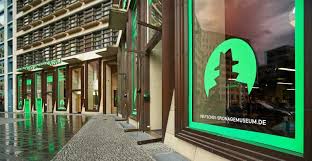
As I stepped out on the street in Kreuzberg (Berlin) on Monday, all was calm, with little to worry about save the choice of the excellent local food, loud music, beer and football (the Dutch invasion was just starting ahead of Tuesday’s match against Austria). Kreuzberg was of course once on the frontier of West Berlin, looking across to East Berlin and will have featured in the high stakes espionage between the West and East (notably so when Markus Wolf ran the Stasi).

Having once run into Mr Wolf, I was pondering what Berlin was like at the time, and we should not be surprised that it is still regarded as ‘the city of spies’, and that it continues to feature in espionage literature.

Given that context, it was no surprise to learn that Germany continues to be targeted by foreign spies. Over a week ago, German Interior minister Nancy Faeser launched the annual threat assessment of the German domestic intelligence service – which pinpoints Russia as well as China and Iran as the authors of multi-faceted attacks (disinformation, cyber-attacks, manipulation of people flows and racial tensions) on Germany, not to mention a recent spate of assassination attempts in Germany by Russia.  

Of great concern is the range of threats to Germany (the same is true in most other countries), from Russian operatives defenestrating enemies of Moscow, to plots to overthrow the German state by the far-right to Islamic terror (there are over 27000 known radicalised Islamists in Germany, and the threat of Islamic terror has been growing since the October 7 attack).

The tactics that the enemies of Europe (and democracy) are deploying are likely very different to those crafted by the likes of Markus Wolf. Espionage during the Cold War was motivated by a need for information, with plenty of proxy battles for influence taking place around the rest of the world.

Today, the aim seems to be outright destabilisation and provocation – from the multiple attacks on arms production facilities across Europe to an epidemic of coups d’état across Africa, to the waves of disinformation on our social media. There is also the impression that the US is being tied down in multiple conflicts around the world.

Today, the eyes of the world are on Gaza and Ukraine – and we are bracing for a new Trump Presidency – perfect conditions to ramp up outright destabilization and provocation. The issue then, is what the EU and its member countries need to do.

The first is to confront the problem and bring it into the open. Nancy Faeser’s report is just one of a growing number from security services across Europe – in May the head of Britain’s GCHQ outlined a similar, urgent threat landscape. The second will be for governments to give security services larger budgets (a Trump presidency might help), and potentially, to allow them a more flexible modus operandi.

The new development relates to the new EU commission. Following last week’s meeting of heads of state, it now looks likely that Ursula von der Leyen will continue as president – and with Katja Kallas as foreign representative, the tone of the next commission will tilt from ‘Green Deal’ to ‘security’ and ‘strategic autonomy’. Defence infrastructure and innovation will become a key trend in the private investment industry (private equity and venture). Von der Leyen has already flagged that enormous amounts of capital will be required to support this, and given the failure of the EU to build out its capital markets union (CMU) this will be an immense challenge.

One element that might help, a little, is von der Leyen’s proposal to create an EU defence commissioner. If it does happen, it will run into two of the common problems that beset bright ideas in Brussels.

First the role of defence commissioner will need to be based on the reallocation of powers from other commissioners – some defence innovation and military logistics responsibilities from Thierry Breton’s department, transport and infrastructure from the Transport commissioner (Valean) and various other responsibilities from the foreign representative.

The second issue is that it might take some power from national defence ministries, but there is also a strong argument that they need to be better coordinated.

In that sense the new EU defence commissioner might reflect changes that John Healey (currently the shadow defence minister in the UK) wants to usher in – an office for value for money in the Ministry of Defence and a restructured defence command.

The EU defence commissioner might also start by coordinating the purchase and use of heavy duty equipment, such as large transport aircraft, and driving the integrated use of new technologies across countries. Another potential task is to find means of better coordinating European security agencies and militaries, so that their collective, offensive capability becomes stronger.

It is a depressing, though necessary use of resources, and a sad sign of our times as globalization fades away.

Have a great week ahead,

Mike