Watching and Waiting

N’interrompez jamais un ennemi qui est en train de faire une erreur.

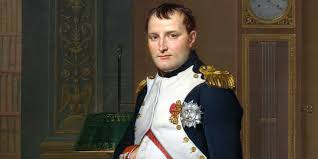
During the Battle of Austerlitz, Napoleon quipped to one of his commanders (General Soult) that one should never interrupt an enemy when he is making a mistake. Austerlitz was one of Napoleon’s tactical triumphs, but some seven years late the Emperor gathered one of the largest armies ever assembled and crossed Russia. The Russians burnt Moscow, harassed the French army and then patiently waited for the cold weather to cruelly teach Napoleon the error of his way (Sylvain Tesson’s book ‘Berezina’ offers a lively account of the retreat from Russia).

In a similar vein, as another modern-day, would-be emperor careens from financial calamity to geopolitical catastrophe, my sense is that the world beyond America, is best served by waiting and watching.

In the next two months the economic damage to America from the tariff campaign will become clear. The corporate earnings season has just started – some of the large banks have done well from the trading volumes created by market volatility – but as the focus turns to technology and other export focused firms, we can expect to see significant drops in earnings, a development that will make the still high valuation multiples for the US stock market hard to sustain. Relatedly, while investment banks are profiting from volatility, most of them are reporting that capital markets activity (public offerings, mergers and funding rounds for private equity firms) have stopped dead.

This is a shock for Wall St. With president Trump having installed a market trader as commerce secretary, a hedge fund manager as Treasury, a private equity titan in the defence department, and so on, capitalists might well have thought that the White House was on their side, but the annihilation of up to 8 trillion dollars in market capitalisation has proven them wrong. There is I imagine, a limit to Wall St’s patience and the pushback on policy will grow.

As it does, the hard (as opposed to ‘soft’ survey) data is likely to worsen dramatically, and the US will enter into an economic breakdown. At the start of this year I had sifted through the IMF GDP forecasts for 2025 and 2026, where uniquely they expected nearly all of the world’s economies to register positive growth. From this starting point, a global recession was a very low probability, but the Trump administration has blundered into one.

Now, policy makers in the US and abroad are realising that watching and waiting is the best way to entice Trump away from his tariff policy. There were signs of this on Wednesday when the Federal Reserve chair declared that tariffs would augment inflation and make it much harder for the central bank to cut rates. This statement represents quite the departure for a monetary authority that has greeted every flicker of economic trouble with lashings of cheap money. Mr Powell knows very well that it is not the job of a central bank to fix the mistakes of an errant policymaker, and very likely that a short, sharp market shock now might deter a great fiasco (and the credibility of the dollar) later.

In contrast, other central banks, who are unburdened by any sense of conflict of interest with Mr Trump, can feel much more free to cut rates into a coming recession, as the ECB did on Thursday. In that context, we may see the dollar strengthen in coming weeks, and much of the stress of the White House policies on the economy, transferred to the corporate bond market.

Then a key, patient player in this unfolding drama is China which, whilst it has deep economic faultlines of its own, is politically and socially coherent enough to weather the onslaught from Washington. Like the Russians who took on Napoleon, China’s strategy is partly one of endurance, partly ‘guerrilla’ (think of rare earth export controls, supply chain manipulation leading to shortages of goods in the US) and a patient attitude to the market turmoil that is starting to undermine the financial credibility of the USA.

Europe may follow suit. Giorgia Meloni spent Thursday in the US with president Trump and then raced back to Rome to host JD Vance. Her visit was useful in terms of Italian and EU diplomacy, but the EC is carefully signalling to Washington that any negotiations on trade will have to be done through Brussels alone, which as the Brexit process revealed, is a hard defence to breech.

Napoleon left Moscow in the middle of October 1812, eventually to creep into Paris just before Christmas. His army was devastated, only 100,000 or so men from an initial force of 600,000 survived. Donald Trump is no Napoleon. In two months’ time the US economy may well be in a state of disarray, consumer confidence and confidence in the president will likely have plummeted further, and the world will be watching and waiting for his capitulation.

Have a great week ahead

Mike
Did no-one see it coming?

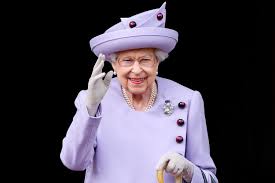
In November 2008, in the darkest hour of the global financial crisis, Queen Elizabeth II asked an audience at the London School of Economics ‘Why did no one see it coming”. We might ask the same question today in respect of Donald Trump’s tariff war, where he has diminished the things that he was reputed to hold dear – the economy, the stock market and the dollar.

One disturbing template that might offer insight into the path that the American economy takes is Brexit. As noted by the current prime minister of Canada, Brexit was not the solution to the problems that Britain faces. Certainly, the disengagement of the US from the world trade system is becoming as soap operatic and sometimes ludicrous as Brexit was.

An even more pertinent example might be Britain at the turn of the 19th century when there was a palpable sense that the might of its empire was peaking. At the time tariffs and trade were widely debated, and leading politicians like Joseph Chamberlain proposed the idea of an ‘imperial preference’, a lower tariff on trade with its colonies, to create a trading zone that would buffer the rise of the US and Germany.

To a certain extent, tariffs and trade became the issue of the day, but in the 1906 general election the public voted overwhelmingly for liberal, open trade (less restrictive tariffs) candidates. This I suspect was also the intention of those who supported Donald Trump in November last – keep the economy and markets strong, whilst evening up the status quo (a little). That tariff rates set by the US (and China) are at levels only last seen in the 1920’s completes the shock, and rhymes with history.

One reason tariffs were a popular policy tool one hundred years ago is that the fiscal side of the economy was not well developed (only a small proportion of Americans paid tax) and, in some cases, central banks did not exist. Today, tax systems are well developed and as small, open economies show, they are the best mechanism to reduce inequality, and to entice investment, both stated objectives of the Treasury secretary.

This particular market crisis is interesting because it is nearly entirely man-made. Turkey has taken a similar path in recent years, all but eviscerating its bond market and currency, but these are inconsequential compared to the depth of US markets. Whilst the president has stepped nimbly and profitably (some say) away from the financial brink, he still risks contagion of his actions in a number of respects.

Two such risks loom on the horizon, an economic war with China and a crisis of credibility in US financial assets.

We are now led to believe that ‘it was China all along’, but it would have been easier to tackle China with the support of America’s former allies in Canada, Japan, the UK and Europe.

For its part, China has plenty of tools to respond to the US with – it can allow its currency to weaken further and through supply chain disruption can inflict higher consumer prices, shortages of goods and lower (Chinese) demand on the US. Informal boycotts of American goods, investigations of US service firms and rare earth restrictions are just a few other tools at China’s disposal.

Should an economic war between the US and China materialise, my sense is that a supportive response from the Federal Reserve has been made less likely by Wednesday’s tariff capitulation by the White House, which demonstrates how arbitrary policy is under this administration.

In the longer-run, the actions of the Trump team could manifest themselves in a capital crisis in the context of the way they have undermined confidence in the US and by extension its financial system. What the likes of Peter Navarro seem not to have grasped is that the quid pro quo of America’s trade deficit is its enormous financial power – the role of the dollar and Treasuries as lynchpins of the international financial system, the dominance of US financial systems and its integral role in the fabric of capital markets, and the capital that overseas investors provide them.

With Mr Trump behaving in the way that some might caricature as ‘emerging market’, If we apply an emerging market stock market valuation rating to US stocks, the SPX index would be half its current size for instance. Equally, the mid-week selloff in Treasuries which was most likely the result of hedge funds unwinding positions, but the poor performance of bonds underlines the sceptical view that markets are starting to take on the administration.

In this context, we may be at the beginning of a great unwind of American financial power.

Have a great week ahead,

Mike 

Another Tea Party?

The Boston Tea Party is an early example of how a trade dispute can reshape an economy (Boston) and foment political change. It is iconic enough that the first presidency of Donald Trump was prefigured by the rise of the Tea Party as a disruptive force in Republican politics.

With the presidential election not far off now, tariffs form the spear-end of Donald Trump’s economic strategy, potentially because he can implement them unilaterally (without the approval of the Senate). In addition, many of his acolytes, from Robert Lighthizer to Peter Navarro, are ‘trade’ obsessed, and have recently published books like ‘No Trade is Free‘ to underline the ways in which they would re-order the international trade system.

In addition, other members of the Trump entourage such as Robert O’Brien, the National Security Adviser (2019-21) has in the July edition of Foreign Affairs Journal invoked the idea that American can bring peace to a disordered world through ‘strength’. In this vision, strength comes in the form of 60% tariffs on Chinese goods and export controls, a message that has repeatedly been emphasised by Trump himself.

In that context, a second Trump presidency could begin with a trade war, and a verbal assault on the currencies of ostensible allies that have weakened in recent years, such as the yen. American consumers and potentially the bond market might pay the price of tariffs (we wrote last week that Trump wanted to fund the development of a sovereign wealth fund with revenues from tariffs).

Trade wars are generally not successful, and while Trump may have in mind America’s trade spats with Japan (1987), the weight of past trade disputes going back to the Smooth Hawley Act suggest that there are better ways to guard American economic power. China could respond with measures that cripple supply chains for at least a couple of years. In this scenario, a trade confrontation between the US and China would decisively shatter the axis of globalisation as we know it, and finally render the WTO (World Trade Organisation) obsolete.

A US-China trade war might have many other consequences.

One might be the rise of populous south Asian (and southeast Asian) from India to Bangladesh to Pakistan, Indonesia, Thailand and Vietnam, with Singapore as their organising locus. Many of these countries are urbanising and rolling out infrastructure, most of them need but distrust China, and in most cases aspire to closer commercial ties to the USA. Tariffs on China by the USA will accelerate supply chain de-risking by Western multinationals towards these countries, though this could well complicate their relationship with China.  

A second consideration is Europe. The EU has been caught by surprise by the consequences of several Biden administration policies – the Inflation Reduction Act and the CHIPS Act – which illustrates that US international trade policy is usually made with a view to domestic politics. A second Trump presidency should be no surprise to Brussels, and there is a small but important team of officials working on a policy response to a potential trade war on Europe by Trump.  Europe’s trump card may lie in its role as a partner with the US against China. It will be difficult for Washington to reshape trade relations with China, Europe and potentially Japan by taking each one on. Stymieing China is better done in collaboration with Japan and Europe, and Trump should really see the constraints of the policy situation that faces him.

A second Trump presidency will be different to the first in the sense that he has had time to prepare for it, and crucially, his supporters have had four years to concoct a policy strategy (‘2025’ seems to have dropped out of headlines). In the same way, a Harris presidency comes with deeper reserves of policy experts, and to a large sense on the international trade and economic outlook, the Harris case represents ‘more of the same’ in terms of the techn0-strategic economic policy that is currently pursued by the White House.

An idealised, and though I like the idea a lot, too lofty rendition of this policy is Walter Russell’s Mead’s September Foreign Affairs essay entitled ‘The Return of Hamiltonian Statecraft’ which argues for the very un-Trumpian notion of ‘enlightened patriotism’.

In this context, a Harris White House would use trade and investment policy to laser focus on America’s race with China for global supremacy. Driving Chinese economic and investment activity further inwards might be one goal, and ironically anything Washington can do to make Chinese public life more closed and repressive, the better (because it curbs innovation and wealth creation).

At the same time, the US and Europe, would both pursue parallel strategies of ‘strategic autonomy’ or what Trump refers to as ‘strategic national manufacturing’ focused on sectors like defence, new computing power (quantum, AI, data storage and management), batteries and new power sources and revolutionary medicine. Europe’s challenge is to find a way of reducing long-term energy costs.

Kamala Harris, who has trialled a few incoherent policies (taxes on unrealised capital gains, price controls) is likely to be more constrained in her fiscal policy – because her government is likely to instinctively focus more on tax and spending changes, for which she will need the help of the Senate (which in turn could tilt towards the Republicans). As such her fiscal policy will focus on not increasing the national debt, and like many other governments, encouraging the private sector to work with government to build out strategic technologies.

I am so far surprised that markets do not seem to price in uncertainty over trade policy, possibly because they are more focused on falling interest rates in the US, Europe and China. However, the next month will start to reveal how seriously financial markets take economic rhetoric of each of the presidential candidates.