A Land Full of Vibrancy and Hope

Avid readers of the ‘Levelling’ book will know that some years ago, I wrote

Latin America remains part of the satellite region of the US pole. Sadly, it has been overlooked by Washington. The prime example of this neglect is Venezuela. The country is failing and in the grip of an underreported humanitarian crisis. Economically, this crisis may lead China to take a deeper role in Venezuela and in its oil production. Diplomatically, the lack of a comprehensive reaction from Washington brings to mind an article entitled “The Forgotten Relationship” that Jorge Castaneda published some years ago in Foreign Affairs in which he bemoaned the deteriorating relationship between Latin America and the United States.

Finally, my pleas are heard, and the White House is organizing a rescue (by gunboat) of Venezuela, and possibly much of Latin America.

While it is hard to know how the new engagement between the Trump administration and the fifth largest repository of oil reserves is going to play out, this administration is different to many of its predecessors in taking an active interest in Latin America – note the partisanship with regard to Brazil, generally good relations with Mexico, a chumminess with Milei and the likely support for the new president of Chile.

Despite very active backchannelling between the US military and the Venezuelan army the course that events might take is unclear, and laden with risks – the chaos of popular unrest in Venezuela, the risks that criminals in Venezuela and surrounding countries become involved (and strike in the US), or indeed the risk that other actors or countries use any regime change in Caracas to hurt the US, cannot be ruled out. Another risk is that some of Venezuela’s allies – Iran, China and Russia – become obstreperous, and dig in with Maduro and his cohorts, or that they use any change of government in Caracas to further their own ends. It is worth noting that only last week China launched a policy document entitled ‘Latin America and the Caribbean: A Land Full of Vibrancy and Hope’.

This is a significant risk of the Trump administration’s fetish for a spheres of influence motivated foreign policy. In the recent school boyish ‘National Security Strategy’, which has caused great anguish in the diplomatic parlors of Europe, the document refers to the ‘Trump Corollary’ to the Monroe Doctrine.

For context, the Monroe Doctrine was likely the first coherent, muscular expression of American foreign policy – at the time it was aimed at keeping the Spanish and other pesky European powers out of Central and Southern America. Indeed, the dithering by the large European powers (notably France) over the long running Mercosur trade agreement, suggests that the European dare not go back to Latin America.

The NSS document gives a good deal of attention to Latin America, and this tilt will have the active support of Secretary of State Marco Rubio. Like it or not, Latin America is now in Washington’s sphere.

However, more generally, the establishment of a spheres of influence mindset in international relations may give the likes of Russia and China the sense that they may do as they wish in their own spheres of influence. In the same way that the invasion of Iraq, on the basis of flimsy evidence of weapons of mass destruction, apparently led Vladimir Putin to believe that the West was no longer respecting the rules of the international order, the ‘Trump Corollary’ strategy is a green light for bad policy actors.

That would of course be bad news for Taiwan, and perhaps Vietnam, the Philippines and Japan, who all to some extent count on the notion of a US security guarantee for Taiwan. It may also prove confusing for the US military which, when not loitering off the coasts of Cuba and Venezuela, is organized around the concept of a grand battle in the South China Sea.

Beyond the obvious implications for Ukraine, there are plenty of other open questions – will China take the ‘Stans’ from Russia, and who gets Africa? Russian mercenaries have forced France out of at least seven countries and China has a hand in nearly every African economy. The cancellation of US AID is already having deadly consequences for human and animal life.

A world of spheres of influence might conjure the diplomacy of the Great Game, but it would leave many countries worse off, and the nondemocracies of the world free to abuse their military and economic power.

A forlorn reminder of this was the jailing of Jimmy Lai, the Hong Kong democracy activist last week. Few Western governments were audible in protesting this act, save Britain, which used to count Hong Kong as part of its sphere of influence (Lai has British citizenship). The silent snuffling out of democracy in Hong Kong is the act that brought the curtain down on globalization in my view. An American spheres of influence foreign policy will sow further chaos. 

Have a great Christmas week ahead, Mike (there won’t be a note next week, we return on the 4th January)

Change of Guard

I was at the Knicks game (against Orlando Magic) at Madison Square Garden on Wednesday night, which offered a glimpse of iconic New York, with Spike Lee courtside to underline the fact.

Madison Square Garden was probably not the place to look for a reaction to Zohran Mamdani’s mayoral election victory, though across Manhattan I found many people exercised about the event (as well as the recent Epstein release).

Having last been in New York only two months ago, it has certainly not become less expensive, and to channel last week’s note (‘Pear-shaped’) on the K-Shaped economy that described how the holders of capital are doing well and labour is doing poorly, Mamdani is the beneficiary of this Marxian contrast, and he has the rhetoric to go with it.

Mamdani had the right level of charisma, decent organization and the perfect context. He may struggle as mayor, notably in terms of his authority with the police and emergency services, his economic acumen and moreover, in curbing the big picture macro issues that are beyond his control, as well as a hostile federal government.

Yet, for all the attention that his election has garnered, I do not think he is the only story in American politics (Seattle’s mayoral election also deserves attention for example), nor do I think he is the answer to the Democrats’ losing ways, and there are a number of other events to consider.

The first is the death of Dick Cheney, a day before Mamdani was elected. Cheney, or ‘Angler’ to give him his secret service codename (there is a good book on Cheney of that title, by Barton Gellman), is now an important reference point in American public life.

Cheney embodied the idea of someone who served the public and private sectors (almost at the same time), and who spent his life embedded in the industrial-defence-political complex. He had served several Republican presidents as a foreign policy and defence hawk, and when George W Bush asked him to lead the search for a vice-presidential candidate, Cheney could find no-one better than himself, and thus spent eight years as ‘W’ Bush’s vice president, with the suspicion being that it was he who called the shots (literally).

At the time, Cheney was regarded as a right-wing hawk, but as American politics changed, he and his courageous daughter Liz (also generally right wing) were two of very few Republicans who had consistently stood up to, and repeatedly condemned Donald Trump. Amongst other policies, Cheney as a Cold War warrior must have found it very difficult to understand and stomach the approach of the current White House to Russia.

That Cheney ended his life as a critic of Trump is a sign of how far the MAGA crowd have taken the Republican party. In itself, that should not mean that the Democrats fight the next elections from the far-left, as the result in New York hinted. 

Indeed, two interesting results, the victories of Mikie Sherrill (now New Jersey’s first female Democratic governor) and Abigail Spanberger (Virginia’s first female governor) suggest that the Democrats can do well in the centre, with credible candidates. Both are role models – Sherrill is a Naval Academy graduate, flew helicopters and is the mother of four children, while Spanberger has three children and worked as a CIA agent.

In the current context, it is encouraging to see these very capable female candidates succeed, and even Marjorie Taylor Greene is displaying a form of reckless courage in veering away from the White House script.

Whilst the Democrat party is in disarray and dispute (following the vote to end the government shutdown), it is in need of a change of guard, notably so given the announcement that Nancy Pelosi will retire from public life. In that respect, serious candidates of the calibre of Sherrill will note three developments that might encourage the sense that a ‘change of guard’ is in the offing.

First, the president’s entanglement with Jeffrey Epstein is sapping his patience and political capital. Secondly, national security will become a more real issue as it is very clear now that China and Russia have only malign intentions towards the West, despite the fantasies of pseudo-Kissingerians in Washington. Third, and most importantly, the direction and timbre of the economy is the key political issue, with affordability at the top of the docket.

Have a great week ahead, Mike 
The UnRavelling Rule

Amidst the slew of corporate earnings and macro-economic data released in the past week, two developments struck me, both of which give the impression of the tectonics of geopolitics pushing against each other.

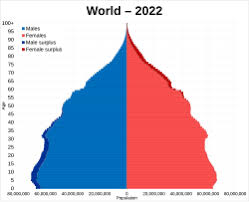
First, in the past year the number of children born in the US has caught up with the EU, at close to 3.6 million babies each (though the EU has a much bigger population). For comparison, Nigeria – whose population is less than half that of the EU – welcomed 7 million babies last year.

Second, in recent months the trend rate of consumer inflation in Japan has surpassed that of the US for the first time in decades, signalling a long awaiting shift in the Japanese economy that has been accompanied by a rise in long-run bond yields (a potentially critical development for the international financial system).

These two examples will give a sense of the rise and fall of nations, that is accelerating since the fall of globalisation (which I date to the effective end of democracy in Hong Kong). This rise and fall – think of countries like football clubs – is also associated by an unravelling of the world order. For example, in a recent note ‘Atlas Shrugging’, we detailed how the independence of the Federal Reserve was being undercut by the White House, and the attempt to remove Lisa Cook from the Fed’s rate setting committee confirms that Donald Trump wants to direct the Fed as an engine of his economic policy (as a giant bond buying machine I suspect).

The independent Fed has been one of the pillars of the globalised world system of the past forty years – and the snuffing out of its independence heralds the unravelling of that system. In the same way that the period of globalisation was characterised by low inflation and the absence of major wars – the presence of inflation and conflict today, is a sign that we are moving into ‘something else’.

In that context I find myself playing a mind game which I call the ‘Unravelling Rule’. Very simply, it is to identity the principal factors that have supported globalisation and that are positive outcomes of it and identify if and how they are unravelling. The crisis of democracy is one such trend (the Economist Intelligence Unit’s Democracy Index has fallen to its lowest level in twenty years).

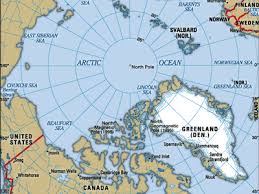
Other certainties are also unravelling – notably the assumption that the USA is an unflinching ally of Europe and many Asian countries, and the possibility that it could even actively undermine them. In this regard, the fact that the Danish government had to summon the US ambassador over the conduct of three Americans in Greenland is troubling and reflects very badly on the White House.

The danger with the ‘Unravelling Rule’ is that in a chaotic world, it is tempting to see unravelling everywhere. It is more obvious though in the case of world institutions – the United Nations, IMF, World Bank and World Trade Organisation, who are frequently ignored by the very large economies, and sometimes badly undermined by them (the WTO is an example). These institutions need to be recast, most likely for the benefit of the populous emerging economies.

On a more speculative basis, there are at least four trends that have marked the past forty years, and that are now worth watching for a change of course.

The first is poverty. It is an underestimated facet of globalisation that it helped a billion people rise out of poverty, according to the World Bank. My concern is that in a world where the major economies (2/3 of the world’s GDP) have debt to GDP ratios above 100%, economic precarity may return, and this time to developed countries. We have already noted (The Road to Serfdom) the extremely high level of inequality in the US and broad economic vulnerability. In Europe, British and French policymakers conjured the spectre of IMF intervention in their economies (it would have to be a new, bigger IMF – which under this White House is unlikely). In that respect the growing disparity in incomes in the UK regions (relative to London) bears watching.

A second is corporate governance and the rule of law as it extends to international business. We have not seen a rule of law or broad governance crisis in sometime, but the rise of decentralised finance (i.e. crypto), the new idiom of the ‘art of the deal’ in the US, and the geopolitically tinged trade relationships that China is developing worldwide. As a global ‘way of doing things’ gives way to more regional or localised approaches, the watertightness of contracts and the oversight of business relationships is something that businesses will need to consider more carefully.

A true litmus test of the ‘Unravelling’ hypothesis will be the role of US multinationals in the world economy. Described as the ‘B-52s’ of globalisation in the late 1990’s by a prominent trade economist, they have shaped the world economy and come to dominate financial markets. I have lost count of the number of charts circulating that declare that Nvidia for example is worth more than the major European stock markets together. Whilst cash rich, they now face a number of challenges – the difficulty of selling into China as it broadens its technological self-sufficiency, and the collateral damage to overseas sales from the Trump trade and foreign policies, and the rise of more specific local tastes in markets like Africa and India.

A final unravelling, and one I would welcome, is for the EU to unleash its nasty side. In the past forty years the successes of the EU – enlargement, holding the euro together and the creation of a European identity (based on borderless travel the Erasmus programme for example). The likes of Poland and Estonia have benefitted greatly from this, and it is fair to say that the UK would be better off ‘in’ than ‘out’. But the emphasis has been largely on soft rather than hard power, and in a ‘harder’ world, the EU will need to take a tougher stance in terms of how it projects itself. 

There are many challenges but three in particular are the potential exclusion of existing and prospective member states like Hungary and Serbia who habitually refuse to act in accordance with EU values and interests, a specifically more aggressive approach to countering sabotage by Russia (and at times China and Iran) in Europe, and then a retaking of the narrative as to what Europe stands for.

Have a great week ahead,

Mike 

Guns and Roses

It looks like I will have to burn all the Biggles books I collected as a child and jettison any antique copies of ‘Eagle’ comic books, because there are reports that Britain and Germany are about to sign a defence co-operation agreement, ending a long stretch of history where they have been on opposing sides. Indeed, the entire literature of what George Orwell described in his essay ‘Boys’ Weeklies’ could now be caught offside.

For instance, the work of John Buchan, once Governor General of Canada, and well known as the author of the ‘Thirty Nine Steps’, may be especially dislodged by an agreement that casts Germany and Britain as best geopolitical friends, as many of his books, like those of Captain W.E. John, depend on the role of the indispensable British hero seeing off his German nemesis. An innovation on the part of Buchan, was the glamorous female mastermind, Hilda von Einem, who vies with the handsome Irish intriguer Dominic Medina (please do read ‘Greenmantle’ and the ‘Three Hostages’) as the foil to Richard Hannay.  

One of the significant moments of history when Britain and Germany (Prussia then) found themselves on the same side was the Battle of Waterloo, one of the great contests, where during a pounding from French guns Wellington’s officers asked for orders he replied, ‘there are no orders, except to stand firm to the last man’.

One of the survivors was Henry Percy, aide de camp to Wellington, who after the Battle had to row halfway across the Channel with the news of the Duke’s victory, as an absence of wind had halted his sloop. On arriving in England he found that many (in the City) already knew of the victory owing, allegedly, to a network of agents assembled by Nathaniel Rothschild who is said to have made a fortune on the event and thereby spawned the phrase ‘buy on the sound of cannons’. It is a useful illustration of the roles of communications (social media today) and finance in war.

Indeed, part of the reason that Germany and Britain are moving closer together on defence (France is even closer to each one militarily) is finance. Gone are the days when London and Berlin could afford to spend 9% of GDP building great battleships in the lead-up to the First World War (Margaret MacMillan’s ‘The War That Ended Peace’ is worth a read), and now they must do with more meagre ambitions and newfound collaborations.

In this context, the recent NATO Summit was a watershed as it signalled a headline commitment to 5% defence spending across NATO countries (as a % of GDP), something that would have been unthinkable four years ago.

In Europe, there is a sense that some of the defence spending pledges amount to a ‘fudge’, and it is very clear that defence spending as a % of GDP does not translate into defence readiness. Of the European members of NATO, the UK, Greece, France, Poland, the Nordics and Baltics are the most defence ready, and some of them are already spending ambitiously. For example, Poland is set to reach a level of defence spending of 4% of GDP and has already struck a strategic military procurement partnership with South Korea.

On the other hand, countries like Italy and especially Spain have been castigated for their reluctance to spend. Italy has talked of including investment in a bridge from the mainland to Sicily as defence infrastructure and in the case of Spain, it has apparently tried to ‘kitchen sink’ other tangential forms of spending into the defence segment.

Still, the broad 5% target is a gamechanger, and is comprised of two parts – close to 3.5% on defence spending and then 1.5% on areas like cyber security and AI driven defence capabilities. Momentum will be boosted by the EU’s Eur 150 bn lending facility for defence procurement, up to Eur 3bn in loans from the EIB (European Investment Bank), and the German government’s significant augmentation of its defence budget. Still, this fiscal support leaves an enormous shortfall that will likely require capital from the private sector.

In this respect, we are at the cross-over of geopolitical forces. NATO as an operating construct has been thrown into doubt by Donald Trump and the actions of his defence policymakers (the latest act being to deprive Ukraine of defensive missiles). As such, Article 5 no longer seems as watertight as it did in the early 2000’s (it has only been invoked once, in September 2011, by Nick Burns, then US Ambassador to NATO). The impression many in Brussels have is that Europe will be left to defend itself from Russian aggression – there is now a parlour game amongst the various European intelligence agencies to estimate when a Russian incursion might occur.

As a result, the EU will become a much bigger player in defence procurement (see the recent White Paper here), Europe’s defence centric innovation economy will grow rapidly, and ‘war bonds’ will become a new asset for investors. Europe’s main threat is most obviously Russia, in addition to cyberwar from further afield. The danger in the long-term is that it finds itself as the last bastion of democracy, amidst a range of large, autocratic countries.

To return to Germany and Britain, anyone who reads the MacMillan books can’t escape the recognition that the arms race between Germany and Britain over one hundred years ago, is now being repeated by the US and China. Ultimately Europe may count itself lucky to stay out of this context.

Have a great week ahead,

Mike

Orientalism

It is likely that many of the people protesting for Palestine in US universities will have read Edward Said’s book ‘Orientalism’, or at least will have an idea who he was. It is also likely that they will have heard of Donald Trump, whose ire at these protesters has led to an unexpected fiscal crackdown on many prominent US universities including Columbia, where Said used to teach (see our recent note ‘University Challenge’).

In brief, the tack of Orientalism was to criticise the construction of a superior, Westernised view of the Middle East (the term was coined by navigators in the US Navy), that is then internalised by members of the Middle Eastern elite. At this broad level the theory was  attractive, but runs into many practical difficulties such as Said’s downplaying the role of women, and the failure of many Middle Eastern countries to develop economically and to nurture the kinds of open society that Said liked to live in. 

As with many facets of the debate around the Middle East, ‘Orientalism’ has become a badge of honour for many, and a contentious identifier for others, and there is a risk that many people who hold the ‘Orientalist’ view, have not updated their outlook for say the rise of Al Qaeda in the broad region and the effective domination in the last decade, of Palestinians by Hamas.

I doubt that Donald Trump has read ‘Orientalism’ (I think his speechwriter might have though) but in the light of the Western perspective of the Middle East, his visit to Saudi Arabia was striking in two respects.

First, like any clever politician, he confirmed the view that several countries in the region want to have of themselves

– ‘this great transformation has not come from Western interventionists … giving you lectures on how to live or how to govern your own affairs. No, the gleaming marvels of Riyadh and Abu Dhabi were not created by the so-called ‘nation-builders,’ ‘neo-cons,’ or ‘liberal non-profits,’ …instead, the birth of a modern Middle East has been brought about by the people of the region themselves’

To a degree, Trump’s view is not correct. The economies of the UAE and KSA were built on Western know-how (see David Mulford’s ‘Packing for India’ for example), and many of the financial institutions at least have mimicked those in the US and UK. Also, a large number of army officers from the region have been trained in imperialist bastions such as Sandhurst.

At the same time, the miraculous growth of these countries can be ascribed to local vision and leadership, on a scale only matched by Lee Kuan Yew in Singapore. And, consistent with the ‘Orientalism’ thesis, many people in the West do not acknowledge the rising institutional role that Abu Dhabi plays in the region, or the extent to which Mohammed bin Saman has become a hero for the youth in his country. In that regard, we might say that the model the Middle Eastern countries have followed is the ‘Sinatra Model’ (‘do it my own way’) with a slight American twist.

The President’s address struck a chord because in the Emirates and the KSA in particular, there is a growing pride and independence in what these countries have achieved economically, and on my last visit there a few months ago, I found that there was little patience on the part of government officials to for example, have EU regulatory standards imposed on joint investment projects. In a note I wrote at the time I flagged how locals had developed their own acronym of the West (W.E.N.A.), surely proof that the ideas in ‘Orientalism’ are dated.

Trump’s speech will be a big disappointment for those who believe in institutions and the idea of nation-building, and in that regard will turn on its head the efforts of so many in the State Department and other institutions. Neither does it augur well for current day American institutions.

The speech also brings into focus what Prof. Afshin Molavi refers to as the existence of ‘two Middle Easts’, namely a geopolitical one (sustained by American defence agreements) and an economic one. Chillingly in the context of the annihilation of Gaza, the Trump speech has tilted the momentum towards the economic version, and I feel that many people in Europe vastly underestimate the focus that governments in the region have on the economic prize, as opposed to the humanitarian catastrophe.

Various countries in the region from Qatar to Syria, may now find themselves the beneficiaries of Mr Trump’s lack of attachment to history and the democratic model, and it is very likely that the region known broadly as the Middle East will be one of the very few in the world to profit from his presidency, and will spearhead a move towards a model of materialistic, technocentric non-democracies, that some of Mr Trump’s supporters have in mind for the USA.

The emergence of the ‘Fourth Pole’, a prospective multipolar zone that will become the beneficiary of trade tensions between the ‘older’ multipolar zones (US, EU, Asia), is still very much on track, but as it develops it will increasingly need institutions, markets, rules and means of binding people to the region, none of which Mr Trump can help with.

The Policeman Premium

I vividly recall seeing Imran Khan give a speech in the mid-nineties, in an era where many sportsmen had what was described as colourful backgrounds he stood out as particularly ‘Bond’ like – at the very top of his game as a cricketer and a ‘playboy’, as the saying goes (at the time he was engaged to Jemima Goldsmith). There are few people who have had such adventurous lives – and Khan’s is interesting for the ways in which he changed tack – towards Islam and politics (he served as Pakistani prime minister from 2018-2022) and his change of fortune (he is currently in solitary confinement in a Pakistani prison).

Whilst Khan’s rise and fall is complex, he ultimately fell foul of the Pakistani security establishment who allegedly became uncomfortable when Khan condemned foreign (US) influence in Pakistani public life. Khan was also the victim of an assassination attempt in 2022, something that has marked Pakistani politics (Benazir Bhutto was assassinated in 2007 and her father Zulfikar was executed in 1977).

In this regard one of the few constants in Pakistani politics has been the ever-present role of the security services in the affairs of the state, and specifically their tactic of creating private armies and terror groups. This has embarrassed them on at least two occasions – the discovery that Osama bin Laden was living in near plain sight in Pakistan and repeated attacks by the Taliban inside Pakistan. Add to that the 2008 Mumbai attacks perpetrated by Lashkar-e-Taiba, and the sense grows that Pakistan has been playing a dangerous game.

In this regard, India’s response to the killing of 26 people in Pahalgam (in Indian controlled Kashmir) took aim, it said, at terrorist infrastructure, in the most serious escalation between the two countries since the very early 1970’s. The subject of this note is not to predict how this conflict will play out – it could be costly, bloody and messy (India has reportedly lost five jets in its initial sortie) but to wonder why this confrontation is happening now and how much of this has to do with the alliances that the two countries have struck.

While India and Pakistan are both members of the Shanghai Cooperation Organisation, Pakistan is the much more active member and very close to China, Iran and Russia. While a lot of Indian hardware comes from Russia, its foreign policy projects the country as an independent actor, India is aiming for a close relationship with the US with whom it may sign a very high level trade deal (it has just completed a modest trade agreement with the UK).

It is very likely that in a different diplomatic regime the Pahalgam attack would have been met with intensive diplomatic engagement by the US, with India whom it regards as an ally and Pakistan, which it funds generously. This has not happened this time, and the tempo of involvement of the White House in this particular regional conflict has not been on a par with other administrations. It is so poor that vice president Vance has declared, in a most un-Kissinger like manner, that ‘it is none of our business’.

Indeed the recent death of Joseph Nye, the political scientist who developed the term ‘soft power’ and who wrote much about America’s engagement with the rest of the world is a reminder that one of the key elements in the old, globalised world order was America’s role as a policeman – with a near monopoly over deadly force and a very active, alert diplomatic corps. An example of this can be found in Brad Hope and Justin Scheck’s book ‘Blood & Oil’ that describes the rise of Mohammed bin Salman as the ruler of Saudi Arabia. For decades the US has steered Saudi diplomacy, and Saudi rulers have guided America in the region. However, the book describes in some detail the lack of strategic direction of the first Trump administration in the military and diplomatic affairs of Saudi Arabia, beyond the organisation of a lavish welcome ceremony for a Trump visit to the Kingdom.

The second Trump administration looks set to entirely do away the role of world policeman, and cynics might say, replace it with the role for rent collector. As such, the geopolitical risk premium will rise, and may help to explain why there are at least two conflicts where basic needs (water) are being weaponised (in Gaza and India/Pakistan). When it played the role of world policeman, the US kept the peace, much to its own advantage.

Now in the context of the very obvious dropping of moral guardrails around international relations, other countries will be less bound by a sense of world order, emboldened by an arms race, and will start to take risks and make mistakes. India-Pakistan is a very dangerous case of this, and one that draws into focus the trade-off between the cost to America’s role as world policeman, and the global ‘peace’ dividend it brought.

Watching and Waiting

N’interrompez jamais un ennemi qui est en train de faire une erreur.

During the Battle of Austerlitz, Napoleon quipped to one of his commanders (General Soult) that one should never interrupt an enemy when he is making a mistake. Austerlitz was one of Napoleon’s tactical triumphs, but some seven years late the Emperor gathered one of the largest armies ever assembled and crossed Russia. The Russians burnt Moscow, harassed the French army and then patiently waited for the cold weather to cruelly teach Napoleon the error of his way (Sylvain Tesson’s book ‘Berezina’ offers a lively account of the retreat from Russia).

In a similar vein, as another modern-day, would-be emperor careens from financial calamity to geopolitical catastrophe, my sense is that the world beyond America, is best served by waiting and watching.

In the next two months the economic damage to America from the tariff campaign will become clear. The corporate earnings season has just started – some of the large banks have done well from the trading volumes created by market volatility – but as the focus turns to technology and other export focused firms, we can expect to see significant drops in earnings, a development that will make the still high valuation multiples for the US stock market hard to sustain. Relatedly, while investment banks are profiting from volatility, most of them are reporting that capital markets activity (public offerings, mergers and funding rounds for private equity firms) have stopped dead.

This is a shock for Wall St. With president Trump having installed a market trader as commerce secretary, a hedge fund manager as Treasury, a private equity titan in the defence department, and so on, capitalists might well have thought that the White House was on their side, but the annihilation of up to 8 trillion dollars in market capitalisation has proven them wrong. There is I imagine, a limit to Wall St’s patience and the pushback on policy will grow.

As it does, the hard (as opposed to ‘soft’ survey) data is likely to worsen dramatically, and the US will enter into an economic breakdown. At the start of this year I had sifted through the IMF GDP forecasts for 2025 and 2026, where uniquely they expected nearly all of the world’s economies to register positive growth. From this starting point, a global recession was a very low probability, but the Trump administration has blundered into one.

Now, policy makers in the US and abroad are realising that watching and waiting is the best way to entice Trump away from his tariff policy. There were signs of this on Wednesday when the Federal Reserve chair declared that tariffs would augment inflation and make it much harder for the central bank to cut rates. This statement represents quite the departure for a monetary authority that has greeted every flicker of economic trouble with lashings of cheap money. Mr Powell knows very well that it is not the job of a central bank to fix the mistakes of an errant policymaker, and very likely that a short, sharp market shock now might deter a great fiasco (and the credibility of the dollar) later.

In contrast, other central banks, who are unburdened by any sense of conflict of interest with Mr Trump, can feel much more free to cut rates into a coming recession, as the ECB did on Thursday. In that context, we may see the dollar strengthen in coming weeks, and much of the stress of the White House policies on the economy, transferred to the corporate bond market.

Then a key, patient player in this unfolding drama is China which, whilst it has deep economic faultlines of its own, is politically and socially coherent enough to weather the onslaught from Washington. Like the Russians who took on Napoleon, China’s strategy is partly one of endurance, partly ‘guerrilla’ (think of rare earth export controls, supply chain manipulation leading to shortages of goods in the US) and a patient attitude to the market turmoil that is starting to undermine the financial credibility of the USA.

Europe may follow suit. Giorgia Meloni spent Thursday in the US with president Trump and then raced back to Rome to host JD Vance. Her visit was useful in terms of Italian and EU diplomacy, but the EC is carefully signalling to Washington that any negotiations on trade will have to be done through Brussels alone, which as the Brexit process revealed, is a hard defence to breech.

Napoleon left Moscow in the middle of October 1812, eventually to creep into Paris just before Christmas. His army was devastated, only 100,000 or so men from an initial force of 600,000 survived. Donald Trump is no Napoleon. In two months’ time the US economy may well be in a state of disarray, consumer confidence and confidence in the president will likely have plummeted further, and the world will be watching and waiting for his capitulation.

Have a great week ahead

Mike

Did no-one see it coming?

In November 2008, in the darkest hour of the global financial crisis, Queen Elizabeth II asked an audience at the London School of Economics ‘Why did no one see it coming”. We might ask the same question today in respect of Donald Trump’s tariff war, where he has diminished the things that he was reputed to hold dear – the economy, the stock market and the dollar.

One disturbing template that might offer insight into the path that the American economy takes is Brexit. As noted by the current prime minister of Canada, Brexit was not the solution to the problems that Britain faces. Certainly, the disengagement of the US from the world trade system is becoming as soap operatic and sometimes ludicrous as Brexit was.

An even more pertinent example might be Britain at the turn of the 19th century when there was a palpable sense that the might of its empire was peaking. At the time tariffs and trade were widely debated, and leading politicians like Joseph Chamberlain proposed the idea of an ‘imperial preference’, a lower tariff on trade with its colonies, to create a trading zone that would buffer the rise of the US and Germany.

To a certain extent, tariffs and trade became the issue of the day, but in the 1906 general election the public voted overwhelmingly for liberal, open trade (less restrictive tariffs) candidates. This I suspect was also the intention of those who supported Donald Trump in November last – keep the economy and markets strong, whilst evening up the status quo (a little). That tariff rates set by the US (and China) are at levels only last seen in the 1920’s completes the shock, and rhymes with history.

One reason tariffs were a popular policy tool one hundred years ago is that the fiscal side of the economy was not well developed (only a small proportion of Americans paid tax) and, in some cases, central banks did not exist. Today, tax systems are well developed and as small, open economies show, they are the best mechanism to reduce inequality, and to entice investment, both stated objectives of the Treasury secretary.

This particular market crisis is interesting because it is nearly entirely man-made. Turkey has taken a similar path in recent years, all but eviscerating its bond market and currency, but these are inconsequential compared to the depth of US markets. Whilst the president has stepped nimbly and profitably (some say) away from the financial brink, he still risks contagion of his actions in a number of respects.

Two such risks loom on the horizon, an economic war with China and a crisis of credibility in US financial assets.

We are now led to believe that ‘it was China all along’, but it would have been easier to tackle China with the support of America’s former allies in Canada, Japan, the UK and Europe.

For its part, China has plenty of tools to respond to the US with – it can allow its currency to weaken further and through supply chain disruption can inflict higher consumer prices, shortages of goods and lower (Chinese) demand on the US. Informal boycotts of American goods, investigations of US service firms and rare earth restrictions are just a few other tools at China’s disposal.

Should an economic war between the US and China materialise, my sense is that a supportive response from the Federal Reserve has been made less likely by Wednesday’s tariff capitulation by the White House, which demonstrates how arbitrary policy is under this administration.

In the longer-run, the actions of the Trump team could manifest themselves in a capital crisis in the context of the way they have undermined confidence in the US and by extension its financial system. What the likes of Peter Navarro seem not to have grasped is that the quid pro quo of America’s trade deficit is its enormous financial power – the role of the dollar and Treasuries as lynchpins of the international financial system, the dominance of US financial systems and its integral role in the fabric of capital markets, and the capital that overseas investors provide them.

With Mr Trump behaving in the way that some might caricature as ‘emerging market’, If we apply an emerging market stock market valuation rating to US stocks, the SPX index would be half its current size for instance. Equally, the mid-week selloff in Treasuries which was most likely the result of hedge funds unwinding positions, but the poor performance of bonds underlines the sceptical view that markets are starting to take on the administration.

In this context, we may be at the beginning of a great unwind of American financial power.

Have a great week ahead,

Mike 

Learning to Love Lenin

I’ve spent much of the past quarter of the year zigzagging across Europe and the US, cursing Vladimir Lenin as I went. He is reputed to have coined the phrase ‘there are decades where nothing happens; and there are weeks where decades happen’, which in turn has been repeated back to me wherever I went. I shouldn’t be too grumpy though, because the ‘Levelling’ is now playing out at high speed.

Since Donald Trump entered the White House for the second time, so much has happened that I want to use this note – coming at the end of the first quarter of the year, to discern new emerging trends from noise, across four different domains.

Bonfire of Diplomacy

The first emerging trend can be characterised by the image of the bonfire of diplomatic relationships, which started at the Munich Security Conference and has continued apace since then. Gone is the cosy globalised world of Bill Clinton and even George W Bush, where America was a benevolent colossus, keeping the peace, spurring prosperity, and putting out financial fires. In my travels, I found myself recommending investors to read Adam Smith on the topic of mercantilist economic behaviour, Palmerston on foreign policy (‘we have no allies, only interests’) and that they acquaint themselves with Peter Hopkirk’s ‘Great Game’.

In brief, my sense is that the Trump team wants the US to become a hyper-charged nation-state, rather than the hyperpower that it was. Whilst there is much consternation in Europe and parts of Asia about this, I do not yet detect widespread disapproval from many Americans I speak with.

Aux Armes!

A consequence of this is Defence Union in Europe. Echoing the French president, we are all ‘strategic autonomists’ now. Many of the urgent phases in this journey are already being undertaken – the publication of the pragmatic EU White Paper on defence, the EU’s new Eur 800bn loan facility for defence spending and critically Germany’s decision to loosen the debt brake provision on defence spending.

Some intelligence agencies (Denmark and Finland for instance) estimate that in the event of a peace deal in Ukraine, Russia would be ready to launch a war on a European country in two years’ time, and in five years could have rebuilt its military to a level that it could consider a war against the EU. The Nordics, Baltic states, Poland, Germany, France and of course the UK appear to buy into the seriousness of this threat, but there are notable defence laggards, namely Spain and Ireland.

Neither does it seem that there is sufficient urgency on the security front – my experience was that Russians were omni-present in the cafes of Vienna and arguably not enough is being done to sanction governments that are apologists for Moscow (i.e. Hungary).

The one aspect of the European revival story I need to be convinced on is the cultivation of a pro-growth socio-economic outlook in countries like France, and specifically, of the need to instigate capital markets union (CMU), which whilst not a vote winner for politicians, is a necessary development for a stronger European economy.

Oops – muscle not fat

The economic policy of the Trump administration is difficult to decipher through the noise of chainsaws and crashing of markets. At its core, I detect a nihilistic fiscal conservatism – a desire to shrink the fiscal deficit and by extension the enormous debt load that means that the USA pays out far more in interest payments What is causing dismay is that the policies enacted to temper the growth of the economy are cutting economic muscle not fat. Universities, researchers, and essential parts of the science establishment are being undercut, and socially it is disturbing to see veterans bearing the brunt of DOGE. More importantly, the shredding of the rule of law and politicising of justice have never helped any economy (Turkey is the case in point).

Whilst much of the media coverage of the Trump economic policies has focused on the harm caused by tariffs (they should be applied in small, not massive doses), not enough attention is given to how corporations will react to policy uncertainty. In a recent note I described Avinash Dixit’s theory of how macro uncertainty causes companies to ‘wait and see’. In that respect the forthcoming earnings reporting season and corporate action calendar bear close watching.

Exceptionally expensive

Allied to the outlook for the US economy is a growing realisation on the part of investors that American assets (the dollar, stocks and corporate bonds) are very expensive, and dominate portfolios. In this regard, the Liberation Day announcement should worry investors. One is the sheer carelessness and apparent incompetence of the tariff policy – it has exposed the lack of analytical capacity in the administration and a lack of concern for the economy. Trust in the administration is draining.

The other is that it has reminded investors of their exposure to US assets. At this stage, the majority of asset allocators in the investment industry still appear content to persist with very conventional portfolio structures, that are arguably not configured for a rapidly changing world.

One thought experiment I perform with investors is to show them how portfolios have changed through time. For example, in 1900 nearly 50% of stocks were railway companies, and the UK made up 25% of the world stock market (close to 3% now). Today the US weighs in at close to 68% of world equities, and my sense is that with the dollar still relatively strong, allocators should start to sell American exceptionalism in the sense that it is impounded in stock valuations.

A final lesson from Lenin might help them. For much of the period of the first wave of globalisation (1870 to 1900) Russian equities comfortably outperformed American companies. But, having been shut for much of the First World War, the Russian exchange opened again in January 1917. Then came the Revolution and the market dropped to zero and shut for 75 years.

Political risk matters!

Have a great week ahead,

Mike

The Road to Serfdom

I was sauntering through the centre of Vienna last Wednesday, admiring its stylish cafes and bars, and Friedrich Hayek came to mind.

Hayek argued against the suffocating role of government (‘central planners’) on the economy and for greater individual liberty, and his arguments still contain a grain of truth in the context of many European economies. Ironically, Austria’s brand-new finance minister had previously worked as an economist for a trade union and might well prove to be an ‘anti-Hayek’.

Hayek was one of the inspirations (after he won the Nobel Prize in 1974) behind what many American libertarians call the ‘Austrian’ school of economics, and his book ‘The Road to Serfdom’ is undoubtedly on the bookshelves of the most ardent members of team Trump, alongside works like Ayn Rand’s ‘Atlas Shrugged ‘.

In the Americas, Hayek is a favourite of the ‘chainsaw’ economists, with a large dollop of irony given the push for total control of the economy by an elite. Indeed, the risk for Americans is that the dismantling of the government led economy in America risks turning Americans into serfs of the private sector. But, this scenario is not yet immediately obvious given the way public attention remains focused on Ukraine and the victims of American tariffs.

In the past six months, a very strong international narrative has spread around the notion of ‘American exceptionalism’. The US is exceptional in a few domains – fighting (military), finance and its multinationals. Donald Trump is using these exceptional pillars to influence other countries and to set in train his vision for a more isolationist America. The response from America’s erstwhile allies has been to rapidly re-arm and re-finance.

An important sign of this was the announcement by Friedrich Merz (with the SPD’s Lars Klingbeil and the CSU chief) of a new defence spending plan, which largely swerves the issue of the debt brake. That German and Japanese bond yields rose suggests that markets are pricing the reallocation of the bill for security as an international public good to America’s former allies.

The return of war as a topic in European debate will alarm many people, and it should not be underestimated. One of my recent notes highlighted how Europe likely faces an ongoing campaign of harassment, sabotage and destabilisation from Russia. The idea that Europe is on its own is now quite starkly taking hold.

While the drumbeat of war will add to stress in our lives, it is not (yet) part of them. For the great majority of people, the geopolitical debate remains one between elites, and so far, does not impact their everyday lives.

This is where European leaders need to pay more attention and try to reset the international narrative. If America is strong in fighting and finance, it is weaker in areas where Europe is strong, and we might say that the two continents are the mirror opposite of each other. In my view, Europe is strong in the areas that matter to most people, most of the time. Specifically, Europe, as a social democracy is the best place to live in the world (6.6% of the world’s population live in ‘full’ democracies), has generally free education and healthcare and its societies are peaceful (according to the UN, the murder rate in the US is 14 times that of Italy). Life expectancy in France for instance, is four years ahead of the USA. Health spending per capita in the US is well over double what it would be for a European country (13k vs. 6k).  

In this context, my counterintuitive argument (to the ‘chainsaw economists’) is that America needs less Hayek, and more ‘Europe’.

The absence of a deep social security system in the US, and the difficulty of accessing decent healthcare at reasonable prices means that a huge number of Americans live in precarity. Demolishing the department of education and cutting state aid to veterans are just two measures that increase vulnerability.

The trend that is emerging, and which will become starkly visible in a recession, is of an American society where a small but important number of households (say 20%) are wealthy enough to live well and access high quality education and healthcare, 40% of households live with the stress of becoming economically vulnerable and a further 30% live in serfdom in the sense that they have no leisure time (Newsweek estimates that one third of American workers has a second job).

Income inequality in the US is at historically very high levels, and the share of total income garnered by the top 1% of the workforce is tipping levels only seen in the 1930’s. Viewed from the point of view of wealth, 38% of the world’s millionaires live in America and over half of the ultra-high net worth (wealth over USD 50mn) individuals in the world are American. Indeed, the top 1% of wealthy Americans own 18.5% of all wealth in America, while the ‘bottom’ 50% of Americans own just 3% of wealth.

As such, the Trump 2.0 programme may not free Americans from serfdom to the government but will make them serfs of a private sector.

As a parting shot, Europe might need a little dose of Hayek. To that end, social welfare systems, state pension plans and healthcare spending may need to be streamlined across Europe as the security agenda becomes more prominent.

Have a great week ahead,

Mike