Praefectus

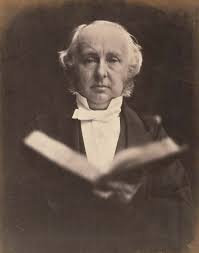
Benjamin Jowett is one of the prominent figures in the long history of Balliol College. Jowett, a scholar of Plato and university reformer, was Master of Balliol from 1870 to 1893, where one of his preoccupations was the production of upstanding young men who would then populate the civil service, and in particular who would be sent to ‘run’ India (Jowett favoured a thorough grounding in Greek and Latin as preparation for this task).

It is an understatement to say that India suffered under British rule, during the colonial era (roughly 1700 to 1947) which was marked by the activities of the East India Company, India’s share of world GDP fell from 26% to 4% (after the Second World War). It is still recovering today.

To draw the obvious comparison with Venezuela, which is apparently now to be run from Washington in imperial style (will Marco Rubio be referred to as the Praefectus of Venezuela?), it at least does not have to worry about having its economy destroyed, the revolutionary socialist governments of the past twenty-five years have done a good job of that. Rubio is not made in the mould of Jowett’s scholars, but he speaks Spanish, which will be useful. A knowledge of finance will also be handy, to tackle the mountain of debt that Venezuela owes.

In a week where the American president has been scurrying around like a giddy child opening Pandora’s boxes, the strategy for Venezuela is not yet clear, and it could go very badly wrong, especially if the factions within the current Venezuelan regime start to disagree violently.

The apparent upside is Venezuela’s oil reserves and refining capacity, but this will take a long time and much capital to realise. Indeed, the process of extracting and monetising oil, and driving this wealth into an economy is something that few economies have mastered.

In this regard, the idea of ‘Dutch disease’, a concept that initially referred to the effect of large gas finds on the Dutch economy, is well known, and colloquially, it describes the way the presence of natural resources can (negatively) skew the economic development of a country. Angola, which has been described as a ‘successful failed state’ for the way it has managed to extract and process oil, but does little else, is an example. Nigeria, Russia and of course Venezuela are other examples.

To their credit, the Gulf economies are good examples of states that have used the wealth generated by natural resources in a very ambitious way, whilst top of the league table are Canada, and Norway. Norway’s sovereign wealth fund is the benchmark for many others, and it bears imagining what the UK could have achieved by channelling the wealth from North Sea oil and gas reserves into a sovereign wealth fund from the 1980’s onwards.

If there is a distinguishing factor across the relative success of the above nations it is the rule of law (and its associated values – policy clarity, strong institutions, and enlightened decision makers). The concept of the rule of law (I can recommend a book of that title by Tom Bingham, formerly Lord Chief Justice and Master of the Rolls and like Jowett a Balliol alumni) should be clear to most readers, but its benefits are even more apparent when it is taken away. In this regard, a comment from a US oil company executive regarding investment in Venezuela (in the FT) to the effect that “No one wants to go in there when a random f…g tweet can change the entire foreign policy of the country’ is illustrative of the benefits of the rule of law. Similarly, threats by President Trump to curb the dividend policy of defence companies, and institutional ownership of housing also contribute to policy uncertainty.

World institutions like the IMF and World Bank have produced tons of research demonstrating the link between the rule of law and growth, and stability. Yet the world that ushered in these institutions and globalization, is crumbling, vandalised by ‘world kings’ (Boris Johnson’s phrase) who act in an arbitrary way. Germany’s President Frank-Walter Steinmeier made an important speech to this effect last week.

The litmus test of this view will be the flow of capital. For the moment, the market view seems to be that ‘world kings’ get things done, and markets are reacting in kind. However, there are looming risks, notably the diverging values between the White House and Europe.  

If world leaders were stupefied by the raid on Caracas, there was near hysteria in Europe at the suggestion by President Trump and his advisers that the US would annex Greenland. Though the initial reaction from politicians and commentators across Europe was perhaps overblown, there is a gulf between the American view of the White House’s foreign policy, and that of allies, and in the medium to long term this growing lack of alignment and trust will prove damaging.

Have a great week ahead, Mike

A Land Full of Vibrancy and Hope

Avid readers of the ‘Levelling’ book will know that some years ago, I wrote

Latin America remains part of the satellite region of the US pole. Sadly, it has been overlooked by Washington. The prime example of this neglect is Venezuela. The country is failing and in the grip of an underreported humanitarian crisis. Economically, this crisis may lead China to take a deeper role in Venezuela and in its oil production. Diplomatically, the lack of a comprehensive reaction from Washington brings to mind an article entitled “The Forgotten Relationship” that Jorge Castaneda published some years ago in Foreign Affairs in which he bemoaned the deteriorating relationship between Latin America and the United States.

Finally, my pleas are heard, and the White House is organizing a rescue (by gunboat) of Venezuela, and possibly much of Latin America.

While it is hard to know how the new engagement between the Trump administration and the fifth largest repository of oil reserves is going to play out, this administration is different to many of its predecessors in taking an active interest in Latin America – note the partisanship with regard to Brazil, generally good relations with Mexico, a chumminess with Milei and the likely support for the new president of Chile.

Despite very active backchannelling between the US military and the Venezuelan army the course that events might take is unclear, and laden with risks – the chaos of popular unrest in Venezuela, the risks that criminals in Venezuela and surrounding countries become involved (and strike in the US), or indeed the risk that other actors or countries use any regime change in Caracas to hurt the US, cannot be ruled out. Another risk is that some of Venezuela’s allies – Iran, China and Russia – become obstreperous, and dig in with Maduro and his cohorts, or that they use any change of government in Caracas to further their own ends. It is worth noting that only last week China launched a policy document entitled ‘Latin America and the Caribbean: A Land Full of Vibrancy and Hope’.

This is a significant risk of the Trump administration’s fetish for a spheres of influence motivated foreign policy. In the recent school boyish ‘National Security Strategy’, which has caused great anguish in the diplomatic parlors of Europe, the document refers to the ‘Trump Corollary’ to the Monroe Doctrine.

For context, the Monroe Doctrine was likely the first coherent, muscular expression of American foreign policy – at the time it was aimed at keeping the Spanish and other pesky European powers out of Central and Southern America. Indeed, the dithering by the large European powers (notably France) over the long running Mercosur trade agreement, suggests that the European dare not go back to Latin America.

The NSS document gives a good deal of attention to Latin America, and this tilt will have the active support of Secretary of State Marco Rubio. Like it or not, Latin America is now in Washington’s sphere.

However, more generally, the establishment of a spheres of influence mindset in international relations may give the likes of Russia and China the sense that they may do as they wish in their own spheres of influence. In the same way that the invasion of Iraq, on the basis of flimsy evidence of weapons of mass destruction, apparently led Vladimir Putin to believe that the West was no longer respecting the rules of the international order, the ‘Trump Corollary’ strategy is a green light for bad policy actors.

That would of course be bad news for Taiwan, and perhaps Vietnam, the Philippines and Japan, who all to some extent count on the notion of a US security guarantee for Taiwan. It may also prove confusing for the US military which, when not loitering off the coasts of Cuba and Venezuela, is organized around the concept of a grand battle in the South China Sea.

Beyond the obvious implications for Ukraine, there are plenty of other open questions – will China take the ‘Stans’ from Russia, and who gets Africa? Russian mercenaries have forced France out of at least seven countries and China has a hand in nearly every African economy. The cancellation of US AID is already having deadly consequences for human and animal life.

A world of spheres of influence might conjure the diplomacy of the Great Game, but it would leave many countries worse off, and the nondemocracies of the world free to abuse their military and economic power.

A forlorn reminder of this was the jailing of Jimmy Lai, the Hong Kong democracy activist last week. Few Western governments were audible in protesting this act, save Britain, which used to count Hong Kong as part of its sphere of influence (Lai has British citizenship). The silent snuffling out of democracy in Hong Kong is the act that brought the curtain down on globalization in my view. An American spheres of influence foreign policy will sow further chaos. 

Have a great Christmas week ahead, Mike (there won’t be a note next week, we return on the 4th January)

The Road to Serfdom

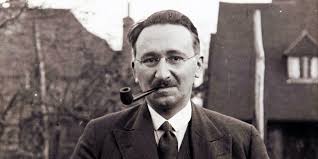
I was sauntering through the centre of Vienna last Wednesday, admiring its stylish cafes and bars, and Friedrich Hayek came to mind.

Hayek argued against the suffocating role of government (‘central planners’) on the economy and for greater individual liberty, and his arguments still contain a grain of truth in the context of many European economies. Ironically, Austria’s brand-new finance minister had previously worked as an economist for a trade union and might well prove to be an ‘anti-Hayek’.

Hayek was one of the inspirations (after he won the Nobel Prize in 1974) behind what many American libertarians call the ‘Austrian’ school of economics, and his book ‘The Road to Serfdom’ is undoubtedly on the bookshelves of the most ardent members of team Trump, alongside works like Ayn Rand’s ‘Atlas Shrugged ‘.

In the Americas, Hayek is a favourite of the ‘chainsaw’ economists, with a large dollop of irony given the push for total control of the economy by an elite. Indeed, the risk for Americans is that the dismantling of the government led economy in America risks turning Americans into serfs of the private sector. But, this scenario is not yet immediately obvious given the way public attention remains focused on Ukraine and the victims of American tariffs.

In the past six months, a very strong international narrative has spread around the notion of ‘American exceptionalism’. The US is exceptional in a few domains – fighting (military), finance and its multinationals. Donald Trump is using these exceptional pillars to influence other countries and to set in train his vision for a more isolationist America. The response from America’s erstwhile allies has been to rapidly re-arm and re-finance.

An important sign of this was the announcement by Friedrich Merz (with the SPD’s Lars Klingbeil and the CSU chief) of a new defence spending plan, which largely swerves the issue of the debt brake. That German and Japanese bond yields rose suggests that markets are pricing the reallocation of the bill for security as an international public good to America’s former allies.

The return of war as a topic in European debate will alarm many people, and it should not be underestimated. One of my recent notes highlighted how Europe likely faces an ongoing campaign of harassment, sabotage and destabilisation from Russia. The idea that Europe is on its own is now quite starkly taking hold.

While the drumbeat of war will add to stress in our lives, it is not (yet) part of them. For the great majority of people, the geopolitical debate remains one between elites, and so far, does not impact their everyday lives.

This is where European leaders need to pay more attention and try to reset the international narrative. If America is strong in fighting and finance, it is weaker in areas where Europe is strong, and we might say that the two continents are the mirror opposite of each other. In my view, Europe is strong in the areas that matter to most people, most of the time. Specifically, Europe, as a social democracy is the best place to live in the world (6.6% of the world’s population live in ‘full’ democracies), has generally free education and healthcare and its societies are peaceful (according to the UN, the murder rate in the US is 14 times that of Italy). Life expectancy in France for instance, is four years ahead of the USA. Health spending per capita in the US is well over double what it would be for a European country (13k vs. 6k).  

In this context, my counterintuitive argument (to the ‘chainsaw economists’) is that America needs less Hayek, and more ‘Europe’.

The absence of a deep social security system in the US, and the difficulty of accessing decent healthcare at reasonable prices means that a huge number of Americans live in precarity. Demolishing the department of education and cutting state aid to veterans are just two measures that increase vulnerability.

The trend that is emerging, and which will become starkly visible in a recession, is of an American society where a small but important number of households (say 20%) are wealthy enough to live well and access high quality education and healthcare, 40% of households live with the stress of becoming economically vulnerable and a further 30% live in serfdom in the sense that they have no leisure time (Newsweek estimates that one third of American workers has a second job).

Income inequality in the US is at historically very high levels, and the share of total income garnered by the top 1% of the workforce is tipping levels only seen in the 1930’s. Viewed from the point of view of wealth, 38% of the world’s millionaires live in America and over half of the ultra-high net worth (wealth over USD 50mn) individuals in the world are American. Indeed, the top 1% of wealthy Americans own 18.5% of all wealth in America, while the ‘bottom’ 50% of Americans own just 3% of wealth.

As such, the Trump 2.0 programme may not free Americans from serfdom to the government but will make them serfs of a private sector.

As a parting shot, Europe might need a little dose of Hayek. To that end, social welfare systems, state pension plans and healthcare spending may need to be streamlined across Europe as the security agenda becomes more prominent.

Have a great week ahead,

Mike

JD Goes to Washington

I have twice shared a stage with J.D. Vance, which at the time of writing puts me one ahead of Donald Trump. On both occasions, Vance’s book ‘Hillbilly Elegy’(I managed to get a signed copy, for my mother-in-law) was seen as offering people a glimpse as to why working class America was switching their traditional allegiance from the Democrats, towards what they perceived to be ‘system-smashing’ politicians like Donald Trump. Indeed, to my own reading, a large section of Irish-America has recently made this political journey.

I thoroughly enjoyed Vance’s book, had widely recommended it, and would continue to do so. He has had a fascinating life, which I am sure will get ever more interesting. Somewhat ironically given the Trump political program, Vance’s success in life is testament to the role of institutions (US Marines and education (not unlike Barack Obama)) and in my view is an argument for greater government spending on education and more open access to elite education in the US.

When I spoke (at two separate conferences) with him, my unkind thought was that he expressed himself better – more thoughtfully – in writing than in the spoken word. That seems to be changing, and Vance has clearly crafted an ability to provoke. Much has been made of his intellectual journey to the extreme right of American politics, something that has become the norm as the Republican party has become shattered by Trump (a contemporary of mine – an elite soldier and former governor – has also veered off to the extreme right). As a result, the press is full of speculation on Vance’s views on the dollar and Ukraine.

Vance is in many respects the opposite of Trump in terms of his life story – he started poor, became a soldier, ‘pulled himself up’ through education and has now converted to Catholicism (thanks in part to the Dominicans). Trump had a privileged upbringing, disdains learning and the military (‘losers’), and could not possibly be more irreligious.

Curiously, the Catholic Church in America, which is much more conservative than that outside the US, appears to be attaching itself to the coattails of the Trump movement, a tactic that helps to explain why it is the largest, oldest institution the world has known.

Vance may now reflect on the role of vice-president, and what this will mean for him. In general, it is a political graveyard, populated by token political players. That Kamala Harris has not carved out a serious role in American public life is testament to this. There are, however, two examples of very effective vice presidents – George W Bush, who was more like a prime minister to Ronald Reagan, and Joe Biden, whose experience and vast range of political relationships meant that Barack Obama was tethered to the political establishment.

In this context, Vance, the critic of elites, is at an interesting point.  Since ‘Hillbilly’ was released, he has been mixing more with the American elite, in the technology, policy and venture capital worlds. If he enters the White House with Trump, he will come up against the full complexity of the American power machine.

Here I recommend Robert Reich’s excellent book ‘Locked in the Cabinet’. Reich, a professor of labour economics, was appointed Labor Secretary by Bill Clinton, and the book recounts how his optimism and idealism left him outmanoeuvred by those who ‘really ran the world’ (Robert Rubin).

Another book that I know Vance has, is Chris Wipple’s ‘The GateKeepers’ which is. fascinating study of seventeen chiefs of staff to American presidents. Trump notoriously went through several chiefs of staff, but in many cases the chief of staff can be the most important player in an administration (Jimmy Baker is the most often cited example).

So, for all the clamour around Vance, he might well – like Robert Reich – find himself sidelined by the team around Trump. With the European press over-obsessing about Vance, this is where the real risk lies. The first Trump presidency was chaotic. The second will come armed with a mission to transform America, potentially along the lines of the Heritage Foundation’s Project 2025’. I will devote more time to this, but in short it is an aggressive plan to re-make American government (politicised), society and the foreign policy. As a recent article in Foreign Affairs put it, this will be an ‘Imperial Presidency’, shorn of the constraints that have shaped American public life for the past two hundred years.

To Europe, the US under Trump will look more like China – driven by a single, imperial leader, obsessed with the viability of domestic industry, slow to help allies and much more transactional in foreign policy, and will use financial policy in a more selfish way. Consistent with the end of globalization, there will no longer be an effort to transmit American values, a la George W Bush and Bill Clinton.

In short, it will be an America that few of us will recognise.

Have a great week ahead,

Mike

Restoring Democracy

A happy new year to all readers, where the start to 2024 has been marked by numerous articles in policy journals and the press about the importance of 2024 from the point of view of politics and democracy, never mind that some of these newspapers have in recent years done their best to promote the vandalization of democracy and the rule of law.

Regular readers will know that the ‘democratic recession’ is a major preoccupation of mine. In this respect, I intend to leap, feet first, into the debate on democracy. In a week’s time L’Accord du Peuple (Calmann Levy) which I have co-authored with the great Pierre-Charles Pradier, will be released in France.

While the book should, I hope, resonate across Europe, our target is France and our aim is to find practical ways of bringing democracy closer to French people. One pragmatic idea is to deploy citizens assemblies at the regional or departmental level, where they have more relevance and where they are perhaps less of a threat to national politicians, who it seems have deplorably little trust in the opinions of French citizens.

Then on January 20th I have the privilege of a TEDx Talk on the topic of ‘restoring the credibility of democracy’. The Talk takes place in Stormont (Belfast), a symbolic location in so many respects for democracy, and where the ‘lights of democracy’ are currently ‘turned off’.

While it is remarkable that nearly half of the world’s population will vote in elections this year (Bangladesh today 7th January, Taiwan next week, and then in order of importance the US, UK (September now likely), India, South Africa, the EU parliament, Mexico, Indonesia and Russia (but we already know the result there)), there are two new elements that are not discussed enough.

One is the fact electoral outcomes in different countries are correlated – for example, what happens in Taiwan next week can impact the US presidential campaign and might even alter the ways in which elections in India and Indonesia are held.

In addition, there are now common global issues (inflation, climate damage) as well as two polarising wars that are colouring political debates in individual countries. The other factor that is common across many of the aforementioned countries is the tug of war between the sanctity of democracy and the belief in ‘strongmanism’. India, South Africa and Russia are in the latter camp. Yet, Indonesia is exceptional here in that Joko Widodo will leave the political stage (he was first elected in October 2014) with exceptionally high approval ratings and broad respect (though his son is involved in the race to succeed him).

There other factor worth emphasising is the industrial-level interference in elections across the world. In this context, Richard Daley’s ‘vote-stuffing’ in favour of John Kennedy’s 1960 presidential campaign or even the Tammany Hall tactic of plying voters with alcohol and then leading them to the voting booth, appear quaint. It will be a busy year ahead for the team at ‘Fancy Bear’ the Russian hacking group alleged to have interfered in elections in the Netherlands, Germany, the UK, US and France amongst other countries. 

There are signs that democracies are responding to this interference. For example, yet more evidence has been uncovered of Russia’s support for Marine Le Pen. In addition, the EU has deployed its Digital Services Act for the first time to launch multiple investigations into X (Twitter) specifically that X has been spreading misinformation and diffusing hate content. Indeed, under Musk’s stewardship X has tried hard not to live up to the requirements of the Act – in May it disengaged from the EU Code of Practice on Disinformation and has scaled back resources for monitoring of content. 

In the year ahead, I suspect that EU policymakers and national governments will take a tougher line on social media and will be more demanding on the social media giants’ willingness to police content.

However, there is a need for democratic governments to be even more muscular. In Europe two thorns in the democratic side are Hungary and Serbia. An EU leaders’ summit at the start of February, whose goal is to sign off aid to Ukraine, may be the final straw in terms of their patience with Hungary, a country that enables attacks on European democracy and the rule of law. There is now talk of suspending Hungary’s voting rights.

Another bad ‘democratic’ actor is Serbia, a potential EU member state. Serbia recently held general and local elections, the latter were marred by apparently very obvious vote rigging. This has triggered large protests in Belgrade against Alek Vucic’s government. Recently there occurred a brutal, sinister assault on the leader of the opposition leader Nikola Sandulovic. In my view, in the light of the ambivalence of Serbia’s relationship with Russia, the EU should suspend its passage towards EU membership.

In short, until the leaders of the democratic world adopt a more aggressive approach to those who attack democracy, they will continue to be mugged by autocrats. There is plenty they can do if they use cyber, social media and economic warfare to push back on attacks on democracy. One initiative that helped to bring down the Iron Curtain was the mass purchase and distribution of photocopiers into Eastern Europe by George Soros. This provided the mechanism by which ideas and information could travel around countries like Poland, Hungary and Romania. It is time for the West to think like this again.

Have a great week ahead,

Mike