Cold War to Total War

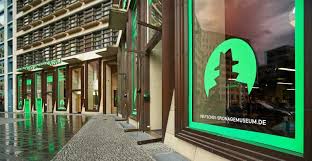
As I stepped out on the street in Kreuzberg (Berlin) on Monday, all was calm, with little to worry about save the choice of the excellent local food, loud music, beer and football (the Dutch invasion was just starting ahead of Tuesday’s match against Austria). Kreuzberg was of course once on the frontier of West Berlin, looking across to East Berlin and will have featured in the high stakes espionage between the West and East (notably so when Markus Wolf ran the Stasi).

Having once run into Mr Wolf, I was pondering what Berlin was like at the time, and we should not be surprised that it is still regarded as ‘the city of spies’, and that it continues to feature in espionage literature.

Given that context, it was no surprise to learn that Germany continues to be targeted by foreign spies. Over a week ago, German Interior minister Nancy Faeser launched the annual threat assessment of the German domestic intelligence service – which pinpoints Russia as well as China and Iran as the authors of multi-faceted attacks (disinformation, cyber-attacks, manipulation of people flows and racial tensions) on Germany, not to mention a recent spate of assassination attempts in Germany by Russia.  

Of great concern is the range of threats to Germany (the same is true in most other countries), from Russian operatives defenestrating enemies of Moscow, to plots to overthrow the German state by the far-right to Islamic terror (there are over 27000 known radicalised Islamists in Germany, and the threat of Islamic terror has been growing since the October 7 attack).

The tactics that the enemies of Europe (and democracy) are deploying are likely very different to those crafted by the likes of Markus Wolf. Espionage during the Cold War was motivated by a need for information, with plenty of proxy battles for influence taking place around the rest of the world.

Today, the aim seems to be outright destabilisation and provocation – from the multiple attacks on arms production facilities across Europe to an epidemic of coups d’état across Africa, to the waves of disinformation on our social media. There is also the impression that the US is being tied down in multiple conflicts around the world.

Today, the eyes of the world are on Gaza and Ukraine – and we are bracing for a new Trump Presidency – perfect conditions to ramp up outright destabilization and provocation. The issue then, is what the EU and its member countries need to do.

The first is to confront the problem and bring it into the open. Nancy Faeser’s report is just one of a growing number from security services across Europe – in May the head of Britain’s GCHQ outlined a similar, urgent threat landscape. The second will be for governments to give security services larger budgets (a Trump presidency might help), and potentially, to allow them a more flexible modus operandi.

The new development relates to the new EU commission. Following last week’s meeting of heads of state, it now looks likely that Ursula von der Leyen will continue as president – and with Katja Kallas as foreign representative, the tone of the next commission will tilt from ‘Green Deal’ to ‘security’ and ‘strategic autonomy’. Defence infrastructure and innovation will become a key trend in the private investment industry (private equity and venture). Von der Leyen has already flagged that enormous amounts of capital will be required to support this, and given the failure of the EU to build out its capital markets union (CMU) this will be an immense challenge.

One element that might help, a little, is von der Leyen’s proposal to create an EU defence commissioner. If it does happen, it will run into two of the common problems that beset bright ideas in Brussels.

First the role of defence commissioner will need to be based on the reallocation of powers from other commissioners – some defence innovation and military logistics responsibilities from Thierry Breton’s department, transport and infrastructure from the Transport commissioner (Valean) and various other responsibilities from the foreign representative.

The second issue is that it might take some power from national defence ministries, but there is also a strong argument that they need to be better coordinated.

In that sense the new EU defence commissioner might reflect changes that John Healey (currently the shadow defence minister in the UK) wants to usher in – an office for value for money in the Ministry of Defence and a restructured defence command.

The EU defence commissioner might also start by coordinating the purchase and use of heavy duty equipment, such as large transport aircraft, and driving the integrated use of new technologies across countries. Another potential task is to find means of better coordinating European security agencies and militaries, so that their collective, offensive capability becomes stronger.

It is a depressing, though necessary use of resources, and a sad sign of our times as globalization fades away.

Have a great week ahead,

Mike
A Tale of Two Debts

It is an understatement to say that the weekend of the 5th July will be a watershed for democracy and politics on both sides of the Channel. It seems that for once since Brexit, Labour might bring a dull calm to British public life, whilst the contagion of political chaos has spread to Paris.

But, as Britain moves left politically and France appears ready to shift rightwards, there is more at stake than politics. Both economies are burdened with huge debt loads, and the ways in which politicians navigate these will determine the geo-economic future of these two UN security council members, and serve as a lesson to other indebted nations.

The economic cases of Britain and France are worthy of attention in at least two respects. The first is their long, often shared economic history. This is the third time that debt levels in both countries have spiked to extreme levels – ominously the previous episodes were the aftermath of the world wars and the period after the Napoleonic Wars. Then, the actions, principally of Pitt the Younger in reforming the economy and financial system meant Britain leapt ahead of France as the power of the 19th century.

The second is that unlike other high debt economies such as the USA, the French and British economies are barely growing, and appear to have lost the means to do so. Neither do they enjoy the exorbitant privilege that the dollar permits. To that end, the high debt challenge posed to London and Paris is a precarious one, with broad implications. At this stage, at least three of those are clear.

The first of these relates to the ways in which high deficits and debt loads will condition politics. Neither country has much fiscal space and this may well tilt the political debate further towards topics like identity, immigration and values. This has been the case in France (and Italy) for some time.

In Britain, it’s hard not to feel that the recent Labour manifesto is ‘boring, boring’ like Keir Starmer’s favourite football team, reflecting Labour’s desire to tiptoe around the fiscal risks facing Britain. Consistent with this, it would not be a surprise that a prospective Labour government could choose to kick-off its term in office with a focus on institutional reform (Houses of Commons and Lords) and accountability in public life.

The second challenge for new governments in Britain and France will be growth, and this is where the real policy lessons will be learnt. As neither country has the scope to enact a hefty fiscal stimulus, new growth must be endogenous to reforms in both economic systems. In this respect Labour, whose keenness to halt policy uncertainty and desire for foreign investment, are in a much easier place.

In France, the strong likelihood is that the aftermath of the July 7th vote is accompanied by an economic shock, driven by the entire lack of transparency and credibility that the far-left and far-right bring to economic policy, as well as their antipathy to foreign investors and corporates.

The third question is who might help France and Britain soften the impact of their debt loads. In financial markets there is a growing view that central banks will need to be deployed to recycle the debt loads of the economies they oversee. This is effectively the case in Japan, though the Bank of England may be loath to be seen to cap gilt yields (especially after the Truss debacle) and the ECB’s Governing Council would be badly split on the issue of ‘rescuing’ France.

The more likely avenue is greater collaboration with private investors (private equity, very large pension funds and some sovereign wealth funds) where projects that would ordinarily be funded and run by the state, are instead jointly capitalized and managed by private institutional investors, and some corporations. This is a likely avenue for Britain on green infrastructure and could continue to be the case for France in sectors like artificial intelligence. 

As July approaches, investors are already starting to vote, gilts and the pound are calm, but there is a budding crisis in the French bond market.

Michael O’Sullivan is co-author of ‘L’Accord du Peuple’ (Calmann-Levy) and the BBC 4 radio documentary ‘Waking up to World Debt’.

Boring, boring …

One of the more ‘colourful’ habits in the otherwise sensible life of Sir Keir Starmer is that he is an Arsenal supporter, to the extent that he has been quizzed on this in media interviews, and cruelly asked if, like Arsenal, he will ‘bottle’ the premiership. For those non-football fans amongst you, even Arsenal fans like to chant ‘boring, boring..Arsenal’).

Consistent with his devotion to Arsenal, ‘boring, boring’ seems to be the guiding light of Starmer’s policy playbook, launched formally on Thursday in the form of the 23,000-word, 134 page Labour manifesto.

The subset of individuals who peruse political party manifestos is small, and I have heroically dug into it to save readers the trouble. It is worth paying attention to because of the likelihood that Labour will form the next government in the UK.

My first take is that the manifesto is very conservative, with a small ‘c’, in the sense that it emphasises Starmer’s reluctance to change many elements of existing fiscal policy (corporate tax stays at 25% for example) and effectively ventures very little in terms of dramatic policy moves.  The headlines stress no ‘austerity’ but it is also hard to see this package producing a durable expansion and return to productivity. The manifesto is accompanied by a laborious compilation of the costs of the Labour programme, the object of which must be to convince markets that Labour are on top of their fiscal ‘game’.

My sense is that the manifesto is characteristic of a party that wants to avoid any kind of policy hiccup before the election, and confirms my sense that the big policy moves, if there are any, will come in the autumn or early 2025, once the government has been bedded in. 

On balance it is a manifesto for workers rather than capitalists. The message for workers is that income tax, national insurance contributions and VAT won’t change, but we will see small groups (private equity execs for instance) treated more severely. Also, with the abolition of generous non-dom tax status, the international wealthy will feel the fiscal pain, added to which private education fees will be charged VAT. These measures are expected to raise GBP 6bn, which is small in the context of the economy and deficit. More efficiencies in spending are expected to bring ‘new’ fiscal boost to GBP 8.5bn

From the point of view of companies and investors, there is not yet much here to worry about, but neither much to be excited for. 

We also have a little more colour on the landmark innovation of the manifesto, GB Energy – the brainchild of Ed Miliband (one of the most experienced Labour ministers and the most ‘policy ready’ one). GB Energy will be based in Scotland and will invest in renewables (co-invest with the private sector in new green technologies and help scale up startups in segments like solar and wind and help to invest in the installation of green energy infrastructure). It will take on existing state-owned stakes in energy projects like GB Nuclear, and the aim is to capitalise it (likely in 2025 to the tune of GBP 8bn). One element for the energy sector is the flagging in the manifesto of much tougher regulation of the energy sector (in terms of consumer prices).

On healthcare, my first impression is that the improvements flagged for the NHS are not transformative and as a trend, point towards more outsourcing of services, away from hospitals. Finally, there are some interesting comments in the ‘serving the country’ section of the manifesto (reform of the House of Lords and a focus on ethics in public life). My expectation is that Labour will lead with these reforms once in power. 

In more detail, I think Labour will win the July 4th election, their immediate accession to power will be marked by a number of high-profile foreign affairs events (i.e. NATO summit) where Starmer will be able to look ‘presidential’. August will be quiet, and I think the early policy moves will come, as above, in the area of institutional reform.

As we move into the autumn, the focus will turn to economics, and I suspect Labour will lead this with a series of announcements on inward investment. The launch of GB Energy and the national wealth fund will follow.

This manifesto is deliberately ‘boring’ in the sense that it will ease Labour’s passage through the election campaign with little policy friction. Voters’ disdain for the Tories will be enough for Labour to win handsomely, and they may well be helped by the damage that the Reform party will do to the Tories.

With the economy in mind, the absence of chaos that should accompany a Labour government (as opposed to the Tories) should help, and a great deal will depend on international factors. However, the manifesto, in my view, is not a convincing plan in terms of kickstarting productivity in the UK economy. ‘Boring’ will not be enough to satisfy the economic challenge that has been left to Starmer.

Have a great week ahead,

Mike

Re-emerging Risks

I started the week chatting with one of the leading experts on globalisation, or deglobalization’ as it is now. He is a little older than me (he won’t mind me saying) but we share much the same formative experiences, notably an internalising of the way the world worked in the 1990’s and 2000’s.

Back then, the big project was the construction of the euro, to the chorus of debates on global imbalances, fiscal strength (Hans Tietmeyer the former Bundesbank chief would be horrified by Western economic policy today). Elsewhere in the late 1990’s forward guidance of monetary policy consisted of analysing the size of Alan Greenspan’s briefcase and there was a healthy debate on whether central banks should act to burst asset bubbles (today central banks seem to trade those bubbles).

The point of this reminiscence is twofold.

The first is to demonstrate that compared to previous decades (and indeed the long-run of economic history) today’s economic landscape is an aberration, out of kilter with most long-term expectations of how economies behave.

The second point is to illustrate that for very long periods, economies follow regimes of behaviour where very different norms can endure for some time. It is often the correction of these norms that triggers large scale shifts in asset allocation, and volatility. One marked echo of market behaviour today, with the early 2000’s is that the equity risk premium (the benefit of owning equities over bonds) has fallen to its lowest level since 2000, and the performance of smaller companies (to very large ones) is the weakest it has been since 2001.

In general, the 1990’s and 2000’s were periods of rising expectations, whereas today that is not generally the case across countries. A notable feature of the sense that ‘things were on the up’ in the 1990’s was the growth of emerging markets.

Indeed, that period has given us at least two economic miracles – the rise of China as an economic and geostrategic power, and the rise of small, emerging states (Singapore and the Emirates). Neither of these ‘miracles’ is given enough credit by the West for what they have done in such a short space of time.

Specifically, last week was highly instructive in the case of emerging economies – three elections registered high market volatility. Mexico has elected a new president amidst fears that the institutions of the state, and its democracy will be further undermined, combined with a leftward tack on economic policy. The peso reacted badly.

India surprised most commentators (the consensus view on Modi has been far too bullish) by failing to ‘ordain’ Modi’s third term in office with a wholesome majority. While this may be positive from the point of view of India’s democracy, it means that the Modi economic steamroller has less momentum.

Then, the failure of the ANC to regain their majority in South Africa should not be a surprise given the failure of that economy to grow much in the last fifteen years (GDP per capita is at the same level as it was in 2010).

In the cases of India and Mexico, markets appear to be pricing democracy very differently – less of it in Mexico is bad, but the checking of Modi’s near absolute power is also bad (at least for the notion that he could have forced through another round of government spending).

Similar to governments across many emerging countries, investors appear to be torn between the strong man model and the Western oriented rule of law one. This is just one parameter where emerging economy governments will be forced to choose – another is between the US and China, and a further one is how to build an economy (and cities) around new technologies and in a more efficient way.

Of the three countries, South Africa is a depressing warning to others, and I see very little hope that it can put in place a coherent developmental model. What is more reassuring is that there are plenty of examples of countries that have made the journey from emerging markets to stable economies – Poland, the Czech Republic and the Baltic states are good examples, and the cohort of Vietnam, Indonesia, Thailand and Malaysia is on its way. Other emerging economies like Nigeria and Argentina are ‘experimental’.

What is also interesting is that emerging markets show that investors are becoming more sensitive to political and institutional risks (institutional investors in Turkey have all but given up). In this respect the important question is whether they start to more severely price in the macro risks associated with some of the developed economies.

If my notional 1990/2000’s investor was to return to the marketplace today, he/she would be confounded by valuations, low volatility and miniscule credit risk, and might start to believe that markets should treat the developed world economies with the same mercilessness it has shown to emerging markets this week.

Have a great week ahead,

Mike

Treasure Chest

John Maynard Keynes is very well known for his contributions to economics and policy making, but less so for his investing prowess. In the 1920’s Keynes worked as a portfolio manager for two insurance companies and from 1921 to 1946 ran the endowment (the ‘Chest’) for King’s College, Cambridge. Keynes’ investing performance is the subject of some fascinating research by David Chambers and Elroy Dimson.

Early in his career Keynes was what we might call a macro investor, focusing on commodities and foreign exchange. Later, he became more focused on stocks, and from the 1930’s Keynes beat the (stock) market by over 5% per year despite several close shaves with personal bankruptcy.

Viewed from the point of view of today’s stock market, what was unusual about Keynes’ style was that in the 1920’s and 1930’s equities were very much the preserve of retail investors, and not so much institutional managers. 

To that end, Chambers and Dimson remark that Keynes’ early allocation to equities was ‘as radical as the much later move to illiquid assets in the late 20th century by Yale’. Unsurprisingly, Keynes’ investing style, which was driven by strong macro-economic views and focused on a few, large and often concentrated positions (if he was investing today he would likely be heavily invested in mega-cap technology stocks) has influenced modern endowment managers, most notably David Swensen of Yale.

Swensen pioneered the move by large US university endowments towards private assets (notably private equity, but also infrastructure and venture), a strategy that has proven remarkably profitable. The top endowments, generally Ivy League schools and other top ranking universities like MIT, have consistently made double digit returns, spurred by annual §private equity returns in the very high teens.

However, the endowment model is coming under scrutiny, partly because some universities have overinvested in private assets at a time when capital distributions have slowed (my former employer Princeton University has effectively invested up to 40% of its portfolio in private equity and venture), and partly because universities themselves have adjusted their expenditure upwards whilst they have enjoyed generous disbursements from performing endowments.

Endowments in the US originally paid 4% of their value to universities annually but in some cases this has risen to 12% (in turn pressuring endowment managers to produce returns). Broadly, disbursements from endowments amount to close to 30% of university budgets with much of it spent on student financial aid. Given that cash distributions from private equity funds have slowed, the knock on to university spending is being felt.

Anyone who has visited a top-flight US university and witnessed the extent to which laboratories, sports facilities and student bursaries are well funded will appreciate the size of university budgets and the role that endowments play. In Europe, only ETH Zurich can match this level of financial backing.

The debate on endowment investing has been enlivened by the publication in February of the 50th NACUBO Endowment Study. In general, the nearly 700 endowments surveyed in the report hold less fixed income than I would imagine for a typical ‘balanced’ investor, more ‘foreign’ equities than US (this might explain some underperformance), and nearly 50% alternative assets (including a large slug of hedge funds).

Interestingly from the point of Keynes’ active management stance, nearly 50% of US endowments ‘outsourced’ their investment office function. Reflecting this, allocations to private equity, returns and return distribution tend to be better in the larger endowments that have well-equipped investment teams.

In turn this reflects the reality that private equity and venture are two of the asset classes (unlike equity and bond funds) where returns are highly dispersed (i.e. there is a large difference between the best and worst performing funds). As such, finding the best performing funds and gaining access to them has a cost in terms of investment research resources. To this end, I wonder if many universities have really been following the ‘endowment’ model as pioneered by Keynes and Swensen.

Indeed, one of the secrets of the performance of the Yale and Harvard models is that they have very good networks of alumni in the private investment industry, who willingly proffered the best advice and access to their alma mater.

Supporting this theory, Keynes had a similar network of former students around the world (notably in Africa – think mining stocks and commodities) who offered him advice, information and investment opportunities and he also had access to relatively sophisticated telegram technology, so that in some cases he had access to market moving information before others. Further, Keynes was unlike many investors today in that his colleagues at King’s had great faith in him and gave him enormous freedom to pursue his own investment style.

This ‘freedom’ has been all but quashed by benchmarking and technology in public markets (i.e. equity and bond funds) but still exits in private markets – the trick is to find the Keynes like managers.

Have a great week ahead,

Mike

Is Labour Ready?

Rishi Sunak’s sodden, tragi-comic, and surprise announcement of a UK general election was an amusing episode in a so far uneventful ‘year of democracy’.

The announcement was a boon to headline writers, who had fun with phrases like ‘Drowning St’. My attention was piqued by the background music ‘things can only get better’ (D:Ream), which added to the farce, but which British political aficionados will recognise as the song that was also used by Tony Blair’s New Labour party in their 1997 election campaign.

At the time, I was finishing my studies and happened to be in London on the day of the election, and vividly recall walking past Downing St, where the sense of a new era was palpable. Today, the challenge for Keir Starmer is whether he can spura new era of growth and renewal in the UK, or whether his party simply turns out to be ‘not the Tories’.

In the late 1990’s, Blair’s government, bolstered by a very strong front bench, had spent a long time preparing for government, and once in power made a series of dramatic policy moves (see our recent note ‘Does debt smother politics?). By comparison, the most important question for the July 4th election – with the Tories 21 points behind Labour in the polls and destined to be wiped out (some 100 sitting MP’s, mostly Tories, will not stand this time) is, how ready are Labour?

Whilst the election announcement has taken many Tory MPs by surprise, my sense is that Labour would also have much preferred a November election – they still must find candidates for over 80 seats and faces a few awkward spots such as Islington North where Jeremy Corbyn will stand as an independent. Indeed, the fact that both the Tories and Labour are logistically unprepared for a July election might benefit the Liberal Democrats, which opens up a small chance of a coalition government (importantly electoral reform would be the price of this).

To date, Keir Starmer’s Labour has given relatively few details on its program, partly to allow space for the Tories to slip up and partly not to skew the debate on the outlook for the economy. This will be Labour’s greatest challenge.

When Blair came to power in 1997 the British economy was bigger than that of China and India together, the world was under the steam of globalization and debt to GDP in the UK was close to 40%. Today, China regards Britain as a ‘little island’ (nothing wrong with little islands!), globalization has come asunder and debt to GDP is 100%.

I suspect that if there are early, dramatic wins for Starmer, they will be in tax (cutting back exemptions for the wealthy and potentially a wealth tax), corruption (standards in public life), and institutional reform (end of the House of Lords?).

Revitalising the economy will take longer, notably because Labour will initially stick to the UK’s fiscal rules and take pains to avoid any early volatility in the pound and gilt markets. In order to enact its plans for technology and ‘green energy’ investment Labour will most likely have to create partnership with international institutional investors.

Outside of these areas it is not clear to me how Labour can immediately reverse the damage done to educational, social services (NHS) and the fabric of small towns and cities, exacted by the Tories. It will require a level of imagination, funding and policy continuity not seen in British politics for decades.

In foreign policy, Labour’s approach will be a much less contentious one – relations with Ireland (which have deteriorated since Johnson) will be much warmer, and the approach to the EU will most likely be less confrontational and more collaborative. Whilst David Lammy (shadow foreign secretary) has spent a decent amount of time in the US, courting Republicans and Democrats, the scenario of a Trump presidency and a Labour government is a high probability one, but a configuration that would stretch the notion of a ‘special relationship’. 

In defence I expect little headline level changes to Britain’s commitments, but the shadow defence minister John Healey will likely re-organise the military command and HQ, and importantly spend a good deal of time reorganising defence investment and procurement so that it gives ‘value for money’. 

In the next few weeks, Labour faces twin, urgent challenges – mobilising the party across the UK, focusing on making inroads in the south and Scotland, and then preparing for government in the context of a gargantuan challenge.

The good news is that the summer holidays start just after the election which I suspect will mean that the effective policy launch of the new government will kick off in September.

Have a great week ahead,

Mike

Not Alright

Since I last wrote on the rise of the far-right in ‘Spode’, they have become marginally more popular though importantly not more powerful and, worryingly more dangerous. In Germany, there has been a spate of arrests of members of AfD (Alternativ fur Deutscheland) and in Slovakia Roberto Fico who is regarded as part of the European far-right has been attacked in a brutal reminder of how violent public life is becoming. Then the Netherlands has finally formed a government, with a far-right ‘dirty and nasty’ twist, in the sense that it upends environmental policies and takes a much tougher stance on asylum and immigration.

The European elections in two weeks’ time will emphasise this. With the polls settling ahead of the vote, the far-right (I&D group) and the very conservative right (ECR) will garner about 22% of the vote.

My expectation is that compared to this time last year, the far-right does better than expected in France, less-well expected in Germany, and very poorly in Italy (as the Lega near implodes). To that extent, the far-right (and extreme-right) is now a fixture on the political scene in the West. We should also take this as a reminder or even confirmation that the world is increasingly troubled by the spectre of the 1920’s, when war, nationalism, extreme politics and economic volatility brought globalization to an end and shattered the world order.

On the optimistic side, I had the pleasure to moderate an event last Thursday on the rise of the far right in Ireland. Ireland is interesting because it is the Candide of nations in that it has hitherto been blissfully untroubled by issues like immigration and the far-right that have beset other European countries, but that are now live issues in Irish politics as both immigrants and politicians suffer violence.

The far-right is problematic in several ways – they sap the energy and momentum from democracies (witness the damage that the likes of Steve Bannon, Itamar Ben-Gvir and Matteo Salvini have done to their countries), there has never been a successful far-right government in a democracy (Italy’s current government is currently ‘acting’ centre-right), and the narrative of the far-right counts homophobia, misogyny, racism and intimidation as its core behaviours.

Now that I have that off my chest, what can governments, policymakers and citizens do to diminish the allure of the far-right? Unsurprisingly there are no quick fixes, and we could bracket the assembly of policy recommendations into four segments.

The first is resources, largely in the form of the allocation of housing and shelter to both immigrants and ‘natives’ in the context of very tight housing markets across Europe (according to the FT the UK has the highest amount of homelessness in Europe because the supply of ‘shelter’ by government and local authorities has dropped sharply).

The second is to address the political narrative around the far-right. In Ireland’s case, a series of very sudden socio-economic changes have occurred, many of them due to deglobalization (refugees from wars, Brexit) and the implications of these changes has not at all been thought through by politicians. As such, the political narrative needs to capture and frame these changes, set out strategic (and not knee-jerk) reactions to them, and then open up a civilised debate around them. Of course, the far-right does its best to poison this debate.

Then thirdly, several experts I met mentioned the role of ‘on the ground’ coaching and engagement of younger people through the arts or sports, so that they do not succumb to violent behaviour associated with the far-right (last month two 19 year olds were arrested in Dublin for what appears to have been the racially motivated murder of a Croatian man).

Then fourth policy focus is the array of external factors acting to undermine our democracies – the role that Russia and China have in undermining Western democracies, and the side effects of social media on younger voters (the EU has just launched an action against META under the new digital services Act in this regard), and of course the careless vandalization of democracy by the likes of Donald Trump and Boris Johnson.

The mention of Johnson leads me circuitously to some good news.

Arguably, Brexit was the outcome of the enticement of the right by the far-right into a bad policy. There is now a consensus that it was a bad idea, at the enormous expense of a broken economy and the withering of Britain’s international reputation, but potentially also with the boon that Britain has discovered that a lurch towards ugly ‘far-right’ politics (such as Rishi Sunak’s unworkable Rwanda policy) doesn’t pay off. Later this year, Britain will very likely vote in a centre-left government against a wider backdrop of a move to the right in Europe. Other countries shouldn’t try to learn this lesson the hard way. 

Have a great week ahead

Mike

Central BAInking

When central banks fall down, they often call other central bankers to help out. The Riksbank asked Mervyn King, governor of the Bank of England up to 2013, to examine its forecasting ability over the course of the 2010’. More recently, the Bank of England whose own forecasting went askance (nothing to do with the practices instilled by Mervyn King of course), asked former Fed chair and Princeton professor Ben Bernanke to cast an eye over its methods.

Bernanke delivered his report a year ago, where his broad conclusion was that central banks in general had performed poorly at macroeconomic forecasting, chiefly because of the series of large global shocks the world has experienced (and I would add the resulting ‘shock and awe’ response of central banks). In the specific case of the Bank of England, Bernanke painted an unflattering picture of a fusty institution where software systems are embarrassingly outdated, data sets are poor and staff resources are badly managed.

One clever solution to all this might simply be, in this age of AI, to ask ChatGPT to forecast growth and inflation. I did so, and it told me to ask the Bank of England.

In fact, central banks are already using what is popularly known as AI. Some central banks in emerging nations like Indonesia use it to scan the public reaction to their monetary policy, and many economists have been using machine learning and probabilistic models well before AI became popular. Indeed, there is growing thought leadership on the use of AI in central banking by bodies like the Bank for International Settlements (BIS).

In some fields, central banks use AI to help oversee the supervision of financial institutions. The ECB has launched the Athena project, which uses AI to help banking supervisors scan millions of documents, so as to help regulators spot anomalies. An extension of this focus is central bank monitoring of fintech firms who themselves use AI to allocate credit and investment strategies to individuals and households.

In the recent past I have referred to the growth of this segment of the banking industry, especially that over one third of ‘unicorn’ level companies in the UK are fintechs and many of these are involved in AI driven lending.  This raises many challenges for supervisors, not simply the difficulty of grappling with new datasets (and their provenance) but also in terms of trying to understand the construction of the AI models that drive fintech services.

In the context of the finalisation of the EU AI Act this year, the use of AI in finance is one of the areas where central banks and supervisors have some catching up to do. Imagine when stock exchanges and certain institutions start to use quantum computing in trading and research.

To my knowledge, the use of AI in central banking seems to be grounded in the assumption that AI driven outcomes are produced to aid, but not replace, the economist/supervisor. I call this the ‘One Man and his Dog’ approach, where the human is assisted in a complex task by a clever, adaptive non-human actor (it used to be a dog but now it’s a computer). It would be a mistake for central bankers to take a more machine centric approach. However, a few obstacles remain.

To tally with Prof Bernanke’s verdict on the Bank of England, IT systems at central banks and data management capabilities are behind the best in the private sector, and the market for intellectual labour is in a bubble as far as AI relevant skillsets are concerned. As a result, language model technicians are unlikely to work in central banks – though my own experience is that today the best economists are also very good at modelling and also deploying AI models.

Data is perhaps the biggest hurdle. I came to economics and econometrics at a time when ‘proprietary data sets’ were hand input into excel spreadsheets from corporate accounts, or from clunky Datastream codes. Today the world is awash in datasets that help to explain the behaviour of households and companies – if central banks could be fed this data they would, potentially, be a lot wiser than they are now, though the risk is that they might become too data sensitive.

The temptation then for the next generation of central bankers will be to use the muscle that their supervisory powers give them to obtain high frequency glittering datasets from payment companies, buy now pay later start ups, and option pricing datapools from the institutions they oversee, and clean and analyse these for the benefit of monetary policy and fraud detection. Some central banks, such as the Bank of Canada are active here, but this trend is a developing one. These high frequency datasets can potentially be very interesting in reading economic shocks, and the response of economies to the monetary policy that follows shocks.

There are at least two more considerations.

First, relatively few economic commentators have drawn the link between central bank digital currencies and AI. Central bank digital currencies, if implemented, could generate huge datasets in the financial behaviour of households, which might then be better used to fine tune monetary policy. In an ideal monetary world, central banks would make small, high frequency and economy specific adjustments to policy through their digital currency frameworks (under this every household would have a bank account with the central bank), according to the AI driven models, with a goal of fulfilling their monetary objectives.

Second, central bankers, a fairly conservative though not unsophisticated lot, will have to learn to change their mindsets and communication techniques if they are going to deploy AI to their advantage. That might just be the biggest obstacle.

Have a great week ahead,

Mike 

Handbags

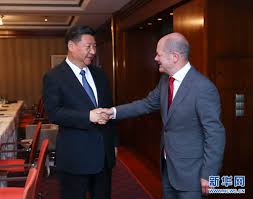
The last time that Xi Jinping visited France (2019) Emmanuel Macron presented him with a 1688 copy of ‘An Introduction of The Analects of Confucius’. Xi is back in Paris this weekend, his fourth visit, placing France alongside Kazakhstan and South Africa as Xi’s favourite destinations after the US (five visits) and Russia (nine).

As such, the question on my mind is what book Macron should give him this time?

He might start with something on Germany, notably Fritz Stern’s ‘Gold and Iron’ to remind us of what a strong chancellor sounds like (Bismark coined the notion of ‘blood and iron’) and indeed to highlight the link between capital and diplomacy. This is relevant because the first dilemma for Macron is how to steer Olaf Scholz toward a tougher political view on China, given that the German economy remains heavily dependent on China. Macron and Scholz had dinner together (spouses included) in Paris on Thursday.

We don’t know what was discussed – the installation of Mario Draghi as a replacement for Ursula von der Leyen, and Germany paying France to broaden its nuclear deterrent to an EU level – are two possibilities. China’s stance towards Ukraine, its deepening alliance with Russia and the ‘dumping’ of Chinese electric vehicles are topics that were most certainly broached. The mystery is Scholz’ insistence on continuing with a visit to the Baltic states on Monday (6th May) when he could have accompanied von der Leyen and Macron to greet Xi. It might be that Germany just wants to keep its ‘special’ relationship with China to itself.

Macron might reflect that at least by having von der Leyen there, the case will be made to Xi that visiting Hungary and Serbia, two ‘bad’ actors, at the same time as France is very bad diplomacy by China. It shows that either China is very far away from a cultivated form of soft power, or that it is now so committed to its relationship with Russia that it cares less about what Europe thinks of it.

At the same time, China has lost Italy as a member of the Belt and Road group, and most of the Baltic and Eastern European states regard it with deep suspicion. Macron should dig out a copy of ‘White Eagles over Serbia’ by Lawrence Durrell to make the point that any influence operations out of Serbia will be contested.

If he is feeling imperial (often), Macron might offer Xi a copy of Claude Martin’s ‘La Diplomatie n’est pas un dîner de gala – mémoires d’un ambassadeur’, all 946 pages of which are a reminder of the grandeur of French diplomacy, China’s humble origins and of course how far it has come, spurring demand for French handbags. I should say that, nice caricature as it is, handbags don’t make it into the top ten of French exports to China.

In that respect the substance of the Xi visit will likely be about the ways in which Europe will derisk but not decouple its trade relationship with China. At this point, I suspect that from the point of view of sensitive technologies, much of the de-risking has happened, and that EU-China trade relations are bottoming out (I expect little warmth at the diplomatic level). Both regions will for the time being regard each other as a ‘hedge’ should Donald Trump be re-elected in November and restart a series of trade disputes. Europe does not see China as a close or natural ally, but it may also be useful to preserve civil relations with it lest American politics takes a wrong turn.

To return to the question I mentioned at the top of the note, perhaps the book should be on economics, specifically asset price bubbles and speculation, an original 1841 version of Charles MacKay’s Popular Delusions and the Madness of Crowds’. An even better idea might be some of the original pamphlets (I know where to find them) relating to the scheme of John Law, the Scotsman who blew up the French economy in 1720. It is a tale of financial engineering that few countries have surpassed, with perhaps, the exception of China.

With best for the week ahead

Mike

CMU IOU

On Thursday last, Emmanuel Macron gave his second ‘Sorbonne’ speech (the first was in 2017) which consisted of laying out, once again, his vision for Europe, though in a more bleak way, and as it happens, periodically stating ‘I’ve gone on for too long’, and then speaking for another twenty minutes.

I was in London at the time so didn’t have the opportunity to walk up the hill to eavesdrop on the president, but it did remind me of another Sorbonne speech, given some twelve or so years ago by Jack Lang, in honour of the Irish president Michael D Higgins. Jack Lang was called upon at short notice because Jacques Delors was ill, but he nonetheless gave a very credible talk on Irish culture, notably on the work of the playwright Sean O’Casey.

I left the Sorbonne as soon as the speech finished, and so did Lang and serendipitously I had the opportunity to walk back towards the 4th arrondissement in his company. What I was most struck by was the number of people who stopped Lang in the street, to shake his hand or take a selfie, and I am not sure that there is a French/German or other European politician who would get a similar reaction whilst traipsing across their capital city. The lesson then is that there are votes in culture, but maybe not grand ideas on geopolitics or finance.

To be fair to Macron, he is one of very few European large country leaders capable of setting out a vision for Europe (Stubb and Tusk might also have a go). Some elements of the speech – to make Europe a world leader in spacetech and AI by 2030 are, from my experience, not credible. Similar goals in quantum computing, new forms of energy technology and biotech are.

The real question however, is who is going to pay for it? Is Macron – and Europe for that matter- a Madame Bovary, addicted to fanciful spending with no means to pay for it?

Compared to the US, Europe is much less well equipped to finance these new technologies at scale. Japan and China are also constrained, but China to a large degree can commandeer private industrial capacity.

One early response to the need for Europe to become more dynamic financially was the launching in 2014 of the capital markets union (CMU) which was headlined by the aim of moving corporate financing away from bank lending to deeper capital markets, and the harmonisation of finance regulations so that capital can flow better across the euro-zone.

The capital markets union soon fell by the political wayside (there have been some advances such as the ELTIF – long-term financing product but little has been done to align pension, insolvency and tax frameworks). However, while the likes of Macron are now touting CMU is a necessary part of Europe’s ‘rearming’, EU leaders ducked the chance to accelerate CMU at a summit last week, arguing it would impose greater costs on local asset managers (the reality is that capital markets in those countries – from Ireland to Belgium – continue to shrink).

This is a great disappointment, and it is little surprise then that the overriding tone of Macron’s Sorbonne II speech was urgent. The irony now, given France’s reputation for regulation (the best explainer of this I have read is Augustin Landier and David Thesmar’s ‘Le Grand Méchant Marche) is that it is mostly French officials (Macron, Lagarde, Le Maire) who are pushing for capital markets union. Indeed the former ECB official Christian Noyer has launched a policy initiative in the space.

The sense of urgency should be all the greater when we hear that the US economy (which was the same size as that of Europe before the global financial crisis) is now 70% larger, and that JPMorgan has a market capitalisation as large as the top ten euro-zone banks. America’s ability to fuel innovation and business operations with finance is exceptional, and the failure of governments in many European countries to properly acknowledge this is disappointing.

My suspicion is that the paths of least resistance will be the loosening of investment regulations so that wealthier, professional investors can access segments like infrastructure and private equity, and even more likely (this will also be the case in the UK under Labour) that Europe’s technology infrastructure of the future will have to be funded by private capital, much of it from outside Europe. A halfway house towards realising this objective will be to permit state and semi-private pension funds invest more in private equity (along the lines of the Canadian model)

Doing so might also provoke a radical change in governance, where pension funds have to be more active and where there is greater public representation on boards. It is an experiment worth trying, far more so than the option of forcing pension funds to hold more government bonds, and thus saving the political skin of politicians in indebted countries.

Have a great week ahead,

Mike