Orientalism

It is likely that many of the people protesting for Palestine in US universities will have read Edward Said’s book ‘Orientalism’, or at least will have an idea who he was. It is also likely that they will have heard of Donald Trump, whose ire at these protesters has led to an unexpected fiscal crackdown on many prominent US universities including Columbia, where Said used to teach (see our recent note ‘University Challenge’).

In brief, the tack of Orientalism was to criticise the construction of a superior, Westernised view of the Middle East (the term was coined by navigators in the US Navy), that is then internalised by members of the Middle Eastern elite. At this broad level the theory was  attractive, but runs into many practical difficulties such as Said’s downplaying the role of women, and the failure of many Middle Eastern countries to develop economically and to nurture the kinds of open society that Said liked to live in. 

As with many facets of the debate around the Middle East, ‘Orientalism’ has become a badge of honour for many, and a contentious identifier for others, and there is a risk that many people who hold the ‘Orientalist’ view, have not updated their outlook for say the rise of Al Qaeda in the broad region and the effective domination in the last decade, of Palestinians by Hamas.

I doubt that Donald Trump has read ‘Orientalism’ (I think his speechwriter might have though) but in the light of the Western perspective of the Middle East, his visit to Saudi Arabia was striking in two respects.

First, like any clever politician, he confirmed the view that several countries in the region want to have of themselves

– ‘this great transformation has not come from Western interventionists … giving you lectures on how to live or how to govern your own affairs. No, the gleaming marvels of Riyadh and Abu Dhabi were not created by the so-called ‘nation-builders,’ ‘neo-cons,’ or ‘liberal non-profits,’ …instead, the birth of a modern Middle East has been brought about by the people of the region themselves’

To a degree, Trump’s view is not correct. The economies of the UAE and KSA were built on Western know-how (see David Mulford’s ‘Packing for India’ for example), and many of the financial institutions at least have mimicked those in the US and UK. Also, a large number of army officers from the region have been trained in imperialist bastions such as Sandhurst.

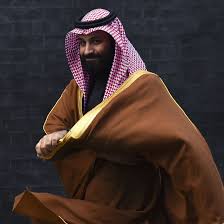
At the same time, the miraculous growth of these countries can be ascribed to local vision and leadership, on a scale only matched by Lee Kuan Yew in Singapore. And, consistent with the ‘Orientalism’ thesis, many people in the West do not acknowledge the rising institutional role that Abu Dhabi plays in the region, or the extent to which Mohammed bin Saman has become a hero for the youth in his country. In that regard, we might say that the model the Middle Eastern countries have followed is the ‘Sinatra Model’ (‘do it my own way’) with a slight American twist.

The President’s address struck a chord because in the Emirates and the KSA in particular, there is a growing pride and independence in what these countries have achieved economically, and on my last visit there a few months ago, I found that there was little patience on the part of government officials to for example, have EU regulatory standards imposed on joint investment projects. In a note I wrote at the time I flagged how locals had developed their own acronym of the West (W.E.N.A.), surely proof that the ideas in ‘Orientalism’ are dated.

Trump’s speech will be a big disappointment for those who believe in institutions and the idea of nation-building, and in that regard will turn on its head the efforts of so many in the State Department and other institutions. Neither does it augur well for current day American institutions.

The speech also brings into focus what Prof. Afshin Molavi refers to as the existence of ‘two Middle Easts’, namely a geopolitical one (sustained by American defence agreements) and an economic one. Chillingly in the context of the annihilation of Gaza, the Trump speech has tilted the momentum towards the economic version, and I feel that many people in Europe vastly underestimate the focus that governments in the region have on the economic prize, as opposed to the humanitarian catastrophe.

Various countries in the region from Qatar to Syria, may now find themselves the beneficiaries of Mr Trump’s lack of attachment to history and the democratic model, and it is very likely that the region known broadly as the Middle East will be one of the very few in the world to profit from his presidency, and will spearhead a move towards a model of materialistic, technocentric non-democracies, that some of Mr Trump’s supporters have in mind for the USA.

The emergence of the ‘Fourth Pole’, a prospective multipolar zone that will become the beneficiary of trade tensions between the ‘older’ multipolar zones (US, EU, Asia), is still very much on track, but as it develops it will increasingly need institutions, markets, rules and means of binding people to the region, none of which Mr Trump can help with.

The Policeman Premium

I vividly recall seeing Imran Khan give a speech in the mid-nineties, in an era where many sportsmen had what was described as colourful backgrounds he stood out as particularly ‘Bond’ like – at the very top of his game as a cricketer and a ‘playboy’, as the saying goes (at the time he was engaged to Jemima Goldsmith). There are few people who have had such adventurous lives – and Khan’s is interesting for the ways in which he changed tack – towards Islam and politics (he served as Pakistani prime minister from 2018-2022) and his change of fortune (he is currently in solitary confinement in a Pakistani prison).

Whilst Khan’s rise and fall is complex, he ultimately fell foul of the Pakistani security establishment who allegedly became uncomfortable when Khan condemned foreign (US) influence in Pakistani public life. Khan was also the victim of an assassination attempt in 2022, something that has marked Pakistani politics (Benazir Bhutto was assassinated in 2007 and her father Zulfikar was executed in 1977).

In this regard one of the few constants in Pakistani politics has been the ever-present role of the security services in the affairs of the state, and specifically their tactic of creating private armies and terror groups. This has embarrassed them on at least two occasions – the discovery that Osama bin Laden was living in near plain sight in Pakistan and repeated attacks by the Taliban inside Pakistan. Add to that the 2008 Mumbai attacks perpetrated by Lashkar-e-Taiba, and the sense grows that Pakistan has been playing a dangerous game.

In this regard, India’s response to the killing of 26 people in Pahalgam (in Indian controlled Kashmir) took aim, it said, at terrorist infrastructure, in the most serious escalation between the two countries since the very early 1970’s. The subject of this note is not to predict how this conflict will play out – it could be costly, bloody and messy (India has reportedly lost five jets in its initial sortie) but to wonder why this confrontation is happening now and how much of this has to do with the alliances that the two countries have struck.

While India and Pakistan are both members of the Shanghai Cooperation Organisation, Pakistan is the much more active member and very close to China, Iran and Russia. While a lot of Indian hardware comes from Russia, its foreign policy projects the country as an independent actor, India is aiming for a close relationship with the US with whom it may sign a very high level trade deal (it has just completed a modest trade agreement with the UK).

It is very likely that in a different diplomatic regime the Pahalgam attack would have been met with intensive diplomatic engagement by the US, with India whom it regards as an ally and Pakistan, which it funds generously. This has not happened this time, and the tempo of involvement of the White House in this particular regional conflict has not been on a par with other administrations. It is so poor that vice president Vance has declared, in a most un-Kissinger like manner, that ‘it is none of our business’.

Indeed the recent death of Joseph Nye, the political scientist who developed the term ‘soft power’ and who wrote much about America’s engagement with the rest of the world is a reminder that one of the key elements in the old, globalised world order was America’s role as a policeman – with a near monopoly over deadly force and a very active, alert diplomatic corps. An example of this can be found in Brad Hope and Justin Scheck’s book ‘Blood & Oil’ that describes the rise of Mohammed bin Salman as the ruler of Saudi Arabia. For decades the US has steered Saudi diplomacy, and Saudi rulers have guided America in the region. However, the book describes in some detail the lack of strategic direction of the first Trump administration in the military and diplomatic affairs of Saudi Arabia, beyond the organisation of a lavish welcome ceremony for a Trump visit to the Kingdom.

The second Trump administration looks set to entirely do away the role of world policeman, and cynics might say, replace it with the role for rent collector. As such, the geopolitical risk premium will rise, and may help to explain why there are at least two conflicts where basic needs (water) are being weaponised (in Gaza and India/Pakistan). When it played the role of world policeman, the US kept the peace, much to its own advantage.

Now in the context of the very obvious dropping of moral guardrails around international relations, other countries will be less bound by a sense of world order, emboldened by an arms race, and will start to take risks and make mistakes. India-Pakistan is a very dangerous case of this, and one that draws into focus the trade-off between the cost to America’s role as world policeman, and the global ‘peace’ dividend it brought.

Grasshopper

I had intended to write about universities this week but, strolling through the City of London, I was surprised, shocked even, to find myself on Trump Street, and then amused to see that it is joined by Russia Row.

My first thought was that this was part of a grand plan by the British establishment ahead of President Trump’s visit to London in September, the idea being to stage an event at the nearby Guildhall and to then tell the president that a nearby street had been named after him. Trump Street was apparently named so because several trumpet makers lived there in the 18th century, but let’s ignore that for the time being.

Yet, the far more meaningful coincidence of Trump Street is its proximity to Gresham Street.

Sir Thomas Gresham was a trader and financier in 16th century London, at a time when coffee houses in the lanes around the Royal Exchange formed the basis of what is known as the City. Gresham was an important player in Queen Elizabeth I’s economy, and his emblem – a grasshopper – is still present in various parts of the City (there is a giant-sized golden grasshopper on the roof of the Royal Exchange….if you can dare to make it up there).

While Gresham’s imprint can be seen across the City, he is remembered by Gresham’s Law which was named after him and states ‘bad money will drive out the good’. Gresham’s Law which echoes similar observations from Copernicus and other scientists through the ages is founded on the idea that in an economy where coins with the same face value but that are made from different base metals (say nickel and copper) there is a tendency for traders to hoard the coins made of the more valuable metal and to circulate lower quality coins. Bad coins stay in circulation, good ones are re-commoditized. From an economics point of view the law is conditioned on all the coins (of variable quality) having the same face value.

Unlike the 16th century, today, coins have the same physical consistency and in general there is little incentive for people to shave bits off coins (historically coins have serrated edges to prevent this) but broadly the Gresham’s Law is applicable in different domains.

Think of how cheap goods (made under questionable labour conditions) have forced quality players out of markets, or how in the run-up to the global financial crisis, low quality financial institutions offering generous loan conditions caused better quality banks to step back from lending. In both cases, regulation or policing of markets is necessary to ensure that ‘bad’ actors do not gain an advantage over good ones. Social media is another example, where it seems a lot of nonsense thrives at the expense of information.

Additionally, the idea of Gresham’s Law is applicable to politics, where in many countries it appears that political actors with extreme views and extreme modus operandi are forcing out ‘good’ ones in the sense that most normal people would be terrified of a career in politics.

Readers will guess that my argument is leading back to Washington. Bad behaviour, bad ideas and bad policies are infesting themselves in public life, the economy and markets – to the surprise of many ardent supporters of President Trump. What is not clear is whether this will result in an evacuation of capital and talent from the US, or whether there will be a counter-reaction. Gresham’s point in describing how bad money drives out good was to avoid the debasement of the currency (schilling), which when Elizabeth I came to power, was already in a bad state. She appointed Gresham as a finance minister of sorts in 1560, and within a year he had ‘bad’ coins taken out of circulation and replaced them with money made from precious metal, the result of which was a dramatic improvement in Britain’s status as a trading and economic power.

The lesson of this should be very clear today. As a final point, it is interesting to note, from the point of view of coins and money, that the ratio of gold (precious metal) to a cyclical commodity (copper) is the most stretched it has been since at least the 1980’s, suggesting that markets at least are thinking of Gresham’s Law.

Have a great week ahead

Mike

Watching and Waiting

N’interrompez jamais un ennemi qui est en train de faire une erreur.

During the Battle of Austerlitz, Napoleon quipped to one of his commanders (General Soult) that one should never interrupt an enemy when he is making a mistake. Austerlitz was one of Napoleon’s tactical triumphs, but some seven years late the Emperor gathered one of the largest armies ever assembled and crossed Russia. The Russians burnt Moscow, harassed the French army and then patiently waited for the cold weather to cruelly teach Napoleon the error of his way (Sylvain Tesson’s book ‘Berezina’ offers a lively account of the retreat from Russia).

In a similar vein, as another modern-day, would-be emperor careens from financial calamity to geopolitical catastrophe, my sense is that the world beyond America, is best served by waiting and watching.

In the next two months the economic damage to America from the tariff campaign will become clear. The corporate earnings season has just started – some of the large banks have done well from the trading volumes created by market volatility – but as the focus turns to technology and other export focused firms, we can expect to see significant drops in earnings, a development that will make the still high valuation multiples for the US stock market hard to sustain. Relatedly, while investment banks are profiting from volatility, most of them are reporting that capital markets activity (public offerings, mergers and funding rounds for private equity firms) have stopped dead.

This is a shock for Wall St. With president Trump having installed a market trader as commerce secretary, a hedge fund manager as Treasury, a private equity titan in the defence department, and so on, capitalists might well have thought that the White House was on their side, but the annihilation of up to 8 trillion dollars in market capitalisation has proven them wrong. There is I imagine, a limit to Wall St’s patience and the pushback on policy will grow.

As it does, the hard (as opposed to ‘soft’ survey) data is likely to worsen dramatically, and the US will enter into an economic breakdown. At the start of this year I had sifted through the IMF GDP forecasts for 2025 and 2026, where uniquely they expected nearly all of the world’s economies to register positive growth. From this starting point, a global recession was a very low probability, but the Trump administration has blundered into one.

Now, policy makers in the US and abroad are realising that watching and waiting is the best way to entice Trump away from his tariff policy. There were signs of this on Wednesday when the Federal Reserve chair declared that tariffs would augment inflation and make it much harder for the central bank to cut rates. This statement represents quite the departure for a monetary authority that has greeted every flicker of economic trouble with lashings of cheap money. Mr Powell knows very well that it is not the job of a central bank to fix the mistakes of an errant policymaker, and very likely that a short, sharp market shock now might deter a great fiasco (and the credibility of the dollar) later.

In contrast, other central banks, who are unburdened by any sense of conflict of interest with Mr Trump, can feel much more free to cut rates into a coming recession, as the ECB did on Thursday. In that context, we may see the dollar strengthen in coming weeks, and much of the stress of the White House policies on the economy, transferred to the corporate bond market.

Then a key, patient player in this unfolding drama is China which, whilst it has deep economic faultlines of its own, is politically and socially coherent enough to weather the onslaught from Washington. Like the Russians who took on Napoleon, China’s strategy is partly one of endurance, partly ‘guerrilla’ (think of rare earth export controls, supply chain manipulation leading to shortages of goods in the US) and a patient attitude to the market turmoil that is starting to undermine the financial credibility of the USA.

Europe may follow suit. Giorgia Meloni spent Thursday in the US with president Trump and then raced back to Rome to host JD Vance. Her visit was useful in terms of Italian and EU diplomacy, but the EC is carefully signalling to Washington that any negotiations on trade will have to be done through Brussels alone, which as the Brexit process revealed, is a hard defence to breech.

Napoleon left Moscow in the middle of October 1812, eventually to creep into Paris just before Christmas. His army was devastated, only 100,000 or so men from an initial force of 600,000 survived. Donald Trump is no Napoleon. In two months’ time the US economy may well be in a state of disarray, consumer confidence and confidence in the president will likely have plummeted further, and the world will be watching and waiting for his capitulation.

Have a great week ahead

Mike

Did no-one see it coming?

In November 2008, in the darkest hour of the global financial crisis, Queen Elizabeth II asked an audience at the London School of Economics ‘Why did no one see it coming”. We might ask the same question today in respect of Donald Trump’s tariff war, where he has diminished the things that he was reputed to hold dear – the economy, the stock market and the dollar.

One disturbing template that might offer insight into the path that the American economy takes is Brexit. As noted by the current prime minister of Canada, Brexit was not the solution to the problems that Britain faces. Certainly, the disengagement of the US from the world trade system is becoming as soap operatic and sometimes ludicrous as Brexit was.

An even more pertinent example might be Britain at the turn of the 19th century when there was a palpable sense that the might of its empire was peaking. At the time tariffs and trade were widely debated, and leading politicians like Joseph Chamberlain proposed the idea of an ‘imperial preference’, a lower tariff on trade with its colonies, to create a trading zone that would buffer the rise of the US and Germany.

To a certain extent, tariffs and trade became the issue of the day, but in the 1906 general election the public voted overwhelmingly for liberal, open trade (less restrictive tariffs) candidates. This I suspect was also the intention of those who supported Donald Trump in November last – keep the economy and markets strong, whilst evening up the status quo (a little). That tariff rates set by the US (and China) are at levels only last seen in the 1920’s completes the shock, and rhymes with history.

One reason tariffs were a popular policy tool one hundred years ago is that the fiscal side of the economy was not well developed (only a small proportion of Americans paid tax) and, in some cases, central banks did not exist. Today, tax systems are well developed and as small, open economies show, they are the best mechanism to reduce inequality, and to entice investment, both stated objectives of the Treasury secretary.

This particular market crisis is interesting because it is nearly entirely man-made. Turkey has taken a similar path in recent years, all but eviscerating its bond market and currency, but these are inconsequential compared to the depth of US markets. Whilst the president has stepped nimbly and profitably (some say) away from the financial brink, he still risks contagion of his actions in a number of respects.

Two such risks loom on the horizon, an economic war with China and a crisis of credibility in US financial assets.

We are now led to believe that ‘it was China all along’, but it would have been easier to tackle China with the support of America’s former allies in Canada, Japan, the UK and Europe.

For its part, China has plenty of tools to respond to the US with – it can allow its currency to weaken further and through supply chain disruption can inflict higher consumer prices, shortages of goods and lower (Chinese) demand on the US. Informal boycotts of American goods, investigations of US service firms and rare earth restrictions are just a few other tools at China’s disposal.

Should an economic war between the US and China materialise, my sense is that a supportive response from the Federal Reserve has been made less likely by Wednesday’s tariff capitulation by the White House, which demonstrates how arbitrary policy is under this administration.

In the longer-run, the actions of the Trump team could manifest themselves in a capital crisis in the context of the way they have undermined confidence in the US and by extension its financial system. What the likes of Peter Navarro seem not to have grasped is that the quid pro quo of America’s trade deficit is its enormous financial power – the role of the dollar and Treasuries as lynchpins of the international financial system, the dominance of US financial systems and its integral role in the fabric of capital markets, and the capital that overseas investors provide them.

With Mr Trump behaving in the way that some might caricature as ‘emerging market’, If we apply an emerging market stock market valuation rating to US stocks, the SPX index would be half its current size for instance. Equally, the mid-week selloff in Treasuries which was most likely the result of hedge funds unwinding positions, but the poor performance of bonds underlines the sceptical view that markets are starting to take on the administration.

In this context, we may be at the beginning of a great unwind of American financial power.

Have a great week ahead,

Mike 
Learning to Love Lenin

I’ve spent much of the past quarter of the year zigzagging across Europe and the US, cursing Vladimir Lenin as I went. He is reputed to have coined the phrase ‘there are decades where nothing happens; and there are weeks where decades happen’, which in turn has been repeated back to me wherever I went. I shouldn’t be too grumpy though, because the ‘Levelling’ is now playing out at high speed.

Since Donald Trump entered the White House for the second time, so much has happened that I want to use this note – coming at the end of the first quarter of the year, to discern new emerging trends from noise, across four different domains.

Bonfire of Diplomacy

The first emerging trend can be characterised by the image of the bonfire of diplomatic relationships, which started at the Munich Security Conference and has continued apace since then. Gone is the cosy globalised world of Bill Clinton and even George W Bush, where America was a benevolent colossus, keeping the peace, spurring prosperity, and putting out financial fires. In my travels, I found myself recommending investors to read Adam Smith on the topic of mercantilist economic behaviour, Palmerston on foreign policy (‘we have no allies, only interests’) and that they acquaint themselves with Peter Hopkirk’s ‘Great Game’.

In brief, my sense is that the Trump team wants the US to become a hyper-charged nation-state, rather than the hyperpower that it was. Whilst there is much consternation in Europe and parts of Asia about this, I do not yet detect widespread disapproval from many Americans I speak with.

Aux Armes!

A consequence of this is Defence Union in Europe. Echoing the French president, we are all ‘strategic autonomists’ now. Many of the urgent phases in this journey are already being undertaken – the publication of the pragmatic EU White Paper on defence, the EU’s new Eur 800bn loan facility for defence spending and critically Germany’s decision to loosen the debt brake provision on defence spending.

Some intelligence agencies (Denmark and Finland for instance) estimate that in the event of a peace deal in Ukraine, Russia would be ready to launch a war on a European country in two years’ time, and in five years could have rebuilt its military to a level that it could consider a war against the EU. The Nordics, Baltic states, Poland, Germany, France and of course the UK appear to buy into the seriousness of this threat, but there are notable defence laggards, namely Spain and Ireland.

Neither does it seem that there is sufficient urgency on the security front – my experience was that Russians were omni-present in the cafes of Vienna and arguably not enough is being done to sanction governments that are apologists for Moscow (i.e. Hungary).

The one aspect of the European revival story I need to be convinced on is the cultivation of a pro-growth socio-economic outlook in countries like France, and specifically, of the need to instigate capital markets union (CMU), which whilst not a vote winner for politicians, is a necessary development for a stronger European economy.

Oops – muscle not fat

The economic policy of the Trump administration is difficult to decipher through the noise of chainsaws and crashing of markets. At its core, I detect a nihilistic fiscal conservatism – a desire to shrink the fiscal deficit and by extension the enormous debt load that means that the USA pays out far more in interest payments What is causing dismay is that the policies enacted to temper the growth of the economy are cutting economic muscle not fat. Universities, researchers, and essential parts of the science establishment are being undercut, and socially it is disturbing to see veterans bearing the brunt of DOGE. More importantly, the shredding of the rule of law and politicising of justice have never helped any economy (Turkey is the case in point).

Whilst much of the media coverage of the Trump economic policies has focused on the harm caused by tariffs (they should be applied in small, not massive doses), not enough attention is given to how corporations will react to policy uncertainty. In a recent note I described Avinash Dixit’s theory of how macro uncertainty causes companies to ‘wait and see’. In that respect the forthcoming earnings reporting season and corporate action calendar bear close watching.

Exceptionally expensive

Allied to the outlook for the US economy is a growing realisation on the part of investors that American assets (the dollar, stocks and corporate bonds) are very expensive, and dominate portfolios. In this regard, the Liberation Day announcement should worry investors. One is the sheer carelessness and apparent incompetence of the tariff policy – it has exposed the lack of analytical capacity in the administration and a lack of concern for the economy. Trust in the administration is draining.

The other is that it has reminded investors of their exposure to US assets. At this stage, the majority of asset allocators in the investment industry still appear content to persist with very conventional portfolio structures, that are arguably not configured for a rapidly changing world.

One thought experiment I perform with investors is to show them how portfolios have changed through time. For example, in 1900 nearly 50% of stocks were railway companies, and the UK made up 25% of the world stock market (close to 3% now). Today the US weighs in at close to 68% of world equities, and my sense is that with the dollar still relatively strong, allocators should start to sell American exceptionalism in the sense that it is impounded in stock valuations.

A final lesson from Lenin might help them. For much of the period of the first wave of globalisation (1870 to 1900) Russian equities comfortably outperformed American companies. But, having been shut for much of the First World War, the Russian exchange opened again in January 1917. Then came the Revolution and the market dropped to zero and shut for 75 years.

Political risk matters!

Have a great week ahead,

Mike

Clime and Punishment

This January was the hottest January on record, at a temperature of 1.75°C above the average for the month (2024 was the hottest year on record with 150 extreme weather events). February was the month with the highest level of economic policy uncertainty since the 1990’s (excluding COVID). Something must be brewing but, the global narrative is so concentrated on the White House and intensely short-term that in a way, the future has been obscured.

Whether we like it or not, climate damage is part of that future path, and will play its own role in the disorder and re-ordering of the international political economic landscape to come. Regular readers will know that in the framework of my ‘Levelling’, imbalances like the crisis of democracy, climate damage and debt will have to be overcome before a new world order is fully established.

 In particular, the deepening of climate damage and the rise of indebtedness are correlated and both are ‘world’ problems, at a time when coordination between the great powers is at its lowest ebb since the 1930’s. For game theorists at least, this produces a tricky equation – how to achieve a global solution or compromise when the main players in the game are trying to steal a march on each other.

Some of the pathways for climate warming are worrying (taking a range of datapoints from the IPCC, Berkley-Earth institute and the Global Carbon Project), if countries implement the commitments agreed at COP-Paris then global warming will be 2.4°C higher than the long-term average temperature by 2050, with current climate policies the increase is expected to be close to 3.5°C and with no climate policy adjustment it might be in the range of 4-5°C. Granted that a 1°C change in world average temperature can translate into a 4°C increase in some of the most climate precarious countries, this last scenario is frightening.

If climate damage encroaches on some of the thresholds mentioned above, it will become even more of a strategic issue for the economy (there is a good literature review here), the technology sector, financial markets and security. Indeed, the 2023 yearly threat assessment produced by the US Director for National Intelligence highlighted that ‘Climate change will increasingly exacerbate risks to U.S. national security interests’.

This report might well become a collector’s item because Pete Hegseth the new Defence Secretary recently (Jan 25) tweeted that ‘The (Department of Defence) does not do climate change crap’. Whilst the US economy is a very powerful driver of climate technology (Texas gets nearly a third of its electricity from wind power), its absence as a moral leader will mean weaker climate policy adherence by other countries.

In that context the link between climate damage and security will have to be made by others, notably the excellent team at UCL’s Dawes Centre for Future Crime, with whom I spent time last week exploring how climate damage is provoking new forms of crime and threats to security that go beyond the simple theft of copper wires and solar panels (a vibrant trade apparently).

There are a few strands in this emerging, important debate to draw out. Climate damage will in the long-run change cities, geographies and economies and produce migratory trends that malevolent states or non-state actors (gangs and organised crime) will exploit. Energy infrastructure is becoming more stressed because of climate change and the side-effects of this were evident last week with the closure of Heathrow following a fire in a nearby electricity substation.

In a more futuristic vein, the response to climate warming will create new technologies, some of them in the realm of geo-engineering which may be able to alter the effects of climate damage, but that might also be commandeered for harm. Then there is AI, which itself will create much greater demand for electricity, but that can help optimise energy usage, though the AI itself is vulnerable to manipulation.

Climate change is also leading to the development of new marketplaces – for carbon credits for example, as well as ESG driven assets and debt, but these new forms of financial market infrastructure are often illiquid, improperly regulated and prone to fraud.

What all this points to is that as climate damage provokes innovation, new infrastructure, technologies and markets in the context of a world where security is now a priority and where non-state actors (i.e. gangs) become more powerful and daring, the response to climate damage now also needs to have countermeasures built into it.

Have a great week ahead

Mike

From Brexit to Dixit

When the UK voted to leave the European Union, there was a strong consensus that proximate economies would suffer the macro fallout – Ireland, Belgium and the Netherlands were all expected to take a hit, and in particular I recall speaking with business leaders in both Brussels and Amsterdam at the time and registering their concerns for the local economy. In fact, Brussels was strengthened as a political capital by the way in which it managed the Brexit process, and Amsterdam has been bolstered as a financial capital by Brexit.

Returning to both cities, which sadly are off my well beaten track, I found great curiosity regarding the vision and tactics of Donald Trump. Like Brexit, Trump’s first term was about smashing globalisation, whilst his second term is an attempt to create a new world order, or at least a new American role in the world order.

The prosecution of his tariff strategy has been chaotic and unpredictable, and there are signs that the DOGE project to cut costs in the government sector is simply disruptive. As a result, policy uncertainty has spiked higher. For example, the Economic Policy Uncertainty index has shot to levels seen only during COVID. As such there is great concern that the US may tip into a recession or even that this is the express policy of the administration, with the goal of reducing borrowing costs (see ‘Un train peut cacher un autre’).

Neither the annihilation of the state nor tariffs may cause a recession, but uncertainty might. In this context, a very well regarded, though complex economics text worth knowing of is Avinash Dixit’s “Investment and Hysteresis’ appearing in a 1992 edition of the   Journal of Economic Perspectives, and later as a book co-authored with Robert Pindyck. Avinash spent much of his career at Princeton and is a kind, softly spoken and thoughtful economist, in contrast to many of the more head-line grabbing varieties of the species we hear from on social media.

One of Dixit’s pre-occupations was the ways in which companies made investment decisions, and to summarise his findings in a crude way, he noted that firms often didn’t react immediately to a change in economic circumstances but opted to ‘wait and see’. As a result, an environment of high economic uncertainty produces inertia on the part of companies (and investors), but this can be beneficial to them as it gives them the option to wait and see how that environment develops.

We are in a ‘Dixit’ moment, where companies are beginning to stall investment plans because of the uncertainty emanating from the White House and the ever deeper fracturing of trade and diplomatic relationships across the world. In financial markets there is a risk that the capital market pipeline remains constipated as mergers and initial public offerings are stalled.

Similarly, the growing uncertainty of America’s diplomatic and military intentions is causing nation-states to change course. For example, Portugal has just cancelled an order for F-35 fighter jets and will instead buy European planes, while the centrepiece of Australia’s military strategy, AUKUS, is in disarray.

It is difficult to tell how long this ‘Dixit’ moment persists, and much depends on the Treasury and White House being able to communicate a clear economic strategy. Notably the administration has been silent on its intentions towards China, which strikes me as odd given that many members of the administration are united in their antipathy towards America’s geostrategic rivalry (Marco Rubio for example published  ‘The World China Made’).

Until we have this clarity, markets will remain jittery, macro data will be unpredictable and activity will err towards the softer side in the US, but perhaps not in Europe where strategic clarity and ambition are picking up from low levels.

Granted that far too much of the macro debate focuses on the big multipolar zone (US, Europe and China), one of the pleasures of my visit to Amsterdam was the chance to meet with David Skilling (the expert on small, open economies) and also serendipitously with Afshin Molavi (the expert on ‘the other 75%’, by which I mean the emerging world economies). It is worth focusing a little on how both of these groups are adjusting to a changing world.

Many small open economies are now in a state of high alert, sceptical of the strategic consequences of the actions of the large nations. In many cases, they are mobilising militarily – the Nordics and Baltic states are an example, and in a recent note I detailed how Singapore, though it is one tenth the size of County Cork, it has an active army nearly ten times the size of that of Ireland, and a reserve army of 250,000 well trained soldiers).

At the other end of the spectrum, large populous emerging countries (think of Indonesia, Nigeria and Bangladesh) are worried about the fallout of the US-China rivalry, but in many ways non-aligned and ambitious for their own economies. On a more positive note Afshin and I think that our ‘4th Pole’ thesis – that the greater economic region linked by the UAE-Saudi Arabia and India – has the makings of a new pole of economic activity.

Have a great week ahead,

Mike

The Road to Serfdom

I was sauntering through the centre of Vienna last Wednesday, admiring its stylish cafes and bars, and Friedrich Hayek came to mind.

Hayek argued against the suffocating role of government (‘central planners’) on the economy and for greater individual liberty, and his arguments still contain a grain of truth in the context of many European economies. Ironically, Austria’s brand-new finance minister had previously worked as an economist for a trade union and might well prove to be an ‘anti-Hayek’.

Hayek was one of the inspirations (after he won the Nobel Prize in 1974) behind what many American libertarians call the ‘Austrian’ school of economics, and his book ‘The Road to Serfdom’ is undoubtedly on the bookshelves of the most ardent members of team Trump, alongside works like Ayn Rand’s ‘Atlas Shrugged ‘.

In the Americas, Hayek is a favourite of the ‘chainsaw’ economists, with a large dollop of irony given the push for total control of the economy by an elite. Indeed, the risk for Americans is that the dismantling of the government led economy in America risks turning Americans into serfs of the private sector. But, this scenario is not yet immediately obvious given the way public attention remains focused on Ukraine and the victims of American tariffs.

In the past six months, a very strong international narrative has spread around the notion of ‘American exceptionalism’. The US is exceptional in a few domains – fighting (military), finance and its multinationals. Donald Trump is using these exceptional pillars to influence other countries and to set in train his vision for a more isolationist America. The response from America’s erstwhile allies has been to rapidly re-arm and re-finance.

An important sign of this was the announcement by Friedrich Merz (with the SPD’s Lars Klingbeil and the CSU chief) of a new defence spending plan, which largely swerves the issue of the debt brake. That German and Japanese bond yields rose suggests that markets are pricing the reallocation of the bill for security as an international public good to America’s former allies.

The return of war as a topic in European debate will alarm many people, and it should not be underestimated. One of my recent notes highlighted how Europe likely faces an ongoing campaign of harassment, sabotage and destabilisation from Russia. The idea that Europe is on its own is now quite starkly taking hold.

While the drumbeat of war will add to stress in our lives, it is not (yet) part of them. For the great majority of people, the geopolitical debate remains one between elites, and so far, does not impact their everyday lives.

This is where European leaders need to pay more attention and try to reset the international narrative. If America is strong in fighting and finance, it is weaker in areas where Europe is strong, and we might say that the two continents are the mirror opposite of each other. In my view, Europe is strong in the areas that matter to most people, most of the time. Specifically, Europe, as a social democracy is the best place to live in the world (6.6% of the world’s population live in ‘full’ democracies), has generally free education and healthcare and its societies are peaceful (according to the UN, the murder rate in the US is 14 times that of Italy). Life expectancy in France for instance, is four years ahead of the USA. Health spending per capita in the US is well over double what it would be for a European country (13k vs. 6k).  

In this context, my counterintuitive argument (to the ‘chainsaw economists’) is that America needs less Hayek, and more ‘Europe’.

The absence of a deep social security system in the US, and the difficulty of accessing decent healthcare at reasonable prices means that a huge number of Americans live in precarity. Demolishing the department of education and cutting state aid to veterans are just two measures that increase vulnerability.

The trend that is emerging, and which will become starkly visible in a recession, is of an American society where a small but important number of households (say 20%) are wealthy enough to live well and access high quality education and healthcare, 40% of households live with the stress of becoming economically vulnerable and a further 30% live in serfdom in the sense that they have no leisure time (Newsweek estimates that one third of American workers has a second job).

Income inequality in the US is at historically very high levels, and the share of total income garnered by the top 1% of the workforce is tipping levels only seen in the 1930’s. Viewed from the point of view of wealth, 38% of the world’s millionaires live in America and over half of the ultra-high net worth (wealth over USD 50mn) individuals in the world are American. Indeed, the top 1% of wealthy Americans own 18.5% of all wealth in America, while the ‘bottom’ 50% of Americans own just 3% of wealth.

As such, the Trump 2.0 programme may not free Americans from serfdom to the government but will make them serfs of a private sector.

As a parting shot, Europe might need a little dose of Hayek. To that end, social welfare systems, state pension plans and healthcare spending may need to be streamlined across Europe as the security agenda becomes more prominent.

Have a great week ahead,

Mike

Un train peut cacher un autre

Adam Smith, though better known now as an economist held the chair of Moral Philosophy at Glasgow and as such it’s fair to assume that he knew a thing or two about the intersection of economics, philosophy and politics, and that often a political crisis is motivated by an underlying economic crisis…hence the title of this note.

Smith lived during a time of mercantilism, which we might describe as a nationalistic approach to trade that aims to maximise the exports of a country whilst keeping imports to a minimum. In this context, Smith wrote of mercantilist nations that ‘their interest lies in beggaring their neighbours’, and the phrase ‘beggar thy neighbour’ has been often used in the economic context, usually when growth is scarce (the aftermath of the Great Depression and the Global Financial crisis)

With mercantilism and ‘beggar thy neighbour’ back in fashion, it is worth returning to Smith’s ‘Wealth of Nations, book IV’ where many of the observations Smith made chime with America today, such as:

‘The sneaking arts of underling tradesmen are thus erected into political maxims for the conduct of a great empire … . By such maxims as these, however, nations have been taught that their interest consisted in beggaring all their neighbours. Each nation has been made to look with an invidious eye upon the prosperity of all the nations with which it trades, and to consider their gain as its own loss. Commerce, which ought naturally to be, among nations, as among individuals, a bond of union and friendship, has become the most fertile source of discord and animosity’.

To that end, beyond the bonfire of American values and diplomatic relationships, there is an emerging, underlying logic to the policies of the White House that China, Japan and Europe need to pay attention to.

I have written many times in this note that the world economy is in the antechamber of a fiscal-debt crisis (listen to ‘Waking up to World Debt’). Unusually, all of the major economies have become indebted at the same time, and the process(es) by which they try to reduce debt at the same time will likely prove extremely hazardous financially.

It seems that the Trump entourage understands this, and that logically the unifying factor behind disparate policies from the creation of ‘DOGE’ to the enfeebling of NATO are driven by a brutal sense of austerity, that starts with the cutting down of all the international public goods that the US has invested in since Bretton Woods.

In this context, the ‘beggaring’ of Europe pushes the bill for European security back across the Atlantic and has shaped the debate in Europe towards greater debt accumulation (for example the debt brake is one of the most contentious topics for the new German government and the EU will soon embark on the issue of EU defence bonds). Japan, South Korea and Australia might be next.

In effect, the White House is using areas where America is exceptional – financial markets, the military and multinationals – to coerce its allies, and in the case of Ukraine to undermine them. Debt might be next.

The closest we have to a template for a Trump grand macro plan is a paper written by Stephen Miran, who may soon take up the role of head of the Council for Economic Advisers. The elements in this plan have popularly become known as the ‘Mar-A-Lago Accord’, which is not unlike the world debt conference idea I have written about in The Levelling, though my version takes place in the recently refurbished Raffles (Singapore).

One of the pillars of the cited ‘Mar-A-Lago Accord is that holders of Treasuries exchange these securities for very long-term loans (that might not provide a coupon). The result would be to restructure the maturity and fiscal burden of America’s debt load. It is a neat idea but will not work in practice. Any debt accord will likely need the impetus of a major financial crisis as a motivator, will need to restructure the debt of all the major economies and will entail a rewriting of financial regulations across the world (for pension funds for example).

In reality, an attempt to enact a Mar-a-Lago Accord, in the same fashion as the debate around NATO, may create aversion (distrust in) to US financial assets and the dollar. Whilst Europeans may not appreciate the extent to which a ‘beggar thy neighbour’ philosophy is driven by US security policy, the White House is underestimating the value that America’s wide ranging financial, diplomatic and commercial infrastructure bring it. An example is that close to 40% of the revenues of large American firms come from overseas.

In the short-term, we are also starting to witness the effects of austerity on the American economy. Though ‘hard’ data on the economy remain solid, the outlook will become very noisy in the next few months as government job cuts take hold and as social welfare cuts (notably in the mortgage industry) sow anxiety. Markets have started to become jittery too, amidst a belief that the administration is much more focused on lowering bond yields (and thus the cost of government debt) than boosting the stock market.

In a scenario where the (US) economy weakens, investors normally turn to Treasuries, but the prospect of a Mar-A-Lago Accord being foisted upon them could lead to a buyers’ strike. The public attack on president Zelensky has disabused diplomats of the intentions of the Trump White House, investors could be next.

Have a great week ahead,

Mike