Charlie Chaplin and the Japanese bond market

The future all over again – satire and dictatorship

On May 15 1932 there was an attempted coup d’etat in Japan, led by a militant, nationalistic faction in the Imperial Army. The principal victim was the Japanese Prime Minister, Inukai Tsuyoshi. The perpetrators of the coup were given relatively light prison sentences, a pointer to the less democratic and belligerent Japan that would soon follow.

The bizarre element of the coup, which fortunately did not succeed was a plan to murder the actor Charlie Chaplin. The thinking was that such a deed would incite popular fury in the US, and thus lead to war, in which Japan would prevail. At the time of the coup Chaplin was watching a sumo wrestling match with the Prime Minister’s son, and thereby escaped the assassins.

This was more than lucky and in many ways Chaplin’s film The Great Dictator is a fine riposte to the destructive nationalism and totalitarianism that took hold across the world from the mid 1930’s. It is a film that still resonates today.

The view that this incident presents of Japan is also interesting. At the time, economically at least Japan was still an emerging market. Indeed the poor performance of the Japanese stock market around the second world war period is responsible for the historic muted performance of emerging markets relative to developed over the past seventy years.

While our view of Japan today is of a placid country, its history in the past two centuries is a reminder of the pitfalls of isolationism, nationalism and war – concerns that are now echoing louder across the international political economy debate. It should be said at the same time that that the post second world war relationship between the US and Japan is a good example of how two feuding countries can come together (Al Alletzhauser’s ‘House of Nomura’ is good on this topic).

That relationship is pivotal today for a number of reasons. First, a series of military equipment purchases by Japan, mostly notably of over 100 F-35 stealth fighters, manifestly aligns it as America’s fulcrum in Asia and unambiguously points to a change in its defence doctrine.

Second, as the world’s third largest economy, and a cyclical one at that, Japan is a large cog in the trade dispute between the US and China. There was a time when America feared the rise of Japan as it now does China, and any fans of economic history may know that during the 1980’s and 1990’s Donald Trump was an eminent Japan-trade basher. For those of you who want a market scare, the April 13 1987 cover of Time magazine carried an image of Uncle Sam pitted against a sumo wrestler under the banner ‘Trade Wars – the US gets tough with Japan’. The stock market crashed five months later. Does history teach us anything?

Japan may profit strategically from the curbing of China by America, though economically it will suffer from the diminution in world trade and through the side-effects of a stronger yen. In that respect, this weekend’s G20 finance minister’s meeting, lead by Taro Aso, is important as it offers an opportunity to begin to mend relations between the US and China. If this does not happen, then Japan’s bond market offers up a vision of what a trade damaged financial landscape may look like.

Last week, Japanese two year bond yields dipped towards minus 20 basis points, very close to the lows of the last decade. That German and many other euro-zone bond yields are at similarly low levels (indeed globally 11 USD trillion worth of bonds trades with negative yields) will encourage many commentators to suggest that Europe is the next Japan. In this respect if bond yields are a forecast of future growth, this is not an optimistic view.

Here, one of the central tenets of The Levelling is that there is too much debt in the global financial system, and that too little is being done about it. Quantitative easing makes this worse by diminishing the urgency which with indebtedness should be tackled and creating the circumstances where economic actors feel that they can take on even more debt. In many cases, Japan being one, debt clogs and distorts the economic system, and until it is paid back or restructured, economic growth in indebted countries (most of the world) will remain sluggish. Its all enough to make me think of Charlie Chaplin’s depression era film Modern Times.

Have a great week ahead,

Mike

Darwin comes to politics

Are political species about to become extinct?

Darwin has finally come to politics. Last week’s European elections saw the further paring back of incumbent parties that have been the pillars of the political establishment in Europe since the second world war. For example, in France the Socialists and Republicans received only single digit levels of support, in the UK the Tories and Labour were roundly humiliated and in Germany, the Social Democrats have seen their vote fall precipitously.

The collapse in the popularity of established political parties is just one element of the breaking down of the order of the past thirty years. To many who have grown up with the reassuring predictability of two-party political systems this will be very confusing, others might simply ask why it taken so long for Darwinian disruption to impact politics.  

Indeed, innovation and disruption characterize many industries and many walks of life. Should politics be exempt? Take business as an analogy: new companies and ventures often succeed because of a new technology or a shift in consumer behavior. Of the top companies by market capitalization in the United States, a good number did not exist twenty years ago.

However, in politics, many of the political parties prominent today have been around for a very long time. To take this analogy further: if the French Socialist Party, the Democratic Party in the United States, or the Tory Party in the United Kingdom were stocks, they would trade at a sharp valuation difference from their peers. If they were companies, their sales would be falling and talk would grow of a takeover.

In many ways, political parties have it easy; they are not subject to the same stresses as companies. Indeed, political parties are also lucky in that unlike, say, consumer goods companies, their “consumers” have been more loyal in their preferences. This stickiness is under threat. Persistently lowered income expectations, demographics, immigration, and the influence of social media all tend to lead voters to be less anchored by party heritage and identity.

Allegiances to parties tend to be built through families and communities and are only broken by the deepest of crises. In this way, the change of preferences being registered by many voters is a sign of both how societies are changing, and of the stresses being placed on those societies.  

Another reason established parties are drifting from their political moorings is that many of them are associated with events and individuals in history. As time passes, events foundational to their rise have less meaning and relevance for younger generations.

So far, diminished support for incumbent parties in Europe is occurring in tandem with the rise of both new parties and a resurgence in some parties with singular identities (i.e. Greens). What we have so far seen little of is a split in a major party. In coming months, it is not unreasonable to think that this could happen in the United Kingdom, in the sense that the Tories are split between Brexiteers and Remainers, while Labour is cleft between hard-left-wing Corbyn socialists and a moderate New Labour faction.

What is even more interesting is that US politics has apparently been spared the dislocations evident across Europe. Party unity may only be cosmetic. We can easily paint a picture of a political spectrum being stretched on the right between the Trump/Pence Republicans and the Bush country-club Republicans and then on the other side between the Sanders/Warren/AOC Democrats versus the Obama/Clinton Democrats. In the US, it may be that a fiscal or debt crisis is needed to break the Republicans or a more profound socio-economic crisis leads to a breech in the Democratic party.

One way in which mainstream parties have managed to survive in recent years is that they have co-opted radical people and causes. This was the case with the Republicans and Donald Trump and with the Tories and the Brexit referendum. The success of the Brexit Party in the EU Parliamentary elections now leaves the Tories exposed, whilst the financial and economic damage that Donald Trump’s trade war is doing may leave many Republicans questioning the party’s economic credentials and its fast evaporating reputation as the guardian of the economy and finance.

In the absence of a deus ex machina in the form of a third party government or international body (it could be the OECD in the run up to the G20 meeting), senior Republicans need to step forward with a framework that can safeguard the intellectual property rights of American companies, its national security whilst at the same time avoiding unnecessary economic and diplomatic shocks.

I can think of few current Republican senators and Congressmen/women who are ready to do so.

Have a great week ahead,

Mike

Secrets of leadership – vision and ‘glue’

The Levelling is published on this coming Tuesday (in the US). As an author who has to sell books, I should perhaps say that differently, something like ‘Globalization is dead, the Levelling is coming’.

In the very last part of the book I wrote that I finished the final edits whilst on holiday in Corsica, and that I had noted that such was the volatile state of world affairs, that I wished nothing too dramatic would happen until the book was published lest it upset the thesis of The Levelling.

What is strange is that while the last seven months have been very volatile in terms of financial market action and economic performance, relatively little has occurred in terms of what Harold Wilson called ‘events’. The one traumatic, unexpected event I witnessed during that time was the fire in Notre Dame, while the event that has yet to happen, is Brexit.

Elsewhere, President Trump has been busy prosecuting the end of the American century and the beginnings of a multipolar world, and unbeknownst to him, the onset of the ‘Levelling’. His actions have sidelined the institutions of the 20th century, many of whom are defunct. He is squandering American soft power at a moment when it arguably most needs it – in Latin America for instance, and he is vandalizing the wiring of the global economy.

Here, when economists and commentators address the issue of the trade war, they tend to focus on high level indicators such as the impact of tariffs on growth and inflation. What will be far more telling, but not yet obvious are the disruptive changes that tariffs and tough trade rhetoric do to corporate supply chains and to investment plans. There are already signs that corporate spending across Asia and the US is dropping, and we should expect that in many cases cross border investment flows will slow.

Arguably, uncertainty for corporates might be lower were there a vision for a post trade war international economic order. None exists, not in the White House and not in bodies like the World Trade Organisation (WTO). If anything, the White House is reacting against the vision offered by the concept of the Chinese Dream or Made in China 2025.

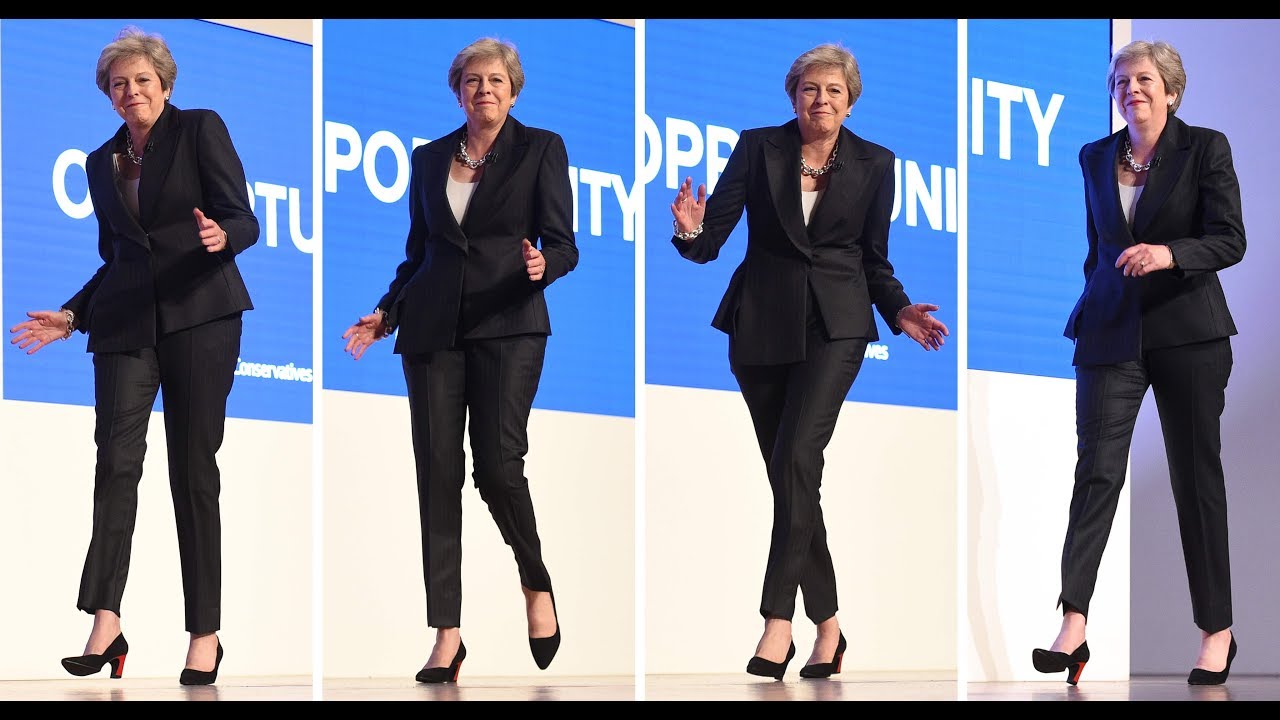
The notion that vision is important, leads me, by a tangent to the question of leadership. There are thousands of books on the topic – from the points of view of management studies, military experts, sports people and so on. Many writers have poured forth on the secret sauce of leadership, on ingredient of which must be ‘vision’ or more aptly the ‘vision thing’ as. Ronald Reagan had it in a very broad sense, George H Bush mulled what he called ‘the vision thing’ and Bill Clinton worked hard to enunciate his vision. Theresa May had none.

The reason that leadership is on my mind is that once the dust clears on the European Parliamentary elections, the haggling over the runners and riders in the next EU executive will take place. Here the most notable change will not be the entry of any particular character, but the exit of Mario Draghi from the European Central Bank. Europe and the euro-zone will and should miss him.

It is my personal view that Draghi is perhaps the only true European leader of recent years. He has had vision – and has demonstrated another key quality of leadership – that of binding people together in difficult circumstances. At a time when the shortcomings of the euro-zone system were laid bare, and there was a risk that the entire apparatus might pull asunder, his political skills acted as a glue to hold it together.

In the style of much of the leadership literature, Mr Draghi’s leadership skills are probably transferable to other domains – he might as easily take the reins at Barcelona FC or Juventus. It may well be more fun than becoming the next Italian Prime Minister or President. For its part, the EU will have to replace the Draghi ‘glue’ with an overhaul of the machinery of the euro-zone system.

Finally, again, in contrast Theresa May had no leadership ‘glue’ with which to bind the many factions in the Tory Party together. My sense is that whomever succeeds her, will need that ‘glue’ to help colleagues accept the reality of the Brexit deal on offer from the EU, and to face into the challenge of piloting Britain’s new, lonely furrow in world affairs.

Have a great week ahead

Mike

How to reconnect Europeans with the EU

The EU elections, like the Eurovision song contest is, for some, a chance to poke fun at the EU and at the more colourful characters contesting seats. Turnout will be relatively low, reflecting the fact that for many Europeans, power lies in national assemblies, and also the fact that they do not entirely understand the role and purpose of the EU Parliament.

In this respect the EU Parliamentary elections will do little to bridge the political and emotional gulf between the EU and its citizens. My own experience is that whether I am in the north of Greece, west of France or south of Ireland, Europe’s citizens are losing their sense of what the EU means to them in a tangible way.

The core elements of the project need to be remade, and done so in a way that brings them closer and more meaningful to Europeans. One example is the constitution. One frequently noted rejoinder during debates on the politics of the EU is to ask whether anyone has in fact read the EU constitution. Few have.

The EU constitution is some four hundred pages long (at seventy thousand words, it is seven times as long as the French and Dutch constitutions), and it is unlikely that many Europeans have read it or that they keep a copy close to hand.

Lawyers and academics will tell us that constitutions are legal documents and as such are long and complicated. Still, weighty texts like the European Constitution put distance between people and those who govern over them.

This is one of the ways in which politics today has created a sense of disconnect between insiders and outsiders. From a socio-political point of view, it is a disturbing divide because Europeans are losing confidence in the European Union, and as multiple economic and humanitarian crises take their political toll, Europeans are losing their sense of what Europe stands for.

One proposal, which may go just a small way to repairing the gap between the EU and its citizens, is for Europeans to have a short, tangible and agreed account of what it means to be European.

One thoroughly modern response might be to use artificial intelligence to optimize the constitutions of the various European states and to condense them into one, meaningful page. The algorithm would extract core beliefs and principles from the constitutions of a range of countries and boil them down into a single, short document.

A more straightforward tack would be produce a short document that highlights the meaning and relevance of the European Union for its many citizens. It could be done as follows, and maybe the next Commission might take this up.

The exercise would involve European citizens running pilot projects to discover what they feel they have in common, where they feel they are different, and what policies might, to their advantage, draw them together. To think aloud, an initial pilot project could be based on the participation of a retired Portuguese teacher, a Polish bank clerk, a German policewoman, a Latvian student, an Italian pensioner, and a Swedish nurse.

Their goal is to produce, on a single sheet of paper, the answers to the following questions: What do they, as Europeans, have in common? What can they stress as common values and aspirations, what policies might bring them closer together as Europeans (i.e. the Erasmus pan-European student-exchange program).

The answers might start off with the fact that most Europeans have a common history, one that has been marked by wars, scarred by the rise and fall of empires, shrouded in Christianity, and shaped by the passage of monarchy to democracy and autarchy, the rise of learning and culture, and, from the thirteenth century onward, the evolution of great cities.

This is an altogether broad and historical view of European identity, and it might well permit the inclusion of countries, such as Russia, that are not considered part of Europe today. The sum total of this historic experience might well inspire citizens to say that they have the following common values: peace (not to have another European war), the influence of the Christian church(es), democracy, recognition of the benefits of social democracy, and free movement of EU citizens.

This may just be a starting point, and it might even gain clarity through the participation of the growing number of pan-European couples and their children. Such an exercise may not also produce the unity of views that pro-Europeans may desire, but it will make Europeans think about what defines their region at a time when the US and China are reinforcing their own identities.

The next trick will be to get Europe’s leaders to react to such a template.

From the Banquet at Hongmen to Hong Kong

…as I was saying…regular readers of the Sunday letter will know that I have taken a break from it in recent weeks to recast the note around my forthcoming book ‘The Levelling’, and I hope that some will be happy it is back.

For those of you who are new to my list (please let me know if I should not have you on the list, or if you have colleagues or friends who would like to join it) I will send out a letter each Sunday morning (the one time people have a chance to read something) that mixes history, politics, markets, geopolitics and economics.

Given the intersection of these factors a good place to start this week is the Banquet at Hongmen, which occurred in China in 206 BC. In an age that is in Game of Thrones overdrive the story of Hongmen will appeal to many (indeed there is already a film about it called White Vengeance (2012)). In China, the tale is short-hand for duplicity and assassination and it featured in the Chinese press last week as part of the more popular response to President Trump’s tariff increase on China.

As an anchor point, ‘Hongmen’ serves a number of purposes that of course effortlessly dovetail into the themes of The Levelling. The first is that internal politics matter – Hongmen occurred at a time when the Qin and Han dynasties were contesting power. In this regard, for all that we hear today about the 2020 Presidential election campaign, we hear equally little about political debate within the Communist Party on topics like trade and relations with the USA.

Second, the cycles of the rise and fall of nations matter a lot. China has had many such cycles and America has effectively to complete a full cycle. Some may feel that this comes across in the bravoura of America’s interaction with other countries, but we should also bear in mind the context and patience that China’s history affords its leadership.

A third related point here is that China’s long history has given it a deep culture and sense of civilization. This is lost on some. Kiron Skinner a State Department official has recently tried to cast US-China relations as a ‘Clash of Civilisations’.  This is a lazy use of Samuel Huntington’s work. A better parsing of the situation is multipolarity, where the world moves away from globalization towards a system driven by three large regions (US, EU and China) who do things in distinctly different ways.

In this context, the trade dispute is a marker of China’s rise and the belated realization of America’s elite as to how it should curb this. Tariffs are not at all the apt tool. There are better avenues. For example, America is extremely powerful financially, in terms of the usage of the dollar, depth and centrality of its markets and the power of its banks. Indeed, one could argue that the US is more hegemonic in finance than it is militarily.

Another avenue is leadership in international rules and standards. Many new fields such as artificial intelligence, genetic editing and cyber war have grown so quickly that they have bypassed international laws, philosophies and norms regarding them. One challenge for the US is to take the lead in outlining new standards and laws in these areas. Unfortunately this is something it does not appear prepared to do, especially in areas like climate change. If anything the US is ceding soft power to China.

To jump to finance, the market view of the trade dispute is that some form of resolution will be forthcoming. The drop in volatility on Friday suggested that US markets are moving from being positioned for a risky outcome, to one that is more sanguine. Other Asia centric ones like the KOSPI index South Korea and the Australian dollar will need to strengthen in order to give the all clear.

If a trade deal is struck, it will mark the beginning of a formal rivalry between the US and China, the start of more ‘nation first’ patterns in consumption and corporate investment and the end of bodies like the World Trade Organisation. There may be many more flash points.

Here, many tend to focus on great naval battles of the future in the South China Sea. In my view, one looming touchpoint is Hong Kong, where there is a fierce debate ongoing around a proposal to permit the imprisonment in China of those sentenced by courts in Hong Kong. For a city-state with a very expensive housing market, dollar currency peg and large stock market, this may be one area where geopolitics again ripples through markets.  

Have a great week ahead,

Mike

Join my mailing list

Processing…
Success! You're on the list.