The Madness of Crowds

Bubble trouble

We are not yet half way through the year and, to put it mildly, quite a lot has happened. One very powerful lens with which to view 2020 so far is through the notion of crowd behavior – crowds rushing to buy toilet paper, crowds obediently dispersing into lockdown for two months and crowds in a frenzy to buy penny stocks in the US.

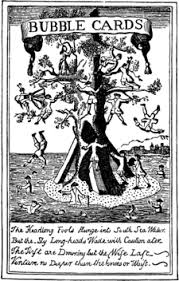
There is a growing literature on the behavior of crowds or how collective consciousness works, but some of the older texts are still worth a read. Gustav Le Bon’s ‘The Crowd – a study of the popular mind’ written in 1895 is one, and a much older one which I recommend is Charles MacKay’s ‘Extraordinary Popular Delusions and the Madness of Crowds’ written in 1841. It is a vivid history of asset price bubbles going back as far as the time of the Crusades, and MacKay, having published it likely hoped that people would learn from it and not repeat mistakes of the past.  

MacKay would have been alarmed though not surprised at some market behavior seen this year, an initial wave of euphoria pushing stock prices higher in February as the coronavirus crisis was unfolding, and then recent aggressive buying of bankrupt companies like Hertz and Cheasapeake Energy, and the tenfold rise in the share price of Chinese construction company FANGDD because its name resembles the FAANG acronym (its stands for Facebook, Amazon, Apple, Netflix and Google).

Since the onset of the coronavirus crisis, the number of retail brokerage accounts at onlne broker Robinhood has nearly quadrupled (there is a Robinhood Tracker app which shows what stocks are most in and out of favour with the Robinhood crowd), with other brokerage sites also seeing a rise in accounts. Apparently, half of those who open new accounts have never invested before. The only rationale for such behavior is that having bought a stock like Hertz, a ‘greater fool’ will come along to buy it at a higher price.

There is a strong sense that some stimulus cheques, and the effect of the Federal Reserve’s huge liquidity injection into markets are having the effect of encouraging reckless speculation.

If this is a cautionary tale for the Fed, its Chair Jerome Powell showed little sign of acknowledging it in his recent press conference.

With the US stock market near all time high valuations, the Fed openly risks creating an asset bubble, further deflating its own credibility and independence, not to mention spurring inefficient use of capital in the midst of a deep recession. The Fed is also guilty of reinforcing the crowd behavior or groupthink amongst central banks that blind buying of assets constitutes effective monetary policy.

If the Fed and US policymakers have enabled bad crowd behavior, what is more interesting are examples of positive collective behavior, the most remarkable of which is the way in which hundreds of millions of people have adhered to lockdown rules.

Some of the early crowd behavior during the crisis illustrates how crowds follow narratives based on short-termism and fear – such as the toilet paper mania of March – there is also a need to focus on the wisdom of crowds.  A good recent example is the way that the majority of race related protests in the US, and the reaction of the police to them, have transformed from violent to peaceful protest.

I hope that in the future more behavioural and political scientists will dig more into this area. In this respect, one theme to emerge from the crisis is the sense that ‘country resilience’ matters in coping with crises. Amongst the components of this resilience are good education systems, credible institutions, clear and fair laws and a high level of trust across society. I suspect, without having yet looked into any evidence, that high trust societies tend to produce ‘wise’ as proposed to ‘mad’ crowds.

‘Mad’ crowds do not need to be preordained. One noteworthy research project that has come to my attention recently is the work of Gary Slutkin’s Cure Violence project (cvg.org) that seeks to break down the transmission of the culture of violence through communities (and by extension ‘crowds’). Another which I have mentioned here before is the way in which social media is being used to ‘crowd think’ laws, charters and constitutions (thegovlab.org). As the desire for political change grows across many countries, crowds will be used in more productive ways.

Have a great week ahead,

Mike

Is inequality a part of the American Dream, or its end?

A quote that has been rattling around my head recently is ‘aside from the moral case against it, inequality above a moderate level creates a kind of society that even crusty conservatives hate to live in, unsafe and unpleasant’. It comes from a 2004 paper entitled ‘Is globalization reducing poverty and inequality?’ by LSE Professor Robert Hunter Wade.

It has come to mind for obvious reasons – namely the behavior of crusty conservatives in America in the face of stark inequalities across race and class, and the risks that extreme inequality poses to the US.

While on one hand 43 million Americans having now claimed unemployment benefit and on the other, the ratio of the size of the US stock market to GDP (one of Warren Buffet’s favourite indicators of ‘value’) is the most stretched ever, the topic of inequality should rise to the top of the US political agenda, with the death of George Floyd a very grim expression of this.

In the US, and in some emerging countries, inequality, in different forms is rife. Much has been written on income inequality (Branko Milanovic’s work is to be recommended) and there is also increasingly good data to show that wealth inequality is the most stretched in close to a century in the US, and the likes of Russia. What is less widely debated publicly are the other ways in which inequality expresses itself.

Health is one area. Angus Deaton and Anne Case’s work is now well known (he won the Nobel Prize) and shows the deterioration in health conditions, especially those relating to mental health, for middle-aged white men and women in the United States. The mortality rate for this cohort has increased sharply owing to drug, opioids and alcohol poisoning, suicides and diseases such as cirrhosis of the liver. Groups with lower levels of education saw a sharper rise in mortality. The coronavirus crisis reinforced this trend.

Another more detailed example of health-care inequality is in dental care. Mary Otto’s book Teeth shows the startling differences in dental health across social classes and reports that they spring from differences in education, diet, and upbringing. In her book Otto tells of a boy who died when a tooth infection, undetected because his parents had no dental-care insurance, spread to his brain.

Technology is another factor that may help cement existing inequalities. For example, in her book Automating Inequality, Virginia Eubanks describes how automation of welfare services through the growing use of algorithms to sift welfare recipients, and in areas like medical insurance assessments, can lead to institutionalized inequalities (the algo- rithm throws out the more needy welfare applicants) and injustice. She describes a regime of data analytics that, through design or error, denies assistance to those in poverty, with low education levels or poor computer literacy, or with a history of mental health issues.

Another example of technology-driven inequality comes from Joy Buolamwini, the founder of the Algorithmic Justice League, whose research initially discovered that facial recognition software was much more accurate at recognizing white faces than black faces. Inaccuracies in algorithmic-based identification can translate into denial of access to social welfare, or misclassification of an innocent person in criminal records.

There is likely much more to describe inequalities that disadvantage according to race, class and sex for instance. The important issue is what is done about them. In the context of the US, the first task is to recognize that inequalities do not stem from globalization but rather how individual countries manage it. The coronavirus crisis illustrated this. A  common problem was dealt with in very different ways with disparate results.

Small, advanced economies like Sweden, Ireland and the Netherlands are amongst the most globalized in the world and have relatively well contained levels of (post-tax) income inequality for example. In addition, they are sources of policy ideas on how to combat various forms of inequality.

To understate the matter, I do not expect the current administration to tackle inequality. Indeed the persistence of deep inequalities following the eight years of the Obama presidency shows how entrenched it can be, and I am not sure that the Biden team will make an immediate impact on inequality – to do so would require a radical change in corporate taxes (higher), federal spending (higher) and regulation (especially of tech).

To that end, the persistence of an overly accommodative central bank, a two tiered health system, a technology sector that hoovers up the gains from innovation and a ‘star’ takes all approach in the banking, sports, media and tech industries point unfortunately towards ongoing inequalities in race and class.

In turn, as the election of Donald Trump has shown, the persistence of inequality, will produce radical political choices. My guess is that America has not seen the end of political volatility, and that increasingly new blood, and new parties will enter the political scene.

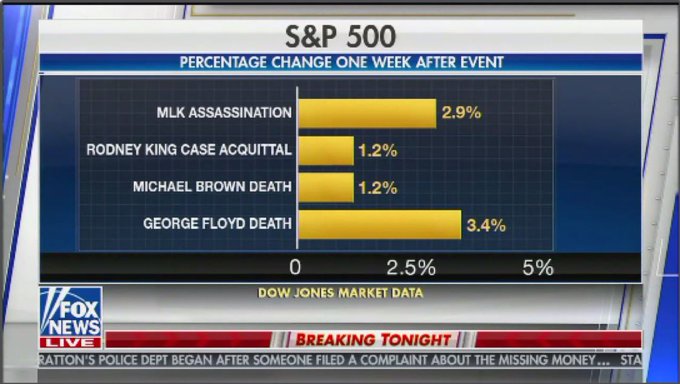
Until then, America will remain divided. To return to Robert Wade’s quote, crusty conservatives don’t get it. On Friday Fox News displayed a disgraceful graphic of the performance of the stock market in periods immediately after the king of a black man (From Martin Luther King to the recent death of George Floyd).

Have a great week ahead,

Mike  

End of Hong Kong means 3 systems, not 2

In a 1992 speech in Fulton, Missouri, Mikhail Gorbachev stated ‘Humanity is at the major turning point. We live in a watershed era. One epoch has ended, and a second one is

commencing and no one yet knows how concrete it will be’. He was right then, and if the speech were given today, these words would also ring true.

The fall of communism was the key event in catalyzing globalization. It was the bookend that opened up new trends that saw the flow of people, money, commerce and importantly, of ideas and cultures. In particular, the fall of communism led to a sharp rise in the creation of new countries (some 34 have been created since 1990), and in the spread of democracy (between 1988 and 2005 the proportion of countries classified as Free rose from 36 to 46% globally according to Freedom House).

Since the fall of communism, the ripple of globalization through the world has lifted billions out of poverty and spawned new technologies. This great period in world history is now at an end, decisively crashed by the coronavirus crisis, having already atrophied in the face of rising indebtedness, trade wars and the vandalization of international institutions by populist leaders. Now, with deadly and decisive timing, the bookend that closes the period of globalization is the subsuming of Hong Kong.

The introduction of new, harsh security laws in contravention of the process of the Basic Law, will severely curb the identity and livelihood of one of the world’s unique cities. Hong Kong played a role in the first wave of globalization in the 19th century and has been prominent in the recent one.

The import of the likely end of Hong Kong’s ‘two systems’ is that at a much greater level it marks the arrival of ‘three systems’, or what I call a multipolar world dominated by the US, China and Europe.

China has acted to hush Hong Kong because of the threat that protests pose to the Communist Party in China (and the position of Xi Jinping), and also because, with the West in disarray, China is in a relatively powerful position. The potential significance of China risking Hong Kong’s role as an international financial portal is that it has decided that the time is come for Shanghai, Shenzen and the Greater Bay Area to become China’s financial hub. This is bad news for those in Hong Kong who think that the economy will continue to thrive in the light of the new security laws.

As such this may mark a move away from an approach that seeks to integrate China with international financial markets, and toward one that deepens China’s markets in the Chinese ‘way’, so that they are overseen by Chinese rather than Western corporate governance rules. China has notably already made this transition in its treatment of the internet.

China’s effective ending of ‘two systems’ in Hong Kong also comes at a time when friction is rising in its interaction with democracies – especially India and Australia (both of whom are members of the QUAD defense grouping with the US and Japan).

Elsewhere China’s assertiveness means that the US and the EU will have to become more singular. Europe (EU) will in my view, soon force its member states to adhere more consistently to its values (Hungary and less so Poland here) and is beginning to make a move towards a greater fiscal role for Brussels.

It is also worth noting that the exit of Britain from the EU is consistent with the end of common law in Hong Kong in that both events underline the decline of Britain’s role in the world and the degeneration of political leadership in England.

That leaves the US. If Gorbachev saw the US today he would likely not be surprised that it has so far retained its military and financial dominance, but by the same token, not astounded that it has failed to harness the benefits of globalization for all Americans.

With the benefit of a few years in the Kremlin, Gorbachev might even remark that the coronavirus has hit the US in all of its weak points – the labour market, inequality and healthcare. To that end the American response to what is happening in Asia, and to the rise of the Chinese ‘Leviathan’ like model, must be to strengthen its own economy, society and institutions, and not to weaken them as President Trump is doing. Leaving the World Health Organization is a strange way for America to help the people of Hong Kong.

Have a great week ahead,

Mike

From Globalization to Gollum

My precious vaccine

If the coronavirus has, at a very broad level, set in train the post-globalization era, the search for a vaccine reveals the detail of what that world will look like.

A vaccine for a virus that is global should in many respects be a hopeful project, but this hope is also undercut by cynicism. Consider the events of the last week.

On Sunday night last, the Chair of the Federal Reserve declared that apart from the financial stimulus enacted by the authorities the best way out of the crisis was through the discovery of a Covid-19 vaccine.

Then, on Monday details emerged of a positive vaccine trial from biotech company Moderna based on a very small group of people. This news led to a more than 20% spike in the company’s share price. Once the market closed, Moderna surprised investors with a rights issue, and it was announced that the individual heading the US’s Warp Speed vaccine program, would sell his USD 12mn holding in the company (he was a non-executive director). Other executives then also sold shares.

While some doubts have been cast on the early Moderna trial, the company will now move to a much bigger vaccine testing group (1,000 plus people) in the summer, with first results due late summer. If all goes well, an approved vaccine could be ready by the start of next year, and this then has to be mass produced and distributed (vaccinating the world will take three years at least).

If the case of Moderna demonstrates the uneasy intersection of science, ethics and money, the broader vaccine race will become even more complex.

Ideally, given the death toll, huge economic damage and societal disruption the coronavirus has caused, one could imagine a unified, global approach to constructing a pipeline (from research, testing, approval to manufacture and distribution) that would produce a ‘world’ vaccine. Previous pandemics such as Ebola, and HIV, demonstrate how collaboration can work and there are already provisions in the WTO framework that allow differentiated drug pricing between richer and poorer countries.

Instead, the quest for a vaccine has more resembled the Lord of the Rings, with the potential vaccine or ‘ring’ being guarded jealously. In a world that seems intent on replacing globalization with Gollum, the scramble for a vaccine (there are over 70 such ‘quests’ with Oxford University seemingly in the lead) will tell us much about how countries and companies organize themselves in the new world order.

The first is that, even in grave circumstances, collaboration between powerful countries and regions is limited. The US has alleged that China has tried to hack American vaccine researchers, and for China’s leader the prospect of a Chinese made, globally distributed vaccine has obvious geopolitical capital. The fissures undercutting this lack of collaboration are also undercutting two of the institutions of the 20th century, the World Health Organisation and the World Trade Organisation, both of which have been poorly led.

The second trend is that the relationship between innovation and finance will need to be rethought and will in many countries incorporate the state as a player.  The capture of technological innovation by a handful of large tech and private equity and venture capital firms in both the US and China is producing inequitable outcomes, such as the absurd coincidence of near twenty percent unemployment in the US and a near record high level in the Nasdaq stock index. Corporate tax rises and regulatory pruning back of mega companies may be a trend of the future.

Relatedly, with globalization given way to a more geopolitically nervous multipolar world, governments will increasingly insert themselves into the innovation process. France was once derided for its ‘strategic yogurt policy’ but governments like it will increasingly regard cyber security, artificial intelligence, genetic editing and so on, as strategic industries where they need to be involved as core players.

In cases where the state has a competence, such as defense, infrastructure or aerospace related innovation, its involvement can be effective, and obviously much less so where it has little expertise to offer.  Clumsy redirection of supply chains and orchestration of drug production are generally not in the competencies of states and they should resist the urge to over control here.

In a world where economists debate whether we will see more deflation or higher inflation in the future, the effect of the two above trends will be to make economies potentially more fractioned and less effective.

To this end, the danger is that states that are over eager to control the innovation process, combined with an intense concentration in the ownership of the benefits of innovation (big tech, venture capital) creates a world where the benefits of innovation are lost to the broader economy and society. Both parties, like Gollum in Lord of the Rings regard innovation as too ‘precious’.

In that regard, the next phase in this debate should focus on finance and corporate governance – tax systems and ownership structures that encourage and spread the benefits of innovation.

Have a great week ahead,

Mike

Shemozzle

Shemozzle – Irish style

Mike Tyson is apparently coming out of retirement. America may need him. Last week on the Sino-Indian border Line of Agreed Control (North Sikkim to be precise) there was a mass brawl between Indian and Chinese troops. Helicopters (China) and fighter jets (India) were scrambled to add heft to the situation, which left several injured. The incident recalled the word ‘Shemozzle’ a Yiddish word that denotes chaos, uproar and confusion. In Ireland, sports commentators have used it to describe fights between opposing hurling or Gaelic football teams.

I fear that ‘Shemozzle’ now enters the lexicon of geopolitics, not least because tensions between nations are rising. One relationship to watch is that between China and Australia, where trade, political and diplomatic relations are worsening. I advise my Chinese friends to be wary – every time Australia play Ireland in ‘Compromise Rules’ football, there is a large scale ‘Shemozzle’.

The notion of a ‘Shemozzle’ is not a bad one to describe the world – tensions are rising as governments try to advance beyond lockdowns, and scarce resources such as vaccines will be fought over. In addition, the tension between markets and the reality of the economic damage from the coronavirus is growing.

In my April 4th note (https://thelevelling.blog/2020/03/28/why-did-nobody-notice-it/) I laid out three broad scenarios – an optimistic one called ‘Easter’ which outlined how much of the crisis could be over by the end of April, a more sober one called ‘Summer’ which flagged late summer as the point at which we should have largely mastered the effects of the virus, and then a tail, very nasty scenario called ‘Winter’ where the effects of the virus drag on and the economic damage is severe.

As it stands, it seems that equity markets have priced in the optimistic ‘Easter’ scenario while it looks more likely that economies and societies will get ‘Summer’. The tension between high equity markets and the real world betrays a range of factors – the oversized role of the Federal Reserve and wealth inequality for instance.

I am focused on the performance of small cap indices and bank stocks (as opposed to tech stocks) as the lead indicator of where the economy and markets will go, given the risk of a credit crunch. In general, the performance of banks has been very weak, with some like Wells Fargo in the US hitting March lows and others in Europe (e.g. Société Générale) hitting their lowest levels since 1991.

At the other end of the market the outperformance of technology stocks also reflects a lack of forward thinking that in the US as in other countries, corporate taxes will have to rise in order to offset the generous stimulus programs put in place by the government. The five large tech companies (FAANG’s) who make up 22% of the market capitalization of the S&P 500 index are vulnerable here, given their earnings. This is perhaps the so-called ‘black swan’ that investors have not priced in.

To stick with the idea of ‘black swans’, a phrase that is now in the popular lexicon as meaning a high impact event as opposed to a highly improbable one a la Karl Popper’s conception of the term, the two recurring ‘swan’ questions I keep hearing are ‘will Europe breakup?’ and ‘will the US and China go to war’. That people continue to think about these questions shows that in effect they are not focusing on events (black swans) but processes.

In particular, the evolution and deterioration of the relationship between the US and China is a process that bears watching. In a week where the Economist front cover declared ‘Goodbye Globalization’ an opinion poll from the Pew Research Centre showed that close to 65% of Americans have a negative view of China. This compares with only 30% some ten years ago and the darkening in Americans’ views of China tightly tracks the demise of globalization.

With rhetoric picking up, and supply chain restrictions on Huawei now more severe, there are three elements of this relationship to watch in the short run. One is the friction between China and American allies in Asia (Australia) amidst talk in China that it needs to prepare itself for military conflict. Another is the shift in supply chains, the most interesting development here is Taiwan Semiconductors’ decision to invest USD 12 bn building a plant in the USA. Also, China may respond in kind to the Huawei announcement on Monday.

Then finally, is the politics – lambasting China, however illogically (the President has stated that cutting ties with China would save USD 550 bn) creates political capital for Donald Trump, and as such we should expect no let up in anti-China rhetoric until November. The question is what damage this does to trade and diplomacy, and whether it leads to a real ‘Shemozzle’.

Have a great week ahead,

Mike

America is the new Europe?

America looks like Europe!

When I try to defend the eurozone financial system to Eurosceptics, or even Europhiles, I remind them that the early years of the dollar were just as difficult as the eurozone crises of recent years. For example, the Whiskey rebellion of 1791 led to a contest between Alexander Hamilton’s Treasury and individual states, and his ultimately successful resolution of the crisis paved the foundation of the American financial system.

Amidst the global economic carnage caused by the coronavirus crisis, many (mostly in London and New York) expect the euro system to face another existential crisis. Though European politicians have generally failed to learn the lessons of past euro crises in that many reforms have not been executed, the euro and EU are more robust than many think.

While the euro is not yet as credible as the dollar, the surprise in coming months may be that America begins to look more like Europe.

Think of it this way. Governors of individual states have never enjoyed such prominence, with for example the governor of California referring to it as a ‘nation-state’. A recent FT survey showed that individual governors are more trusted than the President. In this respect the state governors are like the prime ministers of European countries.

In addition, American states are grouping together to form pacts to coordinate the ending of the lockdown (in Europe it is similar). Unlike Europe though, the political leaning of states is also a determining factor in the speed with which they are reopening, as is the President’s political and fiscal treatment of them (e.g. abandoning Obamacare). In time, this will make states more distinct economically and politically, and less united.

The decisive factor may be the impending credit crunch. We are now moving past both the initial financial shock of the coronavirus crisis, and the comfort of the financial morphine as provided by the Fed and Congress is wearing off. Yet, there is now much less that both the Federal Reserve and Treasury can do to forestall the closure of hundreds of thousands of businesses across America.

Against this backdrop investors are pointing to a growing widening of bond spreads for municipal bonds, and the rhetoric surrounding New Jersey and Illinois echoes with the way Italy and Greece are spoken of. Oil sensitive states may soon also come under pressure.

As the finances of individual states deteriorate, so too will be the expectation of support (bond buying by the Fed), and then, the moral hazard arguments that many in Europe deploy to sanction ECB buying of periphery debt, will resonate in the US.

It is also worth noting that like Japan and Europe in recent years, financial markets have just started to price in negative interest rates in the US (for next January), something that could rattle consumers and its banking sector.

Perhaps the worst thing this virus can do to America, beyond the human tragedy, is to increase the disparity of economic circumstances across states. In a country with extreme wealth inequality and an incomprehensible gap between sharply rising unemployment and a loft stock market, ‘intra-state inequality’ may grow. Migration between states and the current system of federal transfers will not be sufficient to balance this out.

Here, Europe is worth a look. One of the great achievements of the European Union has been the way it has funded infrastructure investment in relatively poorer countries. Americans visiting Ireland will be familiar with the ‘funded by the EU signposts’.

The lesson for America is that at a time when transport, telecoms and educational infrastructure needs to be badly upgraded, this should be done in a way that helps to equalize rather than exacerbate the differences between states. It is a task for the next president, whomever that is. However, the notion that ‘America’ needs to be put back together again needs to be debated now.

Have a great week ahead, Mike

The Decameron

Avoiding the Plague

Giovanni Boccaccio’s Decameron was one of the first literary masterpieces of the Renaissance. It is set in a villa outside Florence, at the height of the Bubonic Plague. Seven women and three men flee the Plague, ensconce themselves in a villa and spend ten days flirting, philosophising and debating. I have no doubt that Netflix or other entertainment channel will copy the idea and send an ensemble of Hugh Grant, Gwyneth Paltrow, George Clooney, Mara Rooney and friends off to the Hamptons to repeat the experience.

If the Decameron were to be repeated, the guests in the villa might even ponder how the world has been changed by the coronavirus. The Black Death itself radically changed Europe, largely through the demographic effect that a 30% reduction in population had – in England nearly 40% of land changed hands, a shortage of labourers meant a rise in wages and innovation of farming methods and produce.

Rising wages for those who survived the Black Death altered the social mix (Walter Scheidel’s The Great Leveler is very good here) to the extent that the wealthy begun to dress more extravagantly in order to distinguish their social standing and in this were helped by regulation (i.e. England’s Sumptuory Laws 1363).

The Black Death altered the geopolitical map of Europe (similar, much earlier plagues like the Athens Plague and Antonine Plague had profound geopolitical effects), led to trade and banking revolutions and spurred the rise of cities like Madrid and Genoa, and the demise of others like Winchester.

Back to the villa, where if our guests were discussing the post coronavirus world they might fall upon the following points. First, the coronavirus crisis has simply exacerbated the faultlines in a fracturing world – indebtedness is growing rapidly, the China-US diplomatic relationship deteriorates, and globalization is crashed.

Second, more optimistically and in the spirit of the Renaissance, the crisis will I hope bring a number of positive changes. One is the realisation of the correlation between climate damage and economic activity. Another is the sense that our cities are places to be lived in – there will be significant changes to the way cities use space, transport and commercial real estate.

A more profound change will be a trend towards improving human development – in developed and developing countries. The components of human development – from life expectancy, to education and healthcare, to economic development – have come to the fore during the coronavirus crisis in the sense that countries with high levels of human development (Germany, New Zealand, Norway) have appeared to deal relatively better with the crisis than others, and the value of good, accessible healthcare systems has become abundantly clear. I might even stretch the point to say that well educated leaders, who take science seriously, have also done reasonably well.

The concept of human development however does not lend itself to political soundbites and as such is hard for politicians to communicate as a policy goal. Neither do initiatives that promote human development pay off in the short term – so politicians need to be around to gain credit for them (Russia is an interesting example where the HDI (Human Development Indicator produced by the World Bank) has been rising steadily). Hopefully, the coronavirus will change this and permit broader discussions on the need to focus government scorecards on human development centric scorecards. If this happens, we may see public goods like accessible education and healthcare become more valued in countries like the US and UK. In this light, there is an opportunity for politicians and those involved in the policy process to craft the idea of human development in a way that people understand and value, and to put it at the centre of political manifestos.

As a final point, when I think of our ten guests in the villa in the Hamptons, Agatha Christie’s book ‘And then there were none’ passes through my head. The idea of wealthy people secluding themselves in a villa to avoid a highly contagious disease is as unpopular today as it was in the 14th century. Again, as Walter Scheidel has pointed out, the Bubonic Plague was a leveller of inequality in the 14th century though amidst plenty of periods of unrest (La Jacquerie in France in 1358 and the Peasant’s Revolt in 1381 in England).

So far, the policy response to the economic fallout from the crisis has arguably boosted wealth inequality (notably in the USA). In the coming weeks the generous provision of liquidity by the Federal Reserve will give way to rising solvency/credits risk, and with it more redundancies unfortunately. As I’ve mentioned before in these pages, market volatility will give way to social and political volatility.

Have a great week ahead,

Mike

Wir sind alles Metallgesellschaft

An unhappy meeting of finance and industry

The behaviour of the price of oil in the last week was, to understate the matter, jerratic. A sharply negative oil price (the first time since 1870 at least) in the May contract served to illustrate how topsy-turvy the economic world has become (I hope some airlines hedged in negative oil!). Together with the relatively recent advent of negative interest rates, negative oil prices will convince many that something is not right in the engine room of the global economy.

I mentioned in last week’s missive that assets like oil that did not fall under the spell of central bank asset purchases gave a truer indication of the economic outlook than those assets that did.  

In this context, the signal sent by the price of oil, even today, should be a cause for concern. Of course, other factors conspired to push oil into negative territory – notably a shortage of storage, the convince of some hedge funds and traders as well as the side effects of financial engineering (exchange traded fund (ETF) structuring).

This upside-down oil shock is not over and the effect of low oil prices will continue to ripple through emerging and high yield debt markets, emerging market currencies and the dollar, as well as banks and the Texan economy.

In the greater scheme of things, it also brought to mind the case of Metallgesellschaft, a giant German industrial conglomerate which in 1993 ran up a USD 1.5bn (a lot of money then) loss on an oil hedging contract. Metallgesellschaft fell foul of the same effect we witnessed last week, contango, where the price of near dated contracts (i.e. May) dropped well below the level of later dated contracts (e.g. July).

The Metallgesellschaft case left a mark on the financial economic history of the early 1990’s and is widely taught in business schools as a case study in the dangers of mixing business and financial engineering.

The collapse of Metallgesellschaft came at an early point in the deployment of derivatives in markets and should have served as a salutary lesson to corporates, regulators and banks. That was not the case.

For instance, the lesson that Deutsche Bank, which had arranged the hedging trades for Metallgesellschaft, apparently drew from the blowout, was to aggressively expand its investment banking operation. Today, the share price of Deutsche bank is down 95% on the level it reached before the global financial crisis (without being too unkind to Deutsche Bank, David Enrich’s ‘Dark Towers’ is worth a look).

What the jumpy oil price and Metallgesellschaft have in common is an instruction on how the real economy and finance have become increasingly intertwined.  

From an economic and investment point of view, there is plenty to consider in this regard. I am tempted to say that there is one sector that does not rely on finance – technology – but the corornavirus crisis has turned tech from an industrial gargantuan into a stock market monster (Microsoft, Apple, Amazon, Alphabet and Facebook account for 22% of the market capitalisation of the S&P 500 index). Next week’s tech earnings results may bring a reality check for stocks, and see volatility pick up.

The two other sectors to consider are banks and private equity. In the light of the Metallgesellschaft discussion what is remarkable so far in the coronavirus economic crisis, is that no bank has keeled over (I may speak too soon).

Indeed, the balance sheet restrictions that have been put in place, and general focus on risk management, appear to have paid off. In many countries, banks are now part of the rescue mechanism, and there is an opportunity for many of them to repair their reputations. In Europe the price of heavy regulation has, made banks very cheap from a valuation point of view so that there may be some upside if a round of consolidation takes hold into 2021.

Unlike banks, private equity has for some reason not come under the intense scrutiny of regulators, even as private equity (and private debt) have replaced the role of banks in parts of the global economy (i.e. shadow banks).

A crunch is coming however. In the USA, private equity companies are heavily invested in medium sized enterprises, and in any cases have taken on large amounts of debt to do so. As the economic toll of the coronavirus deepens, the financial pressure on private equity will translate into economic pressure on companies (leading to cost cuts and layoffs), and social pressure on their workforces. Sadly, this may have a deeper human, economic and political effect than the drama of negative oil prices and deserves to be watched closely by policy makers as the summer approaches.

Have a great week ahead,

Mike

Roof

The Fed as protector in chief

Courthouses are fascinating places, and often help to shine a light on the deeper, darker layers of society. One example which sticks in my mind is the hosting some years ago by the London High Court of disputes between Russian oligarchs. The proceedings provided insights into the workings of Russian ‘capitalism’ and in particular uncovered the term ‘krysha’, or ‘roof’. Its essence is that individuals are given protection (roof) or cover from interference, in return for money or other obligations.

Whilst I know little about the darker corners of the Russian economy the phrase ‘roof’ struck me as a useful one in the light of recent central bank interventions. Regular readers of this note and those who have read The Levelling will know that I consider that in recent years central banks have encroached too far into financial markets, to the extent that they ‘own’ them, economically and psychologically. Amongst the many risks that this can lead to, is for investors to believe that risks in markets are uneven (i.e. the Fed will cover downside risks) and this may help to explain why it took markets so long to react to the outbreak of the coronavirus crisis in January.

The latest moves by the Federal Reserve, in particular that to support the high yield bond market, are redolent of ‘roof’, though ‘floor’ might be a better term. In doing so the Fed distorts market prices, offers one sided ‘bets’ to speculators and helps out reckless investors. Apart from curbing market disorder, some of the Fed’s actions will have very limited economic impact at a time when small businesses and many households in the US are struggling.  

For some, this will create the impression that the Fed is beholden to Washington and more Wall Street than it is responsive to the broader American economy. What is more troubling is that the Fed’s activism will allow a stock market centric president (see my January 19 note ‘Peak Stocks, Peak Trump’) to claim a sense of ‘mission accomplished’, whilst ignoring the deeper economic and public health carnage of the crisis.

In markets, what is noticeable is that assets that do not have ‘roof’ appear to be underperforming those that do. Emerging market debt and fx have been weak, as have energy prices and copper, whilst small cap American stocks (Main Street) have underperformed the Nasdaq (Wall Street).

In this climate, the non-protected (non-roof) assets, or rather those that are not under the spell of big central banks, will likely continue to offer the best steer as to where the global economy is going – in that respect these assets (copper, oil and EM currencies) point to ongoing stress in the global economy. If this continues to be the case it will create a two-tier investment world where investors trade baskets of ‘roof’ (Fed sensitive assets) and ‘non-roof’ assets (economy sensitive assets) against each other.

In Europe, the propensity of the ECB to offer ‘roof’ is constrained by the political-economic divide between northern and southern economies. While the ECB has nonetheless been relatively speedy and generous in its actions, there has been something of a market backlash against periphery bonds (Italy in particular, and also Spain and Portugal). To one end, this strikes me as investors indulging in a habitual trade in that they expect every market crisis to become a euro-zone crisis.

One interesting rebuttal to this is that the US is beginning to look more like Europe. Note that US state governors (like EU state prime ministers) are enjoying a level of prominence they have rarely had and are beginning to form inter-state ‘pacts’ in the same way that countries within the EU are forming coalitions (i.e. France/Germany, the Hanseatic League 2.0). Financially, there will be greater market focus on municipal debt, the variability of real estate prices and mortgage debt across the US (a la Europe). So, Eurosceptics might well look to the US for their next trade.

As a final point Europe to reiterate the sense of recent comments of the French President, needs to give itself ‘roof’. Endless squabbling about debt mutualization is not the way forward here. The best approach is bottom up harmonization of processes – such as setting up a business, corporate governance and capital markets, not to mention harmonization of ‘emergency’ protocols for crises like the coronavirus crisis.

A more profound solution is to do what Europe has not done in a sincere way since its foundation – a strategy to grow its economies together, that goes beyond wordy plans and empty unenforceable commitments. That is the great challenge for Emmanuel Macron and those (myself included) who want the EU to thrive in a post coronavirus world.

Have a great week ahead,

Mike

League of Nations

Soon as competitive as the Champions League?

If the defining characteristic of the coronavirus crisis is its speed, then equally, one of its defining effects has been to expose the vast disparity in in the way countries have been affected by and dealt with the virus.

Though it is very difficult to have a true sense of numbers of infected as well as deceased, there are remarkable differences in fatality rates (per capita) if we say compare close neighbours – Ireland to England, Germany to France or even Norway to Sweden.

Whilst there are also some stark inter-state differences across the USA (Kentucky v Tennessee for instance), countries are still the best lens by which to view the effects of the coronavirus because they capture differences in laws, customs, social cohesion, institutions, political leadership and so on.

On balance, countries with good levels of human development, institutions and where the state is competent, seem to be doing a good job of containing the crisis. They are aided in this by largely obedient and well informed citizens, though the Easter weekend will test how obedient those citizens are.

So far, the crisis (beyond China) has centred largely on what we regard as the developed world (Europe, the USA and many Asian countries like South Korea and Singapore), but it is now picking up in developing countries.  

Amongst the big emerging economies (China apart), Turkey and to a lesser extent Brazil stand out in terms of the onset of new cases. By and large, the emerging world has appeared to be be spared the scale of tragedy that has struck Spain and Italy, partly because testing is done sparsely (India has done 121 tests per million people compared to 13,000 for South Korea), and partly because these countries are less intensely connected to China and other international hubs.

In the near term, there is a growing need to tend to sharply rising poverty in the developing world, and a need to ensure that they are also well served in terms of medical supplies and knowledge.

When the crisis is over, emerging economies will have much to think about in terms of the resilience of their currencies (i.e. Rand), structure of labour markets, the patterns of migration and most importantly, urbanization and the role of public health systems.

This is a time when the rise and fall of nations is being accelerated and offers countries with scope for structural growth (i.e. Bangladesh to Ethiopia) a chance to stop and rethink their paths forward. They might also rethink how they are served by the dominant world powers and by international public goods.

In a context where institutions like the World Bank and World Health Organisation are being drawn into the geo-political rivalry between the USA and China (for example, the US President has threatened to cut funding to the WHO) there is an opportunity for emerging nations to speak out and to claim the best parts of these institutions for the developing world.

One suggestion might be to move the headquarters of the World Bank to Africa, which is the one region of the world that continues to need the expertise of the Bank. Locating the experts and executives of the World Bank in Africa will arguably make them more responsive, and better informed of the economic challenges there.

Equally, the expertise of the World Health Organisation could be harnessed for a post-corona crisis wave of public health education across emerging countries and an embedding of the health lessons of the crisis into urban and economic development planning.

There is also a greater strategic consideration at play. The developing world is still condescended to by the dominant economies and in the style of Thomas Pakenham’s influential book ‘The Scramble for Africa’. For instance, the crippling debt burden associated with the One Belt, One Road project will become more clear in coming months (e.g. Sri Lanka).

Given the way in which the crisis has exposed supply chains, there is potential for emerging countries to take stock of their strategic assets – an ability to produce some pharmaceuticals and healthcare equipment cheaply, and in certain cases, they are critical producers of food.

In a word order where national identities and borders have been reinforced, emerging nations may look to strike a tougher bargain with wealthier ones in terms of their hold over agricultural commodities. If they do so, they can become part of the levelling out of geopolitical power in the post coronavirus world.

Have a great week ahead,

Mike