The Democratisation of Risk

One of my favourite descriptions of globalization comes from JM Keynes, who at the end of  the first wave of globalisation wrote (in Economic Consequences…)

‘The inhabitant of London could order by telephone, sipping his morning tea in bed, the various products of the whole earth, in such quantity as he might see fit, and reasonably expect their early delivery upon his doorstep; he could at the same moment and by the same means adventure his wealth in the natural resources and the new enterprises of any quarter of the world’

A modern day version might see Keynes driving a Tesla, speculating on Robinhood and paying for a new house with bitcoin, all whilst respecting confinement rules, obviously. It may not be as effortless as that, the Tesla might catch fire, the Robinhood account may crash or face a margin call and bitcoin may prove too volatile to do anything with.

The confluence of these finance centric eco-systems has led many people to hold that we are in an age of the democratization of finance – where platforms, tools and products are springing up that give the common man and woman access to the financial opportunities hitherto enjoyed by billionaire hedge fund managers.

This is not the case. Instead of the democratisation of finance, we are in an age of the democratisation of risk – where a range of risks, mostly arcane financial market ones, are increasingly distributed across retail investors. The issue is that the man or woman in the street, is unprepared for these risks. The other, finer point is that when many people across a population find they have the ‘same’ risk, and all react against it at the same time, dislocation occurs.

The news that Amsterdam has overtaken London as a financial trading hub reminds me that it in the 17th century it was a centre of financial innovation (William Goetzman’s book ‘Origins of Value’) and that innovations in finance follow a pattern where early investors and pioneers (especially those who own the infrastructure) do very well, asset prices rise in a parabolic way and this attracts the greater investing public (the democratisation phase), a crash or scandal ensues and regulators arrive late to the scene of the accident.

The derivatisation of the US housing market in the early 2000’s is a good example. Cheap financing meant people could afford more, and bigger houses, until the entire market collapsed.

The study of risk is now a large field. Bodies like the OECD produce a risk scorecard that countries can use in risk assessment, while a good number of institutional and hedge fund investors have become very good at risk management. The coronavirus crisis offers a particular lesson in risk assessment, crisis management and in risk absorption (through fiscal stimulus, the organisation of public services like healthcare and the provision of vaccines, not to mention human adaptability.

The tragic and dramatic experience the world has endured with the coronarvirus may – following on a chaotic Trump Presidency, Brexit and other catastrophes – convince many that the level of risk in the world has risen. I would say that it has not – though two risks loom very large – climate damage and indebtedness – and the factor that makes them distinct is that they are ‘democratisied’ or that they affect increasingly large numbers of people.

If there is a lesson here for politicians and policymakers it is not to permit the democratisation of the twin risks of indebtedness and climate damage (if you graph world average temperature relative to its long term average with world indebtedness relative to its average, the two lines fit nicely over each other).

The telling example was the response of euro-zone countries – notably Spain and Ireland – to their respective financial crises in 2011. In both cases bond market investors, and the eurozone itself, could have borne the risks associated with mounting indebtedness but, ultimately those risks were borne by government balance sheets, and by extension households.

Concretely, what I have in mind is perhaps two principles. That policy makers think not only in terms of the probability of specific risk event outcomes (i.e. from floods to wars) and their potential riskiness, but how those risk outcomes are distributed. Markets work like this – risks never go away, they are simply being continually redistributed across different investors and time frames.

The second element is that policy focuses more on realigning the risk of an event (e.g. polluters) with the fortunes of those who ‘produce’ that risk. In China, the former chairman of Huarong Asset Management was recently sentenced to death for gargantuan levels of corruption. This is accountability taken to extreme levels, but for the Biden administration and many governments in Europe, who foreswear a belief in ‘resets’, ‘stakeholder capitalism’ and ‘ESG’, the democratisation of risk is something they need to fight against.

Have a great week ahead

Mike

Sting like a bee

The euro is like a bumblebee. This is a mystery of nature because it shouldn’t fly but instead it does…after the financial crisis…the bumblebee would have to graduate to a real bee’ Mario Draghi, London 26/7/2012.

Mario Draghi’s ‘bumblebee thesis’ of the euro never got the attention it deserved, largely because a few minutes later in his speech he mouthed the words that he was ‘ready to do whatever it takes’, adding ‘believe me, it will be enough’.

That Draghi went from David Attenborough to Dirty Harry in a few minutes arguably saved the euro and transformed the ECB into a giant monetary battleship whose financial vortex swallowed all credit risk across the euro-zone.

Like Ben Bernanke in the USA, Draghi’s launching of an emergency policy also launched a mindset. In the USA Janet Yellen, and then Christine Lagarde in Frankfurt carried on down the road of intervention. As a result, Greece and Portugal no longer (for the moment) have to worry about paying interest on new government debt issues, whilst France has investors queuing up to pay it for the pleasure of partaking of its vast debt mountain (10 year yield of minus 0.25%).

Draghi’s ‘do whatever it takes’ became the glue that held the euro-zone together – to the extent that the coronavirus crisis failed to create another existential crisis of the euro. However, another side-effect of the ECB’s bond buying program is that it took the pressure off governments to enact the economic reforms that are much talked about in Brussels. Partly because of this eurozone capital markets reform has stalled, its banking sector is relatively weak (as evidenced in valuations) and most troubling of all, the trend growth rate of the euro-zone is too low for comfort.

Italy is a case in point. It is often excoriated by critics in London, Brussels or Berlin for its lack of reforms – the same critics often ignore the suppleness of the Italian political system, the relative steadiness of its fiscal situation and the strength and dynamism of the northern Italian economy. Having said that Italy is not regarded as a model to follow.

What is astonishing then, is the willingness of Mr Draghi to dive into the marmite of Italian politics, and in a way take on the consequences of his own monetary actions in accepting the mandate to become Italian Prime Minster (Yellen has done the same in the US). Though, at the time of writing he has not yet found the support to form a government, his move is a brave one.

It is also a great opportunity for Italy, and Europe. Mr Draghi is very capable (holding a PhD from MIT where former PM Conte had ‘refined his education’ near but not at New York University).

Draghi is also a leader, having manifestly convinced close colleagues, European leaders and many others to share his monetary odyssey. In a previous note I wondered if he might return to Italy to manage AS Roma or become President. The role of Prime Minister seems beneath him and it should be said, risky.

Italy has a history of having many prime ministers (now 30 in the last 73 years, and 37 from 1861 to 1921), with some of them like Mario Monti taking the role as a non-political technocrat. Part of me thinks that politics is no place for gentle technocrats, not perhaps for successful businesspeople (Silvio Berlusconi of course is the exception here).

In that way, Draghi will have to cultivate a style that sees him rise above the rise of everyday politics, not to mention the many populists amongst them, and try to connect with everyday Italians. I am no expert on Italian life but like many countries edging towards the end of the tragic COVID crisis, its people are in need of leadership and, an economic recovery. Again, my naïve, non-Italian perspective is that they can not do better than Draghi.

If Draghi had a policy wish list it might go as follows – boost the trend level of economic growth across Italy, upgrade its education system from schools to universities and transform Italy’s foreign policy stance to one that is less Russia friendly, more involved with Mediterranean neighbours like Greece.

His appointment may also help to mend Italy’s relationship with Brussels, by ensuring that it is represented by one of the most credible European politicians. Moreover, as the post Merkel era approaches, Draghi can become the dominant leader on the European political scene – he took over the Italian Treasury when Emmanuel Macron was a 14 year old school boy.

So, the surprise of 2021 could be Draghi (again) and a renaissance for Italy? I wish him the best of luck.

Have a great week ahead,

Mike

$GME = Goodbye Market Efficiency?

Reddit Rules?

My last two notes have been about bitcoin and the stock market, both of which have become perceptibly more volatile. This week continues the theme, betraying the fact that markets are the fulcrum of the intersection of social, technological and economic forces, and that two of the trends mentioned in my December 4th year ahead note – ‘empire builders’ (the creation of new wealth) and the ‘rise of new financial market ecosystems’ are now coming into focus.

The latest market dislocation is centred around a video game retailer called GameStop. GameStop’s share price traded at a level of $3 last April but hit $370 on Wednesday. During that period, GameStop’s underlying business has not changed much, possibly gotten worse. The new development lies in the dynamics of its share price.

Some hedge funds had sold its shares short (selling them now on the hope that they would buy them back at a lower price), however a cohort of retail investors who apparently managed to ‘synchronise’ their trading views on the social media platform Reddit, aggressively bought shares and options on GameStop, creating not only a short squeeze (the hedge funds were forced to buy back the shares at a higher price) but also a mania that has spread to other stocks.

GameStop’s rise from a pedestrian retailer to a company that is at the time of writing worth $24 bn, continues a market theme of the past year where assets (Tesla, bitcoin etc) diverge wildly from their intrinsic value (e.g. Merrill Lynch has a price target of $10 for GameStop), and where for the first time in a very long period, retail investors (or at least stocks held by retail investors) outperform the market and the institutional community.

As one might expect, Wall Street is not happy. The financial press is full of stories about how the ‘little guys’ are beating the billionaires, and of how the triumph of the Reddit crowd is redolent of the political climate in the US. The decision of some trading platforms to stop trading in names favoured by the Reddit crowd has only increased the sense of ire.

To a very large extent, this has been coming. The arrival of zero fee trading, the development of new trading platforms like Robinhood (who by the way sell order flow data to large hedge funds), financial ammunition (free stocks from trading platforms, plus stimulus checks) and the harnessing of crowds through social media have ‘democratisied’ finance, to put it provocatively. In particular retail trading of options has exploded. Notably, Europe doesn’t enjoy many of these factors, including an ‘equity culture’, so it hasn’t seen the same trading boom (a European stock, Nokia, was picked up US traders).

Without repeating arguments made here previously, the financial climate that central banks have created is also a major factor (market liquidity conditions are the most plentiful in decades), both in terms of their portfolio effect, and impact on risk taking. There is also a sense that central banks are on the side of institutional investors, something that private briefings by the ECB’s chief economist to investment banks last year only reinforces.

For the moment I am less concerned with the way the GameStop phenomenon is being portrayed as a struggle between financial insiders and outsiders, but rather more taken by its implications for finance and for regulators.

This kind of development, together with many others (i.e., ETF’s and cryptocurrencies) should begin to erode the primacy of asset and wealth management firms, a vast number of whom use technology platforms, investment processes and business models that have changed little in the last ten years. There should be greater, downward fee pressure on fund managers who underperform, investment processes should be more centered around liquidity and risk appetite (as well as better encompassing data from options markets and order flow) and in time we should see a wider range of assets introduced into portfolios.  

Two other trends may take off. The first is that the banking/asset management industry should give up on trying to run its own technology projects and instead partner with technology firms. Equally, fintech companies increasingly need the help of banking specialists in order to better understand banking processes, regulation and governance.

The second is that ideally, the notion of the ‘democratization of finance’ takes off so that financial institutions become better at meeting the financial needs of specific groups – from millennials to women for instance.

GameStop’s wild run higher is also a challenge to regulators. It is fair to say that in recent years regulators in the US have done apparently little to regulate manifest oddities in the equity futures market, in the trading behaviour of congressmen and women (Nancy Pelosi trades call options on Tesla!) and the way large investors (and companies) have used the options market to drive equity and debt prices. To that end they should ask what is at stake in regulating the behaviour of retail investors.

The key question regulators must ask is ‘what harm is done’. When speculative behaviour spills over into the real world (for instance causing ‘going concern companies’ to go bankrupt) it must be checked. GameStop itself might react and issues more shares to the retail investors – some of whom in coming weeks will lose, as well as gain a lot of money.

There is likely a temptation on the part of the new Biden administration to strike a more responsible and moral chord regarding Wall Street. It may start with GameStop’s day traders but to be consistent it would have to radically reform Wall Street, which I think unlikely. Instead, we will likely see a cooling of margin trading, and adjustments to the structure of the options market.

The final thought goes to the retail traders. If they wanted to strike out at Wall Street, they might try to target the volatility market (read Robert Harris’ The Fear Index), or more ambitiously if they really wanted to take on short sellers the asset with perhaps the biggest nominal short positions is the dollar. The dollar might spike, and the rest as they say, would be history!

Have a great week ahead,

Mike

Poetry in Motion

The Hill we Climb

This time last year I wrote a note entitled ‘Peak Trump, Peak Markets’. For a while during last March, I thought I had nailed the market forecast, but in the end, I got the important part of the equation right, and on January 21 Donald Trump played a lonely game of golf as the Biden administration got underway.

At the present time I am tempted to say that we are in a ‘Peak Markets, Biden Nadir’ moment. That is not a reflection on the abilities of the new President but simply an assessment of the task ahead of him. In that respect two aspects of his inauguration ceremony struck me.

The first was a segment that the three former two-term Presidents (Clinton, Bush and Obama) recorded for NBC, as a message of support for Joe Biden. What was striking was how tired and troubled the three leaders looked, something that attests to the physicality of politics, and also betrays the ways America has been stress tested by the Trump presidency.

The second, more uplifting aspect of the inauguration was the importance of poetry, first in Amanda Gorman’s recital of ‘The Hill we Climb’, and then in Lin Manuel Miranda’s rendition of Seamus Heaney’s ‘The Cure at Troy’. Heaney is a favourite of the President’s, though for poetry that resonates with great historic events he might also try Yeats’ ‘1916’.

While poetry has featured at presidential inaugurations going back to JFK (Bill Clinton choose Maya Angelou in 1993 and Barack Obama choose Richard Blanco in 2013), and Kennedy’s own inauguration speech is acclaimed as one of the best in recent times, the prominence of poetry at last Wednesday’s ceremony marked a potentially notable shift in tone and method.

At a time when Twitter is fading as a political tool (its share price is down 15% since it suspended Donald Trump’s account) there is a temptation to think that short, nasty and brutish messaging is a thing of the past, and that contemplative clever, eloquence is on the way back. Every schoolboy/girl has learnt that Wordsworth described poetry as ‘emotion recollected in tranquility’ and should politics follow this tack, many of us would be happier.

While a change in the tone of political debate, aided by media and social media companies would be welcome, the danger for the Biden team is that they are too erudite, too polite (‘They speak French’, November 29) and to that end fail to get their message across in a very simple way.

As a reminder of what they face, return to Donald Trump’s inauguration speech. It is considered one of the poorest on record, though he did speak prophetically of ‘American carnage’. He also spoke of ‘Mothers and children trapped in poverty in our inner cities, rusted out factories scattered like tombstones across the landscape of our nation, an education system flush with cash but which leaves our young and beautiful students deprived of all knowledge’ but then did everything he could to aggravate these problems.

In that respect, the Biden administration has a clear task ahead – to reduce record inequality, indebtedness, a sharp drop in human development and ailing infrastructure (with the exception of Denver, America has built no new airports in the past twenty five years).

Biden also faces a stock market that trades at some valuation measures seen only in the 1930’s and late 1990’s, with many sentiment indicators also stretched to the upside. Unlike Trump, Joe Biden will not spend his waking hours tweeting about the stock market, and in general I suspect he will not care much for its gyrations. That should leave the road open to some very bold redistributive fiscal policies, which at the same time may not be to the liking of the stock market.

Whether, in six month’s time we are writing about ‘Peak Biden, Stock Market Bottom’ will depend on Biden’s Treasury Secretary. As Chair of the Federal Reserve she at times let market volatility cow her. At the same time, she has the intellectual background and the motivation to do to inequality what Paul Volker did for inflation. A great, and maybe poetic test of nerve awaits markets and Washington. In coming days we may see more restrictive policies on travel and mobility and the forthcoming debate on the stimulus program will reveal much.

Have a great weeks ahead,

Mike

Should I Buy Bitcoin?

A Tulip?

A friend recently asked if he should buy bitcoin. It hit the USD 42,000 level only a week ago having traded at 10,000 back in October, and last weekend, volatility in bitcoin spiked and it dropped 20% in a couple of days. These moves have drawn a lot of attention and many are now asking whether it is time ‘to buy?’, not just in the US but also in Europe.

Bitcoin was intended to serve as a means of facilitating the transfer of money in a decentralized way (beyond the influence of governments and central banks) – and that in time it would spread as a means of retail payment. In a world where trust in institutions has been challenged since the global financial crisis, bitcoin has appealed to some as an alternative system of exchange (indeed part of the coding of bitcoin contains a reference to the global financial crisis).  

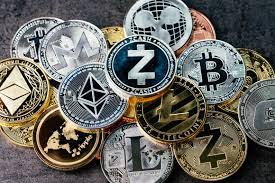
Bitcoin is far away from meeting these objectives, and in my view is a ‘tulip’, a speculative, trading asset. It also seems to me that many people are increasingly happy with bitcoin being assigned this role, and much of the interest and eco-system that is developing around it underpins the role of bitcoin as a speculative asset rather than as a bona fide currency.

In particular, more banks and payment systems – notably PayPal – are allowing bitcoin onto their platforms, either in the sense that it can be used to buy other assets or that it can be traded. It is likely that in coming months regulators will permit cryptocurrency ETF’s to be launched, and other products such as derivatives will spring up around this.

At the same time, many of the highly dubious coin issues of recent years have been shut down by regulators, principally in the USA, though bitcoin remains a favourite means of transacting in the underworld.

More hedge funds that specialize in crypto currencies are on the rise, and crypto exchanges are readily attracting investment funding (Baakt the digital marketplace has recently announced a plan to go public through a special acquisition vehicle).

If the role of bitcoin (and crypto-currencies) as a trading asset eco-system is growing, its place as a currency or means of exchange is being curtailed – indeed the price moves of the past three months would make it very difficult to operate as a reliable means of payment (in addition the verifiability of payments may be harder to complete than some think according to the Bank for International Settlements).

Moreover, the entry points to the crypto currency world are under attack – either in the case of exchanges being hacked or closed down by governments (nearly 80 crypto exchanges ceased to exist through 2020), or in governments looking to identify and tax those putting capital into or taking it out of crypo currencies.

In particular central banks, many of whom are close to launching their own digital currencies (conceptually at least) have an interest in the failure of cryptocurrencies to catch on. Notably Christine Lagarde this week called for bitcoin and its associated ‘funny business’ to be more closely regulated.

As such, this points to crypto currencies being ushered into the corner of eclectic trading assets – though less of an experience than horse racing, with none of the aesthetic bonus of art and not quite the fun of collecting wine.

It’s also worth pointing out that from the point of view of ESG investing (Environmental, Social and Governance) which is arguably another ‘mania’, bitcoin is a ‘sinner’ in that the mining or manufacturing of bitcoin consumes an enormous an amount of electricity, not to mention its negative social and governance aspects.

To draw these strands together in a way that is relevant for investors – what is happening is that as the economic and social utility of bitcoin is falling (i.e. its use as a ‘money’), then its intrinsic value is eroded, and the greater the portion of its price that is made up by speculative activity.

So, if bitcoin is fast becoming a trading asset, should one buy it now? My sense is that many of the people who trade bitcoin also trade S&P futures and assets at the more speculative end of the equity market. A manifestation of this that crypto currencies are highly correlated, making diversification difficult.  

In this respect bitcoin is at the very risky end of market risk appetite and increasingly equity market investors use it as one of a number of steers for the direction of equities. In this context, for most investors, it is best to wait for a drop in risk appetite – and for a degree of panic to return to markets, or for liquidity conditions tightened. The last time we saw depressed risk appetite was in late September, when bitcoin traded below the 10,000 level.

As it stands, risk appetite is very high and due a reversal in coming weeks, so now is not the time to jump into bitcoin.

A Putsch too far

Oddly enough, the first ‘putsch’ in modern times took place at Paradeplatz (in Zurich), today home to banking putsches. In 1839, the conservative, religiously fervent rural community from beyond Zurich led the ‘Züriputsch’ against the city’s liberal elite, thereby coining the term ‘putsch’ for an excited uprising, or incitement of the people, if we can put it like that. Later, the 1923 Munich Beer Hall putsch gave the term a more deadly meaning.

The episode came to mind with the ‘storming of Capitol Hill’ on Wednesday night, an event that on one hand caused me to change the topic of my weekly missive (from bitcoin), and on the other where it is difficult to add to the sense of disgust at confederate flags and ‘Auschwitz’/‘6MWE’ t-shirts being paraded through Congress.

In the old days, putsches and coups d’états were frequent occurrences across Africa, or more sporadic events in Latin America guided by the hand of Henry Kissinger as the myth goes. What transpired on Wednesday was not a coup but the subversion of laws and the takeover of the office of state, and of a political party by the cult of an individual. The development that the Democrats gained two seats in Georgia was lost in the fog of the ‘putsch’. Leaders in other countries where individuals have subsumed institutions – Russia, China, Brazil for example – may have been thrilled by what they saw.

The political implication of Wednesday’s event is that social media companies now have an opportunity to rethink the intersection of politics and social media. Further there is a very likely formal split in the Republican Party between a Liz Cheney ‘Country Club’ faction and a Pompeo/Hailey/Hawley/Cotton raw, nationalistic cabal (half of Republicans supported the ‘putsch’ according to polls). A profoundly divided Republican Party means that like the 1912 election, a Democrat will win in 2024.

From an international point of view what is worrying is that the US, and by extension the international institutions it anchors, will lose moral authority with respect to their ability to condone human rights abuses, corruption and the degradation of democracy in other countries (note events in Hong Kong last week). In the future Turkey, China and Hungary will request to send observers to oversee elections in the US.

Washington has been the keystone or locus of the globalized world, and its violation is, like the smothering of Hong Kong’s democracy this time last year, another rupture that announces the onset of a different world order.

From a European point of view, events in Washington will spoil the prospect of a full reconciliation between European and American diplomacy granted the fear that the underbelly of American society is now isolationist and nationalist. In general, European leaders will be more wary of the US, and at home will take steps to ensure that extreme political groups are marginalized.

The daunting challenge and opportunity, for Europe is to frame itself as the cradle of modern democracy and the beacon of liberal values. The EU has already stated as much through its ‘European Values’ policy thread, but predicably failed to follow through during recent budget negotiations involving Poland and Hungary. The stakes are much higher now, and Europe’s political centre needs to take a big risk and aggressively defend liberal democracy.

Many politicians, and many of us, may hope that with the inauguration of President Biden the ugly side of American politics will subside, or that, in the long-term it can be mollified with education and progressive policies. This sadly is an illusion.

The path that Britain has followed with Brexit is the likely direction for public life in the US – derision, lack of direction and division – until an event or nadir is reached that gives a common cause (it should have been COVID, or climate damage). This common cause could be the collapse of the American economic model in that face of extreme inequality and indebtedness (with a fiscal version of Paul Volker as the catalyst in redistributing wealth) or more predictably an open strategic conflict with China. The former would excite Democrats and the latter Republicans.

This sobering scenario points toward at least five more years of political dislocation in the US. In that time other nations will ‘go it alone’, we will continue to see a ‘levelling’ of power between nations and new approaches to ‘doing things’ that are no longer tied to the Washington Consensus will spring up.

America’s credibility is in tatters. Recall that Trump withdrew the US from the World Health Organisation (WHO) amidst the worst pandemic in a century. He has now broken its society and political system. These will take a very long time to repair.

Have a good week ahead

Mike

The Case of the Missing Billionaires

Jack is troubled

Between 2016 and 2017 a number of Chinese billionaires went missing. Some never re-appeared – it is suspected that wives, lovers or business rivals had a hand in their disappearance. Others however, reappeared, stating that they were ‘helping the authorities’. This period coincided with China’s anti-corruption drive and stuck in my head when I heard that Jack Ma’s Alibaba and Ant Financial were being investigated over monopoly and overleverage concerns.

Some weeks before the investigation, ahead of a potential IPO of Ant, Ma had pronounced that China’s regulators harbour a “pawnshop mentality”, having previously held that if the ‘banks won’t change, we will change the banks’. This affront was obviously too much for the Chinese authorities, and Ma’s colleagues at Ant are now ‘helping the authorities’ with a remake of Ant.

In the US and Europe, the regulatory assault on Alibaba was greeted as proof that China is ‘communist after all’, and that it is a menace to free enterprise. This kind of reaction betrays a lack of willingness to take China seriously and to try to understand what is happening there.

It is much more likely that two interlinked factors are at work. Xi Jinping’s China is one where there is little room for high profile voices who might contradict the President. Indeed, the singularity of Xi’s position will become a much more significant issue in Beijing in coming years, especially so within the Communist Party about whose internal deliberations and rivalries we in the West know relatively little.

Secondly, politics aside, the rationale in clipping the wings of Ant is to reduce leverage in the financial system, and arguably make the Chinese economy more sustainable. This is where Xi’s future and that of China are intertwined – he needs to sustain a prosperous economy in order to fulfil his vision and safeguard his position.

Xi talked about the ‘China Dream’ long before (March 2013) Trump was elected with the help of the catchphrase, Make America Great Again. This Dream is rooted in a desire to regain the place China enjoyed centuries ago when its economy was the dominant one.

 China’s system, viewed from outside, involves a pact or contract, where people will sacrifice their liberty in return for order, prosperity and national prestige. The state is very much in control. It is not something that Europeans or Americans are used to. China’s system has worked very well so far – though the biggest risk it faces is a period of high unemployment, that breaks the contract between people and the Communist Party.

To this end, China and Xi cannot suffer the economy to be derailed by the kind of imbalances that, for example led to the euro-zone crisis. In particular they do not want a lost decade(s) akin that that suffered by Japan – note that last week the Nikkei regained the 27000 level for the first time in twenty nine years.

This interpretation of what is happening in Beijing is reinforced by the fact that it is behaving like a capitalist economy. Consider that the Chinese central bank is not engaged in quantitative easing, bankrupt companies and property vehicles are allowed to default and restructure and, competition between Chinese entrepreneurs is fierce.

Contrast this with Europe and the US, where markets and economies are held together by central bank liquidity provision, where tech monopolies thrive and where zombie companies persist.

In a recent note (Dec 5, ‘What can possibly go wrong?’) I wrote of the ‘Sisyphean economy’ where governments and central banks try to push activity upwards by injecting liquidity into economies, only to see it relapse. Of the major regions only China appears to understand the relevance of this, and is doing its utmost to pare back the risks of a costly ‘reckoning’. Given the extent of indebtedness in China, this is wise. Given the threat to President Xi’s popularity and that of the Communist Party, no-one and nothing can get in the way of the China Dream.

Happy new year

Mike

Drinking with Dickens

Gin Cup?

An important and iconic book for this time of year is Charles Dickens’ ‘A Christmas Carol’. It is important in that it was written at a time (1843) when the celebration of Christmas was being revived, and where German (Christmas tree), pagan Celtic (feasting) and Christian (Mass) elements of the celebration were fusing together.

Dicken’s book also reinforces the morality tale around Christmas, and partly because of the many film versions of it, I suspect many people associate it with year-end reflections on our society. Like Dickens they vow to ‘honour Christmas in my heart and try to keep it all the year’.

A different and arguably from another point of view, more enjoyable take on Dickens’ work is ‘Drinking with Dickens’, a book written in 1980 by Charles Dickens’ grandson Cedric Dickens. It is essentially a book of cocktail recipes for drinks with exotic names like ‘Smoking Bishop’, ‘Barclays Best’ but in reality is much more than that because it draws on the warmth and conviviality of many scenes in Dickens’ works, and through the recipes it gives a very real sense of the atmosphere of mid 19th century England.

Having come across ‘Drinking with Dickens’ a few years ago I can attest that our drinks trolley is stocked with various gins and angostura bitters. So, confined to home and fortified with more than a few cups of gin punch I sat down to think about some of the potential surprises of 2021.

  • Norway joins the UN Security Council for the next two years and elevates the Arctic to a major geopolitical issue. A titanium Russian flag stuck 14,000ft on the ocean floor beneath the Arctic pole in 2007, goes missing, mischievously stolen by a ‘sub-drone’. Fishing and mineral rights around the Arctic become a topic of hot debate.
  • The electric car boom gives way to a new ‘market craze’, capital begins to flow to genetics and genomics, with a flood of special acquisition vehicles being launched in order to buy into cutting edge startups in areas like genetic editing.
  • As part of its policy of ‘national strategic autonomy’ France opts to favour two French made vaccines for its citizens, but adverse reactions lead to a health and political crisis. Emmanuel Macron’s standing drops in the opinion polls, and the French establishment search for a centre right candidate for 2022.
  • A wave of consumer spending, the side-effects on agriculture of climate change and speculation in lumber prices all conspire to drive up inflation. The US bond market crashes, a pensions crisis ensues, and the Economist magazine proclaims China as ‘the new safe haven’
  • Expectations are high that the Biden administration will focus its foreign policy on China, but it pivots dramatically to Latin America, launching a digital dollar as a way of binding South America to the American financial eco-system, and of reducing corruption and the drug trade.
  • In Asia, Japan, Taiwan and South Korea are forced into daily jet fighter scrambles in order to counter airspace incursions by Chinese fighters. In April a squadron of Chinese Chengdu J-20 fighters is hacked mid-air (in fact the pilots’ head display units are hacked) and the squadron is forced to land in Japan. A major diplomatic incident results.
  • With diplomatic and trade ties with Israel now well established, Mohammed bin Zayed Al Nahyan, Crown Prince of Abu Dhabi, looks to deepen economies ties with India and in so doing, build out an independent geo-political ‘pole’ spanning India and the Middle East.
  • The ‘rule of crowds’ takes hold of policy. The stay at home culture has spawned a new form of policy making where laws, regional budgets and local referenda are driven by ‘crowd voting’ and ‘crowd rating’.
  • Brexit, finally accomplished at the end of 2020 leaves Westminster flat. Without the excitement and urgency of a crisis British politics becomes moribund. Boris Johnson resigns as prime minister and moves to America to become a leading chat show host on Donald Trump’s new television station ‘Patriot TV’.
  • By February, an end to the coronavirus crisis is in sight. Though still proscribed by the authorities, people start to party and revel. ‘Drinking with Dickens’ rises to best seller status and the price of angostura and select gins rockets.

Enjoy the rest of the holidays,

With best wishes

Mike

Brexit means Brexit

Boris means Brexit

In a speech at West Point the NATO affairs adviser to the US President declared that Britain had ‘lost an empire and had not found a role’, he also said that ‘Britain’s attempt to play a separate power role – that is, a role apart from Europe, a role based on a ‘special relationship’ with the United States is about played out’. The President in question was Jack Kennedy, the adviser was former Secretary of State Dean Acheson and the year 1962. While it is reassuring to see that some ‘traditions’ do not change, it is surely time for Britain to move on.

That time may now be upon us.

Brexit has proven the most vexacious political project of recent time. It is, to quote Churchill (his view on Russian foreign policy) a riddle, wrapped in a mystery, inside an enigma. We have never known what Brexit really was or where it was going, and the most confused of all were its promotors. The tortuous path to a deal of sorts is now close to an end, for better or worse.

I don’t want to go into the detail of any deal that may soon materialize or whether it will hold (it will become law!) but I do want to stress that Brexit is highly significant to our age because it is both the faultline and crucible of so many issues of our time. With the year ahead upon us, it is time to take stock of these.

Brexit was the first significant fracture in the globalized world order. Britain led globalization in the 19th century and London was arguably its epicentre in the 20th and early 21st centuries. That this phase of Brexit is now closing suggests that the process towards a new world order is underway (as per my TED Talk), but equally the fact that Brexit has taken so long suggest that the process towards ‘something else’ will take a long time.

There are many other fractures in the globalized world order to come and to speculate, I can think of Turkey’s exit from NATO, China’s scramble for Africa, the Emirates and India becoming a new ‘power’, the growing impact on geopolitics of climate damage, and the even deeper irrelevance of bodies like the WTO (World Trade Organisation).

Brexit has also fractured history closer to home. On hearing that the vote in the north east of England had turned for Brexit in the early hours of that fateful vote, my first thought was that the long history of the United Kingdom and Ireland had been smashed.

Scotland will most likely become independent, and the lesson of Brexit is that this process should happen in such a way that bolsters Scotland’s economy, and preserves close and open ties to England, Wales and in particular Northern Ireland. In turn, there is now much talk about a united Ireland, though if referenda on this question are to take place, then at very least this needs to be preceded by much greater interlinking infrastructure between Ireland and the North, and most importantly a Marshall style plan for Northern Ireland’s economy and society.

One of the errors in the immediate aftermath of Brexit was the failure of European leaders to grasp the import of Britain’s vote and the possibility that the factors that motivated Brexit might

ripple across Europe. The past five years saw the rise of radical politics across Europe, though this has largely been contained by the centre.

With cyber wars being waged above, below or around us, Europe is still behind the US and China in terms of what Emmanuel Macron calls ‘strategic autonomy’ (effectively the need to be self sufficient in AI, cyber capabilities, 5G and so on), but the Brexit process has shown and burnished its strengths in two respects. One is the formidable heft and expertise of European technocracy as exemplified by Michel Barnier (who surely deserves a knighthood) and more importantly by the rise of the concept of solidarity, where the EU has at nearly all times spoken with one voice on Brexit. Like the crisis management lessons learned during the euro-zone crisis, the lesson of solidarity is something that needs to be diffused across EU foreign policy.

On a somewhat related note, Brexit could have been cast as a struggle between populists and technocrats, both in the sense of the struggle between Whitehall and Westminster, and London and Brussels. It recalls Yeats’ line in ‘The Second Coming’ that ‘the best lack all conviction while the worst are full of passionate intensity’. This has been a major theme of our times – laws, science and democracy under attack from morally free wheeling populists. The failure of Donald Trump to be re-elected and the many failures of Brexit, suggest that the ‘brave’ are regaining their conviction, and that the ‘worst’ need more than intensity.

In this context, my final thought is what happens to the Brexit Dream? There is some comfort to be had in the fact that Britain is good at reinventing itself, especially it seems after wars with the French! It is likely however, that the task of filling out the template of Global Britain will fall to a new generation of politicians, and potentially activists from outside politics. It is telling that one of the most socially impactful public figures in the UK this year is the footballer Marcus Rashford whose literacy and school meals program have repaired the shortfalls in government spending. Professional politicians should take notice.

Theresa May often stated ‘Brexit means Brexit’. At first, it appears a meaningless comment, but the longer Brexit has gone on and become its own (il)logical universe, the wiser ‘Brexit means Brexit’ sounds. It is however, time to move on.  

Have a great week ahead,

Mike

Globalization is over – what’s next?

Around about this time last year I was lucky to get a call from TED – as in TED Talks. It was somewhat unexpected and flattering as I enjoy watching TED Talks. The topic I was proposed to speak on was the impending end of globalization and a sense of what might possibly come after it.

Globalization ends

Little did I know at the time that globalization would be dealt a fatal blow by the coronavirus. Not only has it begun to produce severe self-limiting side effects such as indebtedness and climate damage, but trade, travel and the flow of ideas have been decisively changed in the last year. Furthermore, what is worrying is that in past international crises – most of them economic or geopolitical, there has usually, ultimately been a sense of a committee to save the world – that leaders and leading nations would come together. This time, uniquely, there has been little collaboration.

TED Talk…2021

In the end, the chaos and tragedy wrought by the coronavirus meant that my Talk changed several times, but in the end the thesis that globalization is dead and is giving away to a multipolar world is still clear, in my view.

Emerging world

One element of the debate on the new world order, and what happens after COVID-19 that worries me is that we spend far too much time talking about the US, Europe and China – especially when there is a huge amount of exciting things going on in fast growing emerging economies – Nigeria, Ethiopia, Bangladesh, Indonesia, Mexico and Brazil for example. Economically and socially they are also stressed by what has happened through 2020, and in most cases do not have large, powerful central banks to cushion the financial blow.

With 2021 in mind, the question for them in the new world order is what model do they follow and what alliances do they build?Most of these countries – during the age of globalization – were used to being told what to do, by the likes of the IMF – but the age of condescension is over now.

 Age of condesension is over

The tangible opportunity in a less uniform, more values driven world is that countries have a greater choice in the path to follow. Arguably, they also face greater pressure to get it right.

 So, should Belarus and Lebanon follow Ireland’s model, that of Dubai? Does Nigeria still feel it has some shared values with the Commonwealth or is it better allying its large, growing population to China and its model…and think of one of the few female leaders in Africa Sahle-Work Zewde, President of Ethiopia, how she might inspired by Jacinda Arden and Nicola Sturgeon of Scotland’s approach and how tangibly, she might implement their approach in Ethiopia.

 It may also be that in the post globalized world, countries like Kenya, Indonesia and Egypt decide to go their own way, and build out their own value systems and economic infrastructure.

2021 challenge

In this way, the arrangements, institutions of the future won’t be crafted in Washington or Beijing, but rather by countries like Tunisia, Cambodia and Brazil swapping notes on how to curb corruption, build healthcare and education systems for exploding demographics and ensure that their voices are represented on the world stage.

 As globalization ends, and chaos seems to reign, these countries and their young populations, the scope they have to grow and shape their societies, are the future and the promise of the next world order. That’s the great challenge for 2021 and beyond!