Gold Card Politics

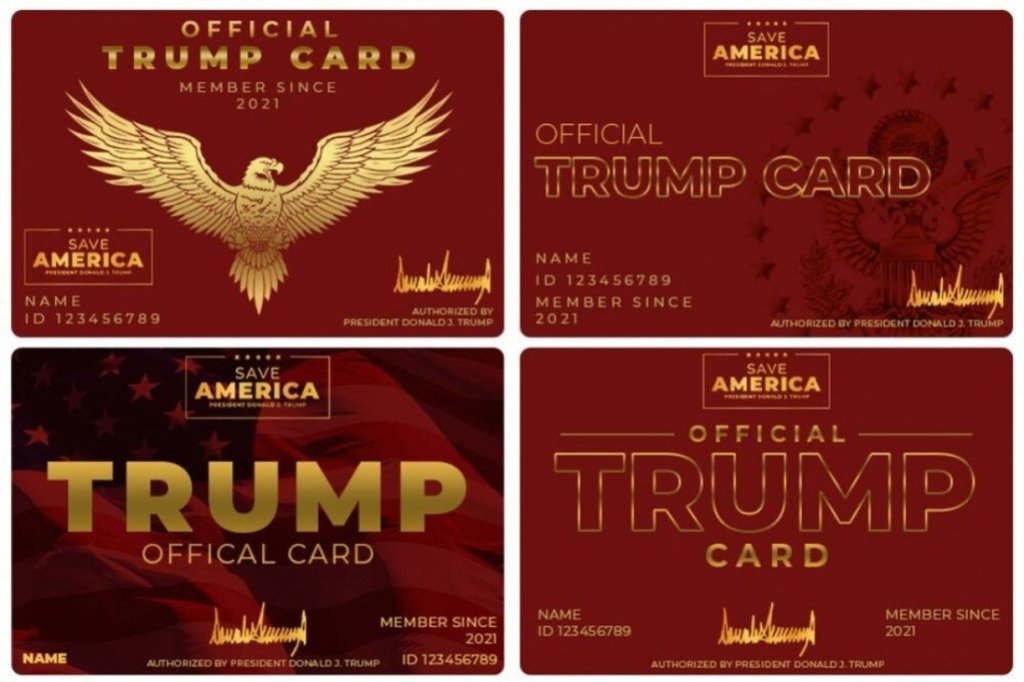
Donald Trump, remember him? He recently asked his supporters to help choose the design of a ‘Trump card’ which they would carry as proof of their allegiance, and of course, their patriotism. Following several failed projects (blogs, radio shows) this lurid tactic represents the further gamification of politics and reflects Trump’s instinct for marketing and his aim to turn politics into a consumer goods subsector. No doubt donors of differing levels of generosity will be offered platinum and gold Trump cards.

There are two other, more serious implications. The first is that such a move, together with recent eye-popping fund-raising rounds by Trump, will deepen the divide in the Republican Party, and set the political agenda for the next midterm elections and 2024 presidential race. The first and main issue any Republican candidate must make is how to position vis a vis Trump (the Missouri Senate race for Roy Blunt’s seat is a case in point).

The second is that in the post COVID world (we are slowly getting there) we are seeing a range of new markers of political behaviour and values. The most striking and deadly is the difference between those who wish to get vaccinated and those who do not (sadly many in emerging countries don’t have this choice).

I have seen many versions of a chart that plots the proportion of people in each US state that have been vaccinated together with the predominant political affiliation in that state – Republican states have low vaccination rates whilst those in Democratic states have a much higher rate. I presume that any of those who will carry the Trump card, do not have a vaccination pass.

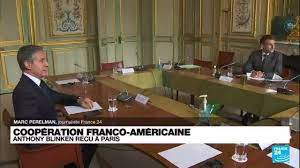
Similarly, in France vaccinations have become a political issue but what is not generally remarked on is that the number of people who have signed up to be vaccinated following Emmanuel Macron’s speech (where he declared cinema, restaurant going conditional on the production of a vaccine certificate) vastly outnumber those who protest against vaccines. What is now interesting is the way in which this ‘marker’ or divide is quickly becoming institutionalized  – many companies will only allow vaccinated employees to return to their offices and governments across a range of countries are tilting incentives towards those who are vaccinated.

I don’t disagree with this and think that as regards the COVID pandemic it is for the good. As a policy exercise it has lessons for how governments can shift, or ‘nudge’ to use the popular term, popular behaviour in positive ways. At the same time, it has obvious dangers in the sense that some governments may take the vaccination template and replicate it for other problems. Will it for example be applied to healthcare where those who drink, eat and smoke too much will be denied state funded healthcare or forced to pay a higher price for it?

What is equally interesting is the way in which the political climate will be shaped by the policy response to the COVID pandemic and the various trends (i.e., digitization) that it has set in motion. In short, what I have in mind is that healthcare related choices like vaccination have become markers of political identity, in the same way that at a country level a government’s stance on LGBT rights has become, in my view, a marker for broader qualities such as a country’s openness, the quality of its democracy and its ability to innovate.

If willingness to become vaccinated against COVID-19 is a marker of political disposition, what might others be?

Keeping with the idea that digitization is growing, one of the developments we may see in the future is the digital passport, effectively a key that can reliably identify someone and link their identity to a national database (i.e. social security). This development may become necessary as part of the roll out of digital currencies, as part of the broad initiative on cyber security and, to an extent, to police anti-social and illegal behaviour on the internet (note that the EU plans to have such a digital identity in operation by 2030).

As these measures come into place they will create political friction, and in particular a group of people who choose to be ‘outside’ or against the system. Other key and emerging issues will become political markers – an awareness of climate damage is now coming into mainstream politics, with Germany a lead test case, and the emergence of crypto and digital currencies will also test the sense that ‘with/against the system’ will become an axis in political debate that may supplant the traditional left/right.

Trump should have gone for a ‘Trump digital wallet’ rather than a gold card.

Have a great week ahead,

Mike

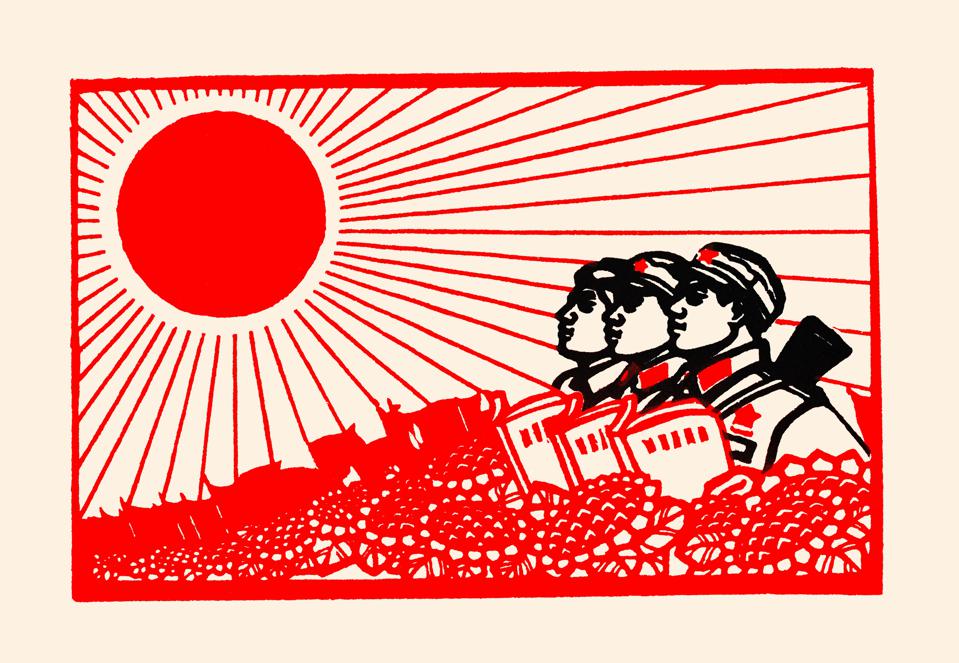
Is China going Communist?

Zhou Enlai, one of the founders of the Chinese state and its first premier, is at the centre of an often used misquote. It is reported that he was asked (during the 1972 Nixon visit to China) for his assessment of the 1789 French Revolution and that he replied, ‘Too early to tell’. In fact, the question had referred to the 1968 student riots in France, and the translator had succumbed to the temptation not to let the truth get in the way of a good story.

Similarly, with the Hang Seng index and the more specific China technology indices down 10% at the start of the week, it is ‘too early to tell’ if this is the beginning of a China led financial market and economic crisis of the type that we witnessed in 2014/2015 and to a lesser extent in 2018. A China crisis proper is high on the list of my ‘things that could go wrong’, but so far China remains the ‘country that has failed to fail’.

The collapse in Chinese equities, especially those in the social media and education sectors owes much to weighty government regulation. In the education sector, the authorities have declared that the rise of private education companies is warping the public education offer and creating inequalities in access to public goods. I generally agree and would suggest that the same is true in Western countries such as the UK and US (ironically there are hundreds of thousands of Chinese students in British and American universities). Most economists will agree that cheap or even free good quality education is the basis of a civil and innovative country.

Where China is different is in the force of its policy making. It has imposed harsh restrictions on its education companies, including a proviso that they cannot make a profit. As a result the price of New Oriental Education fell from USD 8 at the beginning of July to below USD 2 last Tuesday. Equally the share prices of social media driven companies from TenCent to DiDi to Alibaba have also fallen as the Chinese government has also looked to exert a heavy hand over the use of consumer data. They have bounced back somewhat but the credibility of the Chinese market is still at stake.

In the West, these moves will cause some confusion and alarm, not least amongst those who think China is a lesser version of the West. In my view, China is the most successful developmental story of our time, and one where policy (unlike the West) follows a textbook approach, and is importantly, guided by the goal of keeping the ‘Chinese Dream’ on track.

In China, the idea of the ‘rule of law’ is quite different from the way Westerners interpret it, and rather means rule from above, or by the central authority. Here the calculation in Beijing, is that short sharp shocks to certain industries will limit greater socio-economic imbalances and thus avert a larger, existential crisis later.

There are also strategic elements, both for the Communist Party and its leaders, the need to shake up dominant layers and drive investment to other sectors (i.e., semiconductors), and the need to, like the EU, take a lead in forming data regulation.

To that end, investors should view this sell-off, which has pushed Chinese equities into a bear market, as tactical, especially if in coming days it is accompanied by measures to support credit growth in the Chinese economy.

There is a risk of contagion, and there are plenty of ingredients for this. For example, margin debt on trading accounts in China is very high, Chinese high yield bond spreads are the highest they have been in five years (except during the initial COVID sell-off) and economic momentum is sluggish.

In this context, a revolt by investors – both domestic and international – who fear that the Chinese government is going ‘all communist’ would trigger a more prolonged sell-off. In particular, there is a risk that international investors increasingly demand a ‘government intervention’ premium for Chinese assets.

Signs to watch here are weakness across the Chinese credit complex, rising government bond yields and a dip in the yuan, as well as in other cyclically sensitive Asian currencies and international equity indices (e.g. DAX). More broadly a ‘China scare’ for markets would quickly reverse the reflation trade and see fear mongers talk of a demand shock. It might yet be ‘too early to tell’ but China is set to become the driving story in the marketplace.

Rob’in the rich or the poor?

Next week the retail trading platform Robinhood will go public under the ticker ‘HOOD’. Robinhood’s public offering will likely value it at over USD 35bn, and together with a recent fundraising round for European digital bank Revolut, the acquisition of wealth manager Nutmeg (by JPMorgan) and a listing for trading platform eToro (in a special purpose acquisition company), the Robinhood IPO marks a pivotal moment in the transition from ‘old’ banking and towards what is known as fintech.  As such, it is a good milestone from which to judge a number of evolving trends in finance.   

While the Robinhood IPO is a sign that the fintech world has ‘arrived’, like many totemic IPO’s it may also signal a top or high point for digitally driven companies. Bear in mind that a couple of months ago we pointed out that prominent market listings (e.g. from Glenore to Coinbase) tended to mark the end rather than the beginning of a market trend.  

My own judgement is that from an industry point of view, the fintech megatrend is only beginning and will evolve over the next decade. It does also remind us that to a large extent investing in incumbent banks is fruitless, especially so in Europe and Asia, where apart from the ebb and flow of the yield curve, bank performance is undercut by poor governance, inefficient IT spend and short-termist management. 

To put this in stark, performance terms, since May 2006 the MSCI European Equity market index has doubled, while the MSCI European banks index has halved. It doesn’t look like European banks will catch up any time soon even though these ‘dinosaur’ banks (that still collectively hold well over Eur 700bn in investor capital. In contrast the global fintech benchmark has doubled in the past three years.

That doubling has been the result of the emergence a number of new finance eco-systems – retail trading, the retail options market, and crypto to name three – each has its own luridness, excitement, specific sociology and anthropology (from master of the universe options traders to crypto ‘bros’ – the crypto universe is not a female friendly one), to the meme stock traders of the Wall Street (WSB) bets discussion forum on Reddit.

Mindful of the rise and fall and rise again of the WSB traders, the Robinhood IPO will be an excuse for many commentators to trot out the phrase that we are witnessing the ‘democratisation of finance’, but the reality is that we are seeing the democratisation of risk in the sense that different forms of financial risk (leverage, liquidity risk, information asymmetry) are being packaged and sold to the public.

At the other less democratic, indeed elite end of finance (established hedge funds and family offices), there is greater demand for ‘private assets’ (top quality credit funds, venture capital and stakes in growth companies) and in many respects this is one of the more interesting, less discussed parts of the financial world, and certainly the most lucrative.

Another trend that needs greater attention, especially from anyone looking to invest in fintech is how the fintech business model works or doesn’t work. From the outside the likes of Robinhood seem likely highly profitable trading engines, in fact, a perusal of the four-hundred-page SEC S-1 regulatory filing for the IPO (which has over 70 pages on ‘risk factors’) shows that despite USD 81bn in client assets, Robinhood makes the lionshare of its revenue from selling data on client trades to, predominantly, two large hedge funds. In that respect it is more like Facebook than it is like say UBS or Bank of America.

At the same time, there is a strategic, industrial structure-based shift in finance with the steady encroachment of technology companies into finance. The logic of fintech is allowing technology companies to enter the finance world – either as trading platforms, social networks devoted to finance or payment platforms that then develop a more complete service offering (TransferWise, which recently listed on the London Stock Exchange as ‘Wise’, is a good example).

What is not entirely clear here is the way in which the tech and fintech ecosystems will change both the incumbent banking system, and the overall financial system – with implications for monetary policy and regulation.

The Robinhood pre IPO documents also show that 14% of client assets are in crypto, which from a standard asset allocation of portfolio point of view is enormous (I can imagine that a proper portfolio theory approach would put it as 1-2%). Nonetheless, that shows that ‘crypto’ has captured the investment narrative, especially amongst young people and this has much to tell us -about the ‘spirit of the market’ today, not least for the dangers it presents to wealth. 

In this respect one of the very significant trends in coming years will be the battle between centralised and decentralised finance – led by governments and regulators, but that will encompass many areas – law, philosophy, politics and technology. One of the coming challenges will be assigning responsibility across the US regulatory system for crypto assets like bitcoin and the infrastructure that drives them. What is worrying is that even ‘experts’ like Gary Gensler (head of the SEC) have not stepped forward to take this particular bull by the horns.  

Theoretically the ‘defi’ world (decentralized finance) operates outside of the ‘old’ centralized financial world and its real economy, but ‘defi’ cannot viably operate independently of the much greater centralized finance world (made up of the likes of JPMorgan, central banks and governments). To that end, the ‘defi’ winners will be those who can adapt to the ‘old world’ and that are alert to geopolitical sensitivities around the evolution of the world financial order.

Have a great week ahead,

Mike

A Face in the Crowd

One of the more remarkable and still under-estimated films I have seen in recent years is ‘A Face in the Crowd’, a 1957 production by the two-time Oscar winner Elia Kazan. The film is remarkable in a number of senses, especially for the way in which it prefigures the populist use of media – radio and television for political purposes. Anyone watching Andy Griffiths play Larry Rhodes in the film will think immediately of a recent US president, and given the film is based on a book called ‘Your Arkansas Traveller’ by Budd Schulberg, it’s hard not to think of another President from Arkansas.

‘Face in the Crowd’ highlights not only the umbilical link between populism and the media but also the disastrous end that many populist figures face. Populism is one of the plights of our times, for a range of reasons – the dislocations of globalization, the side effects of immigration, poor policy responses to inequality and the rise of social media are a few.

An excellent analytical resource in this regard comes from three German economists (Manuel Funk, Moritz Schularick and Christoph Trebesch) who have previously carried out excellent work on the connection between financial crises and the rise of populism. The researchers have compiled a database of populism that tracks the rise and fall of the phenomenon over time and its economic and political consequences.

The most troubling aspect in their research is to show that populism is at its highest point historically – 25% of the countries in their sample (16 of 60) have or recently (in 2018) had populist governments, as compared to only 14% in the 1930’s. Typically, populism is associated with weaker growth or economic volatility – an occurrence that makes sense if we think of the weakness of the Turkish lira, unrest in South Africa and in general, the consistently poor handling of the coronavirus crisis by populist leaders. The German researchers also show that most populist leaders suffer an ‘irregular’ political exit, and will no doubt be adding the events of January 6th in Washington to their database.

The ‘populism peak’ is important in many respects, not least for the way in which populists feed off and exacerbate the issues of the day – the ambivalence of some Tory politicians over racist acts against English football players is one example.

My hunch is that inflation is about to become the latest populist focus. Recent data show that in the US and increasingly in Europe, inflation is awakening after a long slumber. Indeed, many professional economists and investors have never experienced high inflation. In the USA, some inflation measures and price components are the highest that they have been since the 1980’s. The consensus and official view on rising inflation is that it is ‘transitory’ – driven by a burst of coronavirus recovery spending. The risk, across many fronts is that it proves more enduring and thus can cause financial, economic and political pain.

This is where inflation becomes interesting to populists – anything that causes economic pain and social discomfort is populist ammunition. Indeed, there is plenty of evidence to show that inflation is often the offshoot of populist economic policies as the economic history of Latin America shows.

Inflation, if it is here to stay, will become a political issue in at least three ways. The first is housing where the OECD’s housing affordability gauge has gone vertical (i.e. housing is extremely unaffordable), easily surpassing the levels of 2008 (recall the housing crisis). In some countries like Ireland there is a persistent and acute housing crisis, the debate around which is becoming populist – though it should be said that there has been a broad failure to manage this issue from a policy point of view.

The second way in which inflation becomes an issue is where rising real living costs are not matched by wage rises (we may see this in about six months’ time as economic activity and policy normalizes) and ‘the price of things’ becomes a topic of political debate and increasingly, agitation. In the past, and particularly in emerging economies where households spend a large amount of disposable income on food, price rises can lead to unrest (i.e. the Arab Spring).

Third, rising inflation brings the prospect of rising interest rates which will not only make life more complicated for mortgage holders but will ignite a debate on indebtedness, its consequences and remedies. Lurking behind this is the fact that central banks by declaring inflation ‘transitory’ and not yet giving any sense that they are worried about asset price inflation nor the consequences of asset purchases, find themselves snookered. As we have seen with the tussles between Donald Trump and Fed Chair Jay Powell, central banks make easy targets for populists and can be forced into bad policy decisions by them.

So, inflation if and when it materializes, may be political fodder for populists and if it does, this will complicate the policy and political outlook. Populism is difficult to counteract, and often the best remedy for it is the incompetence of populists themselves. What might be the best solution for inflation – I propose that it is populism. As the study I mentioned earlier shows, populists tend to depress growth, and therefore inflation. 

The Military, Industrial, Financial and Data (MIFD) Complex

There were three events that occurred last week, two of which mirror each other, and that are logically tied up in the third.

The first is the decision of the Chinese internet regulator to suppress the use of the Didi (effectively a Chinese version of Uber or indeed Uber is a Western version of Didi) web application based on concerns over the way it collected personal data and the related potential governance and disclosure shortcomings in the Didi initial public offering.

The second was the decision by US Department of Defence to reopen its JEDI Cloud contract process (note to all arms dealers if you want to convince a government to buy a weapon or weapons system, it needs to have an appropriately convincing name).

The two events are united by a key sentence in President Biden’s midweek speech on the withdrawal of forces from Afghanistan where he stated ‘we will be more formidable to our adversaries and competitors over the long run if we fight the battles of the next 20 years, not the last 20 years’. China and Russia have the same idea, and the battles of the next twenty years will be ‘total’ in that they will encompass cyber security, finance, social media, and trade as well as military aspects, and they will have a strong competitive (as opposed to outright conflictual) aspect.

As a result, the broad topic of security will be all encompassing – stock markets and cloud computing are just two elements that will be drawn into this vortex. This reminds me of the comment of another President Ike Eisenhower, one of only three Presidents to hold a high military rank (after Washington and Grant) who warned ‘we must guard against the acquisition of unwarranted influence, whether sought or unsought, by the military–industrial complex. The potential for the disastrous rise of misplaced power exists and will persist. We must never let the weight of this combination endanger our liberties or democratic process’.

His words ring true today, more so in the light of data and cyber security. They should also alert us to the fact that the military-industrial-financial-data complex (MIFD) will be an expensive affair. In the USA at least, military spending is vast, and often wasteful. Bear in mind that one of George W. Bush’s economic advisers Larry Lindsay, effectively lost his job for estimating the cost of the Iraq War at between USD 100-200bn (it was multiples of this).

Also bear in mind failed spending projects such as the Future Combat Systems Program (USD 46bn), the Crusader gun, a new Bradley tank, the Commanche helicopter (again pay attention to the project names). Also, set all of this against the early warning from the US Defence Intelligence Agency in November 2019 of an emerging pandemic in China and the subsequent government failure to spend on preventative measures, we get the sense that military hardware led investment is overly prioritised.

To give the military a break, all this raises two finance related questions. One is whether the geopolitical contest between the US and China will skew government spending, and the other relates to the combination of military research and innovation.

In the past, warring states have pushed themselves to the brink of bankruptcy – the Napoleonic Wars, the gigantic expense of the German and British navies in the 1910’s and nuclear weapons spending in the cold War. The risk here, and as with the comparison of military and COVID-health spending, is that there is a great, ultimately value destroying wave of investment spending in cloud computing, cyber and data security and drone technology.

The risk also is that the increasingly fashionable idea of industrial strategy in the US (again another example of America becoming more like France) becomes led by the MIF’D. Brian Deese, President Biden’s National Economic Council adviser is already pointing towards developing strategic industries such as semiconductors and telecoms, but the risk is that this strategy becomes skewed by the geopolitical side of the debate rather than the necessarily important focus on productivity.

My final thought is on innovation, where despite inefficiencies in the way military procurement is handled, the underappreciated side of military related spending is innovation. Israel, somewhat controversially I should say, proves this point. A great many of its leading technology firms have been developed as follow throughs from its soldiers and some of its battlefield technologies (Iron Dome, and its drone and robotic battlefield programs) have spawned successful commercial applications and reflect a thriving public-private innovation partnership. Indeed, Israel is cited as a case by Mariana Mazzucato in her thesis that states have a key role to play in driving innovation.

However, beyond extreme data points like Israel, the reality is that the countries that are best at innovating, do not have MIFD complexes, but rather good education systems, progressive incentive structures and state support (rather than control). In that respect, the biggest obstacle to innovation in the US is that it becomes the plaything of geo-politics, and increasingly of a small community of investors who it seems increasingly view innovation as something to trade rather than to nurture.

Have a great week ahead,

Mike

Waiting for Franklin

This year Independence Day falls on a Sunday so the associated bank holiday in the US will be held on Monday (5th). This is not wholly unusual. Benjamin Franklin celebrated the first Independence Day with a dinner for close friends (including John Adams) in Paris. Franklin’s dinners were part of his diplomacy as America’s man in Paris, and the American Club in Paris has continued this tradition (as I am on the topic of Paris, visitors and residents alike should visit the superb, newly restored Hotel de la Marine which will give a taste of the magnificence of the ‘Franklin era’ in Paris).

Franklin is a good example of a political figure who is associated with food, Churchill being an obvious one (Cita Selzer’s book ‘Dinner with Churchill’ is good) and I suspect nearly all the French Presidents (see Jean d’Ormesson star in ‘Les Saveurs du Palais’ for example). By comparison, the post Brexit squabble over sausages is banal.

Franklin, one of my favourite historical figures, also reminds us of many other things, the first of which is that we will rarely see his like again – he was a writer/publisher, physicist, diplomat and politician, amongst many other accomplishments and hugely influential in setting the values and codes that shaped America.

Politics is now such a cruel and demanding ‘sport’ that it is unlikely that someone of Franklin’s many talents (the same is true for the other Founding Fathers) would or could rise to the top (note that the positive trend of rising female participation in top level politics is accompanied by the fact that relatively few European leaders have children illustrating that it is difficult to have a family life in politics).

The other aspect of Franklin’s great life that is worth commentating relates to his time in Paris and the very close ties between America and France. It is very likely that few of those who stride up and down Lafayette Avenue in lower Manhattan know of the contribution of the Marquis de Lafayette and also of the writer Beaumarchais to American history. France and America entered the 18th century as the lynchpins of the democratic world and together with England, Ireland and a host of other European and Asian nations, are still its flag bearers.

What is worrying however is that democracy and much of what Independence Day represents is under steady attack. Some years ago, the American political scientist Larry Diamond wrote of the global ‘democratic recession’ and in recent years think tanks like Freedom House and the Economist Intelligence Unit have remarked on a broad based decline in both the number of democracies and in the quality of democracy.

Almost 70% of countries covered by the EIU’s Democracy Index recorded a decline in their overall democracy score, while the global average score fell to its lowest level since the index began in 2006. The EIU’s database shows that the leading democracies of the world are largely small advanced countries, which contributes to a sense of the vulnerability of democracy vis a vis larger countries, while some of the ‘freedom’ maps from Freedom House show how (geographically) polarised democracy is across the world.

If asked ‘what worries you most about the world’, my response is that democracy withers away and with it the rule of law and the role of credible institutions. We can see the effects of this in countries like Brazil, Hungary and Turkey but we could just as easily dismiss these as emerging markets.

That’s wrong on two fronts – what will shape the world in the 21st century is the form of governance that populous fast growing countries like Bangladesh, Nigeria, Rwanda and Vietnam. Second, in countries like the UK that were hitherto regarded as bastions of democracy, the quality of government is visibly deteriorating.

Moreover, to return to Larry Diamond, he has recently written in Foreign Affairs magazine that the world may face the prospect that American democracy would die out, leaving the international political economy directionless and shapeless. To that end, the politics of states like Georgia may be more meaningful than what happens in domestic politics across India.

The worry is that ‘fake news’, voting restrictions and a radicalised Republican Party lead the US further away from democracy and in the absence of a unifying figure of the mantle of Hamilton (beyond President Biden it is not clear who the obvious next candidate will be given the poor performance of the Vice President) there is a leadership vacuum.

It may be, unfortunately, that such a threat is required to bring forth the next Benjamin Franklin. Happy 4th of July.

Just One Word – ‘Plastics’

One of the memorable moments in the 1967 film ‘The Graduate’ is where the main character 21-year-old Benjamin Braddock is taken aside by a Mr. Maguire, who says ‘One word Ben  ‘plastics’, there is a great future in plastics!’

If the film was remade today, it is hard to know what might replace ‘plastics’ because there is such a mind boggling array of new technologies and technological applications bursting through. For example, a recent report by McKinsey on top technology trends flagged areas like ‘the future of programming’, ‘the bio revolution’ and ‘applied AI’ as the trends to watch.

I could add many more, but the point is that one characteristic of the post COVID economy is a bewildering array of new sub-industries, ESG related norms and consumer areas, that bring the future to our doorsteps almost to the point of exaggeration (e.g driverless flying taxis).

This wave of innovation is accompanied by a surge in entrepreneurship, and a noticeable improvement in the formation of entrepreneurs (one example is the entrepreneur incubator Entrepreneurs First). An important question for large companies is how to think about this array of innovation, how to gain exposure to it and relatedly how to defend business models against its disruptive effects.

One interesting schematic on disruption was recently published in the Harvard Business Review by three management consultants and looks at the vulnerability of different industries to ‘disruption’. More traditional industries like ‘plastics’ (diversified chemicals and rubber) are less prone to disruption, and in many cases tend to buy up brand innovators before they become disruptive (the beer industry is a case in point).

According the HBR schema, industries that are vulnerable to disruption are utilities, energy trading, consumer technologies and banking (investment and asset management). My personal view is that incumbent European banks have, with a few exceptions, failed to innovate and continue to be hampered by poor corporate governance and incentive structures, and unambitious governments and regulators. In some respects the best that can happen is that government and regulators aid the rise of digital banking, though again I am not optimistic that this will happen.

The case of fintech and the rise of digital money, banking and asset management illustrates the nexus between states, corporations and regulators, and helps to show why large corporations need to pay great attention to not only new trends in technology, but also new frameworks and ecosystems (see my May note).

The task of looking into and plotting the future, may be just a little too much for many CEO’s. In recent years the debate on the role of the corporation in socio-economic life has been re-ignited, and there is a consensus that corporations need to play a greater socially responsible role.

A good number are true to this – in the US social causes have been pioneered by progressive corporate leaders, though in Europe company heads are far more shy. While there is a very strong case to be made for corporates that have a more balanced contribution to their social, physical and financial environments there is also a sense that CEO’s now have multiple demands on their attention.

Still, apart from avoiding disruption there are good reasons for corporations to become ‘more involved’ in the future, if I can put it like that.

One is that the institutions, laws and frameworks that will marshall new areas like cyber security, climate damage and digital money will not only involve governments in their construction but other players from corporations, large cities, citizens assemblies and universities. Notably, some of the most interesting thinking I have seen on how to best police cyber security comes from corporates like Microsoft.

Another reason is that, as emphasized here, many of the new technologies that are mentioned in reports like that of McKinsey, have acquired a strategic value and in reality will be developed by tandem relationships of states and corporates – this will be the case with digital currencies, cyber security and artificial intelligence. Plastics never had this problem.

A third and perhaps yet underappreciated reason for corporates to think very hard about issues like the future of democracy, institutions and society is that changes in trust and how we capture identity are undergoing huge shifts. First of all, trust in democracy, politics and institutions in the Western world is falling and to a certain extent is being replaced by new forms of money, corporate brands and radical. This trend places a premium on companies that can build trust with consumers, and on the responsiveness of companies to events that threaten this trust.

The second element here is identity, specifically digital identity. Soon, a combination of cyber security, digital money and data protection will usher in the arrival of secure digital identities or passports. Theoretically this should contribute to more secure e-commerce and banking and potentially better online behaviour through reduced anonymity, but it also means that the channels through which companies interact with consumers will be more formalized and potentially better policed.

Few companies are ready for this.

Have a great week ahead,

Mike

Two Jabs

I have thankfully gotten my ‘two jabs’ and theoretically at least should be free to roam the world. Before I do that, a quick detour to John Prescott, once the UK’s Deputy Prime Minister from 1997 to 2007, who being attacked (an egg was thrown) whilst on an election canvas, responded with his fists against his assailant. As a result he was nicknamed ‘Two Jabs Prescott’. Prescott came to mind when I read of the physical attack on French President Emmanuel Macron.

What was noteworthy was not the stupidity of the attacker but Macron’s response afterwards – he stated that his role was to get out and meet people, hear their concerns and rebuild trust with them. With that, he has put his finger on one of the essential political issues of our time – that people no longer trust their governments and the institutions that rule over them. In France there is speculation (misplaced I think) that Marine Le Pen will sweep to power, and in the UK and beyond a growing realization that Boris Johnson individually is untrustworthy.

More broadly, a few surveys sketch a worrying picture. The PEW Centre in the US shows that trust in government is very low – only 24% of Americans trust their government (the low point was 17% during the Trump administration), compared to 50% after 9/11 and 77% during the Kennedy era.

The OECD Trust in Government project shows a similar picture – globally only 45% of people trust their governments and have a much higher level of trust in education and healthcare systems (in the USA healthcare and military personnel are amongst the most trusted professions – with politicians, banker and journalists at the low end of the trust spectrum).

Across societies, an interesting picture emerges. The World Values Survey shows that in smaller advanced economies – the Nordics and Switzerland for instance – people have a high (60%) level of trust in each other (this may be due to country size, culture and proximity of populations), but in many emerging countries with weak institutions and rule of law (i.e Colombia, Brazil, Ecuador and Peru), trust across societies is far lower (10%). What is striking is that trust levels in China are high, underlying a cohesive society and one where the ‘contract’ between the government and its people is still intact, something that is vastly underappreciated in the West.

Still, this generalized lack of trust in government and high variance in trust across societies has many implications for politics and commerce. The PEW Centre also report that in the US, France and the UK, a majority of people desire a major change in their political system (with citizens assemblies and referendums amongst the solutions proposed here, a la Ireland and Switzerland).

It suggests that in the democratic world (which according to many surveys such as one by the EIU, is shrinking), governments need to invest more in transparency, and in new ways of giving voice to their citizens – either at a local level or for example using social media to gather feedback.

At an institutional level, many institutions are not at all well understood by the people they oversee, central banks being prime amongst them. One example I often flag is the EU, whose leaders now speak of ‘European values’ but who at the same time have not thought out what this means in a tangible sense to the diverse nationalities that make up the Union, and how in a pragmatic way, it might bring them closer together.

Moreover, with respect to the new institutions of the 21st century, be they the guardians of the climate or cyber activity or bodies that will marshal new forms of money, public trust will be one of the most important criteria that drives their construction.

In commerce, there are two trends worth keeping an eye on.

The first is the rise of blockchain, and blockchain enabled means of exchange such as bitcoin. The theory behind blockchain is that its protocol works to bind two parties in a technologically trustworthy transaction or contract. More particularly, the idea of decentralized finance is that it operates outside the ambit of governments and central banks – bodies that are increasingly less trusted. We might even interpret the decision of Ecuador – a country where trust and institutional quality are very low – to adopt bitcoin as a money, as an affirmation of the above.

If you draw a graph of the decline in trust in government and the market value of crypto currencies there is good (inverse) fit, albeit with only eight years of data. So, a provocative way for governments to curb the use of bitcoin might be to boost the credibility of their own actions!

Relatedly, banking systems – which are in many cases too battered or too ill formed to be trusted – are being replaced by other more trustworthy brands. In Kenya for example, the mobile payments system MPensa is widely used and trusted, in part because it is operated by a brand (Vodafone) that is (anecdotally) trusted by Kenyans.

The idea of trust in the economy is a vast and complicated issue, my own preference is that we have governments and institutions we can trust and admire, but the reality is that there is little innovation and dynamism in today’s institutions. I suspect that instead, the next ten years will see a wave of entrepreneurship in money and democracy, some of it ugly and I hope, the sum of it constructive.

Have a great week ahead,

Mike

Transparency International

In his book ‘On China’ Henry Kissinger states that “What distinguishes Sun Tzu from Western writers on strategy is the emphasis on the psychological and political elements over the purely military.”

In that context, President Biden’s commissioning of a report on the origins of the coronavirus is more than just a fact finding project, with respected scientists like Francis Collins of the National Institutes of health as well as partisan politicians such as Sen. Tom Cotton calling for an inquiry into the possibility that the virus was generated in a laboratory. In recent days Anthony Fauci the NIAID Director has added to these calls.

There are plenty of reasons to consider the possibility that the coronavirus could have emanated from bio-experiments, not least the hitherto inability of researchers to decisively pinpoint its precise natural origins. What is striking however, is the lack of cooperation shown by the Chinese authorities in such investigations – either by the World Health Organisation or other bodies (notably calls by Australia for an inquiry have been met with an aggressive reaction from China).

It is this lack of transparency that may condition China’s relations with the rest of the world in coming years, and upon which the USA may choose to focus the ‘psychological and political elements’ of its Asia geopolitical strategy.

As a starting point on transparency, the ‘West’ is not sufficiently curious nor well informed about China, its workings and not sufficiently recognisant of the fact that China has its own deeply rooted political economy. At the same time, China is not ‘open’ to Westerners in the sense that there are linguistic, cultural and strong political barriers to Westerners living in China.

For instance, there are close to 174,000 registered foreigners living in Shanghai (a city of 26 million), compared to the fact that there are at least 5 million Chinese living in the USA. Another perspective is to consider students – in 2018 there were over 120,000 Chinese studying in the UK alone, but only 20000 Americans and 10000 French (the two biggest groups of Westerners in China) studying in China. To my mind this lack of proper two way flow in people between China and the West is one of a number of factors that severely curtail globalization.

So, China is something of a mystery to outsiders, and to a degree to its own citizens (the Tiananmen Square massacre never happened and now any consideration of it in Hong Kong is off limits). China’s economic data is also a case in point. The official line is that Chinese GDP trips along at a rate of 6-7%, though a recent paper from the Brookings Institution suggests that trend GDP is close to 2% lower than official figures, and equally the rate of investment is 7% lower.

Despite a manifest rebound in growth across the world, the health of China’s economy will come into sharper focus in coming months. There are growing signs that credit growth is beginning to slow, and many of the underlying indicators of its economy – industrial production, services activity, economic surprise indicators, car sales, freight activity and electricity generation, land activity and cement production are dropping from recent highs. This comes at a time when inflation in China is rising.

What is most interesting is that the Chinese authorities’ response to this mixed economic data is uncharacteristically (compared to the West) sensible. China is actively trying to prune back excesses in its banking and property sectors, trim crypto activity and halt the rise in its currency. In that respect it is a model for others to follow.

Diplomatically this is not the case – most of China’s neighbours tire of its needling, be it border skirmishes with India, air space incursions over Taiwan, Japan and South Korea, or trade pressure on Australia.

Against this background, the Biden administration may have a greater aim – ‘transparency’ based diplomatic pressure. By seeking to – controversially through Wuhan – shine a light on the lack of openness and transparency in Chinese politics the US may diminish any soft power China has, sow doubt in its intentions and potentially turn the economic screw against China. There are two ways it which this could happen.

The first obvious one is by undermining the broad Belt and Road initiative, whose momentum has slowed badly and is increasingly contested in Europe and parts of Africa. Another, second approach is to set the rules of global corporate governance. By raising the bar on corporate governance globally, the US may make it more onerous for Chinese companies to grow more aggressively and expand overseas, not to mention to limit their access to international capital markets. A global corporate tax agreement could be followed by further measures to improve disclosures on accounting and their enforcement, effectively beefing up governance and oversight. In casting the Chinese economy and its corporates as untransparent the US could impose a capital market penalty on China.

If that is the plan, what then should President Biden do about Tesla, AMC and other market darlings?

Have a great week ahead,

Mike

UNtied Nations

The most startling comment from Dominic Cummings, formerly chief adviser to Boris Johnson, in his parliamentary committee testimony on his previous boss was ‘In any sensible rational government, it is completely crazy that I should have been in such a senior position”. This and the swathe of Cumming’s performance underlines the attractions of British politics as the very best (blood) sport in international political economy. The ‘Brexit’ series has only heightened this sense of entertainment and stupefaction.

It also emphasises that many governments face fiercest opposition from within, and the degree of disorder and degradation that have beset the workings of Downing Street. Boris Johnson’s poor response to the outbreak of COVID (he was apparently writing a book on Shakespeare) is masked by chaos elsewhere, and the absence of both decisive international leadership, and a coordinated global response to the crisis. As I write, two of the major news items refer to the lack of a coordinated global roll-out of vaccines, and to President Biden’s commissioning of a report into the origins of the virus.

To put it mildly, this is not a great way to embark on the road towards a ‘new world order’ as many politicians now term it, or the building of the post COVID economy. The success, productivity and durability of that new world order will depend very much on the kind of ‘rules of the game’ and institutions that marshal it. As the recent cyber-attacks on an oil pipeline in the USA and on the Irish health system show, we do not yet have frameworks in place to deal with the negative outcomes of new technologies.

Democracy, the mechanics of government and institutions need massive investment.

In the ‘new order’ we will need institutions that can bring order to issues such as ‘the future of money (digital currencies, crypto)’, ‘cyber warfare and cyber crime’, policing climate damage’, ‘the incorporation of mental health into healthcare systems internationally’ and genetic editing, to name a few of the challenges looming on the horizon. In this context the crucial question, given the context of a multipolar world driven by very different values, is how to realise the institutions of the 21st century. Here, I can think of maybe four options.

‘Crash and crisis’ – the first option follows the thread of recent history, in particular the policy responses to the global financial crisis and the euro-zone crisis where apparently obvious risks and imbalances caught policymakers off guard, and where they then scrambled inelegantly to put in place rules so that a debt crisis could ‘never happen again’ (I give it three years).

I worry that a major and catastrophic (in terms of resulting human fatalities) cyber-attack could be the catalyst that, following a direct military response, forces the introduction of ‘rules of the game’ for cyber.

‘East versus West’. It is worth remembering that the current international institutional order (i.e. UN) has its origins in the desire of the prospective victors of the second world war to shape the post war world order, and the location of institutions like the UN, IMF and WHO is testament to that balance of power. More recently as the economic centre of gravity in the world shifts, we are beginning to see China both infuse itself into the bureaucracy of the UN (it controls a number of committees) and cultivate Asia centric institutions such as the Asian Development Bank. A world where we have ‘Western’ and ‘Eastern’ multilateral institutions would be a truly divided one, though there is the hope that these institutions could speak to each other, and that this dialogue might be facilitated by smaller nations from Switzerland to the UAE.

Multiple Actors – Two cojoined elements of the ‘new world order’ that are striking are the facts that the challenges posed by innovation and technology (genetics, data, cyber) are closely tied to the corporate and financial worlds and those corporations are of such a size that they are now important global actors in their own right (25% of US stock market capitalisation is made up of the top five technology companies). Under this approach, the institutional solutions to climate damage are collaborations between disparate actors – mayors of large cities, large strategic corporations (i.e. Microsoft), governments, activists and some universities.

‘Santa Fe’ – a variant on the above approach is that it is driven by experts, from very different fields and who bring both a specific expertise and an appreciation of the interlinking causes of many of the challenges the world faces. I term this approach the ‘Santa Fe’ one after the Santa Fe institute which is likely the exemplar in applying a cross disciplinary approach to complex problems and systems. In many ways this is the most enlightened approach to building the institutions of the future, though a somewhat less democratic one.

I suspect that this last option is the least likely. World wars spurred the creation of the League of Nations and the United Nations, let’s hope we don’t need the world to get worse so that it can get better.

Have a great week ahead,

Mike