The Plenum Pauses

If I uttered the word plenum, you might think I was a surgeon or arcane barrister, and not a casual observer of Chinese politics. The ‘Plenum’ is held seven times during the five yearly policy making cycle that aims to set the long-term direction of the development of China by the Communist Party.

Amidst the generalised chaos of Western politics in recent weeks, China held its most recent plenum (July 15-19), and this was the third plenum of this policy cycle, which typically focuses on economic policy. Though the outcome appeared to have been something of a damp squib, it is worth reflecting on .

To many international observers (note that China is becoming much less transparent in its policy process and in the availability of detailed macro data), there are three recurring threads.

The first is to ‘make China more like Denmark’(my words not the CCP’s), in other words to deepen its social welfare net and to limit inequalities. This has long been a goal of the CCP. In 2018, in the last chapter of the Levelling we wrote that ‘Another approach is to develop social infrastructure that encompasses many of the elements of intangible infrastructure, such as health-care spending, education, pension plans, and broader financial services. ……Motivation for building social infrastructure in China may come from stress points uncovered during China’s next recession. As such, it would be a logical chapter in China’s path to development, and not at all unlike Franklin D. Roosevelt’s New Deal. The New Deal was a watershed in the United States in many respects, one of which was that it marked the full evolution of the United States from an emerging to a developed nation.

The building out of a social infrastructure in China remains a significant project, as does the flattening out of Chinese society. Granted that I wrote the above paragraph in 2017/18, it is striking that a number of basic reforms are still missing – there is very little reform of the hukou system (household registration system that allows internal migrants to work in cities) and children of migrant workers to cities do not receive the same social benefits and education as children of city parents do. In addition, little accommodation has been made for the fact that the ageing of the population will strain the social safety network. In that regard China looks a little like France!

So, like the US under Roosevelt, the creation of a formal ‘new deal’ type social infrastructure, if it happens, could be a (positive) turning point for China.

The second challenge is to make China more like Silicon Valley. The plenum underlined the importance of maintaining a laser-like focus on ‘high quality development’, which translates as the need to make China the leader in new, strategic technologies. In this respect it is conceptually like the EU’s idea of strategic autonomy, but far far more serious in implementation.

In addition, the wording of the plenum drafts references ‘fierce international competition’, which ultimately points to intense competition with European car manufacturers, and in the telecoms and AI sectors. In recent years the number of directives from the CCP on topics that fall under the ‘Strategic Innovation’ umbrella, has multiplied and state aid for sectors like AI and semiconductors is now burgeoning into the trillions of dollars.

The third element that bears flagging is the ongoing focus on ‘reform’, and to my limited experience there is a ‘lost in translation’ element where quite harsh Chinese policies end up being translated as positive, innocuous Western ones. As an example, I recall in the 2010’s a very senior Chinese trade diplomat explaining that ‘rule of law’ did not equate to a Western sense of adherence to established laws, but rather the imposition of the rule of the CCP on business, politics and society. In that context, the idea of ‘reform’ means the fitting of Chinese society to the will of CCP, and specifically Xi Jinping ‘thought’.  

My interpretation of all of this is that Xi is shaping China in the form of a more closed state (which again to the tone of my recent note on globalization, makes for a less open world), that curbs the will of those inside, adopts a singularly selfish approach to those outside, and relies on several great strides in technological industrialisation for the prolongation of the ‘China Dream’.

The contradiction here, and specifically between the three strands to emerge from the plenum, is that in its policy making (social infrastructure) and economy (high quality development) China needs innovation but is creating a socio-political system that smothers it. This is the fallacy of authoritarian systems.

In this respect, the third plenum missed a trick in not outlining a Keynesian style stimulus for the economy (or even longer-run structural one). The property market is slowing, entrepreneurs are very cautious and the risks associated with local government debt are rising. 

I am beginning to wonder if, in the carefully choreography world of Chinese policy making, they need to plan for an ‘emergency plenum’.

Make Books Great Again

In a topsy-turvy world marked by high drama political events such as the recent French election, the turmoil in American politics and the promise of the new government in the UK, not to mention the spectacle of the Olympics, only one event really matters – the onset of the holiday season.

My next-door neighbour, as she packed her bags, asked for a few book recommendations, which I had started to provide by text, but as that got overly lengthy, have written them down here instead (with apologies for the focus on finance and economics).

Regular readers will know that in last week’s note I tackled American politics, and specifically JD Vance, and would recommend his book ‘Hillbily Elegy’ as a text that will help us better help us understand him, and America.

As mentioned, if I were to recommend two books to him – as he ambitiously thinks of the vice presidency, I would highlight Chris Whipple’s ‘The GateKeepers‘ which explains how seventeen chiefs of staff to American presidents have marshalled their leaders, as well as Robert Reich’s ‘Locked in the Cabinet’ which is a wonderful, humorous study of how power really works in Washington. Two other books on American politics have been recommended to me, and as I trust the judgment of the friends who have highlighted them I want to pass on ‘When the Clock Broke’ by John Ganz, and ‘An American Dreamer’ by David Finkel.

Sticking with politics, there are a few ‘tomes’ worth noting for the really serious aficionados’ Robert Caro’s books on Lyndon Johnson could take a long time to read, and Ron Chernow’s ‘Hamilton’, which I would class as a must-read. Crossing the Atlantic, in a more gossipy sense, I often recommend Chip Channon’s ‘Diaries’, and Alan Clark’s ‘Diaries’ is a more tawdry follow up. In a more modern setting, Rory Stewart’s ‘Politics on the Edge’ is decent.

In my experience, the world of finance has been badly neglected by writers – fiction and non-fiction, and it might be that very few people with a literary bent are tempted by finance, and of course, fewer bankers can write well. There are a few exceptions – William Cohan (I enjoyed his book on Lazard, ‘The Last Tycoons’)), Michael Lewis (e.g. Liar’s Poker), Amor Towles – who spent most of his career in investment management but emerged sane enough to produce the exquisite ‘Gentleman in Moscow’, ‘Rules of Civility’ and his latest book, ‘Table for Two’; which I have bought and squirrelled away for later in August.

Another writer in this rarefied group is Irish writer Aifric Campbell, who worked in a very senior role in the City, and has produced a number of books – of which ‘The Lovemakers’ is a must read for anyone with an interest in understanding how AI driven robots will interact with humans.

Some of the more interesting books on finance relate to deal making in corporate finance and private equity – ‘Barbarians at the Gate’ was perhaps the first blockbuster here, and my private equity friends have also flagged ‘King of Capital’ (David Carey and John Morris) which sketches the rise of Blackstone and the private equity industry.

Another asset class that is captivating is art, and here Don Thompson’s – The $12 Million Stuffed Shark – The Curious Economics of Contemporary Art’ is fun.  

There is a useful set of books that link the economy to changes in society, and vice versa and notable recent books here are ‘Finance and the Good Society’ by Robert Shiller, and ‘Ultra-Processed People’ by Chris van Tulleken. In this field, James Scott, a highly accomplished social scientist, died last week and of the books of his I have read ‘Seeing Like a State’ is a very good illustration of the collision of state institutions with social complexity. A not unrelated and more entertaining take on this is William Newman’s ‘Things are so bad they can’t get worse’, the story of the institutional collapse of Venezuela.

Finally, I am stashing a few books away for the holidays, Yoko Tawada’s ‘Memoirs of a Polar Bear’, ‘Le Barman du Ritz’ by Philippe Colin, I have pre-ordered Marietje Schaake’s ‘The Tech Coup’ and for old times sake a few Agatha Christie novels. In addition, my wife tells me that Francois Mauriac recommends the biography of Leon Trotsky, which the Marxist society has helpfully put online here.

Have a great week ahead,

Mike 

JD Goes to Washington

I have twice shared a stage with J.D. Vance, which at the time of writing puts me one ahead of Donald Trump. On both occasions, Vance’s book ‘Hillbilly Elegy’(I managed to get a signed copy, for my mother-in-law) was seen as offering people a glimpse as to why working class America was switching their traditional allegiance from the Democrats, towards what they perceived to be ‘system-smashing’ politicians like Donald Trump. Indeed, to my own reading, a large section of Irish-America has recently made this political journey.

I thoroughly enjoyed Vance’s book, had widely recommended it, and would continue to do so. He has had a fascinating life, which I am sure will get ever more interesting. Somewhat ironically given the Trump political program, Vance’s success in life is testament to the role of institutions (US Marines and education (not unlike Barack Obama)) and in my view is an argument for greater government spending on education and more open access to elite education in the US.

When I spoke (at two separate conferences) with him, my unkind thought was that he expressed himself better – more thoughtfully – in writing than in the spoken word. That seems to be changing, and Vance has clearly crafted an ability to provoke. Much has been made of his intellectual journey to the extreme right of American politics, something that has become the norm as the Republican party has become shattered by Trump (a contemporary of mine – an elite soldier and former governor – has also veered off to the extreme right). As a result, the press is full of speculation on Vance’s views on the dollar and Ukraine.

Vance is in many respects the opposite of Trump in terms of his life story – he started poor, became a soldier, ‘pulled himself up’ through education and has now converted to Catholicism (thanks in part to the Dominicans). Trump had a privileged upbringing, disdains learning and the military (‘losers’), and could not possibly be more irreligious.

Curiously, the Catholic Church in America, which is much more conservative than that outside the US, appears to be attaching itself to the coattails of the Trump movement, a tactic that helps to explain why it is the largest, oldest institution the world has known.

Vance may now reflect on the role of vice-president, and what this will mean for him. In general, it is a political graveyard, populated by token political players. That Kamala Harris has not carved out a serious role in American public life is testament to this. There are, however, two examples of very effective vice presidents – George W Bush, who was more like a prime minister to Ronald Reagan, and Joe Biden, whose experience and vast range of political relationships meant that Barack Obama was tethered to the political establishment.

In this context, Vance, the critic of elites, is at an interesting point.  Since ‘Hillbilly’ was released, he has been mixing more with the American elite, in the technology, policy and venture capital worlds. If he enters the White House with Trump, he will come up against the full complexity of the American power machine.

Here I recommend Robert Reich’s excellent book ‘Locked in the Cabinet’. Reich, a professor of labour economics, was appointed Labor Secretary by Bill Clinton, and the book recounts how his optimism and idealism left him outmanoeuvred by those who ‘really ran the world’ (Robert Rubin).

Another book that I know Vance has, is Chris Wipple’s ‘The GateKeepers’ which is. fascinating study of seventeen chiefs of staff to American presidents. Trump notoriously went through several chiefs of staff, but in many cases the chief of staff can be the most important player in an administration (Jimmy Baker is the most often cited example).

So, for all the clamour around Vance, he might well – like Robert Reich – find himself sidelined by the team around Trump. With the European press over-obsessing about Vance, this is where the real risk lies. The first Trump presidency was chaotic. The second will come armed with a mission to transform America, potentially along the lines of the Heritage Foundation’s Project 2025’. I will devote more time to this, but in short it is an aggressive plan to re-make American government (politicised), society and the foreign policy. As a recent article in Foreign Affairs put it, this will be an ‘Imperial Presidency’, shorn of the constraints that have shaped American public life for the past two hundred years.

To Europe, the US under Trump will look more like China – driven by a single, imperial leader, obsessed with the viability of domestic industry, slow to help allies and much more transactional in foreign policy, and will use financial policy in a more selfish way. Consistent with the end of globalization, there will no longer be an effort to transmit American values, a la George W Bush and Bill Clinton.

In short, it will be an America that few of us will recognise.

Have a great week ahead,

Mike

The End of Globalization

In last week’s note(s) I focused a lot on France, to the exclusion of mentioning other debates that are live around the world. One that preoccupies me is that of globalization – which for most readers will seem so esoteric and distant, that they may rightly care little about it. It is in my view worth stopping to think about the direction of globalization – given the way it has shaped the past thirty years. I sense that as globalization crumbles, we are already starting to miss its notable characteristics – peace, low inflation and international prosperity.

Three things happened last week that have globalization, or its demise, back on my mind.

First at the Rencontres Economiques, I had a row with a former German economic minister who claimed that a new wave of globalization was about to start. This claim seemed fanciful, not least that the German economy is cleaven between a reliance on China, a need to be better aligned with the US, a disastrous energy policy and a fascination with Russia that has still not been broken by the war in Ukraine.

Granted that globalization refers to a world that is interdependent and interconnected, it is wrong to hold that we live in a globalised world when dependencies are shifting (the US and Europe want to be much less dependent on China for instance) while the US and China barely have any political and policy connections, and are, in the minds of many, about to embark on war.

The second encounter that set me thinking about globalization was that I ran into Prof Barry Eichengreen, the international authority on foreign exchange, financial flows and who was passing through Europe on his way back to the US from India, where he had delivered a paper entitled ‘Globalization and Growth in a bi-polar world’. Whilst I believe it impossible to enjoy globalization in the context of a world that is severely divided, I was much more careful to pick an argument this time, given Barry’s great mind.

In the paper he charts how trade (relative to GDP) – one of the tenets of globalization – has faced severe headwinds but remains at high levels and has changed course somewhat (trade and investment flows have pushed out to countries like Mexico and Vietnam). Capital and financial flows have retraced even more, and the Eichengreen paper details China’s efforts to deepen its financial markets and boost the use of its currency (though its political economy is a major obstacle to this).

The Eichengreen paper, based largely on what we see in trade and capital flows, paints a picture of the contours of globalization as we have come to know it, as remaining in place. However, I would add to the argument other metrics of globalization – the flow of people, the flow of tourism and overseas education, the flow of ideas and of political and diplomatic discourse between nations. On many of these criteria, walls are going up, and it is impossible to speak of there being a consensus on one global system or way of doing things. Markedly, most of the institutions of the globalised world order (IMF, WHO, World Bank to name a few) are defunct.

My argument is that globalization is not to be confused with the ongoing growth of trade, or the business cycle, it is a very specific form of interconnectedness of nations and regions that is breaking down. It started with the fall of communism, and mostly likely died with the snuffing out of Hong Kong’s democracy in 2020.

This idea was part of a great discussion I had with Chris Watling of LongView Economics as part of their podcast series. LongView is perhaps the best independent markets and economics research firm, and one of the elements they tend to capture very well is the idea of (short and long-term) cycles of risk appetite in markets and economies. In that context, the idea that we are passing from one long-running economic ‘regime’ (globalization, to something else, was apt. 

The Interregnum will be a period of breaking (down the imbalances that have built up with globalisation such as climate damage and debt) and making (new world institutions and the integration of technology into economies and societies). It will be a noisy, chaotic process and its success is not yet a given.

For the moment, the very least we should do is accept that globalization has passed and start to think about the future.

Have a great week ahead.

Mike

The Contagion of Chaos

It is holiday season in France, and not wanting to miss out, we have headed down to Aix en Provence for a long weekend. But, it’s not all fun and games, as there is the excellent ‘Rencontres Économiques’ to attend. The Rencontres is where the French establishment come to discuss the state of the political economic world, in the sun (think of it as Roland Garros for economists). For their troubles, the French have to listen me preach to them on democracy, which is timely to say the least.

The weather was too good and the company so interesting that it would be unfair to define the mood as ‘fin de regime’, but with the second round of the election happening on Sunday 7th, the sense is all about ‘rupture’, and it is hard to believe that there can be a positive scenario for France in the next year or so. As a quick aside the two major pre-occupations of the speakers were the manipulation of social media content (by Russia and other actors) and a sense of frustration with the phrase ‘America innovates, China copies and Europe regulates’.

In this week’s Irish Times, I wrote on the implications for Europe of Emmanuel Macron’s demise. I believe that he is finished as a political force, and the implications of this will ripple across Europe.

Macron as a ‘lame duck’ will no longer carry as much sway as he did in Europe, and from the point of view of countries like the US, may no longer be regarded as the prime mover in EU politics – in that respect Tusk, von der Leyen, Kallas and Meloni are relative winners. The other risk is that Germany in particular finds it hard to cooperate with a RN led government if that transpires, and this will also change the dynamic in EU politics.

Domestically, Macron has twice remade the French political landscape, first creating and energising (but not rooting) a new centre, and then recently, destroying that centre. France now faces an illiberal form of democracy, perched on the very unstable pillars of the far-left and far-right.

The upshot is that the Rassemblement National will be the largest party in the Assemblée, menacingly close to a majority, and now part of the political establishment. On the other side, stepping over the bodies of the few remaining members of the parties of the centre, is an inchoate far-left grouping, with few realistic ideas as to how to improve France’s economy or mend its society.

As such, the likely outcome of this Sunday’s election is a technocratic government in the context of a constitutional crisis. In recent times, France has had three cohabitations (Mitterand-Chirac, Mitterand-Balladur, Chirac-Jospin) but never had to assemble a technocratic government, in the same way that Italy has managed for example (Mario Monti and Enrico Letta were interesting speakers at Aix).

French media is now increasingly featuring constitutional experts opining on how the constitution might steer the formation of a technocratic government, and in some cases, also speaking on the future of the president in the context of this unprecedented political crisis.

The French constitution was never designed with this kind of exercise in mind, it was crafted to form majority governments. Therefore, forming a caretaker technocratic government is an experiment and I suspect that there will be a lot of behind the scenes debate as to who might be best to lead such a government – if that is to be the case.

Formally, the process is led by the president, but with Macron damaged by the detonation of his own political grenade, this now becomes more complicated. Indeed, it will be interesting to see how he can recover from this. France has a difficult year ahead, a constitutional crisis likely punctuated by unrest and the risk of an economic shock.

With a sense of calm and normalcy now finally returning to the UK on this momentous weekend, there is a sense that Macron has caught the ‘contagion of chaos’. He has made an ill-considered decision, in the manner of David Cameron or Rishi Sunak.

If France is having its ‘fin de siècle’ moment then the UK is turning the page. Thursday’s momentous election has swept the Tories out of power, led to a recovery in the Lib Dem vote, sanctioned the Scottish Nationalists and the unionists in Northern Ireland. A major positive was a rise in the number of female MPs (41% of parliament). While Labour only received a third of the vote, Keir Starmer has a huge stock of political capital in parliament.

Like many others I have caricatured him as steady and boring. My sense is that Labour will remain so for the foreseeable future, until they are familiar with the levers of power.

The striking, first task of Keir Starmer will be the NATO summit (July 9-11) where I expect that he will re-affirm the UK’s commitment to its existing military-security goals, especially on Ukraine (compared to the Tories the one area that may change is Israel/Palestine where there will be more emphasis from Starmer on finding a negotiated peace). Notably Starmer will have the luxury of being the most popular of the major NATO country leaders, and one with a fresh start.

From a foreign policy point of view, I expect him to stress better relations with the EU and Ireland specifically, but it is far too early to expect any initiative on trade. I also expect that the tenor of early policy announcements will be focused on the reform of ‘public life’ (House of Lords, corruption).

If he is really daring, he might visit France. 

Have a great week ahead,

Mike

Cold War to Total War

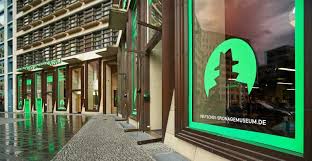
As I stepped out on the street in Kreuzberg (Berlin) on Monday, all was calm, with little to worry about save the choice of the excellent local food, loud music, beer and football (the Dutch invasion was just starting ahead of Tuesday’s match against Austria). Kreuzberg was of course once on the frontier of West Berlin, looking across to East Berlin and will have featured in the high stakes espionage between the West and East (notably so when Markus Wolf ran the Stasi).

Having once run into Mr Wolf, I was pondering what Berlin was like at the time, and we should not be surprised that it is still regarded as ‘the city of spies’, and that it continues to feature in espionage literature.

Given that context, it was no surprise to learn that Germany continues to be targeted by foreign spies. Over a week ago, German Interior minister Nancy Faeser launched the annual threat assessment of the German domestic intelligence service – which pinpoints Russia as well as China and Iran as the authors of multi-faceted attacks (disinformation, cyber-attacks, manipulation of people flows and racial tensions) on Germany, not to mention a recent spate of assassination attempts in Germany by Russia.  

Of great concern is the range of threats to Germany (the same is true in most other countries), from Russian operatives defenestrating enemies of Moscow, to plots to overthrow the German state by the far-right to Islamic terror (there are over 27000 known radicalised Islamists in Germany, and the threat of Islamic terror has been growing since the October 7 attack).

The tactics that the enemies of Europe (and democracy) are deploying are likely very different to those crafted by the likes of Markus Wolf. Espionage during the Cold War was motivated by a need for information, with plenty of proxy battles for influence taking place around the rest of the world.

Today, the aim seems to be outright destabilisation and provocation – from the multiple attacks on arms production facilities across Europe to an epidemic of coups d’état across Africa, to the waves of disinformation on our social media. There is also the impression that the US is being tied down in multiple conflicts around the world.

Today, the eyes of the world are on Gaza and Ukraine – and we are bracing for a new Trump Presidency – perfect conditions to ramp up outright destabilization and provocation. The issue then, is what the EU and its member countries need to do.

The first is to confront the problem and bring it into the open. Nancy Faeser’s report is just one of a growing number from security services across Europe – in May the head of Britain’s GCHQ outlined a similar, urgent threat landscape. The second will be for governments to give security services larger budgets (a Trump presidency might help), and potentially, to allow them a more flexible modus operandi.

The new development relates to the new EU commission. Following last week’s meeting of heads of state, it now looks likely that Ursula von der Leyen will continue as president – and with Katja Kallas as foreign representative, the tone of the next commission will tilt from ‘Green Deal’ to ‘security’ and ‘strategic autonomy’. Defence infrastructure and innovation will become a key trend in the private investment industry (private equity and venture). Von der Leyen has already flagged that enormous amounts of capital will be required to support this, and given the failure of the EU to build out its capital markets union (CMU) this will be an immense challenge.

One element that might help, a little, is von der Leyen’s proposal to create an EU defence commissioner. If it does happen, it will run into two of the common problems that beset bright ideas in Brussels.

First the role of defence commissioner will need to be based on the reallocation of powers from other commissioners – some defence innovation and military logistics responsibilities from Thierry Breton’s department, transport and infrastructure from the Transport commissioner (Valean) and various other responsibilities from the foreign representative.

The second issue is that it might take some power from national defence ministries, but there is also a strong argument that they need to be better coordinated.

In that sense the new EU defence commissioner might reflect changes that John Healey (currently the shadow defence minister in the UK) wants to usher in – an office for value for money in the Ministry of Defence and a restructured defence command.

The EU defence commissioner might also start by coordinating the purchase and use of heavy duty equipment, such as large transport aircraft, and driving the integrated use of new technologies across countries. Another potential task is to find means of better coordinating European security agencies and militaries, so that their collective, offensive capability becomes stronger.

It is a depressing, though necessary use of resources, and a sad sign of our times as globalization fades away.

Have a great week ahead,

Mike

A Tale of Two Debts

It is an understatement to say that the weekend of the 5th July will be a watershed for democracy and politics on both sides of the Channel. It seems that for once since Brexit, Labour might bring a dull calm to British public life, whilst the contagion of political chaos has spread to Paris.

But, as Britain moves left politically and France appears ready to shift rightwards, there is more at stake than politics. Both economies are burdened with huge debt loads, and the ways in which politicians navigate these will determine the geo-economic future of these two UN security council members, and serve as a lesson to other indebted nations.

The economic cases of Britain and France are worthy of attention in at least two respects. The first is their long, often shared economic history. This is the third time that debt levels in both countries have spiked to extreme levels – ominously the previous episodes were the aftermath of the world wars and the period after the Napoleonic Wars. Then, the actions, principally of Pitt the Younger in reforming the economy and financial system meant Britain leapt ahead of France as the power of the 19th century.

The second is that unlike other high debt economies such as the USA, the French and British economies are barely growing, and appear to have lost the means to do so. Neither do they enjoy the exorbitant privilege that the dollar permits. To that end, the high debt challenge posed to London and Paris is a precarious one, with broad implications. At this stage, at least three of those are clear.

The first of these relates to the ways in which high deficits and debt loads will condition politics. Neither country has much fiscal space and this may well tilt the political debate further towards topics like identity, immigration and values. This has been the case in France (and Italy) for some time.

In Britain, it’s hard not to feel that the recent Labour manifesto is ‘boring, boring’ like Keir Starmer’s favourite football team, reflecting Labour’s desire to tiptoe around the fiscal risks facing Britain. Consistent with this, it would not be a surprise that a prospective Labour government could choose to kick-off its term in office with a focus on institutional reform (Houses of Commons and Lords) and accountability in public life.

The second challenge for new governments in Britain and France will be growth, and this is where the real policy lessons will be learnt. As neither country has the scope to enact a hefty fiscal stimulus, new growth must be endogenous to reforms in both economic systems. In this respect Labour, whose keenness to halt policy uncertainty and desire for foreign investment, are in a much easier place.

In France, the strong likelihood is that the aftermath of the July 7th vote is accompanied by an economic shock, driven by the entire lack of transparency and credibility that the far-left and far-right bring to economic policy, as well as their antipathy to foreign investors and corporates.

The third question is who might help France and Britain soften the impact of their debt loads. In financial markets there is a growing view that central banks will need to be deployed to recycle the debt loads of the economies they oversee. This is effectively the case in Japan, though the Bank of England may be loath to be seen to cap gilt yields (especially after the Truss debacle) and the ECB’s Governing Council would be badly split on the issue of ‘rescuing’ France.

The more likely avenue is greater collaboration with private investors (private equity, very large pension funds and some sovereign wealth funds) where projects that would ordinarily be funded and run by the state, are instead jointly capitalized and managed by private institutional investors, and some corporations. This is a likely avenue for Britain on green infrastructure and could continue to be the case for France in sectors like artificial intelligence. 

As July approaches, investors are already starting to vote, gilts and the pound are calm, but there is a budding crisis in the French bond market.

Michael O’Sullivan is co-author of ‘L’Accord du Peuple’ (Calmann-Levy) and the BBC 4 radio documentary ‘Waking up to World Debt’.

Boring, boring …

One of the more ‘colourful’ habits in the otherwise sensible life of Sir Keir Starmer is that he is an Arsenal supporter, to the extent that he has been quizzed on this in media interviews, and cruelly asked if, like Arsenal, he will ‘bottle’ the premiership. For those non-football fans amongst you, even Arsenal fans like to chant ‘boring, boring..Arsenal’).

Consistent with his devotion to Arsenal, ‘boring, boring’ seems to be the guiding light of Starmer’s policy playbook, launched formally on Thursday in the form of the 23,000-word, 134 page Labour manifesto.

The subset of individuals who peruse political party manifestos is small, and I have heroically dug into it to save readers the trouble. It is worth paying attention to because of the likelihood that Labour will form the next government in the UK.

My first take is that the manifesto is very conservative, with a small ‘c’, in the sense that it emphasises Starmer’s reluctance to change many elements of existing fiscal policy (corporate tax stays at 25% for example) and effectively ventures very little in terms of dramatic policy moves.  The headlines stress no ‘austerity’ but it is also hard to see this package producing a durable expansion and return to productivity. The manifesto is accompanied by a laborious compilation of the costs of the Labour programme, the object of which must be to convince markets that Labour are on top of their fiscal ‘game’.

My sense is that the manifesto is characteristic of a party that wants to avoid any kind of policy hiccup before the election, and confirms my sense that the big policy moves, if there are any, will come in the autumn or early 2025, once the government has been bedded in. 

On balance it is a manifesto for workers rather than capitalists. The message for workers is that income tax, national insurance contributions and VAT won’t change, but we will see small groups (private equity execs for instance) treated more severely. Also, with the abolition of generous non-dom tax status, the international wealthy will feel the fiscal pain, added to which private education fees will be charged VAT. These measures are expected to raise GBP 6bn, which is small in the context of the economy and deficit. More efficiencies in spending are expected to bring ‘new’ fiscal boost to GBP 8.5bn

From the point of view of companies and investors, there is not yet much here to worry about, but neither much to be excited for. 

We also have a little more colour on the landmark innovation of the manifesto, GB Energy – the brainchild of Ed Miliband (one of the most experienced Labour ministers and the most ‘policy ready’ one). GB Energy will be based in Scotland and will invest in renewables (co-invest with the private sector in new green technologies and help scale up startups in segments like solar and wind and help to invest in the installation of green energy infrastructure). It will take on existing state-owned stakes in energy projects like GB Nuclear, and the aim is to capitalise it (likely in 2025 to the tune of GBP 8bn). One element for the energy sector is the flagging in the manifesto of much tougher regulation of the energy sector (in terms of consumer prices).

On healthcare, my first impression is that the improvements flagged for the NHS are not transformative and as a trend, point towards more outsourcing of services, away from hospitals. Finally, there are some interesting comments in the ‘serving the country’ section of the manifesto (reform of the House of Lords and a focus on ethics in public life). My expectation is that Labour will lead with these reforms once in power. 

In more detail, I think Labour will win the July 4th election, their immediate accession to power will be marked by a number of high-profile foreign affairs events (i.e. NATO summit) where Starmer will be able to look ‘presidential’. August will be quiet, and I think the early policy moves will come, as above, in the area of institutional reform.

As we move into the autumn, the focus will turn to economics, and I suspect Labour will lead this with a series of announcements on inward investment. The launch of GB Energy and the national wealth fund will follow.

This manifesto is deliberately ‘boring’ in the sense that it will ease Labour’s passage through the election campaign with little policy friction. Voters’ disdain for the Tories will be enough for Labour to win handsomely, and they may well be helped by the damage that the Reform party will do to the Tories.

With the economy in mind, the absence of chaos that should accompany a Labour government (as opposed to the Tories) should help, and a great deal will depend on international factors. However, the manifesto, in my view, is not a convincing plan in terms of kickstarting productivity in the UK economy. ‘Boring’ will not be enough to satisfy the economic challenge that has been left to Starmer.

Have a great week ahead,

Mike

Re-emerging Risks

I started the week chatting with one of the leading experts on globalisation, or deglobalization’ as it is now. He is a little older than me (he won’t mind me saying) but we share much the same formative experiences, notably an internalising of the way the world worked in the 1990’s and 2000’s.

Back then, the big project was the construction of the euro, to the chorus of debates on global imbalances, fiscal strength (Hans Tietmeyer the former Bundesbank chief would be horrified by Western economic policy today). Elsewhere in the late 1990’s forward guidance of monetary policy consisted of analysing the size of Alan Greenspan’s briefcase and there was a healthy debate on whether central banks should act to burst asset bubbles (today central banks seem to trade those bubbles).

The point of this reminiscence is twofold.

The first is to demonstrate that compared to previous decades (and indeed the long-run of economic history) today’s economic landscape is an aberration, out of kilter with most long-term expectations of how economies behave.

The second point is to illustrate that for very long periods, economies follow regimes of behaviour where very different norms can endure for some time. It is often the correction of these norms that triggers large scale shifts in asset allocation, and volatility. One marked echo of market behaviour today, with the early 2000’s is that the equity risk premium (the benefit of owning equities over bonds) has fallen to its lowest level since 2000, and the performance of smaller companies (to very large ones) is the weakest it has been since 2001.

In general, the 1990’s and 2000’s were periods of rising expectations, whereas today that is not generally the case across countries. A notable feature of the sense that ‘things were on the up’ in the 1990’s was the growth of emerging markets.

Indeed, that period has given us at least two economic miracles – the rise of China as an economic and geostrategic power, and the rise of small, emerging states (Singapore and the Emirates). Neither of these ‘miracles’ is given enough credit by the West for what they have done in such a short space of time.

Specifically, last week was highly instructive in the case of emerging economies – three elections registered high market volatility. Mexico has elected a new president amidst fears that the institutions of the state, and its democracy will be further undermined, combined with a leftward tack on economic policy. The peso reacted badly.

India surprised most commentators (the consensus view on Modi has been far too bullish) by failing to ‘ordain’ Modi’s third term in office with a wholesome majority. While this may be positive from the point of view of India’s democracy, it means that the Modi economic steamroller has less momentum.

Then, the failure of the ANC to regain their majority in South Africa should not be a surprise given the failure of that economy to grow much in the last fifteen years (GDP per capita is at the same level as it was in 2010).

In the cases of India and Mexico, markets appear to be pricing democracy very differently – less of it in Mexico is bad, but the checking of Modi’s near absolute power is also bad (at least for the notion that he could have forced through another round of government spending).

Similar to governments across many emerging countries, investors appear to be torn between the strong man model and the Western oriented rule of law one. This is just one parameter where emerging economy governments will be forced to choose – another is between the US and China, and a further one is how to build an economy (and cities) around new technologies and in a more efficient way.

Of the three countries, South Africa is a depressing warning to others, and I see very little hope that it can put in place a coherent developmental model. What is more reassuring is that there are plenty of examples of countries that have made the journey from emerging markets to stable economies – Poland, the Czech Republic and the Baltic states are good examples, and the cohort of Vietnam, Indonesia, Thailand and Malaysia is on its way. Other emerging economies like Nigeria and Argentina are ‘experimental’.

What is also interesting is that emerging markets show that investors are becoming more sensitive to political and institutional risks (institutional investors in Turkey have all but given up). In this respect the important question is whether they start to more severely price in the macro risks associated with some of the developed economies.

If my notional 1990/2000’s investor was to return to the marketplace today, he/she would be confounded by valuations, low volatility and miniscule credit risk, and might start to believe that markets should treat the developed world economies with the same mercilessness it has shown to emerging markets this week.

Have a great week ahead,

Mike

Treasure Chest

John Maynard Keynes is very well known for his contributions to economics and policy making, but less so for his investing prowess. In the 1920’s Keynes worked as a portfolio manager for two insurance companies and from 1921 to 1946 ran the endowment (the ‘Chest’) for King’s College, Cambridge. Keynes’ investing performance is the subject of some fascinating research by David Chambers and Elroy Dimson.

Early in his career Keynes was what we might call a macro investor, focusing on commodities and foreign exchange. Later, he became more focused on stocks, and from the 1930’s Keynes beat the (stock) market by over 5% per year despite several close shaves with personal bankruptcy.

Viewed from the point of view of today’s stock market, what was unusual about Keynes’ style was that in the 1920’s and 1930’s equities were very much the preserve of retail investors, and not so much institutional managers. 

To that end, Chambers and Dimson remark that Keynes’ early allocation to equities was ‘as radical as the much later move to illiquid assets in the late 20th century by Yale’. Unsurprisingly, Keynes’ investing style, which was driven by strong macro-economic views and focused on a few, large and often concentrated positions (if he was investing today he would likely be heavily invested in mega-cap technology stocks) has influenced modern endowment managers, most notably David Swensen of Yale.

Swensen pioneered the move by large US university endowments towards private assets (notably private equity, but also infrastructure and venture), a strategy that has proven remarkably profitable. The top endowments, generally Ivy League schools and other top ranking universities like MIT, have consistently made double digit returns, spurred by annual §private equity returns in the very high teens.

However, the endowment model is coming under scrutiny, partly because some universities have overinvested in private assets at a time when capital distributions have slowed (my former employer Princeton University has effectively invested up to 40% of its portfolio in private equity and venture), and partly because universities themselves have adjusted their expenditure upwards whilst they have enjoyed generous disbursements from performing endowments.

Endowments in the US originally paid 4% of their value to universities annually but in some cases this has risen to 12% (in turn pressuring endowment managers to produce returns). Broadly, disbursements from endowments amount to close to 30% of university budgets with much of it spent on student financial aid. Given that cash distributions from private equity funds have slowed, the knock on to university spending is being felt.

Anyone who has visited a top-flight US university and witnessed the extent to which laboratories, sports facilities and student bursaries are well funded will appreciate the size of university budgets and the role that endowments play. In Europe, only ETH Zurich can match this level of financial backing.

The debate on endowment investing has been enlivened by the publication in February of the 50th NACUBO Endowment Study. In general, the nearly 700 endowments surveyed in the report hold less fixed income than I would imagine for a typical ‘balanced’ investor, more ‘foreign’ equities than US (this might explain some underperformance), and nearly 50% alternative assets (including a large slug of hedge funds).

Interestingly from the point of Keynes’ active management stance, nearly 50% of US endowments ‘outsourced’ their investment office function. Reflecting this, allocations to private equity, returns and return distribution tend to be better in the larger endowments that have well-equipped investment teams.

In turn this reflects the reality that private equity and venture are two of the asset classes (unlike equity and bond funds) where returns are highly dispersed (i.e. there is a large difference between the best and worst performing funds). As such, finding the best performing funds and gaining access to them has a cost in terms of investment research resources. To this end, I wonder if many universities have really been following the ‘endowment’ model as pioneered by Keynes and Swensen.

Indeed, one of the secrets of the performance of the Yale and Harvard models is that they have very good networks of alumni in the private investment industry, who willingly proffered the best advice and access to their alma mater.

Supporting this theory, Keynes had a similar network of former students around the world (notably in Africa – think mining stocks and commodities) who offered him advice, information and investment opportunities and he also had access to relatively sophisticated telegram technology, so that in some cases he had access to market moving information before others. Further, Keynes was unlike many investors today in that his colleagues at King’s had great faith in him and gave him enormous freedom to pursue his own investment style.

This ‘freedom’ has been all but quashed by benchmarking and technology in public markets (i.e. equity and bond funds) but still exits in private markets – the trick is to find the Keynes like managers.

Have a great week ahead,

Mike