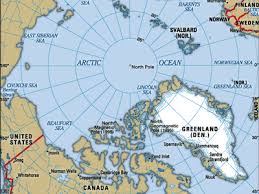
In 2007 two Russian mini-subs, Mir-1 and Mir-2, dived over 4,000 metres below the Arctic Circle to plant a titanium Russian flag, and so launched a primitive claim to the geological treasures at the top of the world. In highly Bond-esque fashion, the subs were supported by Mi-8 helicopters and the Rossiya, Russia’s most powerful nuclear-powered icebreaker.
The exploit was criticized by the then Canadian foreign minister as ‘15th century’ buccaneering but won the three Russian expedition leaders the medal of ‘Hero of the Russian Federation’ (they were accompanied by a Swedish scientist and an Australian adventurer).
The episode highlighted how the scramble for rare places (we wrote about this in 2021) – the Arctic, Antarctic and outer space, are becoming strategic theatres in a world of great power rivalry. As much was emphasized in 2011 when then Secretary for State Hilary Clinton attended the Arctic Council meeting in Nuuk, a hitherto obscure club, to strengthen America’s commitment to the Arctic.
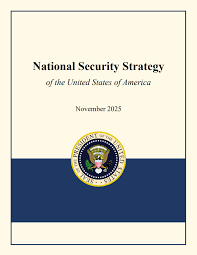
In that context, it is no surprise that the Trump administration has discovered the strategic importance of Greenland, although there is not a single mention of it in the recent National Security Strategy document. The White House might have asked nicely and had its way to place listening stations and missile batteries in Greenland, but instead the President has banalised his office and his country, and placed in jeopardy the most important geopolitical alliance of the past twenty years.
In doing so he has proven my ‘Rule of Unravelling’ which states that in the post globalization era, all of the constructive institutions and values of the globalized world will be stress-tested, in some cases to breaking point. For instance, the UN is invisible and impotent, and the most sacred of American institutions, the Federal Reserve, has come under a full-frontal attack in recent months. NATO it seems is next.
In most European capitals, especially those with large professional armies, there is considerable doubt that, under the Trump administration, the US will be a reliable ally. The immediate implication is to change the calculus that underpins any security guarantee for Ukraine, and indeed the process by which Ukraine will eventually become a member of the European Union.
Europe already significantly outstrips the US in terms of the extent to which it funds Ukraine (relative to GDP, Denmark is the biggest donor), but the intent of this aid will now have to become more lethal, in terms of what Ukraine can do with the arms provided to it, and craftier, in terms of the ways Ukraine can work with European armies to upset Russia’s war machine.
More broadly, there is also growing chatter that NATO is defunct, and will in effect be replaced by a European army (the Spanish foreign minister, amongst others, called for this last week).
A first step here might be an augmentation (and accelerated implementation) of the EU SAFE (Security Action for Europe) program that allows member states to borrow to fund military equipment for joint use, especially where the bulk of that equipment is made in the EU. Canada is a member of the SAFE, and stupidly the EC made it all but impossible for the UK to join. But, US arms manufacturers will have a hard time selling in Europe.
An EU army could very easily be put together around the structures of existing cooperation agreements, and of course, the structures that have been put in place by NATO. Yet, there is still a considerable amount of work to do however on optimizing collaboration in areas like cyber warfare, intelligence sharing and logistics infrastructure (the EU aims to create a ‘Military Schengen’ by 2027).
The aim of such an army would be the defence of European interests and territories, which in practice takes aim at Russia, but can be broadly interpreted to also cover counter-terrorism, space and the deep seas. In the context of the spat over Greenland, the composition of such an army could encompass elements that are not traditionally classed as military activities, such as economic war, but that in a total war world, might be part of the greater arsenal.
In Europe, the response to each crisis is to create a ‘Union’. In the same way that the euro-zone crisis led to the idea of Capital Markets Union, Europe’s ‘neo-con’ moment may produce a ‘Defence Union’, but unlike CMU, there is now a deadly sense of urgency. To my mind, it is still not at all clear that Europe’s political leaders are ready to command a large, capable military machine.
In a recent note ‘Year of the Riposte’ and in a talk at University College Cork with Prof. Andrew Cottey (‘Europe under Siege), I highlighted the litany of challenges that have been put to European leaders by the White House, China and Russia. In every case, the response has been a mixture of panic and a floundering search for compromise. Europe still dances to the tune set by Trump and others, as the Greenland fiasco has shown.
For example, in an underestimated speech at Davos, Friedrich Merz told the audience that ‘he gets it’ on defence and security. Yet, military procurement and recruitment are inefficient and sluggish.
Europe’s leaders have not yet passed the test set out in our recent ‘Riposte’ note ‘the litmus test for Europe in 2026 is to stop reacting to the disorder that others sow, but to build a positive narrative around the EU, and critically to riposte in a meaningful way against its adversaries’.
Soon they will have no choice, In 2019, Emmanuel Macron boldly stated that ‘NATO is brain dead’. It is now.
In October 1971, a time when Mao ruled China, Brezhnev was in charge in the USSR and Nixon president of the USA, Maxim’s, the famous Parisian restaurant closed for two weeks so that staff could prepare the restaurant’s greatest order – the feast organised by the Shah of Iran to celebrate the 2500th anniversary of the establishment of the Persian empire by Cyrus the Great.
The Shah’s celebration became known as the greatest party of all time (Life magazine called it ‘the party of the century’) and became highly controversial for its lavishness. For instance, nearly 300 red Mercedes were used to ferry guests around a large, tented city and in the end Maxim’s and other establishments sent some eighteen tonnes of food to Iran. Waiters had to open and taste all of the bottles of Chateau Lafite Rothschild 1945 for poison. Many of the world’s royal families attended, as did a range of social and political figures from Grace Kelly to Tito to Haile Selassie, to Imelda Marcos. It’s perhaps no surprise that this display of excess was followed a few years later by the Iranian Revolution.
The spectacle of the Shah’s party, his ties to foreign governments and the cruelty of his secret police and a drawn-out recession contributed to months of protests in the late 1970’s, which then led to the Revolution. One of the best accounts of the Revolution is a somewhat accidental one – Desmond Harney’s excellent eyewitness account of the revolution “The Priest and the King.” At the time, Harney worked in Tehran. He had been ready to leave Iran on vacation, but for work-related reasons he remained, and then witnessed the eruption of the revolution around him.
My other Revolution-related thought is of former Ayatollah Khomeini, who, on disembarking the Air France aircraft that took him back to Tehran on the outbreak of the revolution, was asked by ABC anchorman Peter Jennings how he felt about his return to Iran. “Nothing. I feel nothing,” was the alleged response. It gave a pointer as to the austere image Mr. Khomeini wanted to portray and of his cold single-mindedness. The fact that the man who translated Khomeini’s comments, was executed three years later, was another clue as to what would follow.
The regime that Khomeini created has outlasted many others – perhaps only the late Fidel Castro and especially so the late Queen Elizabeth II of England have seen as many US presidents, German chancellors, among others, pass on and off the world stage. While Iran has until recently been a dominant player in the Middle East from a geostrategic point of view, it has, to be polite, not been an economic success.
Thus, in keeping with the template of revolutions, high prices, scarcity of food and fuel, and a broken economy, are triggering protests across Iran, that have become so vast, that expectations are growing that Iranians may eject their leadership. That moment may not be too far off, but the path to an Iran that benefits its people remains a difficult one.
Not only are its geriatric rulers stubbornly cut off from its people and the outside world, they have historically, to a worrying extent (this was especially the case under former prime minister Mahmoud Ahmadinejad), relied on heightened tension with the US, Israel and other ‘enemies’ for political oxygen. Also, economically, Iran is like Russia in that most of the assets and resources in the economy are held by a small number of people (IRG, business owners, clerics) who form a sclerotic elite around the theocrats. Breaking their hold on the economy will be difficult, even under a new regime.
Neither is regime change obvious. The name of the Shah’s son Reza Pahlavi is circulating widely (in the West) as a possible figurehead, but the story of the ‘greatest party’ and the memories of his brutality are at least two reasons why he will not lead a ‘new’ Iran. At the same time, it is not obvious what individuals or groups might replace the regime, if it came to that.
A further complication is that Iranians are highly distrustful of interventions from abroad, indeed some people joke that Iran is the only country in the world where MI6 is still considered to be a force to be reckoned with. Military intervention by the US or other states may not be welcome.
The EU is slightly less distrusted than the US and the UK, and it should take a more active stance – in terms of further sanctions, asylum for the hundreds of young people who have been jailed, organise the supply of communication technology into Iran (VPN’s, satellite technology), and potentially begin to plan to assist and shape a transition process.
Iran has been weakened economically by sanctions, humiliated by Israel and had its military capability enfeebled but sadly, the state still has an array of resources with which to repress its people.
My sense is that the brutal repression in Iran will continue now (with very little visible public support in the US and Europe), and the economy will weaken further. An opening may come when the Supreme Leader, Khamenei dies – he is 86 and suffers from cancer. This event could provide the cover for a discrete but meaningful shift in policy, and the start of negotiations on sanctions and Iran’s nuclear program, and the beginning of a more promising era.
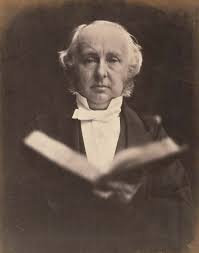
Benjamin Jowett is one of the prominent figures in the long history of Balliol College. Jowett, a scholar of Plato and university reformer, was Master of Balliol from 1870 to 1893, where one of his preoccupations was the production of upstanding young men who would then populate the civil service, and in particular who would be sent to ‘run’ India (Jowett favoured a thorough grounding in Greek and Latin as preparation for this task).
It is an understatement to say that India suffered under British rule, during the colonial era (roughly 1700 to 1947) which was marked by the activities of the East India Company, India’s share of world GDP fell from 26% to 4% (after the Second World War). It is still recovering today.
To draw the obvious comparison with Venezuela, which is apparently now to be run from Washington in imperial style (will Marco Rubio be referred to as the Praefectus of Venezuela?), it at least does not have to worry about having its economy destroyed, the revolutionary socialist governments of the past twenty-five years have done a good job of that. Rubio is not made in the mould of Jowett’s scholars, but he speaks Spanish, which will be useful. A knowledge of finance will also be handy, to tackle the mountain of debt that Venezuela owes.
In a week where the American president has been scurrying around like a giddy child opening Pandora’s boxes, the strategy for Venezuela is not yet clear, and it could go very badly wrong, especially if the factions within the current Venezuelan regime start to disagree violently.
The apparent upside is Venezuela’s oil reserves and refining capacity, but this will take a long time and much capital to realise. Indeed, the process of extracting and monetising oil, and driving this wealth into an economy is something that few economies have mastered.
In this regard, the idea of ‘Dutch disease’, a concept that initially referred to the effect of large gas finds on the Dutch economy, is well known, and colloquially, it describes the way the presence of natural resources can (negatively) skew the economic development of a country. Angola, which has been described as a ‘successful failed state’ for the way it has managed to extract and process oil, but does little else, is an example. Nigeria, Russia and of course Venezuela are other examples.
To their credit, the Gulf economies are good examples of states that have used the wealth generated by natural resources in a very ambitious way, whilst top of the league table are Canada, and Norway. Norway’s sovereign wealth fund is the benchmark for many others, and it bears imagining what the UK could have achieved by channelling the wealth from North Sea oil and gas reserves into a sovereign wealth fund from the 1980’s onwards.
If there is a distinguishing factor across the relative success of the above nations it is the rule of law (and its associated values – policy clarity, strong institutions, and enlightened decision makers). The concept of the rule of law (I can recommend a book of that title by Tom Bingham, formerly Lord Chief Justice and Master of the Rolls and like Jowett a Balliol alumni) should be clear to most readers, but its benefits are even more apparent when it is taken away. In this regard, a comment from a US oil company executive regarding investment in Venezuela (in the FT) to the effect that “No one wants to go in there when a random f…g tweet can change the entire foreign policy of the country’ is illustrative of the benefits of the rule of law. Similarly, threats by President Trump to curb the dividend policy of defence companies, and institutional ownership of housing also contribute to policy uncertainty.
World institutions like the IMF and World Bank have produced tons of research demonstrating the link between the rule of law and growth, and stability. Yet the world that ushered in these institutions and globalization, is crumbling, vandalised by ‘world kings’ (Boris Johnson’s phrase) who act in an arbitrary way. Germany’s President Frank-Walter Steinmeier made an important speech to this effect last week.
The litmus test of this view will be the flow of capital. For the moment, the market view seems to be that ‘world kings’ get things done, and markets are reacting in kind. However, there are looming risks, notably the diverging values between the White House and Europe.
If world leaders were stupefied by the raid on Caracas, there was near hysteria in Europe at the suggestion by President Trump and his advisers that the US would annex Greenland. Though the initial reaction from politicians and commentators across Europe was perhaps overblown, there is a gulf between the American view of the White House’s foreign policy, and that of allies, and in the medium to long term this growing lack of alignment and trust will prove damaging.
In foreign affairs, the great surprise of 2025, has not been tariffs or the geo-politicisation of AI, but the flipping of American foreign policy to apparently align with Russia, jettison the rule of law, tolerate China, and as our recent, prescient note underlined, rediscover Latin America (‘The Land Full of Vibrancy and Hope’). The ‘exit’ of Nicolas Maduro further undermines the rule of law and reinforces the view of a ‘spheres of influence’, where the bad are emboldened and the good are imperiled.
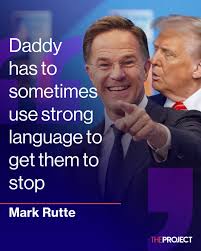
The big disappointment has been the slow, meek reaction of Europe to the above, the low point of which was the reference to Trump as ‘daddy’ by Mark Rutte, former Dutch prime minister and now NATO chief. Indeed, 2025 might also be described as Europe’s ‘neo-con’ year, when its leaders were mugged by the reality of strategic competition, and more specifically the mendacity of Vladimir Putin and the election of Donald Trump.
There are several strands to this. The first is the shock at the delivery of the message that America (the ‘White House’) is in effect dis-engaging from Europe and shattering the idea of the ‘West’. From the shambles of the Munich Security Conference to the communication of the National Security Strategy, there is still a shock felt across the continent to the change of direction that the White House is pursuing. A notable sign of this is how, in the post-Brexit world, Britain has become much closer to Europe on security and defence and is in the lead on strategy around Ukraine. A consequence of America’s ‘flip’ of this reaction, which I feel is not yet appreciated in the US, will be a much reduced willingness to buy American goods and services.
In practical terms, the new geopolitical climate is revolutionising defence spending in Europe. The Baltic and Nordic states, as well as Poland, are all increasing defence budgets amidst warnings of a future confrontation with Russia. Most notably, Germany has cast aside its debt brake to target Eur 1trn in extra defence spending in the next decade, and the EU’s Eur 150bn loan facility has closed its loan round. Europe is now in effect in a three year scramble to build defensive infrastructure, and there is also growing talk of more offensive (i.e. cyber) actions against Russia.
Beyond the manner of the delivery of US diplomacy there is a mixture of anger and confusion in Europe at the stance of the White House. One is the apparent untethered nature of US diplomats like Steve Witkoff, his alleged closeness to Russia and the peace deal proposals he has concocted. This has caused concern because of the time, energy and political capital that European leaders have had to spend (with Ukraine) counteracting the US/Russia proposal.
A second source of ire is the apparent support by the White House for far-right parties in Europe – the AfD, Reform in the UK and the Rassemblement in France – all of whom have proven ties to Russia, all of whom hold 30% or more in opinion polls and all of whom are in direct opposition to governments in the three largest European countries.
It is also worth noting that the tension provoked by the White House has not brought Europe any closer to China – the perceived dumping of Chinese goods (electric vehicles for example) in Europe, and China’s support of Russia’s war in Ukraine are two major sticking points.
One relative bright spot on the horizon is that growth is beginning to pick up across Europe – bank lending is expanding, unemployment already low and lead indicators perking up. In that context it is likely that growth surprises to the upside next year. One great challenge, which has dropped from the policy limelight in the context of the focus on defence, is the Savings and Investment Union (old Capital Markets Union), and this is an essential part of the policy landscape in the coming year.
Looking ahead, across individual countries, there is now a consensus view in the UK that Sir Keir Starmer could be toppled as prime minister by his Labour colleagues (Wes Streeting is favourite to take over, and another Blairite Yvette Cooper, cannot be ruled out either). A recent YouGov poll showed Starmer to be the most unpopular prime minister in the past fifty years, and Rachel Reeves is the most unpopular Chancellor. The only European leader who is further adrift in the opinion polls than Starmer is Emmanuel Macron.
Macron, it seems, has given up, and in France the political debate bypasses him and is steadfastly focused on the next presidential election which should take place in May 2027 though it is not impossible that an attempt is made to unseat him in 2026. The election to watch is in Hungary, where the pro-Russia/anti EU prime minister Viktor Orban is behind in the polls to Peter Magyar’s TISZA party. A return of Hungary to the pro-EU ‘fold’ would be welcome and would constitute a blow to Russia.
To that end, and in the context of the damp squib that was the last EU summit, the litmus test for Europe in 2026 is to stop reacting to the disorder that others sow, but to build a positive narrative around the EU, and critically to riposte in a meaningful way against its adversaries. Greenland might be an early test.
Avid readers of the ‘Levelling’ book will know that some years ago, I wrote
Latin America remains part of the satellite region of the US pole. Sadly, it has been overlooked by Washington. The prime example of this neglect is Venezuela. The country is failing and in the grip of an underreported humanitarian crisis. Economically, this crisis may lead China to take a deeper role in Venezuela and in its oil production. Diplomatically, the lack of a comprehensive reaction from Washington brings to mind an article entitled “The Forgotten Relationship” that Jorge Castaneda published some years ago in Foreign Affairs in which he bemoaned the deteriorating relationship between Latin America and the United States.
Finally, my pleas are heard, and the White House is organizing a rescue (by gunboat) of Venezuela, and possibly much of Latin America.
While it is hard to know how the new engagement between the Trump administration and the fifth largest repository of oil reserves is going to play out, this administration is different to many of its predecessors in taking an active interest in Latin America – note the partisanship with regard to Brazil, generally good relations with Mexico, a chumminess with Milei and the likely support for the new president of Chile.
Despite very active backchannelling between the US military and the Venezuelan army the course that events might take is unclear, and laden with risks – the chaos of popular unrest in Venezuela, the risks that criminals in Venezuela and surrounding countries become involved (and strike in the US), or indeed the risk that other actors or countries use any regime change in Caracas to hurt the US, cannot be ruled out. Another risk is that some of Venezuela’s allies – Iran, China and Russia – become obstreperous, and dig in with Maduro and his cohorts, or that they use any change of government in Caracas to further their own ends. It is worth noting that only last week China launched a policy document entitled ‘Latin America and the Caribbean: A Land Full of Vibrancy and Hope’.
This is a significant risk of the Trump administration’s fetish for a spheres of influence motivated foreign policy. In the recent school boyish ‘National Security Strategy’, which has caused great anguish in the diplomatic parlors of Europe, the document refers to the ‘Trump Corollary’ to the Monroe Doctrine.
For context, the Monroe Doctrine was likely the first coherent, muscular expression of American foreign policy – at the time it was aimed at keeping the Spanish and other pesky European powers out of Central and Southern America. Indeed, the dithering by the large European powers (notably France) over the long running Mercosur trade agreement, suggests that the European dare not go back to Latin America.
The NSS document gives a good deal of attention to Latin America, and this tilt will have the active support of Secretary of State Marco Rubio. Like it or not, Latin America is now in Washington’s sphere.
However, more generally, the establishment of a spheres of influence mindset in international relations may give the likes of Russia and China the sense that they may do as they wish in their own spheres of influence. In the same way that the invasion of Iraq, on the basis of flimsy evidence of weapons of mass destruction, apparently led Vladimir Putin to believe that the West was no longer respecting the rules of the international order, the ‘Trump Corollary’ strategy is a green light for bad policy actors.
That would of course be bad news for Taiwan, and perhaps Vietnam, the Philippines and Japan, who all to some extent count on the notion of a US security guarantee for Taiwan. It may also prove confusing for the US military which, when not loitering off the coasts of Cuba and Venezuela, is organized around the concept of a grand battle in the South China Sea.
Beyond the obvious implications for Ukraine, there are plenty of other open questions – will China take the ‘Stans’ from Russia, and who gets Africa? Russian mercenaries have forced France out of at least seven countries and China has a hand in nearly every African economy. The cancellation of US AID is already having deadly consequences for human and animal life.
A world of spheres of influence might conjure the diplomacy of the Great Game, but it would leave many countries worse off, and the nondemocracies of the world free to abuse their military and economic power.
A forlorn reminder of this was the jailing of Jimmy Lai, the Hong Kong democracy activist last week. Few Western governments were audible in protesting this act, save Britain, which used to count Hong Kong as part of its sphere of influence (Lai has British citizenship). The silent snuffling out of democracy in Hong Kong is the act that brought the curtain down on globalization in my view. An American spheres of influence foreign policy will sow further chaos.
Have a great Christmas week ahead, Mike (there won’t be a note next week, we return on the 4th January)
Last week we released the first five of our themes for the year ahead, where much of the focus was on artificial intelligence –and its potential impact on asset allocation, society, geopolitics and industry.
This week we focus on macro and geopolitical themes, which in the light of the US National Security Strategy document, are becoming vital for Europe.
Have a great week ahead.
#6 Wall Street Retro
One of the curious foibles of Donald Trump is his dislike of economic competitors. If readers care to watch, there are multiple videos of him in the 1980’s and 1990’s castigating the role of Japan as an economic competitor of the US. That period was also marked by the rise of capital markets – as marked by the film ‘Wall Street’ and book ‘Barbarians at the Gate’.
With Trump back in the White House, capital markets activity is building – merger activity is picking up, not just between companies but also business sales by private investment firms to industry. Cross-industry data suggest that takeover activity is picking up significantly, and in private markets, private equity deal making is enjoying a recovery. Other parts of the capital markets chain should also pick up – most notably IPOs and one of the tests for 2026 will be whether a string of large European fintech firms can come to market.
In recent days, the battle between Netflix and Paramount for Warner Brothers is emblematic of some of the major takeover battles of capital markets history, and perhaps a harbinger of future activity.
The Future:
While OpenAI for example is using acquisitions to build out an AI industrial structure, we do not yet have a landmark M&A deal in the fashion of Vodafone-Mannesmann in 2000 or RBS’ acquisition spree in 2007. A sign of things to come are reports in the FT that AI giant Anthropic is preparing an IPO.
An uptick in capital markets activity will be a boon for private markets asset managers, as it helps to free up capital. In equities, it may make value investing easier in the sense that cheaper, struggling firms are acquired, but the net effect may be to push equity valuations even higher.
Reading William Cohen ‘The Last Tycoons’(2007), William Burroughs ‘Barbarians at the Gate’ (1989)
Watch: ‘Wall Street’ (1987)
#7 Age of Debt
One of the most terrifying economic statistics is that the world has never been as indebted- most of the large economies (Japan, China, USA, UK, France and Italy) or about 60% of world GDP, have debt to GDP ratios over 100%. In previous decades 60% was considered excessive!
The good news is that households and corporates are not carrying excess debt loads, and that world household wealth is close to USD 500 trillion. Also, economists have been warning about the risks of indebtedness for some time, and we have not experienced a crash – and apart from an inflation scare, bond markets have been reasonably well behaved. Indeed, we are guilty of thinking of indebtedness as a risk event, rather than an economic process.
That said, as we head towards 2030, the consequences – economic, financial and political – of fiscal deficits and debt loads become all the clearer. At one level, public indebtedness will lead to shifts in economic power – private investors will take on the strategic investment projects that governments cannot afford to do (Canadian pension funds are doing so in the UK already).
At the country level low debt countries like Germany, the Netherlands, Ireland and Norway will make up a small group of ‘safe’ countries that will accordingly enjoy greater economic power. At the same time, France, the UK and perhaps the US will spend the next fifteen years in the ‘Debtor’s Prison’ where policy and politics become dominated by debt. The US and China are more interesting. The obvious response of the White House to indebtedness (it spends more on interest payments than defence) is to pursue a set of unorthodox policies that push the fiscal burden to allies (tariffs on Canada and military spending on Germany).
The Future: In markets, investors are already beginning to price some corporate bonds at yields below their sovereigns, and when credit markets do start to price risk large cash rich companies will be in an advantageous position, and in some cases can control more strategic assets, and the wealthy will find that governments need to court them rather than tax them. Instead of wealth taxes, expect governments to issue ‘Patriot’ bonds to wealthy families.
The one country where this may not be the case is China, which is vastly indebted. Having studied the way some European economies become heavily indebted in the aftermath of the euro-zone crisis, the Communist party will throw entrepreneurs, the wealthy and corporates into the Debtors Prison, and let them pay their way out.
High yield spreads in the US, Japanese bond yields and Chinese bank share prices are some of the key variables to watch.
Read: Charles Dickens’ ‘Little Dorrit’ (1857) and Honoré de Balzac’s ‘Lost Illusions’ (1837-1843) and ‘Pére Goriot’(1835)
Watch: A Christmas Carol (1984 version with George C Scott as Ebenezer Scrooge)
#8 From Multipolarity to the Fourth Pole
As the snippet on Sovereign AI suggests, strategic competition between the large economic blocs is the order of the day, and with globalization in the rear-view mirror the world order is evolving towards a multipolar form – one where the large zones do things increasingly differently.
While the notion of multipolarity is framed around the US, China and Europe, there may well be a fourth pole in the making in the shape of India, the Gulf States and other players across the ‘region’ (which we could define as those countries within a five hour flight from the UAE, which includes some 2.4 billion people across Asia, Africa, Southeast Europe and the Eastern Mediterranean).
There are two elements that will determine whether a ‘Fourth Pole’ emerges – that this coherent group of countries has mass or scale, and that it increasingly has a method – or distinctive way of doing things (I recently developed this theme in the UAE’s newspaper The National).
The notion of the ‘Fourth Pole’ is gathering pace around the very close relationship between the UAE and India (the very popular Hindu Temple in Abu Dhabi is just one sign), and the web of trade, finance and infrastructure deals they are engaging in across the region. This relationship may not ultimately become as deep as that of the EU countries, but it is beginning to look like a modern version of the ‘Coal and Steel’ community. The risk however, is that they overbuild capacity in the face of a forthcoming economic shock or recession.
The Future:The best indication that we had that the UAE is feeling both confident and more independent is that some well-connected government advisors have come up with an acronym for the west – W.E.N.A (Western Europe and North America).
Reading: UAE Future Vision , Peter Hopkirk’s ‘The Great Game’ (1990)
#9 Safe strategies in the Interregnum
The process by which globalization unravels and the multipolar world takes shape is going to be a long, noisy and uncertain one, which I term the ‘Interregnum’. It is an in-between phase, like the German idea of the ‘Zeitenwende’, characterized by noise, uncertainty, and multiple contests between the ‘old’ and the ‘new’ (finance is a good example with the emergence of ‘DeFi’ or decentralized finance).
The Interregnum has at least three phrases. The first centres around the crises of the old, crumbling order notably in debt and democracy, the second phase around social, legal, and economic superstructures built around new technologies (AI, quantum) as well as the evolving contours of the multipolar world order, and then thirdly, the acceptance and coalescence of new world institutions, governments, and companies around this new world order.
The Interregnum will be a period of breaking (down the imbalances that have built up with globalisation such as climate damage and debt) and making (new world institutions and the integration of technology into economies and societies). It will be a noisy, chaotic process and its success is not yet a given.
The Future:From an investment point of view, the shifting geopolitical sands beg the question as to how exposed investors should be to US assets (last week’s theme ‘Expensives to Defensives’) and what safe havens are available (small, advanced economy debt and corporate bonds perhaps, above ‘Age of Debt’). There are other questions percolating up – previously specialized asset classes like agriculture, infrastructure and energy infrastructure will come more into the mainstream and become more ‘strategic’. Un-correlated assets or at least those that have much reduced correlation with equities will also be in demand.
Stablecoins is another area where many scratch their heads – is it a bona fide asset class or an electronic gambling chip? The bigger picture here is the ability of large financial institutions to evolve and adapt quickly to new technologies, whilst maintaining well managed balance sheets. The many ‘buy now pay later’ platforms will likely suffer here.
Read: The Fourth Turning by Neil Howe (1997)
#10 Europe – Right on the Brink
Britain, France and Germany have never been as united, in misery that is. Each country is struggling to get growth going, the UK and France are indebted to the gills, and centrist governments in those countries are highly unpopular. In the political wings, new right-wing parties – the Rassemblement, AfD and Reform. All three lead on the issue of immigration, are less than clear on their economic plans and in their own special way, have close ties to Moscow.
The abiding lesson from Europe’s unpopular centrist governments is that if they do not confront difficult social and political issues, the public will tire of their mildness. In this sense, Europe’s liberals are being mugged by reality, and in the next year (at least in Germany and the UK) we are likely to see more dramatic attempts to combat illegal immigration, and to get economic growth going, with de-regulation emerging as the avenue through which this is achieved.
The Future:The popular narrative is that the US innovates, China copies and Europe regulates. This may no longer be true, especially given the advances China is making in numerous technologies, and Europe may surprise in that a bonfire of regulations may mark 2026. European growth momentum is already better than that of the US, and a positive surprise could be in the offing.
Read: Giuliano da Empoli ‘The Wizard of the Kremlin’(2022), ‘’L’Heure des Prédateurs’(2024).
Watch: The Great Beauty (2013), House of Cards (UK version) (1990), A Very British Coup (1988), and ‘La Conquête’(2011).
It’s that time of year when investors and economists release their prognostics for the year ahead, and eclectic and contrarian as we like to be, The Levelling brings you its top ten themes for 2026, with apologies for the length of the note – in fact this week we are simply giving you the first five themes, with the others to follow next week. It’s really one to print out and read with a coffee, or even a stiff drink.
Given the approach of the holidays, we have also added in some pertinent film and book recommendations.
Some of the ten themes we flag here are based on observations we have made during the year, and relate to trends that are now becoming clearer, chief amongst them is the imprint of AI on economies, geopolitics, and society.
We hesitate to make outright forecasts for GDP and rates for two reasons – first we expect growth to rise modestly during the year (though this is very much dependent on the capex cycle) and second, most of the interesting developments will take place at the sector level.
#1 RAIlway Boom
In the late 1990’s as the dot.com bubble built, there was a polite debate amongst central bankers as to whether or not an asset price bubble was present in stock markets, most notably in dot.com related companies. The upshot of the debate was that even if the central bank could identify a bubble, there wasn’t much it could do to puncture the bubble (notwithstanding Alan Greenspan’s ‘irrational exuberance’ moment).
Today, central banking has changed, and so too have asset bubbles. There is a very broad narrative – from investors and economists – that we are indeed in a ‘bubble’, the only question is whether markets are in the foothills or the peak of the bubble. My sense is more ‘foothills’ than peak, largely because we are not yet seeing the folly and exuberant behaviour that was present in 2000 (I will share some stories in a future note).
Of course, the obvious danger of such a narrative is that for some but not all investors, it permits the belief that investors can continue to buy very expensive assets and later hand them off to ‘greater fools’, and the illusion that ultimately they are not the fools.
Every asset bubble needs an underlying logic, a belief that ‘this time its different’ and this is supplied in spades by the adoption and investment in Artificial Intelligence (AI). Signs that companies and households are deploying AI are manifold. This bubble is also different in the case that AI is producing revenues, as evidenced in the operating and market performance of large AI centric firms (the so called ‘Magnificent Seven’ companies who together now make up nearly 40% of the US stock market capitalization), but those earnings are predicated on the success of the AI business model and are increasingly circular, in that investment by META becomes revenue for Nvidia and so on.
What is altogether less clear to me is how the economics of AI play out. While the adoption of AI is occurring more quickly than other technologies (the internet), competition will surely lower margins quickly. Chinese projects are a case in point, and some of the large US AI platforms, of which OpenAI is the leader, may find their economic models undercut.
Neither is the distribution of the productivity benefits that convincing – specialized firms and operators with access to proprietary data will be able to leverage AI to great benefit, along the lines of my ‘One Man and his Dog’ thesis. However, for most people, once some basic administrative tasks have been swallowed by AI applications, the positive economic impact on their lives might be more limited. Another consideration is that AI model technology is in the hands of a small number of investors, so the capital productivity benefits of it can also be limited.
The Future:The AI boom or bubble is gathering momentum. Levels of capital investment (relative to GDP) are already surpassing those of prior bubbles, but have not yet attained the giddy heights reached during the railway bubble of the 1900’s. The railway bubble was one of the great asset bubbles – and helped build the crucial infrastructure of the first wave of globalization. In 1900, investment in railway infrastructure amounted to 6% of GDP, AI today is just over 1.3%. Also, at the turn of the 19th century nearly 60% of the market capitalization of the US stock market was made up of railway stocks (today it is 0.3%) which as a rule of thumb suggests we might see talk of a USD 10 trn valuation for Nvidia and SPX 10,000 ((the US S&P500 index hitting 10,000 points) as a ‘sell everything’ moment.
Read:Charles Kindleberger’s ‘Mania’s, Panics and Crashes’
#2 ‘Dalloway’
One of the more memorable films I saw in 2025 is Dalloway, a French film starring the ever-excellent Cecile de France, which I hope will make its way to the Anglophone world. The object of the film is to show how pervasive and sometimes pernicious AI could become as a social force, and as we head into 2026, this is a theme that will become more important – in healthcare, labour markets and society – and more startlingly obvious.
To start with an alarming example, in 2021 the Swiss government’s Spiez Laboratory, one of whose specialisations is the study of deadly toxins and infectious diseases, is located right in the heart of Switzerland, performed an experiment where they deployed their artificial intelligence driven drug discovery platform called MegaSyn to investigate how it might perform if it were untethered from its usual parameters.
Like many AI platforms MegaSyn relies on a large database (in this case public databases of molecular structures and related bioactivity data) which it ordinarily uses to learn how to fasten together new molecular combinations to accelerate drug discovery. The rationale is that MegaSyn can avoid toxicity. In the Spiez experiment MegaSyn was left unconstrained by the need to produce good outcomes, and having run overnight, produced nearly 40,000 designs of potentially lethal bioweapon standard combinations (some as deadly as VX). It is an excellent example of machines, unconstrained by morality, producing very negative outcomes. It’s a chilling tale of the tail risks of AI.
More commonly, AI will increasingly become part of our economic and social lives, and its effects will be more apparent.
In labour markets, there is already plenty of evidence to suggest that AI is curtailing hiring, markedly so in the case of graduates. When AI and robotics start to combine, they can have very positive outcomes (in education and elderly care) but in warfare (see the Netflix documentary ‘Unknown Killer Robots’), fruit picking, warehouse management and even construction – to give a few examples, the blue collar labour force will feel the effect. This could set up a political reaction, and we might well see a Truth Social post from the White House to the effect that AI is not such a great idea and needs to be regulated.
A potential side-effect of the more negative effects of AI on the labour market could be a rise in anxiety and what social scientists call ‘anomie’. Much the same is becoming clear from the ways in which social media is skewing the sociability of humans (think of declining fertility rates, pub closures and the mental health effects of social media). As such, the social effects of AI may lead to ‘deaths of despair’. If this is grim, there is potentially very positive news in the use of AI to improve medical diagnoses in inexpensive ways, and the marginal impact of this in emerging countries can potentially be very significant (leading AI firm Anthropic is targeting science and healthcare in terms of applied AI solutions).
The Future:The economic and social side-effects of AI will become clearer – many of them will be positive, but others will start to provoke a political reaction. While the EU has softened some of the restrictions in the EU AI Act, the interesting development is that at the state level in the US there is a growing desire to curb some of the effects of AI, a trend that is supported by case law. Moreover, local politicians in the US (Republican Josh Hawley is an example) are more vocal about the negative side-effects of AI on labour markets and education.
Read:Carl Benedikt Frey ‘The technology Trap’(2019), and Robert Harris’ ‘The Fear Index’ (2011)
Watch: ‘Dalloway’ (1997)
#3 AI Cold War
A further facet of AI to keep an eye on is geopolitics, and as we leave 2025 behind, we will hear more about the notion of an AI Cold War or ‘Sovereign AI’ according to a good Pitchbook note. This emerging idea refers to the strategic uses of AI, in the context of strategic competition between the ‘great’ powers. This race is already on, and the US is in the lead, with China chasing behind (my recent note on The Plenum details how China is prioritizing frontier technologies as the spearhead of its economic plan). Europe is very much in third place, with energy policy and half formed capital markets the biggest obstacle.
In a ‘Cold War’ AI world, model development and deployment increasingly take a multipolar form (see #8 below), regulation is competitive and technology firms closely align with governments – forming symbiotic parts of national infrastructure – while national security considerations are embedded into investment processes and supply chain planning. In time, governments may steer model developers towards new datasets if there is a strategic advantage to be gained.
The Future:From an investment point of view, we expect private equity/credit to become an enabler of this trend, and for their part governments will open up the flow of pension capital to private asset classes. Governments may also become more active investors – either in steering merger and consolidation activity, or in the fashion of the Trump administration, taking stakes in firms that are judged to be strategic. Military uses of AI will become more commonplace, and we will slowly learn more about the effects of this on navigation systems, genetics, finance and social media, to name a few.
Read: ‘Breakneck’, by Dan Wang (2025), ‘Chip Wars’ by Chris Miller (2022)
Watch: Dr Strangelove (1964)
#4 Expensives to Defensives
An age-old joke goes that when asking for directions, the traveller is told ‘I wouldn’t start from here’. It is much the same for investors looking into 2026, though less so tactical traders who believe that they can time the ebbs and flows of the emerging stock market bubble.
The dilemma for asset allocators is that with the US stock market making up some 60% plus (depending on the benchmark) of world market capitalization, and trading at near record valuation multiples (price to earnings or price to long term earnings (Shiller PE), or even market capitalization to GDP (Buffet Indicator), the exposure to American assets is increasingly expensive and risky.
For example, a model that combines monetary, business cycle and market valuation indicators, suggests that from this point onwards, returns in the next couple of years for US equities will be close to zero. Add to that the fact that the dollar still looks expensive and corporate bond (and high yield) spreads are very narrow, and the conundrum for allocators next year will be considerable.
As we end the year, volumes have been very low and speculative activity (options) very high, and this points to high levels of volatility through 2026, and remarkably, a few of the large bank CEOs have warned of significant market drawdowns.
The Future:We expect to see investors put more money to work in cheaper defensive sectors – Staples and Healthcare for example, and for capital to flow to other regions beyond the US. In addition, in the next five years, if multiple surveys of family offices and pensions are to be taken at face value, we expect private assets to make up a much more significant proportion of investment portfolios.
Read: Benjamin Graham ‘The intelligent Investor’ (1949)
Watch: ‘Margin Call’(2011), ‘The Big Short’(2015)
#5 K Shaped economy
In the context of a political-economic climate in the US where good, regular economic data is hard to come by, commentary from industry leaders as they report earnings is providing some fascinating insights. For example, some weeks ago, Chipotle, the burrito chain, reported a surprise drop in revenues because two key consumer groups, households earning USD 100k or less, and younger customers (24-35 years old) are cutting back discretionary spending, even on fast food.
A range of firms with similar client bases underline this trend – car manufacturers report that sales of expensive, large vehicles are strong, but that lower income customers are preferring smaller, fuel-efficient models. McDonalds is revising its ‘extra value meal’ option, and credit card providers like Amex report very different types of activity from rising card balances and distress in the lower segments, to robust spending in its ‘Platinum’ category.
Economists are blithely referring to this phenomenon as the ‘K-shaped’ economy, whistling past the graveyard of economic history that portends revolutions are made of such obvious divergences in fortune.
Now all of the talk is of a K shaped economy – which refers to multiple divergences between the price insensitive wealthy and those in economic precarity who are sensitive to inflation, a services sector that is either shedding jobs and holding back from hiring compared to the upper echelons of the technology and finance industries where unprecedented levels of wealth are being created.
There are two other effects ongoing. The first is the economic effect of AI-focused capital expenditure (across the energy, logistics and technology sectors). The second, more important trend is a mangling of business cycles, such that few of them are synchronized across geographies, or between the real and financial economies (German chemicals is in the doldrums but German finance is on an upswing).
Yet, a better diagnosis might be the ‘Marxist’ economy – one where the owners of capital and the source of labour are at odds.
The Future:In the US, the top 10% of the population own 87% of stocks and 84% of private businesses, according to data from the Federal Reserve. On the other hand, we have previously written about the rise of economic precarity in The Road to Serfdom. So, whilst it is a new observation amongst the commentariat, the diverging fortunes of capital and labour should start to trouble policymakers in 2026. Expect this to be a headline policy issue net year – the White House is already paring back some tariffs, and in Europe governments compete to either tax the wealthy (France and the UK) or to lure them (Italy).
Readers of the ‘Levelling’ might be looking for a destination to visit during the Christmas holidays, and if so, I want to recommend Caherdaniel in Co. Kerry (southwestern Ireland for those of you reading far away), with its gorgeous, long beach, woodlands and often – blue skies. It is also the home of one of Ireland’s best pubs – the Blind Piper.
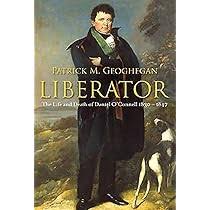
Caherdaniel is most famous for Derrynane House, the home of Daniel O’Connell (born not too far away in Cahersiveen)– one of the grand figures of Irish history – a man that King George IV called the ‘uncrowned king of Ireland’ – also known as the Liberator or Emancipator (his main accomplishment was the emancipation of the Catholics in Ireland in the 19th century). Derrynane is also famous as the place where President De Gaulle spent six weeks after his resignation in 1969 – and he may well have been inspired by a biography of O’Connell, written by his maternal grandmother Josephine, which he read as a child.
My linking of De Gaulle and O’Connell is motivated by the fact that this year is the 250th anniversary of O’Connell’s birth, and last week I moderated a debate on democracy and European politics between a group of Irish and French experts in Paris as part of an ‘O’Connell’ conference.
In trying to explain O’Connell to a French audience today (not to mention the Irish audience – where he is somewhat forgotten), three defining traits stand out.
The first one I would highlight is that he was European in his outlook. I frequently visit Caherdaniel, and the recurring thought is of O’Connell setting off in his carriage to travel Ireland or to go to Westminster or further to Rome – or back to France, where he was educated.
The second element that is interesting – was his internationalism – Marx, Dickens, Balzac, Bismarck, and John Quincy Adams in the US, all had something to say about O’Connell – and he was ardent in his support for other causes – against slavery in the US and, when he first took his seat in Westminster – he campaigned for the emancipation of the British Jews.
The third element we note about him is his political method – he spoke at enormous mass rallies – one at the Hill of Tara is said to have attracted 1 million people, he was an orator and a skilled political organiser, but also someone who believed in peaceful protest – perhaps because of what he witnessed in France during the Revolution. In today’s terms, O’Connell was one of the first democrats, a defender of civil rights, and in some respects a beacon for liberal democracy in Europe and England – he was a founder of the Reform Club in London.
The point of raising his example today, beyond the simple fact of his anniversary, is to make the link with last week’s note on the changing of the political guard in the US (Change of Guard) and the grim backdrop that Western democracies face in terms of the rise of populism, vexatious impact of social media on public life and the vandalisation of Europe by countries like Russia. For example, in the past week a train line in Poland was sabotaged, and controversially the head of the French army warned people to be ‘ready to lose their children’ in a war.
Three strands came out of the debate on modern democracies, under the shadow of O’Connell, that are worthwhile flagging.
The first, is to find ways of breaking the polarization of political arguments, or the phenomenon where political debates quickly become corralled into opposing camps, leaving little room for considered debate. Arguably, politicians are part of this problem given the tendency of governments to constantly spin news developments.
Ironically, the second strand is a demand from politicians (in this case both French and Irish deputies) to curb abuse on social media, in particular its use as a channel to threaten public representatives. Every political figure I know has suffered abuse on social media, of a kind that if it were repeated in person, would most certainly result in a criminal conviction. The question then is whether and when politicians are ready to take a tougher stance with online abuse.
A final thought that relates directly to O’Connell is whether today’s mild-mannered political leaders – I am thinking of the likes of Friedrich Merz and Sir Keir Starmer – should be more enthusiastically populist in pushing their centrist causes. O’Connell was a complicated character and as stated a clever speaker and was a master in getting the ‘crowd’ on his side. The thought experiment is that democratic leaders ditch their anodyne, carefully crafted communications and let their oratorical skills off the leash. It would make a nice change and might well make the role of politician less frustrating.
I was at the Knicks game (against Orlando Magic) at Madison Square Garden on Wednesday night, which offered a glimpse of iconic New York, with Spike Lee courtside to underline the fact.
Madison Square Garden was probably not the place to look for a reaction to Zohran Mamdani’s mayoral election victory, though across Manhattan I found many people exercised about the event (as well as the recent Epstein release).
Having last been in New York only two months ago, it has certainly not become less expensive, and to channel last week’s note (‘Pear-shaped’) on the K-Shaped economy that described how the holders of capital are doing well and labour is doing poorly, Mamdani is the beneficiary of this Marxian contrast, and he has the rhetoric to go with it.
Mamdani had the right level of charisma, decent organization and the perfect context. He may struggle as mayor, notably in terms of his authority with the police and emergency services, his economic acumen and moreover, in curbing the big picture macro issues that are beyond his control, as well as a hostile federal government.
Yet, for all the attention that his election has garnered, I do not think he is the only story in American politics (Seattle’s mayoral election also deserves attention for example), nor do I think he is the answer to the Democrats’ losing ways, and there are a number of other events to consider.
The first is the death of Dick Cheney, a day before Mamdani was elected. Cheney, or ‘Angler’ to give him his secret service codename (there is a good book on Cheney of that title, by Barton Gellman), is now an important reference point in American public life.
Cheney embodied the idea of someone who served the public and private sectors (almost at the same time), and who spent his life embedded in the industrial-defence-political complex. He had served several Republican presidents as a foreign policy and defence hawk, and when George W Bush asked him to lead the search for a vice-presidential candidate, Cheney could find no-one better than himself, and thus spent eight years as ‘W’ Bush’s vice president, with the suspicion being that it was he who called the shots (literally).
At the time, Cheney was regarded as a right-wing hawk, but as American politics changed, he and his courageous daughter Liz (also generally right wing) were two of very few Republicans who had consistently stood up to, and repeatedly condemned Donald Trump. Amongst other policies, Cheney as a Cold War warrior must have found it very difficult to understand and stomach the approach of the current White House to Russia.
That Cheney ended his life as a critic of Trump is a sign of how far the MAGA crowd have taken the Republican party. In itself, that should not mean that the Democrats fight the next elections from the far-left, as the result in New York hinted.
Indeed, two interesting results, the victories of Mikie Sherrill (now New Jersey’s first female Democratic governor) and Abigail Spanberger (Virginia’s first female governor) suggest that the Democrats can do well in the centre, with credible candidates. Both are role models – Sherrill is a Naval Academy graduate, flew helicopters and is the mother of four children, while Spanberger has three children and worked as a CIA agent.
In the current context, it is encouraging to see these very capable female candidates succeed, and even Marjorie Taylor Greene is displaying a form of reckless courage in veering away from the White House script.
Whilst the Democrat party is in disarray and dispute (following the vote to end the government shutdown), it is in need of a change of guard, notably so given the announcement that Nancy Pelosi will retire from public life. In that respect, serious candidates of the calibre of Sherrill will note three developments that might encourage the sense that a ‘change of guard’ is in the offing.
First, the president’s entanglement with Jeffrey Epstein is sapping his patience and political capital. Secondly, national security will become a more real issue as it is very clear now that China and Russia have only malign intentions towards the West, despite the fantasies of pseudo-Kissingerians in Washington. Third, and most importantly, the direction and timbre of the economy is the key political issue, with affordability at the top of the docket.
In the context of a political-economic climate in the US where good, regular economic data is hard to come by, commentary from industry leaders as they report earnings is providing some fascinating insights. Chipotle, the burrito chain, reported a surprise drop in revenues because two key consumer groups, households earning USD 100k or less, and younger customers (24-35 years old) are cutting back discretionary spending, even on fast food.
A range of firms with similar client bases underline this trend – car manufacturers report that sales of expensive, large vehicles are strong, but that lower income customers are preferring smaller, fuel-efficient models. McDonalds is revising its ‘extra value meal’ option, and credit card providers like Amex report very different types of activity from rising card balances and distress in the lower segments, to robust spending in its ‘Platinum’ category. In keeping with this last observation a headline in Thursday’s Wall Street Journal ran ‘big spenders keeping the party going’, while commentary from Federal Reserve board member Michael Barr referred to a two tier economy, where the wealthy are thriving.
Economists are blithely referring to this phenomenon as the ‘K-shaped’ economy, whistling past the graveyard of economic history that portends that revolutions are made of such obvious divergences in fortune. Indeed, it is a habit of economists that when they are unsure of the path of the business cycle, they reach for the alphabet. For example, in the aftermath of the global financial crisis, analysts pondered whether we might see a V, W or U-shaped recovery.
Now all of the talk is of a K shaped economy – which refers to multiple divergences between the price insensitive wealthy and those in economic precarity who are sensitive to inflation (this may help explain the election of Zohran Mamdani, but more on that next week), a services sector that is either shedding jobs and holding back from hiring compared to the upper echelons of the technology and finance industries where unprecedented levels of wealth are being created.
There are two other effects ongoing. The first is the economic effect of AI focused capital expenditure (across the energy, logistics and technology sectors). The second, more important trend is a mangling of business cycles, such that few of them are synchronized across geographies, or between the real and financial economies (German chemicals is in the doldrums but German finance is on an upswing).
Yet, granted that we have just witnessed the highest number of job cuts in an October since 2003 in the US, set against the fact that the stock market hit all-time highs (and valuation highs) in October, a better diagnosis might be the ‘Marxist’ economy – one where the owners of capital and the source of labour are at odds.
In the US, the top 10% of the population own 87% of stocks and 84% of private businesses, according to data from the Federal Reserve. On the other hand, we have previously written about the rise of economic precarity in The Road to Serfdom. So, whilst it is a new observation amongst the commentariat, the diverging fortunes of capital and labour should start to trouble policymakers.
To start with, central bankers are in a difficult position as cutting rates will ultimately make wealth inequality greater, and many monetary economists would argue that inequality is not an objective in the Fed’s mandate. This is a fiscal/political problem, and one that Donald Trump had vowed to fix. However, the kinds of necessary fiscal remedies would have a strong ‘Robinhood’ flavour to them (fewer asset or capital exemptions, higher capital gains tax, and potentially higher corporate taxes) in truth are unlikely to be implemented.
The White House might argue that at least the US isn’t Europe – where everyone is poor, as all the wealthy have fled. Listening to debates in the UK House of Commons or France’s parliamentary fiscal committees last week, I have some sympathy for this view. Europe’s economies look ‘pear-shaped’ as the English might say.
Still, the idea of the K-shaped, or Marxist economy is worth studying, not so much for its economic consequences, but for the political, and ultimately financial, change it may bring.






 The Levelling