DSGE or DSGE?

Forecasting, as they say, is difficult, especially about the future. Two recent examples spring to mind. First, the DGSE (Direction Générale de la Sécurité Extérieure) or the French secret service was lauding itself that it had spotted and followed the Wagner rebellion in Russia, but it seems it badly missed the other Wagner rebellion (against French interests) in Niger.

Second, tacking away from the DGSE to DSGE (Dynamic Stochastic General Equilibrium) models, which are the basis of how policy makers try to frame and forecast economic progression, the Bank of England has slapped itself on the wrist and called upon Ben Bernanke to lead a study into the poor forecasting ability of the Bank, which missed the 11% rise in inflation over the course of the past eighteen months (19% rise in food prices) and has scrambled to raise interest rates in order to compensate.

There is an element of irony here as some ten years ago Mervyn King the former governor led a similar inquiry into the monetary policy framework of Sweden’s Riksbank. To be quite fair to the Bank, which has long been regarded as a standard bearer in the monetary policy community, its governance framework encourages such a review and it would be a very good idea if the European Central Bank would carry out a similar, necessary post-mortem. Instead, I suspect it will carry on, in the hope that the European public have not noticed its blundering.

With those brave words, I acknowledge that I also get things wrong, from time to time. For the moment, I am happy to stand by the prognostics in the year ahead outlook ‘War by Other Means’ I penned with David Skilling last December. The central tenet of the note is the way in which the strategic rivalry between the US and China will shape military, industrial and commercial interests.

Surprisingly, the big moves in this domain have come from the EU, with its AI Act and EU Economic Security Policy. The other theme is inflation and the way in which governments are dealing with it. Bond markets are decidedly unimpressed with the view that inflation is dead and yields (US ten year) are rising to levels where they have previously provoked stress in the economy.

In this respect, one prediction for the second half of this year is that we will hear more about debt sustainability – which I define as the ability of companies, households or governments to meet their debt payment obligations without help (through assistance, default or forbearance).

That the US government now spends more on debt repayments than defence, shows the toll of indebtedness, and its geopolitical implications. I have written about the rise in indebtedness for some time and have a theory that upon the centenary of the word debt conference of 1924, we may need another ‘conference’ in 2024 (my forecasting might be a little off). I am going to spend a good deal more time talking about debt in the coming months.

Another deepening of an existing theme to watch for the remainder of 2023 is the tension between democracy and populism, which in many countries is a close-run thing. As a general trend Europe (except the UK which looks ready to move centre-left) is moving to the right, and in those countries where this move is sticking, politicians are carefully navigating the issues upon which to sound ‘populist’ (identity) and those where it is less advisable (economy). The risk is that their guile induces the public to sleepwalk into a state of mind that permits the enfeebling of laws and institutions.

In the US, the alarming element is that, according to opinion polls, a large group of people are prepared to support Donald Trump (who willingly denigrates democracy) and Ron DeSanctis (who witlessly does so), in apparent disregard for the withering consequences for America’s institutions and reputation (this may have been one factor that prompted the Fitch downgrade of US debt). By the end of the year the 2024 presidential campaign will be in full swing, and the commentariat will devote endless pages to the prospect of Trump II.

As a final word, a recurring theme this year has been the ways in which artificial intelligence will disrupt our economies and lives (i.e. One Man and His Dog). As the year develops, I expect to see at least two sub-trends materialize. The first will be the race to set the rules, regulations. and possibly the institutional architecture around how AI is used, and here I think the UK is in an interesting position, if only its government knew how to ‘play’ this.

The other is that as the weight of high interest rates on economies builds, and activity levels falters, there will likely be more chatter as to how AI can replace humans and make companies more efficient. My One Man and His Dog theory is that AI can help rather than replace skilled humans, and that there is plenty of room for humans to work with skilled, intelligent non-humans (dogs or robots). The fear that AI could displace workers may actually be a positive force in pushing a debate on how to frame its use, notably in China where unemployment and diminishing productivity are another issue to watch.

For the time being, granted the holiday period, the ‘Levelling on Sunday’ will pause for two weeks, returning on Sunday the 27th August.

Have a great week ahead,

Mike 

The Consequences of the Peace

Two of the key, recent headline stories have related to climate, and central banking. We cannot escape the dramatic evidence of climate damage across the world, and recurring high temperature records. In central banking, both the European Central Bank and the Federal Reserve raised rates last week in attempts to cool economies (inflation). If they succeed, they might even temper the heatwaves that grip many parts of the earth.

What is interesting about climate damage and central banking is that since the early 2000’s, both have embarked on trend changes. As the Hadley Centre database shows, excess world average temperatures have broken away from the levels of the past one hundred and fifty years, and now the average annual temperature of the earth’s land is about 1.5% higher than the long-term average. Similarly, in the aftermath of the global financial crisis, the balance sheets of the major central banks, notably the Federal Reserve, expanded dramatically as central banks enacted quantitative easing (QE) programs, even more so through the COVID crisis.

It is tempting to say that the liquidity provided by QE programs provided the fuel to drive climate damage. I am not sure that this is the case in a strict econometric sense, though QE has enabled a lot of poor or suboptimal investment (and possibly excess consumption). It is correct, I think, to say that both the existence of QE (as a sign that economies and financial systems were too fragile and required monetary morphine) and manifest climate damage, are warning signs that the world economy is reaching the limits of modus operandi, and possibly its very existence.

In particular, the contribution of QE was to buy ‘peace’. To paper over cracks or deficiencies in financial systems (the euro-zone), to create a wealth effect (for the wealthy) and to flatten the implications of tail-risk events – from the initial Russian invasion of Crimea to most notably COVID. As a form of ‘glue’ that kept the de-globalizing world together it was a success, but it created a deep dependency and dulled politicians and corporate leaders to rising risk factors.

What is new is that not only is QE in retreat (central bank balance sheets have again recently begun to edge backwards), but the policy framework behind QE is beginning to change. There were two new developments last week.

One was that the Bank of England, long the benchmark for other central banks, finds its credibility dented across various areas. Its forecasting ability is now subject to a post-mortem, led by Ben Bernanke, because according to comments from some members of the monetary policy committee, the banks forecasting models work well on the past, but are not suited to the future.

More alarmingly, in accounting terms, the Bank has made losses of over GBP 150 bn on its QE led market interventions. I am surprised that populists in the UK have not made more of this (they are perhaps more occupied with NatWest), though in Italian politics there are now frequent verbal assaults on the ECB.

Another notable move is the Bank of Japan’s (BoJ) attempt to loosen its control on the long end of the Japanese bond market (‘yield curve control’), which has so far not detonated any major volatility across bond markets. The BoJ is significant in at least two respects. First, it owns just over half of the entire Japanese bond market, and secondly it has been the last hold-out in the trend towards monetary policy normalization.

The upshot of all of this is that in a world where inflation has been curbed but not controlled, the consequences of higher rates will become increasingly obvious, at first in specific sections of the real estate market, and within some household segments. There has so far been a near miraculous absence of credit risk internationally, but I find it hard to see how this can continue, and there is plenty of scope for markets to reprice this.

Central banks, when they prosecuted QE, were the indispensable friends of the political classes – effectively removing the urgency to deal with pressing issues (reform of the euro-zone and national economic structures for instance). Now, the consequences of their (necessary) actions makes life more difficult for incumbent politicians (witness the UK housing market).

I expect that in the political economic landscape, central bankers will be less and less popular, at least until they have to ‘rescue’ the world when the next crisis arrives. A healthy development might be that they stop stretching their mandates to encompass policy topics like climate change (Lagarde) and unemployment (Yellen) that governments should and need to deal with, and that way we might get somewhere on climate damage control. 

Have a great week ahead,

Mike

Breaking the Ossification of Politics

Last Thursday the UK held three by-elections, notably one in Uxbridge to replace the disgraced former prime minister Boris Johnson. While the Tories held this seat (and lost two others to Labour and the Lib Dems), it was reassuring that the ‘ interplanetary space warrior’ candidate ‘Count Binface’ won more votes than UKIP and than Jeremy Corbyn’s older brother Piers. What was even more encouraging was the fact the new Labour MP for Selby is a 25 year old.

It is a welcome sign in a world where political systems, notably in the two main Anglo-Saxon countries, are becoming ossified – that is concentrated, perhaps mired, around a two-party system, and around age-old political dynasties and networks.

In other countries, ossification has taken hold in different ways. In France for example it will, in the light of recent events, surprise readers that nearly half of the members of the Assemblée Nationale are first time deputies (it was a remarkable 75% in 2017) and they are collectively younger than previous political generations (seven years younger than the 2007 batch). Yet, in France, the ossification occurs lower down in the political system (mayors) and in the running of the state.

However, like Germany and a range of other European countries, there is a fluidity and even Darwinism in the party system, with old parties (French Socialists) being easily culled and new ones springing up. One to watch is the resurgent Vlaams Belang party in Belgium (they are fighting for Flemish independence and might just be the end of Belgium as we know it).

The idea of new parties springing up, and in some cases spanning borders is something I had devoted a few pages to in The Levelling, though arguably it is one trend that has not quite materialized in the way I expected.

For instance, I had expected to see a coordinated, cross-nation ‘Heimat Party’ (‘old values’, right wing) across northern countries, but instead these parties are currently emerging in southern European countries (watch Vox’s performance in Spain this weekend). Notably there is international coordination on the right – nefariously between Marion Marechal Le pen and Steve Bannon, and slightly less so between Giorgia Meloni and Mike Pompeo.

In the UK and US, there have been several attempts to set up new parties. Some years ago I sat in on a few meetings of United for Change, a new centrist party in the UK that was well funded, had an impressive list of potential candidates but never got off the ground, much like Chukka Umunna’s Change UK.

This month in the US, a new organization called ‘No Label’ has been launched, with great promises of policies and new presidential candidates to be announced in coming weeks, though what has so far been communicated is unsatisfying.

In the US, the prospect of another Biden vs Trump contest should energise new candidates. Some of these will simply come forward to plant the seeds of future national careers and others should be genuine contenders. In our November 5th 2022 note we stated ‘that the really interesting political figures are found at the mayoral and gubernational levels – Mike Duggan in Detroit and Francis Suarez in Miami’. True to form, Suarez has recently announced a presidential campaign and is one to watch for the future.

To those who desire to break the ossification of political systems in the UK and US, there may be hope ahead. In the US, there are rumours and hope that the CEO of JP Morgan Jamie Dimon might run for President. While I have no insight into whether this is possible, Dimon has enough name recognition, money and support from the business and media establishment to mount a credible ‘Unite America’ presidential campaign. One to watch.

Then in the UK, back to Shelby. It is very likely that a general election in the UK (summer 2024?) could elevate Labour to power, potentially in a coalition with the Lib Dems. This might in time lead to a change in the electoral system, away from the first past the post system and towards proportional representation. This could be Labour’s contribution to revolutionizing British politics, it would allow smaller parties to thrive, likely provoke a split in the Tory party, and usher in an age of consensus built, coalition governments.

Count Binface would approve.

Have a great week ahead

Mike 

One Man and his Dog

Often a little stress can sharpen the mind. A recent journey, by train, from Paris to Oxford was disrupted by first a cancelled train and then predictably, a delayed one. This complicated an otherwise pleasant day because I was supposed to be sitting in front of my laptop participating in the aperture 4X4 discussion forum on AI (artificial intelligence). Instead, I found myself nearly hanging out of the window of the train trying to get good phone reception as I spoke at the forum.

In order to compensate for the poor connection I felt obliged to say something colourful and interesting, and thus put forward the view that the best comparison for understanding how humanity can use AI is the tv programme ‘One Man and his Dog’.

One Man and his Dog was a very popular, though quirky, BBC programme based on sheepdog trials across Great Britain and Ireland, which at its peak in the 1980’s had some 8 million viewers (still running on BBC Alba). In very simple terms it is a sheepdog trial, with farmers herding sheep with the help of their sheep dog, or in technical terms, humans performing a complex task, under pressure, with the aid of a trained, intelligent non-human.

While the comparison of AI with ‘One Man and his Dog’ was initially speculative, the more I think about it the more I consider it apt as a framework to understand how humans should use AI. I have not herded sheep, but imagine it can be as or more difficult as sorting data, as unlike data sheep have minds of their own. The combination of (wo)man and dog as a very productive team illustrates how the best uses of AI are beginning to emerge – by doctors, soldiers and scientists deploying AI to second guess and bolster their own decision making.

In addition, like AI, dogs can be trained to attack and defend, but while dogs make valuable companions I struggle to see how AI/robots can fulfil this function. There is a persuasive argument of how this could happen in book The LoveMakers, and in the behaviour of many people who find the metaverse an appealing place to ‘live’ (I am worried by the appearance of the LOVOT family robot in Japan and by the growing use of the AI relationship app Replika).

While dogs can sense our emotions and perhaps intuit what we are thinking, the increasingly alarming aspect of artificial intelligence is that it can determine what we are thinking. A recent edition of Nature journal described how AI can be used to analyse human brain activity, and translate this accurately into words and images.

If the analogy of sheepdogs and AI is less eccentric than readers might have initially thought, it does I hope highlight the need for society to have frameworks and rules of thumb to parse the use and impact of AI.

Economically, AI is already leading to a repricing of the role of people, like software engineers, whom it can replace, but also to a reappraisal to the training and role of those who can use it to be more productive. I suspect that such is the rate of deployment of AI that in time many of the products and solutions it creates will quickly become commoditised.

The practical aspects of this phenomenon are gathering speed – in the last week alone KPMG has announced a partnership with Microsoft to drive the use of AI in its businesses and the role of Palantir on the side of the Ukrainian military is becoming more clear. Also, actors and screenwriters in Hollywood are striking at the prospect that some of their work could be replaced by AI.

In addition in China, measures have been announced to control the use of generative AI by requiring firms producing these tools to be licensed by the government where these tools are targeted at ‘the general public’.

This move is consistent with my broad thesis that the US, EU and China will increasingly tackle new trends (notably technologies) in very different ways. America has the AI stock bubble (see Nvidia), the EU has its recent AI Act and now China is controlling the production points of generative AI.

In the US, regulators are beginning to catch up with international counterparts. The Federal Trade Commission is investigating whether OpenAI’s ChatGPT produces false information. More broadly, the OECD has warned of the negative effects of AI on labour markets.

My view is that if they want to see how humans and robots should work together, One Man and his Dog is a good place to start.

‘Humble tarte’?

It is always good for the ego and the learning process to revisit bold statements written in the past. This time last year, I wrote in Democratic Twilight that ‘French democracy is in a much better place than its two Atlantic neighbours’

How do you say ‘humble pie’ in French? Humble tarte?

The eruption of two waves of violence in France in the past couple of months – one in reaction to the government (On est lá Macron! ) and the other against the state, has shattered the idea that France is calm politically, though depressingly the US and UK are still not far off the French benchmark.

Having witnessed many of the defining events in Paris in the last ten years (terror attacks, the fire at Notre Dame and many protests to name a few) the latest episode of violence is deeply frustrating. It has implicated many of the facets of French society – its mayors, police, social structure of its cities, its firefighters (tragically) and others. In particular, my frustration is directed at the extreme left to extreme right in French politics and the foreign press.

It is very tempting to spend time assessing who is at fault for this bout of violence, and to wonder how a socio-economic system that is very redistributive and that registers low levels of income inequality, and a city that is seeing massive investment in its suburbs, could prove so fragile at the edges. Many experts and policy officials are busy on this question, so I would rather pose two different ones – why do the French appear to protest so much (and indeed why do other nations not protest), and what are the longer term implications of the rioting for France and its neighbours.

One clue as to why the French appear to protest so much is that the French state is so overwhelmingly present in their lives – it does nearly everything for them. The state provides education, healthcare and pensions and cheap transport, and in most cases does a good job of. It also regulates the lives of its citizens with a fair bit of ‘fait pas ci, fait pas ça’. This relationship leaves little room for flexibility and in general is not one that is built on trust.  It is a distant but dependent relationship that provokes friction.

In this context, it is worth noting that France is running out of fiscal space. With government debt rising and state spending (%GDP) close to 60% there is little room to quell discontent with spending. France’s fiscal constraints may soon start to tell, and one way out of this might be political innovation, but perhaps not before more riots. Another alternative would be to emphatically embrace a pro-growth, reindustrialisation economic philosophy, but I don’t see this happening given it is alien to the average French policymaker’s mindset.

Changing policy mindsets is difficult in France, and Emmanuel Macron deserves credit for trying. The debate on pension reform was an attempt to ease the burden on the state, and in that sense is an attempt to ‘modernise’ France fiscally. What is distinctive about France from an international point of view is that the French right do not have strong views on the economy (there are few proponents of low taxes for instance), but tend to get excited on questions of liberty and identity.

For that reason, the recent riots play to the politic of the right (Jean-Luc Melanchon’s left-wing NUPES group has generally lost credibility in the past two weeks)

For the right at very least, the 2027 race for the Elysée has been kick-started by the riots and notably the divide between left and right will grow, with the right becoming a more crowded space.  

Having written about the rise of the far-right in last week’s note (Spode), one element I am watching of is the extent to which the main runners on the right (Ciotti, Wauquiez, Philippe) will succumb to the temptation to become more nasty on issues like identity and immigration. Michel Barnier, a normally mild-mannered politician could not resist doing so in 2022, and in the US, Ron DeSanctis has recently recorded a disgraceful anti-gay promotional video.

On the right in France, Edouard Philippe is the front runner, and during his career has shown himself to be dignified, and his patience will be tested by overly simplistic proposals from the far-right. It might be said that the great challenge for politicians for the centre-right is to try to address the multi-faceted aspects of issues like immigration in a thoughtful way, amidst a barrage of bile from the extremes of the political spectrum. 

Internationally, the images of the riots (overegged by the foreign press in my view) are damaging for France, and take the allure off its prestige and foreign policy projection. Emmanuel Macron admitted as much, saying such a spectacle would likely not have taken place in Germany.

Yet, while some countries may enjoy the cooling of France’s panache, they must also recognise that the factors that drive the protests – inflation, immigration and integration to name a few, are bubbling up in many other countries, and this weekend have scuppered the government of Mark Rutte in the Netherlands. These factors pose yet another trial in the great democratic recession.

Have a great week ahead,

Mike 

Spode

In 1940 PG Wodehouse was (as he might be) spending the summer in Le Touquet, when he found himself surrounded by German troops and interned. Naively, he agreed to be interviewed by a Nazi propaganda team about his internment, and the subsequent diffusion of this led some in England to denounce Wodehouse as a traitor. He was stoutly backed by the likes of George Orwell (who wrote an essay ‘In defence of PG Wodehouse), but Wodehouse’s denigrators left him disenchanted by England and he spent much of the rest of his life in the US.

There should have been little doubt as to where Wodehouse stood on fascism. His 1938 book ‘The Code of the Woosters’ is famous for his comic undermining of the character Spode, a black shorted fascist, most likely modelled on Oswald Mosley.

There are a few other examples of the deployment of comedy to bring fascists to earth, the best of which is Charlie Chaplin’s ‘Great Dictator’, which I strongly recommend. Then, there is the recent Putin/Lukashenko production of ‘Wagner’, which has (by their own admission) confused the best spies in the West, and drained the credibility of Russia’s dictator.

Unfortunately, that is not the end of fascists, electoral systems around the world are spewing them out. Take a few examples. While the main outcome of last week’s Greek general election in Greece was the majority that New Democracy has garnered, 12% of the seats in parliament are held by far-right parties including the badly disguised neo-nazi Golden Dawn party.

In the forthcoming Spanish election, the far-right Vox party may be crucial to the formation of a government and in German the ugly AfD is on the rise. I distinguish these groups from ‘right wing’ parties by the fact that they shamelessly cultivate links to fascists.

In this context we have to ask what is prompting the significant rise in support for the far-right, how ill it will shape national and international politics, and in the context of Wodehouse, we should not be naïve in the face of this new trend.

In Europe, the first wave of far right political support is generally understood to have come in reaction to the global financial crisis, and a group of German researchers have detailed this. Now it appears to be a reaction to immigration, inflation, identity politics and in some cases a sense of overbearing government. Many of the far right parties in Europe are generally mute on the issue of economic policy and most, while lauding family values, appear to want to make their countries unfriendly to families.

There are few if any far right parties who have entered government and left with their country improved, and in this respect the rise of the right is a concern. In recent years, their track record is Brexit and the ransacking of American democracy.

In the greater scheme of things, the rise of the right is part of the battle against liberal democracy and a marker of this is that in some countries – gay rights and women are coming under attack by the far-right.

In the near term, the political implication of the rise of the far right is that right wing and centrist parties will be tempted to move further towards the right – and this debate is accelerating in France this weekend.

Centre-right parties should however bear in mind that an important lesson from Brexit and indeed the career of Donald Trump is that the rise of the far right is often supported by their co-option by the right (i.e. the Tories enabled Nigel Farage and then became a bastion for the likes of Suella Braverman). In that respect the outcome of the forthcoming Spanish election will be interesting (in so far as the PP are willing to go into power with Vox.

Whilst the far right have typically copied the Spode approach when it comes to political theatre, a new element is that they are increasingly linked across countries. Steve Bannon has worked with Marion Marechal on a ‘school for the far-right’ and Giorgia Meloni and Mike Pompeo are close. Operationally, many far right parties use the same rhetoric, ideas, social media tactics and often have the same backers. At a far murkier level there are ties between the far right in Hungary and Greece and the underworld, and in many countries, these parties have tendrils to Russia. 

In the end, the far-right usually defeats itself, the question is whether the damage they inflict on society and the democratic process is too much, and if so how to curb them. Preventing far right parties entering the democratic process would itself be undemocratic, but they (together with mainstream politicians – I am thinking of Boris) should be subject to stricter campaign finance laws, oversight of their use of social media and full disclosure of their links to foreign states.

In a week where Jair Bolsonaro has been banned from politics for eight years, voters and parties of the centre need to react to the rise of the far right and adapt to it in the knowledge that as a movement it has created rather than solved problems.

Have a great week ahead

Mike 

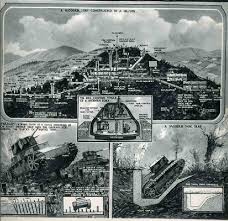
Maginot 2.0

Whatever form a new war may take, whatever part is taken in it by aviation, by gas, by the different destructive processes of modern warfare, there is one imperious necessity, and that is to prevent the violation of our territory by enemy armies. We all know the cost of invasion, with its sad procession of material ruin and moral desolation’.

In an age where we watch on the violation of Ukraine, wait to be annihilated by AI powered robots or sit patiently for the South China Sea war to kick off, the above quote strikes a chord. It comes from a speech in January 1930 by André Maginot, then French Minister for War, who at this stage had been lobbying actively for the barrier that bore his name.

Maginot had fought in the first world war (effectively losing a knee), where heavily fortified structures and defensive lines had slowed the Germans, and the conception of the Maginot line relied largely on history – in the previous thousand years the Germans has predictably charged across the space that the line occupied. In May 1940 Rommel sped through Belgium and the Netherlands, around the Maginot line, and by June German troops were on the outskirts of Paris.

Today, the Maginot line might be the large navies of China and the US, or the web of artificial island bases that China has constructed. What is sure is that we are now in a multi-threat age (of total war) where single use Maginot lines can be rendered useless by multi-domain attacks.

One important and complex element here is that Europe is beginning to build its defences for the consequences of a multi-polar world. Last week it announced the skeleton of its EU Economic Security Strategy, whose aim is to protect key EU technologies, identify and pre-empt economic security threats to cyber, intellectual property, and economic coercion against Europe. The framework is designed to allow states to ‘risk manage’ their diverse exposures to these risks, with a steer from the EU. In effect the initiative builds on a number of more specific Acts – such as the EU Chips Act and 5G Security framework.

In practice the initiative has been motivated by cyber warfare from Russia, the implications of the invasion of Ukraine (and financial flows in and out of Europe to Russia) in addition to the threats to EU intellectual property from foreign states (namely China). We can now expect to see more intensive screening of the export of key technologies from Europe, financial inflows and of inward investment. Watch out next week for the announced risk framework to be debated at an EU leader’s summit on 29/30th June.

The initial implementation of the framework will be interesting, and my sense is that it will initially be used to bring expertise from ‘strong’ states, through the EU, to shore up weak points – from Chinese data centres (i.e. TikTok) in Ireland to foreign ownership of EU infrastructure to the allocation of research funding, to financial flows through Austria’s trust system.

As readers will know I am inordinately focused on the Irish case, and it is a country with multiple ‘Maginot weak points’. The changing world order has uncovered multiple vulnerabilities in Ireland’s security framework – the susceptibility of large technology facilities to espionage, unguarded trans-Atlantic cable lines and a wide-open airspace to name a few. There is now a public consultation process on security ongoing in Ireland, and a suspicion that its defensive frailties are already being filled by NATO countries.

In the EU, one practical implication of the new economic security framework will be the extent to which practices by ‘strong’ states (for example the Netherlands has been very aggressive on protecting the semiconductors industry and on screening Chinese students) will be carried across to other countries, and to the extent that the ‘weakest link’ states have their security and economic infrastructure fortified.

What is not yet absolutely clear (even though institutions like the WTO are mentioned in the announcement) is the extent to which the EU will work with international partners like the US in terms of collaborating more closely on disrupting questionable financial flows for instance. This has been an area of technical weakness across the EU and embarrassingly many of flows of ‘bad money’ in and around the EU have been detected by the US.

In typical European style, this initiative is just a start. It is porous and easily circumnavigated, to stick with the Maginot analogy, but in the longer term points to even greater coordination across states, greater scrutiny of investment flows and I hope, greater collaboration across countries.

Have a great week ahead,

Mike

DiversitAI

A couple of interesting events happened in the venture capital industry last week, that tell us much about how capital flows, and the impact it will have on our society.

In Paris the Sista Fund investment conference took place, the aim of which is to focus attention on the need for the venture industry to provide capital to female founders, and additionally to support female investors. Some of the statistics flagged at the conference are startling –across Europe just 7% of start-up funding goes to female-founded start-ups, and for larger growth companies, less than 1% of large funding tickets (Eur 50mn and more) went to all-female founders in 2022.

Then, in the UK, the Black Seeds fund – a VC fund designed to raise capital for black business founders in the UK raised a total of GBP 5mn. Sadly, this is a miniscule amount of money compared to the size of funds across the industry, not to mention the amount that is wasted on projects of pure fantasy (for a more informed view on this please see the excellent Sinéad O’Sullivan’s recent articles on space and crypto funding in the FT).

At the same time, four French ‘AI bros’ whose new venture Mistral.AI has only been up and running for four weeks received some Eur 105 mn in funding for their venture at a valuation of Eur 240mn. Given the difficulty of raising funds at the moment this is an impressive raise, reflecting both the background of the team and the eco-system of state, business, media and entrepreneurs they have backing them, most of whom are French, highlighting the highly ‘networked’ side of French business.

However, that Mistral.AI can raise Eur 105mn in a few weeks, and Black Seeds takes in only USD 5mn, and no-one is willing to give have the ‘better’ half of the population investment capital, is not a good thing. On one hand it shows how capital gravitates faddishly to the prospect of financial return rather than economic return, and it also shows that while the majority of VC funds and investors wrap themselves in the banners of sustainability/equality and ESG, they are shy of committing real capital to these causes.

In an age where developed countries want to attract qualified migrant workers, and where productivity gains are in short supply, ‘diverse’ (by which I mean ‘not AI bros’) founders need to be able to access investment capital.

A cynical response to the above development is for female entrepreneurs for instance, to cloak their projects in AI, and I suspect that this is already happening such that mind-numbingly, every pitchdeck contains multiple mentions of the word ‘intelligent’. A better piece of advice for VC funds and entrepreneurs is to follow the example of Mistral. AI and build an eco-system of government, corporate and entrepreneur supporters. The best VC’s that I know have done this.

Another angle of attack is AI itself, and specifically the data that various AI applications run on. Some years ago, I wrote about Joy Buolamwini’s Algorithmic Justice League that seeks to adjust algorithms for the biases they are programmed with. To be very speculative here, a corrective approach to AI could be taken a step further and have algorithms programmed exclusively by women, for application in female specific cases in industries like insurance and health, and to have guardrails also programmed by women. Such an approach might make the AI craze more responsive to different segments of society.

The impact of AI has already become an area of intense focus and last week the EU Parliament signed off the EU AI Act, whose main contribution is to divide the application into four pillars from harmless to very harmful (akin to China’s use of AI for social credit scoring). There has been some backlash against this already from businesses across multiple sectors that apply AI and who may find themselves being classified as AI companies (and hence liable to the regulation).

The other group to protest is unsurprisingly, the French AI bros, who fear the Act will crimp their creative flair. With a growing number of Emmanuel Macron’s former ministers joining VC firms and start-ups, I fear the AI bros might win again.

Flying Home

A quote I often like to deploy comes from Jagdeesh Bhagwati, one of the leading policy ‘lights’ and advocates of free trade at the start of this period of globalization who said that American multinationals were the ‘B-52’s of globalization’. It was a fitting image for an economist who counselled the likes of the GATT and other world institutions to let free trade flourish, unrestricted by concerns over labour laws and whose main works were titled ‘Free Trade Today’ (2002) and ‘In Defense of Globalization’ (2004).

To his credit, Bhagwati’s view prefigured the domination of world commerce by US multinationals, that is until China’s own corporate giants rose. Today, the world’s largest companies are still mostly American, with a number of Chinese like Tencent, and a handful of Europeans. 

However, a new trend is occurring, which will involve many of those ‘B-52’s’ turning for home, or even changing their spots.

I had often wondered whether the end of globalisation and the fracturing of the world economy into a multipolar order would produce a similar rupture in global corporate business models. That such a rupture didn’t happen is testament to the agility of these companies, the digitisation of economies and the power of international brands.

Since Donald Trump took power, multinationals have had to deal with a trade war, the supply chain disruptions of COVID and the resulting rise of both the digital economy and working from home in the West. As if that were not enough, the introduction of robotics and machine learning to production processes, national security concerns and then the Inflation Reduction Act have pushed and pulled American companies closer to ‘home’ (with some friend shoring), and even drawn a few Europeans with it.

If the American corporate empire is well, then the British corporate scene is withering (recall that the East India Company was perhaps the first company to become involved in geopolitics – with horrendous consequences for India, please see William Dalrymple’s The Anarchy) as the consequences of Brexit push large companies to delist from London and move to New York or the euro-zone (one of the notable movers is CRH which with a business in nearly every European country and American state is not unsuited to a US listing). HSBC is of course another example where realpolitik has led it to move its centre of gravity to Asia. 

So to summarise, the international corporate response to a changing world has been to either change what is under the bonnet (supply chains, work and technology practices) or change ‘home’. Few of them have changed their ‘shop front’ or brand – which is the canary in the coal mine I have been looking out for.

In that respect, imagine my glee to hear that the giant venture fund Sequoia is to split itself in three – a US/European business, an Indian one and a Chinese firm called Redwood in the English re-translation from Chinese of Sequoia. While differences in local markets and investment styles may have contributed to this, the fact that American companies prefer Western capital than Chinese – and vice versa, will have been a factor, as will the growing scrutiny of service providers like investment firms and consultancies in China by the Chinese authorities. Sequoia is interesting as it has in the past shifted structure in response to a changing environment (nearly two years ago it effectively merged its individual pots of capital into a large pool).

The question now is whether Sequoia is the first of many brands to be hit by the geopolitical bug, and other brands splinter into regional varieties, or rather what industries specifically might be vulnerable. 

If I were a management consultant, I am sure I could make a great deal of money consulting firms on the geo-political transformation of brands, should this become a trend. For the time being I think we can differentiate between brands at three levels.

First, those where the brand is integral to the product and its allure and quality transcend geopolitics (LVMH, Rolls Royce and potentially Apple). Second, there are brands that identify with country brands (TikTok, US car manufacturers, many Japanese companies and some German car companies) and these may be vulnerable. 

Thirdly are companies that involve transfers of data, money and services (capital flows rather than trade flows) and I think the interesting disruptive factor here will not so much be that brands will need to change, but that underlying modes of corporate governance and regulation will increasingly diverge between the large regions. Whereas the initial effect of the ‘B-52’s of globalization’ was to promote an Americanised approach to finance, accounting and regulation across many emerging markets, this may change, to the detriment of Western service companies. 

Sequoia’s job is to spot new trends, let’s see if they are now going to lead one.

Have a great week ahead, Mike

The Great Regression?

The front page of the latest edition of Time magazine carries a warning that we are at the ‘End of humAnIty’ in the sense that AI will take over the world and potentially exterminate the human race. The good news is that Time magazine covers tend to be contraindications, and I am closely watching the share price of AI mania stock Nvidia to see if its share price is going to peak on the publication of the Time cover story.

Regular readers will know that we have treated the dangers of AI on a number of occasions (The Final Problem, Talos, and LevAIlling), and I suspect that the ultimate effect of AI could ultimately be to lengthen human longevity. However, while we sit and worry about AI led drone strikes on our cities and being chased by drone swarms, we underestimate the effect of machines on our bodies and importantly, on our sociability. I had two reminders of this last week.

The first was hearing social historian Miriam Nyhan (formerly of NYU) describe the transition in the economy of Cork from one dominated by Ford to Apple (6000 employees).

While Ford’s initial contribution was to change the way we worked (I have had the benefit of a tour of the Dearborn factory, the most impressive element of which was to see robots making cars), the automobile industry has also changed the way we live – notably in terms of how cities are structured and the amount of exercise we get. Then, Apple and social media in general have changed commerce and entertainment but have also left us with physical contortions (the hunched phone user) and even worse, social deformities in the sense that for the first time ever, humans no longer interact with each other in a solely human way.

The second insight was from Prof. Rose Anne Kenny (author of the excellent ‘Age Proof’) the founder of  TILDA (The Irish Longitudinal Study on Aging) that has tracked nearly 9,000 adults aged fifty and older, and covers all aspects of life — from sex to food, to physical and brain health, genetics, childhood experiences, friendships, finance and much more — to fathom how and why we age, and to resolve how we can live longer and better.

When we combine the changes to our lives from technology, with changes to identity and acts such as drug taking, we are on the cusp of the most dramatic change in human behaviour ever. We can live for longer, but in many instances, we are not living better. What is clear is the degree of flux around our bodies and minds – from longevity to the atomization of societies, the diffusion of identity, and radical changes in average body shapes.

I don’t have a clever name for this epochal transformation – perhaps  ‘The Great Regression’ – but we might date it as having crystalised in the post COVID period when the combined results of all of these factors came together.

This is characterized by a number of factors – generalized longevity across the world with worrying regressions in life expectancy in specific economies owing to a combination of obesity, cardiovascular diseases, drug dependencies and depression. The US stands out here where life expectancy has dropped (see America’s periphery problem) precipitously to 76 years, its lowest level in over two decades (for reference Canada is 82 years and Japan 85).

In the future, these changes will be complicated by a range of factors, notably where morality and money are concerned. Wealthy people will try to access longevity (but perhaps not happiness) and advances in genetic engineering may open up an entirely new vista for the rich to grow and transplant organs or to design their ‘next generation’.

Then, AI broadly has the ability to help diagnose many illnesses depending on countries’ ability to collect good data, but where it is introduced into social welfare systems, may act in a cruel way to exclude people with say cardiovascular complications from getting insurance or social welfare.

As a final point, the striking aspect of Rose Anne Kenny’s work is that healthier and happier, long lives are essentially a function of good design – of cities and towns, healthcare provision, social education and diet (note that the journal Public Health Nutrition shows that ultra-processed food makes up over 45% of household purchases in Ireland, the UK and Germany as opposed to less than 14% in France, Italy and Portugal).

For that reason, I have a lot more confidence in the future of European democracies than autocracies or the Anglo-Saxon socio-economic model to successfully manage the enormous changes taking place in our bodies and minds.

Have a great week ahead,

Mike