

One of the highly unique, and fascinating characteristics of this era of unravelling is the way we increasingly look at the world from a geopolitical rather than a geographic point of view. In previous phases in history, geography and geopolitics aligned neatly – for example the democratic West faced off against the communist East while economically, the North was well ahead of the South. Now, select countries from disparate parts of the world share the same dilemmas and challenges. Japan, as a middle power, arguably has more in common geopolitically with the UK, than it does with Indonesia. In turn, Singapore and Ireland, arguably share the same geopolitical stress points.
In the post globalized world, new coalitions and constellations of countries are beginning to emerge. That much was on display at Davos two weeks ago, when Canadian prime minister Mark Carney eloquently pleaded the case of the democratic ‘middle powers’ and the need for them to collaborate. His speech was followed by the far less eloquent launch of Donald Trump’s ‘Board of Peace’, which is a ragtag band of largely developing countries not known for their commitment to the rule of law and appreciation of human rights.
As the various threads of globalization – from the use of the SWIFT payment system to energy pipelines like Nord Stream, the ‘special relationship’ between the UK and the US, NATO, USAID, and many more, fall by the wayside, new groups and alignments emerge, and in the rest of this note I will sketch some of them.
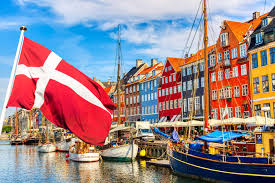
To start at the top of the pyramid, regular readers will know that David Skilling and I have extensively researched the phenomenon of small, advanced economies – a group that spans Sweden, Singapore, New Zealand, the Netherlands, Ireland, Belgium, Norway, Finland, Switzerland, Austria and Denmark, and that may in future incorporate the Gulf States.
Culturally, these countries are very different but share the same economic and social successes (‘happiest place to live’, ‘best rule of law’, ‘highest GDP’), and a common policy recipe that is based on innovation, openness, education and social cohesion. While we have even tried to create a policy forum for these countries (the ‘g20’), they do not act as a formal block, but actively compare notes behind the scenes. For example, the Nordic states are learning from each other and collaborating on immigration, while Ireland urgently needs to follow the examples of Singapore and Norway on defence.
Then, below the small, advanced economies are the ‘middle powers’, sizeable, developed countries, many of whom enjoyed periods of international dominance, but are now beset by demographic issues (ageing and immigration), and are searching for a defined geopolitical role. Japan, the UK, Canada, Korea, Australia and Russia (not big enough economically to be a superpower, and not nice enough either). With the exception of Russia, the middle powers are democracies and most are eager that the world stays much the same as it was during the period of globalization (at least in the case of Keir Starmer). As such they are beginning to hedge bets by aligning with larger powers, Russia with China, and the UK is now cultivating much better relations with the EU.
Looming over the middle powers are the three ‘great powers’ – China, the US and the EU, each with their strengths – military, finance and technology for the US, culture, liberal democracy, well-being and cities in the case of Europe, and industry and cultural cohesion in the case of China.
They will be the pillars of the emerging multipolar world, and in contrast to the globalized era where most countries adopted the American way of doing things, these three ‘blocs’ will increasingly do things their own, culturally specific way. AI is an example, but corporate governance might be another tack. In addition to these three behemoths, a ‘Fourth Pole’ made up of a core of India and the Gulf states, is possible, as we wrote back in November.
Those classifications still leave about fifty percent of the world’s population unaccounted for, whose nations collectively labour under the term ‘Global South’. These countries, from Nigeria to Indonesia to Bangladesh, share similar policy problems – the building of e-commerce driven economies, healthcare and urbanisation, to name a few but they are not at all at the level of policy exchange as the small, advanced economies, and many of them do not have structured economic models.
For some, the idea of the ‘Fourth Pole’ can become an interesting organizing point, but to a very large extent the survival of existing world institutions, from the UN to the World Bank, now depends on the large, populous emerging economies. Equally, the directions that these countries take in their political economy – do they follow the ‘Chinese model’, the European democratic one, or something else altogether. This policy question is vastly underestimated in the discourse on international economics and politics, partly because the ‘great powers’ are not leading by example.
Have a great week ahead, Mike
 The Levelling