Shadow Wars

Quite some years ago, at an evening gathering in Moscow, I had the pleasure of interviewing Natalya Kaspersky (in 1997 she founded the cyber security firm Kaspersky Lab with her then husband Eugene – he and many Kaspersky Lab colleagues had previously worked in the KGB).

I put a question to her regarding the growing number of Russian entrepreneurs, who seemed to thrive in a range of countries – the US, Canada, Germany and so on – but I was surprised by her answer – that the talent of the new entrepreneurial class was entirely due to the Russian state, its educational system and various socio-political institutions.

Today, not unlike both America and China, the Russian state and the notion of entrepreneurship are at odds. Many wealthier, young Russians lurk in Dubai, Cyprus, Georgia or parts of Asia, and the domestic labour market in Russia has been badly damaged by the war in Ukraine. Tellingly in the context of Natalya Kaspersky’s comments, much research talent has been directed into military focused technologies, and more broadly Russia’s ‘War Economy’ has become the only game in town.

This has created opportunities and dependencies for Russia. On one hand, together with China, and Iran, Russia is now a key part of an energy empire – that trades commodities, and builds commodity supply chains for at least one half of the world (India is shifting into this sphere). Both Russia and China have their claws into Africa, in a sinister repeat of what Tom Pakenham called the ‘Scramble for Africa’.

In contrast, Russia’s isolation and mono-sectoral economy leave it heavily dependent on China – some 90% of high-tech imports into Russia come from China, and it is yet unclear what financial support it gets from Beijing. In a week when Argentina’s economy and financial markets spluttered to a halt and triggered a rescue by Washington, Russia risks becoming China’s ‘Argentina’ if that makes sense.

There are however a few lessons for Western policymakers from Russia’s war economy, the first of which relates to debt. An under-remarked point is that Russia’s debt to GDP is only (officially) 20% which at least means it is not constrained by a huge debt burden, unlike the US, Britain, France, China, Italy and Japan. As the historian Niall Ferguson has remarked, no empire that has paid more to service its debt than its military has survived. In the future, indebtedness and military strength will be inter-related.

In 2008, after its partial invasion of Georgia, a post-mortem took place on the relatively poor state of the army (its training, equipment, and tactics) and hence began a modernization process in earnest. Many critics would say that elements of this – such as the structure and training of the army have failed completely, but other elements, notably military technology are a lot better. Germany, Spain, and Italy all need, or are about to embark on modernizations of their armies, while other countries like Ireland will need to remake their armies almost from scratch. In this respect, in a more contested world, there is a premium on getting military modernization right.

The second element of this, which is being felt in cities like Copenhagen, Warsaw and Berlin this week is Russia’s conception of total war. In 2021, a few months before the invasion of Ukraine we wrote (from Great War to Total War )about the now Russian army chief General Gerasimov’s doctrine of total war, which is a view of conflict that covers many strategies such as cyber, border testing, propaganda, and covert attacks, for example. This approach is very much on display across Eastern Europe – the encouragement of discord in Bosnia, the hollowing out of Hungarian politics and in particular the harnessing of Belarus as a form of geopolitical attack dog against the EU.

In this regard, the incursion of drones and jets into European airspace, with the added spice of cyber-attacks, is a sign of Russia stressing and probing European defences, and most importantly, testing the commitment of the US to NATO. My worry is that an accident or an escalation cannot be far off, and the risk that the Ukraine conflict spills into Europe cannot be ignored. Indeed, military planners in Germany and France are warning of the need for thousands more hospital beds to accommodate the casualties that might result from conflict with Russia.

European military planners should focus more on disabling Russia’s economy, which is struggling.

While GDP growth just popped into positive territory, the economy is in a rolling recession of sorts, or at best a period of impoverished stagflation. The labour market, banking sector and consumer sector are points of vulnerability. A longer-term effect is that the potential of the economy is being hollowed out by the effects of military Keynesianism. The US department of war has started to add financial market experts to its strategy teams to plot the vulnerability of enemy economies, Europe should do the same. Its sanctions regime is only half baked, and there is still plenty of low hanging fruit – such as the enablement of Russian oil and gas exports by Greek ship owners, the ongoing flux of Russian money through Austria, Cyprus and other EU states, not to mention the flow of Russian tourists.

Then, there’s plenty more that can be done to disable Russian banks and companies, and to stop proxy trade across parts of Eastern Europe and the ‘Stans’. Europe is already in a shadow war with Russia and will get little help from the current US administration. It needs to focus on Russia’s weak points.

Have a great week ahead, Mike 

How does it all kick off?

One of the pleasures of writing this note is the feedback from readers and the subsequent debate – usually by email, sometimes over a coffee or pint, depending on my travels. The latest such exchange – from a reader in Australia, too far for a pint – related to the looming fiscal catastrophe that uniquely grips most of the major G7 economies and China. Some 60% of the world’s GDP is encumbered by debt to GDP of 100% or more, and untypically large deficits in the context of a business cycle expansion phase.

The question from Australia was ‘how does it all kick off?’ in the sense of when does the next debt crisis begin? I’ve been pondering this since making the BBC documentary ‘Waking up to World Debt? but still don’t have a clear view on what might trigger a crisis, and am mindful of Rudiger Dornbusch’s maxim that imbalances accumulate for longer than you think, and then turn sharply quicker than one would think.

In that respect I think a debt crisis will be soap operatic, and unravel in various stages, not unlike a good Netflix series. In particular it will have a number of distinct characteristics – the historically unprecedented fact that so many large economies are indebted and will all try to escape the debt trap at the same time, and the potential transfer in economic power between corporates (not hugely indebted).

There are a few potential starting points. A dramatic one could be a loss of faith in a major central bank, from the point of view of markets losing confidence that the likes of the Bank of Japan can continue to hoover up that nation’s bond market, without financial consequence.

A more conventional scenario, from an orthodox point of view, is the idea of sustainability, which Keynes defined curtly as ‘when it has become clear that the claims of the bondholders are more than the taxpayers can support’. A lumpier definition comes from institutions like the IMF and World Bank whose standard analysis aims to assess whether

In general terms, public debt can be regarded as sustainable when the primary balance needed to at least stabilize debt under both the baseline and realistic shock scenarios is economically and politically feasible, such that the level of debt is consistent with an acceptably low rollover risk and with preserving potential growth at a satisfactory level.”

In that respect, the conditions for a debt bust might start with a recession, where two problems might occur – the lack of fiscal space to cushion a recession and the political side-effects of this (from riots to split governments), and the immediate ‘discovery’ by markets of those bond markets that are still considered safe havens and those where country credit risk is high (i.e. France).

In particular, the inability of some governments to stimulate their economies without taking on more debt could lead to a deeper recession that might trigger a significant drop in asset values (bad for real estate loans and private credit). Concurrently a new set of bond safe havens might emerge (Norway, Ireland, Netherlands and Germany), whilst previously stable markets (Belgium) might sell-off.

At this early stage, a lot of focus will be on central banks, and those with the credibility and capacity to act to absorb market stress, will likely see their currencies well bid (the euro could be a surprise here). My instinct is that in the case of the Federal Reserve, which might well be a component of the US Treasury under the Trump administration, the fear of highly unorthodox policies will drive the dollar down, rather than upwards as is often the case in a crisis.

A further concern is that in a break with the last seventy or so years of policy making, the US will no longer act as the coordinator of a crisis rescue plan. International economics is becoming more competitive and more game theoretic, such that a debt crisis rescue plan will look more like the COVID crisis, where there is a stark lack of collaboration between the large economies, who will tend to prefer their own, localised rescue plans. To this end, currencies will be very volatile. And that’s just for a start.

Have a great week ahead, Mike


Restoration?

In ten or so years’ time, the question that business leaders, some politicians and policymakers, not to mention the public at large in the Western world, will likely have on their minds is ‘Is a Restoration Possible?’

This thought was prompted by a visit through some of the older parts in England -Salisbury and Dorset, followed by a trip to New York for the McKinsey Global Strategy Summit. There are parallels between the two worlds.  

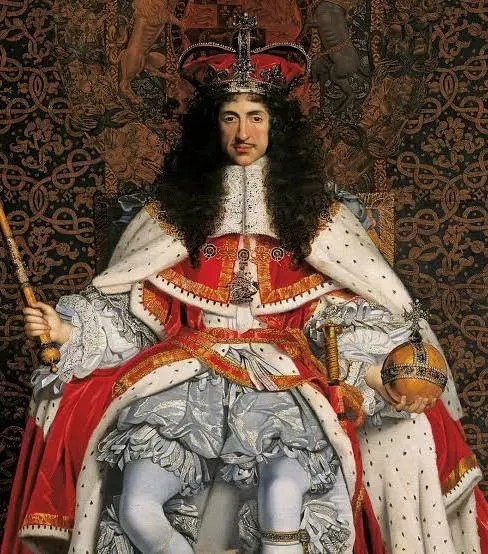
In the middle of 17th century England, the arrest (in 1646) and subsequent death of King Charles I, led to a historic experiment with democracy (in which the Levellers were prominent),., which took a wrong turn (Cromwell positioned himself as Lord Protector). This period was known as the Interregnum – a bit like the current German concept of Zeitenwende – and came to an end after the death of Cromwell and the return of monarchy with the installation of Charles II as king in 1660 (The Restoration).

In many parts of England, notably Dorset, the Restoration was problematic because of lingering political and religious divides owing to the rivalries that were bred by the civil war. The overturning of Puritan laws and social restrictions was also controversial in parts, though the Restoration also produced a mini cultural renaissance.

The story of the transition from the uncertainty and experimentation of the Interregnum to the old order of the Restoration might appear interesting but obscure to some readers, but as a template, it doesn’t fit badly on the new, evolving world order. We have left the thirty-year-old ‘regime’ of globalisation and are moving into the Interregnum – which will see the old order unravel and may not provide many clear indications as to what kind of equilibrium the world settles into.

The transition through the Interregnum will have many wondering if a return to the many boons and benefits of globalisation is possible (‘a Restoration’), whilst others may believe that the vandalization of globalisation produces changes that are so profound that they are irreversible (A Restoration is not possible).

A Restoration would see a rebound in the health of democracy, civil public life, a trade outlook characterised by a reversal of tariffs, greater freedom of labour and better policing of trade conflicts. Two of the great bonuses of globalization, low, stable inflation and the absence of major wars, would return.

At this point, some seven months into the second Trump administration, we are accelerating away from the rosy Restoration scenario. If anything, there is an emerging sense of an ideological consistency across the administration (some people still mention Project 2025 for instance), and an accompanying desire to reshape America permanently.

An extrapolation of the events of the past few weeks might see the following trends – a breakdown of NATO, the IMF and World Trade Organisation, an open conflict between Europe and Russia, the emergence of a regional consensus between China and the larger countries across Asia, huge currency volatility (around the generally weaker dollar), the arrival of a major African power (Nigeria?), the collapse in late 2026 of the AI Bubble, the existence of the most extreme levels of wealth inequality (mostly in the US and India) ever recorded and the attendant socio-political consequences of this, and finally, to maintain the cheery tone, the undermining of the notion of the international rule of law and corporate contract law. I am very likely erring on the pessimistic side for dramatic effect, but few of these trends lead to a ‘Restoration’.

A less dramatic outlook, is that the path towards a ‘new world order’ (we have sketched this path out in a previous note ‘Are We There Yet?’) could still shift towards a ‘Restoration’ but it will first be strewn with several mountain like obstacles (a friend invoked James Martin’s similar idea of a canyon – from Martin’s book ‘The Meaning of the 21st Century’).

These obstacles are, in my view, a climate crisis, a debt crisis and a crisis of democracy or governance. The way in which the international community tackles these crises will determine whether we get to a Restoration or not, and the key policy characteristic will be collaboration across the major regions. In this context, one of the early confirmations that globalization was dead, was the absence of cooperation between the US, China and to a less extent Europe, during the COVID crisis.

To take the example of a debt crisis, the absence of a ‘committee to save the world’ would likely see far greater market volatility, far greater damage to asset prices and a post crisis environment where banking systems and economies take longer to recover, do so unevenly and adopt more localised corporate governance regimes in the post-crisis period (China is the critical country here). Alternatively, collaboration across central banks, an internationally adjudicated resolution to a (government debt crisis) would lessen the financial damage, and potentially provide the context for a more global financial system, post the crisis.

I have only started to mull the concept of a Restoration, but my fear is that a full, coherent Restoration will only occur after various crises, and all of the bad options have first been exhausted.

Have a great week ahead,

Mike

Le Fin

Oscar Wilde’s line that ‘to lose one parent is a misfortune, to lose both looks like carelessness’ can be applied to politics, notably to France’s earnest President Emmanuel Macron, who may lose his fourth prime minister in just over eighteen months when Francois Bayrou submits his government to the mercy of parliament next week.

The likely fall of the Bayrou cabinet may see another powerless coalition cobbled together, or even a general election. In the near term the risk is of a collision between Marine Le Pen’s Rassemblement (old Front National), the bond market and the French state.

That also most surely means the end of the ‘Macronie’, in the sense that Macron is in office but not in power. Polls suggest that few French people would regret or contest this.

It should not have come to this. Unlike many of its neighbours France has generally very good public services, transport and education systems, and Macron has manifestly enlivened the private investment and technology sectors of the economy. Economic growth has been decent by comparison to the UK and Germany at least. Compared to many of its peers and competitors, France is an agreeable and affordable place to live.

However, on Macron’s watch, France has become imperilled financially, the issue of immigration and identity still taxes public life to the extent that the Rassemblement is now the largest single party in parliament, and in foreign policy, France has lost sway in Africa and the Middle East, and more generally on the world stage. Another omission, where the broader elite is complicit, is the failure to reform the French democratic system.

In that context, there are perhaps three lessons from the wimpering end to the Macron era.

The first is that the major economies are now well and truly in the ‘Age of Debt’, where the consequences of indebtedness pervade and dominate politics, financial markets, geopolitics and society. The large economies of the world have never been so indebted, and the fact that they are at the same time will ultimately make debt reduction more disorderly. The Trump administration recognises this and is adopting highly unorthodox, risky measures to make its debt load less unsustainable. In Britain, there is widespread recognition of the country’s fiscal fragility, but policy makers are yet highly risk averse in tackling it. That France is in denial will only make the correction all the more painful.

In France, there is scant willingness on the part of the policy elite nor any of the political parties to seriously address France’s financial situation, and like a fancily dressed pauper, it continues to live beyond its means. For the time being, it can hide behind the euro, but its fellow euro-zone member states will soon become vigilant that France does not trigger another European financial crisis. The upshot of this is the loss of economic autonomy for France.

The second lesson is for centrist parties in the dwindling number of democracies in the world. In the context of the unravelling of the old, globalised order, amidst interference in European affairs from larger countries, government of the centre need to tackle problems like immigration, debt and geopolitics head on, with more aggression, else the parties of the fringe will capitalise on their inaction. Concretely, this amounts to a very different tempo of politics in Europe, and one that is ultimately more singular.

The third lesson, which is specifically European but that will strike a lesson with many Americans, is that European needs to take control of and change the narrative on its own destiny. European leaders have been far too reactive to the demands of the White House, and the violence of the Kremlin.

A lot of hope was placed on Macron to shape a narrative for Europe in the world, notably so in the absence of clarity of thought and leadership from many other European countries like Germany. Europe’s narrative should be that increasingly, for valuable public goods – democracy, the rule of law, education, healthcare and culture – it is the best place in the world. The problem is in paying for it.

Michael O’Sullivan is co-author, with Pierre Charles Pradier, of ‘L’Accord du Peuple’ (Calman-Levy).