The Grecians

In 2013 President George W. Bush referred to the Greeks as ‘Grecians’. At the time the ‘mis-speaks’ of the second Bush president provoked much amusement and some concern, though by comparison to the current occupant of the White House, the author of the disastrous invasion of Iraq is a strategic genius. The ‘Grecians’ came to mind this week when tuning into commentary by the Japanese prime minister Shigeru Ishiba who compared his country’s fiscal situation to Greece in the early 2010’s as he rejected calls for tax cuts. By the staid standard of Japanese political pronouncements this is controversial and will help draw attention to the rise in Japanese interest rates in the past two weeks.

Ishiba’s comments are a harbinger of what is to come as we head into the ‘Age of Debt’, an era where indebtedness will dominate politics, economics and geopolitics. I have spent enough time in Greece over the years to know how brutally painful the consequences of austerity were, and how reckless economic policy had become in the late 1990’s and early 2000’s.

Indeed, I recall the late years of the (Andreas) Papandreou period, when the social debate in Athens revolved around his younger, second wife ‘Mimi’. Papandreou was a very interesting character, and an example I often deploy to show that an education in economics is no guarantee of good policy – before he entered politics Papandreou was the Dean of the economics faculty at Stanford.

Often a finance minister will need political as well as policy skills. In his book, Stress Test, Tim Geithner, who was appointed Treasury Secretary by President Obama and who as head of the New York Fed had very good technical skills, worried aloud that he did not have the political skills for the role (arguably Robert Rubin was the master here) and the Obama team spent some time coaching him in this field.

There is a small but interesting literature on the backgrounds of finance ministers, which hypothesises that more left leaning governments (like Obama?) will choose economics experts to bolster their economic credibility, while right leaning governments often choose a finance minister with a financial services background – Donald Trump’s two Treasury Secretaries, Steven Mnuchin (ex Goldman Sachs banker) and Scott Bessent (hedge fund manager who worked with George Soros for some time) fit this profile.

The point of my dragging up the cv’s of finance ministers is to state that difficult times are ahead, and will require political courage and policy acumen, most of all in the US as President Trump takes aim at the budget deficit. Unfortunately, his lead policy manoeuvre on tariffs have shown that he has neither of these attributes.

In the US, President Trump has driven hard to have his budget (Big, Beautiful Bill) passed by Congress. It contains some elements that are quite sinister such as the ending of an excise tax on gun silencers, and one particular policy I agree strongly with – the introduction of MAGA (Money Account for Growth and Advancement), whereby the Treasury would create tax preferred savings accounts for children and give each one an initial deposit of USD 1,000. Europe should do the same!

However, the broad strokes of the budget look like they could rob many Americans of what they need most, notably MEDICAID. Worryingly from an economic point of view the budget is expected to add nearly USD 3.5 trillion to the budget deficit over the next ten years, according to a range of bodies from the Penn Wharton Budget Model to the Joint Committee on Taxation, and the implication is that the indebtedness of the US will rise further (estimates point to a historic debt to GDP ratio of 125% in ten years’ time). The Congressional Budget Office publishes an intimidating chart that puts this in perspective and shows that the debt to GDP ratio in the US has only been higher (going all the way back to 1790) in the post-World War II period.

This is the daunting backdrop to two poor bond auctions last week (demand for US and Japanese bonds was well below the norm). In this respect, the case of Greece is instructive – notably the devastating effect of forced austerity, the difficulty in trying to make policy when a government has lost the confidence of markets and the reality that once this confidence is lost, it can take time to regain it.

Ultimately, Greece was a small economy in the scheme of things, though its membership of the euro made it systematically important. The US and Japan are on a different scale altogether.

We are all Grecians now.

Have a great week ahead,

Mike
Orientalism

It is likely that many of the people protesting for Palestine in US universities will have read Edward Said’s book ‘Orientalism’, or at least will have an idea who he was. It is also likely that they will have heard of Donald Trump, whose ire at these protesters has led to an unexpected fiscal crackdown on many prominent US universities including Columbia, where Said used to teach (see our recent note ‘University Challenge’).

In brief, the tack of Orientalism was to criticise the construction of a superior, Westernised view of the Middle East (the term was coined by navigators in the US Navy), that is then internalised by members of the Middle Eastern elite. At this broad level the theory was  attractive, but runs into many practical difficulties such as Said’s downplaying the role of women, and the failure of many Middle Eastern countries to develop economically and to nurture the kinds of open society that Said liked to live in. 

As with many facets of the debate around the Middle East, ‘Orientalism’ has become a badge of honour for many, and a contentious identifier for others, and there is a risk that many people who hold the ‘Orientalist’ view, have not updated their outlook for say the rise of Al Qaeda in the broad region and the effective domination in the last decade, of Palestinians by Hamas.

I doubt that Donald Trump has read ‘Orientalism’ (I think his speechwriter might have though) but in the light of the Western perspective of the Middle East, his visit to Saudi Arabia was striking in two respects.

First, like any clever politician, he confirmed the view that several countries in the region want to have of themselves

– ‘this great transformation has not come from Western interventionists … giving you lectures on how to live or how to govern your own affairs. No, the gleaming marvels of Riyadh and Abu Dhabi were not created by the so-called ‘nation-builders,’ ‘neo-cons,’ or ‘liberal non-profits,’ …instead, the birth of a modern Middle East has been brought about by the people of the region themselves’

To a degree, Trump’s view is not correct. The economies of the UAE and KSA were built on Western know-how (see David Mulford’s ‘Packing for India’ for example), and many of the financial institutions at least have mimicked those in the US and UK. Also, a large number of army officers from the region have been trained in imperialist bastions such as Sandhurst.

At the same time, the miraculous growth of these countries can be ascribed to local vision and leadership, on a scale only matched by Lee Kuan Yew in Singapore. And, consistent with the ‘Orientalism’ thesis, many people in the West do not acknowledge the rising institutional role that Abu Dhabi plays in the region, or the extent to which Mohammed bin Saman has become a hero for the youth in his country. In that regard, we might say that the model the Middle Eastern countries have followed is the ‘Sinatra Model’ (‘do it my own way’) with a slight American twist.

The President’s address struck a chord because in the Emirates and the KSA in particular, there is a growing pride and independence in what these countries have achieved economically, and on my last visit there a few months ago, I found that there was little patience on the part of government officials to for example, have EU regulatory standards imposed on joint investment projects. In a note I wrote at the time I flagged how locals had developed their own acronym of the West (W.E.N.A.), surely proof that the ideas in ‘Orientalism’ are dated.

Trump’s speech will be a big disappointment for those who believe in institutions and the idea of nation-building, and in that regard will turn on its head the efforts of so many in the State Department and other institutions. Neither does it augur well for current day American institutions.

The speech also brings into focus what Prof. Afshin Molavi refers to as the existence of ‘two Middle Easts’, namely a geopolitical one (sustained by American defence agreements) and an economic one. Chillingly in the context of the annihilation of Gaza, the Trump speech has tilted the momentum towards the economic version, and I feel that many people in Europe vastly underestimate the focus that governments in the region have on the economic prize, as opposed to the humanitarian catastrophe.

Various countries in the region from Qatar to Syria, may now find themselves the beneficiaries of Mr Trump’s lack of attachment to history and the democratic model, and it is very likely that the region known broadly as the Middle East will be one of the very few in the world to profit from his presidency, and will spearhead a move towards a model of materialistic, technocentric non-democracies, that some of Mr Trump’s supporters have in mind for the USA.

The emergence of the ‘Fourth Pole’, a prospective multipolar zone that will become the beneficiary of trade tensions between the ‘older’ multipolar zones (US, EU, Asia), is still very much on track, but as it develops it will increasingly need institutions, markets, rules and means of binding people to the region, none of which Mr Trump can help with.

The Policeman Premium

I vividly recall seeing Imran Khan give a speech in the mid-nineties, in an era where many sportsmen had what was described as colourful backgrounds he stood out as particularly ‘Bond’ like – at the very top of his game as a cricketer and a ‘playboy’, as the saying goes (at the time he was engaged to Jemima Goldsmith). There are few people who have had such adventurous lives – and Khan’s is interesting for the ways in which he changed tack – towards Islam and politics (he served as Pakistani prime minister from 2018-2022) and his change of fortune (he is currently in solitary confinement in a Pakistani prison).

Whilst Khan’s rise and fall is complex, he ultimately fell foul of the Pakistani security establishment who allegedly became uncomfortable when Khan condemned foreign (US) influence in Pakistani public life. Khan was also the victim of an assassination attempt in 2022, something that has marked Pakistani politics (Benazir Bhutto was assassinated in 2007 and her father Zulfikar was executed in 1977).

In this regard one of the few constants in Pakistani politics has been the ever-present role of the security services in the affairs of the state, and specifically their tactic of creating private armies and terror groups. This has embarrassed them on at least two occasions – the discovery that Osama bin Laden was living in near plain sight in Pakistan and repeated attacks by the Taliban inside Pakistan. Add to that the 2008 Mumbai attacks perpetrated by Lashkar-e-Taiba, and the sense grows that Pakistan has been playing a dangerous game.

In this regard, India’s response to the killing of 26 people in Pahalgam (in Indian controlled Kashmir) took aim, it said, at terrorist infrastructure, in the most serious escalation between the two countries since the very early 1970’s. The subject of this note is not to predict how this conflict will play out – it could be costly, bloody and messy (India has reportedly lost five jets in its initial sortie) but to wonder why this confrontation is happening now and how much of this has to do with the alliances that the two countries have struck.

While India and Pakistan are both members of the Shanghai Cooperation Organisation, Pakistan is the much more active member and very close to China, Iran and Russia. While a lot of Indian hardware comes from Russia, its foreign policy projects the country as an independent actor, India is aiming for a close relationship with the US with whom it may sign a very high level trade deal (it has just completed a modest trade agreement with the UK).

It is very likely that in a different diplomatic regime the Pahalgam attack would have been met with intensive diplomatic engagement by the US, with India whom it regards as an ally and Pakistan, which it funds generously. This has not happened this time, and the tempo of involvement of the White House in this particular regional conflict has not been on a par with other administrations. It is so poor that vice president Vance has declared, in a most un-Kissinger like manner, that ‘it is none of our business’.

Indeed the recent death of Joseph Nye, the political scientist who developed the term ‘soft power’ and who wrote much about America’s engagement with the rest of the world is a reminder that one of the key elements in the old, globalised world order was America’s role as a policeman – with a near monopoly over deadly force and a very active, alert diplomatic corps. An example of this can be found in Brad Hope and Justin Scheck’s book ‘Blood & Oil’ that describes the rise of Mohammed bin Salman as the ruler of Saudi Arabia. For decades the US has steered Saudi diplomacy, and Saudi rulers have guided America in the region. However, the book describes in some detail the lack of strategic direction of the first Trump administration in the military and diplomatic affairs of Saudi Arabia, beyond the organisation of a lavish welcome ceremony for a Trump visit to the Kingdom.

The second Trump administration looks set to entirely do away the role of world policeman, and cynics might say, replace it with the role for rent collector. As such, the geopolitical risk premium will rise, and may help to explain why there are at least two conflicts where basic needs (water) are being weaponised (in Gaza and India/Pakistan). When it played the role of world policeman, the US kept the peace, much to its own advantage.

Now in the context of the very obvious dropping of moral guardrails around international relations, other countries will be less bound by a sense of world order, emboldened by an arms race, and will start to take risks and make mistakes. India-Pakistan is a very dangerous case of this, and one that draws into focus the trade-off between the cost to America’s role as world policeman, and the global ‘peace’ dividend it brought.

Grasshopper

I had intended to write about universities this week but, strolling through the City of London, I was surprised, shocked even, to find myself on Trump Street, and then amused to see that it is joined by Russia Row.

My first thought was that this was part of a grand plan by the British establishment ahead of President Trump’s visit to London in September, the idea being to stage an event at the nearby Guildhall and to then tell the president that a nearby street had been named after him. Trump Street was apparently named so because several trumpet makers lived there in the 18th century, but let’s ignore that for the time being.

Yet, the far more meaningful coincidence of Trump Street is its proximity to Gresham Street.

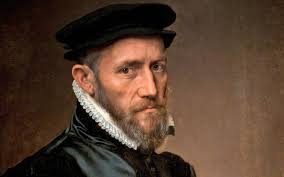
Sir Thomas Gresham was a trader and financier in 16th century London, at a time when coffee houses in the lanes around the Royal Exchange formed the basis of what is known as the City. Gresham was an important player in Queen Elizabeth I’s economy, and his emblem – a grasshopper – is still present in various parts of the City (there is a giant-sized golden grasshopper on the roof of the Royal Exchange….if you can dare to make it up there).

While Gresham’s imprint can be seen across the City, he is remembered by Gresham’s Law which was named after him and states ‘bad money will drive out the good’. Gresham’s Law which echoes similar observations from Copernicus and other scientists through the ages is founded on the idea that in an economy where coins with the same face value but that are made from different base metals (say nickel and copper) there is a tendency for traders to hoard the coins made of the more valuable metal and to circulate lower quality coins. Bad coins stay in circulation, good ones are re-commoditized. From an economics point of view the law is conditioned on all the coins (of variable quality) having the same face value.

Unlike the 16th century, today, coins have the same physical consistency and in general there is little incentive for people to shave bits off coins (historically coins have serrated edges to prevent this) but broadly the Gresham’s Law is applicable in different domains.

Think of how cheap goods (made under questionable labour conditions) have forced quality players out of markets, or how in the run-up to the global financial crisis, low quality financial institutions offering generous loan conditions caused better quality banks to step back from lending. In both cases, regulation or policing of markets is necessary to ensure that ‘bad’ actors do not gain an advantage over good ones. Social media is another example, where it seems a lot of nonsense thrives at the expense of information.

Additionally, the idea of Gresham’s Law is applicable to politics, where in many countries it appears that political actors with extreme views and extreme modus operandi are forcing out ‘good’ ones in the sense that most normal people would be terrified of a career in politics.

Readers will guess that my argument is leading back to Washington. Bad behaviour, bad ideas and bad policies are infesting themselves in public life, the economy and markets – to the surprise of many ardent supporters of President Trump. What is not clear is whether this will result in an evacuation of capital and talent from the US, or whether there will be a counter-reaction. Gresham’s point in describing how bad money drives out good was to avoid the debasement of the currency (schilling), which when Elizabeth I came to power, was already in a bad state. She appointed Gresham as a finance minister of sorts in 1560, and within a year he had ‘bad’ coins taken out of circulation and replaced them with money made from precious metal, the result of which was a dramatic improvement in Britain’s status as a trading and economic power.

The lesson of this should be very clear today. As a final point, it is interesting to note, from the point of view of coins and money, that the ratio of gold (precious metal) to a cyclical commodity (copper) is the most stretched it has been since at least the 1980’s, suggesting that markets at least are thinking of Gresham’s Law.

Have a great week ahead

Mike